
Living plant profile
Royal poinciana
Delonix regia
📌 CLINICAL & BIOLOGICAL ABSTRACT — Royal poincianaDelonix regia, universally hailed across global horticulture as the royal poinciana, flamboyant, flame tree, or peacock flower, is a monumental, breathtaking architectural flowering tree within the legume family (Fabaceae, subfamily Caesalpinioideae). Originally endemic to the dry deciduous woodlands of western Madagascar, this legendary botanical treasure has established an […]
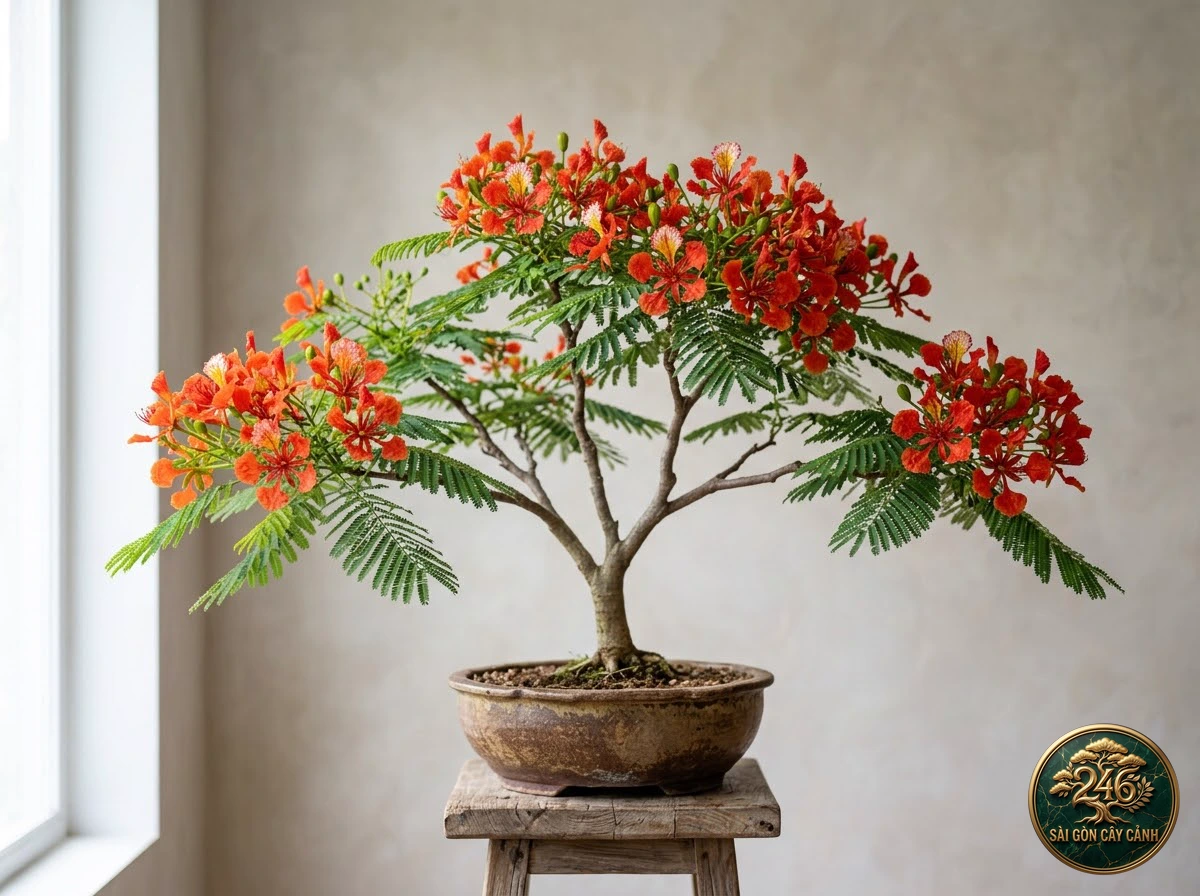
Delonix regia, universally hailed across global horticulture as the royal poinciana, flamboyant, flame tree, or peacock flower, is a monumental, breathtaking architectural flowering tree within the legume family (Fabaceae, subfamily Caesalpinioideae). Originally endemic to the dry deciduous woodlands of western Madagascar, this legendary botanical treasure has established an enduring presence throughout the pantropical world, becoming a poetic cultural symbol of youthful romance and vibrant summer vitality in Vietnam. The tree features an immense, umbrella-shaped spreading crown casting deep cooling shade, airy bipinnately compound foliage resembling delicate emerald plumage, and a magnificent explosion of tens of thousands of fiery scarlet blossoms. Each blossom features four uniform crimson petals and a singular, strikingly variegated standard petal splashed with white and yellow nectar guides. Formally verified 100% non-toxic to companion animals by the ASPCA, Delonix regia serves as Saigon Cay Canh’s premier centerpiece canopy tree for luxury estate courtyards, civic avenues, and biophilic botanical parks.
1. Botanical Origin and Nomenclature History
From the perspective of botanical taxonomy and nomenclature history, this magnificent species was first collected in the wild in the late 1820s by Bohemian botanist Wenceslas Bojer in Foulpointe, eastern Madagascar. Initially described as Poinciana regia in 1829 by William Jackson Hooker within the Botanical Magazine, the species honors Philippe de Longvilliers de Poincy, a prominent 17th-century governor of Saint Kitts who was an avid enthusiast of tropical flora. In 1836, French-American polymath Constantine Samuel Rafinesque transferred the taxon to the distinct genus Delonix in his landmark publication Flora Telluriana. The generic name Delonix derives from the classical Greek terms ‘delos’ (meaning evident, conspicuous, or clear) and ‘onyx’ (meaning claw or talon), elegantly referencing the remarkably elongated, clawed bases of the floral petals. The specific epithet ‘regia’ comes from Latin, meaning ‘regal, royal, or kingly’, paying homage to the breathtaking royal majesty commanded by the tree when fully enveloped in scarlet blossoms.
Introduced to Vietnam by French horticulturists in the late 19th century, Delonix regia was first established in botanical testing stations in Saigon and Hai Phong. Flourishing effortlessly in southern Vietnam’s equatorial monsoon climate, the species rapidly became the defining living landmark of Vietnamese schools, boulevards, and municipal landscapes.
2. Morphological and Anatomical Characteristics
Morphologically, Delonix regia is a large deciduous to semi-evergreen canopy tree reaching mature heights between 10 and 18 meters, with trunk diameters spanning 50 to 100 cm. Mature specimens develop prominent, muscular buttress roots spreading broadly at the base to provide profound structural anchorage. The trunk bark is pale grayish-brown, slightly roughened to shallowly fissured with age. The tree forms an extraordinary flat-topped to umbrella-shaped canopy spreading 12 to 20 meters wide, creating a vast, cool microclimatic haven.
The leaves are bipinnately compound, measuring 30 to 60 cm in length, arranged alternately along vigorous branches; each leaf bears 10 to 25 pairs of pinnae, with each pinna supporting 20 to 40 pairs of small elliptic leaflets measuring 5 to 10 mm long and 2 to 4 mm wide; leaflets are thin, soft, and feathery, presenting a fresh light-green hue during the rainy season before turning golden-amber prior to dry-season shedding.
Inflorescences are terminal or subterminal corymbose racemes 15 to 30 cm long crowded towards branch perimeters. Individual blossoms are extraordinarily showy, measuring 8 to 12 cm in diameter; 5 calyx lobes are thick, scarlet within and greenish beneath; 5 long-clawed petals feature spreading, ruffled obovate blades; four petals are uniform brilliant scarlet-orange, while the fifth upper petal (the standard or banner) is noticeably larger and upright, exhibiting an ivory-yellow ground densely variegated with crimson-magenta blotches serving as an evolutionary nectar guide. The flower contains 10 long, spreading, crimson stamens and a solitary slender pistil. The fruit is a massive, woody, pendulous flat pod (legume) measuring 40 to 70 cm long and 5 to 7 cm wide, turning dark brownish-black and dehiscing into two woody valves to release 20 to 40 hard oblong seeds with mottled seed coats.
3. Photobiological and Microclimatic Requirements
Photobiologically, Delonix regia is an obligate full-sun heliophyte requiring unfiltered solar irradiance. Optimum canopy development and profuse floral induction mandate 7 to 9 hours of direct sunlight daily, corresponding to ambient illuminance levels between 60,000 and 90,000 lux. Intense solar irradiance drives vigorous photosynthesis, metabolizing carbohydrate reserves that trigger floral bud development following dry-season leaf drop.
The species thrives across tropical temperatures from 22 to 38 degrees C, exhibiting superior tolerance against scorching heat waves exceeding 40 degrees C. Conversely, Delonix regia has zero tolerance for heavy shade or freezing temperatures; persistent shade causes leggy, brittle branch extension with drastically reduced flowering. Atmospheric relative humidity between 55% and 75% supports optimal growth.
4. Edaphic and Substrate Specifications
The extensive root network and muscular buttress system of Delonix regia allow it to colonize diverse tropical soils, including fertile alluvial loams, riverine sandy loams, and weathered volcanic red soils. The imperative edaphic requirement is rapid gravitational drainage. The species is highly susceptible to root asphyxiation; stagnant waterlogging persisting beyond 72 hours triggers catastrophic feeder root decay from anaerobic fungal pathogens.
For architectural estate plantings in Ho Chi Minh City, Saigon Cay Canh recommends planting excavations measuring 50 cm wider than root balls, lined with 15 cm of crushed drainage stone. Backfill formulations combine 50% sterilized alluvial loam, 25% carbonized rice hull ash for macroporosity, 15% coarse washed river sand, and 10% mature compost. Soil pH should be maintained between 6.0 and 7.5.
5. Precision Irrigation Regimes
Irrigation for Delonix regia should mirror tropical monsoon seasonal rhythms. During establishment and juvenile growth, maintain soil moisture between 60% and 70% with deep root drenching every 2 to 3 days in early mornings.
Once firmly rooted after the first year, mature specimens exhibit exceptional drought resilience. During Ho Chi Minh City’s monsoon season, natural rainfall suffices entirely, requiring only proper grading to prevent surface pooling. In late dry season (January through March), withholding irrigation for 3 to 4 weeks creates beneficial moisture stress that accelerates deciduous leaf drop; subsequent deep watering triggers explosive, synchronized flowering across the canopy.
6. Mineral Nutrition and Fertilization Schedules
A disciplined fertilization regimen balances organic soil conditioning with balanced mineral feeding to produce rigid, resilient branch timber capable of supporting heavy floral canopies. At the onset of the wet season, excavate shallow peripheral trenches along the drip line and incorporate 10 to 25 kg of composted manure and 500g of rock phosphate.
During mid-monsoon vegetative growth, apply 300g to 800g of balanced NPK 16-16-8 to replenish trunk reserves. Four weeks prior to expected blooming, transition to low-nitrogen, high-potassium formulations such as NPK 10-52-10 combined with foliar chelated boron and zinc to fortify floral pedicels and intensify petal pigmentation for over 45 days.
7. Propagation Techniques and Architectural Pruning
Propagation is primarily accomplished via seed germination. Because seed coats are extremely dense and impermeable, seeds require scarification or soaking in warm water (50 degrees C) for 12 to 24 hours prior to sowing. Sown into porous seedbeds of washed coco peat and carbonized rice hulls, germination occurs within 7 to 12 days at rates exceeding 85%.
Architectural crown pruning is essential for urban safety. Because Delonix regia timber is relatively soft and brittle, branches can fracture in severe monsoon gusts. Saigon Cay Canh arborists perform structural crown thinning in late dry season, removing dead or crossing limbs, reducing over-extended lateral leads, and balancing the umbrella silhouette to minimize wind resistance while invigorating flowering wood.
8. ASPCA Veterinary Toxicological Assessment
Veterinary safety analysis and ASPCA toxicological standards: Classified within the subfamily Caesalpinioideae (Fabaceae), Delonix regia is officially certified by the American Society for the Prevention of Cruelty to Animals (ASPCA) and international veterinary toxicology registries as 100% NON-TOXIC TO DOGS, CATS, AND HORSES.
All vegetative structures, including the bark, feathery bipinnate leaves, and fallen crimson blossoms, are entirely benign and harmless to mammals. The tree contains no caustic latex, toxic saponins, cardiac glycosides, or insoluble calcium oxalate crystals. While hard mature woody pods and seeds should not be ingested in excessive volume due to potential physical choking or mild mechanical digestive impaction, the living foliage and floral tissues pose zero biochemical poisoning risk to domestic animals. Delonix regia is therefore completely safe for family gardens, public parks, and pet-friendly luxury estates.
9. Clinical Plant Pathology Diagnostics
Clinical pathology diagnostics for branch borer management and canopy nutrition in Delonix regia:
| Clinical Symptoms | Pathological Diagnosis | Prescriptive Protocol |
|---|---|---|
| Branch limbs exhibit bore holes with sawdust-like frass; affected branches show wilted foliage and fracture under wind | Longhorn stem borers (Xystrocera globosa or Batocera rubus) tunneling into xylem timber | Probe tunnels with wire to extract larvae; inject systemic fipronil (Regent) or chlorpyrifos into galleries and seal with grafting clay |
| Foliar undersides display chlorotic stippling; foliage turns bronzed and prematurely sheds during hot dry spells | Red spider mites (Tetranychus urticae) desiccating epidermal cells in arid microclimates | Apply high-pressure morning water rinses to canopy foliage; apply selective bio-rational miticides (Ortus or fenpyroximate) |
| Basal trunk bark becomes water-soaked and dark; foul-smelling exudate and white mycelium emerge near the soil line | Root collar rot (Phytophthora cinnamomi or Fusarium spp.) exacerbated by anaerobic waterlogging | Improve soil drainage immediately; scrape infected necrotic bark down to clean wood and paint with copper oxychloride or fosetyl-Al |
10. Comparative Taxonomic and Morphological Matrix
Morphological comparative matrix isolating spreading umbrella canopy, bipinnate plumage, and clawed standard petals of Delonix regia:
| Taxonomic Criteria | Royal poinciana (Delonix regia) | Comparative Species Group A | Comparative Species Group B |
|---|---|---|---|
| Floral morphology and standard petal | Scarlet blossoms 8-12 cm wide; enlarged standard petal variegated with white and yellow nectar guides | Pendulous golden racemes 30-50 cm long bearing 5 equal yellow petals without variegated standard markings | Purplish-pink orchid-like blossoms with 5 spreading clawed petals, the upper petal marked with deep magenta veins |
| Canopy architecture and foliar morphology | Immense flat-topped umbrella canopy 12-20m wide; bipinnate leaves with hundreds of tiny feathery leaflets | Narrow oval crown; once-pinnate leaves with 4-8 pairs of large, glossy ovate leaflets | Moderate upright tree with simple bilobed leaves resembling butterfly wings or cloven cattle hooves |
| Veterinary toxicological profile (ASPCA) | 100% NON-TOXIC to companion animals; foliage and blossoms certified completely pet-safe by ASPCA | 100% NON-TOXIC to companion animals; exemplary safe ornamental landscape tree | 100% NON-TOXIC to companion animals; leaves and blossoms certified safe by ASPCA |
11. Biophilic Landscape Application and Feng Shui Symbolism
In Eastern metaphysics and Feng Shui philosophy, Delonix regia embodies radiant Fire and stabilizing Earth energies, symbolizing youthful passion, scholastic brilliance, and enduring family prosperity. Its fiery crimson blossoms herald positive yang energy, dispelling stagnation and attracting prosperity and recognition to residential estates.
Within Saigon Cay Canh landscape architecture, royal poinciana serves as an iconic focal canopy tree: planted as an imposing specimen tree anchoring vast lawn expanses, arranged in twin gatekeeper formations flanking grand estate portals, or lining principal avenues of master-planned tropical resorts.
12. Procurement and Nursery Specifications at Saigon Cay Canh
Saigon Cay Canh maintains premier acclimatized specimen trees of Delonix regia in mature caliper sizes (from 15 cm to over 60 cm trunk diameter), prepared under disciplined 6 to 12-month root conditioning protocols at our Cu Chi nursery to ensure 100% transplant success and rapid canopy vigor on delivery.
We provide certified nursery stock with balanced umbrella silhouettes, comprehensive 12-month establishment warranties, and full-service crane transport and turnkey landscape planting across southern Vietnam.
Sài Gòn Cây Cảnh Care Compass
Nursery Care Journal & Living Greenery Moments
At Saigon Cay Canh greenhouse, each photograph captures genuine everyday care moments between plant lovers and living greenery, spreading a passion for nature and green-living inspiration.

💬 Góc Tư Vấn & Hướng Dẫn Kỹ Thuật SGCC
Chuẩn E-E-A-T Kinfolk❓ Chăm sóc Royal poinciana cần lưu ý điều gì quan trọng nhất?
💡 Dạ điều quan trọng nhất là giữ môi trường sống ổn định, tránh sốc nhiệt hay dao động thông số đột ngột, đồng thời cung cấp khẩu phần ăn sạch và tươi mới ạ.
❓ Làm thế nào để phòng ngừa bệnh tật hiệu quả cho các bé?
💡 Dạ anh chị nên giữ vệ sinh chuồng/hồ nuôi sạch sẽ, thay nước hoặc dọn dẹp định kỳ và bổ sung vitamin, men tiêu hóa đều đặn để tăng sức đề kháng ạ.
🌿 Trang Thiết Bị, Đất Trồng & Dụng Cụ Bonsai Tuyển Chọn
Dụng cụ tỉa, giá thể hữu cơ & phân bón chuyên dụng cho cây cảnh.
Đá Vermiculite Namix 5dm3 ươm hạt giống, trồng rau mầm …

Than hoa, than củi HOA LAN ĐÔNG LA đã qua xử lý, dùng t…

Phân bón hữu cơ (trùn quế viên nén, canxi bo sữa, kali …
Keo liền da cây MỸ TIẾN – Keo liền sẹo da cây cảnh bons…
5 Kg than củi,than hoa nướng thịt, than củi gỗ,than củi…
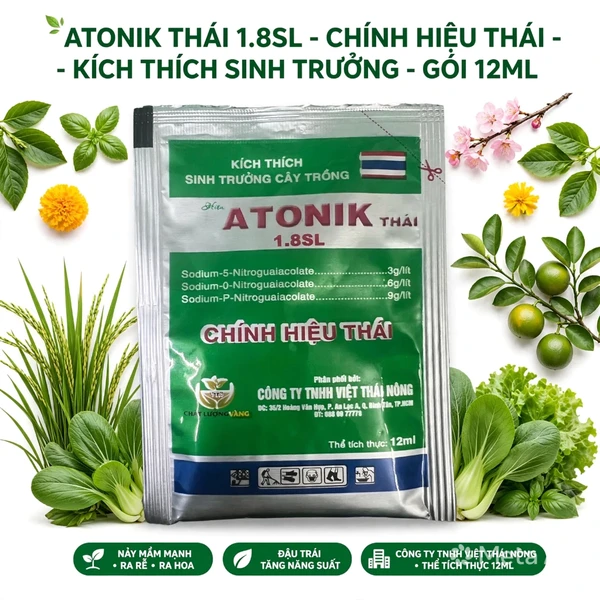
Thuốc Kích Thích Sinh Trưởng Atonik 1.8SL – Gói 12ml – …
ATONIK 100ML CHAI NHÔM THUỐC KÍCH THÍCH SINH TRƯỠNG – R…

Vòi phun nước đa năng 8 chế độ Maygarden VPA101, vòi xị…

Phân Bón NPK 20-20-20, FARMERVN Chuyên Cho Cây Ớt, Phân…

cạp tròn bonsai và cạp xéo giá rẻ, cặp kìm cắt cành bon…
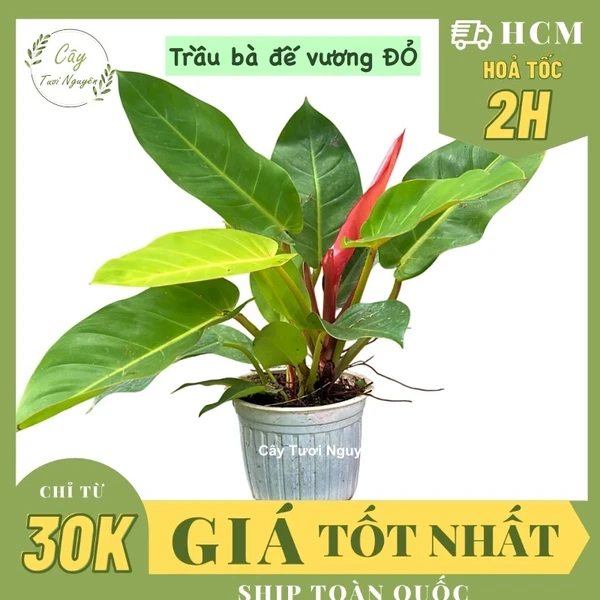
CHẬU CÂY TRẦU BÀ ĐẾ VƯƠNG Đỏ,(cao 20cm), phong thuỷ để …

Vòi Nước Tưới Cây Đa Năng 2000 Lỗ Phun Sương Vòi Xịt Nư…

Spineless yucca
Spineless yucca (Yucca elephantipes), classified within the botanical family Asparagaceae, is an esteemed tropical landscape canopy tree renowned...
Read Monograph →
Seven-finger schefflera
Seven-finger schefflera (Schefflera heptaphylla), classified within the botanical family Araliaceae, is an esteemed tropical landscape canopy tree renowned...
Read Monograph →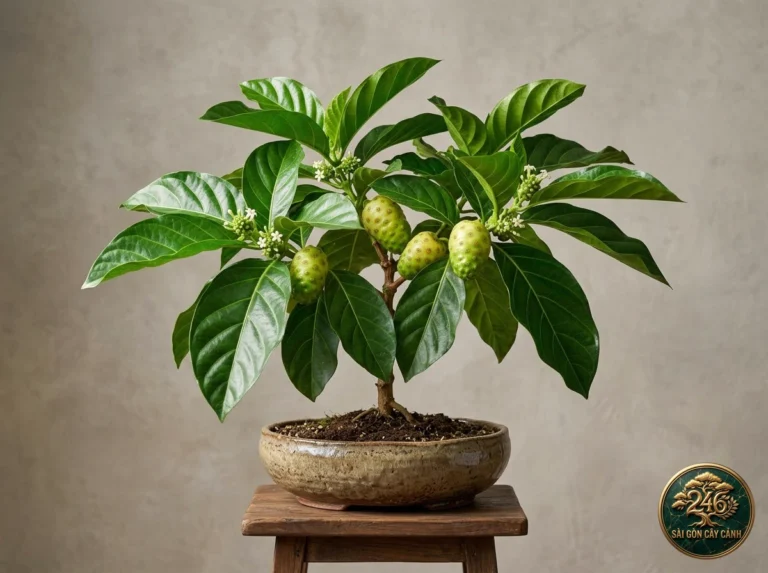
Great morinda noni (Morinda citrifolia), classified within the botanical family Rubiaceae, is an esteemed tropical landscape canopy tree...
Read Monograph →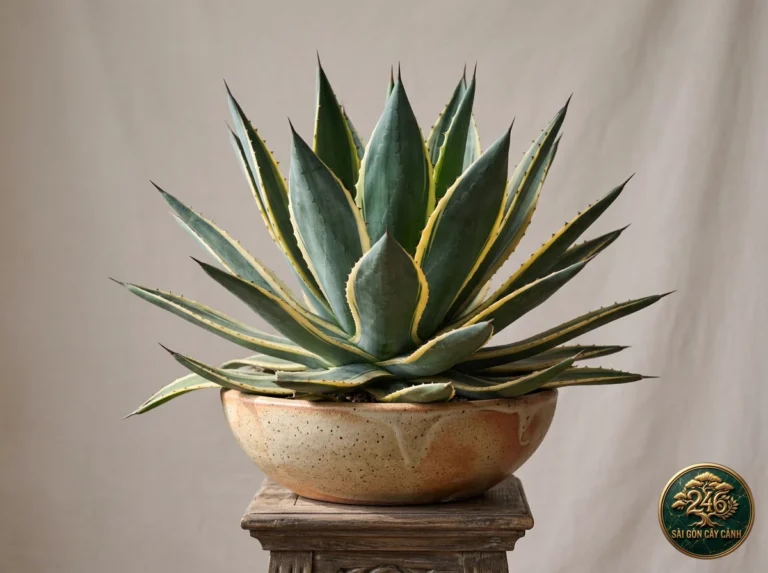
Century plant (Agave americana), classified within the botanical family Asparagaceae, is an esteemed tropical landscape canopy tree renowned...
Read Monograph →Expert Q&A, Recommended Supplies & Article Feedback
Tap once to connect instantly via Google, Facebook or TikTok — no long forms required!
No questions yet for this article. Tap Google / Facebook / TikTok above to ask the first question!