
Living plant profile
Silver monstera
Monstera siltepecana
Detailed taxonomic reference for Silver monstera (Monstera siltepecana): definitive leaf venation keys, root health management, and integrated organic pest control.
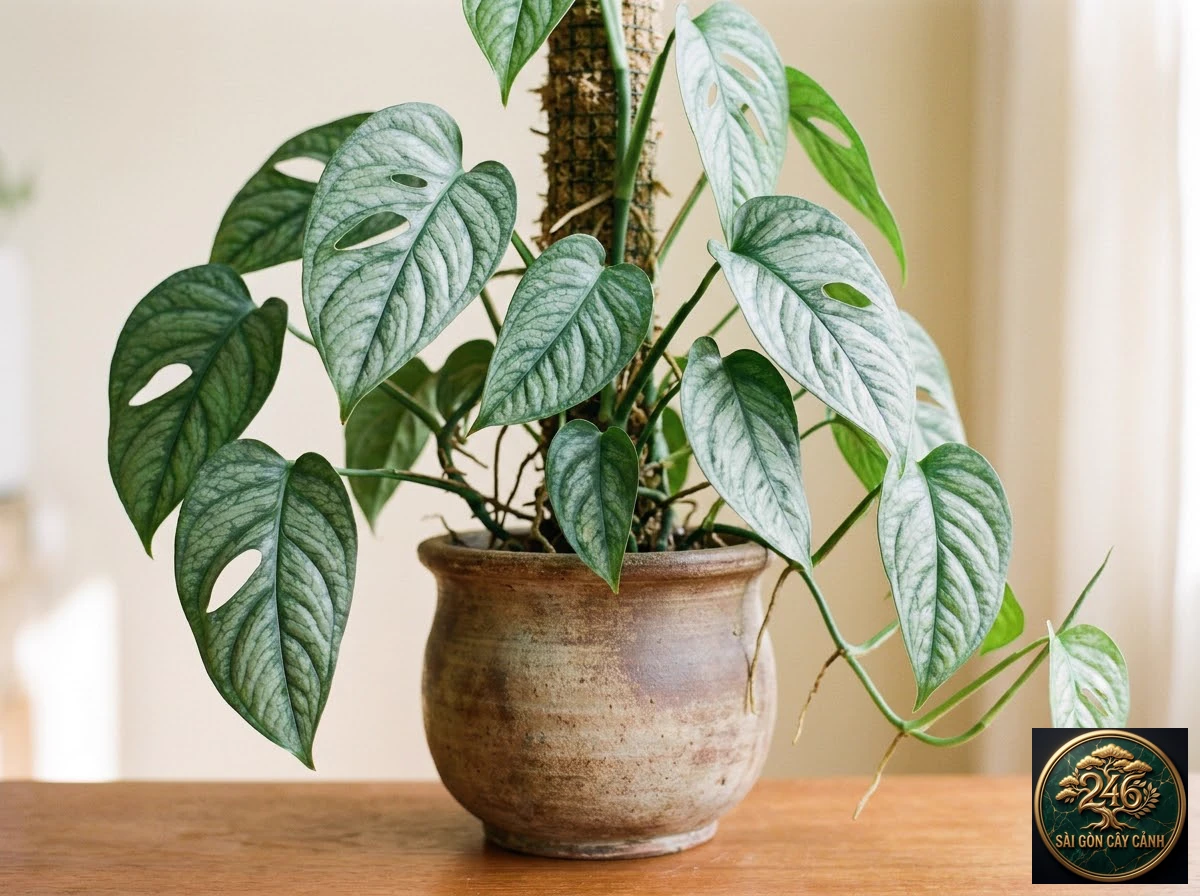
Silver monstera (Monstera siltepecana) stands as one of the most distinguished botanical specimens within the Araceae family cultivated in contemporary interior landscapes. Renowned among botanical horticulturists and exotic foliage collectors globally for its captivating leaf morphology, vigorous physiological resilience, and sculptural silhouette, this species represents a pinnacle choice for refined urban living environments.
1. Systematic Taxonomic Registry & Tropical Canopy Biome
| Scientific Name | Monstera siltepecana |
|---|---|
| Plant Family | Araceae (Aroid family) |
| Growth Habit | Tropical climbing hemiepiphyte vine with fenestrated foliar lamina and robust adventitious aerial roots |
| Light Requirement | Bright indirect / diffused light (1,500 – 3,500 lux); avoid scorching midday direct sun |
| Watering Protocol | Irrigate when upper 40-50% dries; free 3-second bottom drainage |
| Optimal Substrate | Chunky aroid mix: 35% aged pine bark, 25% volcanic pumice, 15% perlite, 15% coco chips, 10% worm castings |
| Ideal Temperature | 18°C – 30°C (64°F – 86°F; highly adapted to climate-controlled indoor spaces) |
| Ambient Humidity | 60% – 85% (Elevated humidity promotes aerial root adhesion and foliar fenestration) |
| Cultivation Difficulty | Easy (Highly vigorous and adaptable to domestic interiors) |
| Pet Safety | Toxic (Contains microscopic insoluble calcium oxalate raphides) |
Officially recognized within the Royal Botanic Gardens Kew – Plants of the World Online (POWO) taxonomic registry, Monstera siltepecana is an accepted species indigenous to the neo-tropical rain forest understories of Central and South America. In its natural biome, the plant flourishes beneath dense forest canopies, thriving under soft, filtered sunlight and relying on high relative atmospheric humidity replenished by tropical seasonal rainfall.
Morphologically adapted as an epiphyte or hemiepiphyte, the species initiates its life cycle in rich forest floor humic detritus before ascending host trees or rocky crags via adventitious aerial roots. Its thick, fibrous nodes serve as moisture and carbohydrate reservoirs, endowing the plant with superior biological endurance during seasonal fluctuations in rainfall and ambient light.
2. Variety Differentiation Key & Critical Anatomy
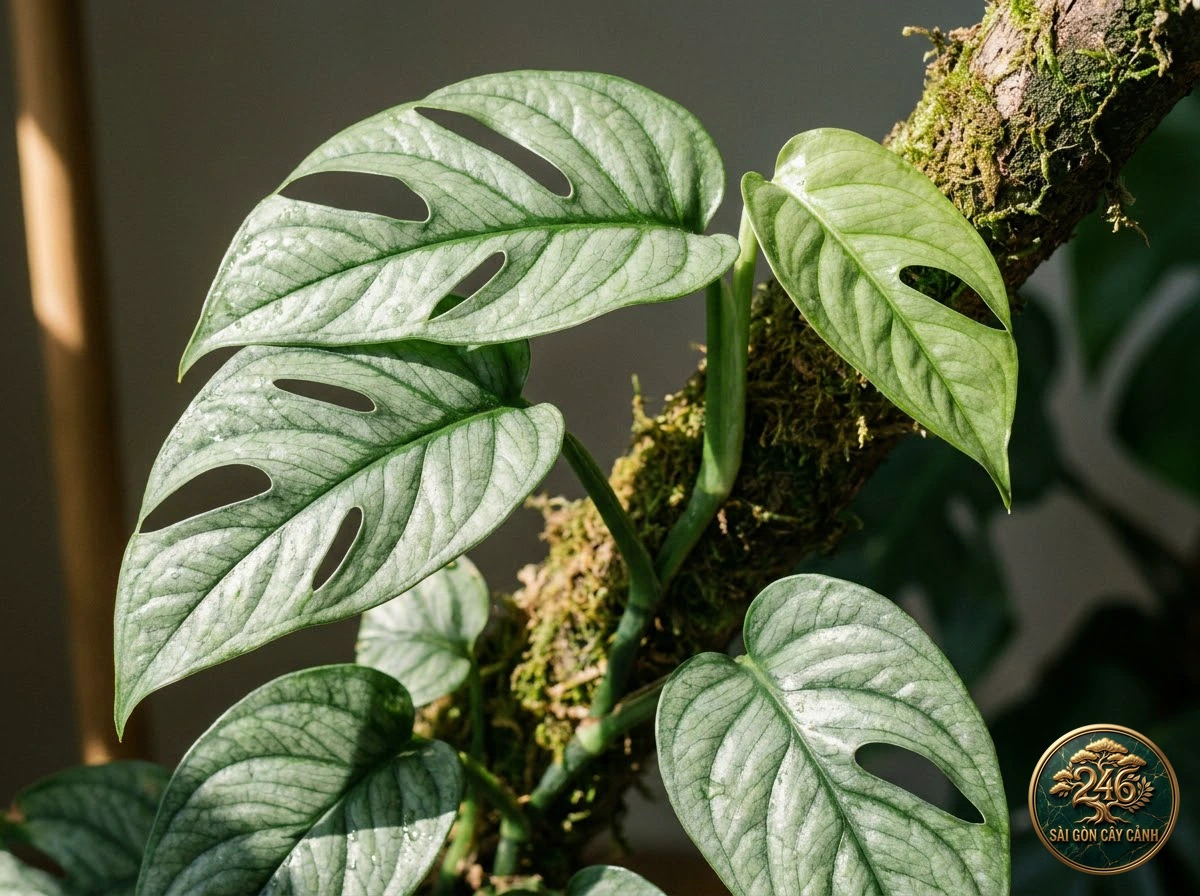
Taxonomically, Silver monstera exhibits unmistakable vegetative markers that differentiate it from related cultivars. Mature leaf blades possess a resilient leathery substance equipped with an organic epidermal cuticle designed to minimize transpirational moisture loss in breezy microclimates.
Its structural venation radiates symmetrically from the primary midrib to the leaf margins, creating an architectural relief that enhances light interception. The foliage presents a deep, lustrous tropical emerald hue, frequently displaying velvety epidermal iridescence under gentle indirect illumination. The petioles feature protective winged sheaths that clasp the central stem, offering reliable structural support as the plant reaches specimen maturity.
3. Photosynthetic Photon Flux Density & Foliar Expansion
Achieving optimal photosynthetic performance and mature blade sizing indoors requires precise calibration of ambient lighting. The plant thrives under bright indirect natural light ranging between 1,500 and 3,500 lux (150 to 350 foot-candles). The ideal household placement is situated 1 to 1.5 meters away from an unobstructed East or South-East facing window where morning sunlight can be harvested gently.
Direct exposure to harsh, unmitigated mid-day sun (particularly from West-facing glass apertures between 11:00 AM and 3:00 PM) must be strictly avoided to prevent solar bleaching and irreversible foliar necrosis. In dim interior corners lacking natural daylight apertures, supplementary full-spectrum LED horticultural grow lights (4000K to 5000K) operated for 8 to 10 hours daily will sustain healthy chlorophyll synthesis.
4. Training Natural Growth Habits for Balanced Silhouettes
Providing a dedicated moist sphagnum pole or coco coir totem is essential for aerial root penetration, triggering maximum leaf enlargement and complete fenestration.
Secure the stem or climbing vines using soft horticultural ties or non-constrictive botanical tape, taking care not to compress emerging meristematic tissue. Regular misting of the sphagnum pole maintains high moisture levels, coaxing root tips deep into the porous core and providing continuous hydraulic pressure to sustain expanding apical shoots.
5. High-Porosity Substrate Mechanics Preventing Compaction
Potting substrate mechanics dictate long-term cultivation success in warm, humid sub-tropical and tropical city climates. Dense commercial potting soils composed primarily of fine peat or field loam readily compact into anaerobic zones, starving root cells of vital oxygen and escalating pathogen susceptibility during extended monsoon wet periods.
The specialized coarse aroid formulation engineered by Saigon Cay Canh includes: 30% kiln-dried aged pine bark nuggets (9-12mm), 25% volcanic pumice stone (5-8mm), 15% horticultural perlite, 20% desalted coconut husk chips, and 10% fully composted organic worm castings. This engineered matrix guarantees an air-filled porosity exceeding 45%, ensuring surplus irrigation drains freely within seconds while retaining a protective mineral moisture film around delicate root hairs.
6. Controlled-Release Coated NPK Fertilization Strategies
Fertilization regimens must be administered with disciplined moderation. Within containerized root volumes, cumulative mineral salts can burn sensitive root tips, manifesting as browned leaf margins and aborted new growths. Cultivators should adhere to a “weakly, weekly” nutritional protocol.
During active vegetative phases throughout the monsoonal season, apply a balanced water-soluble NPK foliar fertilizer (such as 20-20-20 or 30-10-10 with chelated micronutrients) diluted to one-quarter of standard packaging strength every 14 days. Complementing this with organic seaweed kelp meal and humic acid drenches establishes robust cellular wall development and enhances photosynthetic vigor.
7. Identifying Eye-Spot Lesions & Marginal Leaf Tip Burn
| Visual Symptoms | Underlying Root Cause | Diagnostic Verification | Safe Corrective Action |
|---|---|---|---|
| Emerging foliage lacks fenestrations and remains small | Insufficient photosynthetic light or absence of climbing support | Measure light level with lux meter (requires > 2,000 lux) | Relocate closer to window or add full-spectrum LED grow light |
| Simultaneous yellowing and collapse of basal foliage | Prolonged saturation inducing hypoxic root rot | Probe bottom drainage holes; check for sour substrate odor | Withhold water 5-7 days, elevate planter, repot in chunky mix if severe |
| Crispy brown foliar margins and scorched tips | Ambient humidity below 50% or direct air conditioning draft | Check relative humidity with hygrometer at canopy level | Move away from AC vents; add ultrasonic room humidifier |
| Circular brown leaf spots with spreading yellow halos | Fungal pathogen from nocturnal water stagnation | Inspect underside of lamina and petiole sheaths | Blot foliage dry, improve airflow, apply organic bio-fungicide or neem oil |
8. Eliminating Thrips & Whiteflies with Alcohol & Neem Oil
While inherently pest-resistant under proper cultural parameters, indoor specimens may occasionally host opportunistic arthropod pests including mealybugs (Pseudococcidae), thrips (Thysanoptera), and two-spotted spider mites (Tetranychidae) when air movement stagnates.
For home safety, employ biological and physical countermeasures: gently swab mealybug colonies with a cotton pad saturated in 70% isopropyl alcohol; apply cold-pressed pure neem oil emulsified with organic castile soap every 10 days to disrupt pest reproductive cycles. Regularly rinsing the underside of foliage with a lukewarm shower prevents mite populations from establishing protective webbing.
9. Aseptic Node Cultivation in Sterile Sphagnum Moss
Vegetative propagation of Silver monstera is achieved reliably through stem cuttings containing at least one healthy node and an active aerial root initial, or through aseptic basal division. Propagating during the height of the warm growing season maximizes callus formation and rapid root proliferation.
Using a sterile horticultural razor, make a clean incision 2 to 3 cm below the designated node. Treat the wound with activated charcoal powder or organic cinnamon to seal tissue against fungal colonization. Place the prepared cutting in aerated water with mild root-stimulating hormones or wrap the node firmly in moist, sterile New Zealand sphagnum moss. Secondary root branching typically appears within 14 to 21 days, indicating readiness for container potting.
10. Veterinary Toxicity Profiles for Household Pets
Consistent with fellow members of the Araceae family, the vegetative tissue of Silver monstera synthesizes microscopic needle-like insoluble calcium oxalate crystals known as raphides, packaged alongside proteolytic enzymes. This biochemical trait functions as an evolutionary deterrent against herbivorous foraging in nature.
If foliage is masticated by domestic canines or felines, the mechanical piercing of oral mucosal membranes results in localized burning sensations, excessive salivation, temporary dysphagia, and mild gastric distress. Plant owners should strategically position specimens atop high credenzas, pedestals, or architectural plant stands beyond the reach of companion pets and small children.
11. High-Rise Balcony Biophilic Microclimate Staging
Within contemporary biophilic interior architecture, Silver monstera functions as a commanding sculptural focal point, imparting authentic tropical drama into residential and commercial spaces. Its lush geometric foliage offers an exquisite visual dialogue when paired with organic timber finishes, polished concrete walls, or minimalist stone textures.
The plant achieves its greatest aesthetic expression when showcased in artisanal matte ceramic planters, fibrous composite containers, or muted terrazzo pots. Displayed prominently in welcoming foyers, executive office suites, or tranquil reading retreats, it elevates visual serenity, enhances indoor relative humidity, and establishes a profound daily connection with the living natural world.
12. Urgent Plant Triage & Diagnostic Action Checklist
Drawing from years of cultivation in Saigon Cay Canh’s specialized botanical nurseries, we recommend three core horticultural guidelines for perpetual plant vitality:
- Read the Substrate, Not the Calendar: Never water on an uncalibrated time schedule. Always assess root-zone moisture depth manually with a bamboo skewer before supplying hydration.
- Maintain Microclimate Consistency: Avoid erratic relocation across microclimates with steep temperature or humidity differentials. Position in stable, draft-sheltered indirect light.
- Conduct Periodic Foliar Cleansing: Gently clean both blade surfaces with warm water and dilute neem oil monthly to unblock stomata, maximize photon capture, and proactively deter opportunistic arthropods.
13. Frequently Asked Questions About Silver monstera (FAQs)
Why do newly emerging juvenile leaves lack fenestrations?
Fenestrations develop only when the plant receives adequate photosynthetic light (above 2,000 lux) and has a moist support pole for aerial root penetration. Low light produces solid juvenile foliage.
Is it safe to trim long adventitious aerial roots?
Avoid severe pruning as aerial roots absorb ambient moisture. Instead, gently guide root tips back into the potting substrate or tuck them firmly against the moist sphagnum pole.
How frequently should leaf surfaces be cleaned?
Gently wipe the adaxial blade surface with a soft damp microfiber cloth every 7 to 10 days. Dust-free leaves enhance photosynthetic efficiency by up to 30% and deter spider mites.
Can Monstera thrive in air-conditioned rooms?
Yes, it tolerates typical AC temperatures (20°C – 26°C) well. Ensure cold drafts do not strike foliage directly and maintain moss pole moisture.
What are the classic symptoms of hypoxic root rot?
Simultaneous yellowing and softening of basal leaves, drooping petioles, and a sour odor from drainage holes indicate waterlogging. Withhold irrigation and aerate immediately.