
Living plant profile
Spiny spiderflower
Cleome spinosa
📌 CLINICAL & BIOLOGICAL ABSTRACT — Spiny spiderflowerCleome spinosa, universally celebrated in ornamental horticulture as spiny spiderflower, spider plant, or pink queen, is an aristocratic, architectural annual or short-lived perennial herb in the spiderflower family (Cleomaceae). Native to sunny tropical savannahs, riverine washlands, and montane valleys of South America, this botanical marvel commands instant admiration […]

Cleome spinosa, universally celebrated in ornamental horticulture as spiny spiderflower, spider plant, or pink queen, is an aristocratic, architectural annual or short-lived perennial herb in the spiderflower family (Cleomaceae). Native to sunny tropical savannahs, riverine washlands, and montane valleys of South America, this botanical marvel commands instant admiration with its towering terminal globose racemes 20 to 40 cm long. These airy spires showcase a continuous procession of fluttering, long-clawed blossoms in shifting chromatic harmonies of rose-pink, violet-magenta, and pure white. Defining the blossom are six extraordinarily elongated, purple-tinted stamens arching outwards 5 to 8 cm like delicate spider legs, giving the inflorescence an ethereal, kinetic presence. Thriving under intense solar irradiance, naturally deterring insect pests via subtle glucosinolate foliage oils, and verified 100% non-toxic to companion animals by the ASPCA, Cleome spinosa is Saigon Cay Canh’s premier asset for dramatic festival borders, botanical park displays, and luxury private courtyards.
1. Botanical Origin and Nomenclature History
Systematically classified in 1760 by Austrian botanist Nikolaus Joseph von Jacquin within Enumeratio Systematica Plantarum following his botanical expeditions to the West Indies and South America, the generic name Cleome represents an ancient Greek botanical term referring to aromatic mustard-like herbs. The specific epithet spinosa derives from Latin, meaning ‘spiny’ or ‘prickly’, accurately referencing the pair of sharp, stipular spines located at the base of each petiole, which serve as natural deterrents against browsing herbivores.
Captivating horticulturists worldwide with its grand architectural stature and exotic blossom morphology, spiny spiderflower became a staple of grand Victorian borders and pantropical estates. In Vietnam, where it is poetically celebrated as hoa tuy diep (‘drunken butterfly flower’), it flourishes across Lunar New Year exhibitions in Ho Chi Minh City and highland floral centers like Da Lat, commanding admiration for its festive exuberance.
2. Morphological and Anatomical Characteristics
Morphologically, Cleome spinosa is an erect, robust annual or short-lived biennial herb scaling 1 to 1.5 meters in height with a 45 to 75 cm branch spread. Stems are columnar, rigid, dark green, and clad in glandular-viscid hairs that secrete a distinctive musky herbal aroma. Leaves are arranged alternately along the stem; petioles measure 4 to 10 cm, armed at the base with a pair of sharp, rigid stipular spines 2 to 4 mm long; blades are palmately compound with 5 to 7 leaflets; leaflets are lanceolate to oblong-elliptic, 5 to 12 cm long and 1.5 to 3 cm wide, with acute apices, attenuate bases, and finely serrulate margins; foliar surfaces are bright emerald and puberulent.
Inflorescences are dense, erect, towering terminal racemes 20 to 40 cm long that elongate continuously as flowering progresses acropetally. Pedicels are slender, 2 to 4 cm long; 4 sepals are linear; 4 distinct clawed petals feature spreading obovate blades 2 to 3 cm wide in shifting tones of rose-pink, lilac, and porcelain white. Uniquely defining the species, 6 extraordinarily exerted stamens measure 5 to 8 cm long, arching outwards like delicate spider legs tipped with bluish-purple anthers. The pistil is elevated on a prominent elongated gynophore. The fruit is an elongated, pendulous cylindrical capsule (silique) 6 to 12 cm long that dehisces into 2 valves to liberate numerous reniform, wrinkled dark brown seeds.
3. Photobiological and Microclimatic Requirements
Photobiologically, Cleome spinosa is an obligate full-sun heliophyte that revels in high-intensity solar irradiance. Optimal vegetative density, rigid stem calipers, and non-stop floral profusion mandate 6 to 8 hours of unfiltered direct sunlight daily, corresponding to light flux levels between 50,000 and 85,000 lux. Full solar irradiance fuels vigorous photosynthesis, intensifying the incandescent anthocyanin pigments across towering flower spires.
The species exhibits exceptional tolerance against blistering equatorial heat and reflected thermal radiation in southern Vietnam, showing zero midday wilting when properly hydrated. Conversely, cultivation in excessive shade yields leggy, weak stems that lodge easily and display drastically curtailed flowering. Cleome spinosa thrives within ambient temperatures ranging from 24 to 36 degrees C accompanied by moderate relative humidity between 60% and 75%.
4. Edaphic and Substrate Specifications
The deep taproot and extensive fibrous lateral roots of Cleome spinosa demand a well-aerated, fertile, humus-enriched substrate engineered for rapid gravitational drainage. The species is acutely intolerant of waterlogged anaerobic conditions; root zone saturation persisting beyond 36 hours induces rapid pathogen proliferation (Pythium and Phytophthora), leading to sudden collar rot and catastrophic wilt.
The planting medium formulated by Saigon Cay Canh incorporates 45% sterilized alluvial loam, 25% coarse carbonized rice hull ash for macroporosity, 15% coarse river sand or perlite, and 15% mature organic vermicompost. Optimal soil pH is maintained between 6.0 and 7.0. Field plantings must be established on elevated mounds with deep perimeter drainage trenches, while containers must feature ample drainage outlets.
5. Precision Irrigation Regimes
Cleome spinosa requires consistent, moderate soil hydration maintaining 60% to 70% substrate moisture throughout scape elongation and flowering. During hot sunny days, apply a thorough root-zone soaking once daily in early morning hours (07:00 to 08:00) to maintain turgor pressure across towering flowering stems.
Authoritative watering rule: deliver water directly to the soil surface or utilize drip emitters; never apply overhead hydraulic sprays into blooming spikes, as trapped moisture inside delicate clawed petals provokes fungal petal blight. Refrain from late-evening watering, and allow the upper soil layer to become slightly dry between watering cycles.
6. Mineral Nutrition and Fertilization Schedules
Because vertical flower spires expand rapidly and support a dense biomass of flowers, disciplined balanced mineral feeding is paramount. During initial vegetative expansion (days 15 to 30 post-transplanting), apply dilute soluble NPK 16-16-16 or hydrolyzed fish emulsion every 10 days to build robust basal branches and thick foliage.
Every 10 to 12 days, apply a dilute liquid drench of balanced NPK 15-15-15 or NPK 12-12-17 (1.5 grams per liter of water) around the root perimeter. As floral spires initiate, transition to high-phosphorus formulations paired with foliar chelated calcium and boron to thicken stem calipers, preventing lodging under heavy blossom loads and sustaining crisp coloration for 30 to 45 days on the plant.
7. Propagation Techniques and Architectural Pruning
Propagation of Cleome spinosa is universally achieved via seed sowing for commercial scale and uniformity. Seeds are small; surface-sow across seedling flats filled with fine washed coco peat and carbonized rice hull ash, covering with a thin 2 to 3 mm substrate layer. Mist daily; uniform germination occurs within 7 to 10 days at 22 to 28 degrees C. Transplant seedlings into nursery containers when they bear 4 to 6 true leaves (20 to 25 days post-sowing).
Pinching strategy depends on landscape objectives: for bushy bedding displays with multiple medium spires, pinch terminal leaders when plants reach 20 to 25 cm to induce 4 to 6 flowering lateral stems; for monumental cut-flower spires approaching 1.5 meters in height, maintain a solitary unpinched leader and remove secondary axillary buds to direct all nutrients into the primary spire.
8. ASPCA Veterinary Toxicological Assessment
Botanical safety profile and ASPCA pet safety standards: Classified within the family Cleomaceae, Cleome spinosa is officially verified by the American Society for the Prevention of Cruelty to Animals (ASPCA) and international veterinary toxicology registries as 100% NON-TOXIC TO DOGS, CATS, AND HORSES.
The plant contains no toxic alkaloids, hazardous cardiac glycosides, or irritant resins. The subtle musky herbal scent produced by foliar glandular hairs naturally repels insect pests while remaining entirely benign to mammals. Companion animals browsing casually on foliage or chewing spent blossoms encounter zero physiological toxicity or digestive distress. Cleome spinosa therefore represents an exemplary, pet-safe seasonal color annual for festive family gardens and public recreational areas.
9. Clinical Plant Pathology Diagnostics
Pathology screening for damping-off collar rot suppression and towering spire fertigation in Cleome spinosa:
| Clinical Symptoms | Pathological Diagnosis | Prescriptive Protocol |
|---|---|---|
| Tender terminal leaves and young floral buds show ragged holes and chewed margins chewed by nocturnal caterpillars | Armyworms (Spodoptera litura) or loopers browsing on succulent shoots and flower buds after dusk | Hand-pick larvae in the early morning, and apply bio-rational Bacillus thuringiensis (Bt) or spinetoram (Radiant) |
| Basal stems near the soil surface turn water-soaked and brownish-black, causing sudden stalk lodging and collapse | Damping-off root rot (Pythium aphanidermatum or Rhizoctonia solani) induced by persistent waterlogging in heavy soil | Rogue severely diseased specimens, aerate substrate macroporosity, suspend irrigation, and drench with Ridomil Gold |
| Foliar surfaces develop powdery grayish-white fungal felt, causing leaf distortion, floral bud abortion, and drop | Powdery mildew (Oidium spp.) thriving under humid, stagnant atmospheric conditions with dry root zones | Improve air circulation, prune heavily infected foliage, and apply systemic hexaconazole (Anvil) or wettable sulfur |
10. Comparative Taxonomic and Morphological Matrix
Morphological comparative matrix isolating towering globose racemes, kinetic spider stamens, and spiny stipules of Cleome spinosa:
| Taxonomic Criteria | Spiny spiderflower (Cleome spinosa) | Comparative Species Group A | Comparative Species Group B |
|---|---|---|---|
| Inflorescence architecture and stamen morphology | Airy globose terminal racemes 10 to 20 cm wide bearing dozens of clawed pink flowers with long projecting spider stamens | Deep fleshy star-shaped scarlet blossoms 3 to 4 cm wide with a prominent jagged golden corona, unscented | Quadrangular 4-sided terminal spikes bearing asymmetric fan-shaped blossoms in saturated coral-red or apricot hues |
| Stem habit and stipular spine presence | Stately upright herbaceous annual 1 to 1.5 m tall with spiny stipules and glandular pubescent stems | Small architectural tree or tall shrub 3 to 6 m tall bearing thick fleshy star-shaped scarlet blossoms | Compact upright subshrub 30 to 70 cm tall with thick lustrous wavy foliage, entirely spineless |
| Veterinary toxicological status (ASPCA) | 100% NON-TOXIC to companion animals; foliage and blooms are certified completely pet-safe | MILD CAUTION advised due to Apocynaceae latex; restrict companion animals from chewing woody foliage | 100% NON-TOXIC to companion animals; foliage and blooms are certified completely pet-safe |
11. Biophilic Landscape Application and Feng Shui Symbolism
In cultural symbolism and Eastern Feng Shui metaphysics, Cleome spinosa embodies radiant Fire and stabilizing Earth energies, symbolizing joyous abundance, romantic passion, and dynamic celebration. Resembling a kinetic dance of celestial butterflies fluttering over garden beds, its form is revered as a potent herald of commercial abundance, scholarly triumph, and prosperity during festive celebrations.
Within Saigon Cay Canh landscape architecture, spiny spiderflower serves as a premier seasonal festive focal plant: massed into sweeping parterre ribbons across urban flower festivals, framing civic plazas with vibrant vertical clouds, accentuating traditional courtyard displays, or featured in luxury floral containers adorning hospitality estates.
12. Procurement and Nursery Specifications at Saigon Cay Canh
Saigon Cay Canh is an authoritative commercial grower and distributor of top-tier Cleome spinosa cultivars across southern Vietnam, supplying vigorous containerized plants timed precisely for spring festivals, municipal displays, and luxury private estates.nnWe guarantee authentic F1 hybrid vigor, rigid scapes with synchronized blooming, healthy pathogen-free root balls, competitive nursery-direct pricing, and turn-key festive landscape installation services nationwide.
Sài Gòn Cây Cảnh Care Compass
Nursery Care Journal & Living Greenery Moments
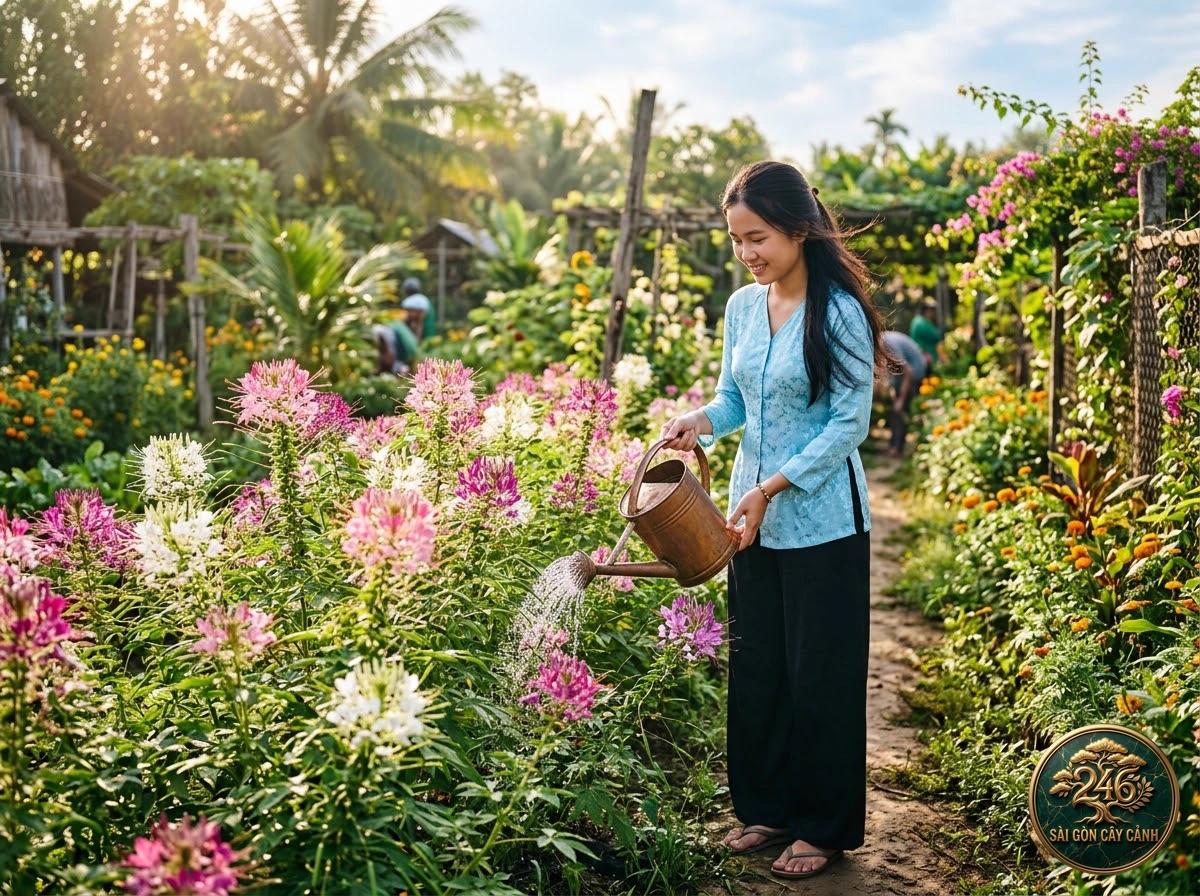
At Saigon Cay Canh greenhouse, each photograph captures genuine everyday care moments between plant lovers and living greenery, spreading a passion for nature and green-living inspiration.
💬 Góc Tư Vấn & Hướng Dẫn Kỹ Thuật SGCC
Chuẩn E-E-A-T Kinfolk❓ Chăm sóc Spiny spiderflower cần lưu ý điều gì quan trọng nhất?
💡 Dạ điều quan trọng nhất là giữ môi trường sống ổn định, tránh sốc nhiệt hay dao động thông số đột ngột, đồng thời cung cấp khẩu phần ăn sạch và tươi mới ạ.
❓ Làm thế nào để phòng ngừa bệnh tật hiệu quả cho các bé?
💡 Dạ anh chị nên giữ vệ sinh chuồng/hồ nuôi sạch sẽ, thay nước hoặc dọn dẹp định kỳ và bổ sung vitamin, men tiêu hóa đều đặn để tăng sức đề kháng ạ.
🌿 Trang Thiết Bị, Đất Trồng & Dụng Cụ Bonsai Tuyển Chọn
Dụng cụ tỉa, giá thể hữu cơ & phân bón chuyên dụng cho cây cảnh.

Phân Trùn Quế SFARM 10kg, 100% nguyên chất, đã qua xử l…

Đầu Vòi Xịt Nước Tưới Cây Đa Năng 8 Chế Độ – Điều Chỉnh…
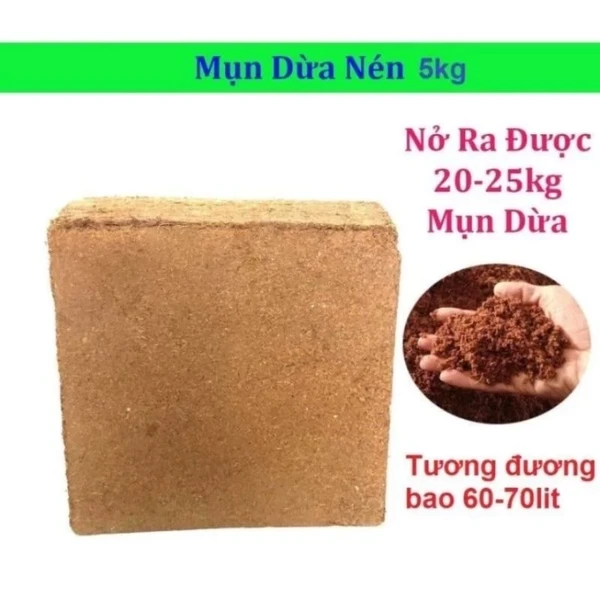
Xơ dừa nén, Mụn dừa nén, Đất trồng nén 5kg trồng cây đã…

BS65 Set chậu 15 chậu bonsai min gốm Bát Tràng men xanh…

Bình Phun Xịt Mini Suvina 0.5l Vỏ Xanh Độ Bền Cao Phun …
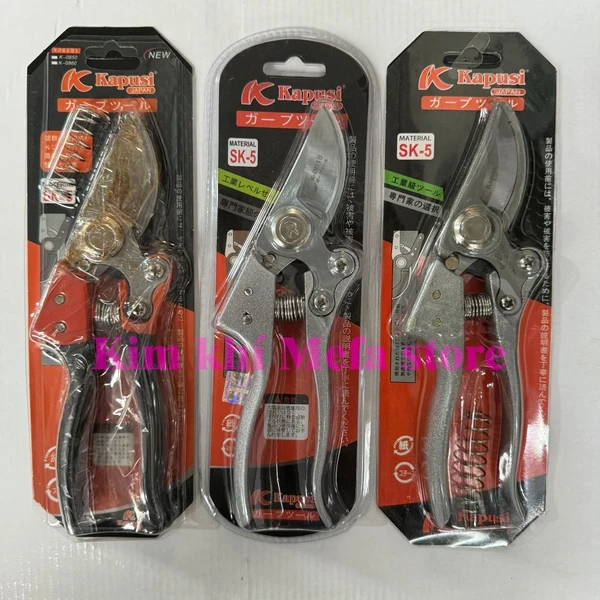
Kéo cắt cành Kapusi SK-5 siêu sắc – Kéo cắt cây, kéo tỉ…
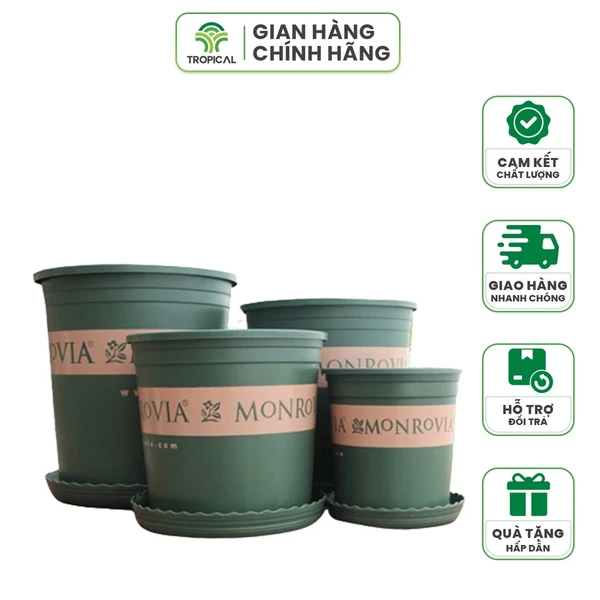
Chậu nhựa trồng cây cao cấp Monrovia
ĐẤT TRỒNG CÂY NÉN DẠNG VIÊN SƠ , đất sạch hữu cơ vi sin…
Kéo cắt cành cộng lực YOKOHAMA SK5 xuất xứ JAPAN Kéo cắ…

Vòi Nước Xịt Rửa Xe 8 Chế Độ Bộ ống Xịt Tưới Vòi Tưới C…

AUXIN GOLD 500ml, phân bón bo giữ hoa, phân bón auxin N…
Hạt giống hoa hồng leo mix đủ màu, hoa hồng leo Pháp kh…

Panicle hydrangea (Hydrangea paniculata)
Panicle hydrangea (Hydrangea paniculata) Hydrangea paniculata, universally known as panicle hydrangea or peegee hydrangea, is a majestic, cold-hardy,...
Read Monograph →
Greater periwinkle
Vinca major, celebrated in international horticulture as greater periwinkle, bigleaf periwinkle, or large periwinkle, is a vigorous, semi-woody...
Read Monograph →
Summer snapdragon (Angelonia angustifolia)
Summer snapdragon (Angelonia angustifolia) Angelonia angustifolia, celebrated worldwide as summer snapdragon or angelmist, is an exceptionally durable and...
Read Monograph →
Moss rose (Portulaca grandiflora)
Moss rose (Portulaca grandiflora) Portulaca grandiflora, universally treasured as moss rose, sun plant, or eleven o’clock, is a...
Read Monograph →Expert Q&A, Recommended Supplies & Article Feedback
Tap once to connect instantly via Google, Facebook or TikTok — no long forms required!
No questions yet for this article. Tap Google / Facebook / TikTok above to ask the first question!