
Living plant profile
Swiss cheese plant
Monstera deliciosa
Swiss cheese plant (Monstera deliciosa) is a celebrated epiphytic climbing liana renowned for its striking architectural presence in modern interior spaces. Combining aesthetic refinement with vigorous adaptability, it is an exemplary choice for novice growers and seasoned plant collectors alike. The definitive factor for success in apartment cultivation lies in establishing a responsive watering routine […]
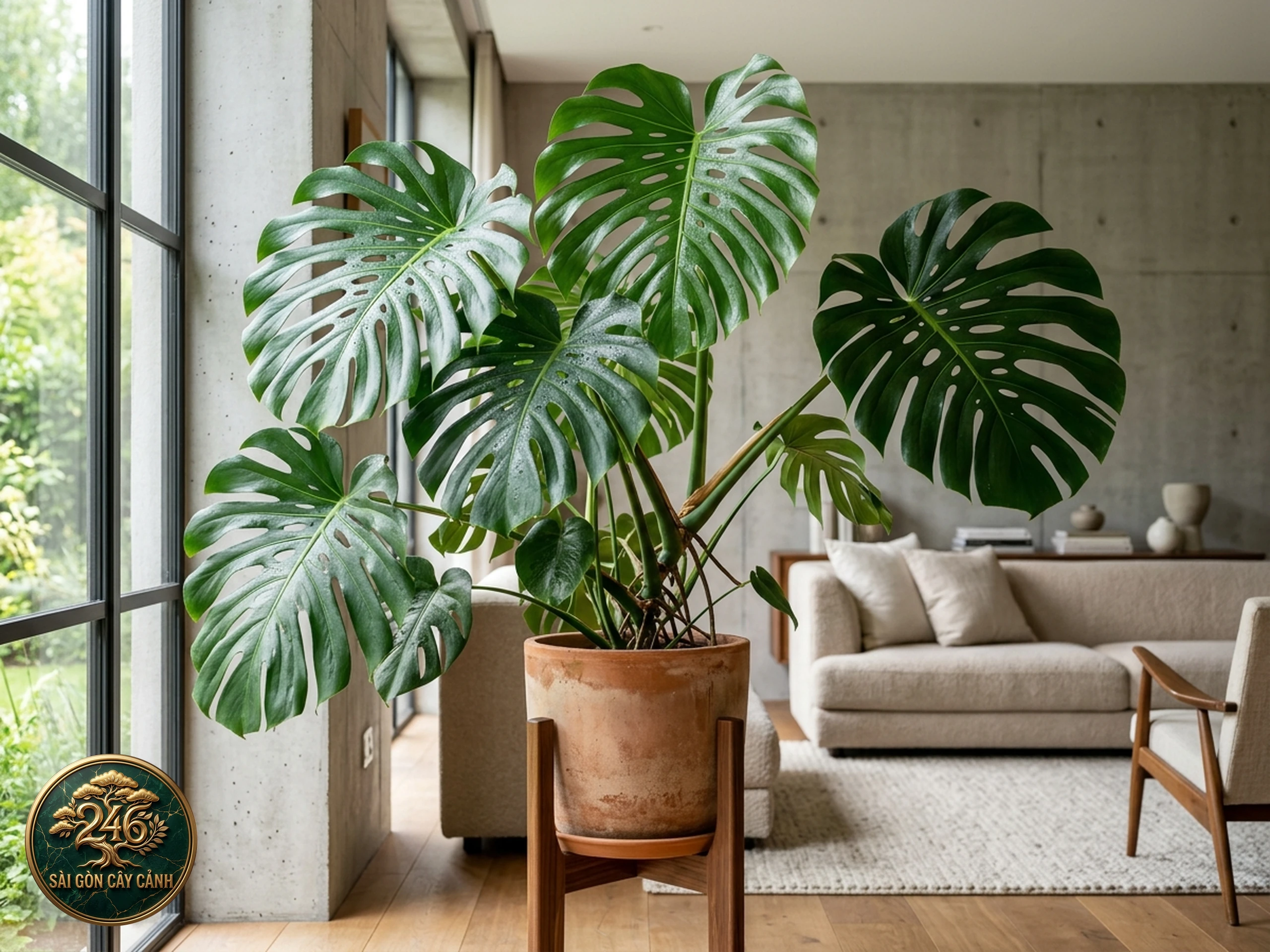
Swiss cheese plant (Monstera deliciosa) is a celebrated epiphytic climbing liana renowned for its striking architectural presence in modern interior spaces. Combining aesthetic refinement with vigorous adaptability, it is an exemplary choice for novice growers and seasoned plant collectors alike. The definitive factor for success in apartment cultivation lies in establishing a responsive watering routine guided by direct substrate assessment rather than a rigid calendar schedule.
1. Botanical Traits & Epiphytic Growth Habit of Monstera Deliciosa
| Scientific Name | Monstera deliciosa |
|---|---|
| Botanical Family | Araceae (Arum family) |
| Growth Habit | Epiphytic and hemi-epiphytic tropical climbing liana |
| Light Exposure | Bright indirect light (1,500 – 3,500 lux); dappled morning sun |
| Watering Requirement | Water thoroughly when upper 30% to 50% of substrate dries out |
| Recommended Substrate | Chunky aerated aroid mix: 40% aged bark, 30% pumice/perlite, 20% peat, 10% worm castings |
| Optimal Temperature | 18°C – 30°C (64°F – 86°F); protect from cold drafts below 12°C |
| Relative Humidity | 60% – 85% RH; thrives with supplemental humidity in air-conditioned spaces |
| Care Difficulty | Moderate / Beginner friendly |
| Pet Safety Status | Toxic to Pets (Contains needle-like insoluble calcium oxalate raphide crystals) |
Indigenous to the dense pluvial rainforests extending from southern Mexico down to Panama, Monstera deliciosa thrives natively as an aggressive nomadic hemiepiphyte. In its wild habitat, seeds germinate along the forest floor where seedlings exhibit skototropism—actively growing toward darkness rather than light to locate and colonize the massive vertical trunks of rainforest canopy trees. Once climbing begins, the plant undergoes profound morphological transformations, transitioning from small, entire juvenile blades into colossal adult foliage capable of reaching over 90 centimeters in width. Understanding this native canopy verticality explains why providing a sturdy moss totem or cedar climbing trellis indoors triggers spectacular foliar maturation.
2. Leaf Fenestration Mechanisms & Phenotypic Distinctions
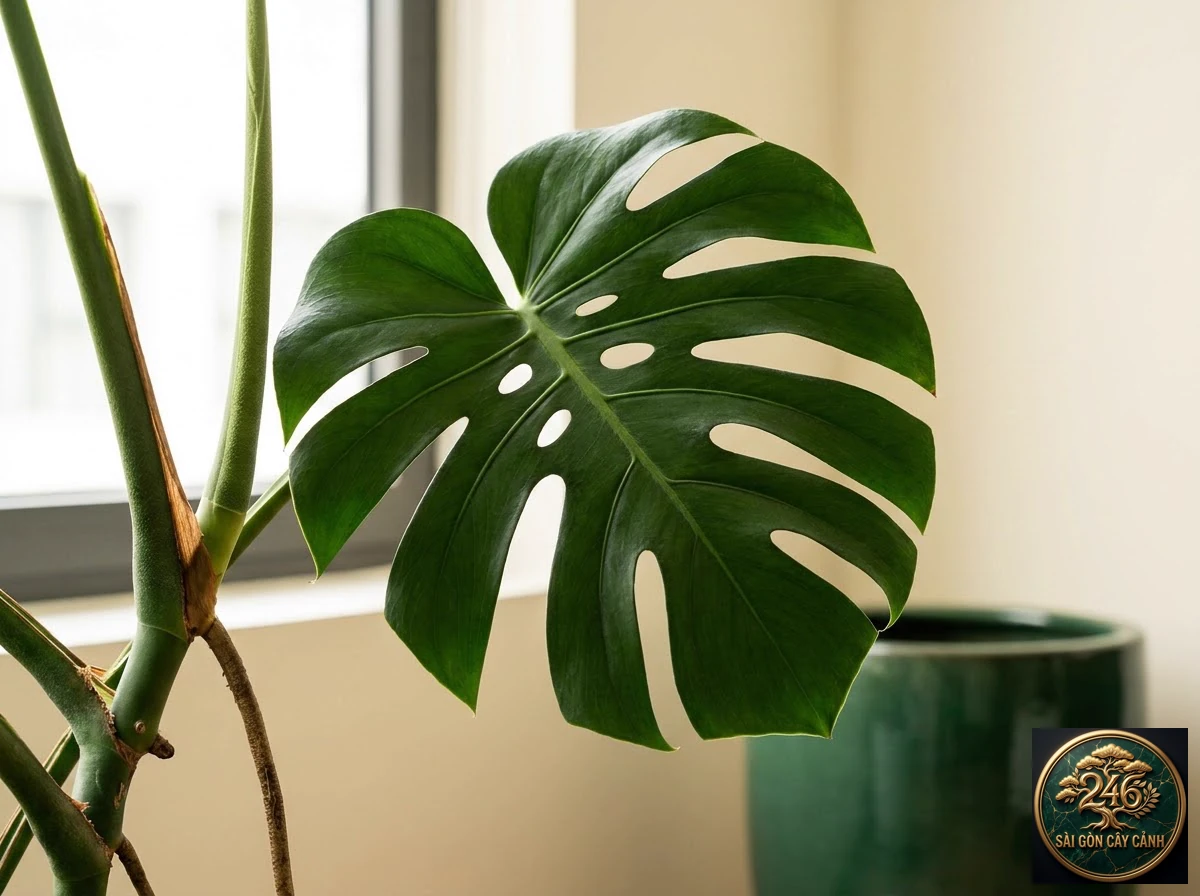
Accurate identification of Monstera deliciosa requires close inspection of foliar structure, petiole anatomy, and developmental habit. In commercial horticulture, ambiguous common names frequently cause misidentification, leading to improper care regimens.
The celebrated leaf perforations and deep marginal incisions—known botanically as fenestrations—are an evolutionary adaptation designed to optimize photosynthetic efficiency in dim forest sub-canopies. By allowing dappled sunlight to filter through upper leaves onto lower vegetative foliage, the plant minimizes self-shading while simultaneously reducing mechanical resistance against monsoonal downpours and tropical wind shear. Internally, thick lignified vascular strands support the heavy lamina, while specialized geniculum tissue at the petiole apex functions as a flexible biological hinge, allowing the leaf blade to dynamically orient toward changing indirect light vectors throughout the day.
Key Diagnostics: Readily distinguished from Monstera adansonii (which develops smaller, narrower leaves with fully enclosed elliptical perforations) and juvenile Philodendron hederaceum (which bears heart-shaped leaves that remain completely unbroken without splits). Furthermore, mature specimens display distinct undulations along the upper petiole geniculum.
3. Optimum Indirect Illumination in High-Rise Urban Apartments
Within urban residences, position the plant in accordance with natural lighting dynamics: Situate approximately 1 to 2 meters away from east-facing exposures or behind sheer curtains at south-facing windows to ensure luminous indirect light. Avoid placing foliage directly in cold convective drafts from air conditioning units, as rapid evaporative loss compromises leaf margins while soil remains wet.
4. Moss Pole Training Protocols & Aerial Root Hydration Care
Do not adhere to a predetermined watering schedule. Transpiration rates fluctuate with seasonal warmth, airflow, and pot volume.
Three-Step Moisture Check:
- Insert a wooden dowel or finger 3-5 cm into the potting medium.
- If damp substrate particles adhere to the probe: Delay watering for 48-72 hours.
- When the probe emerges clean and dry: Saturate the root zone thoroughly until water flows freely from drainage holes, then discard standing saucer water after 15 minutes.
5. Chunky Aroid Substrate Formulation for High Tropical Humidity
The root system of Monstera deliciosa demands substantial gas exchange. Dense potting soils compact over repeated waterings, generating hypoxic conditions that foster anaerobic root pathogens.
The rhizosphere of Monstera deliciosa demands abundant gas exchange, as roots adapted to tree bark suffocate rapidly when confined in dense, peat-dominated substrates. Maintaining an air-filled porosity between 25% and 35% ensures that irrigation water moves rapidly through the root ball without leaving saturated anaerobic pockets. As thick subterranean roots expand, they establish extensive mycorrhizal associations that optimize micronutrient uptake. Periodically loosening the upper layer of substrate during springtime repotting revitalizes microbial vitality and prevents mineral salt accumulation from municipal water.
Recommended Soil Mix: An airy, highly permeable aroid blend consisting of 40% aged pine bark chips, 30% volcanic pumice and coarse perlite, 20% fibrous peat moss, and 10% screened worm castings. Unglazed terracotta or specialized aerated nursery pots provide superior root zone oxygenation compared to non-porous containers.
6. Organic Foliar Nutrition & Bimonthly Seasonal Fertilization
Modest, consistent fertilization sustains healthy foliage without mineral burn. During active vegetative flush (spring and summer), supply balanced liquid organic fertilizer diluted to half strength monthly. Discontinue feeding during dormant or low-light winter intervals.
To support massive leaf development and clean fenestrations, Monstera deliciosa requires adequate micronutrient availability, particularly magnesium and calcium. Deficiencies in available calcium often manifest as crinkled, distorted emerging leaves that struggle to unfurl cleanly. Applying a balanced liquid houseplant fertilizer with an NPK ratio of 3-1-2 diluted to half-strength during the warm spring and summer flush provides ideal nitrogen for vegetative mass while preventing toxic salt accumulation in the root zone. During cooler monsoonal lulls or lower winter light, withhold fertilizers entirely to avoid chemical root scorch.
7. Foliar Diagnosis Matrix: Yellowing Edges & Necrotic Patches
| Observed Symptom | Primary Root Cause | Verification Method | Corrective Action |
|---|---|---|---|
| Lower leaf chlorosis (yellowing) | Overwatering / hypoxic root environment | Inspect lower substrate moisture | Extend dry intervals, verify drainage holes |
| Crispy brown margins | Sub-optimal ambient humidity / AC airflow | Measure room humidity, check draft paths | Relocate away from vents, elevate humidity |
| Etiolation (pale, stretched stems) | Insufficient photosynthetic photon flux | Assess light intensity at foliage level | Shift closer to bright indirect source |
| Soft basal stem / wilting | Fungal root compromise (pythium/phytophthora) | Unpot root ball and inspect root firmness | Excise decayed roots, treat with fungicide, repot |
8. Integrated Pest Defense Against Mealybugs & Thrips
Mealybugs and two-spotted spider mites present the most frequent pest challenges. Regular foliar cleansing with a damp microfiber cloth serves as primary defense. For localized infestations, isolate the specimen and treat with 70% isopropyl alcohol via cotton swab or apply cold-pressed horticultural neem oil during evening hours.
In domestic indoor environments, sap-sucking arthropods such as mealybugs (Pseudococcidae) and two-spotted spider mites (Tetranychus urticae) represent the most frequent foliar threats, particularly when dry indoor air conditioning diminishes ambient humidity. Regular inspections beneath the leaf blades and along petiole sheaths ensure early detection before colonies establish. Wiping both leaf surfaces biweekly with a damp microfiber cloth removes atmospheric dust, discourages mite webbing, and maximizes stomatal conductance for healthy gas exchange without the need for toxic synthetic chemicals.
9. Nodal Stem Propagation in Pure Water and Sphagnum Medium
Propagate during the active growth season via vegetative stem cuttings or division. Select vigorous nodes possessing aerial root initials. Sever cleanly with sanitized shears, allow callous formation for two hours, then root in clean aerated water or damp sphagnum moss under warm, diffused light.
10. Calcium Oxalate Toxicity Profile & Household Pet Safeguards
11. Seasonal Maintenance Calendar for Monsoonal Climates
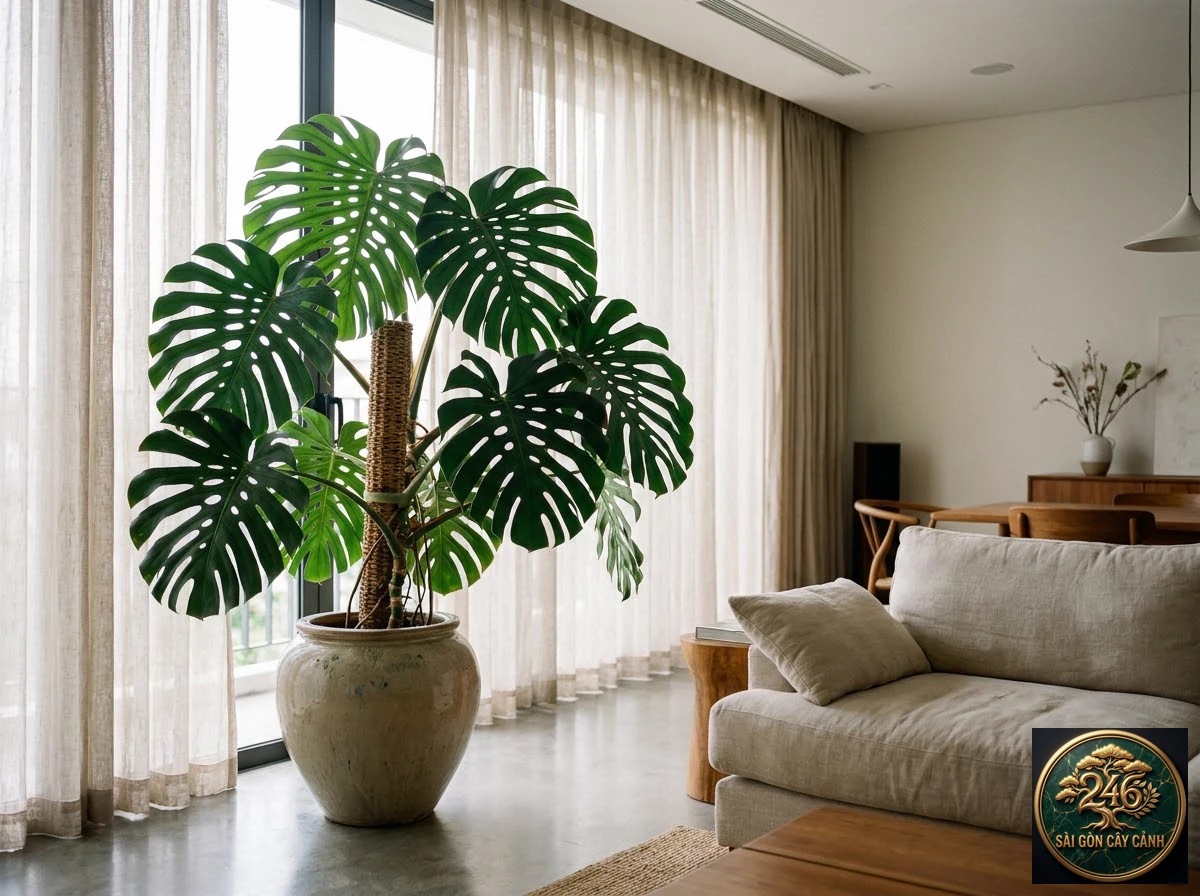
The sculptural foliage of Monstera deliciosa harmonizes gracefully with biophilic, Scandinavian, and contemporary architectural settings. Pair alongside trailing pothos or structural snake plants to create dynamic multi-tiered botanical arrangements.
From a spatial design perspective, Monstera deliciosa acts as a majestic focal specimen in living rooms, executive boardrooms, and open architectural lofts. Its broad, deeply incised emerald fronds soften minimalist geometric interiors, pairing harmoniously with polished terrazzo, warm teak timber, and exposed architectural concrete. To create a multi-layered indoor microclimate, position the Monstera as a central anchor surrounded by compact clumping ferns, hanging trailing pothos, and upright architectural snake plants to enhance localized transpiration and indoor biophilic vitality.
12. Frequently Addressed Care Inquiries by Houseplant Collectors
“Plants can thrive indefinitely in windowless interior spaces” — All vegetative growth requires photosynthetic photons. In rooms devoid of natural light, full-spectrum horticultural LED fixtures must be provided for 8-10 hours daily to maintain metabolic equilibrium.
“Severing aerial roots will cause the plant to die” — A widespread misconception among interior plant keepers is that aerial roots are vital life-support organs that must never be touched. In reality, aerial roots serve primarily to anchor climbing vines to host trees and absorb ambient atmospheric moisture. If an aerial root grows excessively long and creates clutter, it can be pruned flush with the main stem using sanitized shears without causing physiological detriment. Alternatively, guiding aerial roots back down into the potting substrate allows them to convert into subterranean feeder roots, boosting overall hydraulic uptake.
13. Frequently Asked Questions (FAQ)
When should this plant be repotted?
Repot every 18-24 months or when roots spiral densely and emerge through bottom drainage ports. Select a replacement container 3-5 cm wider in diameter.
Should foliar shine products or oils be applied?
Never apply culinary oils or commercial leaf gloss. They occlude stomata, hindering gas exchange and attracting particulate debris. Clean foliage solely with pure water.
Is daily misting beneficial in air-conditioned apartments?
Misting provides only transient humidity spikes and may cause fungal leaf spot if foliage remains wet without air movement. Use a pebble tray or ultrasonic humidifier for sustained ambient moisture.
How can I distinguish underwatering from overwatering?
Underwatered foliage exhibits uniform dry limpness in a desiccated root ball. Overwatered plants display yellowing lower leaves accompanied by mushy, dark petioles and sodden soil.
Can tap water be used directly?
Municipal water often contains dissolved chlorine and fluorides that cause tip burn in sensitive foliage. Allow water to sit uncovered for 24 hours prior to irrigation.