
Living plant profile
Tender brake fern
Pteris tremula
Tender brake fern (Pteris tremula) Tender brake fern (botanical binomial: Pteris tremula) is a distinguished botanical specimen belonging to the Brake fern family (Pteridaceae). Australian tender brake fern Pteris tremula featuring luminous pale green fronds that flutter gracefully in the gentlest breeze upon slender chestnut-brown stipes, 2- to 3-pinnate foliage forming an airy botanical cloud. […]
Tender brake fern (Pteris tremula)
Tender brake fern (botanical binomial: Pteris tremula) is a distinguished botanical specimen belonging to the Brake fern family (Pteridaceae). Australian tender brake fern Pteris tremula featuring luminous pale green fronds that flutter gracefully in the gentlest breeze upon slender chestnut-brown stipes, 2- to 3-pinnate foliage forming an airy botanical cloud.
Sài Gòn Cây Cảnh Care Compass
1. Botanical Nomenclature & Taxonomy
| Scientific Name | Pteris tremula |
|---|---|
| Botanical Family | Brake fern family (Pteridaceae) |
| Vietnamese Vernacular | Cây dương xỉ run rẩy bờ rào úc |
| International Common Name | Tender brake fern |
| Growth Habit | Terrestrial, epipetric or lithophytic tropical fern with creeping or erect rhizome and pinnately divided architectural fronds |
| Light Requirement | Gentle diffused daylight to dappled shade (2,500 – 5,000 lux). |
| Watering Protocol | Even moisture throughout root zone; avoid stagnant saucer water. |
| Optimal Substrate | Aged leaf compost, horticultural pumice, sphagnum fiber, fine pine bark. |
| Ideal Temperature | 16°C – 30°C. |
| Ambient Humidity | 65% – 85%. |
| Cultivation Difficulty | Easy to moderate. |
| Pet Safety | Non-toxic to cats and dogs. |
The taxon Pteris tremula is universally recognized across global botanical authorities (POWO – Royal Botanic Gardens, Kew) as an accepted member of the Brake fern family (Pteridaceae).
In natural habitats, this species plays an essential ecological role, contributing to groundcover stabilization, microclimate regulation, and understory biodiversity in temperate to tropical biomes.
2. In-Depth Morphological Characteristics
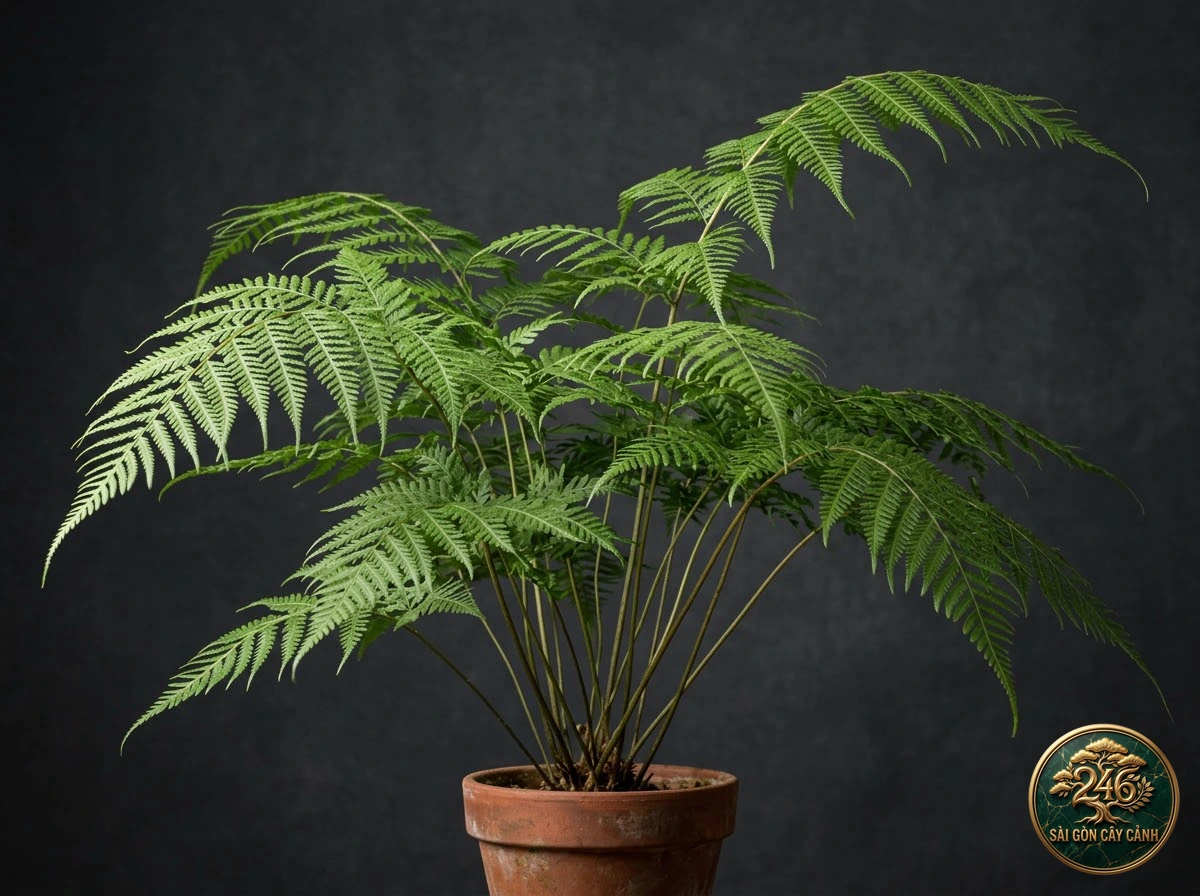
Australian tender brake fern Pteris tremula featuring luminous pale green fronds that flutter gracefully in the gentlest breeze upon slender chestnut-brown stipes, 2- to 3-pinnate foliage forming an airy botanical cloud.
The morphological architecture of Pteris tremula showcases specialized adaptations for low-light forest environments. The petiole and venation patterns maximize light interception while optimizing moisture retention during drier seasonal intervals.
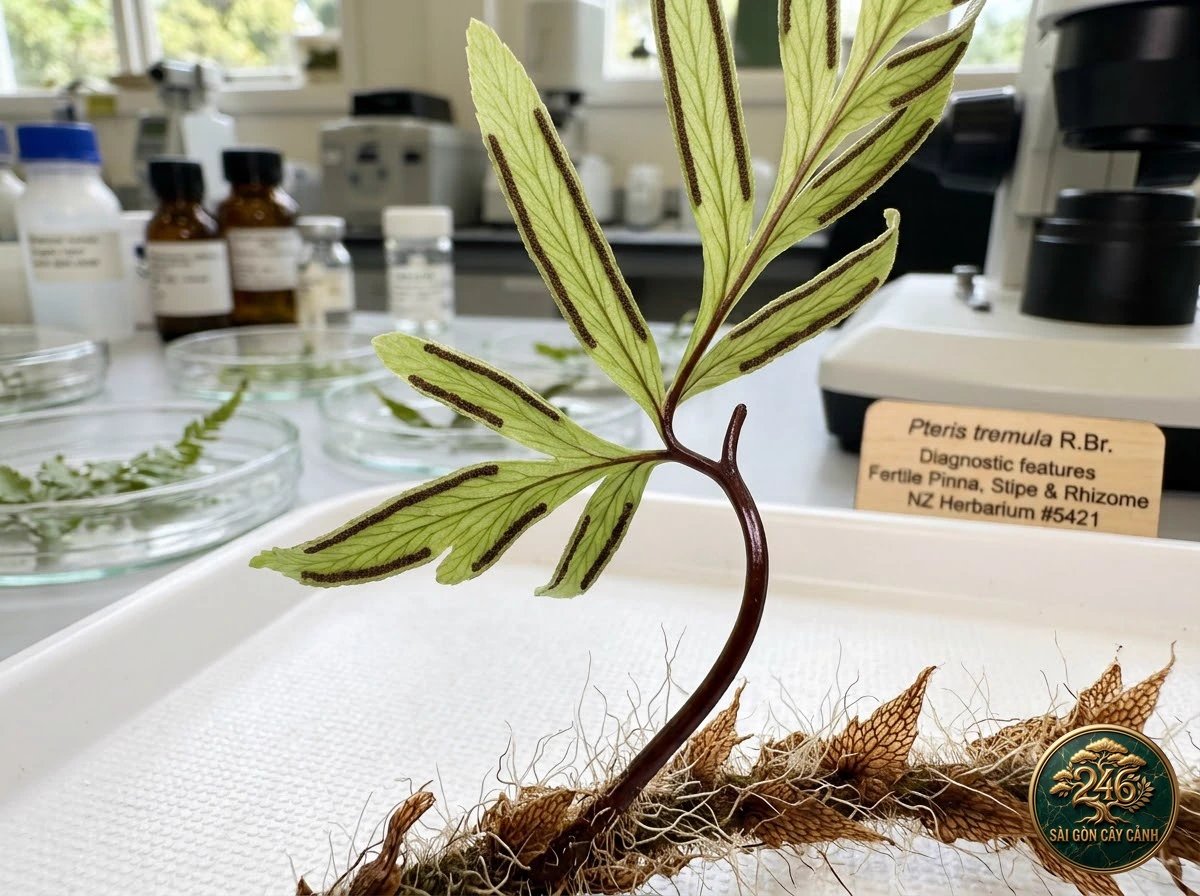
The reproductive sori structures situated along the frond undersides feature robust indusial protection, ensuring long-term spore viability across varying climatic conditions.
3. Photobiology & Light Requirements
Gentle diffused daylight to dappled shade (2,500 – 5,000 lux).
Photosynthetic efficiency peaks under filtered diffused daylight. Direct midday sun exposure causes foliar scorching and dehydration, whereas insufficient light causes stipes to elongate unnaturally with reduced vigor.
4. Irrigation Protocol & Moisture Dynamics
Even moisture throughout root zone; avoid stagnant saucer water.
Always inspect the topsoil moisture layer prior to application. Use dechlorinated water, rainwater, or reverse osmosis water to prevent mineral salt toxicity that leads to brown tip necrosis.
5. Substrate Formulation & Root Aeration
Aged leaf compost, horticultural pumice, sphagnum fiber, fine pine bark.
The root system requires an open, humus-rich substrate structure that maintains uniform capillary moisture while facilitating abundant gaseous exchange to prevent root hypoxia and fungal pathogens.
6. Temperature & Microclimatic Humidity
Optimal ambient temperature ranges between 16°C – 30°C., with ambient relative humidity maintained at 65% – 85%..
In air-conditioned environments, deploy pebble humidity trays or ultrasonic cool-mist humidifiers to preserve delicate foliar integrity.
7. Nutrition & Bio-Fertilization Strategies
Administer balanced organic liquid fertilizers at 1/4 to 1/2 strength monthly throughout active growth phases. Avoid heavy synthetic mineral salts that induce osmotic root burn.
8. Pruning, Sanitation & Propagation
Prune aging or damaged fronds near the base using sterilized botanical shears. Propagation is achieved through rootball divisions during early spring or spore cultivation under controlled humid chambers.
9. Integrated Pest Management & Troubleshooting
Scout regularly for mealybugs, scale insects, and spider mites during low-humidity periods. Apply organic cold-pressed neem oil or horticultural insecticidal soaps for proactive control.
| Observed Symptom | Underlying Etiology | Remedial Corrective Action |
|---|---|---|
| Frond pinnules turn crispy brown and desiccated at margins | Ambient humidity drops below 50% or severe root desiccation | Elevate ambient humidity via pebble trays, relocate away from AC drafts, and hydrate root zone |
| Basal stipes turn translucent yellow, soft and decaying | Substrate waterlogging inducing hypoxic crown and rhizome rot | Withhold water for 5-7 days, unclog drainage holes, excise decaying stipes, and aerate medium |
| Fronds emerge pale washed-out green with spindly stipes | Chronic photosynthetic light deficiency (under 800 lux) | Relocate closer to filtered morning light window or deploy supplemental LED horticultural lights |
| Fine stippling and minute webbing on pinnule undersides | Spider mite infestation accelerated by dry, stagnant air | Wash foliage with gentle tepid spray, apply organic cold-pressed neem oil emulsion weekly |
| White cottony wax deposits clustered at basal petiole sheaths | Mealybug sap-feeding colonies | Spot-treat using cotton swabs dipped in 70% alcohol; spray natural horticultural mineral oil |
10. Toxicity Profile & Pet Safety (ASPCA Standards)
Non-toxic to cats and dogs.
Validated safe for interior residential placement around cats and dogs according to ASPCA non-toxic plant references.
11. Interior Styling & Architectural Landscape Design
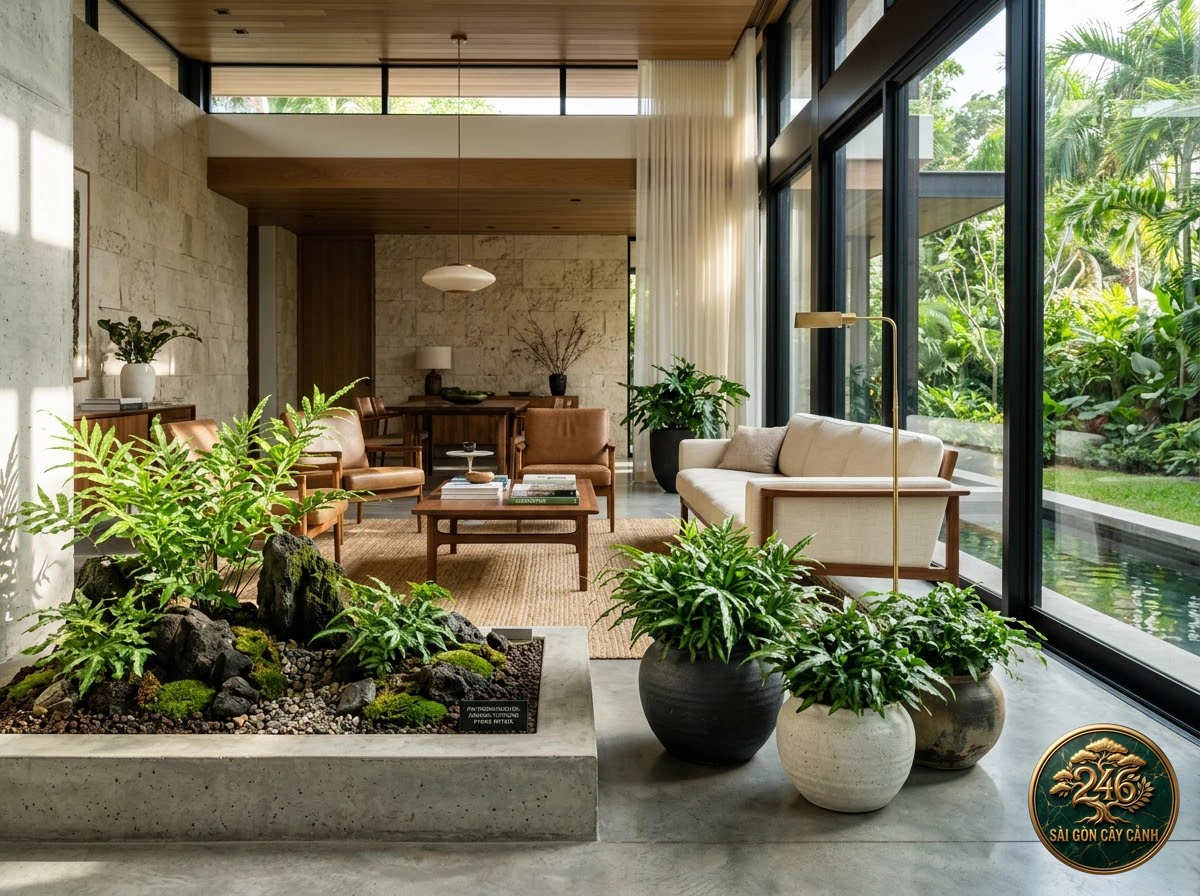
With its architectural posture and delicate botanical texture, Pteris tremula serves as an exceptional focal point in ceramic floor planters, residential courtyards, and tranquil wellness spaces.
12. Common Horticultural Pitfalls
- Overwatering in heavy soil: Results in anaerobic root rot and rapid foliar collapse.
- Direct sun exposure: Bleaches frond pigmentation and crisps margins.
- Dry draft exposure: Arid air causes tip browning and foliage shedding.
- Excessive fertilizing: Accumulates fertilizer salts, damaging tender roots.
Nursery Care Journal & Living Greenery Moments
At Saigon Cay Canh greenhouse, each photograph captures genuine everyday care moments between plant lovers and living greenery, spreading a passion for nature and green-living inspiration.

13. Frequently Asked Questions (Botanical FAQs)
Can this plant thrive in air-conditioned interiors?
Yes, provided indirect light is abundant and humidity is supplemented using pebble trays or humidifiers away from direct cold drafts.
How frequently should repotting take place?
Repot every 18 to 24 months during early spring when root structures fill the container volume.
How can one keep fronds lush and vibrant green?
Maintain humidity above 70%, wipe foliar dust gently, and provide gentle filtered light.