
Living plant profile
Tuberosum caladium
Caladium tuberosum
Comprehensive botanical dossier for Tuberosum caladium (Caladium tuberosum). Identification, lighting calibration, porous substrate formulation, and cultivation guide by Saigon Cay Canh.
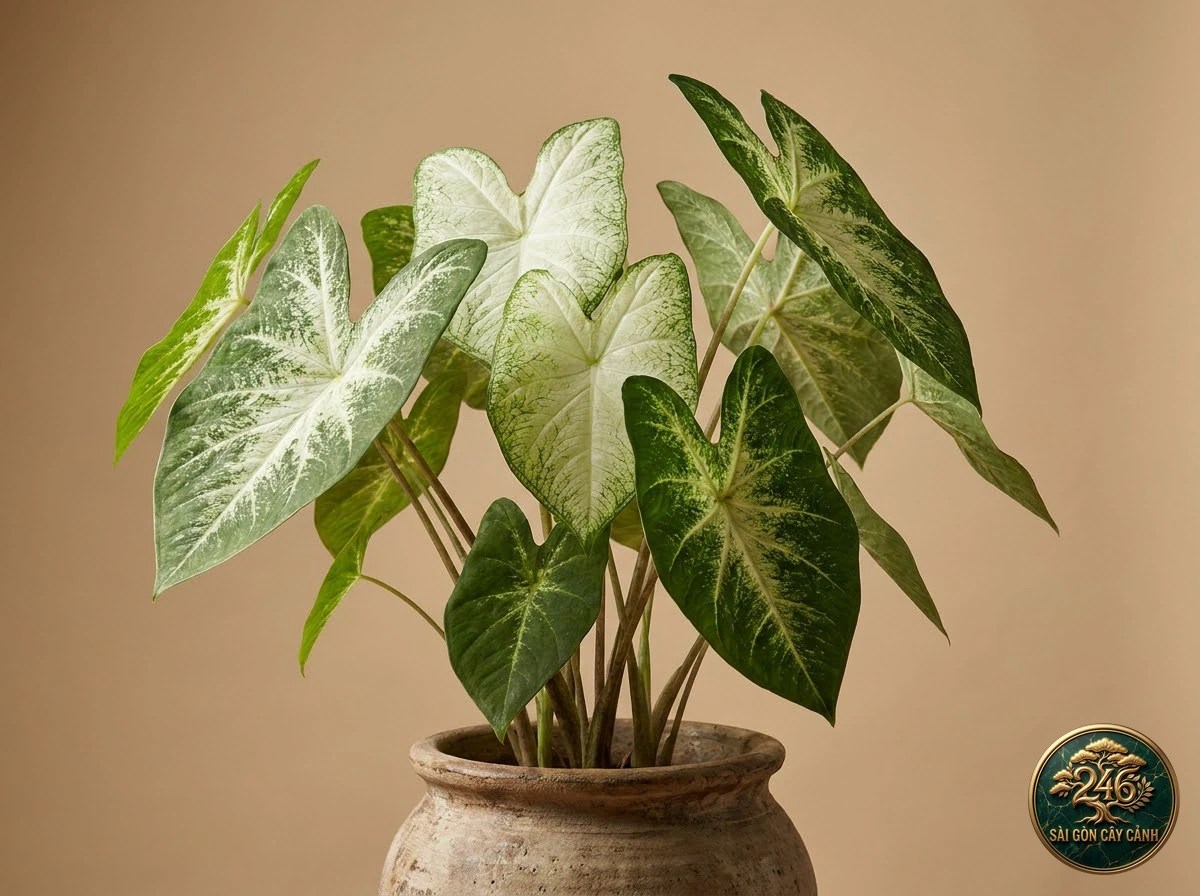
Tuberosum caladium (Caladium tuberosum) is an aristocratic South American geophyte celebrated for its distinctly spherical subterranean tubers and expansive heart-shaped foliage. Adorned with soft blush-pink washes radiating through deep jade-green matrices, this botanical specimen imparts graceful neoclassical elegance to indoor plant collections.
1. Core Botanical Taxonomy & Cultural Specifications
| Scientific Name | Caladium tuberosum |
|---|---|
| Botanical Family | Araceae (Aroid Family) |
| Native Distribution | Tropical rainforest slopes and limestone valleys of Brazil and Venezuela |
| Growth Demeanor | Tuberous geophyte developing pronounced spherical tubers, dense clumping habit, winter deciduous |
| Lighting Threshold | Bright filtered illumination (1,600 – 2,800 lux); shields papery foliage from scorching rays |
| Hydration Cadence | Evenly moist during active foliage flush; halt irrigation completely during winter rest |
| Substrate Formulation | 40% medium pumice, 25% composted pine bark chips, 20% sphagnum coir, and 15% perlite |
| Thermal Range | 22°C – 31°C (72°F – 88°F; vegetative vigor ceases below 16°C/60°F) |
| Relative Humidity | 70% – 85% (Elevated atmospheric humidity preserves foliar turgor and undulating margins) |
| Cultivation Difficulty | Moderate (Requires understanding seasonal tuber resting phase and precise moisture tapering) |
| Pet Safety Profile | Toxic (Microscopic insoluble calcium oxalate crystals cause oral burning in pets) |
Formally recognized within taxonomic archives of the Royal Botanic Gardens Kew (POWO), Caladium tuberosum takes its specific epithet from its strikingly globose, well-defined subterranean tubers. Thriving naturally upon well-drained hillsides and limestone valleys across tropical South America, it establishes robust fibrous root systems anchored within fertile organic pockets.
The spherical tuber exhibits rough, grayish-brown cortex with multiple apical vegetative eyes evenly spaced across its upper dome, enabling synchronized petiole emergence that generates a harmoniously balanced hemispherical clump thirty to forty-five centimeters high.
During tropical dry seasons, the plant executes an adaptive survival mechanism by translocating all foliar moisture and carbohydrates into the subterranean tuber, entering physiological stasis beneath forest soils until vernal rains trigger renewal.
2. Morphological Identification & Foliar Architecture
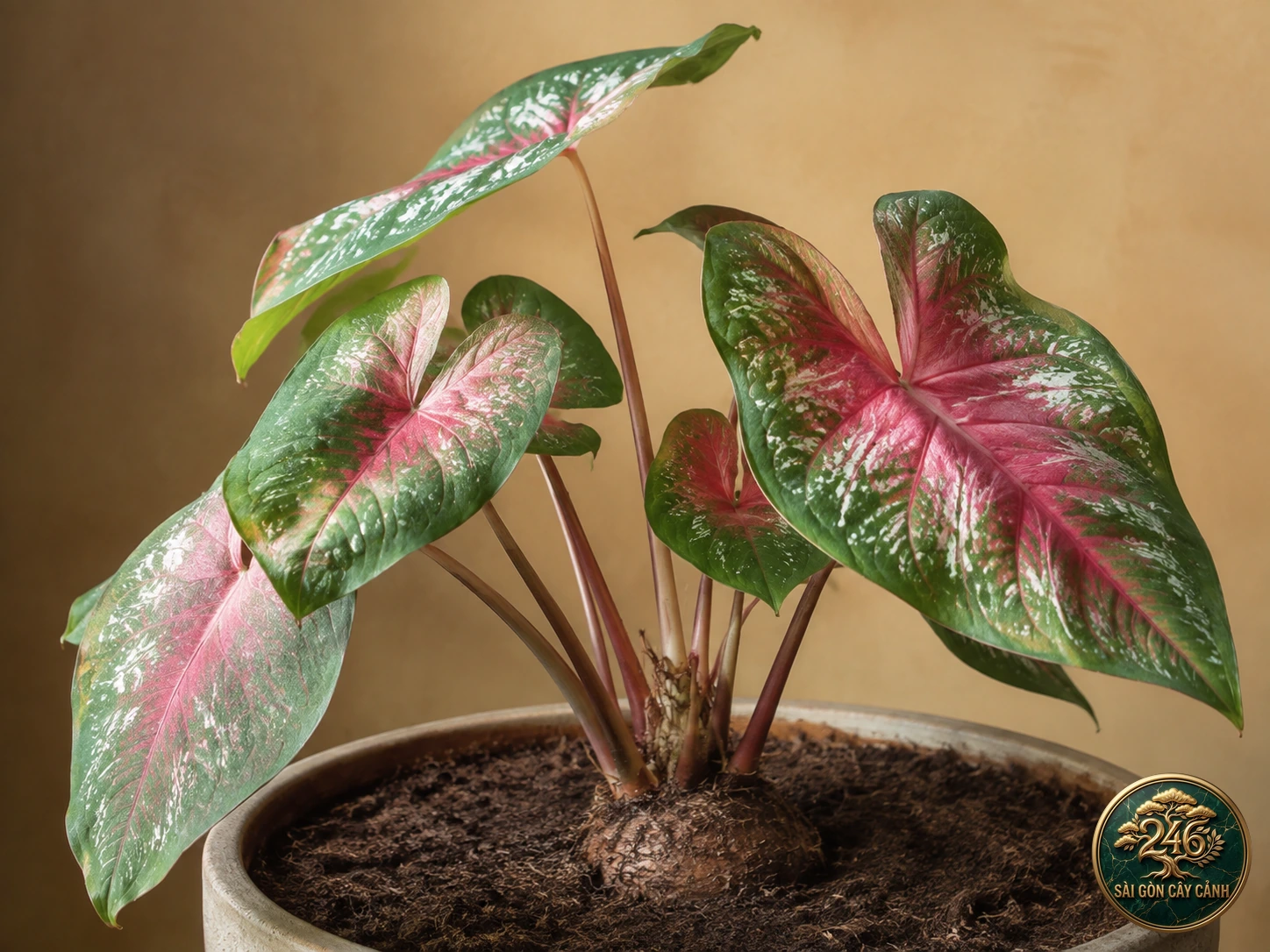
The lamina of Tuberosum caladium displays a broadly cordate outline measuring 18 to 28 cm, with gently undulating margins and a delicately reflexed apex. Its chromatic signature features pastel blush-pink or rosy flushes diffusing gracefully along primary veins into rich jade-green margins.
The foliar blade is delicate yet resilient, backed by a pale abaxial surface revealing pronounced structural venation. Petioles are bright green and erect, sheathed firmly at their bases to provide steady structural balance.
Cellular anatomy of Caladium tuberosum reveals expansive cordate blades reinforced by an intricate reticulate venation grid, endowing thin laminar tissues with structural resistance against heavy rainfall. The central blush-pink flush is formed by water-soluble vacuolar pigments that shimmer dynamically under varying angles of ambient illumination.
3. Photometric Calibration & Window Exposure Optimization
Diffused daylight between 1,600 and 2,800 lux provides the ideal photosynthetic window for Tuberosum caladium. Soft filtered illumination preserves tender blush-pink tones without scorching thin foliar tissues. Unfiltered midday sun must be strictly avoided.
Under lighting deficits, central pink flushes fade into dull green, while petioles stretch weakly. Positioning plants near east or southeast-facing windows with sheer curtains yields superior coloration.
Photosynthetic equilibrium stabilizes when the plant receives filtered illumination between 1,800 and 2,600 lux. Diffuse lighting promotes expansive laminar development in broad cordate blades, creating an umbrella-like canopy across the container rim.
4. Geophytic Tuber Dynamics & Dormancy Phenology
During vigorous spring and summer flushes, saturate the root ball thoroughly whenever the top two centimeters of mix become dry to the touch. Ensure total moisture percolation through the root zone without bottom stagnation.
As leaves undergo synchronized yellowing in late autumn, systematically reduce irrigation and cease watering completely once foliage collapses, allowing the spherical tuber to rest safely in dry medium.
The biological comfort range spans 22°C to 31°C. The plant exhibits zero frost tolerance; temperatures below 16°C trigger immediate translocation of foliar nutrients into the tuber and initiate dormancy.
Atmospheric humidity should remain steady at 70% to 85%. Elevating ambient moisture using gravel humidity trays or humidifiers shields expansive foliar blades from edge desiccation.
Adapted to tropical limestone valleys, Tuberosum caladium thrives when subterranean substrate temperatures remain between 23°C and 28°C. Avoid applying chilly irrigation water, as thermal shock stunts active root meristems.
Throughout seasonal dormancy spanning from late autumn through late winter, relocate resting containers into dry, wind-sheltered quarters maintaining steady ambient temperatures between 20°C and 24°C (68°F – 75°F). Lifting tubers is unnecessary provided the substrate remains bone-dry; simply suspend all watering entirely and shield pots from stray air-conditioner drips or humidity leaks.
5. Engineered High-Porosity Substrate Formulation
An optimal porous substrate blend contains 40% medium pumice, 25% aged pine bark chips, 20% composted sphagnum moss, and 15% coarse perlite. This mineral-dominant aggregate mix ensures excellent aeration around resting spherical tubers.
A buffered pH between 5.5 and 6.5 facilitates balanced micro-nutrient absorption throughout active growth.
The spherical subterranean tuber demands an airy root substrate providing instantaneous water drainage. Horticultural pumice (3-6mm) blended with composted pine bark creates abundant subterranean air pockets, ensuring continuous oxygen access around the tuber skin and preventing fungal rot.
6. Organic Bio-Fertilization & Mineral Management
Apply diluted organic liquid fertilizer monthly through warm months, emphasizing potassium and phosphorus to promote substantial tuber sizing and foliar luster.
Suspend all fertilizer applications completely once autumn yellowing begins, keeping feeding suspended throughout dormancy.
Starch storage inside the spherical tuber of Caladium tuberosum requires natural potassium and phosphorus during the latter half of the vegetative cycle. Applying diluted fermented banana bio-extract every three weeks plumps the subterranean tuber, priming vigorous bud emergence in spring.
7. Clinical Diagnostic Matrix & Horticultural Resolutions
| Clinical Symptom | Root Pathology | Diagnostic Method | Targeted Resolution |
|---|---|---|---|
| Synchronized foliar collapse in winter | Natural seasonal tuber dormancy transition | Prune withered foliage, halt watering, store dry in cool room | Normal biological phenology |
| Faded foliar coloration, loss of pink | Insufficient diffused daylight below 1,000 lux | Move closer to bright filtered window receiving 2,000 lux or add LED lights | Pigment degradation |
| Soft, foul-smelling subterranean tuber | Fungal rot from prolonged water stagnation | Excise decayed tissue, sanitize healthy tuber sections, transfer to dry pumice | Lethal tuber rot |
| Crisp, curling margins along leaf edges | Ambient atmospheric humidity below 60% | Deploy ultrasonic humidifier to maintain >70% humidity, block cold drafts | Foliar desiccation |
8. Pest Mitigation Protocols & Foliar Sanitation
Manage spider mites and mealybugs by routinely wiping abaxial surfaces and applying preventive monthly neem oil sprays.
Tuber rot from fungal pathogens arises strictly in waterlogged soil; maintain high aggregate porosity to prevent rot.
To prevent fungus gnat larvae from damaging the outer skin of the spherical tuber, mulch the potting surface with a 1 cm layer of fine pumice or expanded clay pebbles. This dry mineral barrier denies adult gnats access to moist oviposition sites.
9. Asexual Propagation Methodology
Propagate by harvesting daughter offsets or sectioning spherical parent tubers in early spring. Use a sterile razor to slice tuber fragments retaining viable eyes, air-drying cuts in shade for twenty-four hours.
Nestle tuber sections into warm, damp nursery media; fresh vegetative shoots sprout within two to three weeks.
Sanitation maintenance for Tuberosum caladium involves excising senescing basal leaves cleanly with sterilized shears. Wiping wide blades with damp microfiber cloths in early morning clears domestic dust, optimizing stomatal respiration and deterring opportunistic pests.
10. Veterinary Toxicology & Domestic Safety Safeguards
Display containers upon elevated shelving or plant stands safely out of reach of household pets.
11. Biophilic Interior Design & Architectural Styling
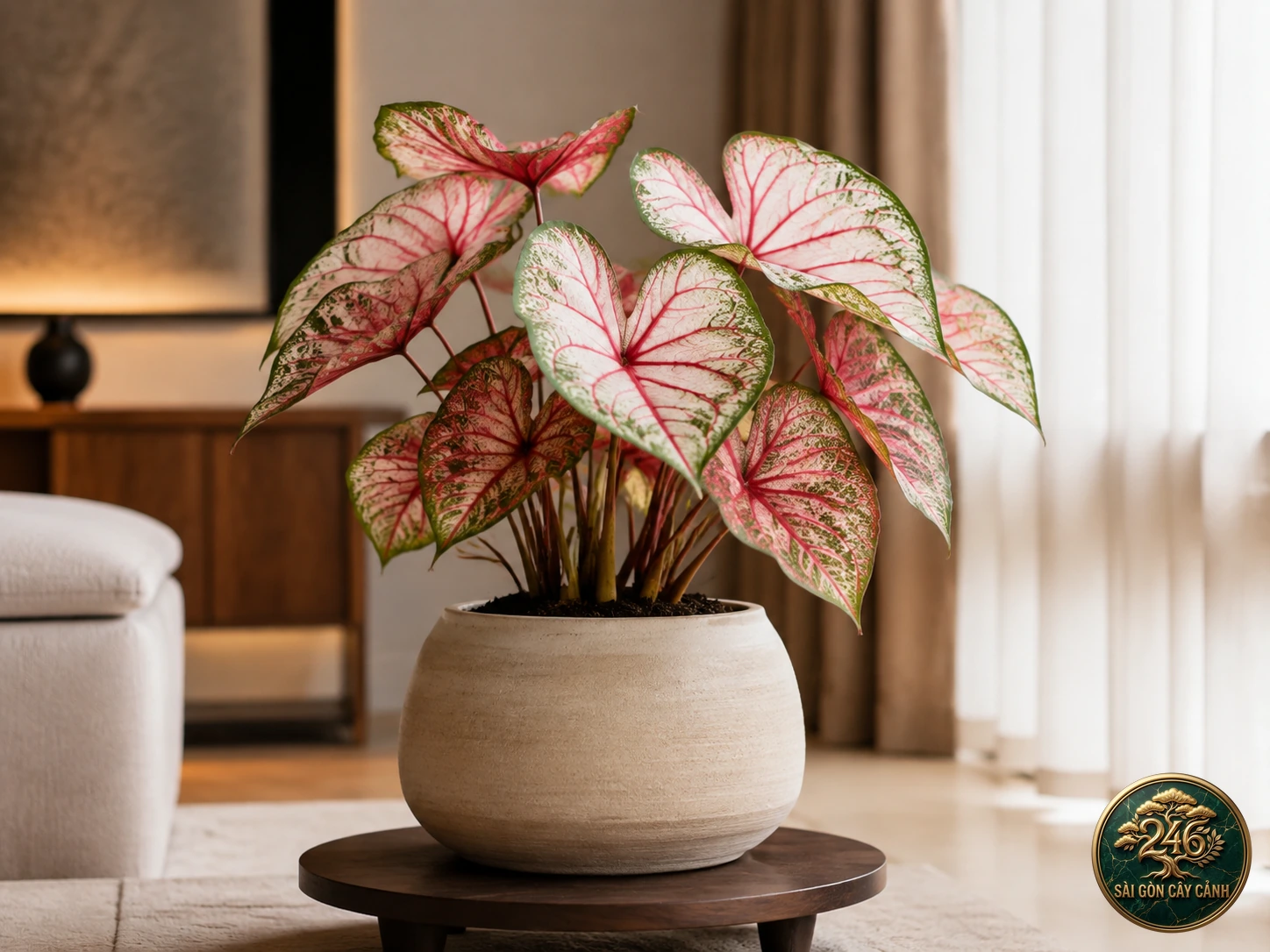
With its expansive heart-shaped silhouette and gentle blush-pink hues, Tuberosum caladium serves as an elegant living accent for living rooms, executive offices, and contemplative spaces. It pairs seamlessly with textured stoneware or rustic terracotta planters.
Its gracefully mounded canopy provides visual relaxation and Biophilic balance in contemporary urban settings.
Within Biophilic interior design, Tuberosum caladium radiates harmonious botanical fullness with its broadly mounded, blush-pink cordate canopy. It shines with understated luxury in neutral stoneware or pale concrete planters, enlivening executive desks and private reading lounges.
12. Master Cultivation Axioms
Three master horticultural axioms for cultivating resilient Tuberosum caladium specimens:
- Hydration axiom: Sustain consistent moisture throughout active vegetative flushes and cease watering entirely when foliage collapses for dormancy.
- Illumination axiom: Deliver bright diffused illumination between 1,600 and 2,800 lux, shielding broad leaves from harsh direct sun.
- Sanitation axiom: Maintain ambient warmth above 22°C (72°F) and relative humidity over 70% to preserve foliar turgor and vitality.
13. Frequently Asked Botanical Questions (FAQs)
How long does Tuberosum caladium dormancy last?
Dormancy typically spans two to three months in cooler conditions. When warm vernal temperatures above 22°C (72°F) return, tubers awaken and produce fresh foliage.
How often should daughter tubers be separated?
Separate daughter offsets only during early spring repotting when offsets have formed independent roots and parent clumps become crowded.
How can I maximize mature foliar blade sizing?
Deliver bright diffused daylight between 2,000 and 2,800 lux, sustain steady moisture, and apply potassium-rich organic nutrition monthly during active flushes.
Can this species thrive on sheltered balconies?
Yes. Sheltered east-facing balconies receiving gentle morning light provide an exceptional growing environment.
Will handling the tubers irritate human skin?
Intact dry tuber skin is harmless, but handling damaged moist tissue releasing sap may cause mild skin tingling; wear gloves during repotting.
How deeply should the spherical tuber of Caladium tuberosum be planted?
Avoid planting excessively deep. Settle the tuber 3 to 5 cm beneath the substrate surface with apical growth eyes directed upward. Excessively deep placement delays shoot emergence and heightens rotting risks.