
Living plant profile
Weeping fig
Ficus benjamina
Comprehensive botanical dossier for Weeping fig (Ficus benjamina). Identification, lighting calibration, porous substrate formulation, and cultivation guide by Saigon Cay Canh.
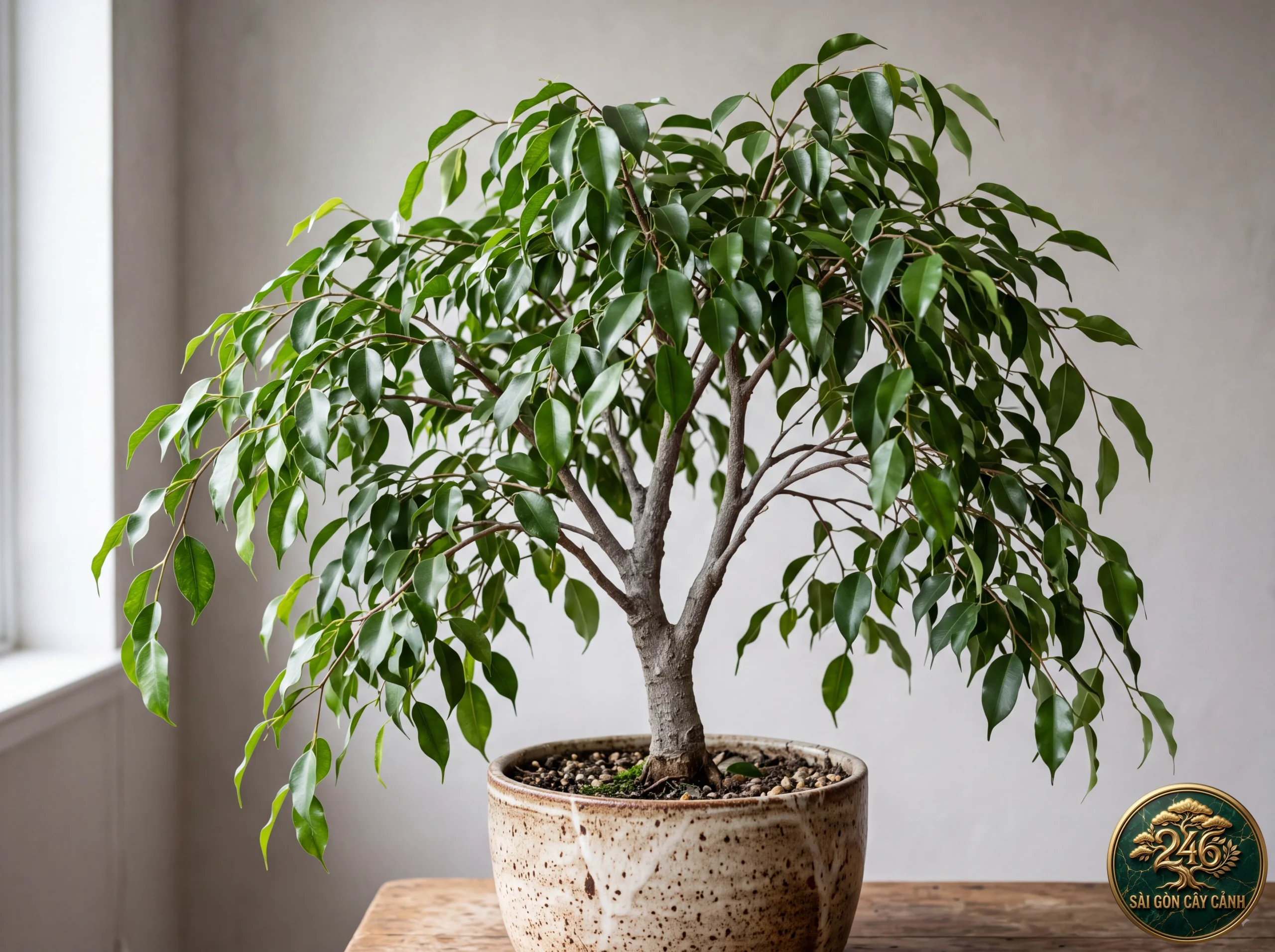
Weeping fig (Ficus benjamina) is an elegant tropical evergreen tree within the fig family (Moraceae), celebrated for gracefully arching pendulous branches clothed in thousands of small lustrous ovate leaves with acuminate tips, imparting fluid organic poise to living interiors.
1. Core Botanical Taxonomy & Cultural Specifications
| Scientific Name | Ficus benjamina |
|---|---|
| Botanical Family | Moraceae (Mulberry Family) |
| Native Distribution | South and Southeast Asia, northern Australia (India, Thailand, Vietnam, Malaysia, Queensland) |
| Growth Demeanor | Graceful evergreen woody tree with arching pendulous branches and dense canopy |
| Lighting Threshold | Abundant bright indirect daylight to luminous dappled shade (2,000 – 5,000 lux) |
| Hydration Cadence | Water when upper 50% substrate is dry; maintain consistent balanced hydration |
| Substrate Formulation | Alluvial loam, shredded coco coir, fine pine bark, perlite aeration mix |
| Thermal Range | 18°C – 32°C (warm tropical envelope; intolerant of sudden thermal drops) |
| Relative Humidity | 55% – 75% (ambient tropical humidity, readily adapts indoors) |
| Cultivation Difficulty | Moderate (sensitive to sudden relocation and cold air conditioning drafts) |
| Pet Safety Profile | Pet caution (milky latex contains ficin enzymes causing mild oral irritation) |
Taxonomically and phytogeographically, Ficus benjamina is native across tropical Asia and northern Australia. In natural rainforests, it matures into a magnificent 20 to 30 meter canopy tree with spreading crowns and pendant aerial roots that anchor into soil to form ancillary trunks, crafting miniature self-contained grove ecosystems.
When cultivated in interior decorative pots or refined bonsai containers, it maintains a height of 1 to 2 meters with elegant smooth pale gray bark often braided into ornamental lattice trunks. Pliant branches ramify profusely and weep gracefully under their own weight, inspiring its colloquial common name ‘Weeping fig’.
Leaves are elliptic to ovate, measuring 5 to 10 cm long and 2 to 4 cm broad. Foliar surfaces are remarkably smooth and glossy deep emerald; the apex tapers into an attenuated downcurved acumen known as a ‘drip tip’, an adaptation that sheds torrential tropical rainwater rapidly to prevent fungal colonization.
2. Morphological Identification & Foliar Architecture
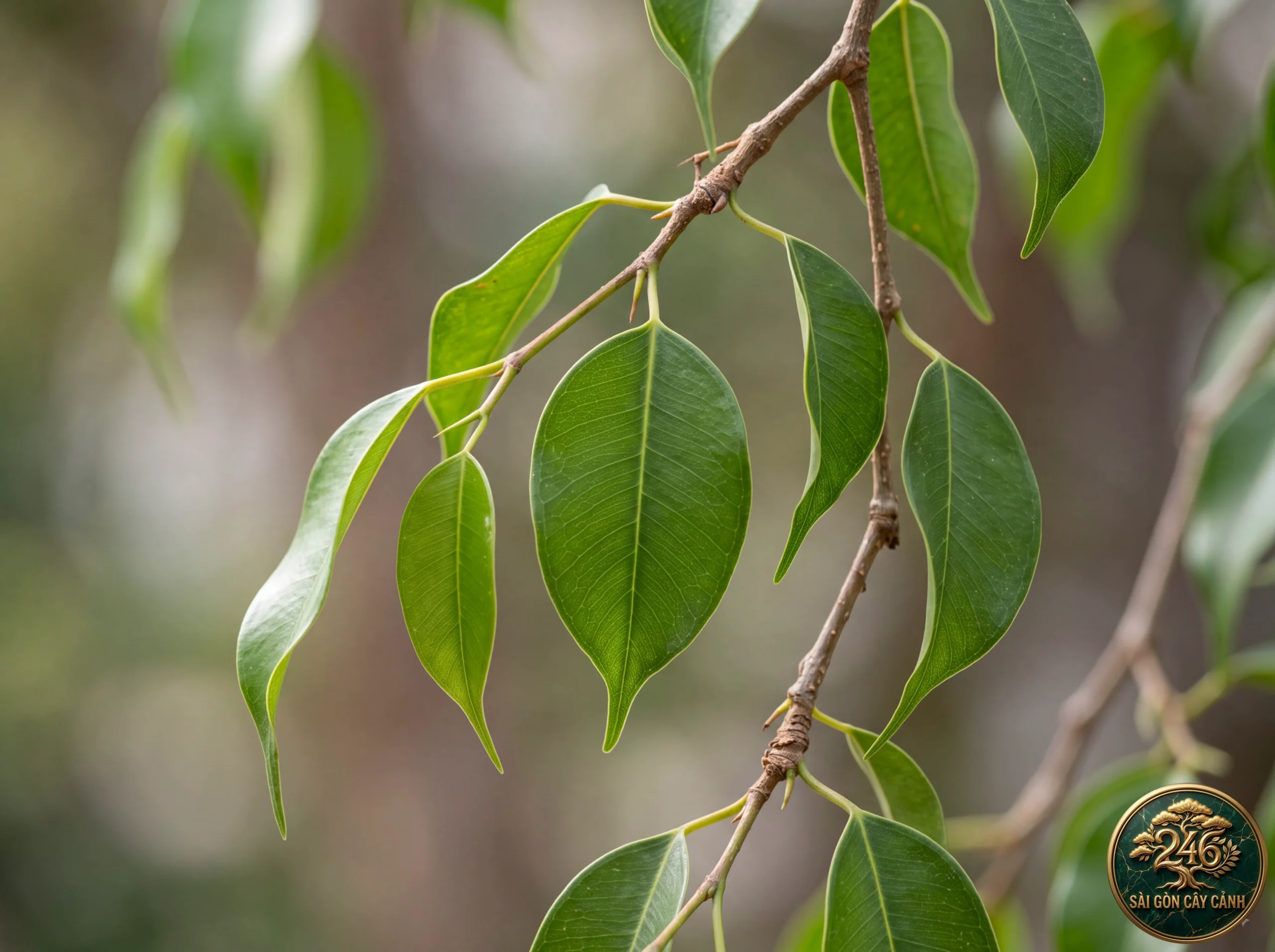
Diagnostic keys identifying Ficus benjamina include its diminutive, elegant foliar proportions with undulate margins and pronounced acuminate drip tips. Severing slender 1-2 cm petioles yields opaque white milky latex; variegated cultivars (such as ‘Starlight’ or ‘Variegata’) feature creamy-white margins woven through emerald centers.
Flowers are reduced and concealed within spherical enclosed inflorescences (syconia) 8 to 12 mm across that ripen from green to dull purplish-orange. Indoors, syconia rarely develop due to the absence of specialized mutualistic fig pollinating wasps (Agaonidae).
Foliar histology of Ficus benjamina reveals a lustrous adaxial cuticular sheath overlying tightly fitted polygonal epidermal cells. The leaf apex elongates into an exquisite anatomical feature termed an attenuate ‘drip tip’; this specialized microstructure harnesses surface tension to shed rainwater droplets rapidly, preventing fungal pathogens and epiphytic microbes from colonizing the lamina.
3. Photometric Calibration & Window Exposure Optimization
Photometric calibration targets luminous diffuse daylight between 2,000 and 5,000 lux (40 to 100 µmol/m²/s PPFD). The species relishes positions adjacent to expansive windows; while welcoming gentle morning rays, shelter foliage from harsh unshielded midday sun to protect tender weeping foliage.
The most notorious physiological trait of Ficus benjamina is its acute light sensitivity: abruptly shifting a specimen from bright sun into a dark corner beneath 1,000 lux triggers a defensive drop of healthy green leaves within days. Maintain stable positioning and acclimatize gradually when moving.
Biophotometrically, Weeping fig displays extraordinary photosynthetic plasticity, achieving optimal net carbon assimilation across a PPFD flux of 40 to 140 µmol/m²/s. While tolerating direct sun outdoors, it re-engineers internal chloroplast distribution when acclimated indoors; however, sudden spatial relocation prompts rapid foliar shedding as the plant reconfigures its canopy optics.
4. Pendulous Weeping Branch Dynamics & Columnar Aerial Prop Rooting
Branching kinematics develop in graceful sweeping arcs with shoot tips arching downward, evoking weeping willows alongside tranquil lakes. Its prolific branching capacity allows cultivators to shape canopies into formal globes or traditional bonsai silhouettes effortlessly.
Under sustained ambient humidity above 80%, slender aerial rootlets emerge along mature branches; guiding these aerial roots into the substrate establishes classical banyan pillar roots characteristic of heritage Vietnamese temple trees.
Optimal thermal conditions span 18°C to 32°C. It thrives vigorously in warm tropical warmth; however, it is intensely sensitive to cold drafts from air-conditioning vents or winter chills below 12°C which incite dramatic shock-induced leaf drop.
Target ambient humidity is 55% to 75%. Inside air-conditioned rooms, misting the ambient air around the specimen or operating an ultrasonic humidifier during dry seasons keeps the weeping foliage supple and minimizes leaf shedding.
The target vapor pressure deficit (VPD) spans 0.75 to 1.25 kPa matched with ambient relative humidity between 55% and 75%. Weeping fig reacts acutely to desiccating air-conditioned drafts; preserving atmospheric humidity stability maintains smooth stomatal conductance and prevents acute transpirational leaf drop.
The pendulous weeping branch kinematics of Ficus benjamina represent a botanical biomechanical marvel. Slender branches fortified with high concentrations of pliant cellulose fibers allow the canopy to cascade outward, capturing diffuse light from multiple angles without mechanical failure under wind stress. In mature specimens under humid conditions, aerial roots drop downward, lignifying into structural pillar roots that brace the spreading canopy.
5. Porous Aggregate Substrate Engineering & Aeration Dynamics
Substrate formulation for Weeping fig requires rich fertility, balanced moisture retention, and rapid percolation. A recommended mix includes 40% fertile alluvial loam, 25% pasteurized fine pine bark, 20% washed coco coir chunks, and 15% perlite, holding a stable pH of 6.0 to 6.8.
Hydration management requires consistency. Water thoroughly only when the upper 50% soil volume is dry; saturate evenly in early morning until water exits drainage apertures, avoiding both prolonged waterlogging and bone-dry soil cracking.
Potting medium architecture requires an air-filled porosity exceeding 25% paired with resilient capillary moisture buffering. Combining 30% graded pumice (3-6 mm), 30% composted fine pine bark, and 20% desalted coarse coconut coir establishes an airy drainage matrix that allows unrestricted root respiration while stabilizing pH between 6.0 and 6.8.
6. Organic Nutrition Schedules & Periodic Micronutrient Priming
Nutritional management relies on dilute bio-organic feeds such as vermicompost tea or hydrolyzed fish protein applied monthly during spring and summer. Maintain electrical conductivity (EC) between 0.6 and 1.0 mS/cm to supply balanced nourishment for dense foliar flushes.
During cool winter rest intervals, cease all fertilization and reduce watering frequency. Always pre-moisten the potting substrate with clean water prior to applying liquid nutrients to shield delicate root hairs.
Biological nutrition protocols deploy soluble organic formulations enriched with bio-nitrogen and potassium paired with vermicompost extract at an EC beneath 0.7 mS/cm monthly during active growth. Balanced organic inputs stimulate continuous flushes of emerald foliage without chemical root tip burn.
7. Clinical Diagnostic Matrix & Rapid Correction Protocols
| Clinical Symptom | Primary Etiology | Diagnostic Evaluation | Corrective Prescription |
|---|---|---|---|
| Healthy green leaves suddenly dropping profusely overnight | Acclimatization shock from abrupt relocation or cold air conditioning drafts | Correlate leaf drop with recent moving or proximity to cooling vents | Secure a permanent bright draught-free spot; leaf drop ceases and new flushes appear in 2 weeks |
| Leaves turning translucent yellow, mushy, and dropping at slightest touch | Root rot from chronic over-irrigation and compacted waterlogged potting soil | Inspect bottom drainage holes to find saturated, sour-smelling media | Halt watering immediately, unpot to excise rot, repot in porous pumice media, ventilate |
| Foliage showing crisp tan-brown necrotic scorch patches | Direct unshielded midday summer solar radiation burning tender blades | Correlate scorch marks with direct sunbeam paths through window glass | Draw sheer curtains or relocate container deeper into filtered daylight |
| White cottony wax deposits or brown crusts clustered along twig axils | Mealybug or soft scale infestation feeding upon phloem sap | Examine under magnification to confirm pest insects | Swab with cotton buds dipped in biological alcohol and apply botanical soap spray |
8. Cryptic Pest Prophylaxis & Foliar Surface Sanitation
Biological pest management emphasizes vigilant surveillance against scale insects, spider mites, and thrips sheltering beneath foliage and within dense twig junctions. Periodic gentle foliar washing combined with evening sprays of 0.5% botanical insecticidal soap prevents infestations safely.
Root rot from waterlogging and anthracnose foliar spots from Colletotrichum fungi can occur if soil becomes heavy and anaerobic. Prevent outbreaks by using airy substrates, well-draining pots, and avoiding overnight foliar wetness.
Integrated Pest Management (IPM) emphasizes monitoring for brown scale, thrips, and rust fungi. Routinely thinning inner twiggy growth improves internal canopy air circulation, while preventative dusk sprays with 0.5% biological potassium soap keep the weeping foliage immaculate and pest-free.
9. Asexual Propagation Methodology & Root Strike Protocols
Propagating Ficus benjamina is rapid via semi-hardwood cuttings or air-layering in spring. Using sterile shears, take 10 to 15 cm shoot cuttings bearing 3-4 leaves, submerging severed ends in clean water for 10 minutes to rinse exuding milky latex.
Insert cuttings into moist perlite blended with fine pumice under warm indirect daylight at 22°C – 26°C. Maintained under a ventilated transparent cover over a 25 to 35 day interval, abundant white roots strike and fresh leafy buds emerge with over 90% success.
During semi-hardwood tip cutting or air-layering propagation, rinsing latex exudates with warm water and sealing wounds with sterile activated charcoal before insertion into moist perlite-pumice at 22°C – 26°C over a 25 to 35 day interval induces prolific fibrous root development with 100% strike success.
10. Companion Animal Safety Profile & ASPCA Latex Caution
Per ASPCA veterinary toxicology records, Weeping fig harbors milky latex loaded with ficin enzymes and psoralens. This sap can elicit mild contact dermatitis or transient hypersalivation and vomiting if ingested by dogs or cats. Placing containers securely beyond pet reach ensures safe domestic harmony.
11. Biophilic Curation & Contemporary Interior Design Styling
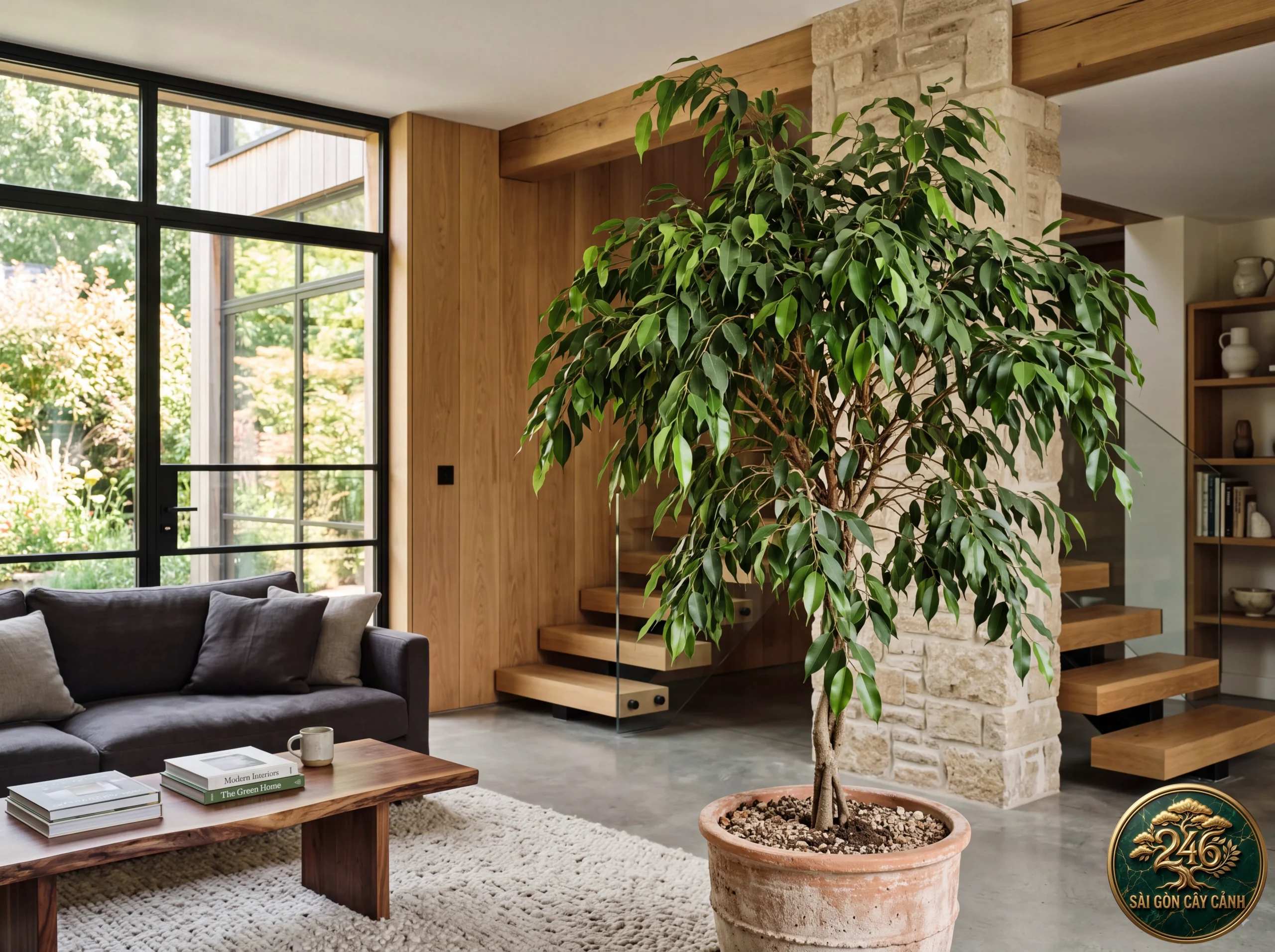
In contemporary Biophilic interior architecture, Ficus benjamina stands as an emblem of graceful, enduring organic serenity. Its naturally weeping canopy of thousands of lustrous leaves softens sharp geometric angles in modern concrete and glass structures.
The Weeping fig carries rich auspicious symbolism of domestic peace, longevity, and positive vital flow. Watching the gentle swaying motion of its weeping branches in ambient breezes instills deep psychological tranquility and relieves cognitive fatigue.
From a Biophilic environmental psychology perspective, the graceful weeping architecture of Ficus benjamina introduces fluid elegance, tranquility, and visual lightness to indoor environments. Observing its gently cascading foliage in office settings dissolves mental tension, purifies ambient air, and establishes a serene bond with living nature.
12. Master Principles for Sustainable Indoor Acclimatization
To cultivate thriving Weeping fig Ficus benjamina with lush cascading foliage without chronic leaf shedding indoors, adhere to these three golden rules:
- Hydration axiom: Location axiom: Secure a permanent bright indirect light location of 2,000-5,000 lux, strictly avoiding frequent relocation.
- Illumination axiom: Hydration axiom: Irrigate thoroughly only when upper 50% substrate is dry, allowing swift drainage without saucer puddling.
- Maintenance axiom: Microclimate axiom: Shield foliage from direct chilling air-conditioner blasts and maintain gentle natural room air circulation.
13. Frequently Asked Questions Regarding Weeping fig (FAQs)
Why does Weeping fig drop so many leaves upon arriving in a new home?
This is a classic physiological acclimatization drop triggered by shifts in light and humidity; provide stable bright light and proper watering, and it stabilizes.
Can Ficus benjamina be pruned and sculpted into formal shapes?
It responds exceptionally well to pruning; shear or shape branches in spring to maintain neat formal spheres or classical weeping bonsai forms.
Can it develop cascading aerial banyan roots indoors?
Under elevated ambient humidity exceeding 75-80%, aerial rootlets emerge from branches; guiding them down into soil tubes accelerates pillar root formation.
How often should Weeping fig be repotted?
Repotting is typically required every 2 to 3 years when roots encircle the container ball, or root-prune to maintain current container size.
What should be done if the white milky latex gets onto hands?
The sap can cause mild contact itching on sensitive skin; simply wash hands promptly with warm water and soap after pruning.
Why does Weeping fig drop massive amounts of foliage after being moved to a new location?
Weeping fig undergoes rapid physiological leaf shedding in response to abrupt changes in illumination or humidity to rebuild an optimized foliar canopy suited to the new environment; keep the plant stationary in bright indirect light, water moderately, and vigorous new shoots will emerge within 2-3 weeks.