
Living plant profile
Canna-leaf peace lily
Spathiphyllum cannifolium
Comprehensive botanical dossier for Canna-leaf peace lily (Spathiphyllum cannifolium). Identification, lighting calibration, porous substrate formulation, and cultivation guide by Saigon Cay Canh.
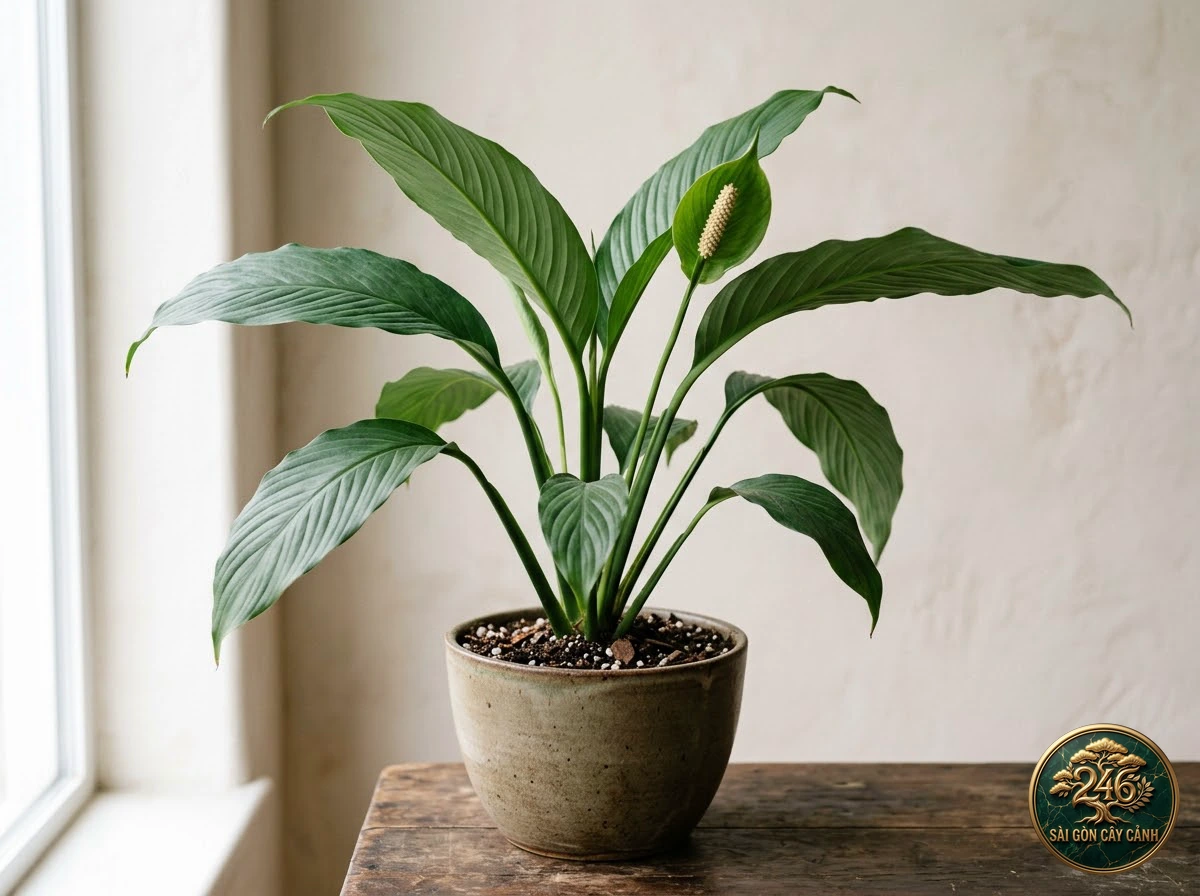
Canna-leaf peace lily (Spathiphyllum cannifolium) is an aristocratic Neotropical flowering aroid hailing from pristine South American riverbanks, distinguished by upright, leathery foliage reminiscent of canna leaves paired with nocturnal-fragrant creamy white spathes. Its structural elegance, air-purifying vitality, and architectural poise enrich modern interiors.
1. Core Botanical Taxonomy & Cultural Specifications
| Scientific Name | Spathiphyllum cannifolium |
|---|---|
| Botanical Family | Araceae (Aroid Family) |
| Native Distribution | Riparian lowland rainforests of Venezuela, Guyana, Suriname, and the island of Trinidad |
| Growth Demeanor | Robust erect terrestrial aroid forming dense clumps with thick, canna-like leathery foliage |
| Lighting Threshold | Steady diffused daylight (1,500 – 3,200 lux); thick foliage tolerates slightly higher illumination |
| Hydration Cadence | Hydrate when top 30% substrate dries; favors consistent capillary moisture without waterlogging |
| Substrate Formulation | 35% pumice, 30% composted fine bark, 20% washed coco coir chips, and 15% horticultural perlite |
| Thermal Range | 21°C – 31°C (70°F – 88°F; thrives in warm tropical indoors, ceases development below 16°C/60°F) |
| Relative Humidity | 65% – 85% (Elevated ambient humidity prolongs inflorescence longevity and preserves foliar turgor) |
| Cultivation Difficulty | Easy to Moderate (Resilient and reliable bloomer when provided ample filtered daylight) |
| Pet Safety Profile | Toxic (Contains insoluble calcium oxalate raphide crystals; position securely away from pets) |
Formally cataloged in the Royal Botanic Gardens Kew (POWO) repository, Spathiphyllum cannifolium represents an iconic riparian peace lily native to Amazonian-Guianan rainforest margins. The specific epithet ‘cannifolium’ directly describes its erect, broad-bladed foliage resembling members of the genus Canna.
The plant develops a robust, compact subterranean rhizome that branches horizontally to produce dense vegetative clumps with dozens of petioles ascending 50 to 90 cm. Each petiole is supported by a broad basal sheath and a flexible apical pulvinus, allowing blades to adjust phototropically beneath canopies.
Fibrous adventitious feeder roots spread shallowly through mineral-rich humic riverbanks. The root cortex features aerenchymatous lacunae that facilitate oxygen transport, endowing the root system with temporary flood resilience during tropical monsoonal overflow periods.
2. Morphological Identification & Foliar Architecture
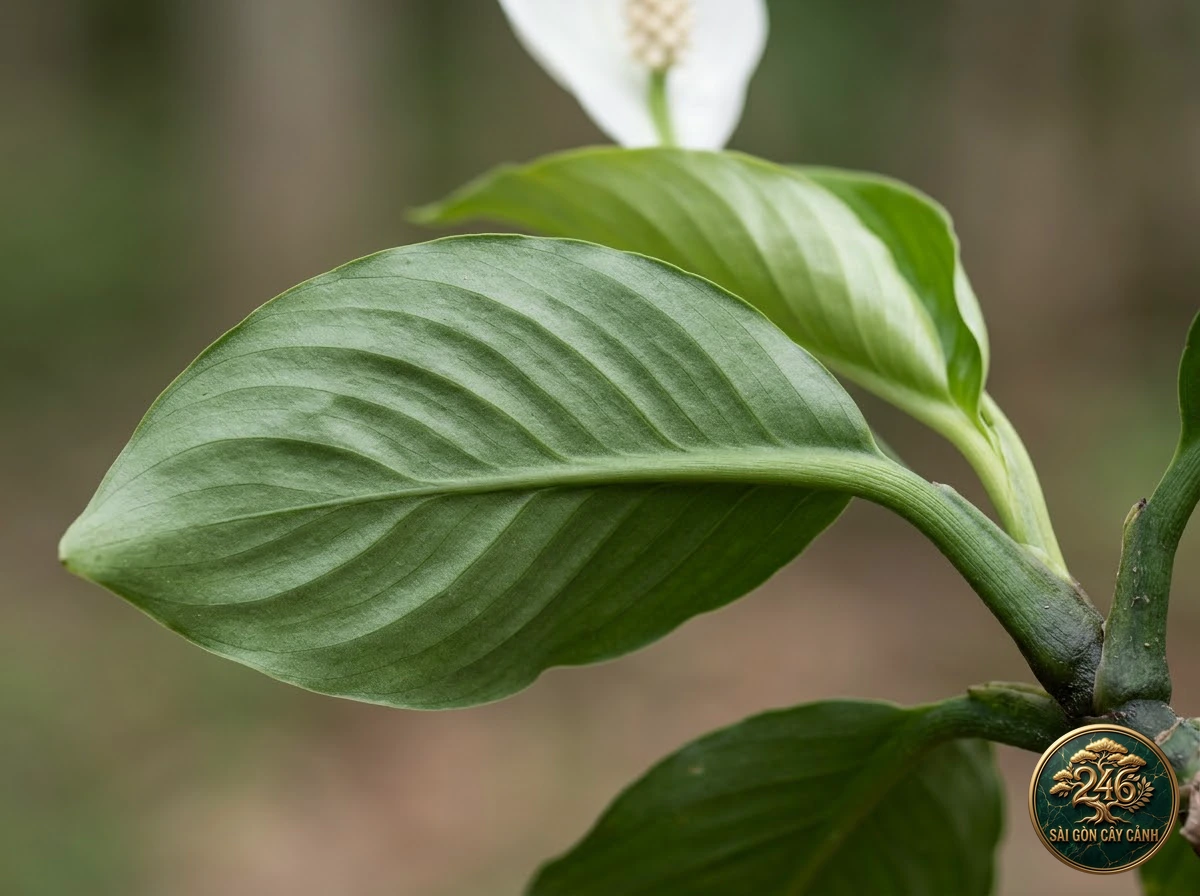
Foliar blades of Canna-leaf peace lily display an elongated elliptic to broadly lanceolate contour measuring 30 to 50 cm in length and 12 to 20 cm in width. Unlike flimsy domestic cultivars, its lamina is rigid, erect, and distinctly coriaceous, exhibiting a deep semi-matte forest-green adaxial surface.
The prominent midrib is deeply keeled beneath, supported by densely parallel lateral veins that impart rhythmic ribbed texture. The inflorescence comprises a lance-ovate creamy white spathe 12 to 18 cm long cupping a cylindrical pale-yellow spadix that emits sweet floral fragrance during twilight hours.
Optical microscopy reveals that the foliar cuticular layer of Spathiphyllum cannifolium is twice as thick as domestic cultivars, granting superior desiccation resistance under arid indoor conditions. The palisade parenchyma consists of densely packed columnar cells rich in chlorophyll, producing a regal deep forest green and an understated satin luster resembling a natural microscopic wax coating.
3. Photometric Calibration & Window Exposure Optimization
Endowed with thick leathery foliage, Spathiphyllum cannifolium demands bright filtered illumination between 1,500 and 3,200 lux to stimulate consistent floral primordia initiation. Positioning containers near east-facing windows or sunlit atriums encourages continuous fragrant white blooms.
Protracted confinement in low-light recesses below 800 lux preserves vegetative survival but halts flowering completely. Conversely, direct midday sun exposure triggers acute photothermal lesions, scorching the leathery leaf blades with brown patches.
Photometric assays determine that optimal PPFD for Canna-leaf peace lily spans 80 to 160 umol/m2/s. Thanks to thick coriaceous foliage, this species handles higher photon influx without foliar bleaching, accelerating carbohydrate synthesis that directly fuels fragrant inflorescence initiation.
4. Rhizomatous Clump Architecture & Growth Management
Hydration strategy centers upon sustaining continuous capillary cool moisture during active vegetative and blooming flushes. Irrigate thoroughly when the top 30% substrate dries, watering slowly until excess moisture discharges unhindered into the saucer.
Crucial cultural directive: peace lilies are exceedingly sensitive to dissolved chlorine and fluoride in municipal tap water, the primary trigger of blackened leaf tips. Strictly utilize rainwater, filtered water, or tap water aged for 48 hours in open containers.
The optimal thermal range for growth and anthesis spans 21°C to 31°C (70°F – 88°F). The species thrives under warm tropical room temperatures, arresting vegetative activity below 16°C (60°F) and suffering chilling injury below 12°C (54°F).
Ambient relative humidity should hover between 65% and 85%. Grouping atop pebble humidity trays or operating ultrasonic room humidifiers ensures that thick petioles retain vigor and inflorescences persist for over a month.
A steady room temperature between 21°C and 31°C (70°F – 88°F) provides ideal conditions for vegetative flushes and persistent anthesis. Maintaining ambient humidity above 65% via gravel trays or room misting preserves petiole turgor and sustains white spathe freshness for over six weeks.
Unlike climbing vines, the structural core of Spathiphyllum cannifolium is a compact branching subterranean rhizome. Maintaining an upright architectural clump requires balanced multidirectional lighting to prevent petioles from leaning phototropically. Rotating containers 90 degrees weekly preserves a stately, symmetrical upright silhouette.
5. Porous Aggregate Substrate Engineering & Aeration Dynamics
Root health hinges upon organic-rich, highly porous potting mixes providing unhindered gas exchange. An optimal blend incorporates 35% medium pumice (5-8mm), 30% composted pine bark, 20% washed coco coir pith, and 15% coarse perlite, buffered to pH 5.5 to 6.5.
This aggregate matrix preserves refreshing capillary moisture mimicking riparian tropical floodplains without compaction, shielding rhizome crowns from anaerobic fungal decay.
The peace lily root network flourishes within an organic-rich aggregate substrate retaining capillary moisture. Medium pumice (5-8mm) paired with composted pine bark establishes microscopic aeration channels, ensuring even moisture percolation while shielding subterranean rhizomes from anaerobic fungal decay.
6. Organic Nutrition Schedules & Periodic Micronutrient Priming
Nutritional management demands moderate, diluted feeding. During floral bud development, apply balanced organic liquid fertilizer enriched with natural potassium and phosphorus every three weeks to fuel broad spathes and vibrant spadices.
Avoid excessive synthetic nitrogen, which prompts foliar surge at the expense of floral initiation and causes spathes to turn dull green. Flush the potting mix with clean water quarterly to leach fertilizer salts.
During floral initiation flushes, administer diluted liquid organic feeds enriched with natural potassium and phosphorus every three weeks. Balanced macronutrients fuel broad, snowy spathes and vigorous spadices that diffuse rich nocturnal floral fragrance.
7. Clinical Diagnostic Matrix & Rapid Correction Protocols
| Clinical Symptom | Primary Etiology | Diagnostic Evaluation | Corrective Prescription |
|---|---|---|---|
| Crisp blackened leaf tips and margins | Chlorine/fluoride toxicity from municipal water or low humidity | Inspect room hygrometer and verify irrigation water purity | Switch to purified water and raise ambient humidity above 65% |
| Lush vegetative foliage but complete absence of flowers | Photon deficit below blooming threshold or excessive nitrogen | Measure ambient illuminance and evaluate fertilizer NPK | Relocate to 2,000+ lux indirect light and apply potassium-rich feed |
| Sudden synchronized collapse and drooping of all petioles | Severe root dehydration or severe anaerobic root asphyxiation | Probe substrate core depth with wooden dowel | Bottom-soak immediately if desiccated; repot in fresh mix if rotted |
| White spathes turning green prematurely | Excessive synthetic nitrogen or natural inflorescence senescence | Evaluate flower age and reduce nitrogen supplementation | Prune spent inflorescence stalks flush to base and taper fertilizers |
8. Cryptic Pest Prophylaxis & Foliar Surface Sanitation
Mealybugs and spider mites occasionally harbor inside compressed petiole sheaths or foliar undersides during arid spells. Wiping infestations with cloths dampened in organic coconut castile soap eliminates pests safely.
Cleanse foliage bi-weekly using damp microfiber cloths to clear domestic dust deposits, ensuring unimpeded stomatal transpiration and photosynthetic efficiency.
Expansive foliar blades require bi-weekly cleansing with damp microfiber cloths to clear airborne dust and keep stomata breathing freely. Inspect basal petiole sheaths routinely for cryptic mealybugs, wiping them away with organic coconut soap at first detection.
9. Asexual Propagation Methodology & Root Strike Protocols
The most effective asexual propagation technique is rhizomatous clump division during early spring repotting. Gently unpot the specimen, tease away residual mix, and use a sterilized blade to section rhizomes into divisions retaining at least 3 to 4 sturdy leaves.
Pot divisions into fresh porous potting mix, saturate thoroughly, and shelter in warm humid shade for 2 to 3 weeks until adventitious feeder roots anchor firmly.
When propagating via rhizome clump division, excise connective rhizome tissues cleanly with a sterile blade, dusting cuts with sulfur or agricultural lime before potting. Shelter newly potted divisions in warm, humid shade for three weeks to establish fibrous feeder roots.
10. Companion Animal Safety & Veterinary Toxicology Protocols
Because all vegetative and floral tissues store insoluble calcium oxalate raphides, position containers upon elevated plant pedestals beyond the reach of pets to prevent oral ingestion.
11. Biophilic Curation & Contemporary Interior Design Styling
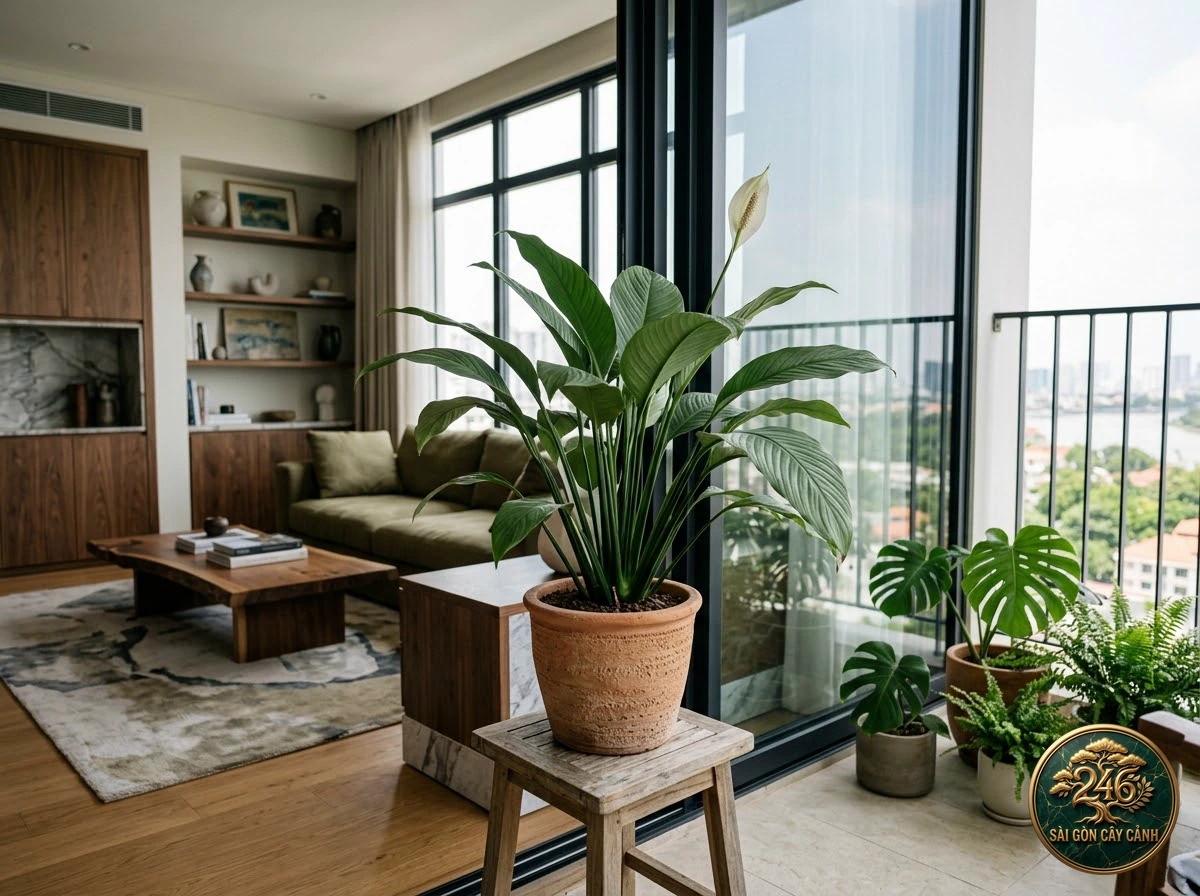
Within sophisticated Biophilic interior architecture, Canna-leaf peace lily serves as an elegant botanical statement symbolizing tranquility and architectural purity. Its upright leathery foliage and sculpted white spathes enliven living salons and executive suites.
Deep forest-green hues paired with delicate nocturnal fragrance foster an atmosphere of restorative calm, refreshing mental energy after intensive working days.
Within biophilic interior architecture, the upright canna-like posture and sculpted white spathes of Canna-leaf peace lily instill calm, dignity, and restorative clarity across executive lounges, conference rooms, and serene living salons.
12. Master Principles for Sustainable Indoor Acclimatization
To maintain thriving emerald foliage and stimulate recurring fragrant blooms on Spathiphyllum cannifolium indoors, growers should follow three essential axioms:
- Hydration axiom: Irrigate when top 30% substrate dries, strictly utilizing dechlorinated water to prevent black foliar tip necrosis.
- Illumination axiom: Deliver bright filtered daylight (1,500 – 3,200 lux), avoiding direct harsh sunlight to sustain pristine white blooms.
- Maintenance axiom: Ensure airy, porous potting substrates and rotate containers weekly to encourage symmetrical, upright growth.
13. Frequently Asked Questions Regarding Canna-leaf peace lily (FAQs)
How long do the white spathes remain in bloom?
The creamy white inflorescences of Spathiphyllum cannifolium remain pristine for 4 to 6 weeks before transitioning to green as flowers senesce.
What causes persistent brown or black leaf tips?
Foliar tip burn primarily results from fluoride and chlorine accumulation from municipal tap water, or dry ambient air below 50%. Use purified water and raise humidity.
Should spent peace lily flowers be pruned away?
Yes. Excising spent flower stalks cleanly at their base prevents unnecessary seed development and channels metabolic energy into new foliar and floral flushes.
Can this peace lily survive in windowless bedrooms?
It survives temporarily under dim conditions but will never bloom. Install full-spectrum 4000K horticultural LEDs for 8 to 10 hours daily to sustain health.
How often should rhizome clump division be conducted?
Divide clumps every 2 to 3 years when rhizomes outgrow container rim capacity, refreshing substrate and establishing vigorous new daughter plants.
Does the Canna-leaf peace lily actually possess a fragrant flower?
Yes, distinctly so. Unlike many odorless commercial hybrids, wild Spathiphyllum cannifolium diffuses a delightfully sweet, refreshing floral perfume during evening and twilight hours to attract native nocturnal pollinators.