
Living plant profile
Spoon-spathe peace lily
Spathiphyllum cochlearispathum
Comprehensive botanical dossier for Spoon-spathe peace lily (Spathiphyllum cochlearispathum). Identification, lighting calibration, porous substrate formulation, and cultivation guide by Saigon Cay Canh.
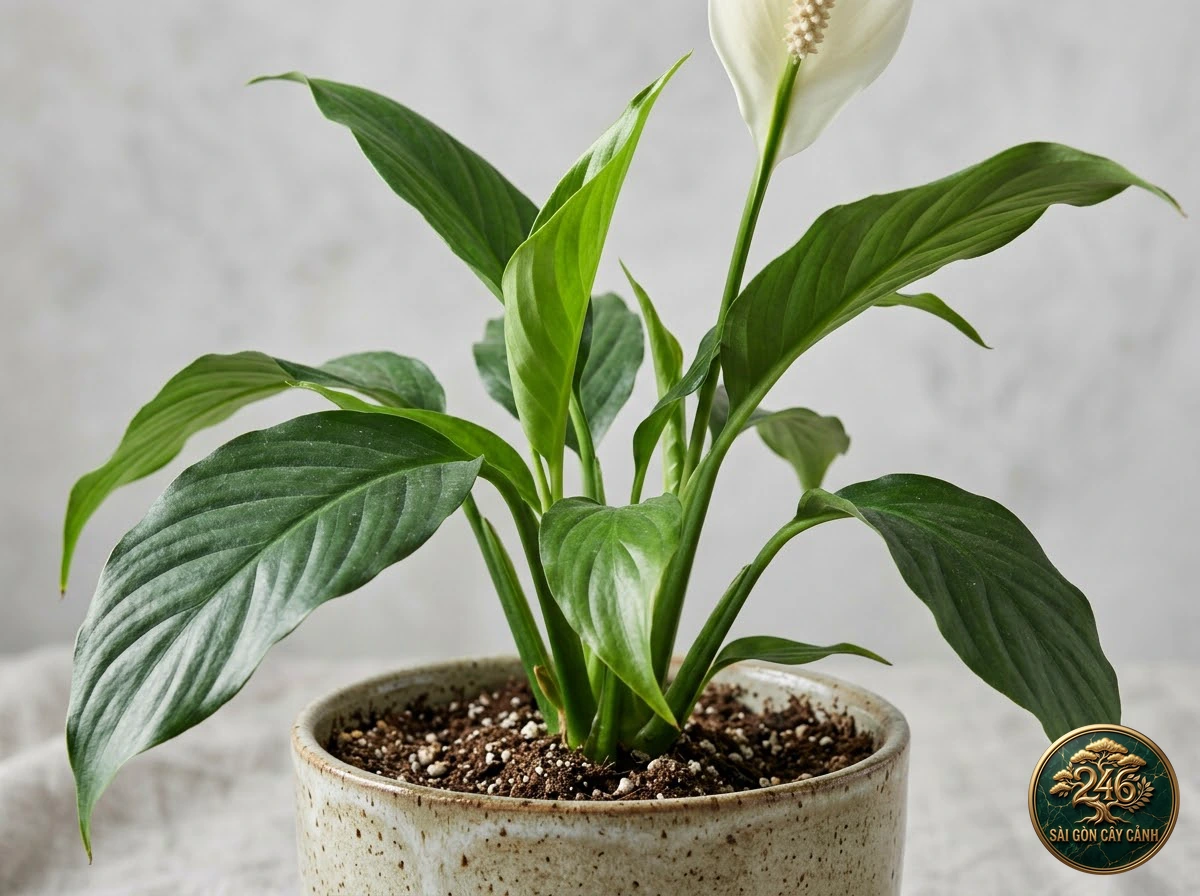
Spoon-spathe peace lily (Spathiphyllum cochlearispathum) is the undisputed colossus of the peace lily genus, hailing from lush rainforest slopes of southern Mexico. Celebrated worldwide for monumental architectural stature approaching two meters in height, broadly undulate foliage, and spectacular spoon-shaped concave white spathes, it anchors high-ceilinged interior landscapes.
1. Core Botanical Taxonomy & Cultural Specifications
| Scientific Name | Spathiphyllum cochlearispathum |
|---|---|
| Botanical Family | Araceae (Aroid Family) |
| Native Distribution | Submontane wet rainforests of southern Mexico across Veracruz, Oaxaca, and Chiapas |
| Growth Demeanor | Monumental terrestrial aroid forming massive architectural clumps reaching 1.2 to 1.8 m height |
| Lighting Threshold | Generous diffused daylight (1,800 – 3,500 lux); high light capture sustains massive biomass |
| Hydration Cadence | Thoroughly hydrate when top 30% substrate dries; demands steady capillary moisture and drainage |
| Substrate Formulation | 35% coarse pumice, 30% pine bark nuggets, 20% washed coco coir chips, and 15% coarse perlite |
| Thermal Range | 22°C – 32°C (72°F – 90°F; thrives in warm tropical indoors, ceases development below 16°C/60°F) |
| Relative Humidity | 70% – 85% (Elevated ambient saturation prevents margin desiccation across giant foliage) |
| Cultivation Difficulty | Moderate (Demands generous spatial footprint and large planters to accommodate root mass) |
| Pet Safety Profile | Toxic (Contains insoluble calcium oxalate raphides; keep safely beyond domestic animals) |
Documented in the authoritative botanical registry of the Royal Botanic Gardens Kew (POWO), Spathiphyllum cochlearispathum stands as the largest species within the Neotropical Spathiphyllum clade. In native Chiapas and Veracruz rainforests, it forms expansive colonies along karst ravines and floodplains.
Its subterranean rhizome develops massive ginger-like proportions (4 to 8 cm diameter), anchoring deep into soil strata to brace massive canopies against tropical storms. From this rhizome, cylindrical petioles extend vertically 60 to 100 cm with tremendous mechanical strength.
The specific epithet ‘cochlearispathum’ derives from Latin (cochleare = spoon), describing the deeply concave spathe that functions as an optical and acoustic reflector, funneling visual signals to attract native euglossine bee pollinators in deep rainforests.
2. Morphological Identification & Foliar Architecture
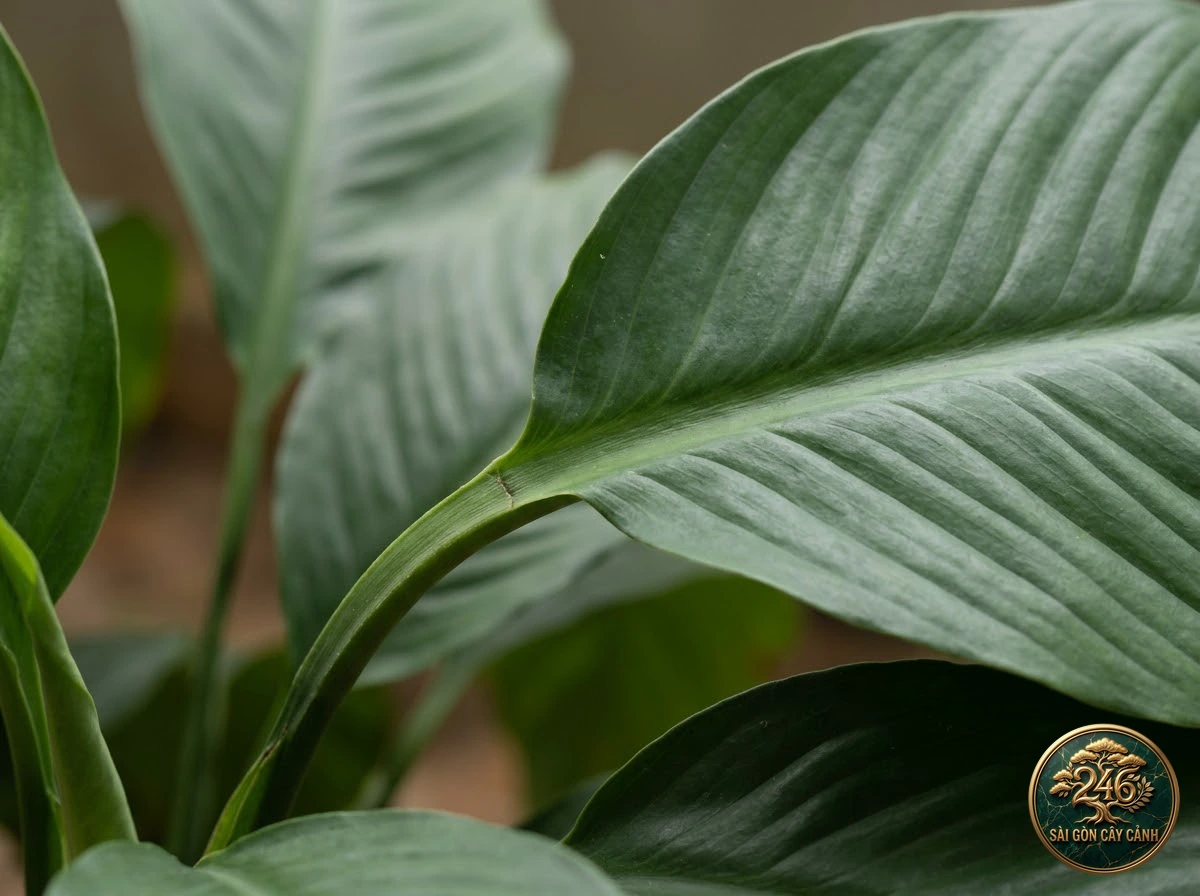
Foliar blades of Spoon-spathe peace lily attain lengths of 50 to 80 cm and widths of 25 to 40 cm. The oblong-elliptic lamina features undulating ruffled margins reminiscent of ocean swells, bathed in a lustrous bright emerald sheen that reflects ambient illumination.
The spathe is a botanical tour de force: deeply concave and spoon-shaped in pure porcelain white, spanning 18 to 30 cm in length and 12 to 20 cm across. It cradles an erect, columnar yellowish-cream spadix measuring 10 to 15 cm, emitting a refined floral fragrance.
Morphological analysis of Spathiphyllum cochlearispathum demonstrates that it boasts the most colossal inflorescence in the entire genus Spathiphyllum: pristine white spathes achieve lengths of 25 to 35 cm, arching into a deeply concave spoon-shaped contour. The stout, fleshy cylindrical spadix bears hundreds of perfect bisexual florets, emitting a refreshing sweet fragrance at dawn and dusk.
3. Photometric Calibration & Window Exposure Optimization
Sustaining monumental biomass and generating spectacular floral displays requires generous filtered lighting between 1,800 and 3,500 lux. Displaying specimens within double-height atriums, lightwells, or 1.5 to 2 meters from east-facing glass facades delivers optimal light.
Protracted illumination deficits below 900 lux induce petiole laxity, causing giant leaves to sprawl horizontally while halting floral induction. Conversely, harsh direct solar rays penetrating unshaded glass scorch expansive blades within hours.
Carrying massive foliar biomass, the Spoon-spathe peace lily requires photon flux densities (PPFD) between 90 and 170 umol/m2/s to preserve cellular turgidity and stimulate giant floral bud emergence. Positioning specimens in sunlit interior atriums or beneath filtered skylights fuels vigorous development without foliar bleaching.
4. Rhizomatous Clump Architecture & Growth Management
Water management for this monumental aroid demands generous volume paired with instantaneous drainage. During warm active periods, thoroughly drench media when the upper 30% substrate dries, ensuring saturation across the deep container volume.
Consistent with all peace lilies, it reacts poorly to high tap water fluoride and chlorine. Irrigate strictly with rainwater or filtered water to preserve the pristine ruffled leaf margins.
Optimal temperatures range between 22°C and 32°C (72°F – 90°F). The specimen demonstrates robust summer heat tolerance but resents chilling drafts; temperatures below 16°C (60°F) arrest new leaf emergence.
Relative humidity should be maintained between 70% and 85%. In air-conditioned living spaces, running a humidifier or placing specimens near interior water features preserves turgid leaf fullness.
Optimal vegetative growth unfolds between 22°C and 32°C (72°F – 90°F). In air-conditioned commercial spaces, keep containers sheltered from direct cold air blasts and sustain relative humidity at 65% to 85% to protect massive foliar margins from desiccating or curling.
Attaining mature heights up to 1.8 meters, specimens require heavy-gauge ceramic or composite containers (45 to 60 cm diameter) to provide ballast against toppling. The stout rhizome branches continually into monumental clumping clusters; rotating containers 90 degrees weekly maintains a balanced, symmetrical architectural silhouette.
5. Porous Aggregate Substrate Engineering & Aeration Dynamics
Substantial root mass and large container volumes demand durable coarse aggregates: 35% coarse pumice (10-15mm), 30% heat-treated pine bark nuggets, 20% washed coco coir chips, and 15% coarse perlite.
Coarse porosity eliminates deep pot compaction, sustaining oxygen diffusion to lower root zones and eliminating root rot vulnerabilities.
Expansive root volumes necessitate high water retention coupled with superior porosity. A blend uniting 35% coarse pumice (8-12mm), 30% aged pine bark nuggets, 20% desalted coconut husk chips, and 15% coarse perlite ensures uniform moisture dispersion without forming anaerobic saturation zones at container bottoms.
6. Organic Nutrition Schedules & Periodic Micronutrient Priming
Fueling giant foliar biomass and oversized spoon spathes requires regular organic bio-nutrition. Apply liquid worm casting extract and hydrolyzed fish emulsion diluted every three weeks during active growth.
Avoid concentrated synthetic fertilizers to prevent root tip necrosis, flushing substrates thoroughly quarterly to maintain clean media.
Nutritional demands for this giant peace lily exceed standard miniature cultivars. Apply balanced liquid organic fertilizer enriched with natural potassium, calcium, and phosphorus every three weeks during active flushes to support robust foliage and 1-meter flowering scapes.
7. Clinical Diagnostic Matrix & Rapid Correction Protocols
| Clinical Symptom | Primary Etiology | Diagnostic Evaluation | Corrective Prescription |
|---|---|---|---|
| Margins of giant leaves becoming crisp, brown, and curled | Ambient air-conditioner aridity below 55% relative humidity | Measure room humidity at canopy height using a hygrometer | Deploy an ultrasonic humidifier and relocate away from air vents |
| Petioles severely stretched, sprawling horizontally outward | Severe illumination deficit below 900 lux threshold | Measure ambient lux levels at current container location | Relocate planter to bright lightwells or near expansive windows |
| Mass yellowing of lower foliage with foul-smelling rhizome | Waterlogged container base causing anaerobic root rot | Inspect drainage apertures and examine subterranean root ball | Excise necrotic roots, sanitize, and repot into coarse airy substrate |
| Expanding blackened necrotic lesions on leaf tips | Fluoride and chlorine toxicity from untreated tap water | Review municipal water quality used for routine care | Switch to purified water or clean rainwater for all irrigation |
8. Cryptic Pest Prophylaxis & Foliar Surface Sanitation
Expansive blades readily collect indoor dust. Wipe surfaces bi-weekly with damp microfiber cloths to clear stomata and discourage mealybugs from sheltering in petiole axils.
Inspect foliar undersides regularly for spider mites during dry periods; apply biological neem emulsion monthly for comprehensive protection.
Expansive leaf surfaces collect significant domestic dust. Wipe both sides of blades bi-weekly with damp microfiber cloths to maintain unimpeded stomatal transpiration, checking basal petiole sheaths carefully to detect and eliminate early mealybug colonies.
9. Asexual Propagation Methodology & Root Strike Protocols
Propagation is performed by separating rhizome offshoots during large-scale repotting. Select divisions with established independent roots and 3+ mature leaves, sectioning with a sterile knife.
Establish offshoots in coarse porous substrate, sustaining steady moisture in humid shade. Daughters anchor and push new foliage within 4 weeks.
Propagate via rhizome clump division during container repotting every 2 to 3 years. Use a sterilized serrated knife to divide the dense crown, ensuring each new division retains at least 4 sturdy leaves and viable adventitious roots before potting in fresh porous mix.
10. Companion Animal Safety & Veterinary Toxicology Protocols
The plant stores insoluble calcium oxalate raphides causing acute oral burning if chewed; position containers safely and train companion animals away from leaves.
11. Biophilic Curation & Contemporary Interior Design Styling
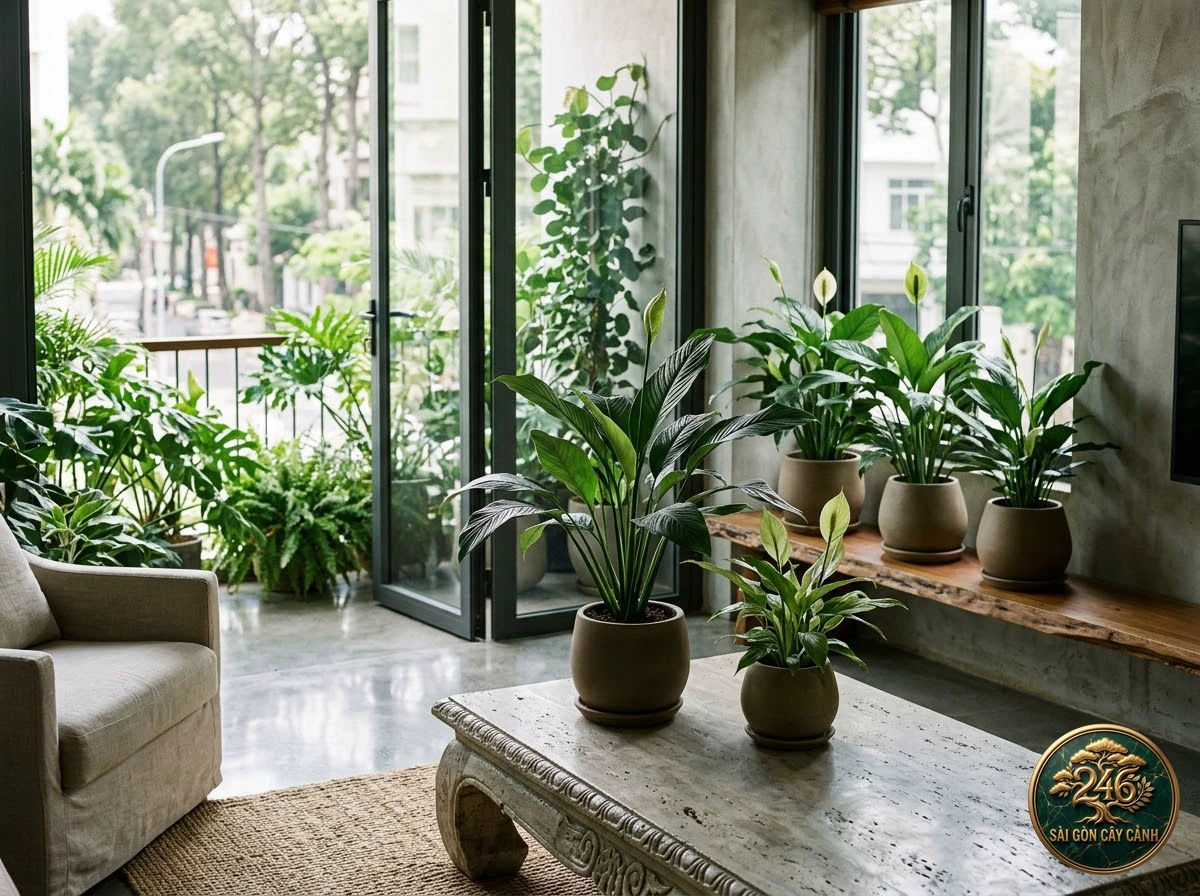
Within monumental Biophilic interior spaces, Spoon-spathe peace lily embodies grandeur, prestige, and botanical majesty. Its soaring canopy and ruffled foliage provide a dramatic living anchor for luxury hotel lobbies and grand corporate suites.
Porcelain spoon spathes rising proudly above dark emerald canopies radiate uplifting purifying energy, leaving an unforgettable visual impression on visitors.
As one of the most magnificent giant foliage specimens, the Spoon-spathe peace lily delivers regal, architectural majesty to five-star hotel lobbies, conference centers, luxury botanical penthouses, and world-class creative studios.
12. Master Principles for Sustainable Indoor Acclimatization
To cultivate a thriving monumental specimen of Spathiphyllum cochlearispathum and stimulate recurring giant spoon-shaped blossoms indoors, horticulturists must adhere to three essential rules:
- Hydration axiom: Provide a spacious, heavy-based container and highly porous substrate to allow unrestricted subterranean rhizome expansion.
- Illumination axiom: Deliver generous filtered illumination (1,800 – 3,500 lux) to satisfy photonic demands of massive foliar surfaces.
- Maintenance axiom: Irrigate thoroughly upon top 30% substrate dry-down, using pure dechlorinated water to keep expansive margins pristine.
13. Frequently Asked Questions Regarding Spoon-spathe peace lily (FAQs)
What maximum height can Spoon-spathe peace lily attain indoors?
In large containers under optimal care, mature specimens reach 1.5 to 1.8 meters in height with canopy spreads exceeding 1.5 meters.
How long does the giant spoon spathe remain in bloom?
The concave porcelain-white spathe remains fresh and vibrant for 5 to 8 weeks before transitioning to green and senescing.
What planter size is required for this massive aroid?
Choose heavy planters with a diameter of 40 to 60 cm and depth of at least 45 cm to support its extensive rhizomatous root mass.
Should commercial leaf-shine oils be applied to the foliage?
Strictly avoid leaf-shine products; mineral oils clog large stomatal pores, disrupting respiration and triggering foliar necrosis.
What fertilization cadence is recommended?
During active warm months, apply diluted organic bio-fertilizer every three weeks; suspend feeding during cool seasons.
What maximum height can Spathiphyllum cochlearispathum attain indoors?
In large containers (50+ cm) with bright filtered light and humidity above 70%, this specimen readily attains heights of 1.5 to 1.8 meters with a canopy span approaching 2 meters, forming a truly breathtaking botanical installation.