
Living plant profile
Hooker’s aglaonema
Aglaonema hookerianum
Comprehensive botanical dossier for Hooker’s aglaonema (Aglaonema hookerianum). Identification, lighting calibration, porous substrate formulation, and cultivation guide by Saigon Cay Canh.
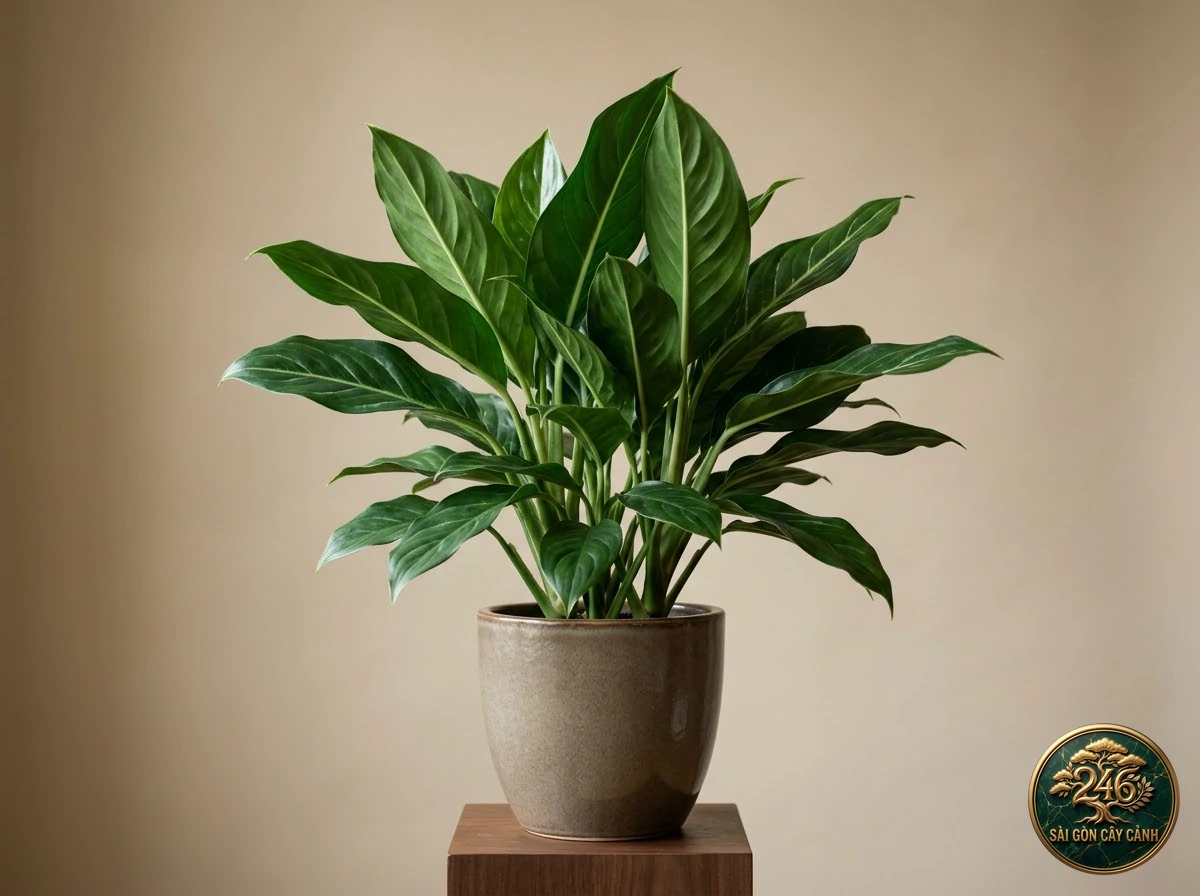
Hooker’s aglaonema (Aglaonema hookerianum) commemorates the distinguished 19th-century botanist Sir Joseph Dalton Hooker. Bearing stately elongated petioles that elevate broad emerald leaf blades, this montane aroid exemplifies architectural grace and robust constitutional hardiness.
1. Core Botanical Taxonomy & Cultural Specifications
| Scientific Name | Aglaonema hookerianum |
|---|---|
| Botanical Family | Araceae (Aroid Family) |
| Native Distribution | Subtropical Himalayan foothills, Assam valleys in India, Bangladesh, and northern Myanmar |
| Growth Demeanor | Erect robust herbaceous perennial with elongated arching petioles and sturdy subterranean rhizomes |
| Lighting Threshold | Medium to bright filtered daylight (1,000 – 2,500 lux); notably cold-tolerant relative to other congeners |
| Hydration Cadence | Irrigate when upper third of potting mix feels dry; withstands transient dry spells gracefully |
| Substrate Formulation | 30% composted leaf mold, 30% volcanic pumice, 25% fine fir bark, and 15% coarse perlite |
| Thermal Range | 15°C – 30°C (59°F – 86°F; exceptional cold tolerance among tropical aroids) |
| Relative Humidity | 60% – 80% (Comfortably adapts to standard domestic household humidity regimes) |
| Cultivation Difficulty | Easy (Hardy biological constitution, forgiving of occasional cultivation lapses) |
| Pet Safety Profile | Toxic (Insoluble calcium oxalate crystals irritate animal oral tissues) |
Recognized in Kew taxonomic registries (POWO), Aglaonema hookerianum inhabits moist montane valleys and forested slopes throughout the Himalayan foothills across Assam, Bangladesh, and northern Myanmar. Flourishing at elevations between 300 and 1,200 meters, it experiences cool mountain breezes and seasonal temperature drops uncommon in lowland tropical zones.
Subtropical highland origins endowed Hooker’s aglaonema with remarkably expansive thermal resilience. Able to tolerate temperature drops down to 15°C without foliar injury or bud abortion, it outclasses many lowland tropical aroids in domestic resilience.
Across southeastern Himalayan foothill habitats, this perennial colonizes limestone valleys carpeted with deep deciduous leaf litter. Cool, dry winters followed by heavy monsoonal summer rains shaped a natural semi-dormancy cycle, during which thick underground rhizomes accumulate starch to power rapid spring vegetative flushes.
2. Morphological Identification & Foliar Architecture
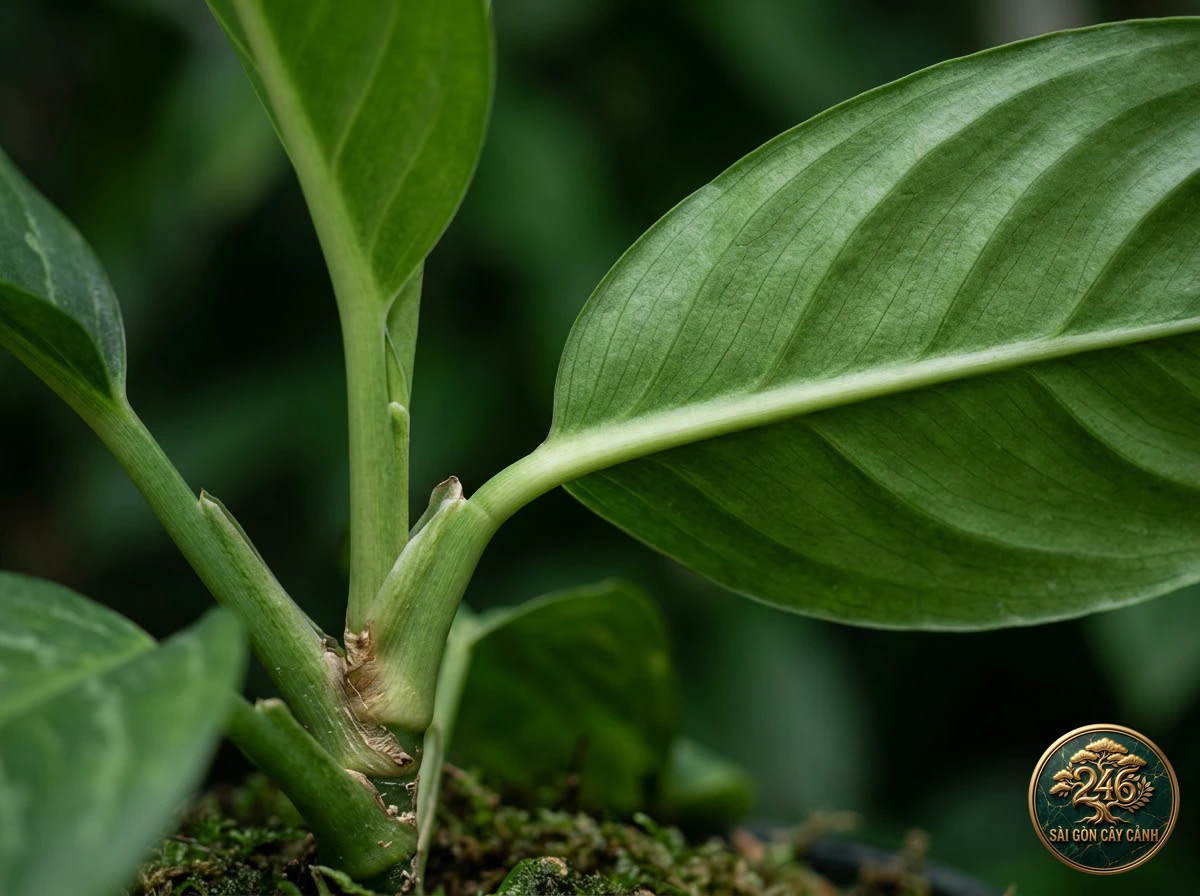
The commanding focal feature of the plant is its broad ovate-elliptic foliar blade, measuring 20 to 35 cm long and 10 to 15 cm wide. Laminae present a stately deep emerald green tone with a subtle satin luster, accented by prominent pinnate lateral veins arching gracefully outward.
Sturdy elongated petioles measuring 25 to 40 cm project upward, elevating broad blades into an airy canopy architecture. Broad basal sheaths clasp lower stem nodes firmly, imparting an erect, fan-like habit that creates architectural presence in any interior.
Anatomical examination of petiole cross-sections reveals dense peripheral collenchyma fiber rings delivering remarkable flexural rigidity against mountain wind gusts. Thickened laminar cuticles coated in natural plant waxes minimize non-stomatal transpiration during dry subtropical winter spells.
3. Photometric Calibration & Window Exposure Optimization
Optimal vegetative development occurs under generous diffused daylight ranging between 1,000 and 2,500 lux. Positioning the vessel near East-facing windows, north-facing glass partitions, or bright interior atriums provides steady photosynthetic impetus.
While tolerating brighter conditions than delicate variegated varieties, foliage must still be protected from direct solar rays between 11 AM and 3 PM to avoid chlorophyll photobleaching. Under moderate lower light, petioles elongate attractively without losing foliar luster.
4. Structural Cane Dynamics & Form Optimization
Robust petiole tissues and dense basal root anchoring endow Hooker’s aglaonema with exceptional self-supporting capacity. It forms a full, symmetrical foliar silhouette without requiring moss poles or mechanical supports.
Selecting substantial ceramic or stone containers provides ballast against the leverage of elevated foliage, preventing tipping during indoor air movements. Rotate the planter a quarter turn weekly to maintain circular symmetry.
5. Engineered High-Porosity Substrate Formulation
Subterranean rhizomes thrive within well-aerated forest loam rich in decomposed organic matter. Heavy clay soils hinder subterranean root respiration and throttle emerging offshoot development.
A proven potting mixture combines 30% mature composted leaf mold, 30% volcanic pumice, 25% conditioned fir bark nuggets, and 15% coarse perlite. This formula sustains gentle internal humidity around the root mass while allowing surplus irrigation to exit unhindered.
Decomposed leaf mold introduces natural enzymes and complex carbon chains that facilitate steady nutrient uptake without acidifying the medium. Concurrently, inorganic pumice maintains resilient physical pore geometry over years of successive irrigation.
6. Organic Bio-Fertilization & Mineral Management
Nutrient consumption is moderate during spring and summer flushes. Incorporating slow-release organic worm castings bimonthly or drenching with diluted organic liquid fertilizer once monthly encourages thick, stately petiole development.
Suspend all fertilizer applications during cooler winter intervals when vegetative growth slows. Quarterly, flush the potting medium with copious fresh water to rinse away cumulative mineral deposits.
7. Clinical Diagnostic Matrix & Horticultural Resolutions
| Clinical Symptom | Root Pathology | Diagnostic Method | Targeted Resolution |
|---|---|---|---|
| Basal leaves turn yellow uniformly, cane softens | Compacted substrate trapping stagnant water | Probe bottom container moisture depth | Halt watering, elevate pot, renew with porous mineral potting mix |
| Foliar margins display dried brown scorched patches | Intense midday sunlight striking leaf blades | Check sunlight trajectory through windows | Move pot into a gentler diffused daylight zone |
| Elongated spindly petioles leaning heavily | Protracted deficit of natural illumination | Check lux reading at foliage canopy | Relocate planter closer to window or add horticultural illumination |
| Fine white powdery clusters inside petiole bases | Mealybug activity nestled within sheltered crevices | Examine basal petiole sheaths closely | Wipe clean with a cotton swab soaked in 70% alcohol |
| Emerging unfurled shoots develop black necrotic tips | Sub-optimal humidity combined with cold AC drafts | Verify room thermometer and hygrometer | Reposition away from air drafts, elevate ambient humidity above 60% |
8. Pest Mitigation Protocols & Foliar Sanitation
Owing to a thick foliar cuticular layer, Hooker’s aglaonema exhibits commendable pest resistance. Occasional mealybug sightings in lower petiole sheaths can be promptly resolved by wiping with a soft rag moistened in 70% alcohol or applying mild insecticidal soap.
Broad leaf blades readily gather domestic dust particles over time. Monthly foliar cleaning with a damp microfiber cloth preserves glossy green luster and maintains open stomata for efficient gas exchange.
For multi-stemmed mature specimens, routine sanitation pruning of spent basal leaf sheaths with sterilized shears eliminates sheltered breeding habitats for mealybug and thrips larvae. Following pruning, wipe excised margins clean and position in good airflow so natural callousing seals within 24 hours.
9. Asexual Propagation Methodology
Clump division during repotting serves as the most dependable propagation route. Sever the connecting subterranean rhizome cleanly with a sterilized knife, treat wounds with horticultural sealant, and air-dry for 12 hours before potting separately.
Stem cuttings possessing dormant nodes can likewise be rooted in airy damp nursery media over 4 to 6 weeks. Maintain warm shaded conditions to promote vigorous adventitious root formation.
10. Veterinary Toxicology & Domestic Safety Safeguards
Elevate containers on plant pedestals away from domestic pets. In cases of accidental exposure, rinse oral tissues with cool water immediately and consult a veterinarian if respiratory distress is suspected.
11. Biophilic Interior Design & Architectural Styling
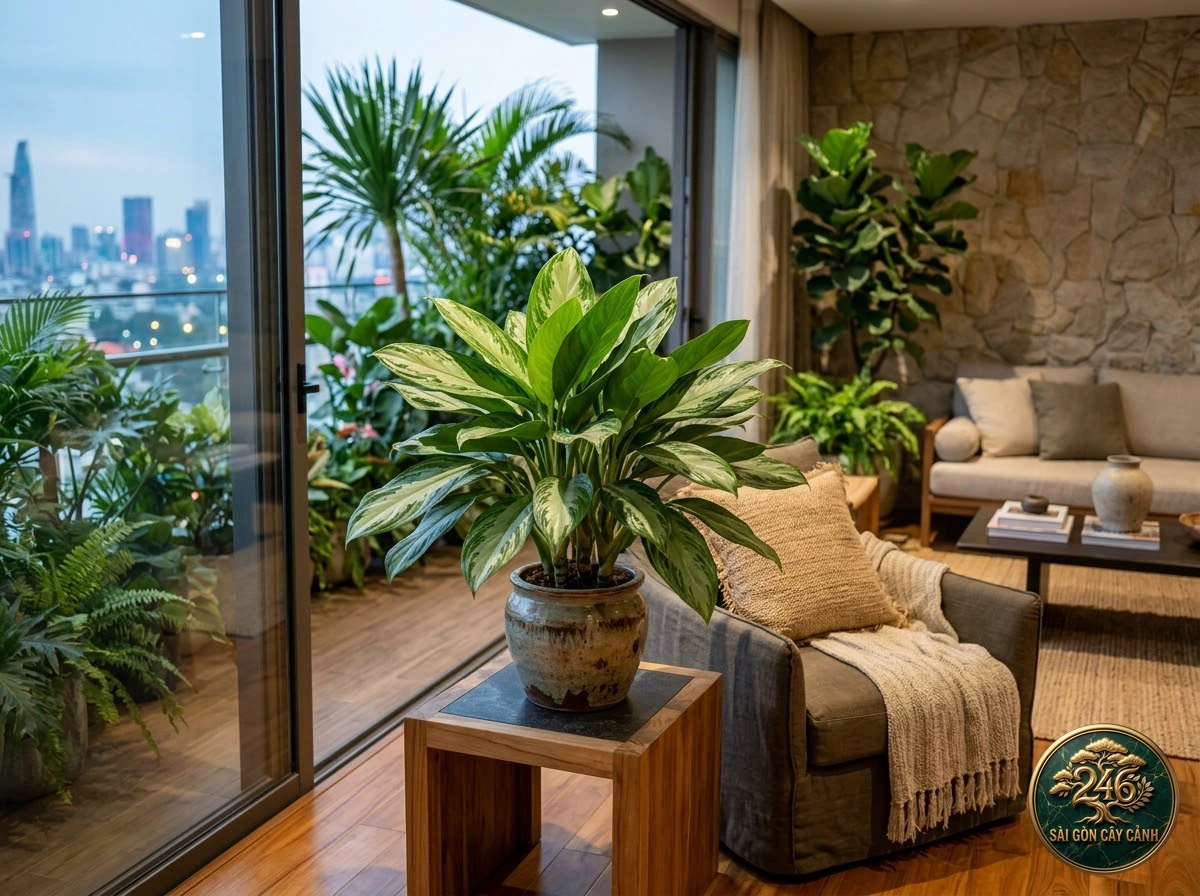
Displaying stately vertical presence and expansive emerald foliage, Hooker’s aglaonema provides architectural elegance within grand reception foyers, conference rooms, executive suites, and spacious domestic living quarters.
The plant harmonizes flawlessly with white ceramic planters, terrazzo containers, or minimalist wooden stands, introducing vibrant natural poise and organic tranquility into modern indoor environments.
The clean vertical lines of elongated petioles create an optical illusion of greater ceiling height within contemporary apartments. Saturated emerald foliage imbued with Himalayan mountain vitality clears mental fatigue, fostering centered focus and organic balance.
12. Master Cultivation Axioms
Distilled from practical nursery operations at Saigon Cay Canh, observe these three essential cultivation rules:
- Hydration Precision: Irrigate only after the upper third of the substrate has visibly dried down; verify moisture depth before watering.
- Solar Management: Provide medium to bright filtered illumination between 1,000 and 2,500 lux; shield foliage from direct midday solar rays.
- Foliar Care: Wipe broad foliar blades monthly with a damp microfiber cloth to preserve deep gloss and maintain gas exchange.
13. Frequently Asked Botanical Questions (FAQs)
What minimum winter temperature can Hooker’s aglaonema comfortably endure?
Thanks to its subtropical Himalayan origins, it comfortably withstands temperatures down to 15°C without suffering root rot or foliar chill damage.
What mature dimensions can this specimen achieve in domestic cultivation?
Under favorable container culture, mature specimens reach 80 to 120 cm in height with an expansive foliar spread approaching one meter.
How does one encourage thick, upright petiole development?
Providing ample filtered daylight between 1,500 and 2,500 lux paired with monthly organic feeding promotes robust fiber formation, keeping canes erect.
When is the optimal season for container repotting?
Every 18 to 24 months during early spring or warm monsoonal onset, once roots thoroughly colonize the pot volume.
Is the plant susceptible to lower leaf loss during seasonal transitions?
It demonstrates remarkable stability through seasonal fluctuations, provided overwatering is avoided and drainage remains porous.
How can one encourage extensive basal tiller production?
Selecting a wider-mouthed container and incorporating organic bio-fertilizer top-dressings at the onset of spring stimulates dormant subterranean nodes to send up vigorous tillers.