Living plant profile
Parlatore’s dumb cane
Dieffenbachia parlatorei
Comprehensive botanical dossier for Parlatore’s dumb cane (Dieffenbachia parlatorei). Identification, lighting calibration, porous substrate formulation, and cultivation guide by Saigon Cay Canh.
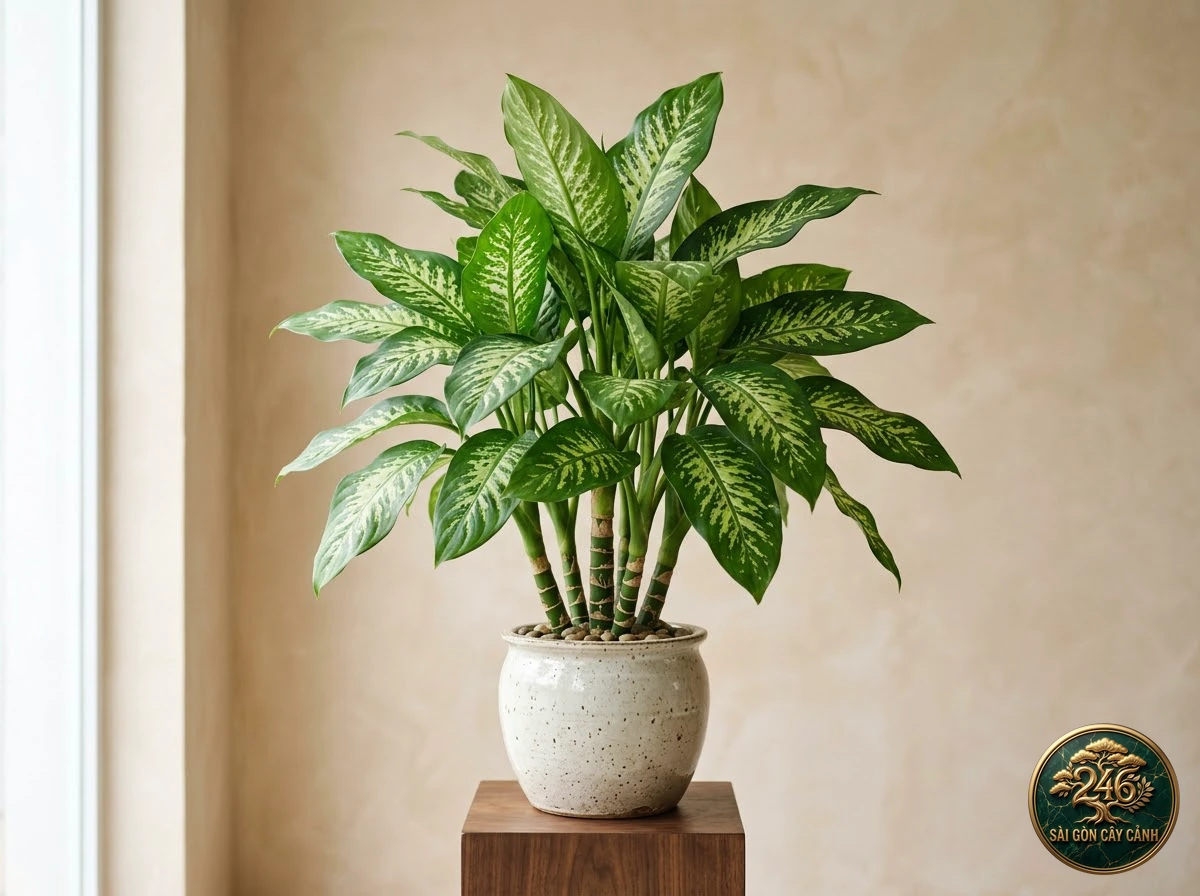
Parlatore’s dumb cane (Dieffenbachia parlatorei) honors the celebrated Italian botanist Filippo Parlatore, originating amidst the majestic Andean cloud forest slopes. With an immaculate ivory midrib striking down deep satin emerald blades, this montane aroid exudes noble refinement, quiet poise, and enduring mountain constitution.
Sài Gòn Cây Cảnh Care Compass
1. Core Botanical Taxonomy & Cultural Specifications
| Scientific Name | Dieffenbachia parlatorei |
|---|---|
| Botanical Family | Araceae (Aroid Family) |
| Native Distribution | Subtropical montane cloud forest slopes of the Andes in Colombia and Venezuela |
| Growth Demeanor | Stately erect herbaceous perennial with distinctive ivory midribs and cold-resilient canes |
| Lighting Threshold | Medium filtered indirect daylight (1,000 – 2,400 lux); preserves sharp ivory venation |
| Hydration Cadence | Irrigate once upper third of substrate dries; root system demands aerated moisture without standing water |
| Substrate Formulation | 35% volcanic pumice, 30% fine fir bark, 20% perlite, and 15% vermicompost |
| Thermal Range | 16°C – 28°C (61°F – 82°F; exceptional cool mountain tolerance among dumb canes) |
| Relative Humidity | 65% – 85% (Elevated ambient humidity preserves foliar hydration and deep satin gloss) |
| Cultivation Difficulty | Easy to Moderate (Resilient mountain constitution, cold-hardy, forgiving nature) |
| Pet Safety Profile | Toxic (Insoluble calcium oxalate crystals irritate animal oral tissues) |
Recorded in Kew taxonomic registries (POWO), Dieffenbachia parlatorei is native to subtropical montane cloud forests along the Andean cordillera spanning Colombia and Venezuela. Flourishing at elevations between 800 and 1,800 meters, it thrives in perpetual mountain mists and cool temperate air currents uncommon in tropical lowlands.
Highland origins endowed Parlatore’s dumb cane with remarkable cool tolerance. Sturdy canes develop thick epidermal cuticles that preserve cellular turgor even during cool montane nights, making it a reliable domestic perennial.
Across misty Andean cloud forest ridges, soil profiles are enriched by minerals continuously weathered from volcanic magma rocks. Roots weave through cool rock fissures bathed in oxygenated mountain runoff, endowing this botanical specimen with superior natural immunity against soil-borne pathogens.
2. Morphological Identification & Foliar Architecture
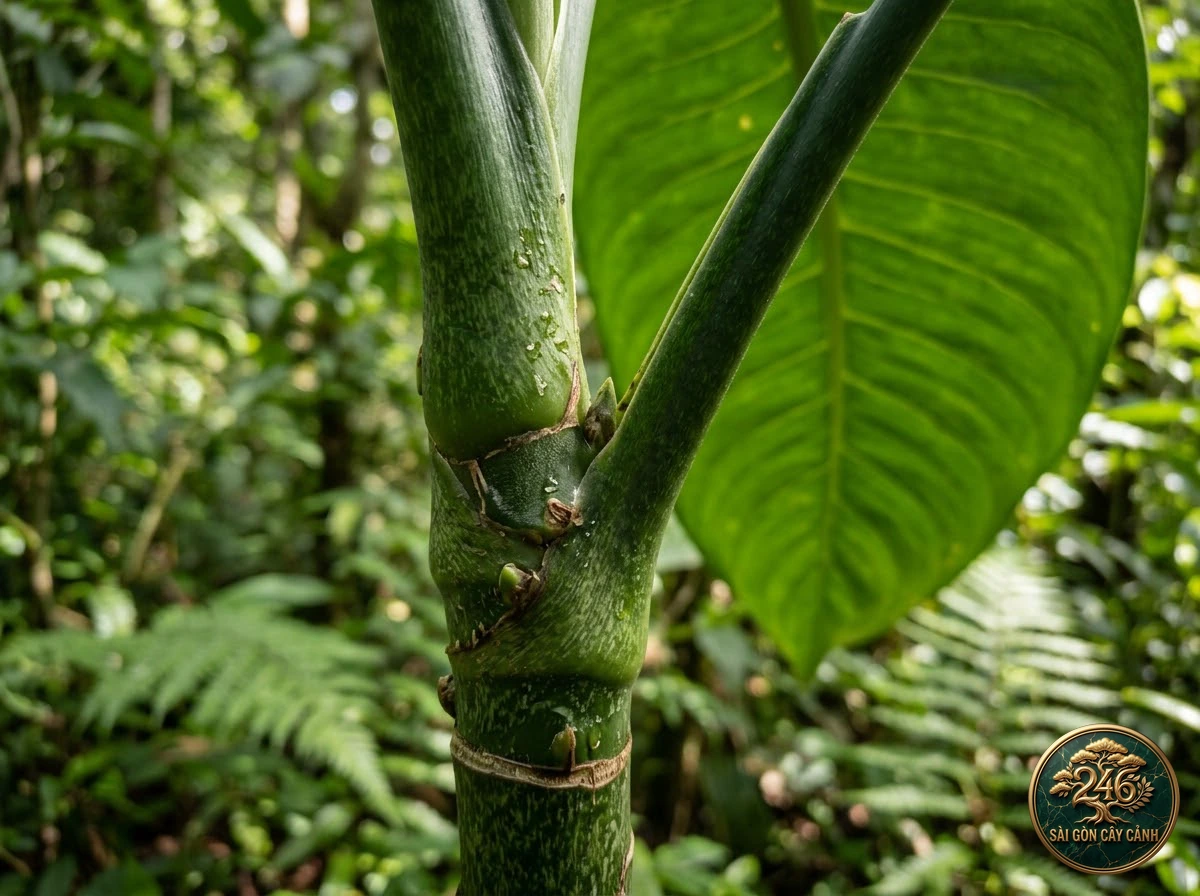
The commanding morphological signature is an immaculate ivory-white midrib running unbroken from petiole to apex like a polished ribbon of jade. Oblong-lanceolate leaves measuring 25 to 40 cm feature deep satin emerald surfaces accented by graceful pinnate lateral venation.
Rigid petioles sheath smooth green canes via tightly wrapped basal sheaths. Foliage arches outwards in balanced horizontal tiers, creating an architectural silhouette that blends regal authority with natural grace.
The immaculate ivory midrib of Parlatore’s dumb cane comprises specialized collenchyma cells rich in light-reflecting carotenoids and flavonoids, devoid of green chlorophyll. This structural column operates as a mechanical spine, preventing thick leathery blades from drooping during atmospheric humidity shifts while orchestrating dramatic contrast against deep emerald grounds.
3. Photometric Calibration & Window Exposure Optimization
Optimal vegetative development occurs under generous diffused daylight ranging between 1,000 and 2,400 lux. Staging near East or Southeast-facing domestic windows with sheer curtains provides ideal photon density for foliar health.
While resilient, foliage must be shielded from harsh direct midday sun to avoid bleached burn marks. Under moderate interior daylight, the crisp ivory midrib maintains its sharp contrast against dark green lamina.
4. Structural Cane Dynamics & Form Optimization
Parlatore’s dumb cane maintains an upright, self-supporting habit supported by stout canes. It requires no moss totem or mechanical framing, naturally organizing into a neat columnar bush.
Selecting stable ceramic stoneware provides reliable balance against foliar weight. Turn the container ninety degrees weekly to foster balanced radial symmetry.
5. Engineered High-Porosity Substrate Formulation
Montane root systems demand loose, mineral-rich potting media with superior drainage porosity. Heavy clay soils suffocate tender feeder roots, causing root rot following heavy watering.
A proven potting formula combines 35% volcanic pumice, 30% aged fir bark nuggets, 20% perlite, and 15% mature vermicompost. This matrix maintains gentle subterranean moisture while surplus irrigation exits unhindered.
A combined 55% inorganic mineral fraction of pumice and perlite replicates rocky Andean slopes, providing an oxygen-rich environment for emerging root tips. Aged bark retains essential moisture without accumulating dissolved fertilizer salts.
A 55% volcanic mineral fraction establishes a naturally sterile subterranean matrix for emerging root tips. Aged pine bark nuggets retain essential moisture without binding dissolved salts, preserving pristine root aeration and guaranteeing long-term specimen vigor over years of cultivation.
6. Organic Bio-Fertilization & Mineral Management
Nutrient consumption is moderate. Administer dilute organic kelp or humic bio-fertilizer at one-quarter standard strength once every three to four weeks during active vegetative cycles.
Scale back fertilizer during cooler seasons when growth slows. Quarterly, flush the potting medium with copious fresh water to leach out accumulated mineral fertilizer salts.
7. Clinical Diagnostic Matrix & Horticultural Resolutions
| Clinical Symptom | Root Pathology | Diagnostic Method | Targeted Resolution |
|---|---|---|---|
| Basal foliage turns yellow, substrate remains soaked | Irrigating too frequently in low-airflow quarters | Check bottom soil moisture depth with a probe | Extend watering intervals, relocate to better ventilated spot |
| Leaf tips display scorched blackish-brown margins | Direct midday solar exposure hitting lamina | Observe sun trajectory through domestic glass | Draw sheer curtain or retreat pot deeper into room |
| Elongated spindly stems with sparse small leaves | Severe deficit of photosynthetic daylight | Assess light levels at plant location | Move planter nearer diffused daylight or install horticultural lamp |
| White cottony wax deposits along petiole sheaths | Mealybug colonies taking root in stagnant air | Inspect petiole junctions closely | Clean manually using cotton swabs moistened in 70% alcohol |
| Ivory midrib fades and blurs into leaf blade | Insufficient photosynthetic irradiance | Measure lux level at leaf canopy | Move specimen to filtered daylight between 1,500 and 2,400 lux |
8. Pest Mitigation Protocols & Foliar Sanitation
Possessing a durable foliar cuticle, the specimen demonstrates strong natural resistance to pests. The chief domestic concern is mealybugs sheltering within petiole sheaths. Gently swab colonies with 70% alcohol to clear pest pockets effectively.
Wiping foliage monthly with a moist cotton cloth removes domestic dust. This simple maintenance preserves the striking white midrib and keeps stomata functional across all seasons.
Natural biochemical defenses in this Andean mountain species are pronounced, with secondary metabolites in cellular sap naturally deterring masticating insects. Nonetheless, maintaining convective airflow and monthly foliar hygiene remains the golden key to preventing spider mite outbreaks during dry seasons, keeping foliar surfaces immaculate.
9. Asexual Propagation Methodology
Propagation is readily accomplished via clump division during repotting or cane cuttings. Sever connecting rhizomes with a sterilized knife treated with 70% alcohol, seal cut surfaces, and air-dry for 12 hours before potting.
Root cane cuttings containing dormant nodes in moist nursery mix over 4 to 6 weeks. Maintained in warm ambient shade, adventitious roots and fresh green shoots will emerge steadily.
10. Veterinary Toxicology & Domestic Safety Safeguards
If accidental pet mastication occurs, promptly flush the oral cavity with cool water or offer small quantities of milk to soothe mucosal tissues, consulting a veterinarian if symptoms persist.
11. Biophilic Interior Design & Architectural Styling
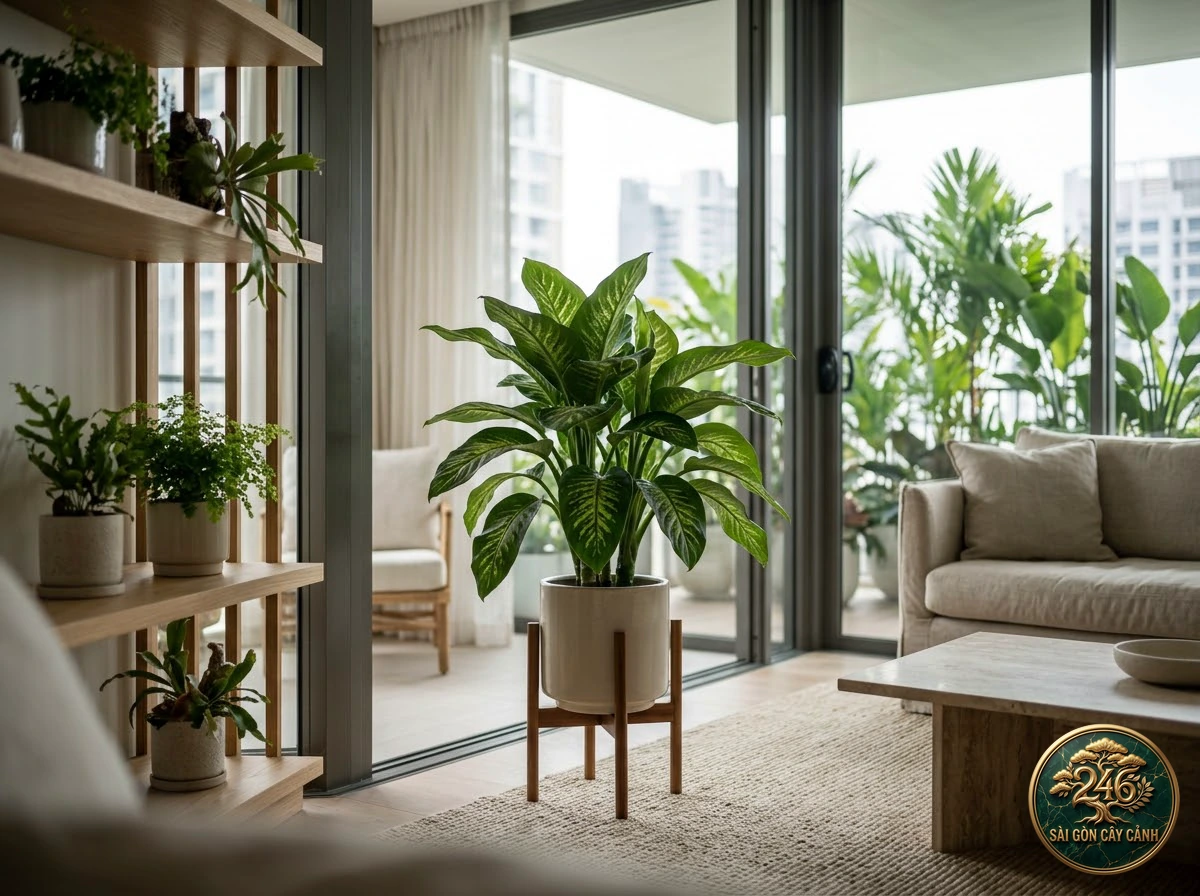
Showcasing immaculate ivory venation and deep emerald leaves, Parlatore’s dumb cane provides noble architectural presence within executive studies, Indochine residences, and spacious modern living rooms.
It harmonizes flawlessly with rustic stoneware, terrazzo vessels, or minimalist wooden stands, introducing serene natural poise and organic tranquility into modern domestic atmospheres.
The poised botanical lines evoke the refined serenity of classic ink-wash landscapes. It contributes cultural depth and quiet mental calm to executive libraries, alleviating the stress of fast-paced metropolitan living.
12. Master Cultivation Axioms
Distilled from practical nursery operations at Saigon Cay Canh, observe these three essential care principles:
- Hydration Precision: Irrigate only after the upper third of substrate dries down; confirm moisture depth with a wooden probe before watering.
- Solar Management: Provide ample filtered daylight between 1,000 and 2,400 lux; shield foliage from direct midday solar rays at all times.
- Foliar Care: Wear protective gloves during pruning and wipe foliage monthly with a damp cloth to maintain hygiene and stomatal exchange.
13. Frequently Asked Botanical Questions (FAQs)
How well does Parlatore’s dumb cane tolerate cooler winter temperatures?
Thanks to its montane Andean cloud forest origin above 1,000 meters elevation, it comfortably withstands temperatures down to 16°C without risk of root rot or foliar chill damage.
How does one maintain the immaculate ivory contrast of the midrib?
Providing ample filtered daylight between 1,200 and 2,000 lux paired with regular organic feeding keeps the ivory ribbon sharply defined against dark emerald lamina.
When is container repotting recommended?
Every 14 to 18 months during early spring or warm monsoonal onset, once roots thoroughly colonize the container volume.
Is the plant susceptible to lower leaf loss during weather shifts?
It demonstrates remarkable stability through seasonal fluctuations, provided overwatering is avoided and drainage remains porous.
Does contact with plant sap cause skin irritation?
Sap containing calcium oxalate crystals triggers mild itching on sensitive skin. Wash immediately with soap and water if accidental contact occurs.
Can this specimen thrive in conference rooms with limited natural light?
It adapts well to conference rooms if supported by 8 to 10 hours of domestic LED lighting daily and moved closer to natural daylight once a week.
Nursery Care Journal & Living Greenery Moments
At Saigon Cay Canh greenhouse, each photograph captures genuine everyday care moments between plant lovers and living greenery, spreading a passion for nature and green-living inspiration.