
Living plant profile
Willdenow’s spikemoss
Selaginella willdenowii
Willdenow’s spikemoss (Selaginella willdenowii) Willdenow’s spikemoss (botanical binomial: Selaginella willdenowii) is a distinguished botanical specimen belonging to the Spikemoss family (Selaginellaceae). Willdenow’s spikemoss Selaginella willdenowii, a magnificent climbing lycophyte from Southeast Asian rainforests extending stems 2-4m long, bearing large fan-shaped fronds radiant with electric peacock-blue iridescence. Saigon Cay Canh Care Compass (360° Horticultural Protocol) Light […]
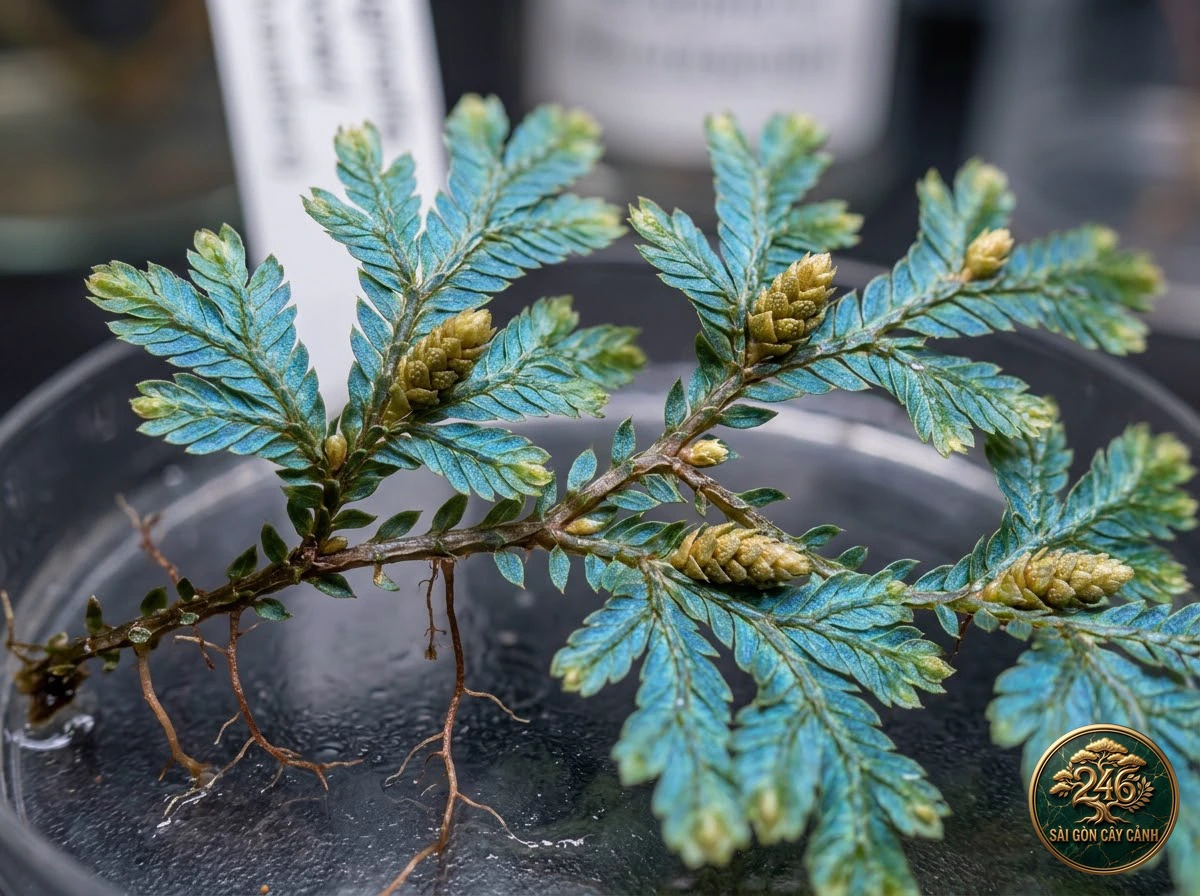
Willdenow’s spikemoss (Selaginella willdenowii)
Willdenow’s spikemoss (botanical binomial: Selaginella willdenowii) is a distinguished botanical specimen belonging to the Spikemoss family (Selaginellaceae). Willdenow’s spikemoss Selaginella willdenowii, a magnificent climbing lycophyte from Southeast Asian rainforests extending stems 2-4m long, bearing large fan-shaped fronds radiant with electric peacock-blue iridescence.
Saigon Cay Canh Care Compass (360° Horticultural Protocol)
- Light Exposure
- Deep dappled shade (1,500 – 3,500 lux); completely shielded from direct sun.
- Irrigation
- Consistently moist soil; frequent misting supporting climbing roots.
- Substrate
- Rainforest humic soil, Chilean sphagnum, fine fir bark, charcoal bits.
- Temperature
- 20°C – 32°C.
- Atmospheric Humidity
- 80% – 95%.
- Maintenance Difficulty
- Moderate to advanced (requires climbing space and high humidity).
- Pet Safety
- Non-toxic and pet-safe.
1. Botanical Nomenclature & Taxonomy
The taxon Selaginella willdenowii is universally recognized across global botanical authorities (POWO – Royal Botanic Gardens, Kew) as an accepted member of the Spikemoss family (Selaginellaceae).
In natural habitats, this species plays an essential ecological role, contributing to groundcover stabilization, microclimate regulation, and understory biodiversity in temperate to tropical biomes.
2. In-Depth Morphological Characteristics
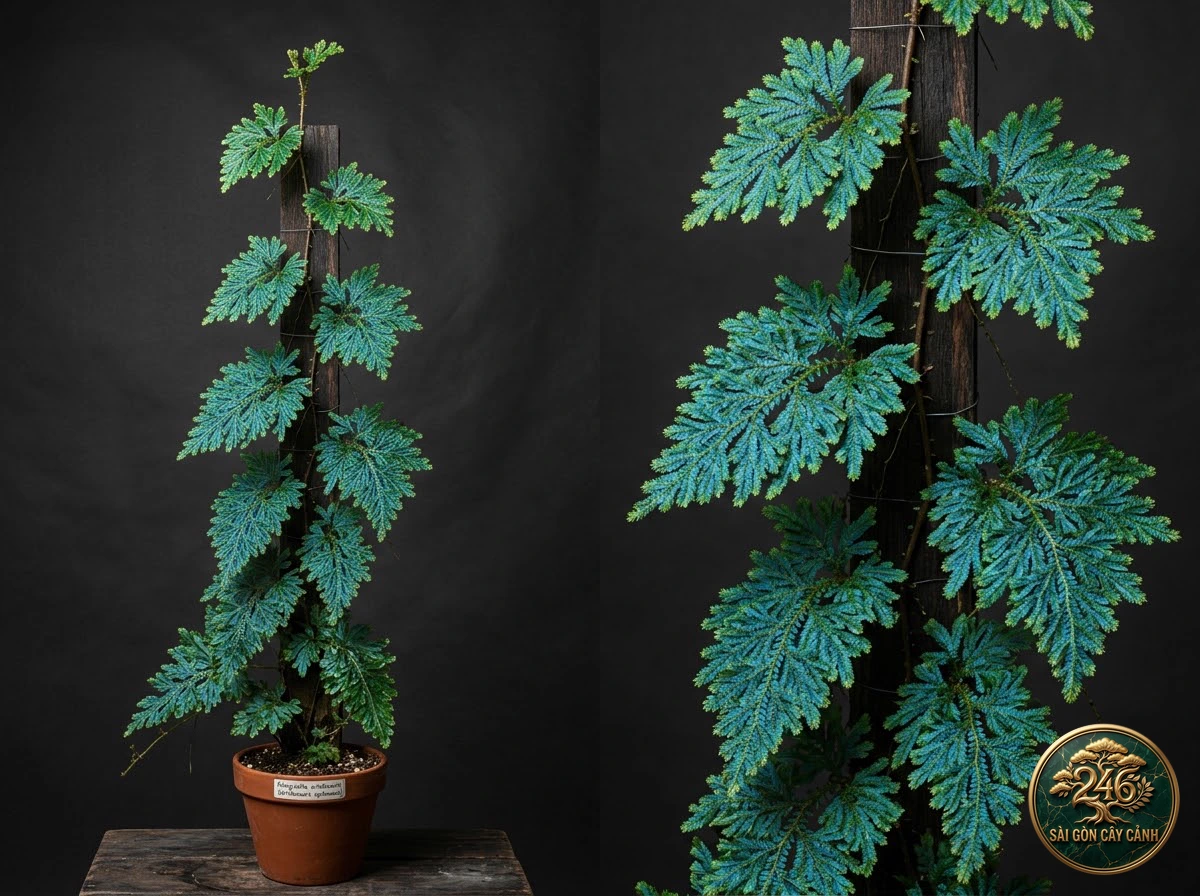
Willdenow’s spikemoss Selaginella willdenowii, a magnificent climbing lycophyte from Southeast Asian rainforests extending stems 2-4m long, bearing large fan-shaped fronds radiant with electric peacock-blue iridescence.
The morphological architecture of Selaginella willdenowii showcases specialized adaptations for low-light forest environments. The petiole and venation patterns maximize light interception while optimizing moisture retention during drier seasonal intervals.
The reproductive sori structures situated along the frond undersides feature robust indusial protection, ensuring long-term spore viability across varying climatic conditions.
3. Photobiology & Light Requirements
Deep dappled shade (1,500 – 3,500 lux); completely shielded from direct sun.
Photosynthetic efficiency peaks under filtered diffused daylight. Direct midday sun exposure causes foliar scorching and dehydration, whereas insufficient light causes stipes to elongate unnaturally with reduced vigor.
4. Irrigation Protocol & Moisture Dynamics
Consistently moist soil; frequent misting supporting climbing roots.
Always inspect the topsoil moisture layer prior to application. Use dechlorinated water, rainwater, or reverse osmosis water to prevent mineral salt toxicity that leads to brown tip necrosis.
5. Substrate Formulation & Root Aeration
Rainforest humic soil, Chilean sphagnum, fine fir bark, charcoal bits.
The root system requires an open, humus-rich substrate structure that maintains uniform capillary moisture while facilitating abundant gaseous exchange to prevent root hypoxia and fungal pathogens.
6. Temperature & Microclimatic Humidity
Optimal ambient temperature ranges between 20°C – 32°C., with ambient relative humidity maintained at 80% – 95%..
In air-conditioned environments, deploy pebble humidity trays or ultrasonic cool-mist humidifiers to preserve delicate foliar integrity.
7. Nutrition & Bio-Fertilization Strategies
Administer balanced organic liquid fertilizers at 1/4 to 1/2 strength monthly throughout active growth phases. Avoid heavy synthetic mineral salts that induce osmotic root burn.
8. Pruning, Sanitation & Propagation
Prune aging or damaged fronds near the base using sterilized botanical shears. Propagation is achieved through rootball divisions during early spring or spore cultivation under controlled humid chambers.
9. Integrated Pest Management & Troubleshooting
Scout regularly for mealybugs, scale insects, and spider mites during low-humidity periods. Apply organic cold-pressed neem oil or horticultural insecticidal soaps for proactive control.
10. Toxicity Profile & Pet Safety (ASPCA Standards)
Non-toxic and pet-safe.
Validated safe for interior residential placement around cats and dogs according to ASPCA non-toxic plant references.
11. Interior Styling & Architectural Landscape Design
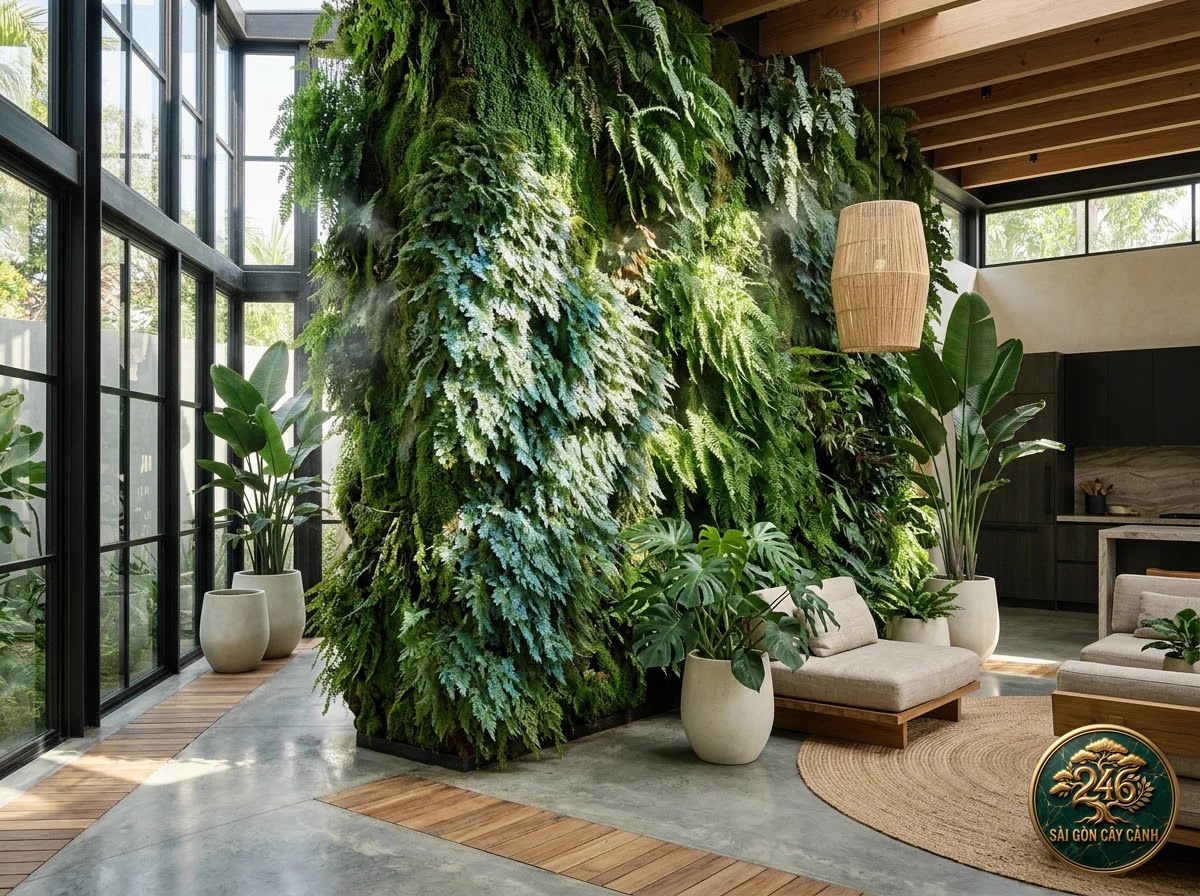
With its architectural posture and delicate botanical texture, Selaginella willdenowii serves as an exceptional focal point in ceramic floor planters, residential courtyards, and tranquil wellness spaces.
12. Common Horticultural Pitfalls
- Overwatering in heavy soil: Results in anaerobic root rot and rapid foliar collapse.
- Direct sun exposure: Bleaches frond pigmentation and crisps margins.
- Dry draft exposure: Arid air causes tip browning and foliage shedding.
- Excessive fertilizing: Accumulates fertilizer salts, damaging tender roots.
13. Frequently Asked Questions (Botanical FAQs)
Can this plant thrive in air-conditioned interiors?
Yes, provided indirect light is abundant and humidity is supplemented using pebble trays or humidifiers away from direct cold drafts.
How frequently should repotting take place?
Repot every 18 to 24 months during early spring when root structures fill the container volume.
How can one keep fronds lush and vibrant green?
Maintain humidity above 70%, wipe foliar dust gently, and provide gentle filtered light.