Living plant profile
Felt Plant (Kalanchoe beharensis)
Kalanchoe beharensis
Felt Plant (Kalanchoe beharensis) The Felt plant (botanical binomial: Kalanchoe beharensis Drake) stands as one of the most majestic and sculpturally commanding arborescent succulents within the stonecrop family (Crassulaceae). Revered across global landscape architecture by regal monikers including elephant’s ear kalanchoe, velvet elephant ear, and Napoleon’s hat, this slow-growing pachycaul marvel captivates viewers with its […]
Felt Plant (Kalanchoe beharensis)
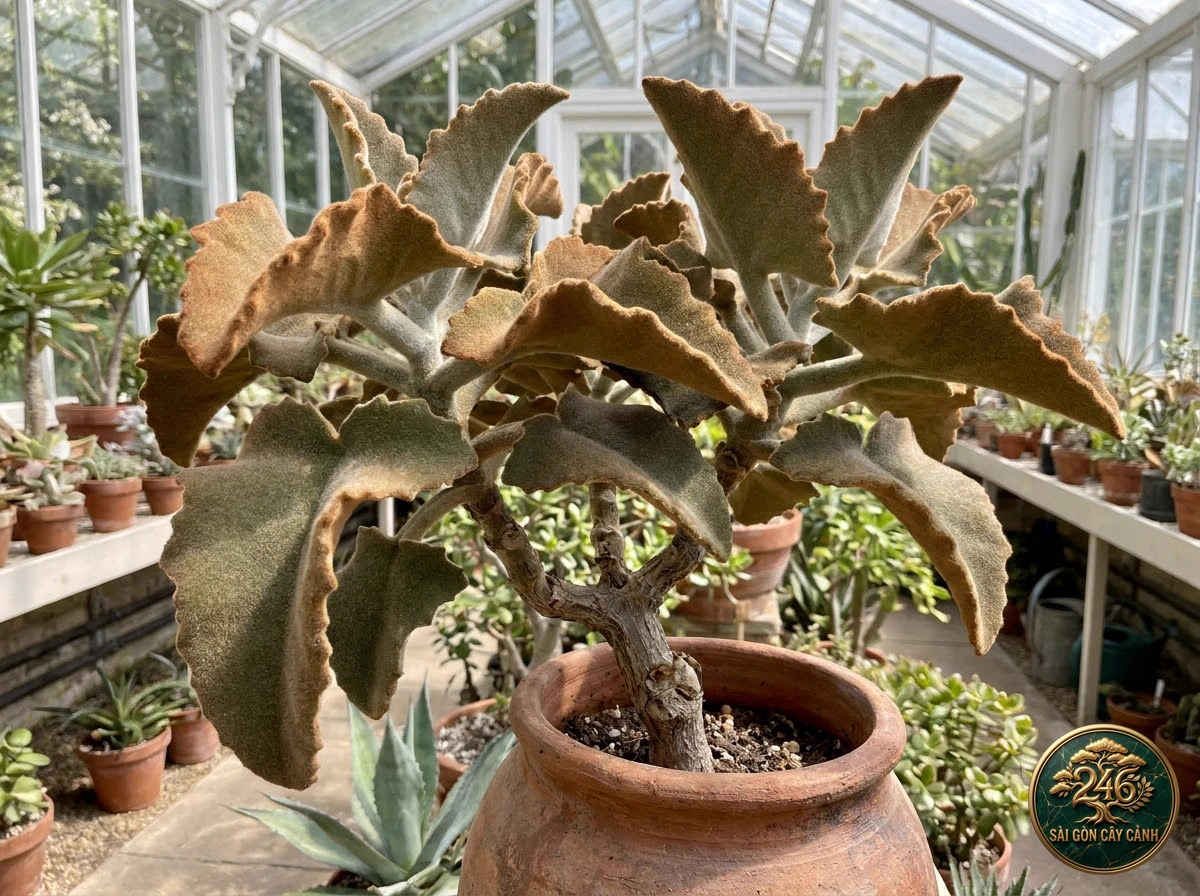
The Felt plant (botanical binomial: Kalanchoe beharensis Drake) stands as one of the most majestic and sculpturally commanding arborescent succulents within the stonecrop family (Crassulaceae). Revered across global landscape architecture by regal monikers including elephant’s ear kalanchoe, velvet elephant ear, and Napoleon’s hat, this slow-growing pachycaul marvel captivates viewers with its colossal, undulating triangular-hastate leaves cloaked in a dense, velvety indumentum of dendritic trichomes that transition dramatically from warm cinnamon-bronze on the adaxial surface to a luminous glaucous silvery-blue beneath.
Endemic to the arid spiny thickets around Behara in southernmost Madagascar, this botanical masterpiece was scientifically classified in 1903 by French botanist Emmanuel Drake del Castillo. Reaching the stature of a small sculptural tree with a rugged, spiny-scarred woody trunk, the felt plant transcends ordinary succulent cultivation. In modern biophilic curation and xeriscape architectural design, it stands as an enduring monument of organic gravitas, structural serenity, and timeless adaptation.
Sài Gòn Cây Cảnh Care Compass
1. Comprehensive Botanical Taxonomy & Key Specifications
To establish an empirical baseline for botanical researchers, curators, and landscape architects, Saigon Cay Canh compiles the definitive taxonomic metrics below:
| Taxonomic Marker & Botanical Attribute | Empirical Specification & Observed Profile |
|---|---|
| Accepted Botanical Binomial | Kalanchoe beharensis Drake (Bull. Mus. Hist. Nat. (Paris) 9: 41, 1903) |
| Phylogenetic Hierarchy (APG IV) | Order Saxifragales / Family Crassulaceae / Genus Kalanchoe |
| Horticultural Classification & Growth Form | Arborescent pachycaul succulent shrub or small tree, architectural specimen |
| International Trade Vernaculars | Felt plant, Elephant’s ear kalanchoe, Velvet elephant ear, Napoleon’s hat |
| Native Geographic Provenance | Arid spiny thickets of Behara and Ambovombe, southernmost Madagascar |
| Growth Habit & Ultimate Dimensions | Erect, sparsely branched arborescent shrub reaching 1.5 to 3 meters in stature |
| Foliar Architecture & Indumentum | Massive undulating triangular-hastate leaves (10-35 cm wide) clad in dendritic felt |
| Surface Pigmentation & Chromatic Contrast | Adaxial cinnamon-russet bronze; abaxial silvery-gray to chalky blue-white |
| Veterinary Safety Evaluation (ASPCA) | TOXIC TO PETS (contains cardiotoxic bufadienolide steroid glycosides) |
Through disciplined specimen curation at Saigon Cay Canh, every cultivated felt plant specimen attains exceptional trichome thickness and rigid trunk lignification, fulfilling the highest standards of luxury botanical design.
2. Morphological Identification Keys & Anatomy
The anatomical architecture of Kalanchoe beharensis reflects extraordinary morphological adaptations tailored to withstand scorching equatorial semi-desert extremes:
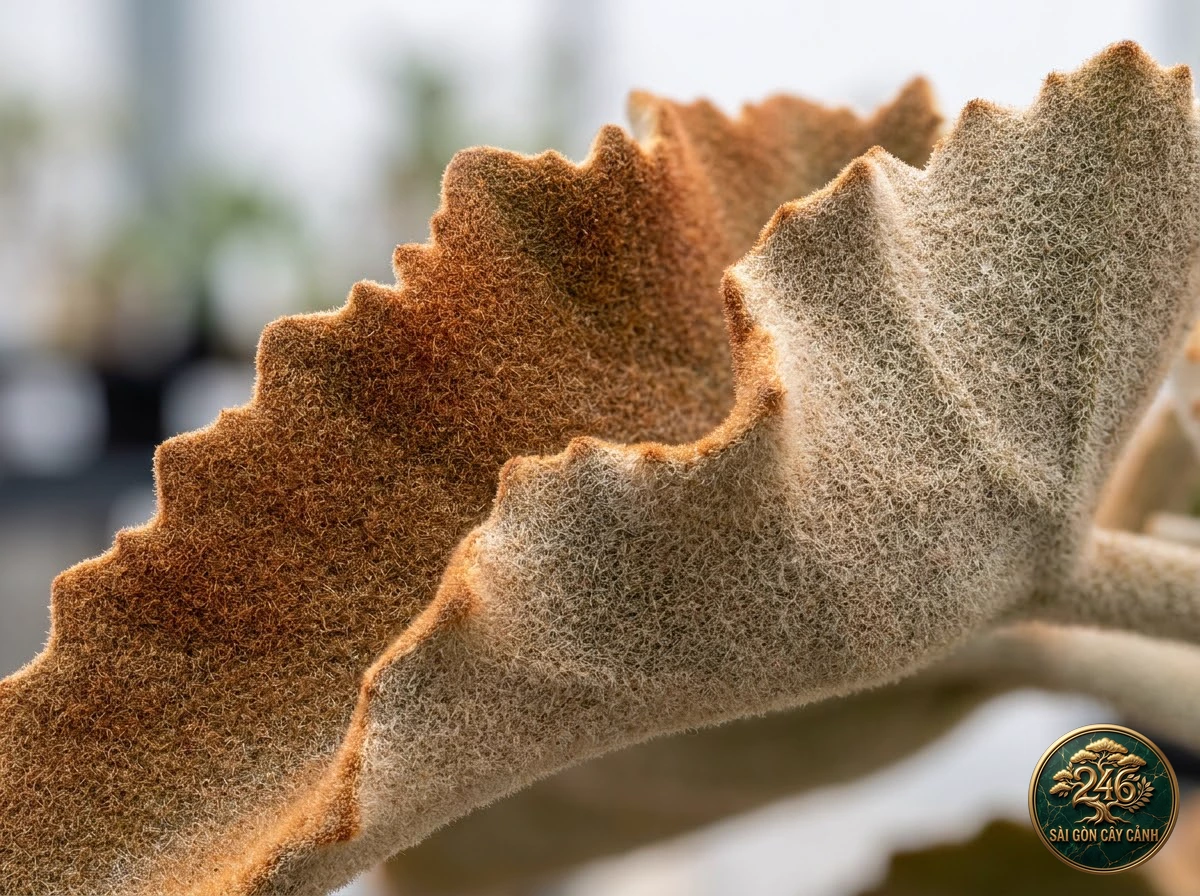
Massive Undulating Foliar Blades: Arranged in decussate opposite pairs, the leaves are the largest in the family Crassulaceae, measuring 15 to 40 cm long and 12 to 35 cm broad. Each leaf blade displays an exaggerated triangular-hastate outline with deeply concave basal lobes. The margins are boldly scalloped, undulating, and folded upward into a canoe-like contour that guides prevailing desert breezes smoothly across the foliar plane without snapping the stout petiole.
Dual-Layered Dendritic Trichome Indumentum: The leaf surface is densely enveloped in a thick, multi-tiered pelt of branched dendritic trichomes resembling microscopic trees. This velvety indumentum creates a sophisticated microclimate: the upper surface exposed to solar radiation accumulates rich tannin and anthocyanin compounds imparting a warm cinnamon-bronze hue, while the lower surface remains chalky glaucous-silver, scattering terrestrial infrared heat radiating from limestone gravel.
Stout Lignified Trunk & Spiny Leaf Scars: The central trunk is thick and pachycaul, reaching 5 to 15 cm in diameter with mature age. As lower leaves naturally senesce and detach, they leave prominent, sharp, triangular corky projection scars along the grayish-brown bark. This jagged armature serves as a mechanical deterrent against browsing desert wildlife seeking internal succulent moisture.
Vast Branched Terminal Panicle: Late in winter or early spring, mature specimens elevate an expansive branched inflorescence extending 50 to 90 cm aloft. The urn-shaped flowers measure approximately 1.5 cm, displaying yellowish-green to dusky pink exteriors marked with delicate violet longitudinal striations within the corolla throat.
3. Botanical Taxonomy & Nomenclature History
Formal scientific recognition of this majestic species was established in 1903 by French botanist Emmanuel Drake del Castillo in the Bulletin du Museum d’Histoire Naturelle in Paris. The specific epithet beharensis refers directly to the type locality near Behara in the southern Toliara region of Madagascar, where early botanical expeditions gathered type herbarium specimens.
Within the modern APG IV phylogenetic system, Kalanchoe beharensis belongs to the stonecrop family Crassulaceae, subfamily Kalanchoideae. Taxonomically, it occupies a specialized arborescent evolutionary lineage that diversified within Madagascar’s unique spiny thicket ecoregion, developing woody pachycaul trunks to store massive quantities of water beneath dense fibrous bark.
Celebrated cultivars developed by international collectors include ‘Fang’ (featuring curious tooth-like tubercles projecting from the abaxial leaf surface) and ‘Brown Dwarf’ (a compact cultivar showcasing intense mahogany-brown foliar felt), each highly prized in specialized architectural plant collections.
4. Native Habitat & CAM Photosynthetic Physiology
The native domain of Kalanchoe beharensis is Madagascar’s southern spiny thicket, a harsh ecoregion characterized by prolonged dry periods lasting nine to ten months annually, scarce erratic precipitation below 350 to 400 mm, and skeletal limestone substrates.
To dominate this desiccating environment, the felt plant mobilizes high-capacity Crassulacean Acid Metabolism (CAM):
During blistering daylight hours, the double-layered felt coat acts as a thermal barrier, maintaining internal mesophyll temperatures significantly below surrounding ambient air. All foliar stomata remain hermetically sealed, preventing evaporative water loss.
Under cover of night, stomatal pores open wide to inhale atmospheric carbon dioxide from cooling ocean-tempered breezes. Phosphoenolpyruvate carboxylase (PEPC) rapidly fixes CO2 into four-carbon malic acid, which is safely stored within immense central vacuoles throughout the succulent parenchyma. At dawn, stomata close; stored malate is decarboxylated internally to release high concentrations of CO2 to the Calvin-Benson cycle for RuBisCO assimilation, producing vegetative carbohydrates without sacrificing precious internal hydration.
5. Luminous Flux & Undulating Foliar Contour Dynamics
Abundant sunlight is the essential environmental driver governing foliar thickness, indumentum density, and the deep bronze coloration of the upper leaf surface. Maintain generous luminous flux between 5,000 and 10,000 lux.
Position containers along south, southeast, or east exposures receiving 5 to 7 hours of direct morning and midday sunshine daily. Full-spectrum photon bombardment stimulates protective tannin and anthocyanin synthesis within adaxial epidermal cells, deepening the warm cinnamon-russet hue and keeping leaf margins tightly scalloped and folded.
Under insufficient light regimes (below 2,500 lux), foliage flattens out, margins lose their architectural wave, petioles stretch spindly, and the velvety coat turns dull greenish-gray. When transitioning greenhouse specimens to full outdoor sun, acclimate over ten days to prevent surface scorching on delicate young foliage.
6. Hydraulic Dynamics & Soil Desiccation Protocol
Possessing massive water-storage parenchyma tissues inside its thick leaves and woody trunk, the felt plant exhibits extreme drought endurance, easily withstanding weeks of dry root conditions.
Follow the soak-and-dry irrigation protocol without exception. Water thoroughly only when the entire substrate volume has become completely dry down to the base of the container. During warm dry seasons, irrigation cycles generally span 10 to 15 days. Verify moisture exhaustion by probing with a long wooden skewer to the bottom of the container: apply water only when the probe emerges bone-dry.
Critical Horticultural Warning: Never spray water directly over the velvety leaves. The dense dendritic felt traps moisture tenaciously; trapped water combined with warmth fosters opportunistic fungal blights that cause dark necrotic lesions across foliar blades. Always direct water around the container perimeter or apply via controlled bottom soaking.
7. Granular Mineral Substrate Formulation & Aerobic Porosity
Replicating the freely draining limestone gravel and red sands of southern Madagascar requires an open, grit-dominated potting medium that eliminates stagnant moisture.
Saigon Cay Canh prepares a bespoke 70:30 mineral-to-organic substrate:
- 70% Coarse Inorganic Aggregates: 40% coarse volcanic pumice (4-8 mm grain size providing generous aeration channels), 15% crushed red scoria rich in mineral iron, and 15% expanded white perlite.
- 30% Organic Amendments: 20% desalted, tannin-free coco coir peat and 10% screened vermicompost providing gentle humic compounds.
This open aggregate structure allows excess irrigation water to evacuate through drainage apertures in moments, maintaining optimal rootzone oxygen tension that suppresses anaerobic Phytophthora root pathogens. Maintain substrate pH between 6.3 and 7.0 to sustain robust pachycaul trunk development.
8. Thermal Hardiness, Humidity & Ventilation Dynamics
The felt plant flourishes across a warm thermal range of 20°C to 35°C, thriving effortlessly in Southern Vietnam’s tropical microclimates.
Dry specimens endure temporary temperature dips down to 5°C without injury. However, cold conditions combined with wet potting soil induce devastating root and stem necrosis.
Relative humidity is best maintained between 35% and 55%. Generous, buoyant air circulation is essential: continuous gentle airflow dissipates foliar heat buildup during sunny midday hours, accelerates drying of accidental water splashes on the felt, and promotes healthy nocturnal gas exchange.
9. Clinical Diagnostic Matrix & Cultural Remediation
Consult this empirical clinical diagnostic matrix to identify and remediate physiological abnormalities in Kalanchoe beharensis:
| Observed Clinical Symptom | Etiological Cause & Pathology | Remedial Horticultural Protocol |
|---|---|---|
| Trunk base softens and turns water-soaked black; lower felt leaves detach easily | Excessive irrigation or clogged pot drainage causing rhizosphere hypoxia and bacterial stem rot | Halt watering immediately; excise firm healthy crown above decay with a sterile saw, callus 5 days, and re-root in dry pumice; discard old soil |
| Leaves flatten out, lose cinnamon hue, and petioles elongate weakly | Prolonged insufficient light levels causing etiolation and diminished trichome production | Relocate to an area receiving 5 to 6 hours of direct morning sun; supplement with full-spectrum horticultural LED fixtures indoors |
| Felt leaves appear shriveled, thin, and limp to the touch while retaining color | Extended drought depleting internal water reserves within massive succulent parenchyma | Provide a thorough soak around the rootzone or bottom soak for 20 minutes; foliage will plump up and regain rigid turgor within three days |
| Velvety foliar surface turns slimy with grayish mold patches and foul odor | Overhead watering leaving trapped moisture inside the thick dendritic indumentum | Gently sweep away mold with a soft dry brush; move plant to a well-ventilated dry location; discontinue foliar wetting permanently |
Monitoring the rigid turgidity and upward wave of apical leaf blades offers the most dependable metric of specimen health.
10. Integrated Pest Management & Sanitation
Shielded by its thick leathery cuticle and dense dendritic pelt, the felt plant is naturally resilient against chewing insects. However, mealybugs (Pseudococcus species) may seek refuge in leaf axils or crevices around trunk scars.
When white cottony mealybug clusters appear, spot-treat them directly using a cotton swab dipped in 70% medicinal alcohol. The alcohol breaks down their protective wax shield instantly, eradicating insects without scorching the dense indumentum.
Routine nursery sanitation involves removing naturally senesced lower leaves, gently sweeping accumulated dust with a soft bristle brush, and applying an occasional preventative evening mist of organic neem oil emulsion to repel sap-sucking pests.
11. Specialized Asexual Propagation Protocols
Kalanchoe beharensis propagates reliably via terminal woody stem cuttings or individual mature felt leaf cuttings.
Seasonal Timing: Early spring or the start of the warm dry season (24°C-30°C) stimulates swift meristematic division and root formation.
Stem Tip Cutting Protocol:
- Using a sterilized pruning saw or sharp blade, sever a vigorous stem tip measuring 15 to 25 cm possessing 2 to 3 pairs of healthy felt leaves.
- Strip the lowest leaf pair to expose approximately 5 cm of clean stem bearing nodular leaf scars.
- Allow cuttings to rest in dry, shaded air for 5 to 7 days until cut surfaces develop a firm, corky callus.
- Insert the callused stem upright into dry coarse pumice or sand. Provide light moisture around the pot rim; anchor roots form within three to four weeks.
Leaf Propagation Technique: Detach a mature, healthy felt leaf cleanly from the main trunk. Rest the leaf flat upon dry pumice grit in bright indirect light. Adventitious roots and miniature plantlets will emerge from the callused petiole base over several months.
12. Companion Animal Safety & ASPCA Toxicity Disclosure
The botanical tissues of the felt plant contain naturally occurring cardiotoxic steroid compounds classified as bufadienolide cardiac glycosides (notably bryotoxin derivatives). These glycosides exert a potent inhibitory effect on the myocardial Na+/K+-ATPase pump in mammalian heart tissues, disrupting cardiac electrical conduction.
Ingestion of foliar or stem tissue by curious dogs or cats precipitates clinical symptoms within hours: excessive salivation, severe nausea, vomiting, watery diarrhea, abdominal pain, marked lethargy, and dangerous cardiac arrhythmias (irregular pulse, tachycardia, or severe heart block). Ingestion of substantial quantities can lead to circulatory collapse.
Practical Safety Measures: Restrict cultivation to elevated heavy planters, sturdy credenzas, or private sunrooms completely inaccessible to domestic pets. When incorporating this magnificent specimen into residential interiors, position it where animals cannot reach the foliage. In any case of suspected ingestion, transport the pet immediately to an emergency veterinary hospital alongside a plant sample for gastric decontamination and cardiac monitoring.
13. Biophilic Design & Architectural Landscaping
With its commanding arborescent silhouette and colossal undulating felt leaves, Kalanchoe beharensis functions as a world-class living botanical sculpture in contemporary interior architecture.
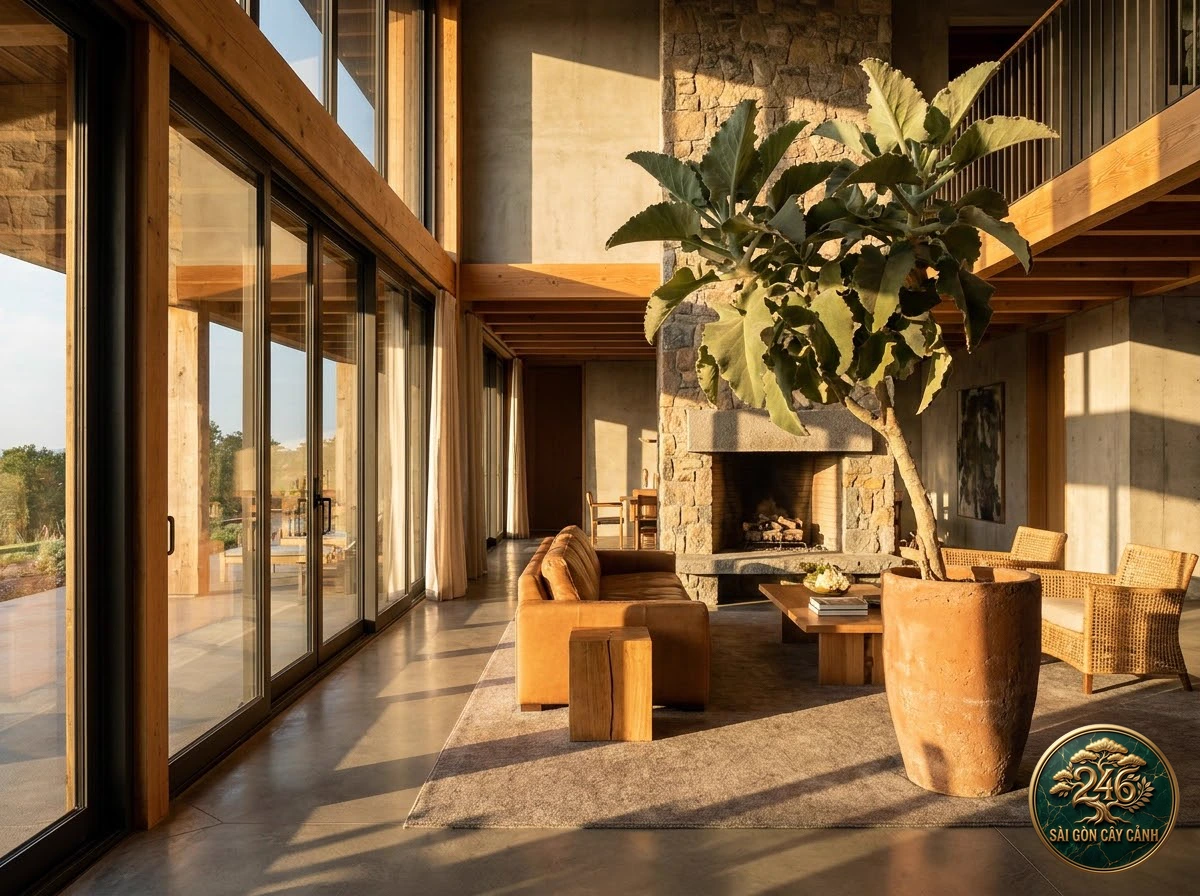
Luxury Architectural Planter Staging: Paired with massive raw concrete planters, honed basalt pots, or dark matte charcoal ceramic vessels, a specimen felt plant commands dramatic presence within luxury hotel atriums, double-height penthouse living spaces, and executive reception galleries. Its sculptural cinnamon-and-silver foliage introduces calm architectural authority and organic warmth.
Xeriscape Landscape Masterpieces: In drought-tolerant tropical rock gardens, an established felt plant serves as an arborescent anchor, delivering an extraordinary focal point when underplanted with low-growing echeverias and dark volcanic gravel.
14. Brand Ambassador & Cultivation Ethos
At Saigon Cay Canh, we honor the ancient majesty of pachycaul succulents like Kalanchoe beharensis. Our nursery specialists cultivate each specimen with patient craftsmanship, acclimating them to Southern Vietnam’s equatorial solar energy to build magnificent trunk architecture and plush foliar felt.

The dedication reflected in hands dusted with volcanic rock flour represents our genuine commitment to authentic botanical stewardship: enriching human living spaces with resilient, ethically nurtured greenery that stands the test of time.
15. Frequently Asked Questions (FAQs)
Why are the massive felt leaves flattening out and losing their cinnamon-bronze color?
Flattening leaves and loss of bronze pigmentation indicate insufficient sunlight exposure. Relocate the specimen to receive 5 to 6 hours of direct morning sunlight daily; abundant photons will promptly stimulate protective indumentum pigmentation.
Can I clean dust off the velvety foliage by misting the plant with water?
Never mist or spray water directly onto the felt leaves, as moisture trapped inside the dense trichomes causes fungal rot. Instead, gently sweep away dust using a soft bristle brush or a gentle handheld air blower.
How tall does the felt plant grow when cultivated in a container?
In container culture, root restriction typically limits ultimate height to between 80 cm and 1.5 meters over several years. Planted directly into garden beds in warm climates, it can develop into a small tree reaching 2 to 3 meters.
Why do lower leaves drop and leave spiny triangular scars along the trunk?
This is natural pachycaul trunk development. As the plant matures into a small tree, lower leaves naturally senesce and shed, leaving behind hardened corky scars that form an attractive spiny armature supporting the massive crown.