Living plant profile
Paddle plant luciae (Kalanchoe luciae)
Kalanchoe luciae
Comprehensive botanical monograph on Paddle plant luciae (Kalanchoe luciae): structural morphology, physiological adaptations, porous mineral substrate, and specialized cultivation guidelines.
Paddle plant luciae (Kalanchoe luciae)
Sài Gòn Cây Cảnh Care Compass
1. Botanical Introduction & Taxonomic Identity
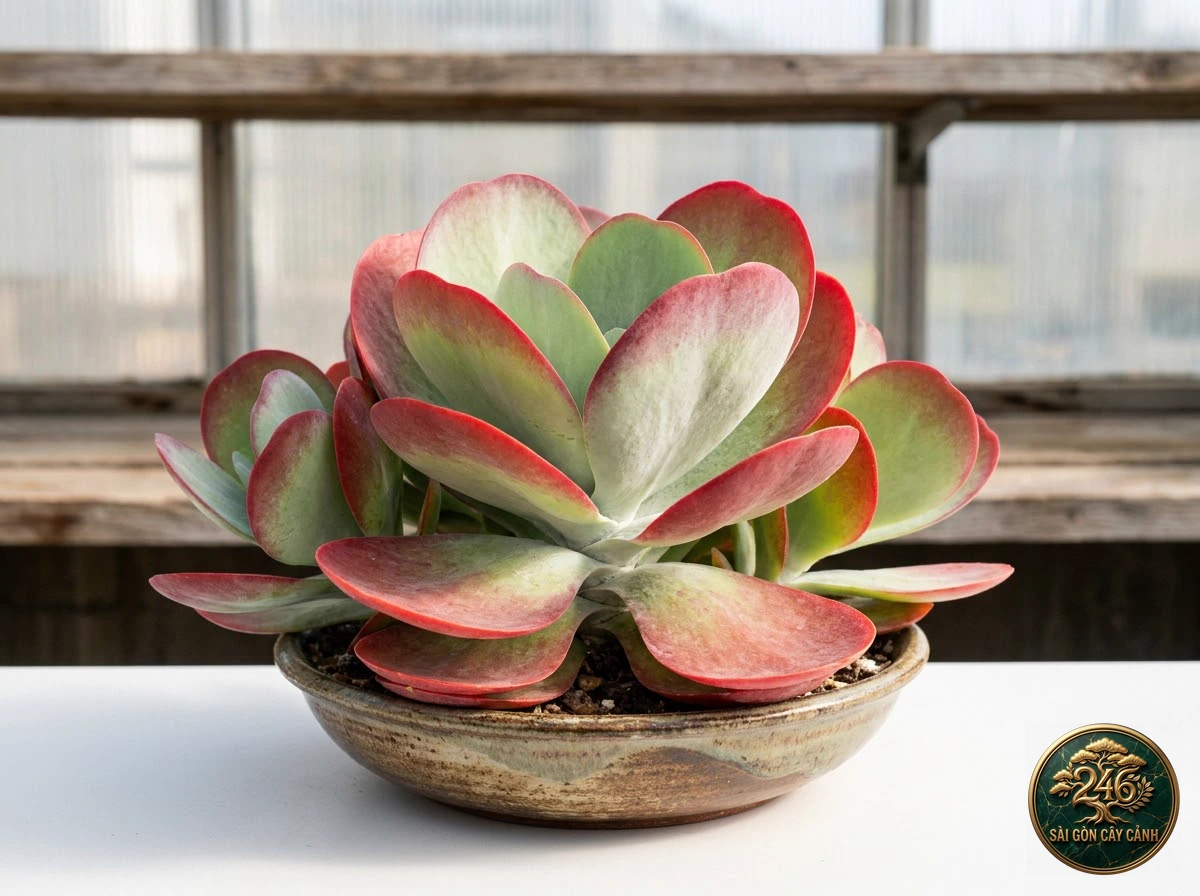
Kalanchoe luciae represents one of the most visually mesmerizing succulent species native to Southern Africa, acclaimed in contemporary architectural horticulture for its bold structural silhouette and dynamic chromatic adaptations. Commonly referred to as the paddle plant or flapjacks, this taxon produces massive, flattened obovate blades stacked in alternating decussate pairs that evoke vertically rising clamshells. Every foliar surface is coated with a delicate dusting of powdery white epicuticular wax, serving as an evolutionary solar barrier that deflects harsh ultraviolet radiation while retaining cellular moisture in arid habitats. The definitive visual hallmark of this species is its foliar responsiveness to bright sunlight: under generous tropical insolation, the margins flush with intense ruby-red and carmine hues, establishing striking aesthetic contrast against the glaucous chalky interior.
The botanical history of Kalanchoe luciae is rooted in the studies of French botanist Raymond-Hamet, who formally described the taxon in 1908 within the Bulletin de l’Herbier Boissier based on botanical holotypes gathered from northeastern South Africa. For subsequent decades, commercial nurseries frequently conflated K. luciae with Kalanchoe thyrsiflora due to their overlapping paddle foliage. Late twentieth-century taxonomic revisions definitively restored its distinction: Kalanchoe luciae bears pale cream to soft yellow urn-shaped florets, narrower spatulate leaf bases, and an intense foliar capacity for ruby anthocyanin accumulation distinct from the compact yellow columnar inflorescence of thyrsiflora.
2. Native Habitat & Geographical Distribution
In its native habitat, Kalanchoe luciae inhabits quartzite crevices, rocky ridges, and open savanna slopes spanning the South African provinces of Limpopo, Mpumalanga, and KwaZulu-Natal, reaching across into Eswatini. Specimens anchor tenaciously inside fractured rocky fissures or beneath scattered thorny thickets at elevations ranging from 600 to 1,500 meters above sea level. This geographical domain experiences a harsh semi-arid climate marked by prolonged winter droughts and episodic summer downpours that rapidly percolate through rocky strata. Surviving these unforgiving conditions led the species to develop extraordinary foliar water storage parenchyma coupled with Crassulacean Acid Metabolism (CAM), keeping foliar stomata tightly sealed during daylight hours to eliminate evaporative transpirational loss.
3. Detailed Morphological Characteristics
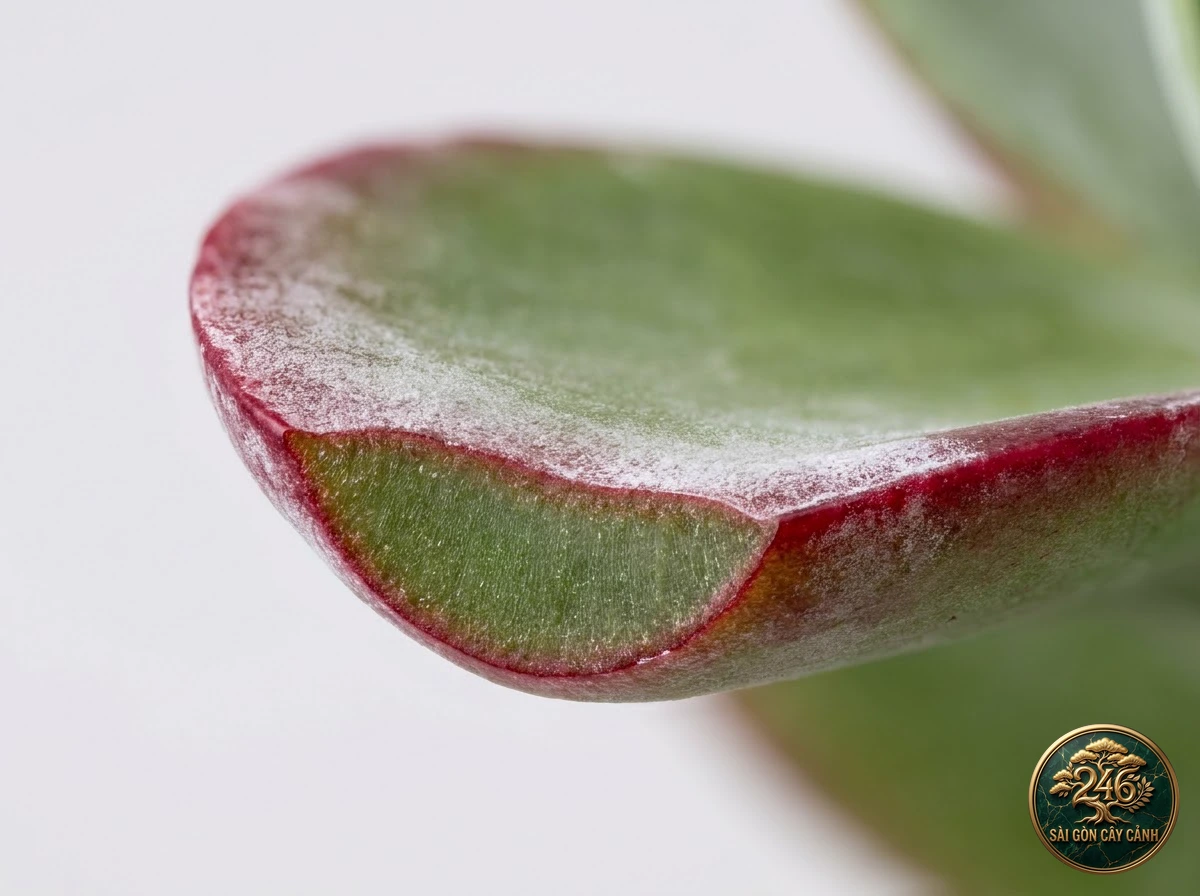
Anatomically, Kalanchoe luciae forms a stout, stem-hugging rosette composed of opposite decussate, sessile foliage attached to a compact fleshy stem. Each mature leaf displays an expansive obovate or paddle-like contour with a distinctly tapered base, extending 12 to 20 cm in length and 8 to 15 cm across. The delicate white farina blanket is synthesized by specialized epidermal glandular structures; mechanical abrasion permanently disrupts this crystalline wax, leaving exposed green tissue that cannot regenerate its waxy coating. Upon attaining maturity after three to five years, the central apex elongates into an enormous upright thyrse standing 1.0 to 1.5 meters tall, supporting dense clusters of small, urn-shaped pale yellow to cream blossoms that release a subtle honey fragrance before the monocarpic central rosette yields vitality to emerging basal offsets.
Microscopic examination of the foliar epidermis in Kalanchoe luciae reveals an intricate farina coating comprising millions of microscopic fatty acid ester crystalloids arranged in an irregular three-dimensional lattice. This creates a superhydrophobic surface that sheds rain droplets swiftly while preventing stomatal clogging. Beneath the epicuticular wax lies an expansive palisade and spongy mesophyll featuring enlarged vacuoles packed with water bound to cellular mucilage and pectins, sustaining cellular turgor under extreme osmotic stress during African dry seasons.
4. Core Botanical Matrix
Core taxonomic and cultivation parameters:
| Botanical Parameter | Observed Trait | Saigon Cay Canh Horticultural Recommendation |
|---|---|---|
| Scientific Name | Kalanchoe luciae Raym.-Hamet | Maintain certified taxonomic labeling across nursery stock |
| Plant Family | Stonecrop family (Crassulaceae) | Observe specialized succulent physiological requirements |
| Native Distribution | Arid quartzite slopes and savannah scrublands extending from Limpopo, Mpumalanga, KwaZulu-Natal through Eswatini, South Africa | Replicate native climatic parameters in indoor cultivation |
| Illumination Intensity | 25,000 – 55,000 lux | Demands 5 to 7 hours of unfiltered direct solar radiation daily to develop deep ruby foliar pigmentation |
| Thermal Window | 16°C – 32°C | Protect against frost below 8°C and provide ventilation during heat |
| Relative Humidity | 40% – 60% | Sustain gentle atmospheric air movement to disperse stagnant moisture |
| Substrate pH | 6.0 – 6.8 | Utilize porous neutral mineral components for rapid drainage |
| Substrate Formulation | 40% porous pumice (3-6mm), 20% expanded perlite, 15% red scoria grit, 15% desalinated coco coir, 10% seasoned worm humus | Maintain coarse granular structure; avoid dense suffocating soils |
| Irrigation Strategy | Irrigate thoroughly only when the growing medium becomes bone-dry; avoid pooling moisture within cupped leaf axils | Enforce thorough substrate dry-down between watering sessions |
| Propagation Pathways | Separation of adventitious basal offsets, rooting semi-hardwood terminal cuttings, or sexual seed propagation | Perform during warm spring or early wet season for peak vigor |
| Veterinary Toxicology | TOXIC TO COMPANION ANIMALS (ASPCA Toxic) | All tissues synthesize bufadienolide cardiac glycosides capable of triggering serious gastrointestinal and cardiovascular toxicity in pets upon ingestion. |
5. Toxicity Profile & Domestic Safety
Toxicological profiles compiled by veterinary authorities confirm that Kalanchoe luciae produces active steroidal compounds designated as bufadienolide cardiac glycosides throughout its vegetative and floral architecture. These bioactive toxins specifically inhibit myocardial sodium-potassium ATPase enzymes, disrupting ionic gradients and provoking uncontrolled cardiac muscle contractions in domestic animals such as dogs and cats. Ingestion of succulent leaf tissue induces rapid clinical manifestations including acute hypersalivation, persistent vomiting, severe watery diarrhea, abdominal cramping, profound lethargy, and dangerous cardiac arrhythmias. Saigon Cay Canh strongly advises indoor plant custodians with household pets to display specimens strictly upon elevated consoles, high decorative shelves, or secured terrace pedestals unreachable by animals.
6. Lighting Dynamics & Photosynthetic Adaptations
Ample solar radiation serves as the primary environmental driver dictating the compact architecture and striking pigmentation of Kalanchoe luciae. In tropical climates, optimal cultivation demands a minimum of 5 to 7 hours of direct, unfiltered sunlight each day, thriving under luminous intensities between 25,000 and 55,000 lux. Strong solar exposure stimulates foliar anthocyanin synthesis along the margins and keeps leaf blades rigid and upright. In dimly illuminated interior spaces, specimens suffer rapid etiolation, characterized by elongated internodes, droopy foliage, and the complete disappearance of red pigmentation into a pale greenish tone. Acclimatizing indoor-grown specimens to full sunlight requires a gradual ten-day adjustment phase to avert severe foliar sunburn.
7. Moisture Equilibrium & Irrigation Regimes
Irrigation regimes for Kalanchoe luciae must adhere strictly to a complete dry-down cycle between watering events. Under tropical lowland temperatures, moisture should be applied thoroughly once every 7 to 10 days, depending on container porosity and air movement. Direct water gently around the perimeter rim or utilize sub-irrigation by placing the pot in a shallow reservoir for 10 minutes, followed by complete gravitational drainage. Never shower water from above directly onto the foliar crown; stagnant moisture captured within clasping leaf bases fosters anaerobic fungal spores that cause lethal black rot. During prolonged monsoon spells or when atmospheric humidity exceeds 80%, watering intervals should be extended to 14 to 18 days.
8. Substrate Architecture & Nutrition Strategy
The specialized potting substrate engineered by Saigon Cay Canh for Kalanchoe luciae comprises 75% coarse mineral components and 25% stabilized organic amendments: combining 40% horticultural pumice (3-6mm), 20% expanded perlite, 15% crushed red scoria rich in iron minerals, 15% desalinated neutralized coco coir, and 10% pure aged vermicompost. This porous granular architecture provides continuous macroporous channels, enabling gravitational irrigation water to drain within moments while bathing root tips in fresh oxygen. A substrate pH hovering between 6.0 and 6.8 ensures optimal cation exchange and nutrient uptake. A modest top-dressing of low-nitrogen, high-potassium slow-release fertilizer pellets applied once each spring satisfies its nutritional requirements.
Regarding nutritional mineralization, Kalanchoe luciae maintains negligible nitrogen demands but benefits substantially from essential trace minerals including iron, magnesium, and particularly potassium to reinforce epidermal walls and promote anthocyanin pigment synthesis. Excessive nitrogen application triggers watery, floppy foliage, suppresses the vivid red margin blush, and heightens vulnerability to bacterial soft rot. At the beginning of the warm spring cycle, top-dressing with a modest amount of cured organic vermicompost or applying a conservative low-nitrogen slow-release blend provides balanced sustained nourishment.
9. Temperature Dynamics & Aeration Strategy
The optimal thermal comfort zone for Kalanchoe luciae spans 18°C to 32°C, matching southern tropical environments exceptionally well. Established specimens comfortably endure daytime heat peaks up to 38°C provided that robust cross-ventilation prevents heat accumulation. Conversely, wet roots in cold conditions below 5°C trigger sudden foliar cellular collapse and basal decay. An ambient relative humidity of 40% to 60% is preferred. Continuous atmospheric airflow serves as an indispensable cultural barrier: gentle ambient breezes dissipate thermal boundary layers around foliage, evaporate accidental droplet accumulations, and suppress the onset of fungal leaf spot pathogens.
10. Specialized Propagation Protocols
Propagation of Kalanchoe luciae is reliably achieved via basal offset separation, apical stem beheading, or sexual seed germination. Basal offset division stands as the most straightforward technique: when adventitious offsets emerging around the root collar reach 5 to 7 cm across, sever them cleanly with a sterilized blade retaining a portion of their root structure, allow the cut surface to callus in dry shade for 3 to 5 days, and plant into barely moist pumice grit. Stem tip cuttings harvested before floral initiation also strike roots promptly after callusing. While single leaf propagation is biologically possible, embryonic meristem activation requires several months of patient incubation under filtered light.
11. Diagnostic Matrix & Preventative Health
Cottony foliar mealybugs nestled inside deep leaf junctures and subterranean root mealybugs represent the primary pests threatening Kalanchoe luciae. Upon sighting white waxy deposits, immediately dab the insects with a cotton swab soaked in 70% medicinal alcohol; the alcohol instantly dissolves their protective lipid armor without leaving toxic synthetic deposits on foliage. If root rot manifests as a darkened, soft collar near the soil line, unpot the specimen without delay, surgically excise all diseased tissues until sound green flesh is reached, treat the excision with antimicrobial sulfur powder, and repot into pristine, completely dry pumice substrate.
Clinical diagnostics and remedial actions:
| Observed Symptom | Primary Root Cause | Saigon Cay Canh Remedial Action |
|---|---|---|
| Lower leaves turn soft, thin, and wrinkled | Prolonged moisture deficit in the root medium | Provide a deep perimeter soak for Kalanchoe luciae; tissues recover within 48 hours |
| Black soft decay at the stem base with leaf drop | Anaerobic fungal root rot due to waterlogged substrate | Unpot immediately, excise necrotic pulp, treat with sulfur powder, and repot into bone-dry pumice |
| Elongated, weak internodes with pale drooping foliage | Chronic insufficiency of direct solar radiation | Relocate Kalanchoe luciae to receive unshaded morning sunlight for 4 to 6 hours daily |
| White cottony clusters nested in foliar axils | Foliar mealybug infestation (Pseudococcidae) | Apply 70% medicinal alcohol directly with a cotton bud to dissolve waxy insect cuticles without foliar damage |
12. Living Architecture & Interior Styling
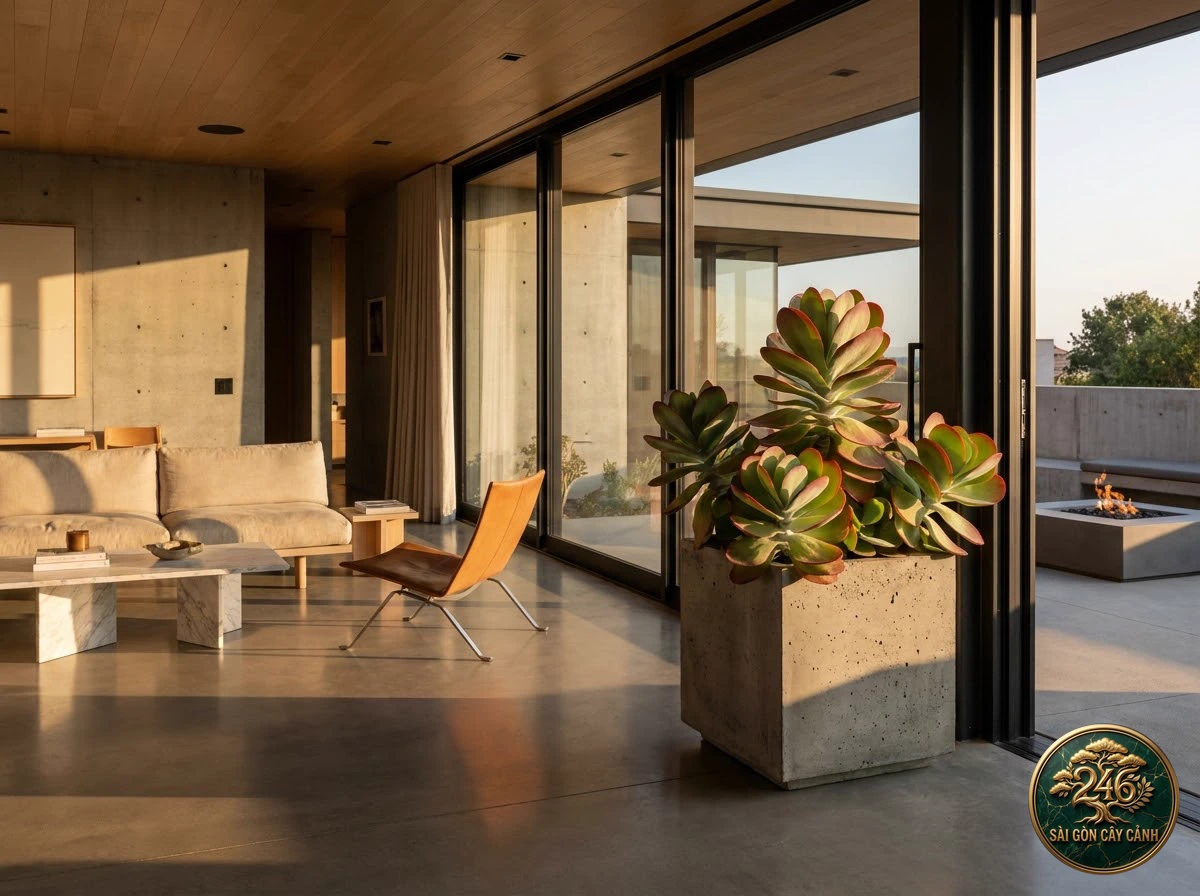
Within high-end interior botanical styling and contemporary landscape design, Kalanchoe luciae operates as a bold sculptural centerpiece. The sharp architectural verticality of its paddle-shaped blades and intense ruby margin blushing provide captivating textural contrast against minimalist concrete pots, charcoal matte ceramics, or weathered terracotta planters. The plant excels on luminous penthouse balconies, modern xeriscape rock gardens, luxury villa entrances, or sunlit workspace consoles adjacent to expansive windows, projecting a commanding sense of poise, vitality, and enduring natural elegance.
In contemporary landscape design and architectural interior styling, Kalanchoe luciae serves as an authoritative statement of desert luxury. Its erect paddle foliage, rising like sculptural ruby-red sails, provides compelling geometric contrast against large raw concrete planters, rounded terrazzo urns, or matte charcoal ceramic pottery. When paired with directional night accent lighting, the interlocking leaf silhouettes cast dramatic architectural shadows across textured masonry walls, introducing evocative natural drama and contemplative depth to modern spaces.
Brand Ambassador & Living Herbarium Botanical Philosophy
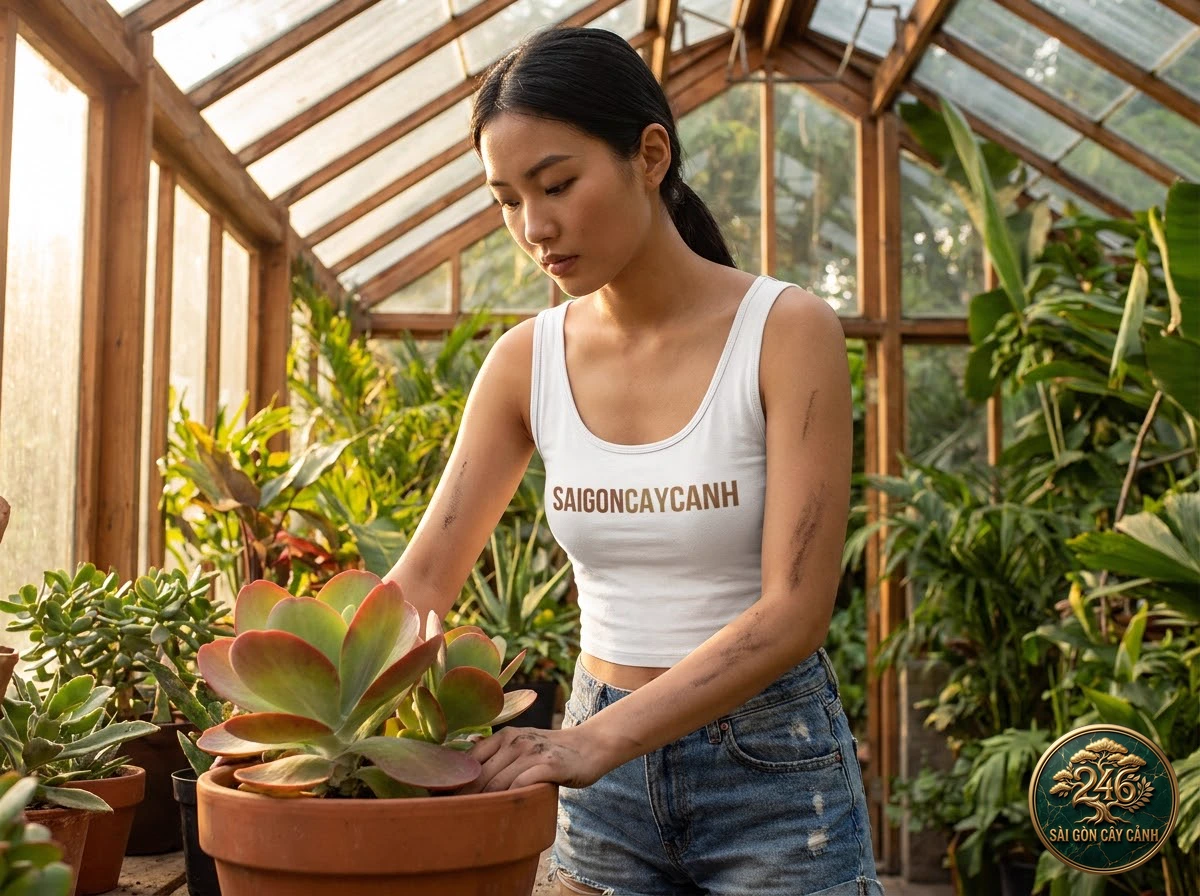
At Saigon Cay Canh botanical nursery, each specimen is curated and tended under the guidance of our brand ambassador, ensuring vibrant vitality and true-to-type morphology.
13. Horticultural Excellence & Living Heritage
At Saigon Cay Canh, every specimen of Kalanchoe luciae is carefully cultivated and hardened under unshaded tropical skies, ensuring structural compactness, pristine farina coats, and vivid crimson margin pigmentation. Our botanical specialists attend meticulously to every operational detail from substrate blending to handcrafted potting, proudly delivering robust living botanical treasures that bring natural beauty, artistic distinction, and lasting greenery into your architectural home.