
Living plant profile
Goat’s horn cactus
Astrophytum capricorne
📌 CLINICAL & BIOLOGICAL ABSTRACT — Goat’s horn cactusAstrophytum Cactaceae Standard Botanical Monograph V2 Goat’s Horn Cactus (Astrophytum capricorne): Curled Papery Spines and Arid Pot Culture Scientific Binomial: Astrophytum capricorne (A.Dietr.) Britton & Rose English Vernacular: Goat’s horn cactus Plant Family: Cactaceae Native Distribution: Coahuila, Mexico Astrophytum capricorne is an extraordinary star cactus of Coahuila […]
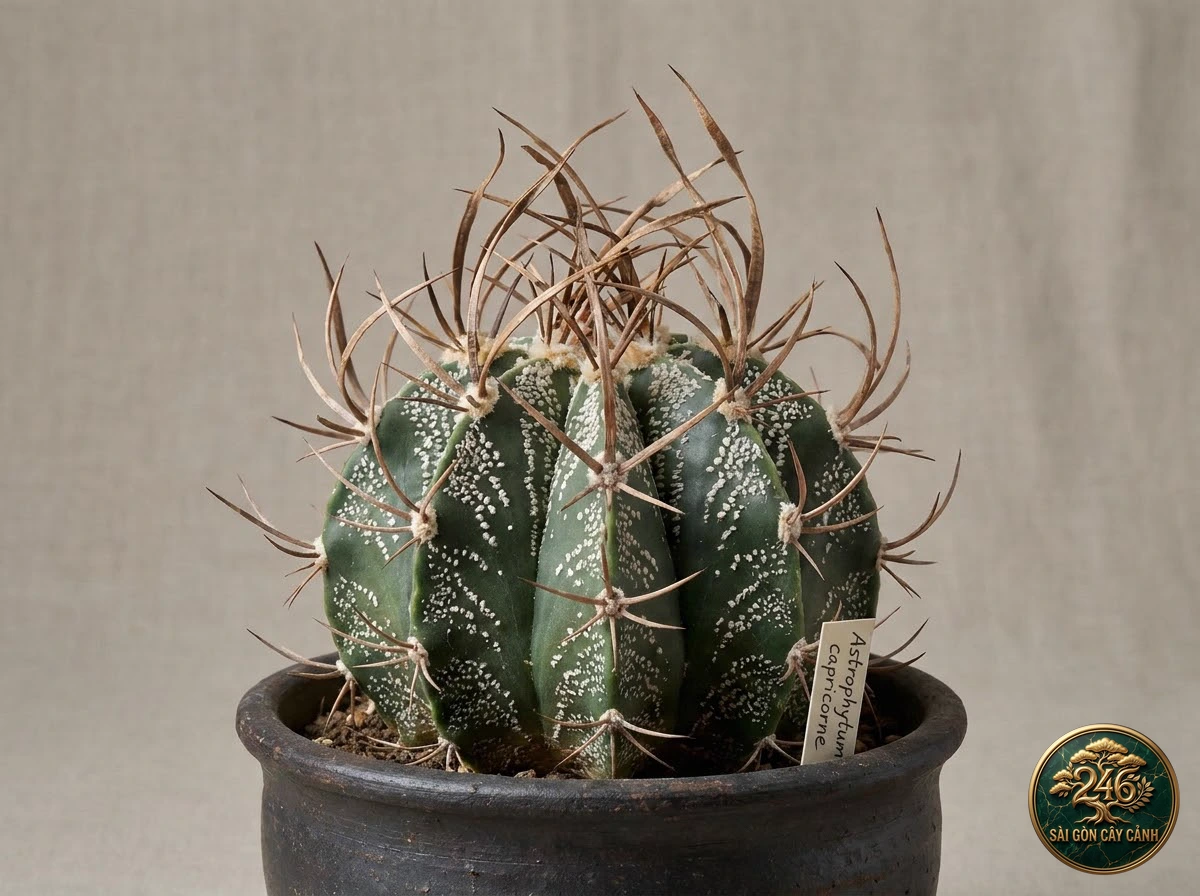
Goat’s Horn Cactus (Astrophytum capricorne): Curled Papery Spines and Arid Pot Culture
English Vernacular: Goat’s horn cactus
Plant Family: Cactaceae
Native Distribution: Coahuila, Mexico
Astrophytum capricorne is an extraordinary star cactus of Coahuila rocky mountain slopes, celebrated for its twisted papery spines curling like wild goat horns over a speckled globose dome and crimson-throated yellow blooms.
Sài Gòn Cây Cảnh Care Compass
1. Botanical Provenance & Nomenclature History
Astrophytum capricorne was initially cataloged by Albert Dietrich in 1851 and transferred to Astrophytum by Britton and Rose in 1922. This species is indigenous to arid limestone mountain slopes and scree throughout Coahuila, northern Mexico.
Growing alongside sun-scorched desert grasses and limestone rocks, it evolved flexible ribbon-like spines that provide camouflage among dry tussocks while filtering intense solar rays from the apical meristem.
2. Morphological Characteristics & Diagnostic Keys
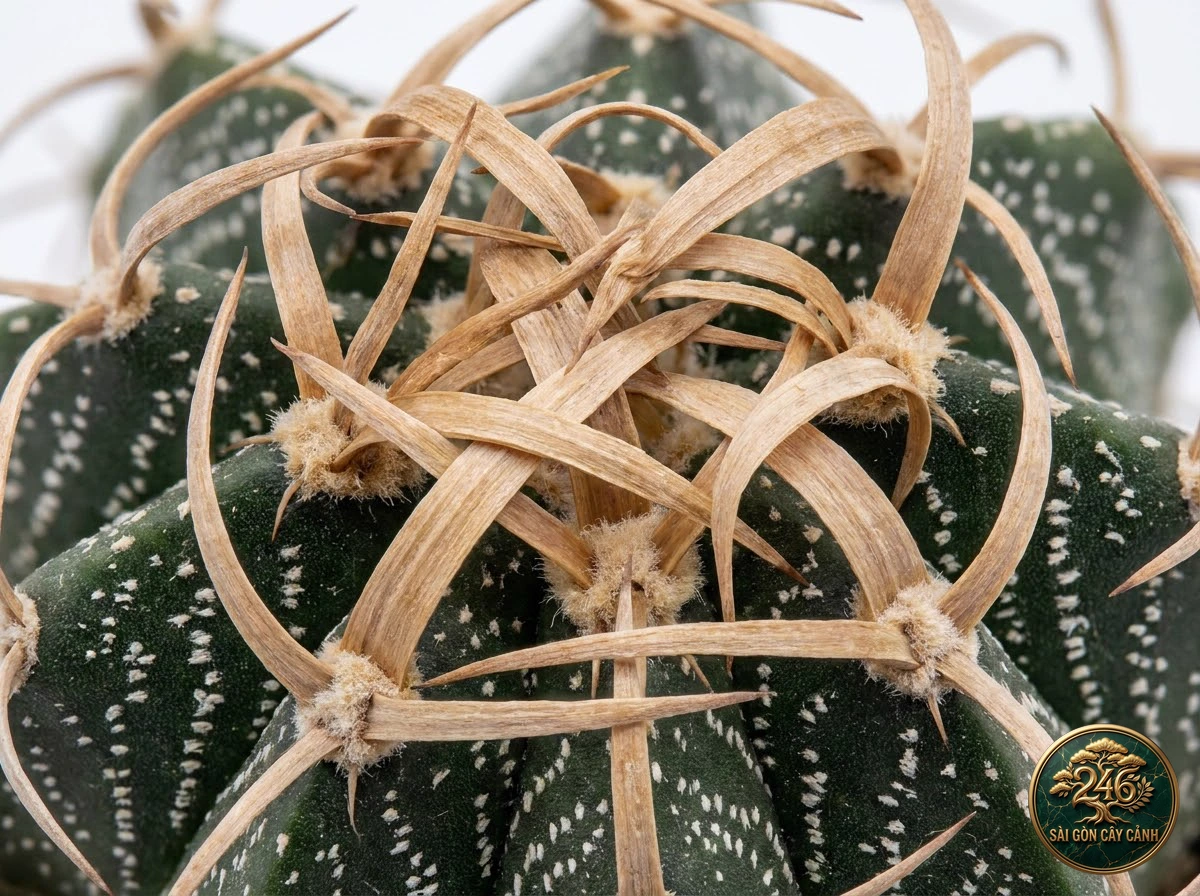
The stem begins globose before elongating into an upright dome fifteen to twenty-five centimeters tall, divided into eight deep, well-defined ribs. Areoles give rise to five to ten flattened papery spines five to seven centimeters long, curling irregularly in amber-brown over the stem apex.
During summer, magnificent flowers six to seven centimeters broad open with brilliant yellow petals illuminated by a deep crimson-red central throat, casting a delicate fragrance.
3. Photosynthetic Irradiance & Microclimate Engineering
Optical requirements span 5,000 to 9,000 lux, excelling under generous direct morning photons; natural light sustains characteristic spine curling and prompts vigorous summer floral displays.
Position containers in airy open verandas with good breezes to maintain crisp, buoyant spine texture, avoiding stuffy rooms that cause spines to become limp and lose their wild horn-like silhouette.
4. High-Percolation Mineral Substrate Engineering
The potting mix combines 50% medium-grade pumice, 20% volcanic lava scoria, 15% perlite, and 15% screened aged organic compost.
High mineral porosity ensures irrigation water percolates through the root zone and exits bottom drain holes rapidly, keeping the root collar dry and allowing root hairs to breathe.
5. Biological Irrigation Protocols & Seasonal Rhythms
Watering follows strict soak-and-dry discipline: soak deeply every seven to nine days in warm seasons only after the soil volume has dried completely.
During humid rainy months, expand watering intervals to fifteen or eighteen days to maintain firm stem turgor and prevent papery spines from holding moisture.
6. Trace Mineral Nutrition & Balanced Bio-Fertilization
Apply diluted organic liquid fertilizer rich in phosphorus and potassium at one-quarter standard strength once monthly in late afternoon during warm periods.
Avoid high-nitrogen feeding that causes rapid soft expansion, which weakens papery spine structures and makes them brittle and prone to breakage.
7. Clonal & Sexual Propagation Protocols
Propagate reliably by seed; dark amber seeds sprout uniformly within six to ten days over moist aerated mineral sand.
Yearling seedlings begin developing their first curling papery spines along apical areoles, faithfully reflecting the wild architectural traits of parent plants.
8. Biochemical Toxicity & Companion Animal Safety (ASPCA)
Astrophytum capricorne contains zero biological toxicity under ASPCA standards, posing no systemic health danger to household cats, dogs, or pet birds.
Its flexible papery spines lack sharp puncture tips, ensuring safe and easy handling during maintenance and repotting.
9. Clinical Pathology Diagnostics & Pest Management
Diagnostic evaluation of nutritional imbalances and preservation steps for Astrophytum capricorne spines:
| Observed Symptom | Biological Root Cause | Standard Remedial Action |
|---|---|---|
| Papery spines turn dark and brittle-soft | Overhead watering leaving moisture trapped in spine mass | Cease top watering, relocate to breezy location to air-cure spines |
| Stem collapses into brown watery rot | Root rot infection from waterlogged dense potting mix | Unpot, excise rot to clean tissue, dust sulfur, dry 7 days, reroot |
| Flower buds abort before opening | Insufficient solar photons or chilling from cold irrigation | Move to direct morning sun, apply temperate water along pot rim |
| White cottony tufts nestled at spine bases | Mealybug pests feeding on epidermal sap | Dab clean with 70% alcohol on cotton swab, spray organic neem oil |
10. Taxonomic Comparative Matrix Across Allied Taxa
Anatomical matrix contrasting Astrophytum capricorne with neighboring ribbon-spined xerophytes:
| Diagnostic Metric | Astrophytum capricorne | Allied Species A | Allied Species B |
|---|---|---|---|
| Spine character | Flexible ribbon-like papery curled horns | Stout rigid needle-sharp golden spines | Entirely spineless smooth epidermal ribs |
| Rib structure | 8 deep ribs with pronounced sharp margins | 8 spiraling ribs developing columnar height | 5 symmetrical ribs resembling a bishop’s hat |
| Floral throat | Deep fiery crimson-red central throat | Uniform pale canary yellow throughout | Subtle yellowish-orange or pure yellow |
| Tactile feel | Pliable papery touch without piercing | Rigid piercing thorns requiring leather gloves | Smooth velvet or pebble-like texture |
11. Biophilic Interior Design & Architectural Application
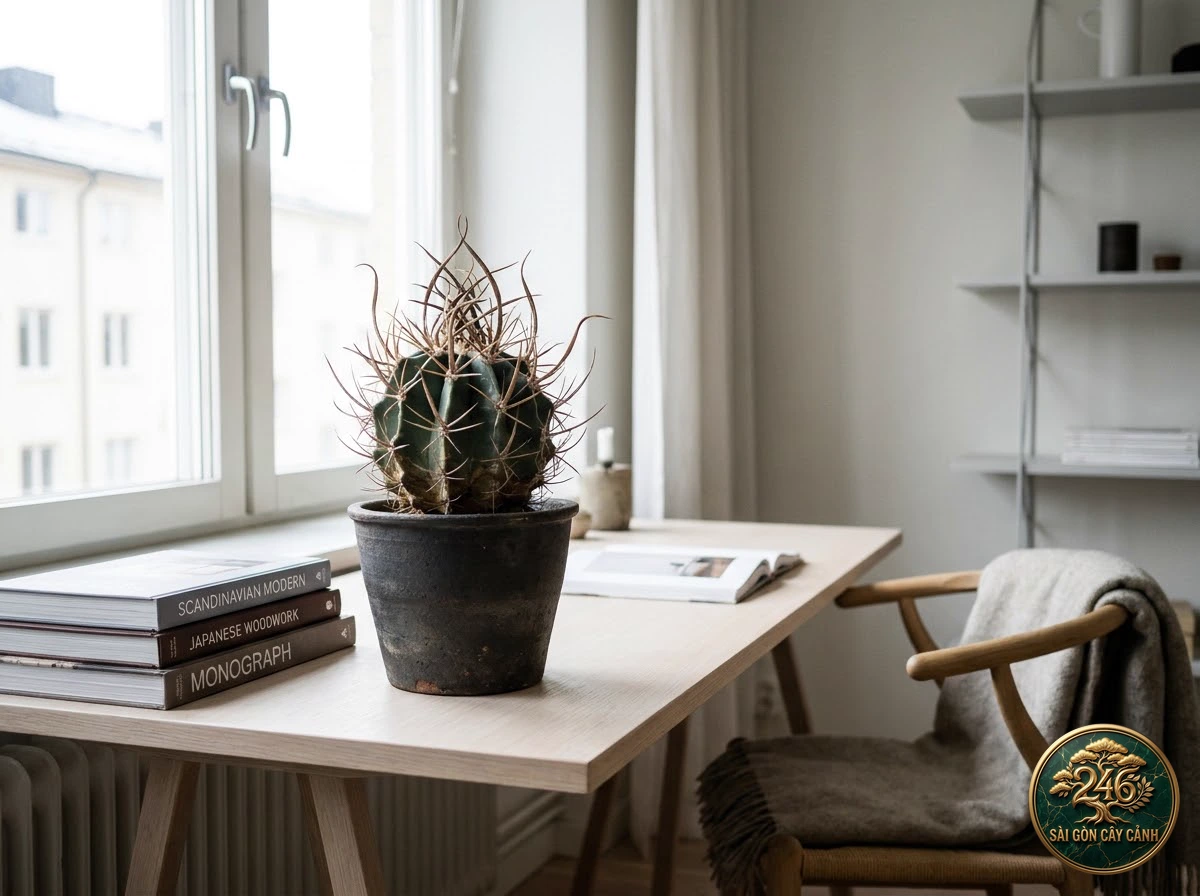
The rugged wild elegance of Astrophytum capricorne with twisting horn spines embodies sculptural artistry within raw terracotta planters or slate trays.
It conveys resilience, creative adaptability, and unique natural character, highly favored across innovative architectural and design studios.
🌿 Trang Thiết Bị, Đất Trồng & Dụng Cụ Bonsai Tuyển Chọn
Dụng cụ tỉa, giá thể hữu cơ & phân bón chuyên dụng cho cây cảnh.

Đất trồng sen đá, xương rồng trộn sẵn 1 Kg 🔥Coco Forest…

Vòi phun nước đa năng 8 chế độ Maygarden VPA101, vòi xị…

Phân Trùn Quế Viên Nén SFARM Đặng Gia Trang Gói 1Kg – P…
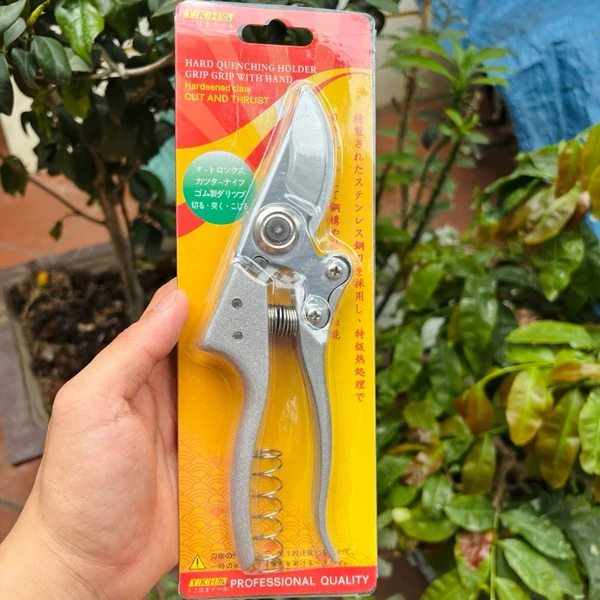
Kéo cắt cành cộng lực YOKOHAMA SK5 xuất xứ JAPAN Kéo cắ…

viên sơ dừa nén, đất sạch hữu cơ vi sinh dinh dưỡng cho…
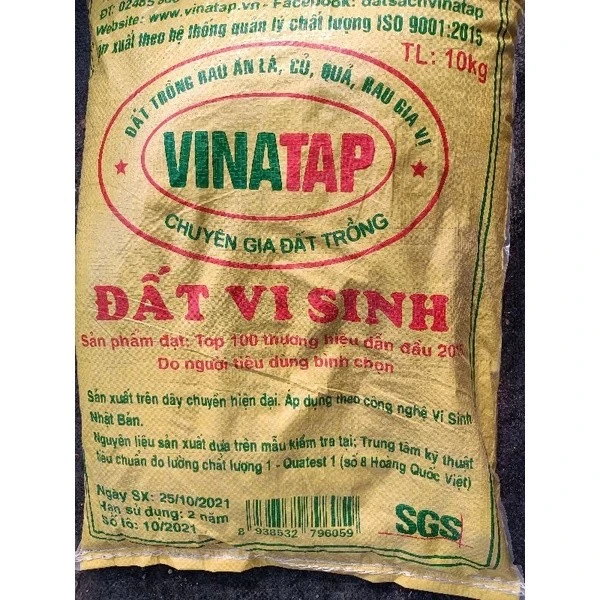
Đất Vi Sinh Trồng Cây Bao 10kg – Đất Sạch Dinh Dưỡng Đã…

Phân Bón Lá Growmore All Purpose – To Củ, Lớn Trái, Chắ…

Giá Thể Mùn Dừa Sfarm Đã Qua Xử Lý – Bao 50dm3 – Xơ dừa…

Bánh xơ dừa hữu cơ nén hình chữ nhật đã xử lý mầm bệnh …
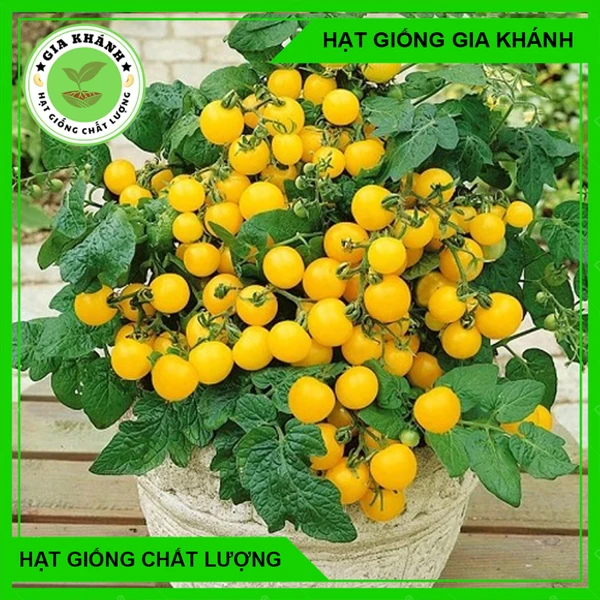
GÓI 30 HẠT GIỐNG CÀ CHUA BI LÙN VÀNG F1 SIÊU TRÁI – SIÊ…
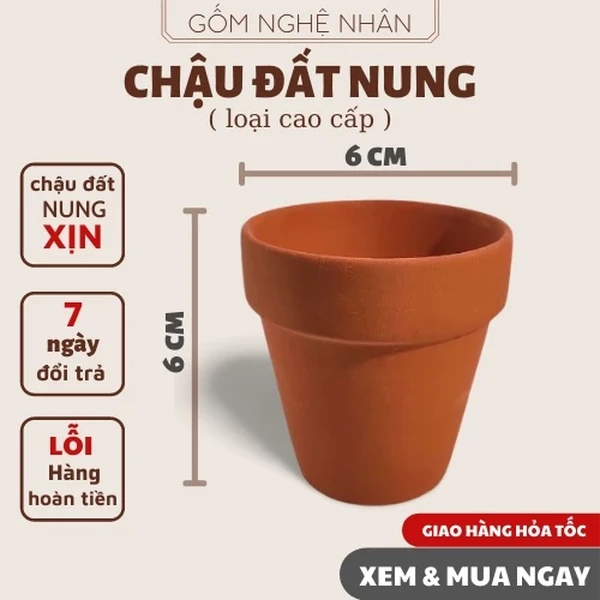
Chậu đất nung trồng sen đá và xương rồng, chậu trồng se…
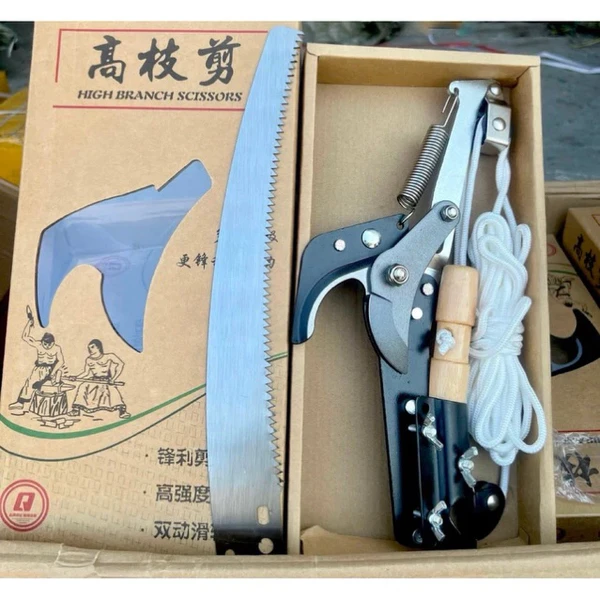
Kéo Cắt Cành Trên Cao Tích Hợp Lưỡi Cưa Cây Thép SK5 Nh…
Nursery Care Journal & Living Greenery Moments
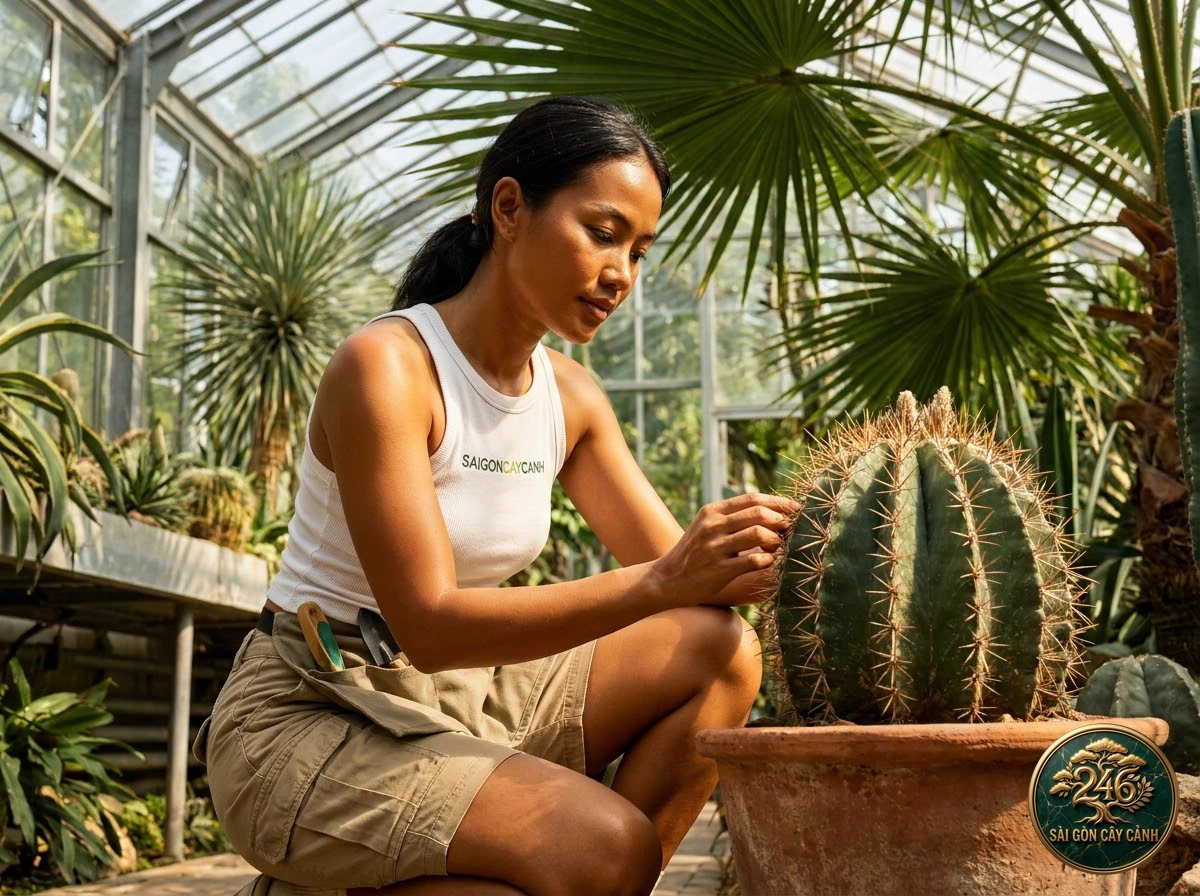
At Saigon Cay Canh greenhouse, each photograph captures genuine everyday care moments between plant lovers and living greenery, spreading a passion for nature and green-living inspiration.
💬 Góc Tư Vấn & Hướng Dẫn Kỹ Thuật SGCC
Chuẩn E-E-A-T Kinfolk❓ Chăm sóc Goat’s horn cactus cần lưu ý điều gì quan trọng nhất?
💡 Dạ điều quan trọng nhất là giữ môi trường sống ổn định, tránh sốc nhiệt hay dao động thông số đột ngột, đồng thời cung cấp khẩu phần ăn sạch và tươi mới ạ.
❓ Làm thế nào để phòng ngừa bệnh tật hiệu quả cho các bé?
💡 Dạ anh chị nên giữ vệ sinh chuồng/hồ nuôi sạch sẽ, thay nước hoặc dọn dẹp định kỳ và bổ sung vitamin, men tiêu hóa đều đặn để tăng sức đề kháng ạ.
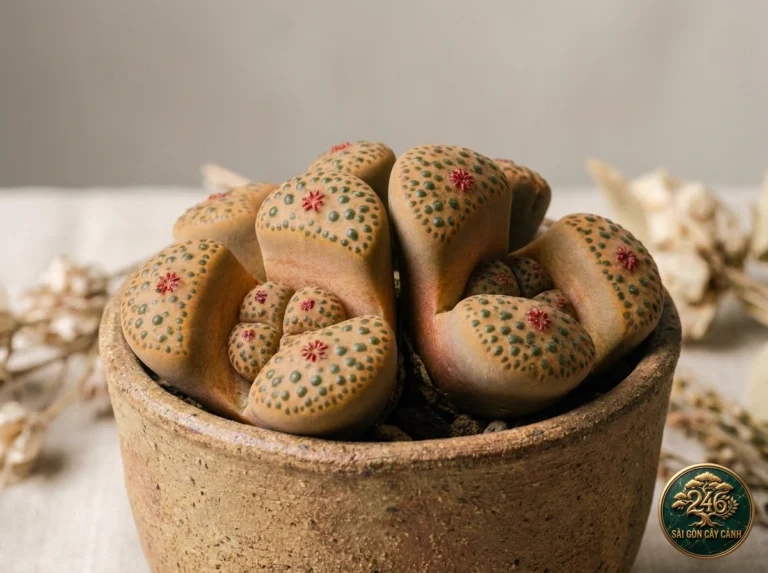
Spotted Living Stone (Lithops fulviceps)
Lithops fulviceps is a captivating living stone succulent native to arid Namibian plateaus, distinguished by warm ochre leaves densely dotted with elevated
Read Monograph →
Bunny Ears Cactus (Opuntia microdasys)
Opuntia microdasys is the world-famous Bunny Ears cactus native to Mexican deserts, celebrated for delightful paired paddle cladodes resembling rabbit ears
Read Monograph →
Cylindrical Snake Plant (Sansevieria cylindrica)
Sansevieria cylindrica, the Cylindrical Snake Plant or African Spear, is a celebrated architectural succulent featuring stiff upright round spearlike leave
Read Monograph →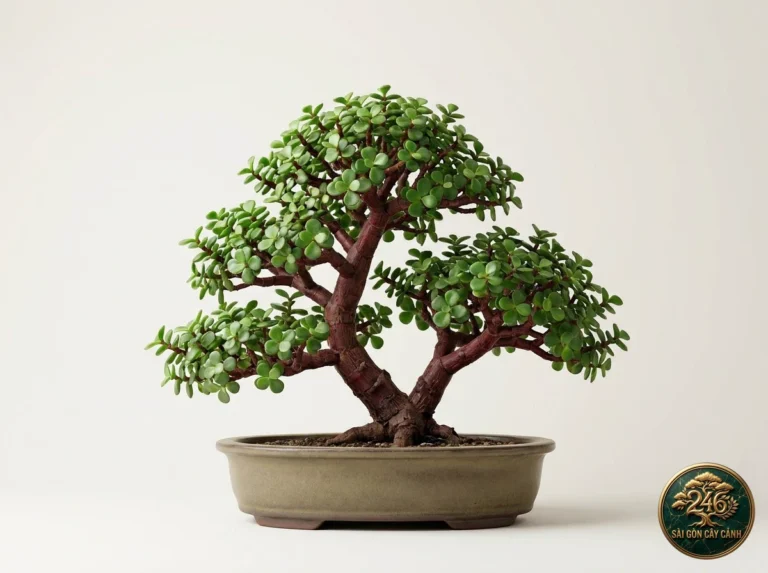
Elephant Bush (Portulacaria afra)
Portulacaria afra, celebrated as the Elephant Bush or Spekboom, is a remarkable South African succulent shrub renowned for mahogany-red woody stems, rounde
Read Monograph →Expert Q&A, Recommended Supplies & Article Feedback
Tap once to connect instantly via Google, Facebook or TikTok — no long forms required!
No questions yet for this article. Tap Google / Facebook / TikTok above to ask the first question!