
Living plant profile
Elephant Bush (Portulacaria afra)
Portulacaria afra
Portulacaria afra, celebrated as the Elephant Bush or Spekboom, is a remarkable South African succulent shrub renowned for mahogany-red woody stems, rounde

Elephant Bush (Portulacaria afra): Spekboom Carbon Sequestration and Bonsai Guide
Portulacaria afra, celebrated as the Elephant Bush or Spekboom, is a remarkable South African succulent shrub renowned for mahogany-red woody stems, rounded emerald leaves, and unmatched carbon-sequestration capacity.
Sài Gòn Cây Cảnh Care Compass
1. Botanical Nomenclature & Taxonomic History
Portulacaria afra was scientifically described in 1786 by Austrian botanist Nikolaus Joseph von Jacquin. It serves as the keystone dominant species throughout the Albany Thicket biome in Eastern Cape, South Africa.
Hailed globally as an ecological wonder, it flexibly switches between C3 photosynthesis during moist periods and CAM metabolism during droughts, sequestering carbon at rates rivaling tropical rainforests.
2. Morphological Architecture & Anatomical Specializations

Plants develop into woody succulent shrubs two to four meters tall with lustrous mahogany-red to reddish-brown stems branching profusely. Fleshy opposite obovate to rounded leaves measure one to two centimeters long, displaying bright jade-green coloration.
Branches lignify into attractive reddish bark while retaining structural flexibility for bonsai styling; tiny starry lavender-pink blossoms appear in dense clusters following seasonal droughts.
3. Photosynthetic Photoperiod & Radiation Dynamics
Thrives under generous solar radiation of 6,000 to 18,000 lux, excelling under four to six hours of direct daily sunlight to spur dense branching and thick leaf turgor.
It adapts gracefully to bright indoor interiors near windows; prolonged dim light induces lower leaf shedding and elongated internodes.
4. Mineral Substrate Matrix & Aeration Dynamics
The potting blend requires airy porosity and rapid drainage: 40% fine pumice grit, 30% sandy loam, 15% carbonized rice husks, and 15% organic worm castings.
Its vigorous root system absorbs moisture briskly while demanding abundant aeration, particularly when styled in shallow bonsai containers.
5. Hydraulic Equilibrium & Precision Irrigation Protocol
Irrigation regime: soak deeply every five to seven days during warm weather once the topsoil has dried out; though drought-hardy, steady water encourages lush jade foliage.
In cool or overcast rainy spells, extend watering to every ten or fourteen days, irrigating only when leaves show slight soft wrinkling.
6. Nutrient Management & Mineral Supplementation
Supply balanced organic liquid houseplant nutrition at half strength once every four weeks through the summer to encourage trunk lignification and dense leaf cushions.
7. Vegetative Propagation & Conservation Protocols
Propagate effortlessly via stem cuttings ten to fifteen centimeters long; cure severed stems in airy shade for twenty-four hours.
Insert cuttings into moist pumice sand; roots strike vigorously within seven to fourteen days with virtually 100% success rate.
8. Biochemical Toxicity Evaluation & Pet Safety Standards (ASPCA)
Portulacaria afra holds certified 100% non-toxic status under ASPCA guidelines, posing zero hazard to dogs, cats, or curious children.
In native South Africa, its tart, crisp, vitamin-rich succulent leaves are a prized staple for wild elephants and are eaten by humans in refreshing wild salads.
9. Physiological Diagnostic Matrix & Targeted Intervention
Detection of woody stem damage and restoration of pristine jade turgor in Portulacaria afra:
| Clinical Diagnostic Sign | Primary Root Cause | Corrective Horticultural Protocol |
|---|---|---|
| Leaves turn pale yellow and drop extensively upon touch | Overwatering causing root hypoxia or sudden environmental shock | Suspend watering immediately, allow potting mix to dry thoroughly for ten days, enhance ventilation |
| Leaves appear wrinkled and concave while remaining green | Severe hydration deficit during hot sunny spells | Perform a deep bottom-soak; leaves absorb moisture and plump back to full turgor within 24 hours |
| Branches stretch thin and internodes become awkwardly long | Insufficient ambient photosynthetic lighting | Prune back leggy stems and move container into four to six hours of direct sunlight daily |
| Cottony white deposits cluster within leaf-stem nodes | Mealybugs infesting tender young branch junctions | Swab clean with 70% isopropyl alcohol and spray organic horticultural neem oil at dusk |
10. Comparative Diagnostic Matrix & Allied Xerophyte Differentiation
Field morphological comparison differentiating Portulacaria afra from allied succulent bonsai taxa:
| Diagnostic Parameter | Portulacaria afra (Target Taxon) | Allied Congeneric Relative A | Allied Congeneric Relative B |
|---|---|---|---|
| Foliar dimensions | Miniature 1 to 2 cm rounded jade droplets | Large thick 3 to 5 cm oval paddles | Flat leaves clustered in compact rosettes |
| Stem bark coloration | Lustrous mahogany-red to reddish-brown woody stems | Dull greyish-brown thick succulent stems | Herbaceous fleshy green stems |
| Biochemical safety | 100% non-toxic, edible for humans and pets (ASPCA approved) | Contains mild toxins to cats and dogs (Crassula ovata) | Non-toxic |
| Bonsai adaptability | Superb flexibility for wired miniature bonsai styling | Pruned as upright shrub mounds | Arranged in miniature succulent dish gardens |
11. Biophilic Interior Aesthetics & Architectural Display
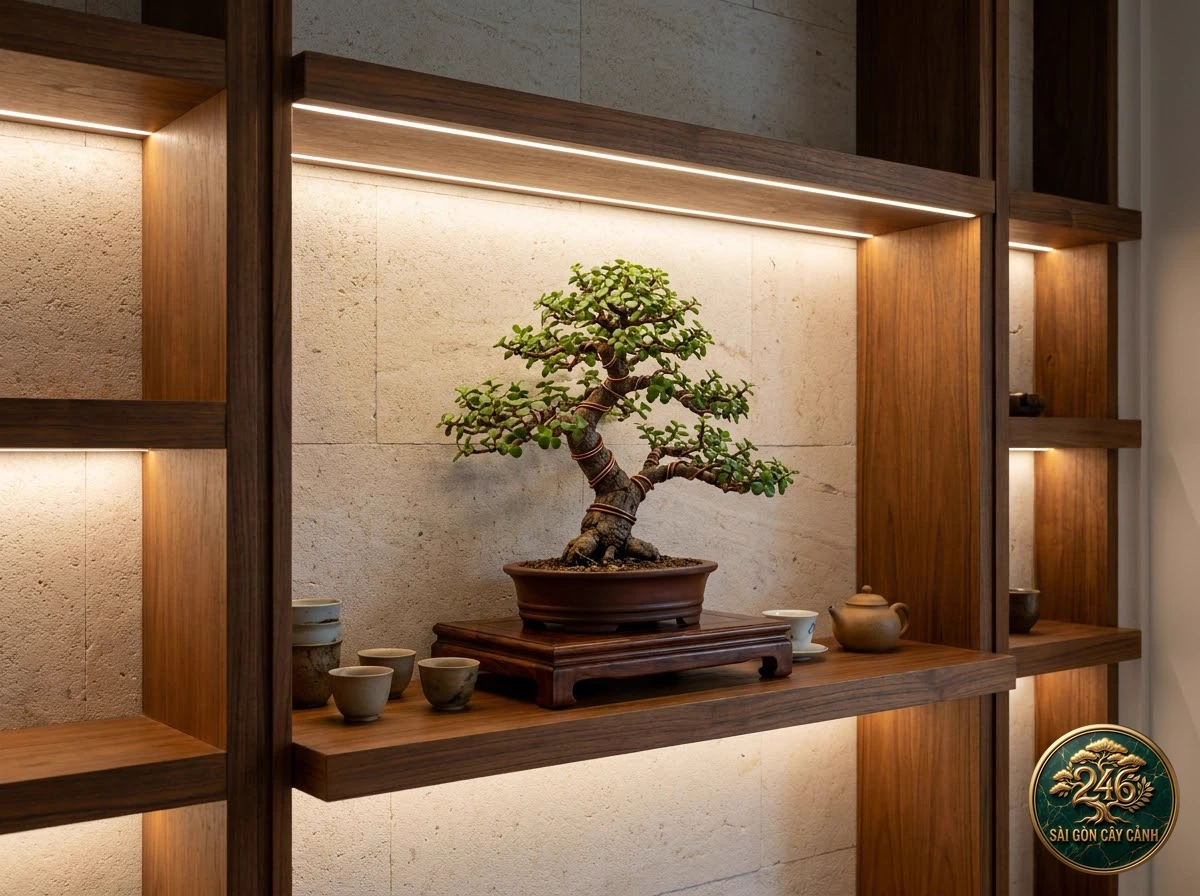
Portulacaria afra shines as the premier succulent bonsai subject, evoking ancient windswept grandeur when trained into upright, cascade, or literati styles in unglazed tokoname trays.
Its mahogany trunk paired with jade-like foliage symbolizes prosperity and enduring life, bringing refreshing biophilic elegance to contemporary interiors.
🌿 Trang Thiết Bị, Đất Trồng & Dụng Cụ Bonsai Tuyển Chọn
Dụng cụ tỉa, giá thể hữu cơ & phân bón chuyên dụng cho cây cảnh.
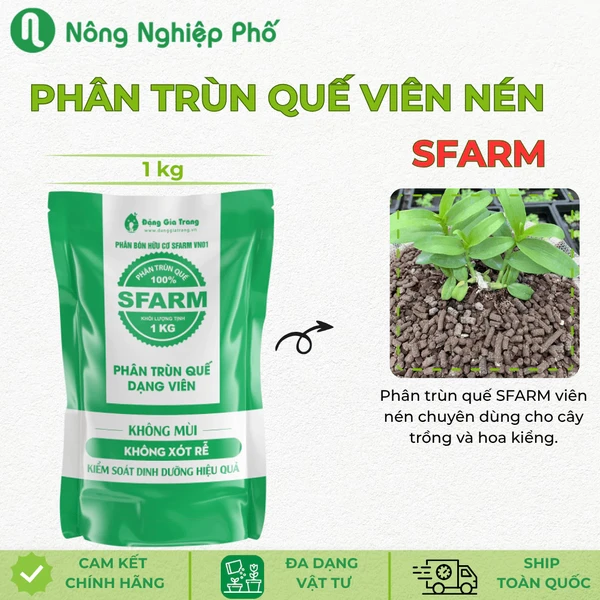
Phân Trùn Quế Viên Nén SFARM 1kg Cho Mọi Loại Cây Phân …

Hạt giống hoa Hồng Leo Pháp đủ màu (Tặng phân bón), hoa…
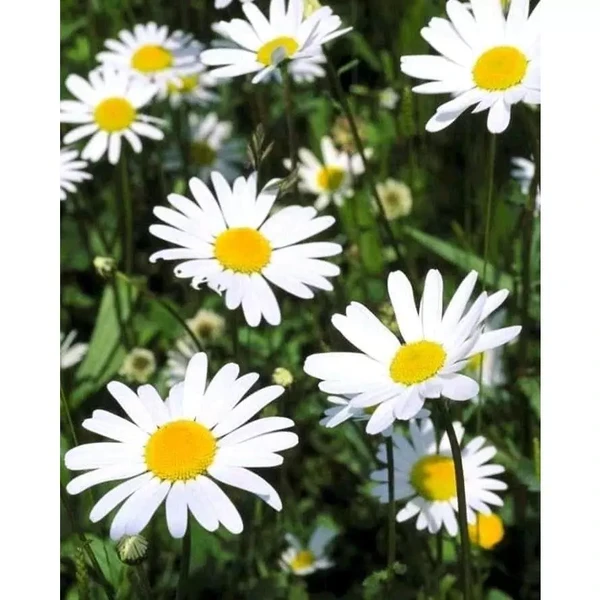
HẠT GIỐNG HOA CÚC CHI TRẮNG ( CÚC HỌA MY) (100 hạt )

Bộ 2 Cây Mini – 10x10x15 Cm – Dáng Bán Cầu – Sen Đá Chu…

COMBO 4 BÁNH XƠ DỪA DẠNG NÉN TRÒN, ĐƯỢC SỬ DỤNG LÀM GIÁ…

Bộ vòi xịt nước tưới cây đa năng 8 chế độ

10kg Akadama Ibaraki Nhật Bản Nguyên Bao 14L | Size S (…
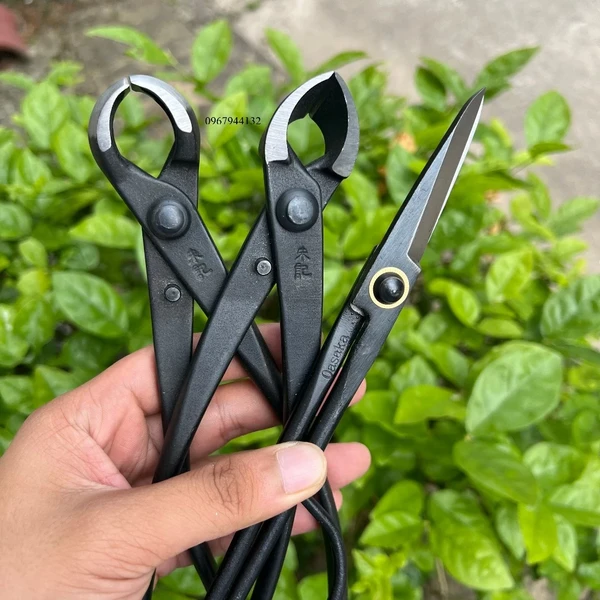
SET Kìm Cạp Tròn + Cạp Xéo + Kéo Tỉa Lá Thép Đúc Nguyên…

Phân bón lá cao cấp NPK Growmore 20-20-20 hộp 500gr phá…

Cưa cầm tay nhỏ gọn cưa tay gấp gọn mini tiện lợi cưa g…

Kéo Cắt Cành Trên Cao Nhật Bản SK5 – Kéo Cắt Tỉa Cây Cả…

XẺNG ( BAY) INOX LÀM VƯỜN siêu bền không gỉ sét
Nursery Care Journal & Living Greenery Moments
At Saigon Cay Canh greenhouse, each photograph captures genuine everyday care moments between plant lovers and living greenery, spreading a passion for nature and green-living inspiration.

💬 Góc Tư Vấn & Hướng Dẫn Kỹ Thuật SGCC
Chuẩn E-E-A-T Kinfolk❓ Chăm sóc Elephant Bush (Portulacaria cần lưu ý điều gì quan trọng nhất?
💡 Dạ điều quan trọng nhất là giữ môi trường sống ổn định, tránh sốc nhiệt hay dao động thông số đột ngột, đồng thời cung cấp khẩu phần ăn sạch và tươi mới ạ.
❓ Làm thế nào để phòng ngừa bệnh tật hiệu quả cho các bé?
💡 Dạ anh chị nên giữ vệ sinh chuồng/hồ nuôi sạch sẽ, thay nước hoặc dọn dẹp định kỳ và bổ sung vitamin, men tiêu hóa đều đặn để tăng sức đề kháng ạ.
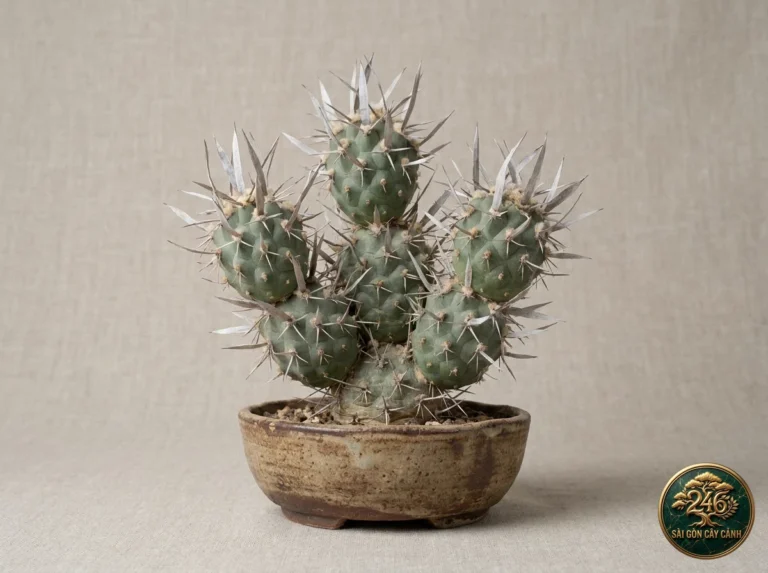
Paper Spine Cactus (Tephrocactus articulatus)
Tephrocactus articulatus is an extraordinary South American cactus celebrated for fragile pinecone-like stacked joints and wide, papery, flexible ribbon-li
Read Monograph →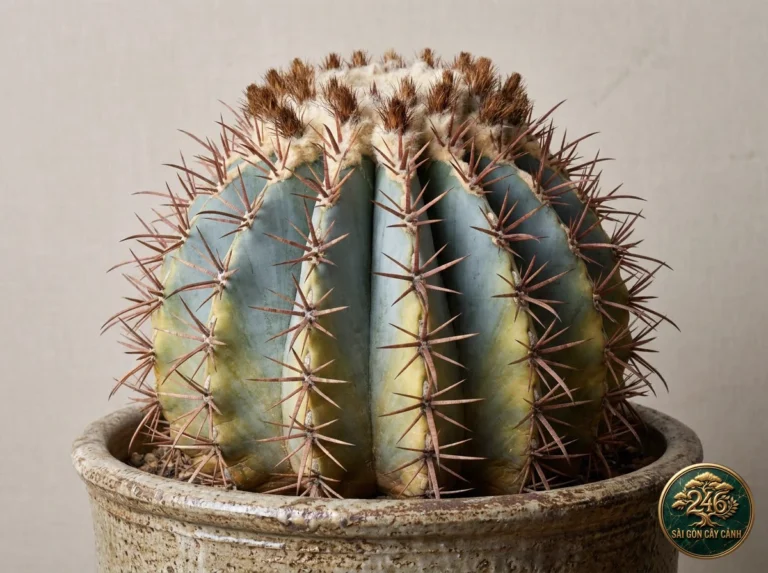
Giant Barrel Cactus (Echinocactus platyacanthus)
Echinocactus platyacanthus is the monumental giant barrel cactus of the Mexican plateau, legendary for multi-century lifespans, colossal slate-blue ribbed
Read Monograph →
Fox Tail Agave (Agave attenuata)
Agave attenuata, the Fox Tail or Swan Neck Agave, is a magnificent spineless succulent renowned for wide rosettes of velvety pale sea-green unarmed leaves,
Read Monograph →
Ruby Living Stone (Lithops optica ‘Rubra’)
Lithops optica, particularly its celebrated 'Rubra' cultivar, is the ultimate jewel of living stones, displaying captivating amethyst-purple to ruby-red tr
Read Monograph →Expert Q&A, Recommended Supplies & Article Feedback
Tap once to connect instantly via Google, Facebook or TikTok — no long forms required!
No questions yet for this article. Tap Google / Facebook / TikTok above to ask the first question!