
Living plant profile
Ruby Living Stone (Lithops optica ‘Rubra’)
Lithops optica
Lithops optica, particularly its celebrated ‘Rubra’ cultivar, is the ultimate jewel of living stones, displaying captivating amethyst-purple to ruby-red tr

Ruby Living Stone (Lithops optica): Coastal Fog Adaptation and Amethyst Leaf Care Guide
Lithops optica, particularly its celebrated ‘Rubra’ cultivar, is the ultimate jewel of living stones, displaying captivating amethyst-purple to ruby-red translucent windowed leaves and silky white winter flowers.
Sài Gòn Cây Cảnh Care Compass
1. Botanical Nomenclature & Taxonomic History
Lithops optica was originally documented by Rudolf Marloth in 1910 before Nicholas Edward Brown finalized its placement in Lithops in 1922. It occupies an extremely narrow strip along the Atlantic coast near Luderitz within the hyper-arid Namib desert of southwestern Namibia.
With annual rainfall virtually zero, survival relies entirely upon dense nocturnal coastal fog rolling off the cold Atlantic Benguela current; its amethyst ‘Rubra’ form is coveted worldwide as the pinnacle of succulent collecting.
2. Morphological Architecture & Anatomical Specializations

Each plant features a miniature fused pair of succulent leaves one to two and a half centimeters tall and one to two centimeters wide, split by a deep central fissure.
The epidermis radiates intense amethyst-purple, ruby, or magenta hues, capped by a translucent apical window that illuminates interior photosynthetic tissues; winter brings silky snow-white flowers two and a half centimeters broad.
3. Photosynthetic Photoperiod & Radiation Dynamics
Requires bright filtered light of 5,000 to 10,000 lux or three to five hours of gentle morning sun to maintain deep amethyst-ruby coloration without bleaching.
Originating in cool coastal fog belts, it is more sensitive to scorching summer heat than inland taxa; provide light shade during peak summer noon hours alongside excellent air ventilation.
4. Mineral Substrate Matrix & Aeration Dynamics
Demands 90% to 95% pure mineral composition: 60% fine pumice, 20% washed volcanic scoria, 15% perlite, and 5% sharp coarse silica sand.
High mineral granularity allows roots to absorb moisture efficiently while eliminating standing moisture around the delicate subterranean taproot.
5. Hydraulic Equilibrium & Precision Irrigation Protocol
Irrigation mirrors natural coastal fog cycles: bottom-soak every ten to fourteen days during late autumn and winter while flowering and active.
During hot humid summer months, suspend soil soaking entirely, misting ambient air at dusk to mimic Atlantic fog banks and guide the plant safely through dormancy.
6. Nutrient Management & Mineral Supplementation
Withhold chemical fertilizer entirely; an optional trace mineral soak diluted to one-tenth strength can be offered once in early winter during floral opening.
7. Vegetative Propagation & Conservation Protocols
Propagate from selective hand-pollinated seed of pure red parentage; sow on damp mineral sand in cool conditions between 18C and 22C.
Germination takes one to two weeks, with vibrant ruby pigmentation establishing prominently after the primary leaf cycle in year two.
8. Biochemical Toxicity Evaluation & Pet Safety Standards (ASPCA)
Lithops optica holds verified non-toxic status under ASPCA standards, posing zero chemical or physical hazard to domestic animals or children.
Its succulent leaves are entirely benign, void of noxious toxins or prickly spines.
9. Physiological Diagnostic Matrix & Targeted Intervention
Tissue health audit and targeted amethyst preservation protocols for Lithops optica gemstones:
| Clinical Diagnostic Sign | Primary Root Cause | Corrective Horticultural Protocol |
|---|---|---|
| Ruby pigmentation fades into dull pale greenish tone | Inadequate sunlight exposure or excess nitrogen fertilizer | Relocate planter to receive three to five hours of gentle morning sun daily, cease all feeding |
| Apical window surface wrinkles and recesses concave | Dehydration during active winter blooming cycle | Bottom-water lightly on a sunny morning to restore cellular turgor |
| Outer leaf pair shrivels into a crisp papery husk in late winter | Completely normal seasonal leaf replacement cycle | Keep substrate dry, allowing the new leaf pair to consume outer tissue reserves |
| Leaf pair turns soft, watery, and collapses into dark purple mush | Bacterial rot spurred by watering during hot stagnant summer dormancy | Discard diseased plant immediately, isolate neighboring pots, and enhance airflow |
10. Comparative Diagnostic Matrix & Allied Xerophyte Differentiation
Morphological comparison differentiating Lithops optica from related gemstone living stone taxa:
| Diagnostic Parameter | Lithops optica (Target Taxon) | Allied Congeneric Relative A | Allied Congeneric Relative B |
|---|---|---|---|
| Cuticular pigmentation | Rare amethyst-purple to ruby-red coloration | Tawny ochre with elevated dark green dots | Coffee brown with sunken dendritic patterns |
| Blooming schedule | Late season flowering in late autumn into winter | Mid-autumn floral flushes | Early to mid-autumn blossoms |
| Petal coloration | Silky snow-white petals with pale center | Golden yellow petals with clean white throat | Solid golden yellow daisy petals |
| Habitat microclimate | Atlantic coastal fog desert near Luderitz | Inland sandstone plateaus of southern Namibia | Arid open dolomite grasslands of South Africa |
11. Biophilic Interior Aesthetics & Architectural Display
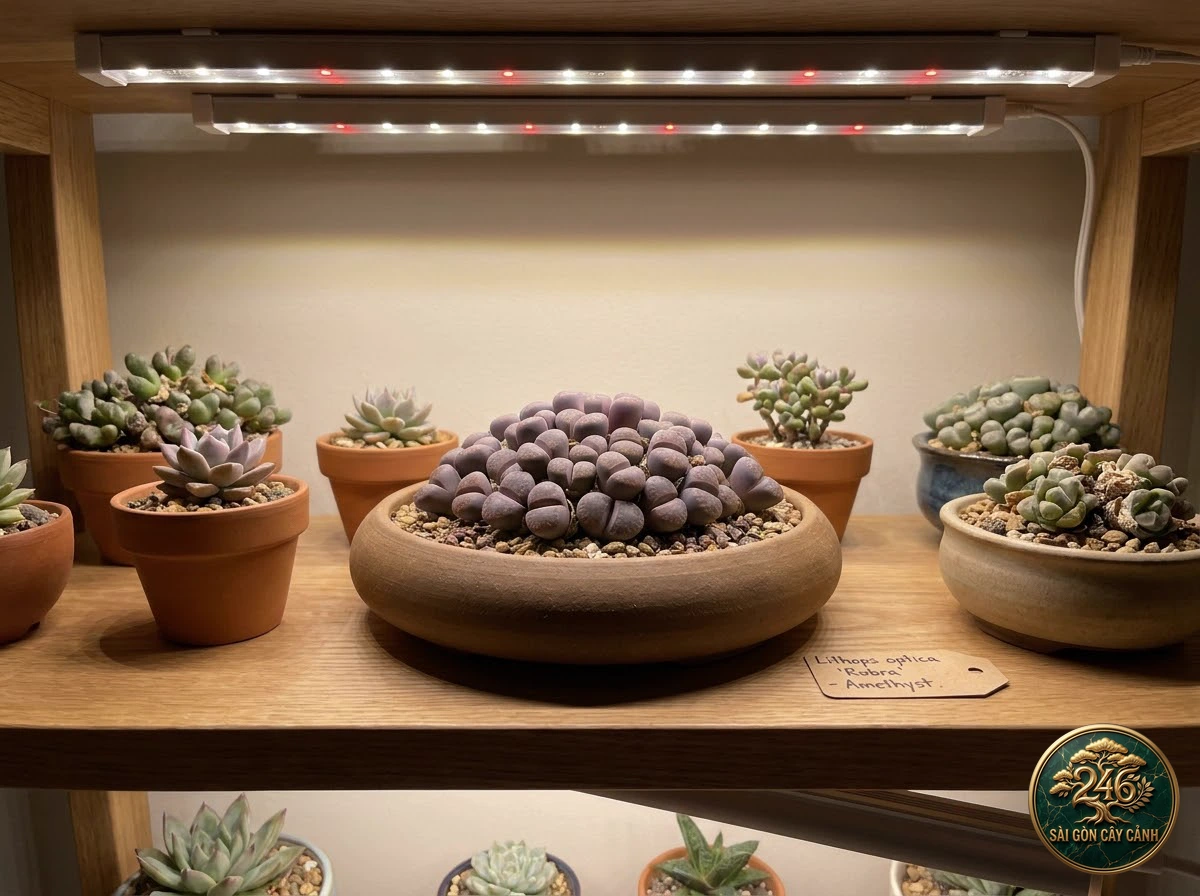
Lithops optica serves as a living gemstone for sophisticated botanical collectors, creating breathtaking contrast when potted in matte black ceramic or raw basalt dishes.
Its royal amethyst hue and translucent cleft introduce an air of refined luxury, mesmerizing observers with natural gemological wonder.
🌿 Trang Thiết Bị, Đất Trồng & Dụng Cụ Bonsai Tuyển Chọn
Dụng cụ tỉa, giá thể hữu cơ & phân bón chuyên dụng cho cây cảnh.

Đất trồng Sen Đá, Xương Rồng trộn sẵn 85% đá cao cấp,gi…

Chậu gốm đất nung Men Hỏa Biến Dáng Đẹp -Trồng cây Sen …

Đá bọt PUMICE giá thể trồng cây ĐỦ SIZE đá núi lửa pumi…

Nguyên bao 20kg (45 lít) Pumice Stone – Đá Anh Vũ nhập …
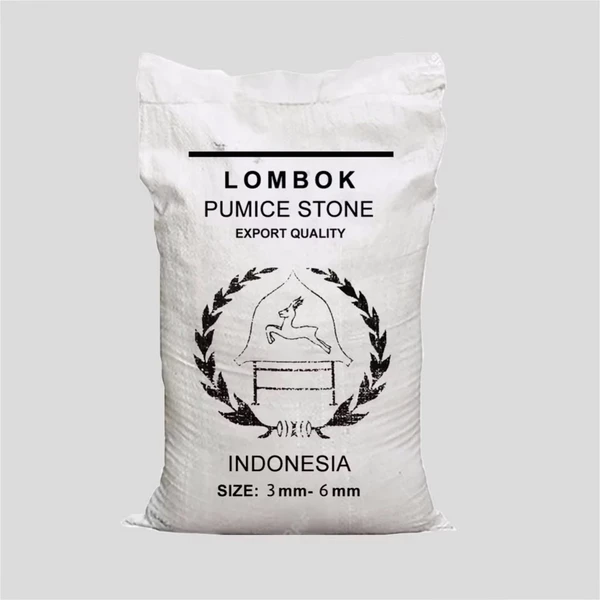
Pumice Stone – Đá Anh Vũ nhập Indo size 3-6mm – Trồng s…
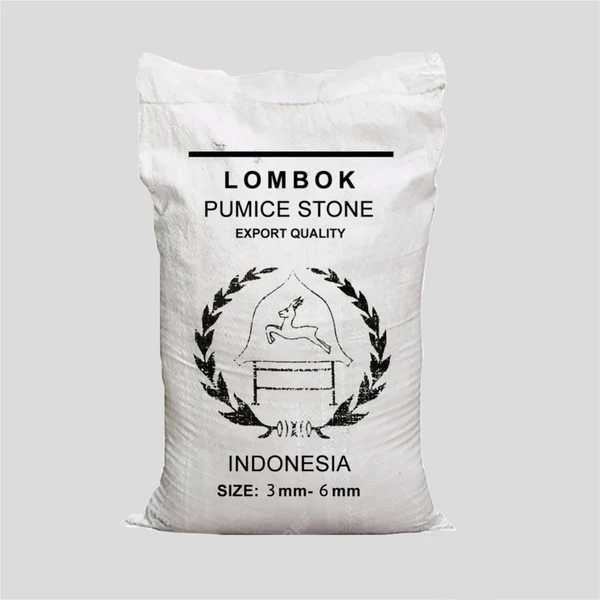
Nguyên bao Pumice Stone 45L (~20kg) – Đá Anh Vũ nhập In…
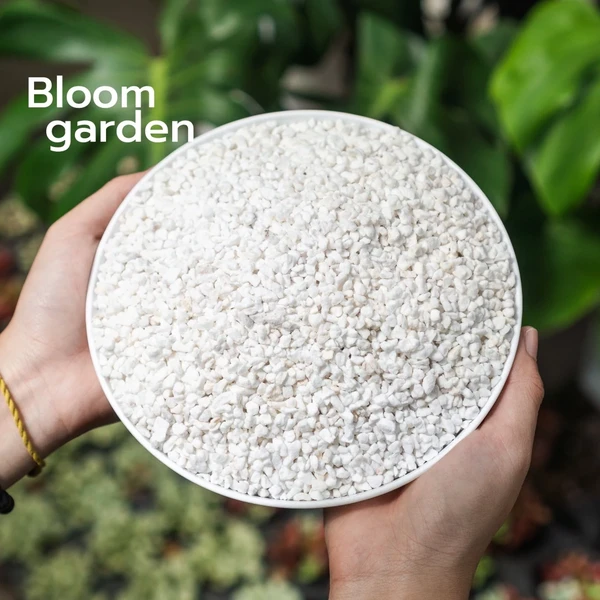
Đá trân châu – Perlite Stone – Trộn giá thể, thoát nước…

Bộ 3 Kích Rễ Phục Hồi Cây Farmix: Thuốc Atonik + N4M Ra…

Cây Cẩm Nhung Lá May Mắn ( Fittonia )

Kéo Tỉa Lá, Tỉa Dăm, Tỉa Đa Năng Thép Trắng Nguyên Khối…

Giá thể trồng kiểng lá Vietpot, trộn sẵn, chuyên dùng c…
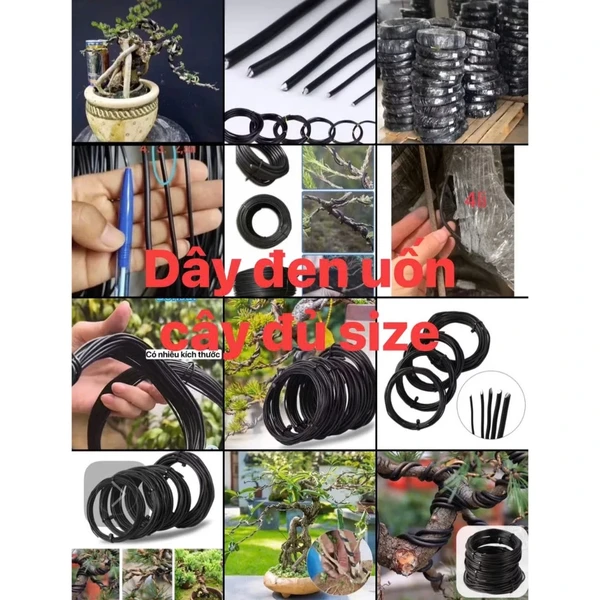
Dây Uốn Cành Cây Bonsai Màu Đen Đủ Size , Dây Nhôm Đen …
Nursery Care Journal & Living Greenery Moments
At Saigon Cay Canh greenhouse, each photograph captures genuine everyday care moments between plant lovers and living greenery, spreading a passion for nature and green-living inspiration.

💬 Góc Tư Vấn & Hướng Dẫn Kỹ Thuật SGCC
Chuẩn E-E-A-T Kinfolk❓ Chăm sóc Ruby Living Stone (Lithops o cần lưu ý điều gì quan trọng nhất?
💡 Dạ điều quan trọng nhất là giữ môi trường sống ổn định, tránh sốc nhiệt hay dao động thông số đột ngột, đồng thời cung cấp khẩu phần ăn sạch và tươi mới ạ.
❓ Làm thế nào để phòng ngừa bệnh tật hiệu quả cho các bé?
💡 Dạ anh chị nên giữ vệ sinh chuồng/hồ nuôi sạch sẽ, thay nước hoặc dọn dẹp định kỳ và bổ sung vitamin, men tiêu hóa đều đặn để tăng sức đề kháng ạ.

Golden Barrel Cactus (Echinocactus grusonii)
Echinocactus grusonii is the world-renowned Golden Barrel cactus native to central Mexico, celebrated for its flawless ribbed spherical geometry, dense clo
Read Monograph →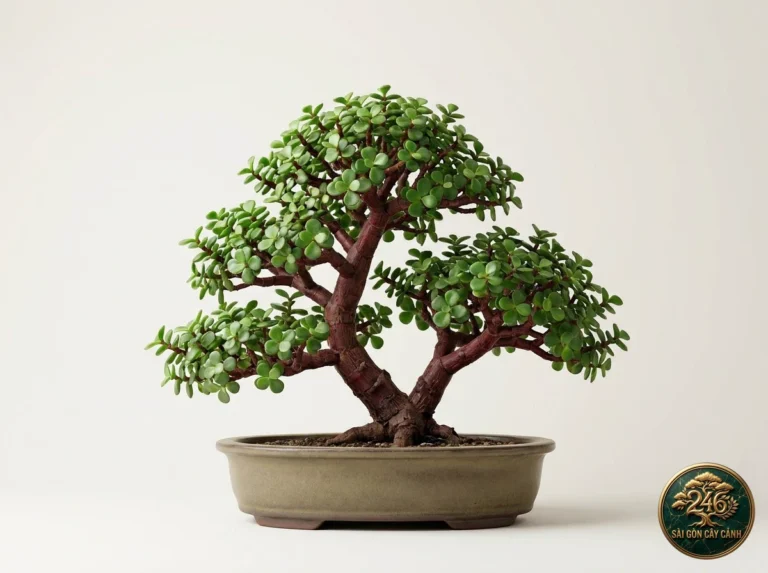
Elephant Bush (Portulacaria afra)
Portulacaria afra, celebrated as the Elephant Bush or Spekboom, is a remarkable South African succulent shrub renowned for mahogany-red woody stems, rounde
Read Monograph →
Desert Rose (Adenium obesum)
Adenium obesum, widely known as the Desert Rose, is a legendary African succulent pachycaul prized for its massive swollen basal caudex, sculptural grey br
Read Monograph →
Mistletoe Cactus (Rhipsalis baccifera)
Rhipsalis baccifera is an extraordinary epiphytic cactus with cascading curtains of slender pencil-like stems, adorned with starry white blossoms and trans
Read Monograph →Expert Q&A, Recommended Supplies & Article Feedback
Tap once to connect instantly via Google, Facebook or TikTok — no long forms required!
No questions yet for this article. Tap Google / Facebook / TikTok above to ask the first question!