
Living plant profile
Oleander (Nerium oleander)
Nerium oleander
📌 CLINICAL & BIOLOGICAL ABSTRACT — Oleander (Nerium oleander)Oleander (Nerium oleander) Nerium oleander, globally celebrated as oleander or rose bay, is an iconic evergreen Mediterranean woody shrub renowned for its extraordinary resistance to drought, salinity, and urban pollution, coupled with year-round profusions of showy blossoms. Beneath its resplendent ornamental beauty lies a lethal array of […]
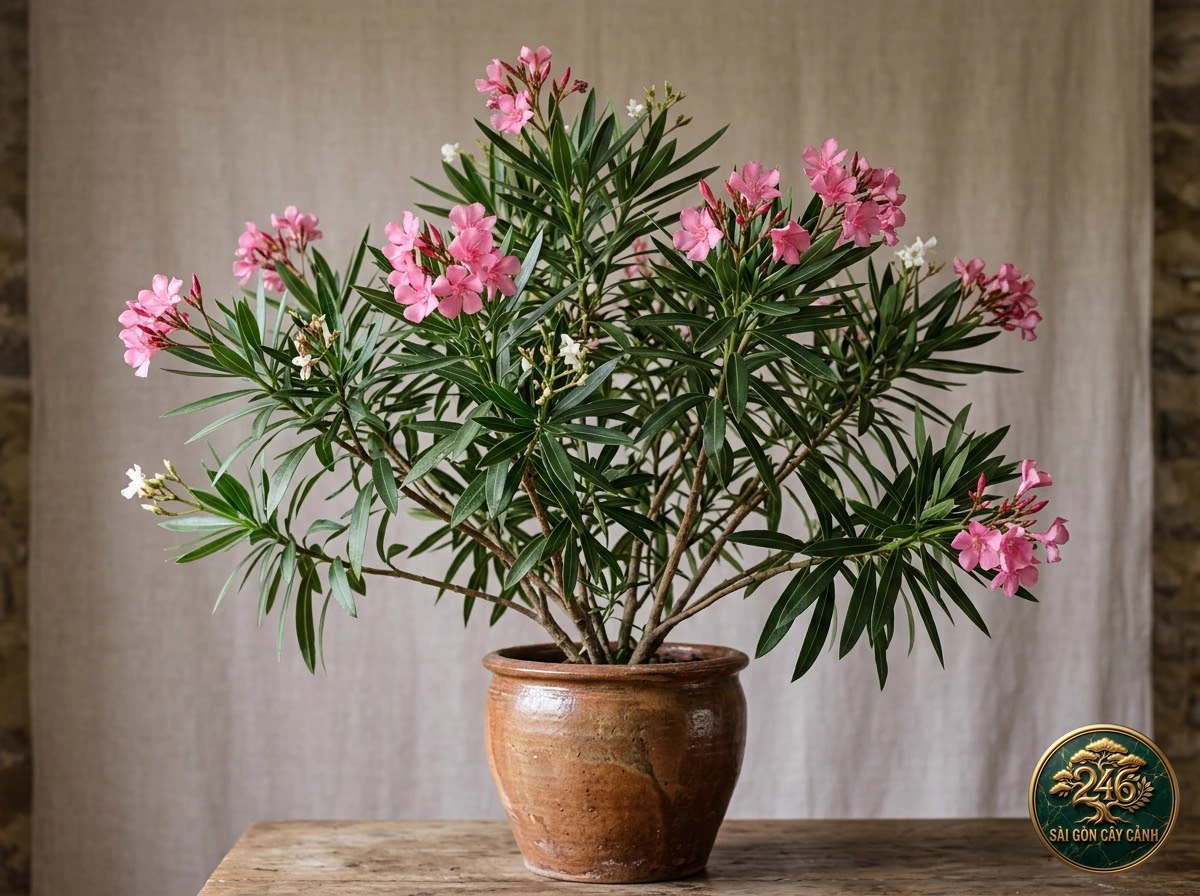
Oleander (Nerium oleander)
Nerium oleander, globally celebrated as oleander or rose bay, is an iconic evergreen Mediterranean woody shrub renowned for its extraordinary resistance to drought, salinity, and urban pollution, coupled with year-round profusions of showy blossoms. Beneath its resplendent ornamental beauty lies a lethal array of cardiac glycosides, necessitating rigorous botanical understanding, uncompromising handling protocols, and judicious landscape placement within modern architectural projects.
Sài Gòn Cây Cảnh Care Compass
1. Botanical Identity & Taxonomic Nomenclature History
Nerium oleander was established by Carl Linnaeus in 1753 within his foundational botanical register Species Plantarum. The generic designation Nerium derives from the ancient Greek neros, signifying moist or water-associated, referencing its natural riparian habitat along Mediterranean ephemeral riverbeds (wadis). The specific epithet oleander reflects medieval Latin denoting morphological foliar similarities to the olive tree Olea europaea.
Spanning an extensive indigenous range from the Iberian Peninsula through the Mediterranean basin to Southwest Asia, oleander boasts thousands of years of presence in classical Roman peristyle gardens and Greek mythology. In Vietnam, it has long served along expressway median strips, expansive civic parks, and industrial greenbelts due to its unmatched particulate matter filtration and pollution resilience, coupled with clear public educational safety signage.
2. Morphological Anatomy & Structural Architecture
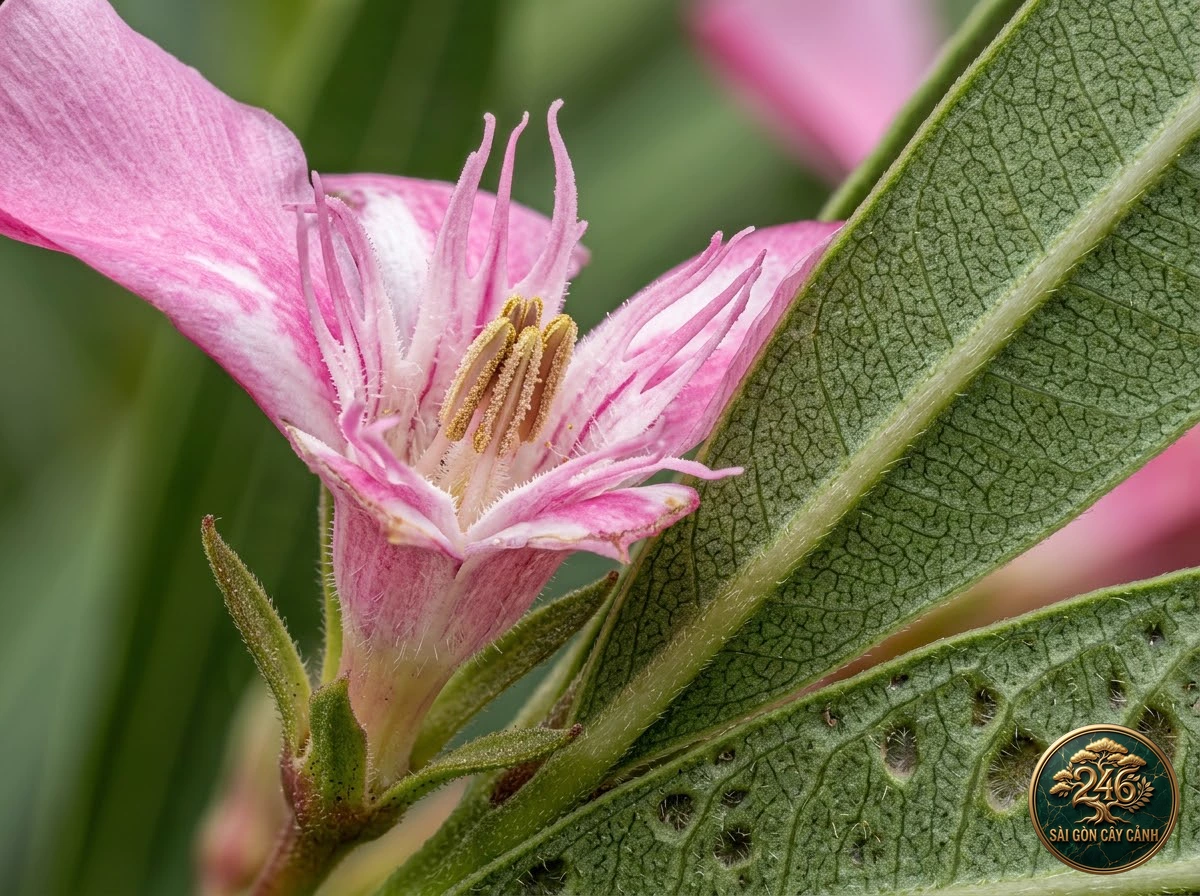
Morphologically, Nerium oleander develops as a robust evergreen woody shrub or multistemmed small tree reaching heights of 2 to 6 meters, forming an upright vasiform crown. Stems are erect, clad in smooth greyish-green juvenile bark transitioning to fibrous grey-brown bark with age, secreting potent toxic clear-to-turbid sap. Leaves are arranged in ternate whorls of 3 (rarely 4 or opposite) at each stem node; blades are narrowly lanceolate-linear measuring 10 to 22 cm long by 1.5 to 3.5 cm wide, with acute apices and attenuate bases.
The foliar lamina is thickly coriaceous, displaying a dark lustrous green upper surface and paler underside with an elevated ivory midrib and dense parallel secondary venation. Inflorescences form terminal thyrses bearing abundant blossoms. The salverform-funnelform corolla spans 4 to 6 cm across with five spreading obovate corolla lobes (available in both single and double cultivars). Colors range from rose-pink, crimson, and ivory white to yellow and apricot, exuding sweet delicate perfume. The fruit consists of paired elongated follicles 10 to 18 cm long releasing plumose seeds bearing golden-brown silky hairs.
3. Solar Irradiance Thresholds & Photosynthetic Dynamics
Nerium oleander is an extreme full-sun heliophyte engineered to withstand blistering solar radiation, desiccating summer winds, and extreme urban heat loads. It requires a mandatory minimum of 6 to 8 hours of unfiltered direct sunlight daily, thriving within light thresholds spanning 45,000 to 90,000 lux. Intense irradiation drives perpetual floral bud differentiation, dense woody lignification, and heavy foliar cuticle deposition.
When sited in shaded exposures or enclosed courtyards lacking direct light, specimens etiolate rapidly, producing weak brittle shoots, sparse pale foliage, and total floral failure. The species demonstrates legendary resistance against reflected asphalt radiant heat, saline ocean gales, and vehicular emissions without exhibiting foliar necrosis.
4. Mineral Substrate Mechanics & Root Aeration Porosity
The root architecture of Nerium oleander is deeply penetrative and expansive, capable of tapping deep subterranean water tables and flourishing across extreme edaphic environments, ranging from saline littoral sands and rocky limestone screes to heavy alkaline clays. However, for urban containers and raised planters, the medium should guarantee structural aeration and reliable percolation to maximize vegetative performance.
The standard substrate blend formulated by Saigon Cay Canh incorporates 40% coarse volcanic scoria or pumice (3-6 mm), 30% fertile alluvial loam, 20% carbonized rice husks, and 10% well-composted manure inoculated with bio-agents. Substrate pH tolerates an exceptionally wide spectrum from mildly acidic to strongly alkaline (pH 6.0 to 8.2). Container bases must be lined with coarse aggregate drainage courses.
5. Hydraulic Equilibria & Irrigation Regimens
Hydraulically, Nerium oleander ranks among the most drought-resilient flowering woody shrubs globally. Established specimens endure extended months of blistering drought without precipitation by virtue of deep anchoring taproots and specialized foliar stomatal crypts lined with hairs that minimize moisture loss. In container horticulture, water thoroughly every 2 to 3 days during peak summer only after upper substrate layers dry.
The plant tolerates transient riparian flooding for several hours due to its native wadi heritage, but prolonged anaerobic waterlogging exceeding 48 hours must be avoided to prevent root rot and premature foliar drop.
6. Nutrient Biogeochemistry & Fertilization Protocols
Nerium oleander possesses low-to-moderate nutritional demands, extracting minerals efficiently from poor soils. However, to sustain heavy year-round blooming flushes with saturated colors, apply balanced slow-release organic granules (NPK 6-12-12) or aged vermicompost around the root zone every 60 days.
During seasonal spring and autumn bloom flushes, apply a water-soluble fertilizer formulated with elevated phosphorus, potassium, and chelated boron (such as NPK 15-30-15) at 1 gram per liter every 15 to 20 days to stimulate uniform bud clusters and prolong floral persistence.
7. Clonal Propagation & Germplasm Conservation
Nerium oleander possesses extraordinary vegetative reproductive power, propagating seamlessly via stem cuttings or seed. Semi-hardwood cuttings harvested in spring or rainy periods achieve success rates exceeding 95%. Select healthy 15 to 25 cm branch segments, making a 45-degree angled cut with sterile shears and stripping basal foliage by two-thirds.
Dip the base into 1,000 ppm IBA rooting powder and insert into moist sharp sand, or simply suspend the basal 3 to 5 cm in aerated water under bright indirect light. Within approximately 25 to 30 days, prolific white adventitious roots 5 to 8 cm long emerge, signaling readiness for potting into soil. Propagation via seeds collected from ripe splitting follicles is equally straightforward.
8. Phytochemical Toxicity & Pet Safety Standards (ASPCA)
CRITICAL PHYTOTOXICITY WARNING AND ASPCA PET SAFETY CLASSIFICATION: Nerium oleander ranks among the most lethally toxic botanical species globally. All anatomical organs—including roots, bark, stems, foliage, flowers, seeds, nectar, milky sap, and even smoke derived from burning wood—contain potent cardiac glycosides, primarily oleandrin, neriine, oleandrigenin, and adynerin. These phytochemicals inhibit the myocardial sodium-potassium adenosine triphosphatase (Na+/K+-ATPase) pump, precipitating catastrophic cardiac conduction disruptions.
Under ASPCA toxicological criteria, the species is classified as SEVERELY TOXIC TO CANINES, FELINES, EQUINES, AND HUMANS. Ingestion of even minute quantities provokes severe burning oral mucosal irritation, protracted emesis, bloody diarrhea, extreme bradycardia, ventricular arrhythmias, seizures, and fatal cardiac arrest. NEVER plant specimens in children’s playgrounds, schools, or pet enclosures; never utilize twigs as cooking skewers or incinerate pruned debris; always wear full personal protective gear, wash thoroughly with soap, and sanitize pruning instruments with 70% medical alcohol.
9. Clinical Pathology Diagnostics & Treatment Strategies
Clinical diagnostic monitoring for oleander aphid outbreaks and bacterial knot gall suppression in Nerium oleander:
| Clinical Manifestation | Etiological Cause | Standard Treatment Protocol |
|---|---|---|
| Undersides of leaves encrusted with thousands of tiny bright yellow-orange aphids | Oleander aphid infestation (Aphis nerii) sucking sap and excreting honeydew | Blast foliage with high-pressure water spray at dawn, apply potassium insecticidal soap or biological neem oil sprays |
| Stems and leaves develop swollen, rough, dark brown knot-like galls | Oleander gall or canker caused by bacterium Pseudomonas savastanoi pv. nerii entering wounds | Excise gall-bearing branches cleanly using shears sanitized in 70% medical alcohol, incinerate debris, and spray copper bactericide |
| Foliar margins scorch brown, progressing inward with systemic branch dieback | Oleander leaf scorch induced by xylem-clogging bacterium Xylella fastidiosa | Prune out diseased limbs at least 20 cm below symptoms with sterile tools, control sharpshooter insect vectors |
10. Comparative Morphology & Allied Taxa Diagnosis
Morphological comparative matrix isolating lethal cardiac glycosides and narrow whorled lanceolate leaves of Nerium oleander:
| Diagnostic Parameter | Nerium oleander (Oleander) | Comparative Specimen A | Comparative Specimen B |
|---|---|---|---|
| Toxicological Profile | EXTREMELY LETHAL: rich in cardiac glycosides (oleandrin); fatal ingestion risk | Mildly toxic: latex sap causes minor dermal irritation and mild emesis | Moderately toxic: contains allamandin provoking acute vomiting and purgative diarrhea |
| Foliar Diagnostics | Narrowly lanceolate 10-22 cm, entire margin, ternate whorls of 3 leaves | Elliptic-oblong 6-10 cm, lustrous coriaceous blade, decussate opposite pairs | Obovate-lanceolate 8-15 cm, whorls of 4 leaves, thick glossy waxy blade |
| Structural Habit | Upright vasiform woody shrub or small tree 2-6 m, multistemmed base | Slender twining evergreen vine 2-4 m, climbing via voluble shoots | Expansive woody climbing liana 4-8 m, possessing massive vegetative reach |
11. Biophilic Design Harmony & Contemporary Spatial Aesthetics
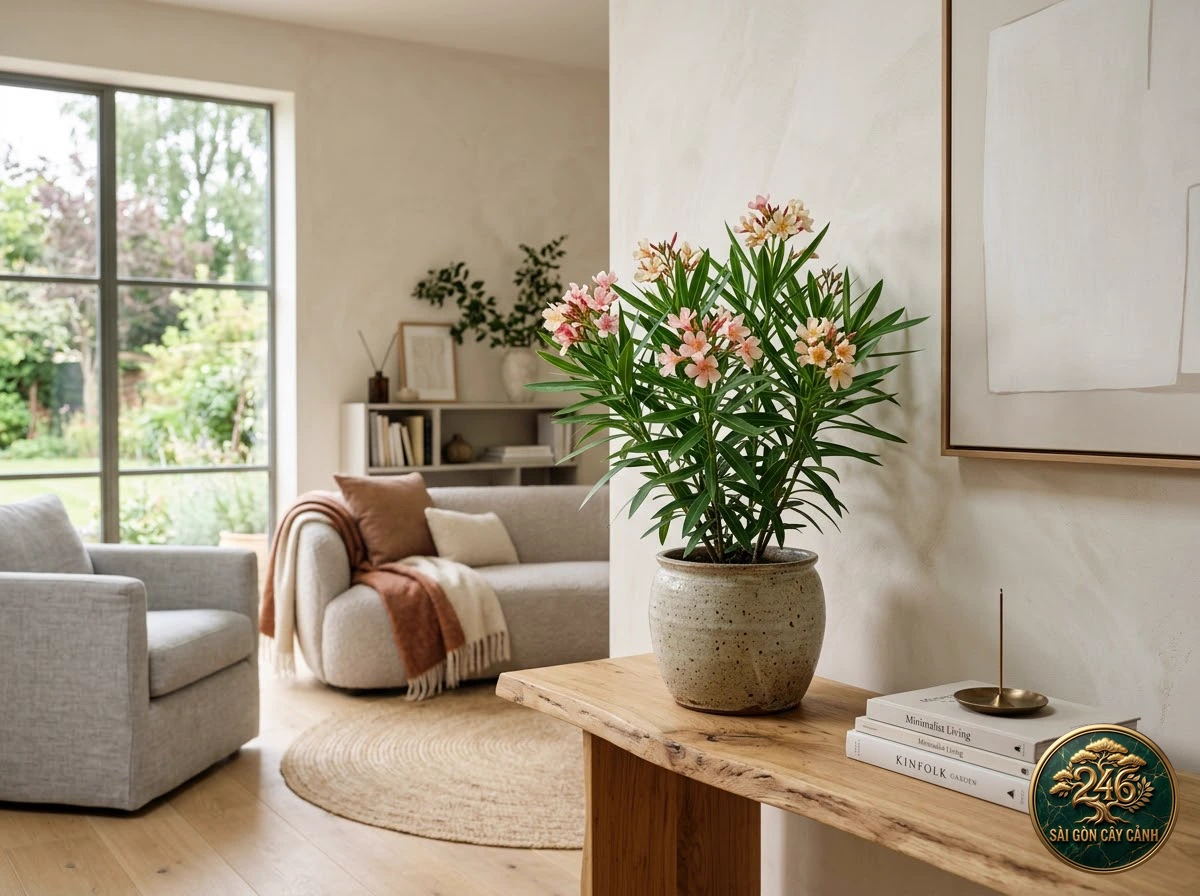
In contemporary landscape architecture and urban planning, Nerium oleander symbolizes indomitable resilience, heroic perseverance, and unmatched environmental phytoremediation. With its proven capacity to absorb gaseous pollutants, sequester particulate heavy metals, and attenuate traffic noise, oleander functions as a frontline ecological green shield for modern metropolises.
In professional landscape zoning, oleander is strictly and judiciously sited along expressway median corridors, industrial buffer greenbelts, coastal seawall promenades, and civic botanical conservatories equipped with educational safety signage, maximizing its magnificent flowering display and ecological prowess safely away from human and animal hazards.
12. Saigon Cay Canh Provenance & Cultivation Assurance

Saigon Cay Canh curates and delivers verified Nerium oleander urban forestry stock, featuring muscular multi-branched trunks, dense healthy foliage, and certified pest-free condition before project delivery.
We provide verified botanical taxonomy, rigorous landscape safety zoning advice following international standards, alongside comprehensive phytotoxicity handling manuals and full establishment warranties for major transportation infrastructure and industrial eco-parks.
💬 Góc Tư Vấn & Hướng Dẫn Kỹ Thuật SGCC
Chuẩn E-E-A-T Kinfolk❓ Chăm sóc Oleander (Nerium oleander) cần lưu ý điều gì quan trọng nhất?
💡 Dạ điều quan trọng nhất là giữ môi trường sống ổn định, tránh sốc nhiệt hay dao động thông số đột ngột, đồng thời cung cấp khẩu phần ăn sạch và tươi mới ạ.
❓ Làm thế nào để phòng ngừa bệnh tật hiệu quả cho các bé?
💡 Dạ anh chị nên giữ vệ sinh chuồng/hồ nuôi sạch sẽ, thay nước hoặc dọn dẹp định kỳ và bổ sung vitamin, men tiêu hóa đều đặn để tăng sức đề kháng ạ.
🌿 Trang Thiết Bị, Đất Trồng & Dụng Cụ Bonsai Tuyển Chọn
Dụng cụ tỉa, giá thể hữu cơ & phân bón chuyên dụng cho cây cảnh.
Cám Chích Chòe ( Chòe Than_Chòe Đất _Chòe Lửa ) [Thức ă…

2 hủ Phân bón lá cao cấp NPK 20-20-20 growmore 100g

Đất Trồng Kiểng Lá , Bao 1kg, Giá Thể Trộn Sẵn, Tiệ…
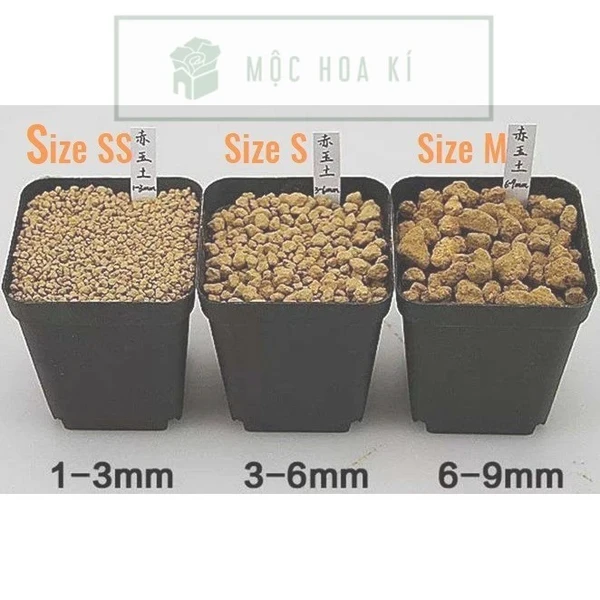
Lẻ 1kg Đất nung Akadama Nhật Bản (nền thủy sinh , bons…

Đôn gỗ kê chậu cây cảnh mini Vỉa Hè, chất liệu gỗ tự nh…
Vôi Bột Nông Nghiệp ĐÃ ĐƯỢC XỬ LÍ – Dùng cải tạo đất, k…

Đôn Vuông Trang Trí Kê Cây Cảnh, Chậu Hoa, Bình Gốm Gỗ …

Dây nhôm định hình cây bonsai màu đen chống cong, dây n…
Chậu Đất Nung Trồng Sen Đá UCHUU Chậu Trồng Bonsai Mini…
Chậu gốm ( Sl :2 chậu) mini bonsai gốm bát tràng
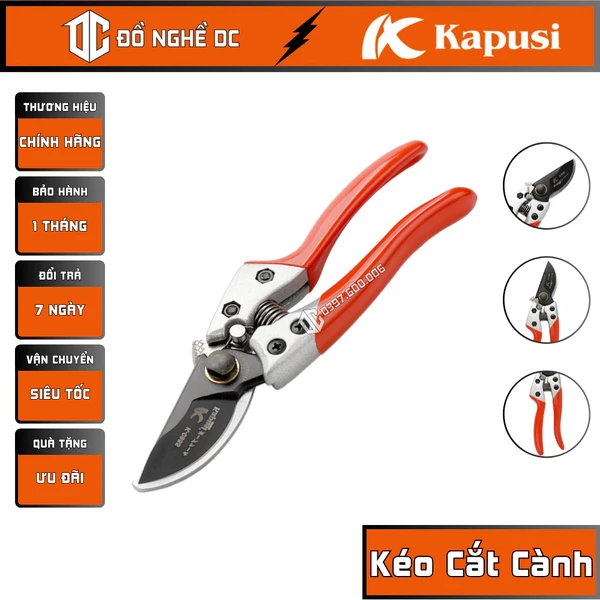
Kéo Cắt Cành Siêu Sắc, Kéo Tỉa Cành Cây, Dụng cụ Làm Vư…

Chậu hoa gốm sứ Chậu hoa Nhỏ Trồng Cây sứ màu trắng đá …

Scarlet wrightia
Wrightia coccinea, celebrated among connoisseurs of rare tropical flora as scarlet wrightia or red jasmine tree, is a...
Read Monograph →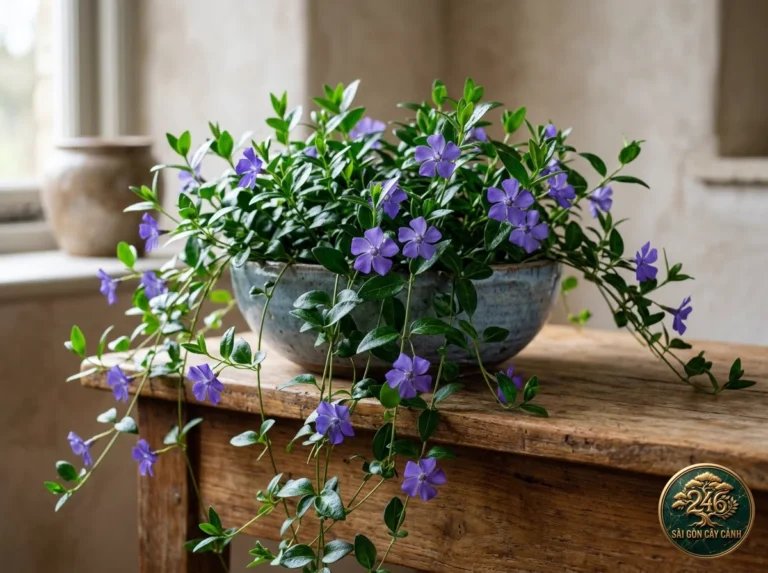
Lesser periwinkle
Vinca minor, universally recognized as lesser periwinkle, dwarf periwinkle, or creeping myrtle, is an aristocratic, evergreen perennial subshrub...
Read Monograph →
Summer snapdragon (Angelonia angustifolia)
Summer snapdragon (Angelonia angustifolia) Angelonia angustifolia, celebrated worldwide as summer snapdragon or angelmist, is an exceptionally durable and...
Read Monograph →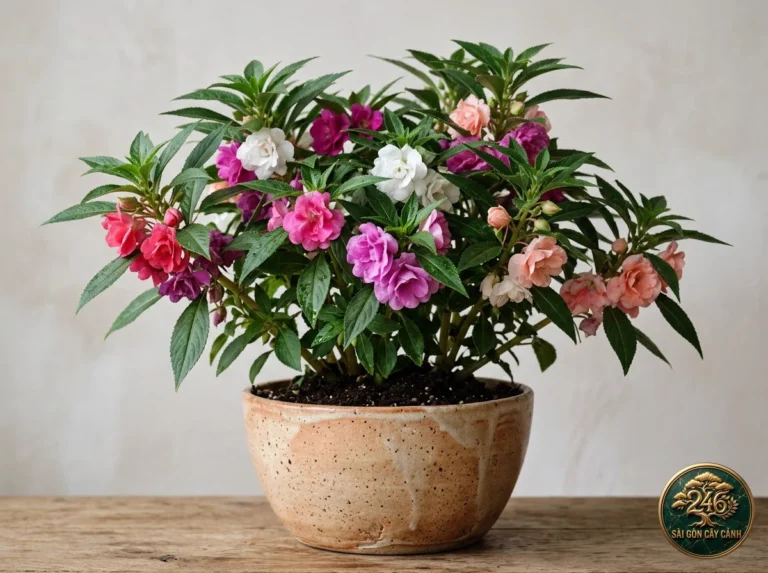
Garden balsam (Impatiens balsamina)
Garden balsam (Impatiens balsamina) Impatiens balsamina, universally treasured as garden balsam, rose balsam, or touch-me-not, is a nostalgic,...
Read Monograph →Expert Q&A, Recommended Supplies & Article Feedback
Tap once to connect instantly via Google, Facebook or TikTok — no long forms required!
No questions yet for this article. Tap Google / Facebook / TikTok above to ask the first question!