
Living plant profile
Garlic vine (Mansoa alliacea)
Mansoa alliacea
📌 CLINICAL & BIOLOGICAL ABSTRACT — Garlic vine (Mansoa alliacea)Garlic vine (Mansoa alliacea) Mansoa alliacea, celebrated globally as garlic vine, false garlic, or ajo sacha, is a fascinating and intensely floriferous semi-evergreen woody liana within the bignonia family (Bignoniaceae). Native to the Amazon rainforest of South America, it is renowned worldwide for its tri-colored blooming […]
Garlic vine (Mansoa alliacea)
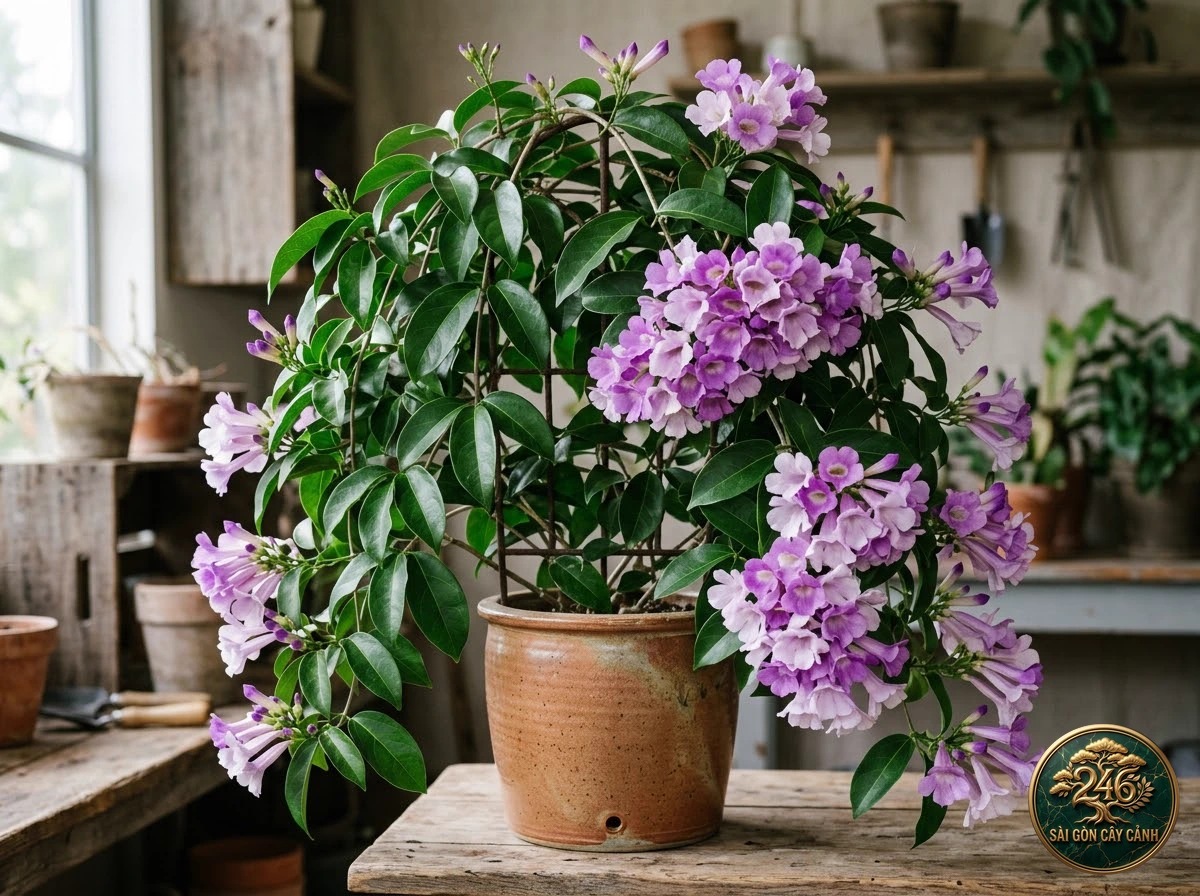
Mansoa alliacea, celebrated globally as garlic vine, false garlic, or ajo sacha, is a fascinating and intensely floriferous semi-evergreen woody liana within the bignonia family (Bignoniaceae). Native to the Amazon rainforest of South America, it is renowned worldwide for its tri-colored blooming spectacles: its flared tubular funnelform blossoms emerge in deep rich lavender-violet, transition gradually to soft pastel pink, and finally fade to pristine ivory-white before petal fall, creating a multi-tonal floral tapestry across a single trellis. Its defining botanical marvel resides in its crushed foliage and stems that release a warm, pungent alliacious aroma driven by organic allyl sulfides and alliin compounds, serving as a natural organic repellent against mosquitoes and garden pests. Within Saigon Cay Canh landscape architecture, garlic vine symbolizes protective guardianship and health vitality, providing an ecological pest-deterring floral arbor for luxury villas.
Sài Gòn Cây Cảnh Care Compass
1. Botanical Identity & Taxonomic Nomenclature History
Mansoa alliacea was formally transferred into its accepted generic classification by American botanist Alwyn Howard Gentry in 1979 within the Annals of the Missouri Botanical Garden, building upon Jean-Baptiste Lamarck’s 1785 baseline description Bignonia alliacea in Encyclopedie Methodique. The generic name Mansoa honors Antonio Luiz Patricio da Silva Manso (1788–1848), an esteemed Brazilian physician, statesman, and botanist. The specific epithet alliacea translates from Latin as ‘garlic-like’ or ‘resembling Allium’, referencing the distinct sulfurous aroma released by crushed tissues.
Indigenous to the dense Amazonian rainforests of Brazil, Peru, and Colombia, garlic vine has been venerated by indigenous Amazonian tribes under the ethnomedicinal name ‘Ajo Sacha’ (wild garlic). It was traditionally brewed into restorative infusions and planted around dwellings to repel reptilian and insect pests while clearing stagnant atmospheric energies. Acclimatized across Vietnam by Saigon Cay Canh, it reigns as both a glorious tri-colored climbing spectacle and an ecological biophilic mosquito barrier for luxury residential estates.
2. Morphological Architecture & Anatomical Characteristics
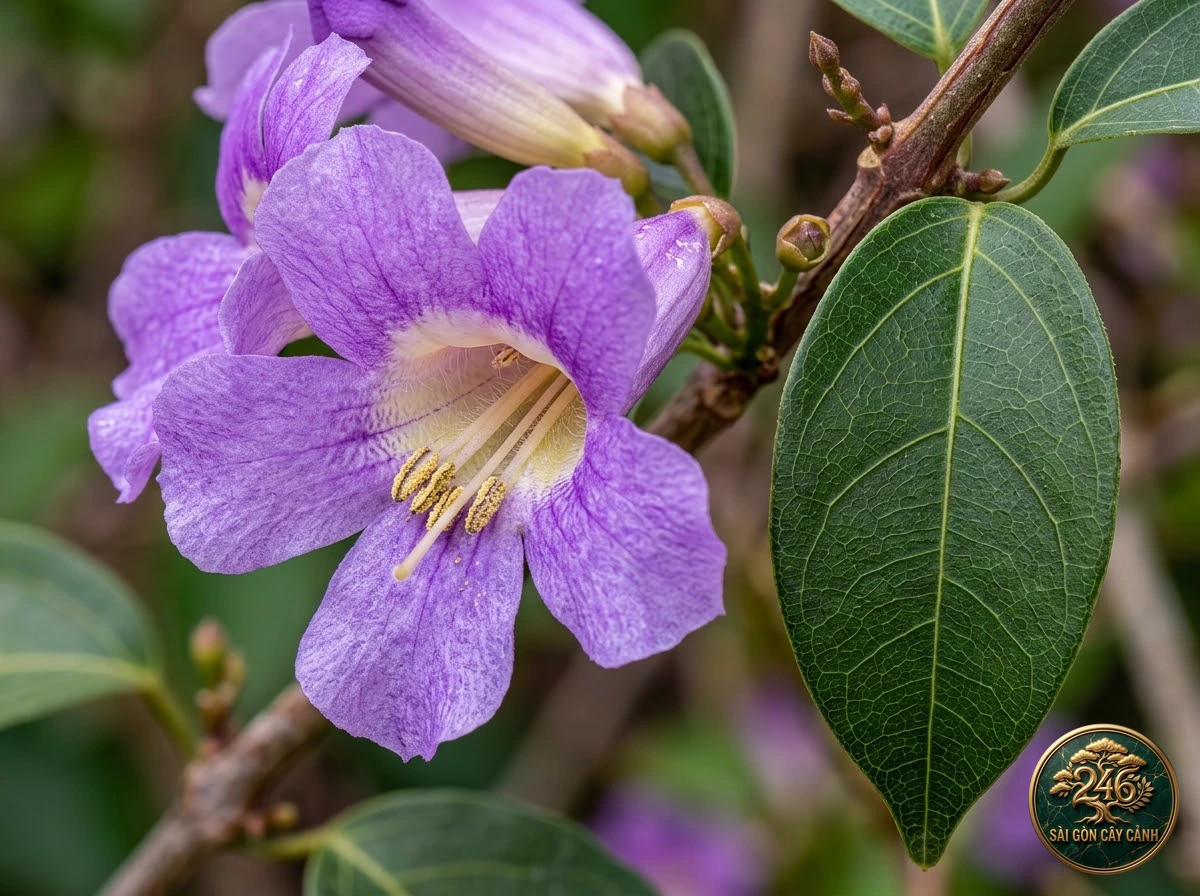
Morphologically, Mansoa alliacea develops as a vigorous, semi-evergreen woody climbing liana reaching 4 to 8 meters in vertical height with dense lateral branching. Stems are cylindrical, pale green and glabrous when young, maturing into stout woody boughs with smooth greyish-brown bark. Foliage is oppositely arranged; petioles measure 1 to 2.5 cm; leaves are bifoliolate, bearing two elliptic to ovate-oblong leathery leaflets 7 to 15 cm long by 3 to 6 cm wide, with acuminate apices and entire margins rendered in lustrous deep green; a tripartite climbing tendril is positioned between the leaflet pair to anchor shoots onto trellises.
Inflorescences arise as lavish, axillary and terminal cymes bearing 10 to 25 blossoms. The floral morphology displays chromatic metamorphosis: the calyx is cup-shaped with 5 minute teeth; the corolla is a flaring funnelform trumpet 4 to 6 cm long with a limb 3 to 5 cm wide and 5 rounded, undulating lobes. On anthesis day one, petals display a deep royal lavender-violet; by day two, they fade into a soft orchid-pink; by day three, they transition to creamy-white before abscising. The fruit is an elongated, linear-flattened capsule 20 to 30 cm long dehiscing to release winged membranous seeds.
3. Photobiology & Photosynthetic Energy Thresholds
Mansoa alliacea is an obligate heliophyte performing best under unfiltered direct sunlight with luminous intensities between 45,000 and 85,000 lux. A daily duration of at least 6 to 8 hours of intense direct solar exposure is mandatory to fortify woody canes, maximize volatile essential oil concentration, and stimulate synchronous flushes of tri-colored lavender trumpets across the entire canopy.
When positioned in heavy shade below 25,000 lux, climbing boughs elongate loosely, leaves turn dark green with excessive node spacing, and blooming is severely repressed. The species demonstrates remarkable resilience against tropical summer heat exceeding 38 degrees C, supported by woody moisture reserves and robust root foraging mechanisms.
4. Mineral Substrate Mechanics & Root Aeration Dynamics
The root architecture of garlic vine consists of deep vertical anchoring taproots and an extensive lateral feeder root system, demanding rich, fertile, humus-dense alluvial loam engineered for rapid gravity drainage without pooling. Stagnant anaerobic waterlogging persisting beyond 24 hours suffocates delicate rootlets, inciting sudden shoot wilt and fatal root rot.
The benchmark potting substrate crafted by Saigon Cay Canh contains 45% fertile alluvial loam, 25% carbonized rice hulls for root zone aeration, 15% washed coco coir, 10% Trichoderma-fortified composted manure, and 5% horticultural perlite. Soil pH is maintained within 6.0 to 7.2. Trellis beds and large planters must feature reliable, unobstructed drainage channels.
5. Irrigation Dynamics & Soil Hydraulic Equilibrium
During juvenile development and active vegetative shoot extension, Mansoa alliacea requires consistent daily moisture. Once mature with deeply established roots, it displays outstanding drought tolerance. To evoke spectacular cyclical blooming displays, Saigon Cay Canh employs a calibrated water-deficit cycle: moderating irrigation for 5 to 7 days until leaves flag slightly, followed by deep soaking and bloom nutrition, which prompts synchronous flower bud break within 10 days.
During routine maintenance, water deeply at dawn only after the upper 2 to 3 cm of substrate dries out. In dry summer periods, irrigate once daily; during monsoon spells, suspend watering entirely. Following severe downpours, verify that drainage trenches around garden beds remain completely unobstructed.
6. Mineral Nutrition Protocols & Periodic Fertilization Schedules
To sustain robust woody climbing canes and evoke 4 to 6 explosive blooming flushes annually, garlic vine requires disciplined mineral nutrition. Top-dress with aged vermicompost or slow-release organic pellets (NPK 6-8-12) monthly at a rate of 1.0 to 1.5 kg worked into the perimeter root zone.
Following seasonal trims and during active floral bud initiation, dissolve a water-soluble balanced formula (NPK 15-20-25 or NPK 10-30-20) at 1.5 grams per liter every 10 to 12 days. Complement with foliar sprays rich in chelated calcium, boron, and organic potassium every 20 days to fortify pedicel rigidity, holding radiant multi-hued cascades aloft against wind and weather.
7. Acclimatized Propagation & Germplasm Preservation
Mansoa alliacea is reliably propagated using stem layering on existing arbors or two-node semi-ripe cuttings supplied with gentle bottom heat. For air-layering, ring-bark a 1.5 cm girdle on a flexible cane, apply rooting gel, and encase firmly in moist sterilized coir blended with decomposed rice straw.
Layering pouches fill with golden-brown root masses within 18 to 22 days; sever the rooted cane with a sharp saw and establish in potting soil under gentle shade for 10 days prior to permanent landscape installation, faithfully preserving its tri-color floral bloom and natural pest-repellent aroma.
8. Biosafety Assessment & Companion Animal Toxicological Profiles (ASPCA)
Botanical safety profile and ASPCA pet safety standards: Classified within the Bignoniaceae family, Mansoa alliacea is recognized as completely NON-TOXIC and safe around companion animals (dogs, cats, horses) and humans under standard ASPCA toxicological benchmarks. The volatile essential oils synthesized in vegetative tissues contain benign organosulfur compounds (allyl sulfides) resembling culinary garlic, which pose zero toxicological risk while providing natural pest-deterring bioactivity.
The natural pungent garlic aroma typically discourages dogs and cats from chewing on climbing vines. Casual contact or accidental ingestion of petals causes zero systemic toxicological harm. Horticulturists should prune back spent canes after blooming, sanitize cutting shears with 70% medical alcohol, and maintain routine biophilic hygiene to keep climbing displays flourishing safely.
9. Clinical Pathology Diagnostic Matrix & Therapeutic Interventions
Pathology diagnostic protocol for aphid control and water-deficit floral stimulation in Mansoa alliacea:
| Clinical Symptomology | Etiological Factor | Prescribed Therapeutic Protocol |
|---|---|---|
| Climbing vines produce luxuriant green foliage across the trellis but fail completely to produce floral buds | Excessive nitrogen feeding and continuous overwatering preventing essential seasonal dry-stress induction | Tip-prune excessive vegetative vines, withhold water for 6 days to induce mild drought stress, then drench with organic fish potassium to ignite garlic vine flushes |
| Emerging floral buds and tender branch tips are encrusted with cottony mealybugs causing bud drop | Mealybug infestation feeding on succulent floral buds during warm humid weather intervals | Swab mealybug colonies with ethanol-tipped swabs, followed by topical sprays of entomopathogenic Beauveria bassiana fungi |
| Potting soil is waterlogged, lower leaves turn yellow and drop prematurely, and shoots wilt | Root asphyxiation and rot induced by poor drainage or clogged container drainage ports | Suspend watering immediately, clear container drainage holes, aerate surface soil, and drench with Trichoderma |
10. Comparative Morphology & Sympatric Differentiation
Taxonomic comparative matrix contrasting tri-color floral metamorphosis and biophilic alliacious aroma of Mansoa alliacea:
| Diagnostic Trait | Mansoa alliacea (Garlic vine) | Comparative Taxon A | Comparative Taxon B |
|---|---|---|---|
| Corolla Architecture and Coloration | Tubular lavender corollas that fade to pale violet exhaling a distinctive pungent garlic fragrance | Bell-shaped flaring corollas 6 to 8 cm long in pastel pink with delicate crimson throat veins | Tubular corollas 5 to 7 cm long clustered in dramatic pendulous cascades of blazing fiery orange |
| Aroma Profile and Ecological Traits | Crushed tissues release strong alliacious scent deterring mosquitoes; flowers shift from violet to white | Sweet subtle floral perfume attracting bees; semi-scandent branches completely devoid of garlic scent | Scentless brilliant orange floral tubes adapted to lure nectar-feeding birds and pollinators |
| Companion Animal Safety and ASPCA Profile | BENIGN / AROMATIC CAUTION (contains safe organosulfur compounds imparting garlic scent, completely non-toxic to pets) | NON-TOXIC (certified completely benign and safe for companion animals under ASPCA non-toxic benchmarks) | NON-TOXIC (certified completely benign and safe for companion animals under ASPCA non-toxic benchmarks) |
11. Symbolic Heritage, Biophilic Design & Architectural Placement
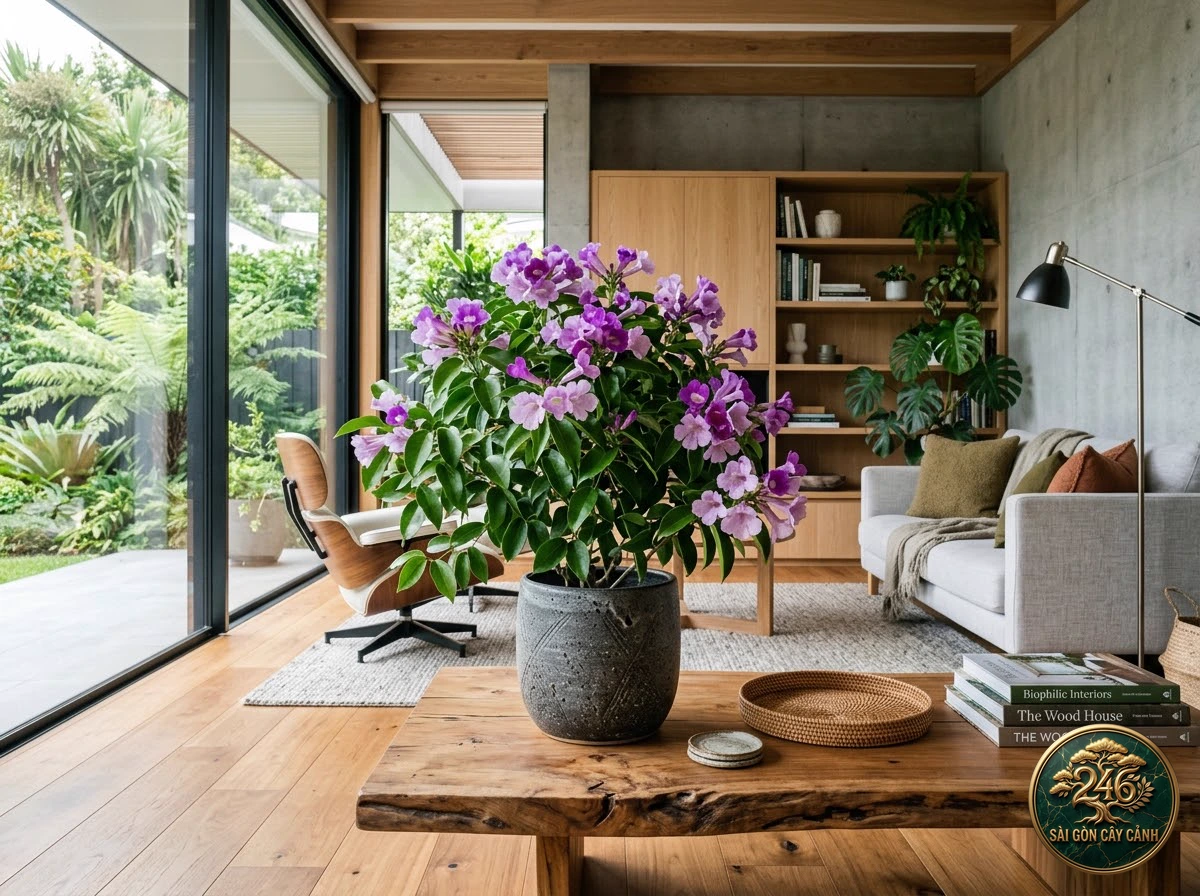
Within botanical symbolism and biophilic landscape aesthetics, garlic vine stands as an illustrious emblem of protective serenity, atmospheric purification, health longevity, and harmonic domestic wealth. Its natural alliacious fragrance clearing ambient pests, paired with the mesmerizing tri-color transition of lavender, pink, and white blossoms, introduces uplifting protective energy that blesses residential spaces with tranquil vitality.
Boasting robust climbing vigor and recurrent seasonal flushes, Mansoa alliacea serves as the premier ornamental choice: framing luxury villa entry pergolas, screening garden perimeter fences, shading breezy rooftop terraces, or planted around swimming pools and outdoor dining pavilions to deliver natural organic mosquito deterrence.
12. SGCC Acclimatization Benchmarks & Quality Guarantee
Saigon Cay Canh guarantees genetically pure Mansoa alliacea specimens rich in natural mosquito-repelling essential oils and mesmerizing tri-color blooms, supported by comprehensive ecological arbor advisory for villa estates.
💬 Góc Tư Vấn & Hướng Dẫn Kỹ Thuật SGCC
Chuẩn E-E-A-T Kinfolk❓ Chăm sóc Garlic vine (Mansoa alliacea cần lưu ý điều gì quan trọng nhất?
💡 Dạ điều quan trọng nhất là giữ môi trường sống ổn định, tránh sốc nhiệt hay dao động thông số đột ngột, đồng thời cung cấp khẩu phần ăn sạch và tươi mới ạ.
❓ Làm thế nào để phòng ngừa bệnh tật hiệu quả cho các bé?
💡 Dạ anh chị nên giữ vệ sinh chuồng/hồ nuôi sạch sẽ, thay nước hoặc dọn dẹp định kỳ và bổ sung vitamin, men tiêu hóa đều đặn để tăng sức đề kháng ạ.
🌿 Trang Thiết Bị, Đất Trồng & Dụng Cụ Bonsai Tuyển Chọn
Dụng cụ tỉa, giá thể hữu cơ & phân bón chuyên dụng cho cây cảnh.

Combo kìm cạp bonsai, cạp tròn, cạp xéo, combo cạp bons…

Combo 2 Kéo Cắt Tỉa Dăm + Kéo Cắt Cành Cây Cảnh Cao Cấp…

Cây Trầu Bà Tỷ Phú xanh (Burle Marx Green), cây cao 10-…
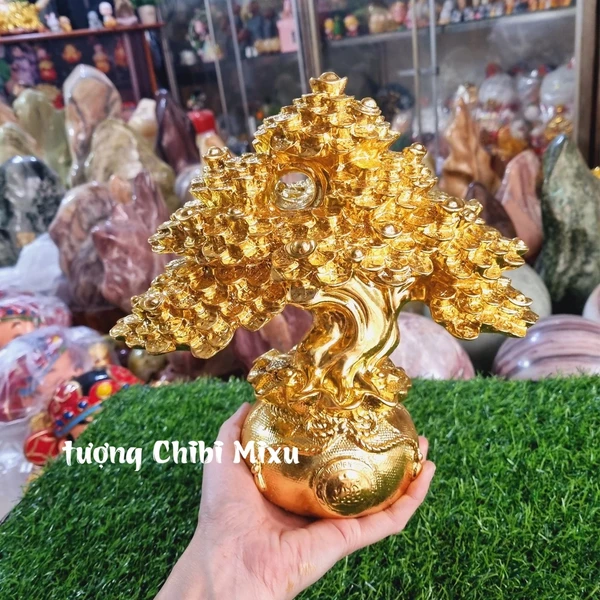
Cây Kim Tiền – cây Tài Lộc mạ ánh vàng – phát tài phát …

Đá Masato (1kg) – Loại cao cấp, sạch bụi, không vụn – R…

Combo 5 Cây Sen Đá vỉ ngẫu nhiên | Combo sen đá mini

Cây Kim Tiền, Kim Phát Tài, Kim Tiền Mini, Cây Mới Khỏe…
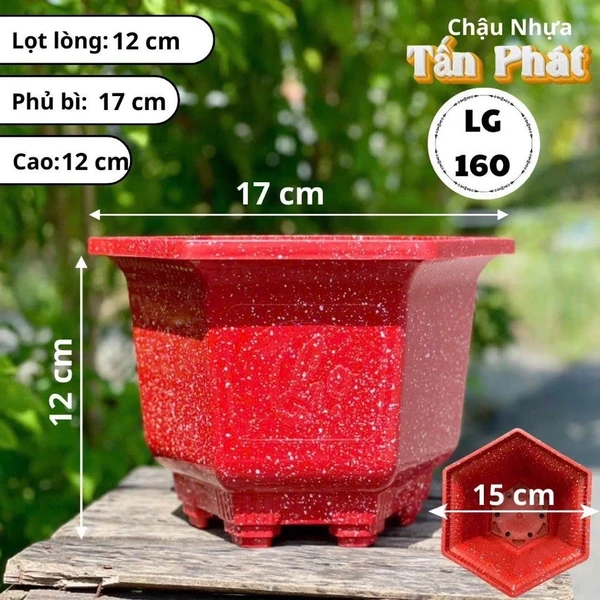
Chậu Nhựa LG160 Trồng Cây Cảnh – Chậu Lục giác Trồng Ho…
TÚI PHÂN RƠM TRỘN SẴN 1KG, đất trồng, giá thể phù hợp đ…

Chậu trồng cây Bonsai, Cây tiểu cảnh mini bằng chất liệ…

Phân bón hữu cơ trùn quế SFarm Đặng Gia Trang, TRÙN QUẾ…

Chậu Đất Nung Họa Tiết Sọc [Hỏa tốc]
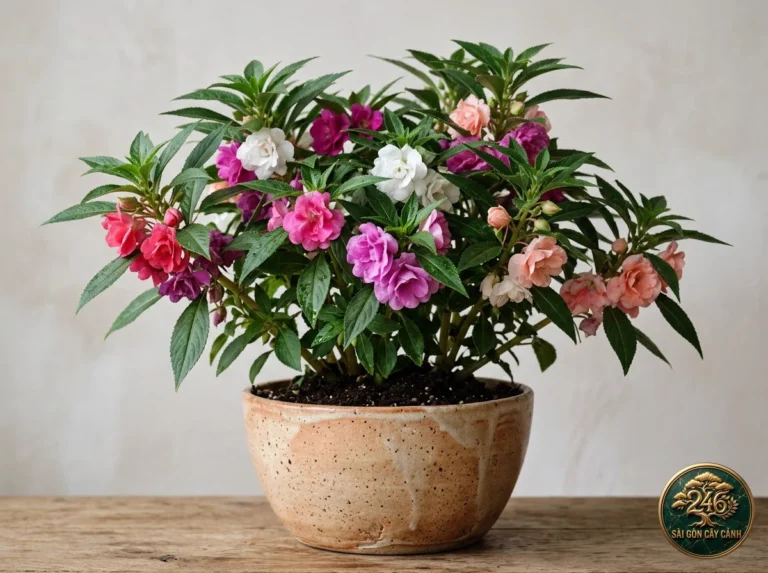
Garden balsam (Impatiens balsamina)
Garden balsam (Impatiens balsamina) Impatiens balsamina, universally treasured as garden balsam, rose balsam, or touch-me-not, is a nostalgic,...
Read Monograph →
Nile crossandra
Crossandra nilotica, celebrated internationally as the Nile crossandra or East African firecracker flower, is an aristocratic, evergreen tropical...
Read Monograph →
French hydrangea (Hydrangea macrophylla)
French hydrangea (Hydrangea macrophylla) Hydrangea macrophylla, internationally celebrated as French hydrangea, bigleaf hydrangea, or hortensia, is a magnificent...
Read Monograph →
Wingpod purslane (Portulaca umbraticola)
Wingpod purslane (Portulaca umbraticola) Portulaca umbraticola, widely known as wingpod purslane, ornamental purslane, or broadleaf moss rose, is...
Read Monograph →Expert Q&A, Recommended Supplies & Article Feedback
Tap once to connect instantly via Google, Facebook or TikTok — no long forms required!
No questions yet for this article. Tap Google / Facebook / TikTok above to ask the first question!