
Living plant profile
Chinese violet
Asystasia gangetica
📌 CLINICAL & BIOLOGICAL ABSTRACT — Chinese violetAsystasia gangetica, widely celebrated in subtropical and tropical landscaping as Chinese violet, Ganges primrose, or creeping foxglove, is a graceful, floriferous perennial herbaceous groundcover in the acanthus family (Acanthaceae). Indigenous to tropical forest margins, riparian grasslands, and savannas spanning sub-Saharan Africa and the Indian subcontinent, this adaptable species […]
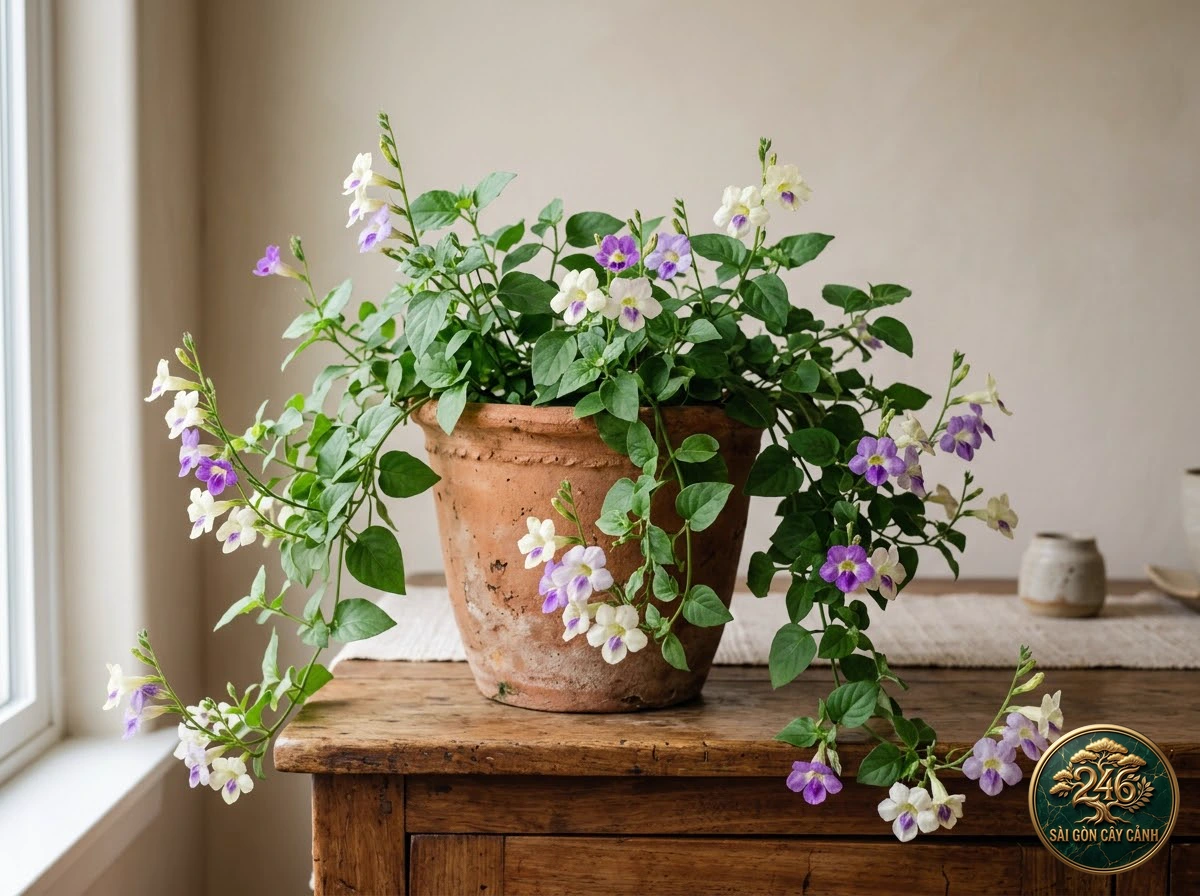
Asystasia gangetica, widely celebrated in subtropical and tropical landscaping as Chinese violet, Ganges primrose, or creeping foxglove, is a graceful, floriferous perennial herbaceous groundcover in the acanthus family (Acanthaceae). Indigenous to tropical forest margins, riparian grasslands, and savannas spanning sub-Saharan Africa and the Indian subcontinent, this adaptable species is celebrated for its rapid stoloniferous carpet-forming habit. Its soft, deep-green ovate foliage provides a lush understory foundation for terminal racemes of flaring, foxglove-like trumpet blossoms spanning 2 to 3.5 cm long in luminous shades of creamy-white, pale sulfur, or pastel lavender, accented by intricate purple-violet nectar guides on the lower petal lip. Flowering profusely year-round and verified 100% non-toxic to companion animals by the ASPCA, Asystasia gangetica is Saigon Cay Canh’s premier selection for cascading shaded balcony urns, biophilic urban underplantings, and rapid woodland soil stabilization.
1. Botanical Origin and Nomenclature History
Originally described by Carl Linnaeus in 1756 as Justicia gangetica, the species was critically reclassified in 1867 by Scottish botanist Thomas Anderson into the genus Asystasia within Thwaites’ Enumeratio Plantarum Zeylaniae. The generic name Asystasia is derived from ancient Greek asystatos (inconsistent or asymmetrical), denoting the mildly irregular, bilabiate segmentation of its five-lobed corolla. The specific epithet gangetica honors the sacred Ganges River basin in India, where classical type specimens were documented.
Due to its vigorous stoloniferous rooting and uninterrupted floral succession, Chinese violet dispersed broadly across pantropical ecosystems. In Vietnam, Asystasia gangetica has long flourished in lowland and montane zones alike, establishing a prestigious legacy as an indispensable ecological groundcover and cascading urn subject across eco-resorts, municipal gardens, and contemporary urban greening projects.
2. Morphological and Anatomical Characteristics
Morphologically, Asystasia gangetica is an evergreen perennial creeping herb forming dense sprawling carpets 20 to 40 cm high, with long prostrate stolons extending 80 to 150 cm and rooting vigorously at nodes upon contact with moist substrate. Stems are subquadrangular to columnar, succulent, freely branching, light green, and sparsely puberulent. Leaves are arranged in opposite pairs along nodes; petioles measure 0.5 to 2.5 cm; blades are ovate to broadly elliptic, 3 to 8 cm long and 2 to 5 cm wide, featuring subcordate to rounded bases, acuminate apices, and entire to repand margins; foliar surfaces are thin, herbaceous, bright emerald green, and conspicuously net-veined.
Inflorescences are terminal, one-sided (secund) racemes 5 to 15 cm long bearing 6 to 15 blossoms opening acropetally. Pedicels are short and slender; the calyx possesses 5 linear-lanceolate lobes 5 to 7 mm long. The funnelform-campanulate corolla measures 2.5 to 3.5 cm in length, consisting of a basal cylindrical tube flaring into a 5-lobed bilabiate limb; petal coloration spans creamy-white, primrose-yellow, or pale lavender, with the central lower lobe prominently ornamented by deep purple-violet nectar guide blotches. Four didynamous stamens are enclosed within the throat. The fruit is a clavate capsule 2 to 2.5 cm long that dehisces explosively to discharge 4 flattened, tuberculate seeds.
3. Photobiological and Microclimatic Requirements
Photobiologically, Asystasia gangetica possesses extraordinary environmental adaptability, thriving from partial sunlight to deep understory shade receiving 20,000 to 45,000 lux. It flourishes exceptionally when receiving 2 to 4 hours of gentle morning solar irradiance or filtered woodland canopy light. Shaded conditions sustain intense emerald foliar coloration, promote vigorous stolon elongation, and preserve the delicate pastel tones of open corollas.
While accommodating full unshaded sun when sustained by constant root hydration, intense tropical noon rays cause leaves to bleach toward yellowish-green with compacted internodes. In southern Vietnam, establishing Chinese violet beneath open tree canopies or on eastern and northern verandas produces the most luxuriant ornamental results. It thrives within ambient temperatures between 22 and 34 degrees C and relative humidity from 65% to 85%.
4. Edaphic and Substrate Specifications
The shallow fibrous root network and extensive nodal rootlets of Asystasia gangetica inhabit the upper 10 to 20 cm of soil, exhibiting vigorous adaptability across diverse soil profiles. It flourishes in alluvial loam, sandy loam, or humus-rich soils provided adequate continuous moisture and drainage porosity are maintained. Stagnant anaerobic waterlogging persisting beyond 48 hours induces root hypoxia and invites Pythium collar rot, causing localized patch dieback.
The planting medium formulated by Saigon Cay Canh incorporates 40% washed desalted coco peat, 30% sterilized alluvial loam, 15% carbonized rice hull ash for macroporosity, and 15% mature organic vermicompost. Substrate pH should remain stabilized between 6.0 and 7.0. Hanging baskets and raised masonry planters must incorporate generous drainage perforations lined with coarse gravel to ensure free water passage.
5. Precision Irrigation Regimes
Water requirements for Asystasia gangetica are moderately high to support its rapid biomass expansion and succulent herbaceous stems. During the dry season in southern Vietnam, administer thorough watering once or twice daily in early morning hours (07:00 to 08:00), supplemented by a late-afternoon watering if soil surface dry down occurs, maintaining 70% to 80% substrate moisture.
Watering protocol: deliver water via gentle rose sprays or drip irrigation across the root zone; throughout heavy monsoonal rain spells, suspend supplemental watering and ensure unobstructed drainage paths to accelerate water discharge and promote root aeration.
6. Mineral Nutrition and Fertilization Schedules
Because Chinese violet produces continuous vegetative growth and unbroken successions of flowering racemes, disciplined nutritional support preserves foliar density and prolific bloom flushes. Every 2 to 3 months, top-dress with a thin layer of aged vermicompost to replenish soil microbiology.
Every 10 to 12 days, apply a dilute liquid drench of balanced NPK 16-16-16 or NPK 15-15-15 (1.5 grams per liter of water) around the root perimeter. During peak floral initiation, apply foliar sprays rich in chelated calcium, boron, and potassium humate to reinforce pedicel strength, heighten purple throat blotch contrast, and prolong blossom retention for 2 to 3 weeks on the plant.
7. Propagation Techniques and Architectural Pruning
Propagation of Asystasia gangetica is exceptionally rapid and achieves nearly 100% strike rates via stem cuttings or rooted runner divisions. Select 10 to 15 cm healthy semi-succulent stem segments bearing 3 to 4 nodes, insert into moist sandy substrate, and maintain under bright indirect light; vigorous white roots establish within 7 to 10 days, yielding transplant-ready groundcover in 14 to 20 days.
Routine trimming is the primary maintenance protocol: owing to its vigorous creeping habit, perform shearing every 2 to 3 months to constrain lateral expansion, eliminate spent flowering scapes, and rejuvenate dense, floriferous juvenile canopies.
8. ASPCA Veterinary Toxicological Assessment
Botanical safety profile and ASPCA pet safety standards: Classified within the family Acanthaceae, Asystasia gangetica is verified by the American Society for the Prevention of Cruelty to Animals (ASPCA) and international veterinary toxicology registries as 100% NON-TOXIC TO DOGS, CATS, AND HORSES.
All vegetative and floral organs, including succulent creeping stems, tender ovate leaves, and trumpet blossoms, are completely free of hazardous alkaloids, toxic resins, or poisonous glycosides. The cellular sap is benign upon contact or ingestion. In fact, in tropical Africa and parts of India, tender young shoots are traditionally consumed as a nutritious cooked potherb rich in proteins and vitamins. Companion animals browsing casually on foliage encounter zero toxicological danger. Consequently, Chinese violet represents one of the safest perennial color selections for family courtyards and pet-friendly hospitality landscapes.
9. Clinical Plant Pathology Diagnostics
Clinical pathology protocol for caterpillar bud deterrence and rejuvenative carpet trimming in Asystasia gangetica:
| Clinical Symptoms | Pathological Diagnosis | Prescriptive Protocol |
|---|---|---|
| Tender leaves and young racemes show ragged margins and silk webbing spun by nocturnal caterpillars | Leaf-roller caterpillars or armyworms skeletonizing succulent foliage and flower buds after dusk | Hand-pick larvae at dawn, and apply bio-rational Bacillus thuringiensis (Bt) or concentrated bio-neem extract |
| Creeping stolons near the soil surface turn black, water-soaked, and limp, causing rapid clump wilting after heavy rains | Root and collar rot (Pythium or Rhizoctonia spp.) induced by stagnant anaerobic waterlogging in heavy soil | Excise diseased runners cleanly, aerate the surface substrate, suspend irrigation, and drench with Ridomil Gold or Aliette |
| Abaxial leaf surfaces show fine microscopic webbing accompanied by stippled chlorosis and dull grayish foliage | Two-spotted spider mites (Tetranychus urticae) siphoning cellular fluids during warm, arid weather spells | Rinse leaf undersides with fine morning water jets, and apply horticultural mineral oil (SK Enspray) or Ortus bio-acaricide |
10. Comparative Taxonomic and Morphological Matrix
Taxonomic comparative matrix evaluating flaring secund racemes, purple nectar guides, and rapid stoloniferous rooting of Asystasia gangetica:
| Taxonomic Criteria | Chinese violet (Asystasia gangetica) | Comparative Species Group A | Comparative Species Group B |
|---|---|---|---|
| Blossom morphology and corolla form | Broad flaring trumpet corolla with 5 lobes in creamy-white marked by deep purple-violet throat nectar guides | Quadrangular 4-sided terminal spikes bearing asymmetric fan-shaped blossoms in saturated coral-red or apricot hues | Elongated tubular 2.5 cm fiery scarlet calyx-corolla tubes clustered densely along weeping pendulous sprays |
| Branching habit and creeping architecture | Soft creeping herbaceous stems rooting freely at nodes and extending 80 to 150 cm into dense carpets | Compact upright evergreen shrub 30 to 70 cm tall with lustrous wavy foliage, preferring bright filtered sun | Slender leafless rush-like wiry green stems with tiny scalelike bracts; cascades of brilliant scarlet tubular flowers |
| Photobiological niche and endurance | Thrives in deep to partial canopy shade, producing flexible creeping stems that root freely at nodes | Thrives in bright filtered light to gentle early morning sun, developing glossy deep green foliage in partial shade | Demands fierce full tropical sun for 6 to 8 hours daily, flowering relentlessly under high solar irradiance |
11. Biophilic Landscape Application and Feng Shui Symbolism
In Eastern biophilic philosophy and Feng Shui metaphysics, Asystasia gangetica radiates gentle Wood and purifying Water energies, symbolizing familial harmony, boundless kindness, and the continuous diffusion of fresh life force. Its cascading pastel blossoms marked with purple throats evoke a tranquil floral stream that dissolves environmental tension, fostering peaceful contemplation and auspicious contentment within living spaces.
Within contemporary Saigon Cay Canh landscape architecture, Chinese violet serves as a staple shade carpet: edging shaded villa footpaths, covering bare understory ground around large ornamental palms, featured in cascading ceramic hanging pots on apartment balconies, or massed into naturalistic wave parterres across boutique hospitality estates.
12. Procurement and Nursery Specifications at Saigon Cay Canh
Saigon Cay Canh produces and distributes premium containerized and flat-grown Asystasia gangetica stock across southern Vietnam, supplying white-purple and lavender flowered forms for luxury hospitality resorts, municipal public parks, and private residential estates.nnWe guarantee authentic cultivar genetics, vigorous root balls ready for rapid ground colonization, disease-free nursery stock, competitive wholesale pricing, and turn-key biophilic landscape advisory nationwide.
Sài Gòn Cây Cảnh Care Compass
Nursery Care Journal & Living Greenery Moments
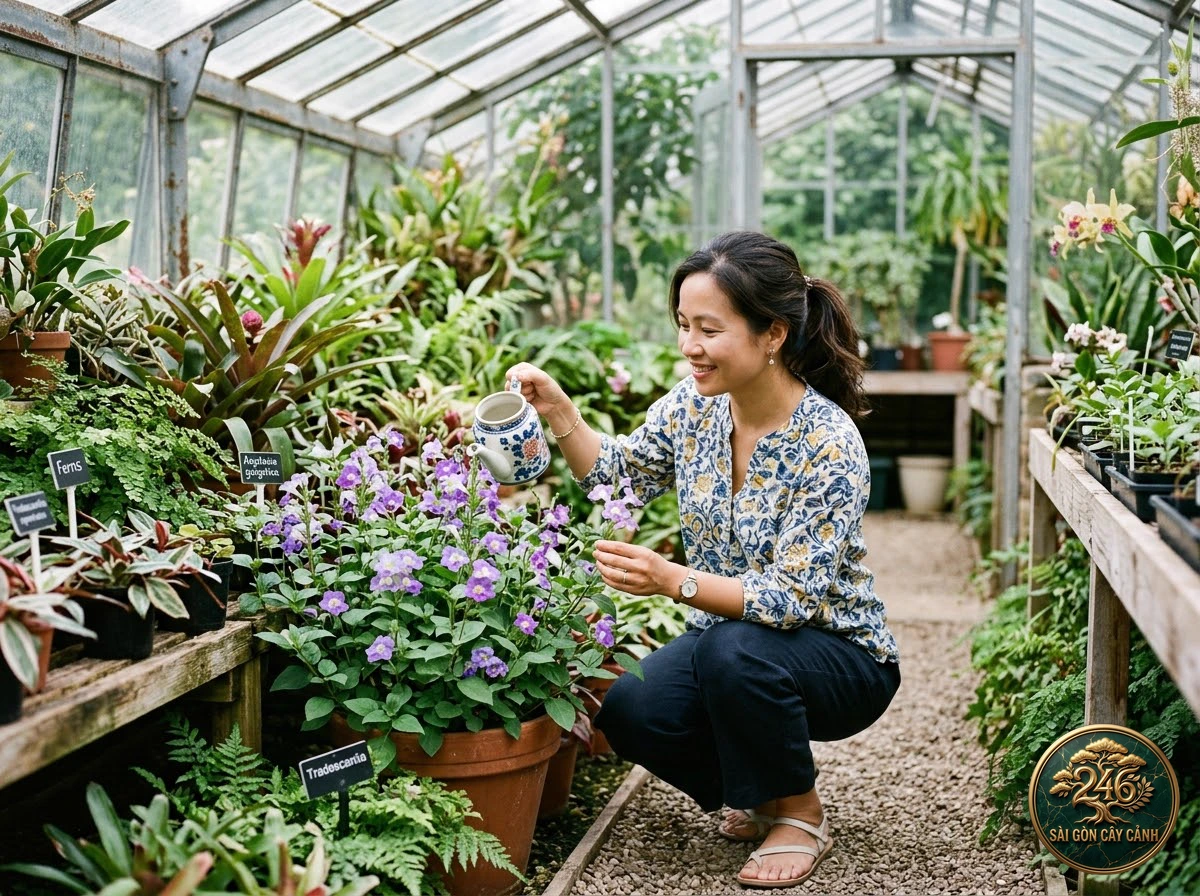
At Saigon Cay Canh greenhouse, each photograph captures genuine everyday care moments between plant lovers and living greenery, spreading a passion for nature and green-living inspiration.
💬 Góc Tư Vấn & Hướng Dẫn Kỹ Thuật SGCC
Chuẩn E-E-A-T Kinfolk❓ Chăm sóc Chinese violet cần lưu ý điều gì quan trọng nhất?
💡 Dạ điều quan trọng nhất là giữ môi trường sống ổn định, tránh sốc nhiệt hay dao động thông số đột ngột, đồng thời cung cấp khẩu phần ăn sạch và tươi mới ạ.
❓ Làm thế nào để phòng ngừa bệnh tật hiệu quả cho các bé?
💡 Dạ anh chị nên giữ vệ sinh chuồng/hồ nuôi sạch sẽ, thay nước hoặc dọn dẹp định kỳ và bổ sung vitamin, men tiêu hóa đều đặn để tăng sức đề kháng ạ.
🌿 Trang Thiết Bị, Đất Trồng & Dụng Cụ Bonsai Tuyển Chọn
Dụng cụ tỉa, giá thể hữu cơ & phân bón chuyên dụng cho cây cảnh.

Hạt giống hoa Hồng Leo Pháp đủ màu (Tặng phân bón), hoa…

Combo 2-3 cây Kim Tiền -Kim Phát tài – Cây Phong Thủy ,…

Cây kim tiền vàng mô hinh cây vàng may mắn cây tài lộc …

Dây Uốn Cành Cây Bonsai Màu Đen Đủ Size , Dây Nhôm Đen …

Hạt giống hoa mười giờ Thái nhiều màu, Hạt hoa 10h dễ t…
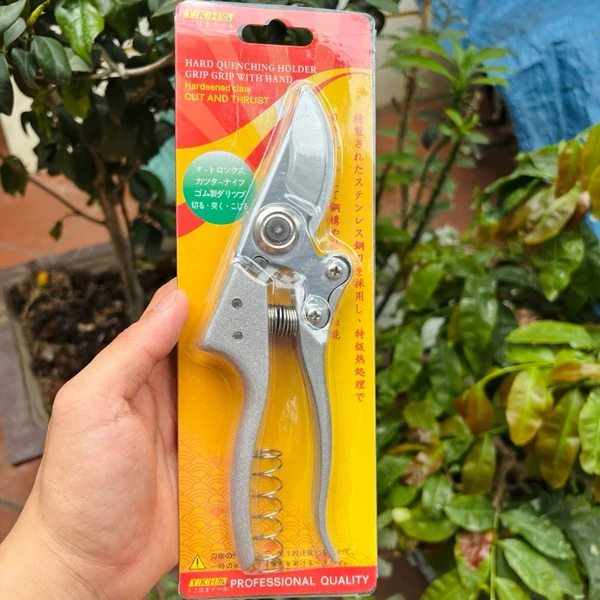
Kéo cắt cành cộng lực YOKOHAMA SK5 xuất xứ JAPAN Kéo cắ…

3kg Vôi bột nông nghiệp đã qua xử lí, cải tạo đất trồng…

Vòi phun nước đa năng 8 chế độ Maygarden VPA101, vòi xị…

Đá masato rải mặt chậu, trộn đất trồng sen đá xương rồn…
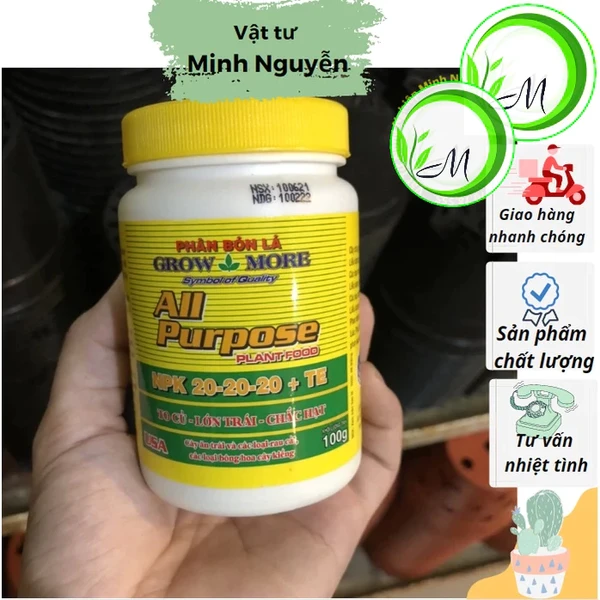
Phân bón lá 20-20-20 lọ 100g, phân bón growmore của mỹ,…

Chậu Nhựa Trồng Cây Monrovia Cao Cấp Siêu To – Unigreen…

Bộ dụng cụ làm vườn trẻ em URKIBESOTA, Bộ dụng cụ trồng…

Pinwheel flower
Tabernaemontana divaricata, universally revered across tropical Asia as pinwheel flower, crape jasmine, or East Indian rosebay, is an...
Read Monograph →
Busy Lizzie (Impatiens walleriana)
Busy Lizzie (Impatiens walleriana) Impatiens walleriana, internationally celebrated as busy Lizzie, sultana, or patient Lucy, is a luxuriant...
Read Monograph →
Globe amaranth (Gomphrena globosa)
Globe amaranth (Gomphrena globosa) Gomphrena globosa, universally celebrated as globe amaranth, bachelor’s button, or immortelle, is a charming...
Read Monograph →
Red button costus (Costus woodsonii)
Red button costus (Costus woodsonii) Costus woodsonii, internationally celebrated as red button costus, scarlet spiral flag, or Indian...
Read Monograph →Expert Q&A, Recommended Supplies & Article Feedback
Tap once to connect instantly via Google, Facebook or TikTok — no long forms required!
No questions yet for this article. Tap Google / Facebook / TikTok above to ask the first question!