Living plant profile
Beetle peperomia
Peperomia angulata
Comprehensive botanical dossier for Beetle peperomia (Peperomia angulata). Identification, lighting calibration, porous substrate formulation, and cultivation guide by Saigon Cay Canh.
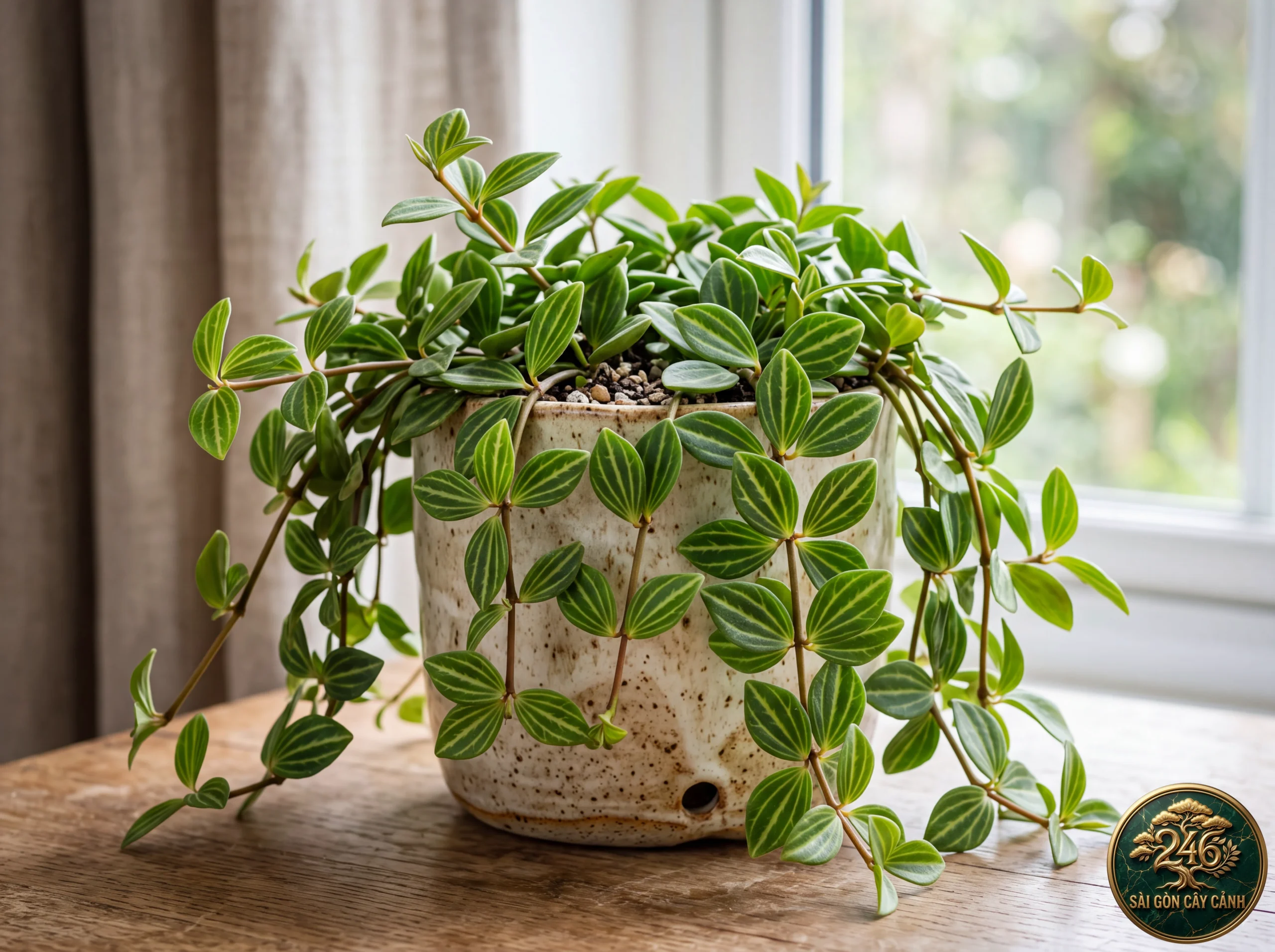
Beetle peperomia (Peperomia angulata) is an extraordinary semi-succulent tropical foliage species in the pepper family (Piperaceae), celebrated for distinct quadrangular stems and lanceolate leaves patterned with longitudinal creamy stripes resembling a beetle’s carapace.
1. Core Botanical Taxonomy & Cultural Specifications
| Scientific Name | Peperomia angulata |
|---|---|
| Botanical Family | Piperaceae (Pepper Family) |
| Native Distribution | Tropical rainforests of South America (Colombia, Peru, Brazil) |
| Growth Demeanor | Semi-succulent creeping or gently trailing herb with dense ramification |
| Lighting Threshold | Moderate to bright filtered diffuse daylight (1,200 – 3,000 lux) |
| Hydration Cadence | Water when upper 50% media dries out; avoid stagnant saturation |
| Substrate Formulation | Pumice aggregate, fine pine bark, coarse coco coir, biochar mix |
| Thermal Range | 18°C – 30°C (warm tropical comfort; protect from cold below 12°C) |
| Relative Humidity | 60% – 80% (tropical rainforest atmospheric humidity levels) |
| Cultivation Difficulty | Easy (resilient succulent foliage, water-wise, highly durable) |
| Pet Safety Profile | 100% Non-Toxic (ASPCA certified completely safe for dogs and cats) |
Taxonomically and ecologically, Peperomia angulata hails from the dense tropical rainforests of northwestern South America, including Colombia, Peru, and the upper Amazon basin. It prospers as an epiphyte rooted in tree crevices or clambering across leaf litter along riparian forest floors, capturing gentle filtered rays under multi-tiered canopies.
The definitive taxonomic marker of Peperomia angulata is embodied in its specific epithet ‘angulata’ (angled): the cauline stems exhibit distinctly quadrangular cross-sections tinted in pale green or purplish-russet. Branching prolifically at the nodes, it bears lanceolate to elliptic leaves 2 to 4 cm long and 1 to 2 cm wide.
The upper foliar surface is deep glossy emerald, dramatically traced with 4 to 5 longitudinal parallel veins of reflective creamy-white or pale chartreuse traversing from petiole to apex. This contrast creates a striped pattern reminiscent of a beetle’s wing-cases, earning its charming common name ‘Beetle peperomia’.
2. Morphological Identification & Foliar Architecture
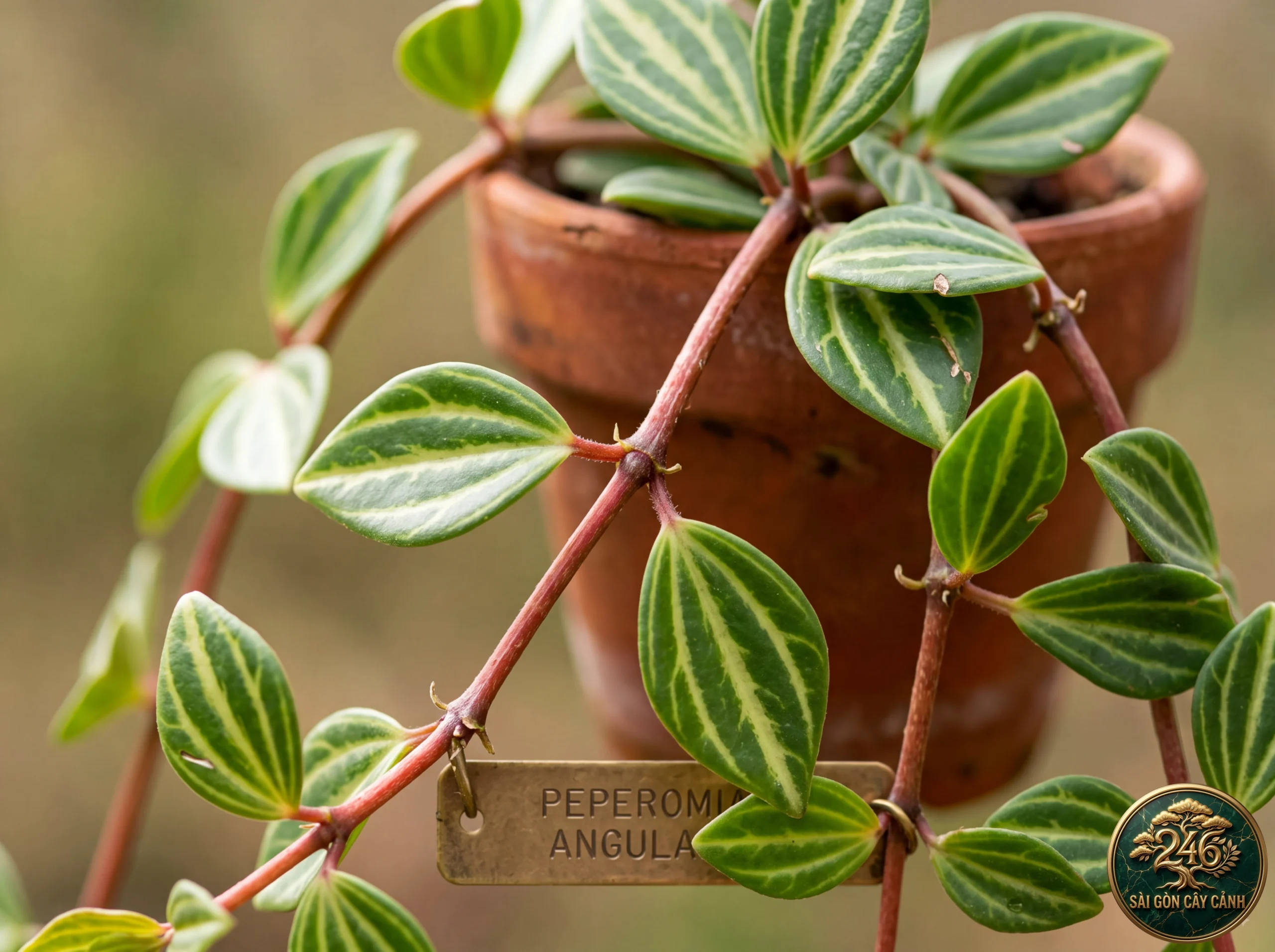
Diagnostic keys distinguishing Beetle peperomia center on its squarish, four-angled stems paired with longitudinal cream-white striped venation across succulent lanceolate blades. Palpating the leaf reveals firm structural turgor; the abaxial epidermis is pale chartreuse, completely smooth, and glabrous.
Inflorescences emerge as slender chartreuse rat-tail spikes 5 to 8 cm long rising erectly above foliage in summer. The plant grows as a semi-prostrate creeping mound that cascades gently over container edges, creating a delightful tapestry of striped beetle-like foliage.
Laminar histology of Peperomia angulata demonstrates remarkable cellular differentiation along parallel veins. Silvery-white longitudinal stripes flanking primary costae consist of transparent hypodermal cells with air-filled intercellular lacunae that reflect ambient photons creating beetle-back iridescence, while alternating dark emerald bands concentrate dense palisade mesophyll rich in chlorophyll a and b.
3. Photometric Calibration & Window Exposure Optimization
Photometrically, Peperomia angulata prospers under diffuse indirect daylight spanning 1,200 to 3,000 lux (25 to 60 µmol/m²/s PPFD). Ample gentle light preserves the crisp contrast of creamy longitudinal stripes; protracted darkness below 800 lux causes stripes to fade into muddy green while stems etiolate.
Protect the foliage from direct scorching midday summer rays, as delicate variegated stripe cells easily suffer thermal lesions turning unsightly tan. Placing containers near an east-facing window or 1.5 meters from a sheer-curtained west window ensures balanced illumination.
Biophotometric profiling establishes that Striped beetle peperomia achieves peak net photosynthetic assimilation within a PPFD flux between 25 and 55 µmol/m²/s. Soft diffused photons enhance the dramatic contrast of silver costal stripes against glossy dark emerald fields; sustained irradiance surpassing 85 µmol/m²/s induces chlorophyll photodegradation, dulling the silvery striations into yellowish lesions.
4. Quadrangular Branching Histology & Striped Beetle-Back Foliar Venation
The four-angled cauline anatomy provides natural mechanical rigidity, allowing young shoots to ascend before gracefully bowing under gravity. Compressed, pliant internodes ensure a dense bush habit that withstands minor handling.
At every cauline node, adventitious root primordia stand primed to erupt upon contact with moist substrate. This trait allows the species to clamber across driftwood branches and mossy rocks within semi-open terrarium displays.
Optimal thermal conditions range between 18°C and 30°C, perfectly suited to modern urban interiors. Protect specimens from cold drops beneath 12°C and shield from direct convective blasts from air-conditioning vents.
Ambient relative humidity is ideally calibrated between 60% and 80%. During dry periods, placing containers over pebble-water trays or grouping with companion tropical foliage establishes a humid microclimate preserving lustrous foliar sheen.
The target vapor pressure deficit (VPD) spans 0.7 to 1.05 kPa paired with ambient relative humidity maintained between 60% and 80%. Internal water-storing hypodermal buffers allow the plant to withstand air-conditioned drafts, regulating stomatal conductances smoothly to prevent physiological foliar margin curling.
Cauline anatomy of Peperomia angulata features a distinct quadrangular cross-section strengthened by continuous collenchymatous vascular ribs along all four angled corners. This structural architecture imparts robust torsional rigidity, allowing trailing stems to drape gracefully or spread along substrates without snapping under the cumulative mass of hundreds of succulent elliptical leaves.
5. Porous Aggregate Substrate Engineering & Aeration Dynamics
Substrate engineering for Beetle peperomia requires balanced capillary moisture holding combined with superb macroporosity. A proven mix comprises 40% medium pumice, 25% pasteurized fine pine bark, 20% washed coarse coco coir, and 15% perlite, stabilizing pH between 6.0 and 6.8.
Hydration cadence follows the dry-down principle: water thoroughly when the top 50% potting mix volume is dry. Irrigate in the morning until water percolates freely from drainage holes, promptly discarding excess runoff from collection saucers.
Substrate hydraulic conductivity necessitates an air-filled porosity exceeding 30% at container capacity for unhindered rootlet respiration. Blending 35% graded pumice (3-6 mm) with 25% composted fine pine bark produces a porous capillary matrix that buffers gentle hydration while holding a stable pH between 6.0 and 6.8.
6. Organic Nutrition Schedules & Periodic Micronutrient Priming
Nutritional management relies on dilute bio-organic feeds such as vermicompost tea enriched with potassium-dense fermented banana water applied monthly during spring and summer. Maintain electrical conductivity (EC) beneath 0.5 mS/cm to nourish foliage without root burn.
During cool winter slowdowns, suspend fertilization entirely and widen irrigation intervals. Always moisten potting media with clean water before administering nutrient liquids to shield sensitive feeder rootlets.
Biological nutritional management involves applying dilute vermicompost extract paired with cold-water kelp essence at an EC strictly below 0.5 mS/cm monthly during spring and summer flushes. Soluble bio-potassium and chelated zinc and iron sharpen the crisp silvery parallel venation without chemical root scorch.
7. Clinical Diagnostic Matrix & Rapid Correction Protocols
| Clinical Symptom | Primary Etiology | Diagnostic Evaluation | Corrective Prescription |
|---|---|---|---|
| Creamy longitudinal stripes fading and leaves turning dull green | Prolonged light starvation in deeply shaded indoor locations | Measure ambient light levels beneath 1,000 lux over extended weeks | Move specimen closer to luminous indirect daylight near east windows |
| Stems turning soft, black, and leaves falling at slightest touch | Root and stem rot caused by chronic over-irrigation and soggy media | Inspect bottom soil to find waterlogged, sour-smelling substrate | Halt irrigation immediately, unpot to excise rot, repot in airy pumice media |
| Foliage showing crisp tan-brown necrotic scorch spots | Direct unshaded solar radiation burning delicate succulent cuticle | Correlate scorch marks with unshielded direct midday sun angles | Draw sheer curtains or relocate container deeper into filtered daylight |
| White cottony wax deposits nestled along four-angled stem grooves | Mealybug infestation feeding upon tender cauline tissues | Examine under magnification to confirm mealybug insects | Swab with cotton buds dipped in biological alcohol and apply insecticidal soap |
8. Cryptic Pest Prophylaxis & Foliar Surface Sanitation
Biological pest management emphasizes early detection of mealybugs and spider mites through bi-weekly foliar wiping. Gently wiping leaf surfaces with soft damp cloths removes dust and prevents cryptic pest colonization.
Prevent Pythium root rot by ensuring substrate remains open and well-aerated, utilizing generous drainage holes, and never allowing drainage water to linger in saucers overnight.
Integrated Pest Management (IPM) focuses on vigilant scouting for cryptic mealybugs and spider mites along the striated abaxial leaf surfaces. Periodic wipe-downs with damp microfiber cloths and preventative dusk applications of 0.5% organic potassium soap maintain pristine, pest-free foliar canopies.
9. Asexual Propagation Methodology & Root Strike Protocols
Propagating Peperomia angulata is effortless via tip cuttings or 2 to 3 node stem segments. Using sterile snips, take 8 to 10 cm cuttings, allowing severed ends to air-callus in warm shade for 2 hours.
Insert cuttings into moist perlite blended with fine pumice under a ventilated transparent humidity cover at 22°C – 26°C. Within a 25 to 35 day interval, dense adventitious root clusters develop at submerged nodes and vigorous shoots emerge.
During quadrangular stem tip cutting propagation, allowing cut ends to air-callus in shade prior to insertion into moist perlite-pumice media prevents pathogenic rot. Housing cuttings under a ventilated humidity dome in warm 22°C – 26°C conditions over a 25 to 35 day interval stimulates robust callus strike and axillary bud initiation with 100% success.
10. Companion Animal Safety Profile & ASPCA Non-Toxic Verification
Peperomia angulata is certified by the ASPCA as completely non-toxic to dogs and cats. Free from harmful phytotoxins or toxic sap, it represents an entirely safe foliage addition for pet-friendly households.
11. Biophilic Curation & Contemporary Interior Design Styling
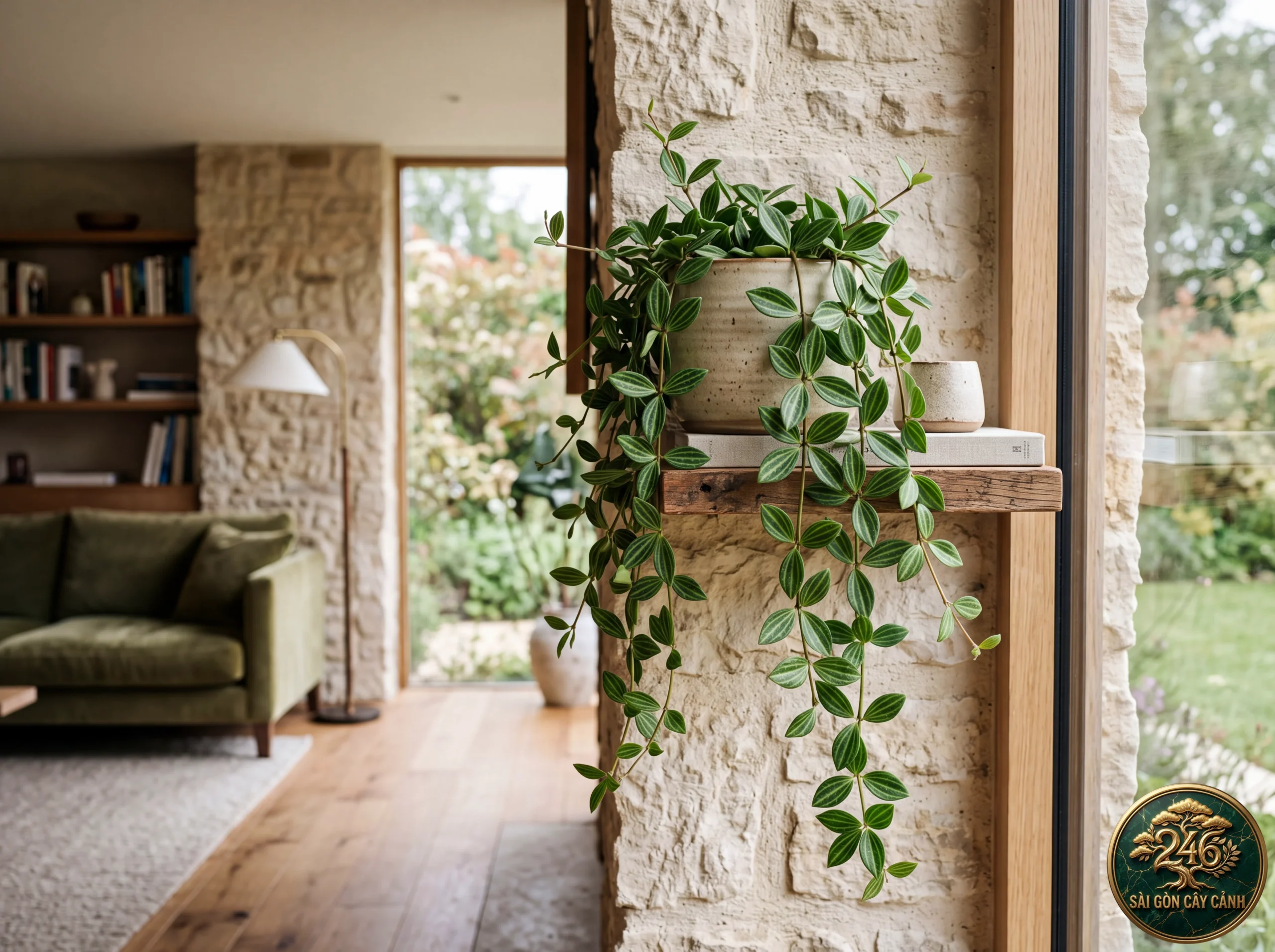
In modern Biophilic interior styling, Peperomia angulata introduces an eye-catching graphic accent through its geometric striped venation. Its gently cascading habit looks exquisite in artisanal ceramic pots on executive desks, bookshelves, or hanging beside sunlit windows.
The beetle-carapace pattern paired with vibrant greenery conveys resilient natural vitality within urban settings. Contemplating the delicate geometric precision of its striped foliage sparks creative thinking and fosters tranquil balance.
From a Biophilic spatial psychology viewpoint, the rhythmic parallel striations of Peperomia angulata introduce exquisite geometric order and soothing visual balance. Positioned in hanging planters or displayed on living room shelving, it softens rigid architectural lines, cultivating a restorative, elegant sanctuary.
12. Master Principles for Sustainable Indoor Acclimatization
To cultivate thriving Peperomia angulata with sturdy four-angled stems and crisp creamy stripes indoors, adhere to these three core principles:
- Hydration axiom: Hydration axiom: Irrigate only when substrate dries 50%, ensuring rapid drainage without stagnant saucer pooling.
- Illumination axiom: Illumination axiom: Provide luminous indirect daylight of 1,200-3,000 lux to keep the creamy longitudinal stripes vivid.
- Maintenance axiom: Ventilation axiom: Deploy lightweight mineral-rich mixes of pumice and perlite, maintaining gentle natural air circulation.
13. Frequently Asked Questions Regarding Beetle peperomia (FAQs)
Why is this plant called ‘Beetle peperomia’?
Its common name derives from the longitudinal creamy-white stripes traversing deep green leaves, evoking the striped elytra of certain tropical beetles.
Is the four-angled stem a genetic deformity?
No; the distinctly quadrangular stem cross-section is a natural anatomical hallmark codified by its specific epithet ‘angulata’.
Does Beetle peperomia produce flowers indoors?
Yes; it blooms in summer, producing upright chartreuse rat-tail spikes 5-8 cm long terminating slender branches.
How frequently should Peperomia angulata be repotted?
Due to its compact root architecture, repotting into a slightly larger pot is required only every 2 to 3 years.
Can it be co-planted in mixed arrangements with other foliage?
Yes; it pairs beautifully in mixed container arrangements alongside Fittonia, Maranta, or other Peperomias sharing similar gentle care needs.
Why do intact leaves of Striped beetle peperomia shed easily upon touch?
Spontaneous leaf shedding typically indicates basal rhizosphere asphyxiation from perched water tables or thermal shock from direct air-conditioned drafts; move the pot to a draft-free warm spot, verify drainage, and allow soil to dry before watering again.