
Living plant profile
Blue butterfly bush (Rotheca myricoides)
Rotheca myricoides
📌 CLINICAL & BIOLOGICAL ABSTRACT — Blue butterfly bush (Rotheca myricoides)Blue butterfly bush (Rotheca myricoides) Rotheca myricoides, globally celebrated under its historic botanical designation Clerodendrum ugandense as blue butterfly bush, Oxford and Cambridge bush, or butterfly clerodendrum, is an astonishing semi-evergreen woody flowering shrub within the mint family (Lamiaceae). Indigenous to the sun-drenched hillslopes of […]
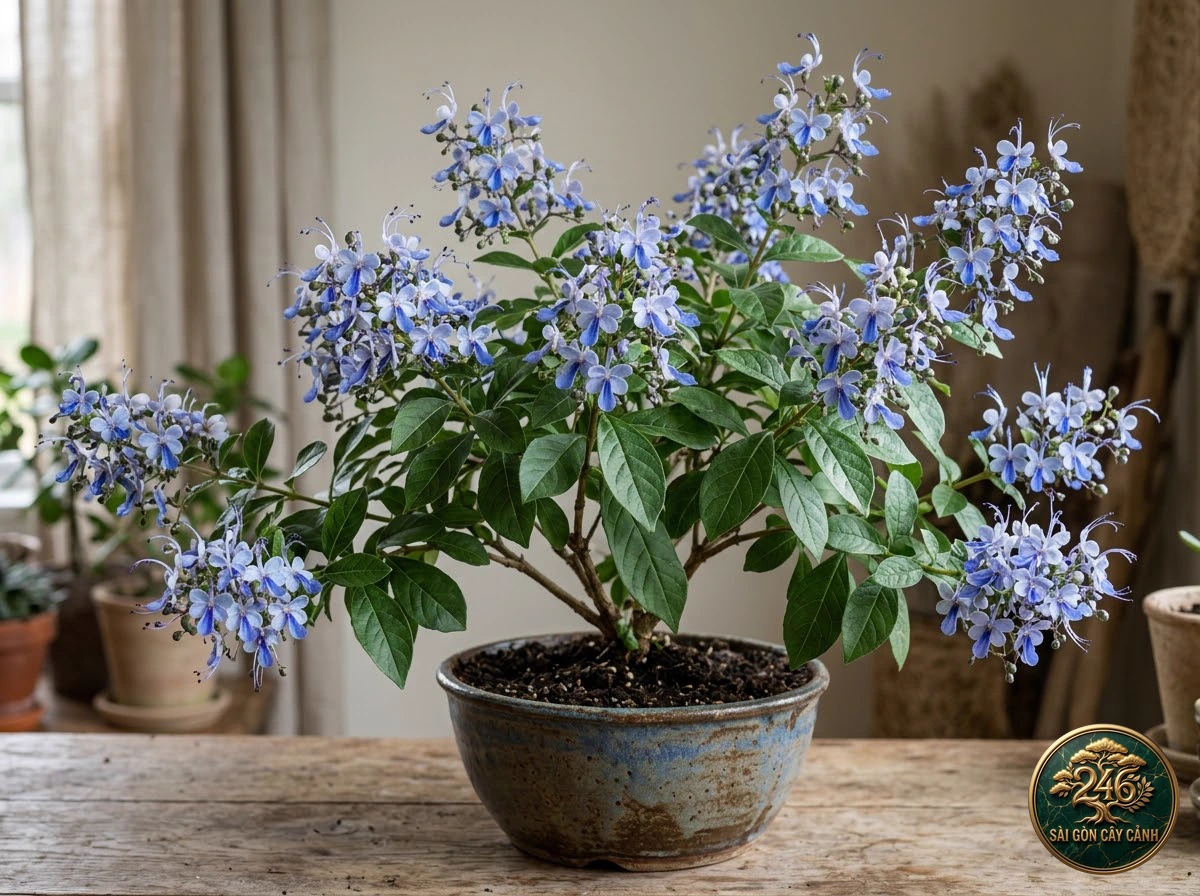
Blue butterfly bush (Rotheca myricoides)
Rotheca myricoides, globally celebrated under its historic botanical designation Clerodendrum ugandense as blue butterfly bush, Oxford and Cambridge bush, or butterfly clerodendrum, is an astonishing semi-evergreen woody flowering shrub within the mint family (Lamiaceae). Indigenous to the sun-drenched hillslopes of eastern Africa, it commands legendary horticultural admiration for its uniquely sculpted blossoms that mimic fluttering butterflies with uncanny botanical perfection. Four lateral petals display soft, ethereal sky-blue or pale azure hues, while the solitary median petal forms a deeply cupped, intense violet-blue keel resembling a butterfly’s vibrant body, crowned by elegant arching stamens extending like whimsical antennae. Within Saigon Cay Canh luxury landscaping, this extraordinary blue-flowered rarity brings exquisite serenity and airborne grace to botanical estates.
Sài Gòn Cây Cảnh Care Compass
1. Botanical Identity & Taxonomic Nomenclature History
Rotheca myricoides was initially described in 1842 by German botanist Christian Ferdinand Friedrich Hochstetter as Spironema myricoides. In 1909, the iconic Ugandan butterfly shrub was named Clerodendrum ugandense by Albert Penzig. In 1998, botanists Dorothy Anne Steane and David John Mabberley published extensive molecular phylogenetic evidence reconstructing the subfamily Teucrioideae within Lamiaceae, formally reinstating the resurrected genus Rotheca and establishing the accepted binomial Rotheca myricoides.
The generic name Rotheca derives from the indigenous Kannada vernacular name ‘erotheca’ in southwestern India. The specific epithet myricoides reflects morphological foliar similarities to the bog-myrtle genus Myrica. Indigenous to rocky slopes and open thickets across eastern Africa, it was introduced to the Royal Botanic Gardens, Kew, where British horticulturists fondly coined the moniker ‘Oxford and Cambridge bush’ honoring its harmonious blend of dark blue and pale blue collegiate colors. Acclimatized in Vietnam by Saigon Cay Canh, it has become a cherished blue-flowered horticultural treasure.
2. Morphological Anatomy & Structural Architecture
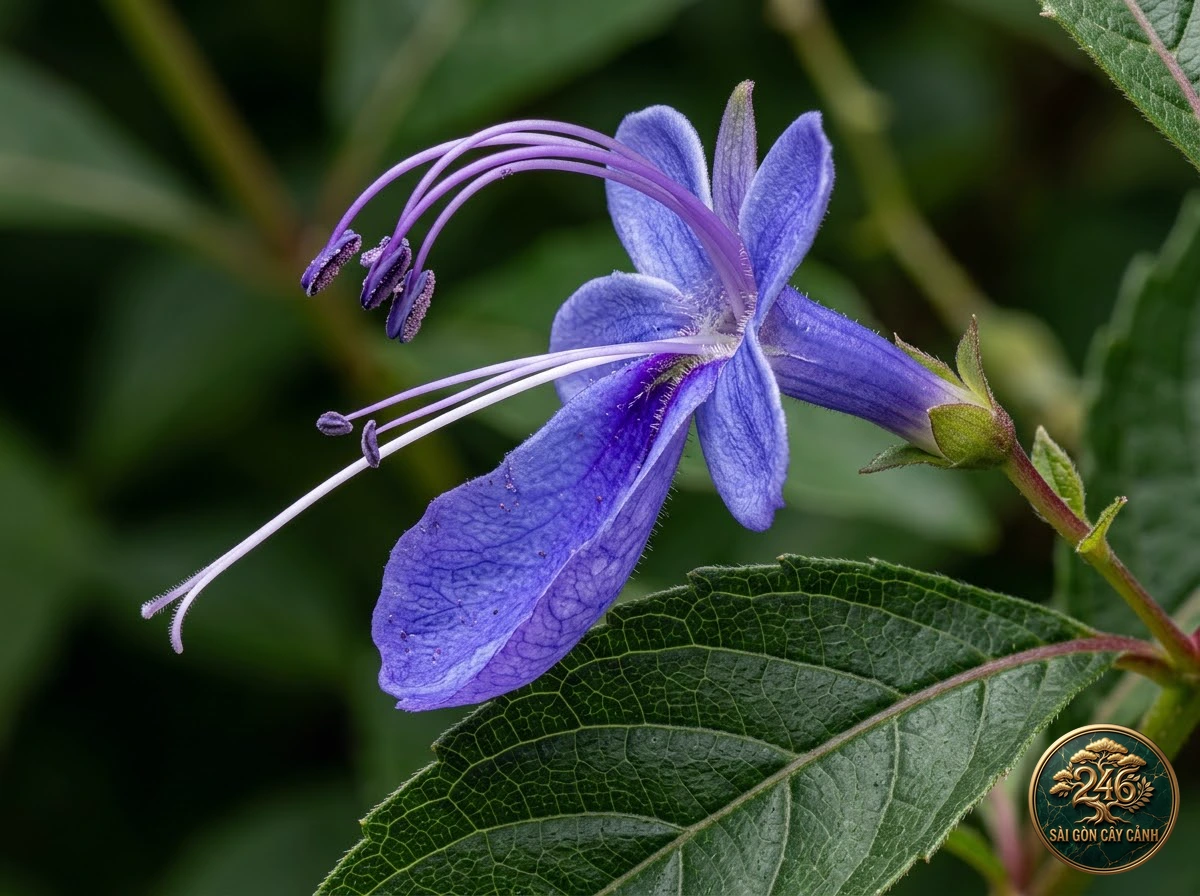
Morphologically, Rotheca myricoides develops as an open, arching semi-evergreen woody shrub or small tree reaching heights of 1.5 to 3.0 meters with an expansive canopy spreading 1.2 to 2.2 meters wide. Stems branch freely from the base; mature bark is greyish-tan with lenticels, while young shoots are slender, obtusely 4-angled, pale green, and puberulent. Leaves are arranged oppositely or in whorls of three to four; blades are elliptic to obovate, measuring 5 to 12 cm long by 2.5 to 5 cm wide, featuring cuneate bases, acute to obtuse apices, and coarsely serrate upper margins. The foliage is bright lustrous green above with prominent venation beneath, emitting a faint herbal aroma when bruised, supported by short petioles 0.5 to 1.5 cm long.
Inflorescences arise as loose, terminal and upper axillary paniculate cymes spanning 15 to 25 cm in length, carrying numerous fluttering zygomorphic blossoms. Each floret measures 2.5 to 3.5 cm across, displaying remarkable bilaterally symmetrical butterfly architecture: four lateral lobes are spreading, delicate, and rendered in pale sky-blue to ethereal cerulean, while the larger anterior median lobe is strongly concave, spatulate, and intensely saturated in royal violet-blue. Four slender, pale blue curving stamens 2.5 to 3.5 cm long arch high above the corolla like delicate butterfly antennae, tipped with purplish anthers. Flowering occurs perpetually throughout warm seasons. The fruit is a subglobose 4-lobed drupe 0.5 to 0.8 cm in diameter, ripening to lustrous black.
3. Solar Irradiance Thresholds & Photosynthetic Dynamics
Rotheca myricoides is an adaptable heliophyte-to-sciophyte performing at its peak under bright partial shade or gentle direct sunlight with luminous intensities between 35,000 and 65,000 lux. A daily duration of 4 to 6 hours of morning insolation is critical to maintain compact internodes and fuel continuous flushes of ethereal two-toned blue butterfly blossoms.
Under blistering unshaded midday tropical sun exceeding 38 degrees C without adequate root moisture, delicate azure petals flag temporarily and foliar tips may scorch; conversely, in dense shade below 20,000 lux, growth turns leggy and bloom flushes drop markedly. Siting along eastern exposures or beneath high-canopy tropical trees provides optimal growing conditions.
4. Mineral Substrate Mechanics & Root Aeration Porosity
The root system of blue butterfly bush combines flexible woody taproots with a spreading network of fibrous feeder roots, requiring deep, fertile, humus-enriched loam engineered for rapid gravity drainage without pooling. While exhibiting admirable tolerance of brief dry spells, it cannot endure prolonged stagnant saturation; waterlogged conditions exceeding 48 hours induce Pythium and Phytophthora root rot, triggering severe leaf drop.
The benchmark potting substrate engineered by Saigon Cay Canh contains 40% clean alluvial loam, 25% carbonized rice hulls for root zone aeration, 20% washed coco coir, 10% Trichoderma-inoculated aged vermicompost, and 5% horticultural perlite. Soil pH is maintained within 6.0 to 6.8. Containers and planting beds must feature large, free-flowing drainage channels.
5. Hydraulic Equilibria & Irrigation Regimens
With continuous shoot flushes and perpetual flowering flushes of butterfly-shaped blossoms, Rotheca myricoides requires steady, measured hydration. The baseline watering protocol mandates saturating the root perimeter thoroughly at dawn whenever the upper 2 cm of substrate feels dry. During arid hot summer spells, water once daily; during the rainy season, suspend watering until surface soils drain.
Direct irrigation into the soil around the base; never blast overhead water against open butterfly blossoms, as forceful water droplets tear delicate azure petals and bend exserted stamens. Following severe rains, inspect containers to ensure drainage orifices remain unobstructed.
6. Nutrient Biogeochemistry & Fertilization Protocols
To sustain compact arching branches and fuel continuous flushes of exquisite bicolored blue butterfly blooms across branch tips, Rotheca myricoides requires disciplined mineral nutrition. Top-dress with aged vermicompost or slow-release organic pellets (NPK 6-8-12) monthly at 1 to 2 kg worked gently into the perimeter drip line.
Following routine pruning cuts, dissolve a water-soluble balanced formula (NPK 15-20-25 or NPK 16-16-16) at 1.5 grams per liter, drenching the root zone every 10 to 12 days. Complement with foliar sprays containing chelated calcium, boron, and zinc every 20 days to ensure pedicel tensile elasticity, allowing delicate blue petals to flutter resiliently in the breeze.
7. Clonal Propagation & Germplasm Conservation
Rotheca myricoides propagates easily and swiftly via semi-hardwood stem cuttings, achieving rooting success rates above 90%. The prime propagation window spans warm spring or early monsoon months when shoots are actively expanding. Select vigorous semi-ripe branchlets 10 to 15 cm long with 2 to 3 nodes. Using shears sanitized with 70% medical alcohol, make a 45-degree angle cut below a node, remove lower foliage, and cut remaining upper leaves in half.
Dip the basal cut into 1,000 ppm IBA rooting powder for several seconds and insert 4 to 5 cm deep into moist sharp sand, coco coir, and perlite. Maintain under 50% shade with regular fine misting; robust adventitious root networks establish within 12 to 16 days, accompanied by rapid lateral shoot development.
8. Phytochemical Toxicity & Pet Safety Standards (ASPCA)
Botanical safety profile and ASPCA pet safety standards: Classified within the Lamiaceae family, Rotheca myricoides is recognized as NON-TOXIC and safe around companion animals (dogs, cats) and humans under standard ASPCA toxicological guidelines. The plant synthesizes no hazardous tropane alkaloids or injurious phytochemical toxins.
Accidental chewing of foliage or fallen blossoms by domestic pets does not induce systemic toxidrome, though consuming fibrous plant material may cause mild transient stomach upset. Horticulturists should sanitize cutting shears with 70% medical alcohol before and after routine pruning to maintain biosecure garden hygiene.
9. Clinical Pathology Diagnostics & Treatment Strategies
Pathology diagnostic protocol for dry-season spider mite control and post-bloom structural shearing in Rotheca myricoides:
| Clinical Manifestation | Etiological Cause | Standard Treatment Protocol |
|---|---|---|
| Stems become etiolated and sparse, internodes stretch, and butterfly blooms drop or fail to initiate | Severe light deprivation caused by growing in dense shade below 20,000 lux for extended periods | Prune leggy stems back using shears sanitized with 70% alcohol, move plant to receive 4 to 6 hours of morning sun daily |
| Foliage displays silvery stippling, turns mottled, and fine webbing develops on leaf undersides | Tetranychus spider mites proliferating during hot arid atmospheric conditions, sucking foliar sap | Syringe leaf undersides vigorously with fine water spray at dawn, followed by two applications of cold-pressed neem oil |
| Potting soil is soggy, lower leaves turn yellow and drop prematurely, and shoots wilt | Root asphyxiation and rot induced by poor drainage or clogged container drainage outlets | Suspend watering immediately, clear container drainage ports, aerate surface soil, and drench with Trichoderma |
10. Comparative Morphology & Allied Taxa Diagnosis
Taxonomic comparative matrix distinguishing bilaterally symmetrical two-toned blue butterfly flowers and arching stamens of Rotheca myricoides:
| Diagnostic Parameter | Rotheca myricoides (Blue butterfly bush) | Comparative Specimen A | Comparative Specimen B |
|---|---|---|---|
| Floral Architecture and Color Symphony | Intricate butterfly floret with four pale sky-blue lateral petals and a deep violet-blue median keel | Dense terminal rounded corymbs of fragrant rose-pink florets packed tightly like floral hydrangeas | Monumental pagoda panicle 30 to 50 cm high densely set with scarlet-orange florets and long red stamens |
| Branch Habit and Foliar Profile | Arching semi-woody shrub 1.5 to 3 meters tall, slender branchlets, elliptic to obovate leaves 5 to 12 cm | Erect semi-woody shrub 1.2 to 2 meters tall, suckering vigorously from roots to form dense thickets | Stout erect semi-woody shrub 1.5 to 2.5 meters tall with prominently 4-angled stems and fan-like leaves |
| Companion Animal Safety and ASPCA Profile | NON-TOXIC (non-hazardous to companion animals under standard ASPCA guidelines) | NON-TOXIC (non-hazardous to companion animals under standard ASPCA guidelines) | NON-TOXIC (non-hazardous to companion animals under standard ASPCA guidelines) |
11. Biophilic Design Harmony & Contemporary Spatial Aesthetics

Within botanical symbolism and biophilic landscape aesthetics, blue butterfly bush embodies transcendent serenity, soaring freedom, joyful transformation, and celestial grace. Its exceptionally rare true-blue floral coloration introduces profound tranquility and uplifting peacefulness, sweeping away atmospheric tension and refreshing the human spirit.
Owing to its delicate architecture and captivating color harmony, Rotheca myricoides serves with distinction across modern landscape designs: cultivated as an enchanting container specimen on luxury villa verandas, planted along European-style estate walkways, composed alongside white or golden flowering shrubs for vibrant color contrasts, or featured as a sculpted focal shrub in glazed ceramic urns.
12. Saigon Cay Canh Provenance & Cultivation Assurance
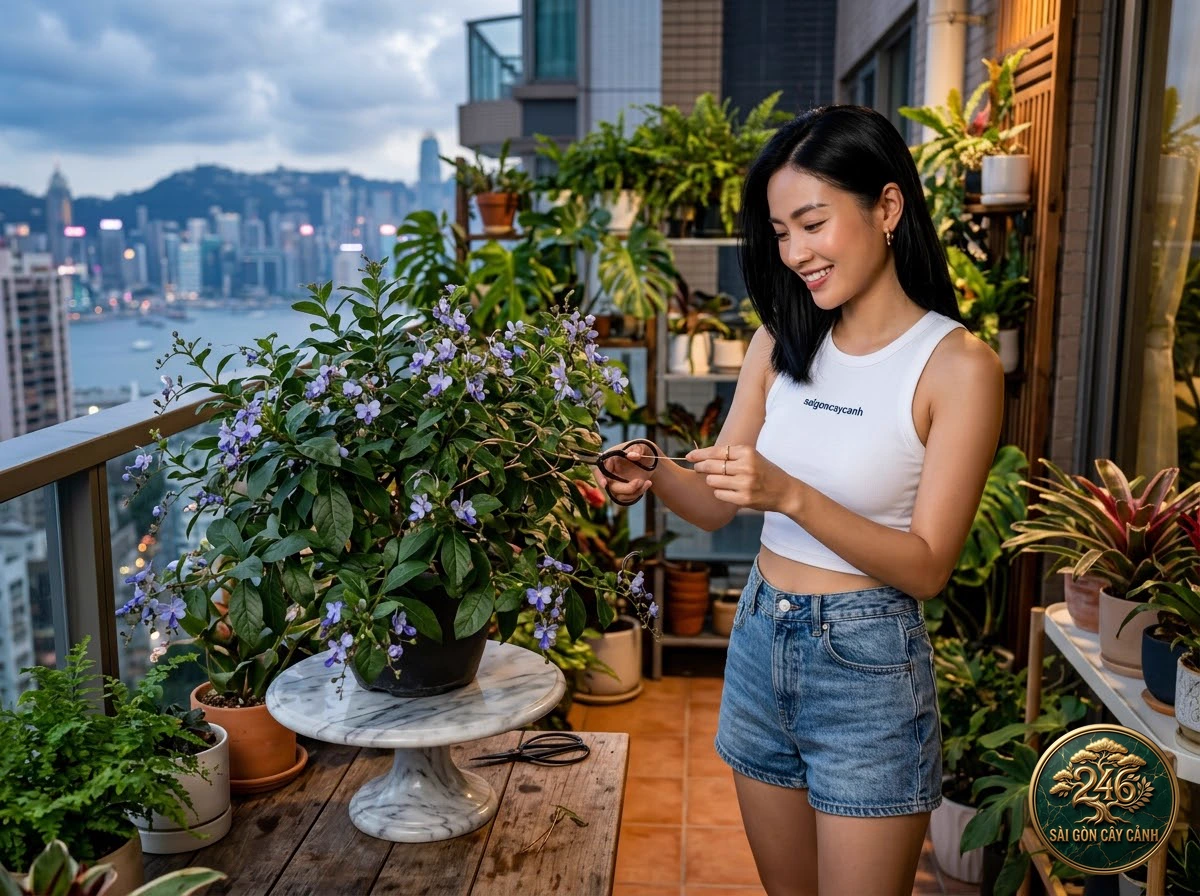
Saigon Cay Canh delivers magnificent, acclimated specimens of pure Rotheca myricoides, featuring healthy structural branches, vibrant lustrous foliage, and prolific floral buds prepared to flutter into heavenly blue butterflies across premier landscape collections.
We provide 100% botanical taxonomic verification, comprehensive living plant health warranties, professional seasonal pruning maintenance, and dedicated biophilic landscape design advisory for private estates and luxury hospitality spaces.
💬 Góc Tư Vấn & Hướng Dẫn Kỹ Thuật SGCC
Chuẩn E-E-A-T Kinfolk❓ Chăm sóc Blue butterfly bush (Rotheca cần lưu ý điều gì quan trọng nhất?
💡 Dạ điều quan trọng nhất là giữ môi trường sống ổn định, tránh sốc nhiệt hay dao động thông số đột ngột, đồng thời cung cấp khẩu phần ăn sạch và tươi mới ạ.
❓ Làm thế nào để phòng ngừa bệnh tật hiệu quả cho các bé?
💡 Dạ anh chị nên giữ vệ sinh chuồng/hồ nuôi sạch sẽ, thay nước hoặc dọn dẹp định kỳ và bổ sung vitamin, men tiêu hóa đều đặn để tăng sức đề kháng ạ.
🌿 Trang Thiết Bị, Đất Trồng & Dụng Cụ Bonsai Tuyển Chọn
Dụng cụ tỉa, giá thể hữu cơ & phân bón chuyên dụng cho cây cảnh.

Combo 2 cây Cau Tiểu Trâm – Tổng thể 35-45 cm – Trang t…

sen đá Phật bà xanh cổ thụ Đà lạt
Đất Sạch Trồng Rau, Hoa, Cây Kiểng – Giá Thể Ươm Cây, T…

Dây nhôm hình cây cảnh màu đen chống uốn cong Dây nhôm …

Combo 5 chậu nhựa Lục giác giả đá mai T160 (16x15x11cm)

Siêu lân kẽm usa Trường Phát MẪU MỚI biến vàng thành xa…

1KG dây nhôm đen uốn cây cảnh (đủ size 1li-8li). Dây nh…

Đá Masato – Loại cao cấp, sạch bụi, không vụn – Rải mặt…

Chậu Cây Men Hỏa Biến SIZE TO – Chậu Trồng Cây Sen Đá Đ…

Đất trồng sen đá xương rồng trộn sẵn kèm phân bón cao c…

Chậu nhựa trồng hoa, cây cảnh chữ nhật Monrovia A610 – …

Atonik Chai 100ml Thuốc Kích Thích Sinh Trưởng Ra Rễ Ng…
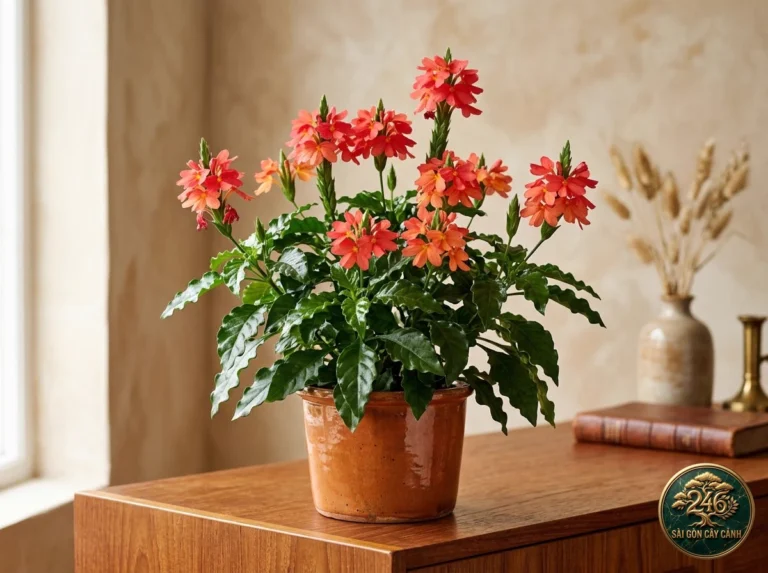
Nile crossandra
Crossandra nilotica, celebrated internationally as the Nile crossandra or East African firecracker flower, is an aristocratic, evergreen tropical...
Read Monograph →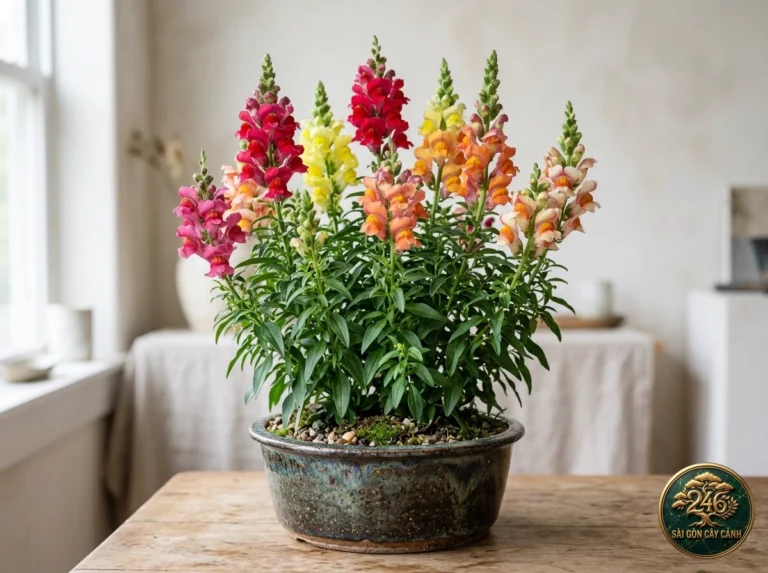
Snapdragon (Antirrhinum majus)
Snapdragon (Antirrhinum majus) Antirrhinum majus, universally celebrated as snapdragon or dragon flower, is an aristocratic and dramatically sculpted...
Read Monograph →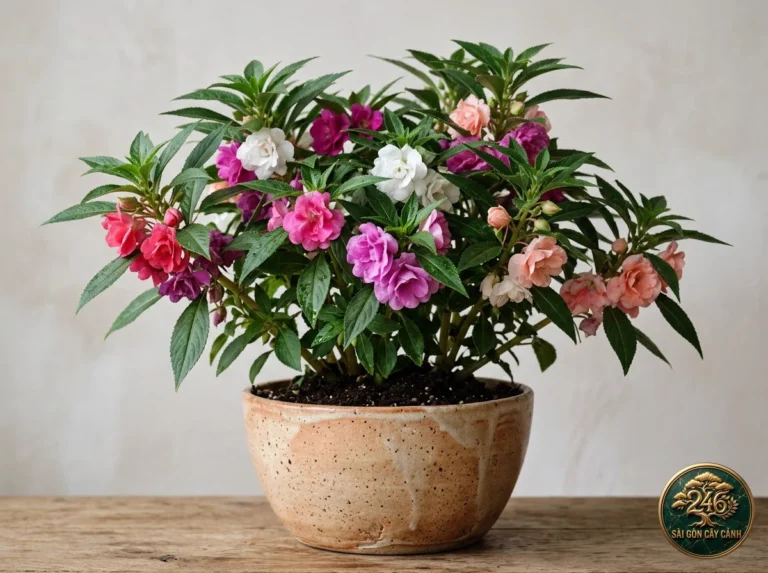
Garden balsam (Impatiens balsamina)
Garden balsam (Impatiens balsamina) Impatiens balsamina, universally treasured as garden balsam, rose balsam, or touch-me-not, is a nostalgic,...
Read Monograph →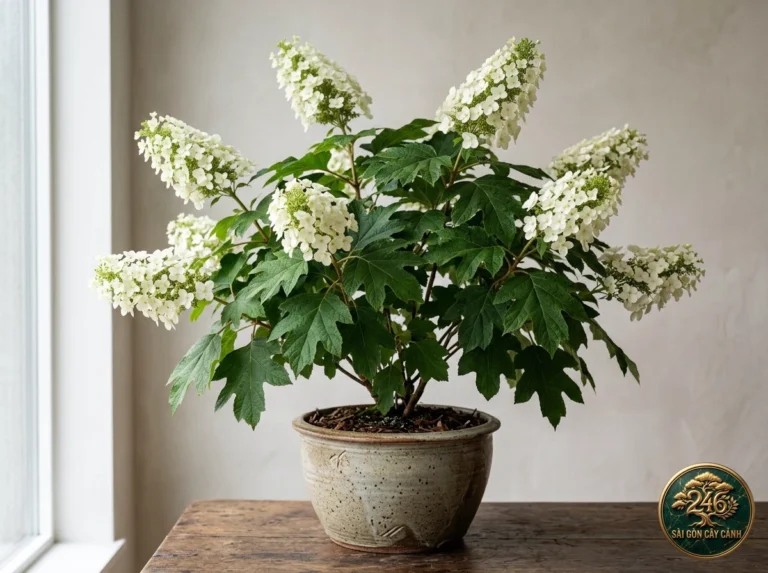
Oakleaf hydrangea (Hydrangea quercifolia)
Oakleaf hydrangea (Hydrangea quercifolia) Hydrangea quercifolia, internationally celebrated as oakleaf hydrangea, is an awe-inspiring, structurally dramatic deciduous flowering...
Read Monograph →Expert Q&A, Recommended Supplies & Article Feedback
Tap once to connect instantly via Google, Facebook or TikTok — no long forms required!
No questions yet for this article. Tap Google / Facebook / TikTok above to ask the first question!