
Living plant profile
Brazilian jasmine (Mandevilla sanderi)
Mandevilla sanderi
📌 CLINICAL & BIOLOGICAL ABSTRACT — Brazilian jasmine (Mandevilla sanderi)Brazilian jasmine (Mandevilla sanderi) Mandevilla sanderi, commonly acclaimed as Brazilian jasmine or rosedipladenia, is an aristocratic tropical evergreen woody vine revered as a reigning queen among flowering climbers owing to its sweet rose-pink floral radiance and perpetual profusion of trumpet blossoms. Featuring lustrous deep-emerald leathery foliage […]

Brazilian jasmine (Mandevilla sanderi)
Mandevilla sanderi, commonly acclaimed as Brazilian jasmine or rosedipladenia, is an aristocratic tropical evergreen woody vine revered as a reigning queen among flowering climbers owing to its sweet rose-pink floral radiance and perpetual profusion of trumpet blossoms. Featuring lustrous deep-emerald leathery foliage and supple twining stems, this species effortlessly unites refined architectural romance with indomitable tropical vigor.
Sài Gòn Cây Cảnh Care Compass
1. Botanical Identity & Taxonomic Nomenclature History
Mandevilla sanderi was originally described by English botanist William Botting Hemsley under the basionym Dipladenia sanderi in 1896 within The Gardeners’ Chronicle. The specific epithet sanderi honors German-born English orchidologist and nurseryman Henry Frederick Conrad Sander, who introduced the plant to European horticulture from Brazil. In 1933, American botanist Robert Everard Woodson transferred the species into the genus Mandevilla during his comprehensive taxonomic revision.
The generic name Mandevilla honors Henry Mandeville, an English diplomat and gardener stationed in Buenos Aires. Indigenous to rocky coastal montane slopes around Rio de Janeiro, Mandevilla sanderi rapidly ascended to global horticultural prominence. In Vietnam, it represents a cherished climber across luxury villa balconies, romantic arched porticos, and rooftop pergolas seeking refined elegance.
2. Morphological Anatomy & Structural Architecture

Morphologically, Mandevilla sanderi develops as an evergreen twining woody climber or compact scandent shrub ascending 2 to 4.5 meters via slender, voluble twining stems. Young shoots are supple, greenish-bronze, secreting viscous milky latex upon tissue rupture. Subterraneously, the plant forms prominent tuberous storage roots engineered to retain water and carbohydrates, imparting formidable drought resilience during extended dry periods.
Leaves are arranged in decussate opposite pairs; blades are broad-elliptic to obovate measuring 5 to 7 cm long by 3 to 4 cm wide, featuring an abruptly acuminate tip and rounded to subcordate base. The lamina is thickly coriaceous, exhibiting a gleaming dark-emerald upper surface and paler underside with prominent venation. Inflorescences form axillary racemes bearing 3 to 5 blooms. The salverform-funnelform corolla spans 6 to 8 cm in diameter, consisting of a vivid golden-yellow throat expanding into five rounded, silky lobes of deep rose-pink, carmine, or scarlet. The fruit consists of paired slender follicles containing plumose seeds.
3. Solar Irradiance Thresholds & Photosynthetic Dynamics
Mandevilla sanderi is a sun-loving climber thriving in full sun to gentle partial shade, requiring at least 5 to 6 hours of direct solar exposure daily to stimulate continuous floral evocation. The optimal light threshold spans from 35,000 to 70,000 lux. Gentle morning and late-afternoon sunlight promotes rich corolla pigmentation and compresses internodal lengths, creating an exuberant tapestry of blooms.
During intense midday summer heatwaves in low-latitude zones, a light 20% shade cloth helps protect tender flower margins from dehydration scorch. When maintained in heavy shade, the specimen shifts energy into vegetative vine extension, yielding thin pale leaves and complete floral cessation.
4. Mineral Substrate Mechanics & Root Aeration Porosity
Equipped with subterranean storage tubers, Mandevilla sanderi possesses natural water reserves but reacts with acute sensitivity to saturated, poorly drained soils. Anaerobic moisture entrapment incites rapid tuber rot, leading to systemic defoliation and plant demise. The rooting medium must demonstrate exceptional aeration porosity and instantaneous gravitational percolation.
The specialized media formulation developed by Saigon Cay Canh combines 40% coarse Japanese pumice or perlite (3-6 mm), 25% carbonized rice husks, 20% washed and desalted coco coir, and 15% aged worm castings inoculated with Trichoderma. Substrate pH is maintained in the slightly acidic spectrum from 5.8 to 6.5. Generous gravel or broken pottery drainage courses must line container bottoms.
5. Hydraulic Equilibria & Irrigation Regimens
The hydraulic strategy for Mandevilla sanderi is ‘soak thoroughly, dry down evenly’. Deliver water only when the uppermost 2 to 3 cm of substrate has dried completely. Apply water until slight effluent drains through bottom ports at early dawn, never allowing excess water to stand in saucers for more than 30 minutes.
During dry intervals, irrigate every 2 to 3 days based on ambient heat. In torrential monsoon seasons, elevate containers or position them beneath airy sun-permeable pergolas to shield the delicate tuberous root system from relentless waterlogging.
6. Nutrient Biogeochemistry & Fertilization Protocols
To sustain perpetual flushes of sumptuous rose-pink blossoms, Mandevilla sanderi requires a nutrient regimen enriched with phosphorus, potassium, and chelated trace elements. Apply slow-release organic fertilizer granules (such as pelletized worm castings or NPK 5-10-10) around the container rim every 40 days.
When new climbing shoots initiate floral buds, apply a water-soluble fertilizer with an NPK profile of 15-30-15 or 10-52-10 at 1 gram per liter every 10 to 12 days. Supplement with chelated iron and magnesium once monthly to maintain rich emerald foliar gloss and eliminate interveinal chlorosis.
7. Clonal Propagation & Germplasm Conservation
Mandevilla sanderi is most commonly propagated via apical semi-hardwood stem cuttings taken in spring or early rainy season. Harvest healthy 10 to 15 cm shoot tips possessing 2 to 3 mature leaf nodes using shears sanitized with 70% medical alcohol. Strip basal foliage and immature flower buds, then coat the cut base with 1,000 ppm IBA rooting hormone.
Insert cuttings into a sterile mix of perlite and damp coco peat under filtered shade, maintaining ambient relative humidity between 80% and 85%. Within approximately 25 to 30 days, adventitious roots proliferate and juvenile root tubers begin to swell, signaling readiness for potting into individual nursery containers.
8. Phytochemical Toxicity & Pet Safety Standards (ASPCA)
Botanical safety evaluation and ASPCA pet safety standards: Classified within Apocynaceae, Mandevilla sanderi produces a milky white latex sap throughout its vascular tissues. This sap contains diterpenes and mild glycosides capable of causing minor cutaneous irritation, erythema, and transient contact dermatitis on sensitive human skin.
Under ASPCA toxicological guidance, the plant is categorized as possessing mild toxicity for companion animals (dogs and cats). Chewing significant foliage may trigger mild nausea, hypersalivation, and transient gastrointestinal distress. Gardeners should wear protective gloves while pruning, sanitize cutting tools with 70% medical alcohol, and locate climbing trellises safely above pet reach.
9. Clinical Pathology Diagnostics & Treatment Strategies
Clinical screening for storage tuber rot suppression and vibrant rose-pink floral flushes in Mandevilla sanderi:
| Clinical Manifestation | Etiological Cause | Standard Treatment Protocol |
|---|---|---|
| Basal foliage yellows and drops rapidly with shoots showing shriveling | Tuber rot caused by waterlogged substrate or excessive evening irrigation | Immediately cease watering, unpot specimen to excise rotten tubers with sterile blade, repot into coarse pumice, and apply Ridomil Gold |
| Powdery white fungal spots coat young foliage with buds turning brown | Powdery mildew developing under low light levels and stagnant humidity | Relocate to an airy location receiving over 5 hours of sun, prune infected parts, and spray organic potassium bicarbonate or sulfur |
| Cottony white mealybugs nestling in axils and shoots, producing sticky honeydew | Mealybug infestation draining cambial sap, causing distorted growth and bud drop | Manually swab mealybugs using 70% medical alcohol on cotton buds, followed by weekly sprays of cold-pressed neem oil |
10. Comparative Morphology & Allied Taxa Diagnosis
Morphological comparative matrix contrasting rose-pink corollas with golden throat and tuberous roots of Mandevilla sanderi:
| Diagnostic Parameter | Mandevilla sanderi (Brazilian jasmine) | Comparative Specimen A | Comparative Specimen B |
|---|---|---|---|
| Floral Coloration | Vivid rose-pink or carmine, throat illuminated by radiant golden-yellow | Immaculate pure chalk-white petals with warm glowing lemon-yellow throat | Luminous pure golden-yellow, throat delicately veined orange-red |
| Root Anatomy | Develops pronounced subterranean tuberous storage roots for drought reserves | Features fleshy water-retaining tuberous roots, highly drought hardy | Fibrous to woody deep lateral root system, entirely lacking tuberous swelling |
| Climbing Scale | Slender twining vine 2-4.5 m, ideal for delicate balconies and obelisks | Graceful compact twiner 2-4 m, suited for light trellises and balustrades | Massive vigorous woody liana 4-8 m, capable of blanketing vast architectural pergolas |
11. Biophilic Design Harmony & Contemporary Spatial Aesthetics

In architectural design and Eastern biophilic philosophy, Mandevilla sanderi symbolizes tender affection, romantic harmony, lasting domestic happiness, and gentle good fortune. The exuberant rose-pink trumpets standing against lustrous dark foliage generate an atmosphere of tranquil serenity, soothing urban fatigue and infusing living spaces with poetic grace.
The plant is exceptionally favored across European-style villa balconies, sun-screening window trellises, romantic arched gates, and freestanding topiary obelisks situated in luxury garden patios and boutique wellness cafes.
12. Saigon Cay Canh Provenance & Cultivation Assurance
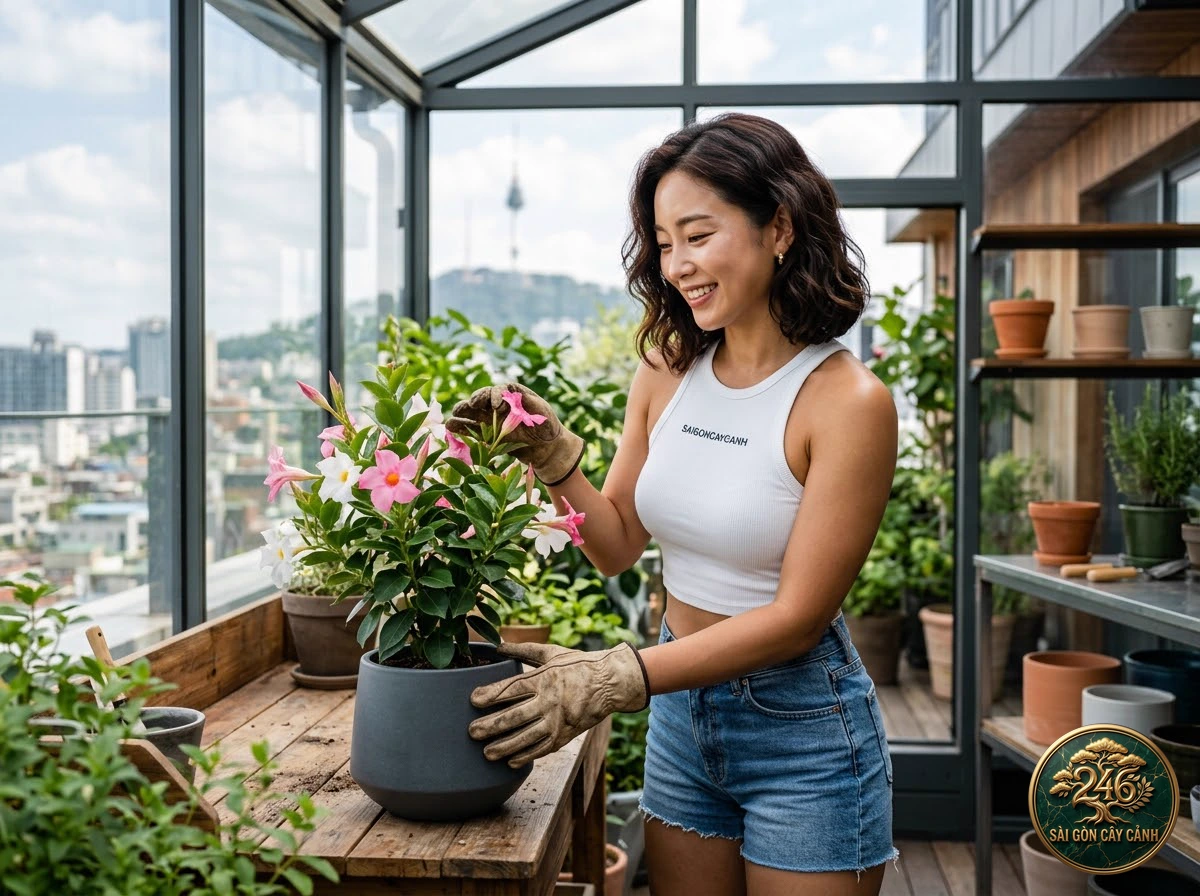
Saigon Cay Canh delivers premium acclimated Mandevilla sanderi specimens trained onto sturdy trellis frameworks, endowed with vigorous tuberous roots and bursting with floral buds ready for immediate landscape elevation.
We provide certified botanical taxonomy, architectural trellis engineering advice for wind resistance, and tailored high-potassium bloom nutrition schedules, backed by comprehensive living establishment guarantees across all premier estates.
💬 Góc Tư Vấn & Hướng Dẫn Kỹ Thuật SGCC
Chuẩn E-E-A-T Kinfolk❓ Chăm sóc Brazilian jasmine (Mandevill cần lưu ý điều gì quan trọng nhất?
💡 Dạ điều quan trọng nhất là giữ môi trường sống ổn định, tránh sốc nhiệt hay dao động thông số đột ngột, đồng thời cung cấp khẩu phần ăn sạch và tươi mới ạ.
❓ Làm thế nào để phòng ngừa bệnh tật hiệu quả cho các bé?
💡 Dạ anh chị nên giữ vệ sinh chuồng/hồ nuôi sạch sẽ, thay nước hoặc dọn dẹp định kỳ và bổ sung vitamin, men tiêu hóa đều đặn để tăng sức đề kháng ạ.
🌿 Trang Thiết Bị, Đất Trồng & Dụng Cụ Bonsai Tuyển Chọn
Dụng cụ tỉa, giá thể hữu cơ & phân bón chuyên dụng cho cây cảnh.

Kéo Cắt Cành Trên Cao Nhật Bản SK5 – Kéo Cắt Tỉa Cây Cả…

Bộ Vòi Nước Tưới Cây Đa Năng 2000 Lỗ Phun Sương Vòi Xịt…
Phân Bón NPK 17-17-17 (chiết lẻ 1kg) 1 màu BM nhập Đức …

Phân bón lá NPK 20-20-20+TE Growmore – Hủ 100gr chuyên …

Đất nung Akadama Nhật Bản gói 1kg trồng xương rồng, sen…

Viên Nén Xơ Dừa Trồng Cây – Đất Sạch Vi Sinh Trồng Rau,…

chậu bonsai mini – sen đá- xương rồng men hỏa biến gốm …
Chậu trồng cây, chậu đất nung wax màu trắng cà phê bông…
Cây Cẩm Nhung Lá May Mắn ( Fittonia )
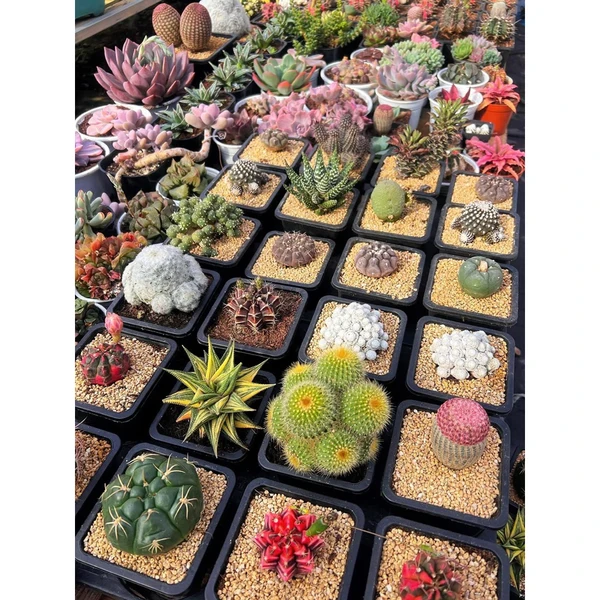
Siêu đá rải mặt masato dành cho sen đá xương rồng 500gr
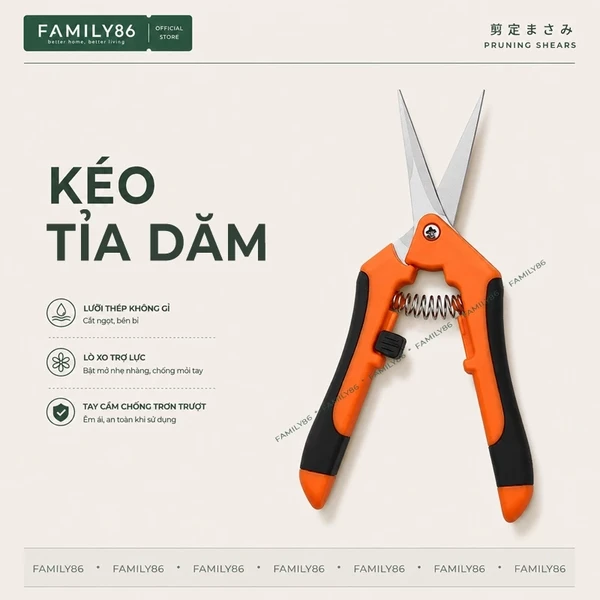
Kéo Tỉa Cây Cảnh Mũi Nhọn Thép Không Gỉ, Kéo Cắt Cành T…
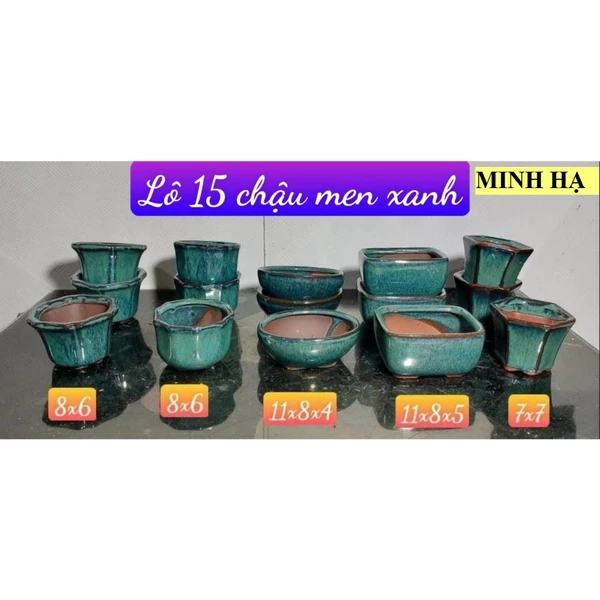
BS65 Set chậu 15 chậu bonsai min gốm Bát Tràng men xanh…
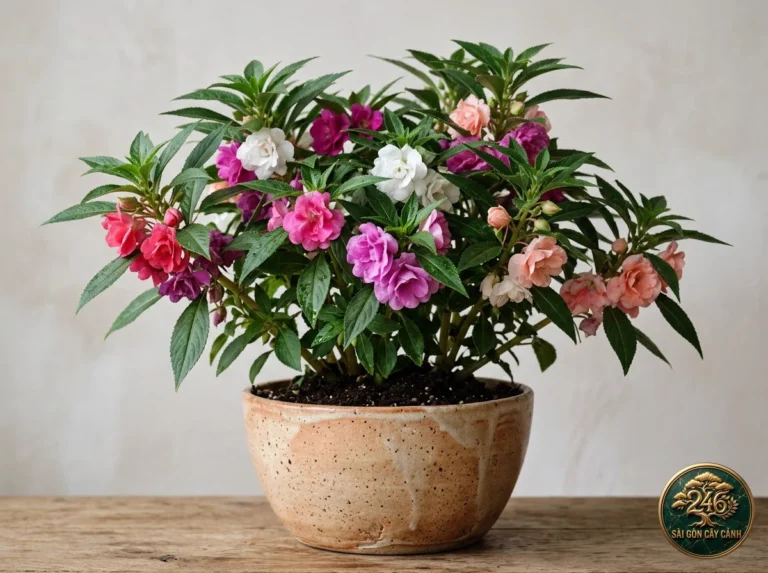
Garden balsam (Impatiens balsamina)
Garden balsam (Impatiens balsamina) Impatiens balsamina, universally treasured as garden balsam, rose balsam, or touch-me-not, is a nostalgic,...
Read Monograph →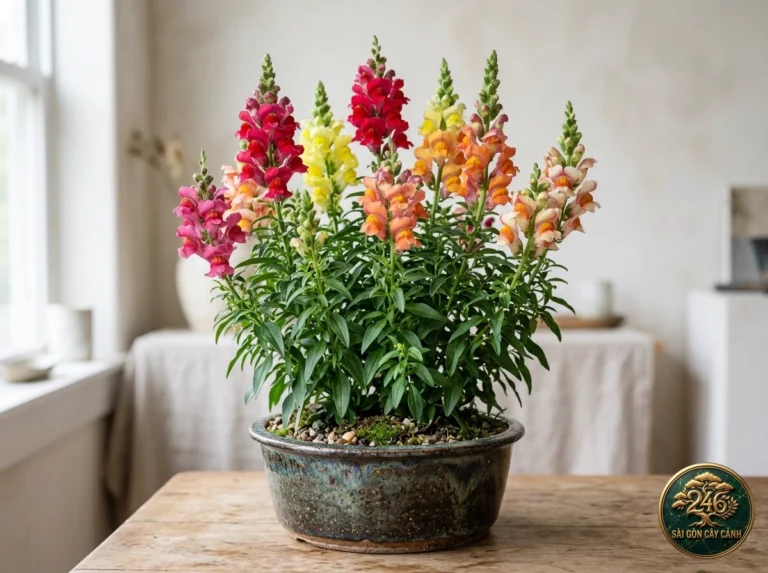
Snapdragon (Antirrhinum majus)
Snapdragon (Antirrhinum majus) Antirrhinum majus, universally celebrated as snapdragon or dragon flower, is an aristocratic and dramatically sculpted...
Read Monograph →
Firecracker plant
Russelia equisetiformis, celebrated universally across tropical horticulture as the firecracker plant, coral plant, or fountain plant, is an...
Read Monograph →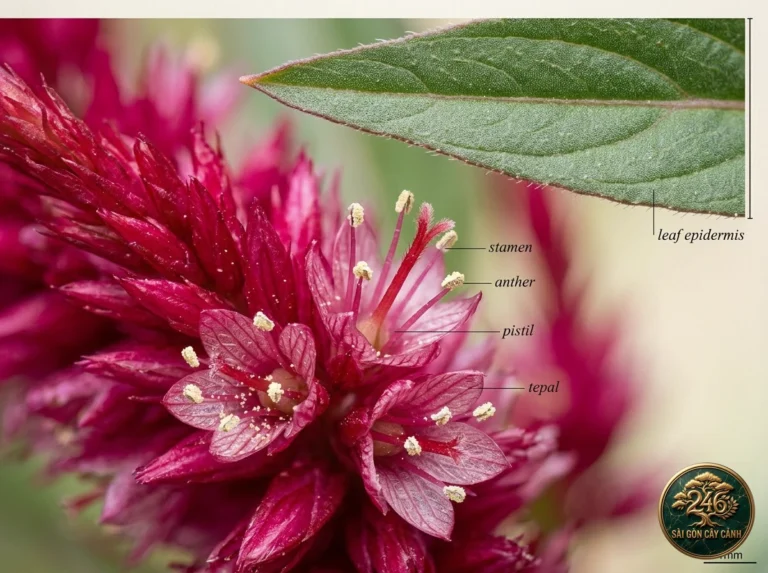
Plumed cockscomb (Celosia argentea)
Plumed cockscomb (Celosia argentea) Celosia argentea, encompassing both feathery plume cockscomb (var. plumosa) and undulating crested cockscomb (var....
Read Monograph →Expert Q&A, Recommended Supplies & Article Feedback
Tap once to connect instantly via Google, Facebook or TikTok — no long forms required!
No questions yet for this article. Tap Google / Facebook / TikTok above to ask the first question!