
Living plant profile
Calico kitten crassula (Crassula pellucida)
Crassula pellucida
Comprehensive botanical monograph on the Calico kitten crassula (Crassula pellucida): heart-shaped foliar morphology, tricolor chimera, and hanging basket cultivation.
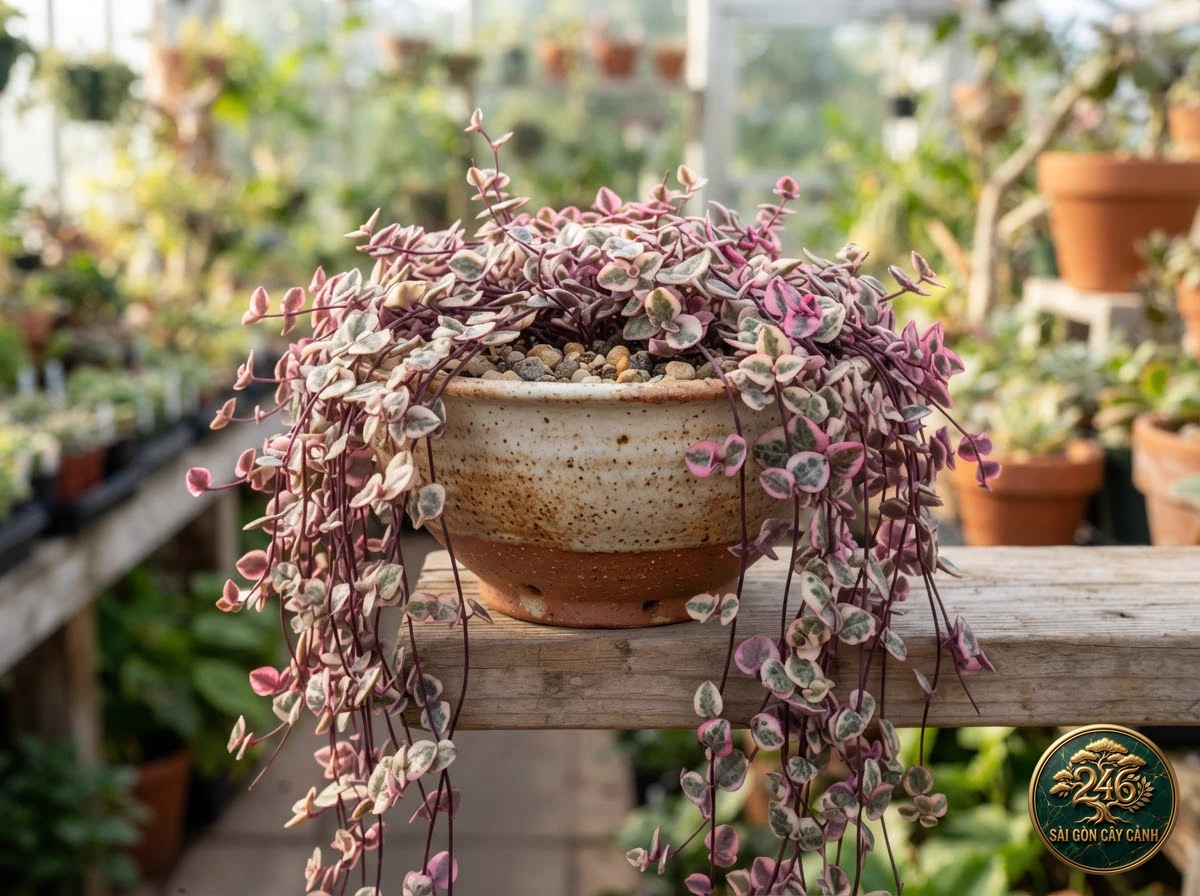
Calico Kitten Crassula (Crassula pellucida)
The Calico kitten crassula (botanical binomial: Crassula pellucida L., predominantly cultivated as the celebrated cultivar Crassula pellucida subsp. marginalis ‘Variegata’) stands as one of the most enchantingly graceful, multi-colored trailing succulents within the stonecrop family (Crassulaceae). Famously adored across international horticulture under the endearing moniker “Calico Kitten”, this trailing perennial enchants plant enthusiasts with its cascading magenta-purple stems clothed in hundreds of petite, heart-shaped succulent leaves displaying an exquisite pastel tricolor chimera: fresh apple green, soft butter cream, and luminous blush pink margins that deepen to rich rose-magenta under morning sunshine.
Indigenous to shaded rocky cliffs, damp coastal gorges, and subtropical forest margins of South Africa, the species represents a fascinating evolutionary departure from rigid desert shrub forms, adopting a prostrate mat-forming and pendulous cascading habit. In modern interior landscaping and biophilic architecture, it reigns supreme as a premier choice for suspended balcony baskets, vertical living walls, and artistic dish terrariums, imparting an aura of romantic gentleness, structural softness, and vibrant natural elegance.
Sài Gòn Cây Cảnh Care Compass
1. Comprehensive Botanical Taxonomy & Key Specifications
To provide collectors and landscape architects with an empirical botanical reference, Saigon Cay Canh outlines the essential taxonomic and morphological parameters below:
| Botanical Descriptor / Biological Parameter | Empirical Botanical Metric & Cultural Value |
|---|---|
| Valid Botanical Binomial | Crassula pellucida L. (Species Plantarum 1: 283, 1753) |
| Celebrated Variegated Subspecies | Crassula pellucida subsp. marginalis (Dryand.) Toelken ‘Variegata’ |
| Standard International Common Names | Calico kitten crassula, Variegated trailing crassula, Calico stonecrop |
| Taxonomic Family & Genus | Crassulaceae (Stonecrop family) / Genus Crassula |
| Native Geographic Provenance | Damp rocky cliffs and coastal forest margins of Eastern Cape and KwaZulu-Natal, South Africa |
| Growth Habit & Morphology | Prostrate creeping groundcover to pendulous trailing succulent, cascading 20-40 cm |
| Foliar Structure & Coloration | Cordate (heart-shaped) fleshy leaves; tricolor variegated (emerald, cream, magenta pink) |
| Photosynthetic Flux Density Need | Bright indirect light or gentle morning direct sunshine (3,500 – 7,000 lux) |
| Companion Animal Safety Status | Certified non-toxic to domestic canines, felines, and companion birds (ASPCA certified) |
| Engineered Substrate Composition | 60% porous mineral aggregate (pumice, perlite, scoria) + 40% washed coco coir fiber |
Unlike extreme desert succulents that demand harsh arid baking, the calico kitten appreciates moderate ambient humidity and sheltered diffuse light. In our nursery conservatory, each trailing specimen is carefully conditioned under filtered morning rays to maintain radiant pink margins year-round.
2. Morphological Diagnostic Keys & Foliar Anatomy
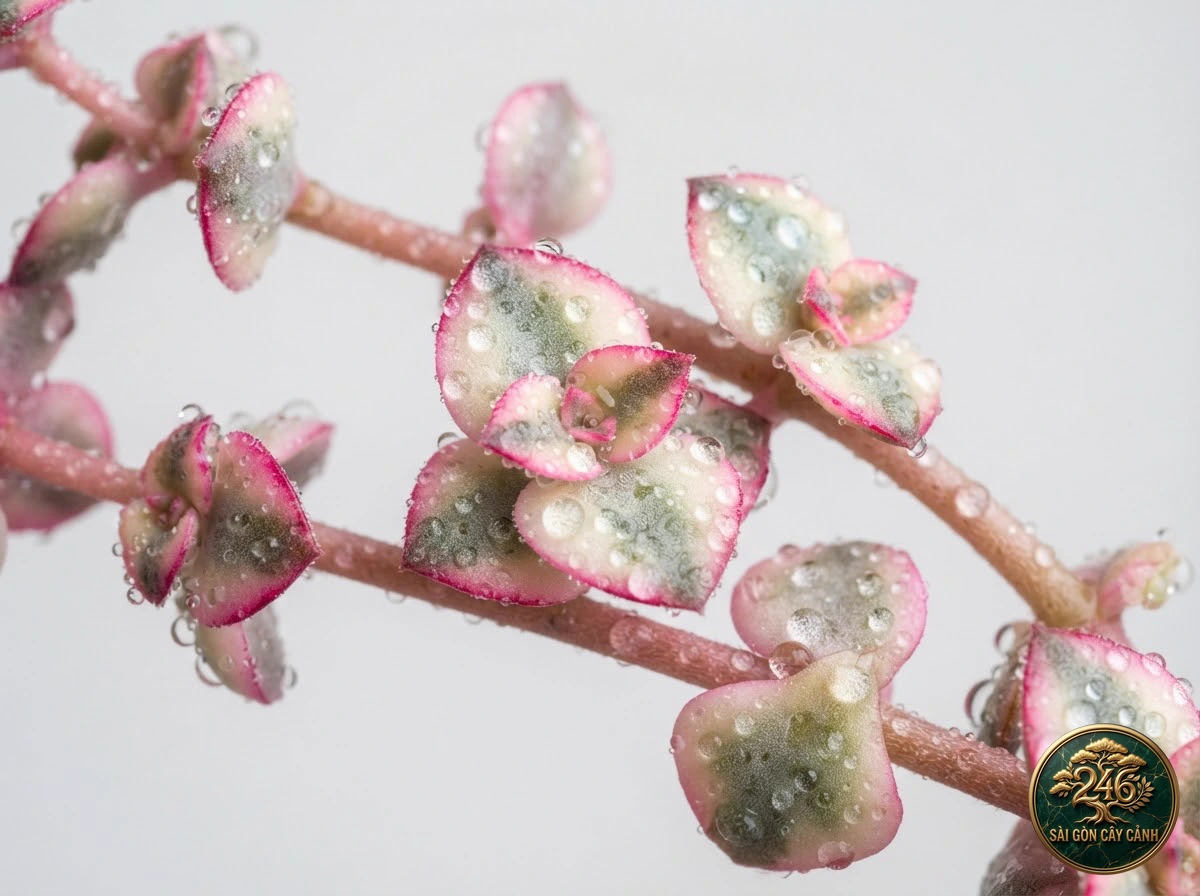
Examining the structural morphology of this stonecrop reveals an array of delicate adaptations engineered for survival along shaded subtropical cliff faces:
Heart-Shaped Variegated Foliage: The leaves are opposite, succulent, broadly ovate to cordate (heart-shaped), measuring 1.5 cm to 2.5 cm in length and about 2 mm in thickness. The leaf surface is smooth with a translucent epidermis (pellucida derives from Latin for “translucent or glowing through”). The foliar blade displays a striking tricolor pattern: a vibrant emerald green core, surrounded by creamy ivory variegation, edged in a delicate pinkish-purple stitched margin. Under gentle solar radiation, anthocyanin pigmentation floods the epidermal cells, suffusing the entire leaf in romantic plum-magenta tones.
Trailing Stems & Aerial Adventitious Roots: The slender, succulent stems display a vivid wine-red to rose-purple coloration. Exhibiting a pendulous and spreading habit, they cascade gracefully 25 cm to 40 cm over container rims. At each leaf node, fine aerial adventitious rootlets emerge, ready to anchor into rocky crevices upon soil contact, allowing the plant to carpet cliff faces in nature.
Hydrenchyma & Flexible Cellular Walls: Beneath the thin dermal layer lies an internal hydrenchyma tissue filled with clear mucilaginous water storage cells. These flexible parenchyma cells expand during moist spells and contract gently during drier intervals without structural tissue rupture, conferring impressive drought resilience despite its tender appearance.
Delicate Starry Inflorescence: In late autumn through winter, slender terminal peduncles arise above the trailing canopy, presenting dainty corymbose cymes of minute blossoms. Each tiny star-shaped flower possesses five pointed white petals delicately blushed with soft pink at their tips, accented by dark purple anthers that stand out delightfully against the pastel trailing foliage.
3. Botanical Taxonomy & Nomenclatural History
The botanical classification of Crassula pellucida dates to Carl Linnaeus’s 1753 Species Plantarum. The specific name pellucida refers to the translucent nature of its delicate epidermal tissues when held against backlighting.
In 1812, botanist Jonas Carlsson Dryander described the distinctly margined forms as Crassula marginalis. Following comprehensive South African revisions by H.R. Toelken in 1977, the taxon was classified as a formal subspecies: Crassula pellucida subsp. marginalis. The selected chimeric sport ‘Variegata’ (Calico Kitten) has since become a beloved horticultural treasure preserved through vegetative cloning worldwide.
Under the APG IV phylogenetic classification, the taxon resides in family Crassulaceae, order Saxifragales. Diverging from arid scrubland ancestors, this subspecies adapted to cooler, moister coastal ravines, providing evolutionary biologists with valuable insights into the ecological flexibility of the stonecrop lineage.
4. Native Ecology & Subtropical Microclimate Adaptation
Wild populations inhabit the coastal forest margins, moist shaded kloofs, and rocky ravine slopes of South Africa’s Eastern Cape and KwaZulu-Natal provinces. Unlike the scorched Karoo desert, this coastal biome enjoys higher annual rainfall (500 mm to 800 mm) accompanied by ocean mists and buoyant coastal breezes.
Growing as a lithophytic groundcover over decomposing forest leaf litter and shaded sandstone ledges, the plant thrives under dappled canopy illumination. Consequently, it employs a facultative CAM photosynthetic system: under moist, mild conditions, it conducts conventional daytime C3 carbon fixation for rapid vegetative growth, but smoothly transitions to water-conserving nocturnal CAM acid storage during prolonged dry intervals.
This metabolic plasticity explains why the calico kitten displays much faster vegetative growth than extreme desert succulents, while still retaining robust xerophytic survival mechanisms during domestic neglect.
5. Photosynthetic Irradiance & Pink Margin Enhancement
Light intensity is the primary driver dictating the vibrancy of the tricolor chimera. To maintain rich rose-pink margins and compact internodal leaf stacking, the plant requires abundant luminous flux ranging from 3,500 to 7,000 lux.
An eastern or southeastern window or shaded balcony represents the ideal domestic location, supplying 3 to 5 hours of cool, gentle morning sunshine. Morning ultraviolet rays stimulate anthocyanin accumulation along the creamy margins without generating the scorching infrared heat that damages unpigmented white tissues.
Avoid harsh midday direct sun or intense unshaded western glass, which rapidly scorches the white variegated patches into dry, papery brown blemishes. Conversely, deep shade below 2,000 lux causes trailing stems to stretch thinly, internodes to widen, and foliar colors to revert to monochromatic pale green. In darker interiors, supplement with full-spectrum horticultural LED fixtures for 8 to 10 hours daily.
6. Hydraulic Dynamics & Hanging Basket Management
Originating from moist cliff sides, this succulent tolerates slightly more moisture than desert stonecrops, yet its fine fibrous root system remains highly susceptible to anaerobic rot if water stagnates.
The golden rule is: Allow the upper substrate to thoroughly dry out before re-watering. In warm tropical climates, suspended hanging baskets generally require irrigation every 5 to 7 days, as elevated air circulation evaporates moisture faster than floor pots. Check moisture by inserting a finger into the soil mix; when dry 2 cm down and the pot feels light, water thoroughly.
Water with a narrow-spouted can directly into the soil zone around the perimeter of the basket. Avoid splashing overhead onto dense foliar mounds in stagnant evening air to prevent fungal leaf spot. Always verify that bottom drainage holes remain unobstructed to permit rapid gravitational runoff.
7. Granular Mineral Substrate Formulation & Aerobic Porosity
The fine trailing root system requires a lightweight, highly aerated growing medium that drains surplus moisture promptly while retaining enough organic nourishment to support trailing stems.
The ideal potting mix perfected by Saigon Cay Canh comprises 60% lightweight mineral components (35% fine volcanic pumice sized 2-4 mm, 15% expanded perlite, 10% crushed red scoria) combined with 40% buffered organic matter (25% washed, desalinated coco peat and 15% screened vermicompost castings).
Pumice and perlite keep the hanging basket lightweight while preventing soil compaction around the delicate fibrous root network. Organic worm castings provide gentle, sustained micronutrients without excess mineral salts that could burn tender root tips. Maintain soil pH between 6.2 and 6.8 to support healthy foliar cell development and nutrient uptake.
8. Thermal Tolerances, Ambient Humidity & Airflow Dynamics
Calico kitten crassula thrives within a temperature range of 16°C to 28°C, producing luxuriant growth during spring, autumn, and mild winter spells. During midsummer heat waves exceeding 34°C, suspend containers in shaded, well-ventilated locations to protect roots from thermal distress.
Cold hardiness is moderate, with a safe lower survival threshold of 6°C. Protect trailing baskets from cold drafts and winter rain, which can trigger rapid stem decay.
Relative humidity is best maintained between 50% and 75%, well-aligned with natural subtropical microclimates. Consistent buoyant air movement is vital for hanging baskets: gentle airflow rapidly dries foliar moisture droplets, prevents localized heat accumulation, and eliminates humid micro-pockets that foster fungal spores.
9. Clinical Diagnostics & Plant Pathology Matrix
Reference this clinical diagnostic matrix to identify and remediate cultural disorders in calico kitten crassula:
| Observable Clinical Symptom | Underlying Pathology & Etiology | Curative Horticultural Protocol |
|---|---|---|
| Basal stems turn black and water-soaked; leaves drop freely upon touch | Substrate hyper-saturation and poor aeration leading to root and stem rot | Snip healthy trailing tips to propagate and salvage the clone; discard rotten base and replant in airy mineral pumice mix |
| Stems become long, thin, and spindly; leaves turn plain green and lose pink margins | Insufficient light exposure disrupting anthocyanin production and causing etiolation | Trim leggy trailing ends to stimulate bushier lateral growth; relocate basket to receive 3-4 hours of gentle morning sunshine daily |
| Heart-shaped leaves feel soft and wrinkled while stems remain firm and healthy | Moisture deficit depleting internal water reserves within foliar storage cells | Water thoroughly around container perimeter or bottom-soak for 10 minutes; foliar turgor will restore within one to two days |
| White variegated patches develop dry, crispy brown scorch marks | Acute solar sunburn from sudden exposure to harsh midday or unshaded western rays | Move container to bright filtered light or beneath 40% shade netting; damaged leaves will naturally shed and replace with healthy growth |
Regularly assessing the turgidity and bright coloration of apical leaf pairs on cascading stem tips provides an accurate reflection of root health.
10. Biological Pest Management & Sanitation
Due to its dense trailing growth habit, calico kitten plants can occasionally harbor citrus mealybugs (Planococcus citri) and thrips within the sheltered crevices between overlapping leaf nodes.
Mealybugs appear as small white cottony clusters along stem joints, extracting phloem sap and weakening stems. When spotted, dab individual pests using a cotton swab dipped in 70% isopropyl alcohol. The alcohol dissolves their waxy coat immediately without harming the succulent tissue.
Maintain clean sanitation by regularly clearing dried leaves from the interior base of the container. A monthly prophylactic spray of cold-pressed organic neem oil emulsion during evening hours provides dependable biological defense against sap-sucking pests.
11. Specialized Asexual Propagation Protocols
Calico kitten crassula is among the swiftest succulents to multiply asexually. The trailing stems form adventitious roots with remarkable vigor from stem cuttings.
Seasonal Timing: Spring or mild tropical rainy periods offer optimal warmth and humidity for rapid root development.
Stem Cutting Procedure:
- Using clean floral scissors sanitized with 70% isopropyl alcohol, snip vigorous trailing stem tips measuring 6 cm to 10 cm in length.
- Strip the lowest leaf pairs to expose about 2 cm of bare stem containing active nodal meristems.
- Allow cuttings to rest in dry, shaded air for 2 to 3 days until cut ends form a protective corky callus.
- Insert the base 1.5 cm deep into fine pumice or coarse mineral sand.
- Place in bright filtered daylight and apply light surface mists every other day. Adventitious roots establish firmly within two to three weeks.
12. Companion Animal Safety & ASPCA Certification
The plant contains no dangerous bufadienolide cardiac glycosides or caustic sap irritants. It is safe to touch and handle during routine pruning and grooming.
However, cascading trailing stems fluttering in the breeze are naturally tempting to curious playful pets, particularly cats. Ingesting quantities of fibrous succulent stems can cause mild mechanical stomach upset in carnivores. Suspending hanging planters from ceiling hooks or high wall brackets preserves specimen elegance while keeping foliage safely out of reach.
13. Biophilic Design & Modern Interior Landscaping
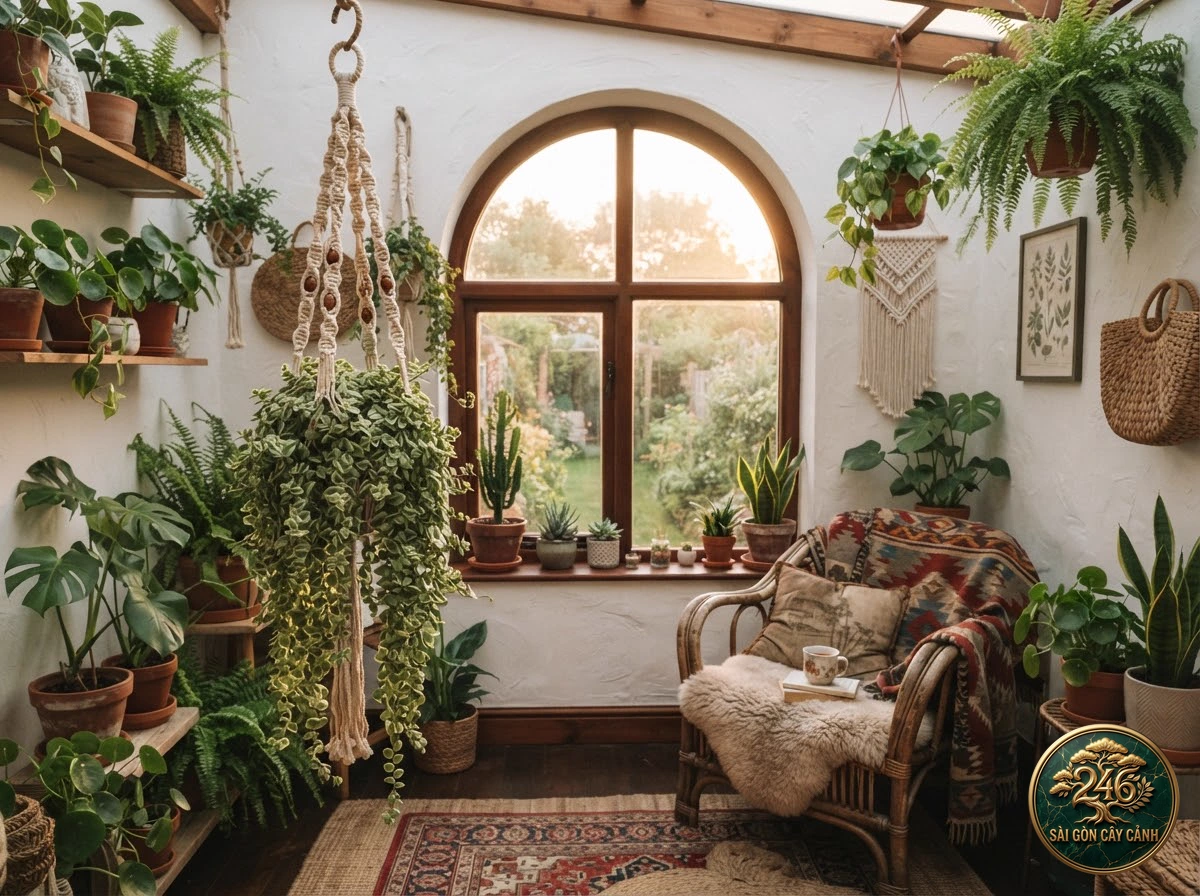
With its cascading trailing habit, heart-shaped foliage, and pastel calico palette, this succulent brings romantic grace and textural delicacy to modern biophilic interiors.
Hanging Basket Elegance: The plant shines brilliantly when suspended in minimalist white ceramic hanging pots, unglazed terracotta bowls, or natural coconut-fiber wire baskets. Cascading stems drape gracefully like a living beaded tapestry, moving gently in morning breezes.
Living Terrariums & Mixed Dish Gardens: Its creeping groundcover habit makes it an ideal groundcover component in open glass terrariums and mixed succulent bowls, where its tricolor leaves contrast delightfully against dark moss and natural stones.
14. Brand Ambassador & Saigon Cay Canh Cultivation Philosophy
At Saigon Cay Canh, we nurture every calico kitten trailing basket with profound horticultural dedication. Our specialists acclimate each specimen to equatorial climate dynamics, delivering lush, resilient living art to brighten your sanctuary.

The image of our nursery artisan gently grooming cascading stems with soil-dusted hands reflects our genuine commitment to living botanical craftsmanship. We trust this charming trailing jewel will bring tranquility and joy into your home.
15. Frequently Asked Questions (FAQs)
How do I keep the pink and purple margins vibrant on calico kitten leaves?
Provide 3 to 5 hours of gentle morning direct sunlight daily combined with good airflow and moderate watering. Morning sun stimulates anthocyanin synthesis along the margins, keeping the pink tones vivid and crisp.
Why is my trailing calico plant dropping leaves near the soil base?
Base leaf drop is usually caused by overwatering or dense foliage blocking light and air around the soil crown. Thin out overcrowded stems, allow the soil to dry out between waterings, and ensure the basket hangs in breezy air.
Can I grow calico kitten crassula as a tabletop plant instead of a hanging basket?
Yes. When grown in tabletop bowls, stems will creep across the soil surface, forming a dense, colorful carpet before gently draping over pot rims. Regular tip pinching keeps the growth dense and compact.
Does this succulent tolerate tropical summer heat well?
Yes, it adapts well to warm climates, provided it is shielded from harsh midday direct sun. In hot summer months, keep the container in bright filtered shade or beneath 40% shade cloth to ensure lush, thriving foliage.