
Living plant profile
Crossberry (Grewia occidentalis)
Grewia occidentalis
📌 CLINICAL & BIOLOGICAL ABSTRACT — Crossberry (Grewia occidentalis)Crossberry (Grewia occidentalis) Grewia occidentalis, universally known as the crossberry or four-corner berry, is an extraordinary woody ornamental native to Southern Africa celebrated for its starry mauve-purple blossoms with striking golden stamens and unique four-lobed cross-shaped edible fruits. Possessing supple branches, textured rustic grey bark, and an […]

Crossberry (Grewia occidentalis)
Grewia occidentalis, universally known as the crossberry or four-corner berry, is an extraordinary woody ornamental native to Southern Africa celebrated for its starry mauve-purple blossoms with striking golden stamens and unique four-lobed cross-shaped edible fruits. Possessing supple branches, textured rustic grey bark, and an enthusiastic year-round flowering disposition, this resilient species brings dynamic wild elegance to botanical living collections.
Sài Gòn Cây Cảnh Care Compass
1. Botanical Identity & Taxonomic Nomenclature History
Grewia occidentalis was scientifically published by Carl Linnaeus in 1753 within his foundational Species Plantarum. The genus commemorates Nehemiah Grew, the English physician and botanical anatomy pioneer renowned for his groundbreaking microscopic studies of plant tissues. The specific epithet occidentalis signifies ‘western’, denoting its discovery in the southwestern regions of Africa.
Classified under the mallow family Malvaceae (formerly in Tiliaceae), the crossberry holds deep cultural roots among Southern African indigenous communities, valued for its medicinal bark, edible vitamin-rich fruit, and remarkably supple timber historically prized for crafting resilient hunting bows.
2. Morphological Anatomy & Structural Architecture

Anatomically, Grewia occidentalis grows as an evergreen to semi-deciduous woody shrub or small tree attaining 2 to 5 meters in African scrublands. The main stem divides into supple, flexible branches wrapped in smooth to finely fissured ash-grey bark that develops aged rustic fissures early in cultivation.
The alternate leaves are ovate to elliptic, measuring 2.5 to 5 centimeters, with crenate-serrulate margins, shiny dark green upper surfaces, and subtle pubescence along abaxial veins. Solitary or clustered starry flowers span 2.5 to 3.5 centimeters across, featuring five spreading mauve-pink sepals, five shorter violet-purple petals, and a prominent central cushion of vibrant golden-yellow stamens. The diagnostic hallmark is its distinctive four-lobed cross-shaped drupe, ripening from green to glossy red and finally deep brownish-purple with a sweet, edible pulp.
3. Solar Irradiance Thresholds & Photosynthetic Dynamics
Grewia occidentalis is an avid sun-worshipper adapted to subtropical savannas, demanding generous radiant energy to sustain vigorous branching and continuous floral initiation. It flourishes within light intensity parameters between 35,000 and 75,000 lux.
Providing 5 to 6 hours of daily direct sunshine ensures compact internodal growth and prolific flowering. In sunny tropical climates, it demonstrates exceptional solar resilience without foliar burn, provided basal root moisture remains adequate.
4. Mineral Substrate Mechanics & Root Aeration Porosity
Naturally adapted to rocky hillsides and sandy scrub, crossberry requires highly porous, free-draining media. An ideal bonsai formulation combines 50% medium Akadama (2-4 mm), 30% volcanic Pumice, and 20% crushed black lava rock enriched with a small portion of decomposed leaf mold.
Substrate pH should stabilize between 6.0 and 7.2. Large, unobstructed bottom drainage apertures lined with mesh are essential to prevent anaerobic water retention.
5. Hydraulic Equilibria & Irrigation Regimens
Hydraulic demands are moderate. Grewia occidentalis possesses considerable drought resilience via its fibrous taproot system; however, sustained flowering flushes and plump berry swelling require regular irrigation. Water deeply whenever the upper aggregate layer dries pale.
In hot summer seasons, water thoroughly every morning. During protracted tropical monsoons, monitor drainage and extend watering intervals to avoid water stagnation around fragile feeder roots.
6. Nutrient Biogeochemistry & Fertilization Protocols
Nutrient management requires a balanced ratio of macronutrients and trace minerals to fuel ongoing vegetative ramification alongside continuous floral flushes. Distribute slow-release organic pellets in perimeter containers every 45 to 60 days.
Supplement every 2 to 3 weeks with diluted high-phosphorus/potassium foliar fertilizer (such as 10-20-20 or 6-30-30) to amplify floral bud set, enhance violet sepal coloration, and ensure robust fruit retention.
7. Clonal Propagation & Germplasm Conservation
Grewia occidentalis propagates with exceptional ease via stem cuttings and fresh seed germination. Take 8 to 12 cm semi-hardwood cuttings in spring or summer, treat basal ends with 1,000 ppm IBA rooting hormone, and insert into moist fine pumice or sand; rooting establishes within 3 to 4 weeks with an 85% success rate.
Seeds cleaned from ripe brownish-purple crossberries should be soaked in warm water for 24 hours prior to sowing; germination follows within 14 to 21 days with rapid seedling development.
8. Phytochemical Toxicity & Pet Safety Standards (ASPCA)
Phytochemical toxicity and ASPCA pet safety evaluation: Grewia occidentalis is certified as completely NON-TOXIC to dogs, cats, and humans under ASPCA criteria. The ripe four-lobed fruits contain wholesome natural sugars and vitamin C, serving as traditional wild bush food across Africa.
The plant tissues harbor no dangerous alkaloids or toxic saponins. When wiring and pruning, always sterilize tool blades with 70% medical alcohol and apply cut paste onto major branch cuts to protect its supple woody frame from opportunistic pathogens.
9. Clinical Pathology Diagnostics & Treatment Strategies
Clinical diagnostic monitoring for juvenile berry abortion suppression and continuous mauve star bloom stimulation in Grewia occidentalis:
| Clinical Manifestation | Etiological Cause | Standard Treatment Protocol |
|---|---|---|
| Flower buds turn yellow and abort prematurely before opening | Insufficient direct solar irradiance coupled with boron and calcium micronutrient deficiency | Move specimen to receive 5-6 hours of direct sun daily and apply chelated boron-calcium foliar sprays |
| Four-lobed young crossberries shrivel and drop prematurely | Localized root ball desiccation during fruit swelling or sap-sucking scale insect infestation | Maintain consistent substrate moisture, inspect fruit axils, and apply organic cold-pressed neem oil |
| White powdery patches developing on juvenile foliage during humid periods | Powdery mildew fungal infestation favored by high humidity and inadequate air circulation | Prune inner congested twigs to enhance airflow, avoid overhead watering, and spray bio-fungicide |
10. Comparative Morphology & Allied Taxa Diagnosis
Taxonomic comparative matrix distinguishing geometric four-lobed cross-shaped drupes and mauve starry flowers of Grewia occidentalis:
| Diagnostic Parameter | Grewia occidentalis (Crossberry) | Comparative Specimen A | Comparative Specimen B |
|---|---|---|---|
| Fruit Morphology | Unique four-lobed cross-shaped drupe, ripening to reddish-brown | Five-valved woody capsule releasing winged seeds | Globose blue-black fleshy berry enclosing a single stone |
| Floral Architecture | Star-like flower with 5 spreading mauve sepals and golden central cushion | Large cup-shaped white petals with vibrant orange-yellow stamens | Papilionaceous pea-flowers in long cascading pendulous racemes |
| Wood Flexibility | Exceptionally supple and pliable wood, highly receptive to bending | Moderately brittle wood, styled primarily via clip-and-grow pruning | Vigorous woody liana twining forcefully counter-clockwise |
11. Biophilic Design Harmony & Contemporary Spatial Aesthetics
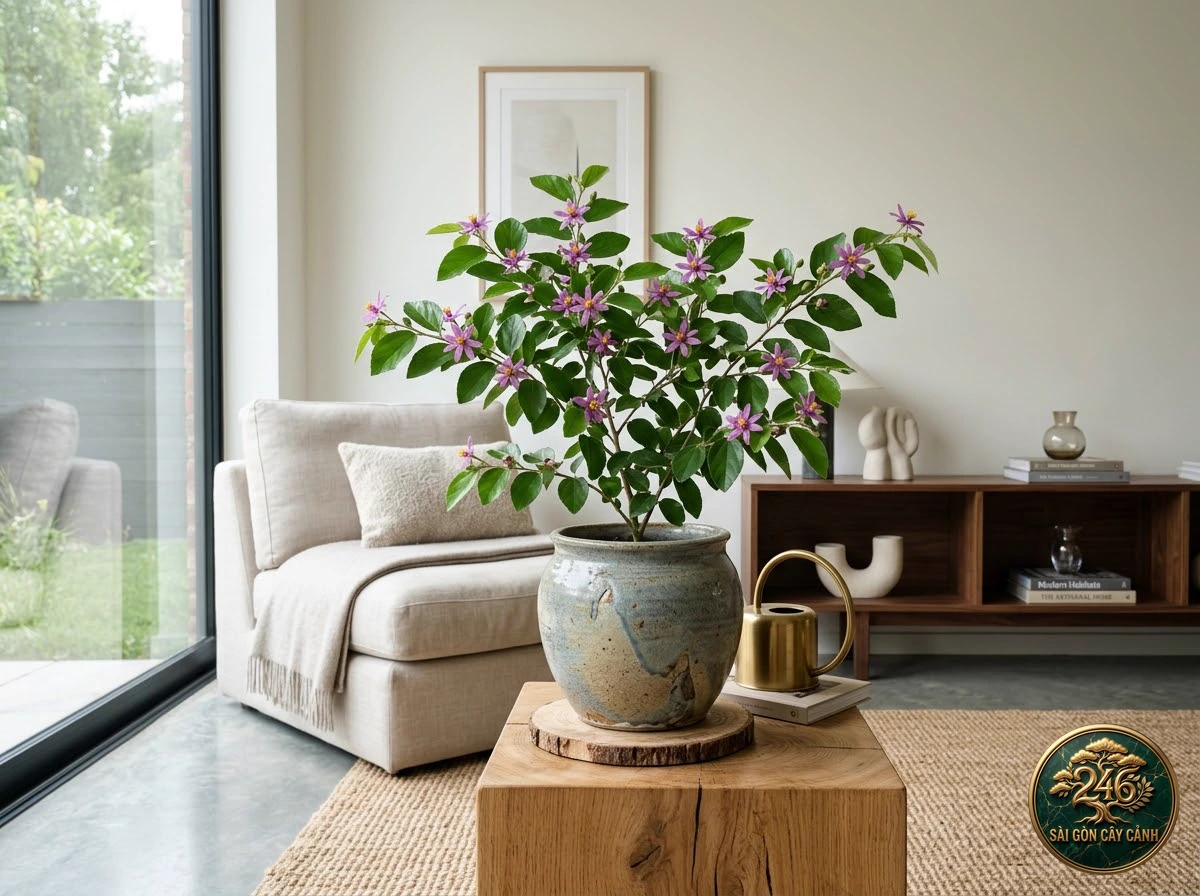
Within biophilic landscape philosophy, the crossberry symbolizes four-directional harmony, balanced prosperity, and unconfined natural freedom. The distinctive four-lobed cross-shaped fruit serves as an emblem of all-season fortune, dispelling negativity and anchoring domestic spaces with grounded vitality.
A Grewia occidentalis bonsai adorned with starry violet flowers and geometric crossberries brings a captivating African savanna aesthetic to modern balconies, living rooms, and biophilic gardens.
12. Saigon Cay Canh Provenance & Cultivation Assurance

Saigon Cay Canh curates vigorous, healthy Grewia occidentalis specimens featuring expressive supple trunks, verified continuous flowering genetics, and established root balls in artisanal ceramic containers.
We guarantee verified botanical nomenclature, provide dedicated seasonal fertilizing protocols for fruit retention, and offer lifelong professional bonsai styling advisory.
💬 Góc Tư Vấn & Hướng Dẫn Kỹ Thuật SGCC
Chuẩn E-E-A-T Kinfolk❓ Chăm sóc Crossberry (Grewia occidenta cần lưu ý điều gì quan trọng nhất?
💡 Dạ điều quan trọng nhất là giữ môi trường sống ổn định, tránh sốc nhiệt hay dao động thông số đột ngột, đồng thời cung cấp khẩu phần ăn sạch và tươi mới ạ.
❓ Làm thế nào để phòng ngừa bệnh tật hiệu quả cho các bé?
💡 Dạ anh chị nên giữ vệ sinh chuồng/hồ nuôi sạch sẽ, thay nước hoặc dọn dẹp định kỳ và bổ sung vitamin, men tiêu hóa đều đặn để tăng sức đề kháng ạ.
🌿 Trang Thiết Bị, Đất Trồng & Dụng Cụ Bonsai Tuyển Chọn
Dụng cụ tỉa, giá thể hữu cơ & phân bón chuyên dụng cho cây cảnh.

Móc chậu hoa để trang trí nhà cửa treo ban công
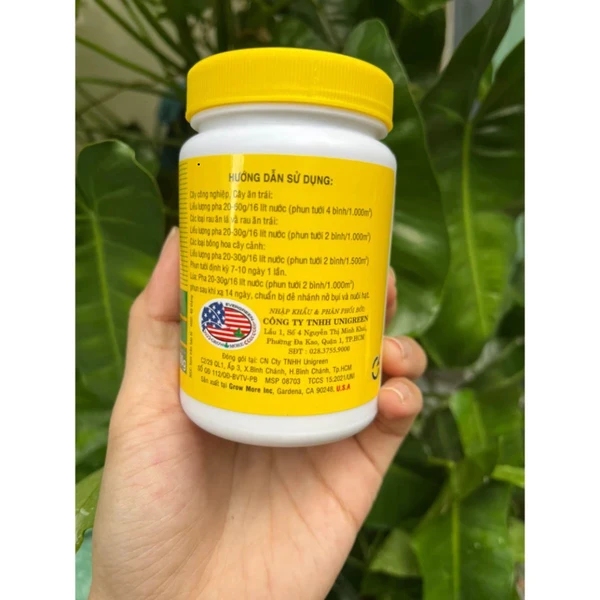
Phân bón lá Growmore USA , NPK Growmore 30-10-10 / 6-30…
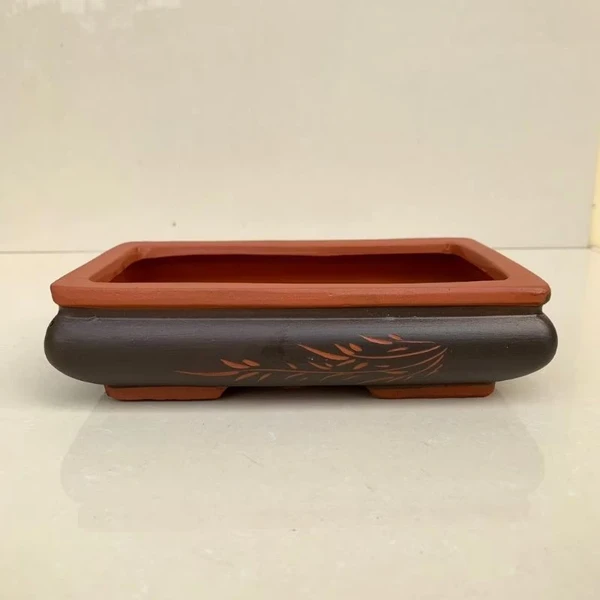
Chậu Chữ Nhật Bo Góc Trồng Cây Mini bonsai tiểu cảnh – …

Kiểng Lá Trầu Bà Lá Xẻ Đột Biến Monstera Thaicons Premi…
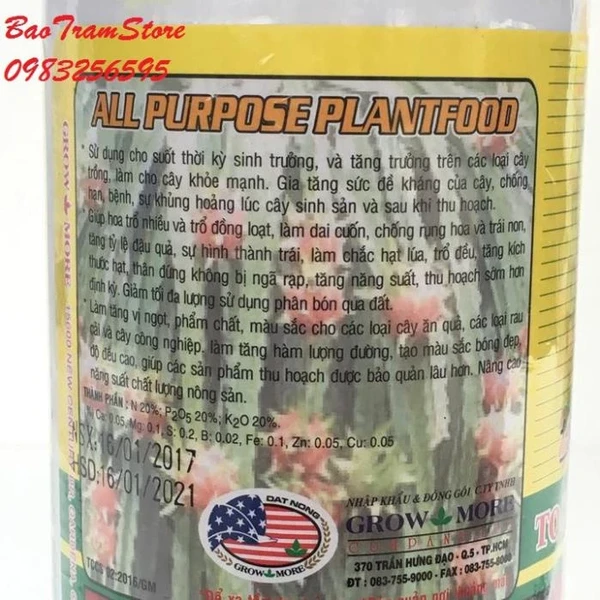
Phân bón lá cao cấp NPK Growmore 20-20-20 hộp 500g

Cây Cẩm Nhung Lá May Mắn ( Fittonia )
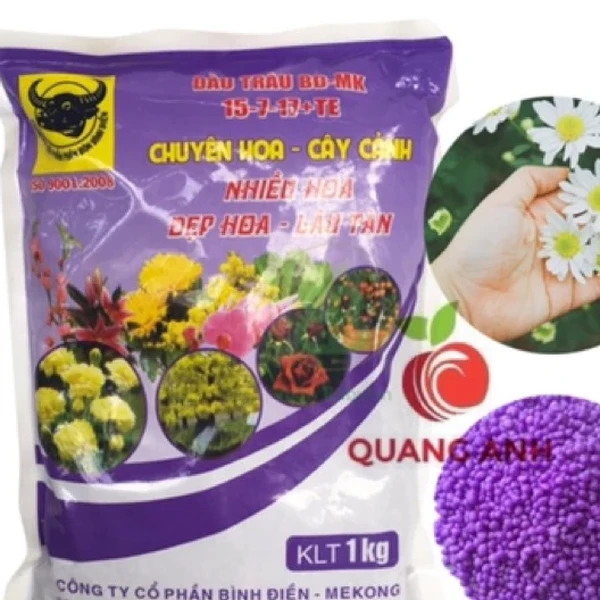
Phân bón Đầu Trâu NPK 15-7-17 dinh dưỡng giai đoạn sắp …

Kéo Cắt Cành SK5 Sắc Bén, Kéo Tỉa Cành Cây Làm Vườn Tay…

Vôi Bột Nông Nghiệp Nguyên Chất – Khử Chua Đất, Cải Tạo…

PHÂN BÓN LÁ NPK 20-20-20+TE GROWMORE 100g
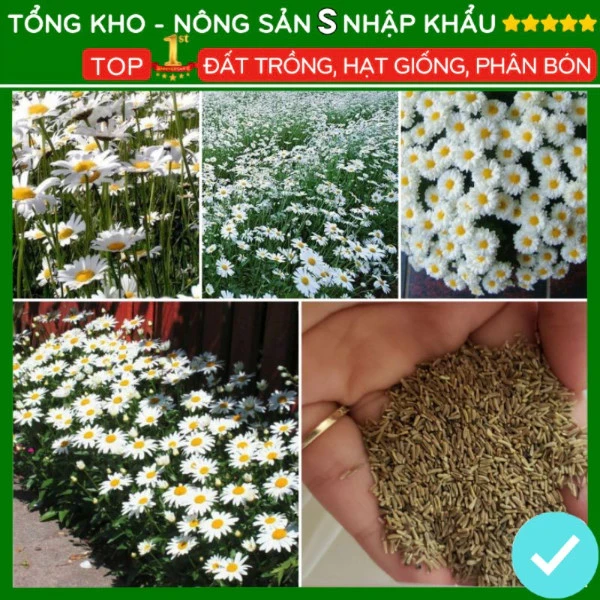
Hạt giống hoa cúc họa mi trắng dễ trồng F1 dễ chăm sóc …

Jingdezhen Chậu hoa nhiều màu sắc [Huayun] Chậu hoa Chậ…
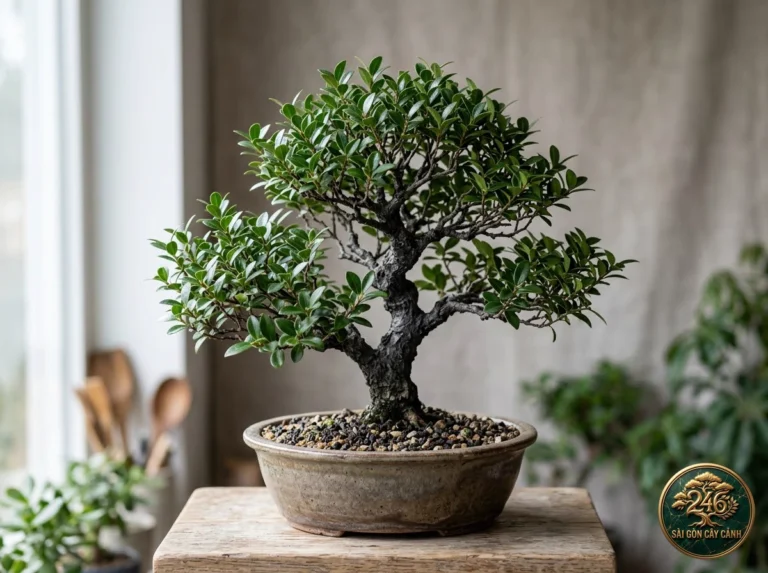
Boxleaf ebony (Diospyros buxifolia)
Boxleaf ebony (Diospyros buxifolia) Diospyros buxifolia, esteemed as boxleaf ebony, is a rare hardwood botanical subject prized in...
Read Monograph →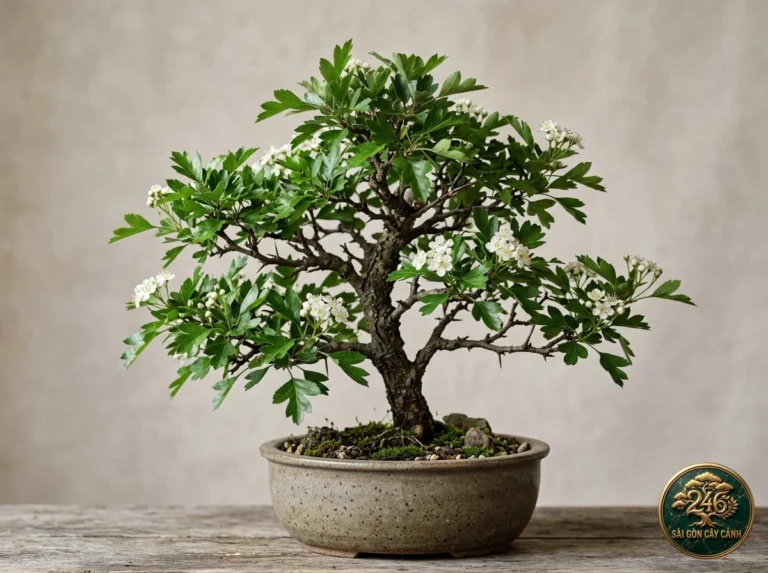
Common hawthorn (Crataegus monogyna)
Common hawthorn (Crataegus monogyna) Crataegus monogyna, revered as common hawthorn or oneseed hawthorn, is a legendary deciduous woody...
Read Monograph →
Toringo crabapple (Malus toringo)
Toringo crabapple (Malus toringo) Malus toringo, widely celebrated as toringo crabapple or Siebold crabapple, is a premier deciduous...
Read Monograph →
Littleleaf cotoneaster (Cotoneaster microphyllus)
Littleleaf cotoneaster (Cotoneaster microphyllus) Cotoneaster microphyllus, celebrated as littleleaf cotoneaster or rockspray cotoneaster, is an exquisite alpine prostrate...
Read Monograph →Expert Q&A, Recommended Supplies & Article Feedback
Tap once to connect instantly via Google, Facebook or TikTok — no long forms required!
No questions yet for this article. Tap Google / Facebook / TikTok above to ask the first question!