Living plant profile
Emerald ripple peperomia
Peperomia caperata
Comprehensive botanical dossier for Emerald ripple peperomia (Peperomia caperata). Identification, lighting calibration, porous substrate formulation, and cultivation guide by Saigon Cay Canh.
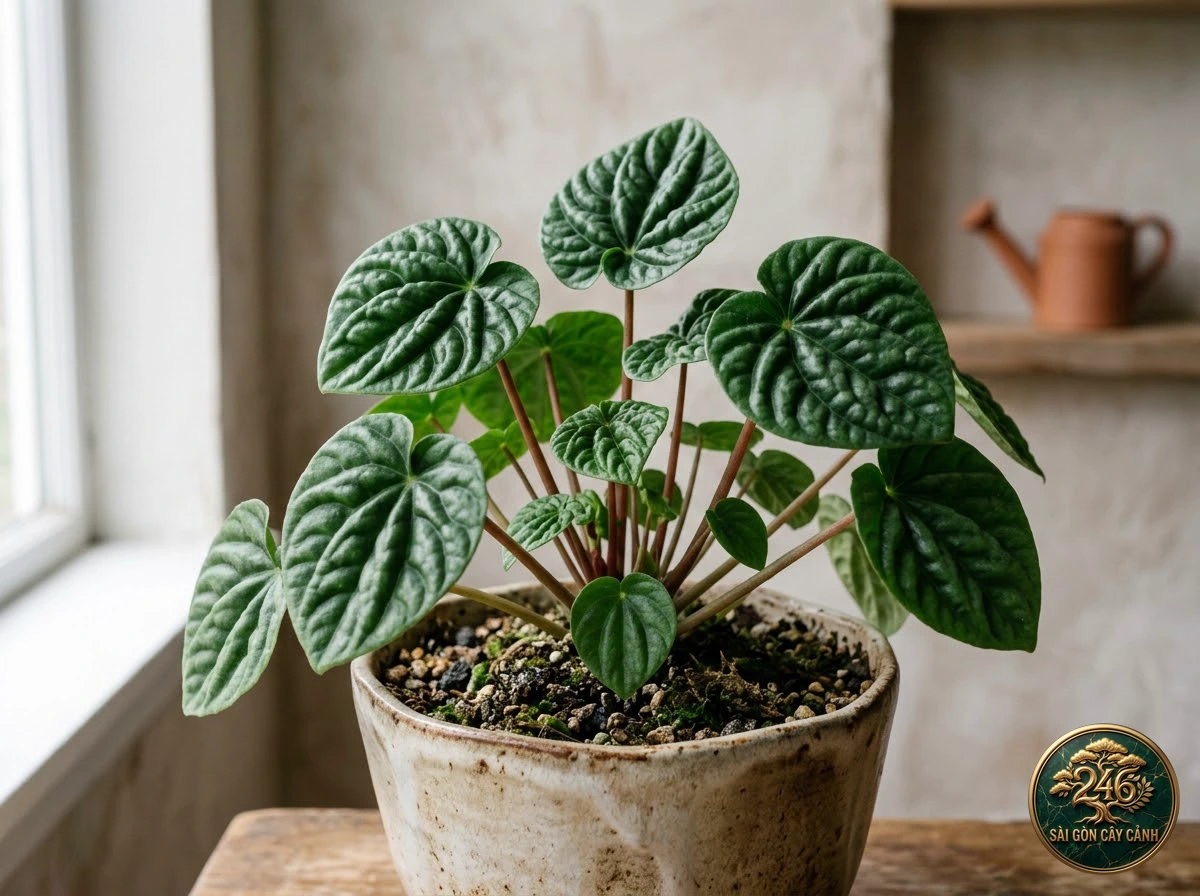
Emerald ripple peperomia (Peperomia caperata) is an exquisite miniature foliage masterpiece indigenous to coastal Atlantic rainforests in southeastern Brazil. The species is celebrated for compact heart-shaped rosette clusters boasting deeply corrugated, corrugated ripples in metallic emerald and dusky wine-purple, framed by vibrant coral-crimson petioles and erect milk-white mouse-tail spadix inflorescences.
1. Core Botanical Taxonomy & Cultural Specifications
| Scientific Name | Peperomia caperata |
|---|---|
| Botanical Family | Piperaceae (Pepper Family) |
| Native Distribution | Southeastern Brazil (Atlantic Coastal Rainforest) |
| Growth Demeanor | Compact mound-forming rosette perennial growing 15 to 25 cm tall |
| Lighting Threshold | Moderate to bright filtered indirect illumination (1,000 – 1,800 lux) |
| Hydration Cadence | Sub-irrigate when top 2cm dries, maintaining gentle airy moisture |
| Substrate Formulation | 40% pumice, 25% mini bark, 20% Chilean sphagnum, 15% worm castings |
| Thermal Range | 18°C – 26°C (64°F – 79°F), sensitive to cold below 12°C (54°F) |
| Relative Humidity | Optimal relative humidity 60% – 80% |
| Cultivation Difficulty | Easy to moderate (Prevent moisture accumulation inside leaf ripples) |
| Pet Safety Profile | Certified 100% non-toxic to domestic pets (ASPCA verified) |
Scientifically described in 1958 by prominent American botanist Truman George Yuncker, Peperomia caperata rapidly ascended to global acclaim across horticultural circles. The specific epithet ‘caperata’ derives from Latin signifying ‘wrinkled’ or ‘corrugated’, perfectly denoting the deeply furrowed, three-dimensional rippled topography of its architectural laminas.
Across its native Brazilian Atlantic rainforest habitat, the plant prospers as a low understory element colonizing moist forest litter or moss-covered decaying logs. This biotope delivers persistent atmospheric moisture while surplus rainfall drains swiftly through loose humic aggregates.
According to Kew’s Plants of the World Online (POWO), Peperomia caperata is an accepted species of family Piperaceae. Definitive diagnostic markers encompass deeply sunken dark purplish-brown vein furrows contrasted against glistening emerald ridges, producing dramatic visual depth.
2. Morphological Identification & Foliar Architecture

Laminas of Emerald ripple peperomia feature a rounded cordate-ovate profile spanning 3 to 6 cm in length and 3 to 5 cm across. The surface is deeply corrugated like folded accordion paper or ribbed seashells, with deeply sunken veins establishing dark valleys between tautly raised emerald ridges.
Foliar coloration harmonizes deep forest emerald with dusky wine-purple valleys. Petioles measure 5 to 10 cm in length, displaying a stout succulent texture in vivid coral-red to ruby-crimson, presenting foliage in a perfectly symmetrical, compact hemispherical rosette.
Micro-morphological architecture of Peperomia caperata foliage is characterized by deeply corrugate-bullate laminar relief. The adaxial surface forms prominent quilted mounds alternating with sunken venation troughs, creating micro-air pockets that regulate foliar surface temperature beneath dense canopies of the Brazilian Atlantic Forest (Mata Atlantica). Deep emerald-purple tones inside troughs reflect high concentrations of anthocyanin pigments tailored to capture diffuse scattered light in moist forest understories.
3. Photometric Calibration & Window Exposure Optimization
Peperomia caperata thrives under gentle filtered indirect irradiance, correlating with an optimal PPFD threshold of 45 to 85 µmol/m²/s. Generous diffuse photons stimulate anthocyanin synthesis within laminar furrows, maximizing chromatic contrast between purple valleys and emerald ridges.
Direct intense solar exposure bleaches rich purplish hues and scorches succulent tissues. Conversely, severe light deprivation beneath 500 lux prompts weak petiole etiolation, collapsing the tidy rosette silhouette into a loose, indistinct sprawl.
Photosynthetic performance in Peperomia caperata reaches optimal rates under photon flux densities (PPFD) between 40 and 85 µmol/m²/s. The corrugated surface scatters incoming photons across multifaceted angles, ensuring palisade cells receive uniform illumination without thermal stress. Direct sun exposure rapidly photo-bleaches protective purple pigments, causing bleached patches and irreversible foliar scorching.
4. Corrugated Bullate Venation & Spadix Mouse-Tail Inflorescences
The compact rosette mound habit of Peperomia caperata features a very short subterranean stem axis from which radiant petioles diverge symmetrically, forming a balanced dome 15-25 cm in height. This architecture maximizes diffuse light interception while maintaining airy spacing around basal crowns.
The corrugated bullate laminar folds serve critical ecophysiological roles: deep furrows retain microclimatic humidity boundary layers while raised ridges capture photons from diverse angles without concentrating thermal radiation on any single tissue sector.
Optimal indoor temperatures for Peperomia caperata settle comfortably between 18°C and 26°C (64°F – 79°F). It performs splendidly in conditioned interiors, yet is sensitive to cold drafts and drops foliage rapidly if ambient warmth falls below 12°C (54°F).
Optimal relative humidity spans 60% to 80%. While possessing greater dry-air tolerance than delicate begonias, sustaining ambient humidity above 65% ensures turgid foliar substance and sharp chromatic contrast across furrowed tissues.
An ideal cultivation environment stabilizes vapor pressure deficit (VPD) between 0.7 and 1.0 kPa, corresponding to 55% – 75% relative humidity at comfortable room temperatures (22°C – 26°C). Avoid placing containers directly before hot heating vents or dry air-conditioner drafts to prevent abrupt thermal shock and moisture deflation within quilted leaf mounds.
The plant grows as a tidy compact rosette rarely exceeding 20 cm in height. Succulent pinkish-red petioles support deeply heart-shaped corrugated blades. Slender, erect mouse-tail spadix inflorescences in creamy white rise gracefully above dark quilted foliage, displaying hundreds of tiny petal-less florets during active summer flowering periods.
5. Porous Aggregate Substrate Engineering & Aeration Dynamics
The substrate blend for Emerald ripple peperomia demands superior air-filled porosity exceeding 35% paired with spongy, airy moisture retention. An elite recipe incorporates 40% pumice, 25% mini pine bark, 20% Chilean sphagnum, and 15% fully aged vermicompost.
Containers require free drainage. Never pour water overhead into the corrugated foliar furrows or central petiole crown; always sub-irrigate by placing the container in a water saucer for 15 minutes before allowing complete gravitational drainage.
The fibrous root system of Peperomia caperata is exceptionally delicate and shallow, requiring a porous, slightly acidic potting matrix (pH 6.0 to 6.6). Combining 35% pumice, 30% clean coco coir, 25% fine pine bark, and 10% worm castings produces an airy, moisture-retentive aggregate that cushions tender roots without causing anaerobic compaction.
6. Organic Nutrition Schedules & Periodic Micronutrient Priming
Nutritional management must remain restrained: deploy liquid biological organic fertilizer diluted to quarter-strength every 3 to 4 weeks during spring and summer. Soluble iron and magnesium fortify deep emerald chlorophyll and dusky purple anthocyanins.
Suspend feeding during winter dormancy. Avoid synthetic fertilizer granules, as chemical salts incinerate delicate fibrous roots and trigger basal collar liquefaction.
Fertilization protocols should utilize gentle organic liquid feeds calibrated to an EC of 0.5 to 0.8 mS/cm once monthly. Supplementing bio-available trace minerals such as magnesium and sulfur enhances the dramatic chromatic contrast between sunken purple veins and emerald ridges.
7. Clinical Diagnostic Matrix & Rapid Correction Protocols
| Clinical Symptom | Primary Etiology | Diagnostic Evaluation | Corrective Prescription |
|---|---|---|---|
| Petioles liquefying at base, leaves detaching from crown | Chronic over-hydration causing hypoxic basal crown decay | Inspection reveals blackened mushy tissue at soil line and waterlogged media | Cease irrigation, excise rot, repot in airy pumice mix, and adopt bottom-watering |
| Purple furrow contrast fading, petioles stretching leggy | Prolonged light deficiency beneath 500 lux | Petioles measure twice normal length with loose rosette habit | Relocate specimen near sheer-curtained windows or supplement 1,400 lux botanical LED light |
| Laminar margins crisping dry, entire rosette wilting slightly | Atmospheric humidity collapsing below 45% or prolonged dehydration | Hygrometer records arid air and substrate is bone-dry | Sub-irrigate container and place atop an insulated pebble humidity tray |
| Gray fuzzy fungal mold forming inside foliar furrows | Standing water trapped inside corrugated ripples inciting Botrytis | Magnification confirms fungal spore filaments inside furrows | Excise afflicted blades, eliminate foliar misting, and improve 24/7 room ventilation |
8. Cryptic Pest Prophylaxis & Foliar Surface Sanitation
Chief pathological hazards include Phytophthora/Pythium basal rot from overwatering and Botrytis gray mold from water trapped in laminar furrows. Ensuring gentle continuous airflow and strictly sub-irrigating delivers foolproof protection.
Dust foliage periodically using a soft cosmetic brush to dislodge particles from within corrugated ripples, rigorously avoiding abrasive wet wipes that bruise tender tissues.
Biological pest management emphasizes early prevention of mealybugs congregating at the crowded bases of petiole clusters. Spot-treating infestations with cotton swabs dipped in 70% bio-alcohol and maintaining generous air circulation around the rosette base effectively suppresses rot-inducing pathogens.
9. Asexual Propagation Methodology & Root Strike Protocols
Propagating Peperomia caperata is exceptionally rewarding via leaf-petiole cuttings or halved leaf sections. Select mature, firm blades and sever petioles cleanly leaving a 1.5 to 2 cm stem using a sterile blade.
Insert petioles at a 45-degree angle into moist perlite-sphagnum within a clear propagation dome; held at 24°C in diffuse light, clusters of tiny rippled plantlets sprout vigorously over a 25 to 35 day developmental interval.
The most reliable propagation technique employs single leaf cuttings with a 2-3 cm petiole inserted into moist perlite or shredded sphagnum. Enclosing the propagation tray inside a ventilated clear humidity dome at 23°C – 25°C triggers an abundance of miniature plantlets from the petiole base over a 25 to 35 day developmental interval.
10. Companion Animal Safety Profile & ASPCA Non-Toxic Verification
Owing to its compact stature and absolute non-toxic profile, specimen planters can be displayed freely on living room tables, low bookshelves, or bedside stands without requiring any physical pet barriers.
11. Biophilic Curation & Contemporary Interior Design Styling
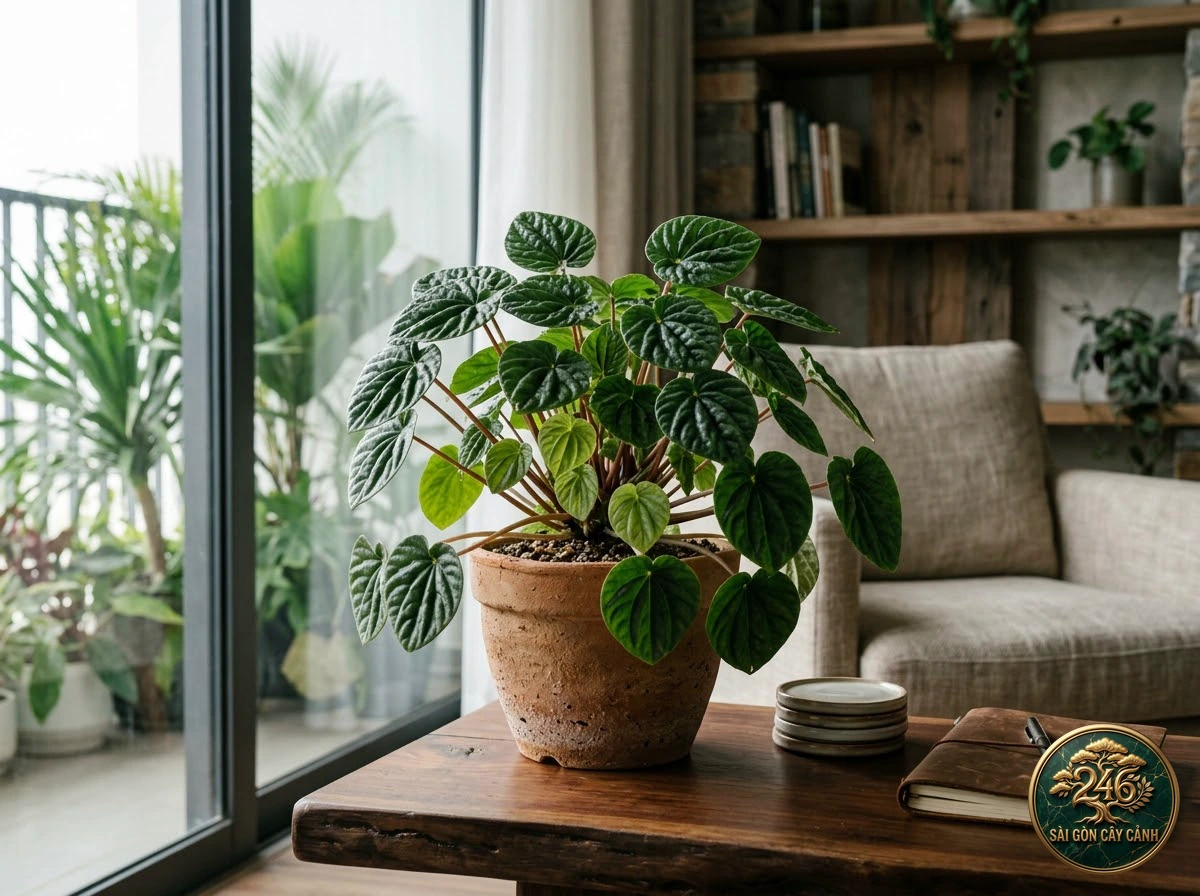
Peperomia caperata functions as an immaculate living sculptural accent in Scandinavian and contemporary Biophilic interior design. The unique corrugated foliar architecture paired with graceful white mouse-tail flower spikes brings organic sophistication and serene balance into living spaces.
The species also excels as an elite component for desktop terrariums, valued for its restrained growth rate, tidy rosette habit, and high humidity tolerance.
Featuring uniquely corrugated ripple texture and elegant upright white mouse-tail flower spikes, Emerald ripple peperomia acts as an exquisite sculptural centerpiece for contemporary interiors. Its mysterious deep emerald-purple foliage conveys architectural sophistication, tranquil serenity, and natural harmony.
12. Master Principles for Sustainable Indoor Acclimatization
Three foundational axioms for cultivating pristine Peperomia caperata specimens:
- Hydration axiom: Sub-Irrigation Axiom: Never pour water directly onto corrugated blades; deliver hydration via bottom saucers when the upper substrate dries.
- Illumination axiom: Filtered Light Axiom: Situate beneath 1,200 – 1,600 lux indirect light to sustain vivid contrast between emerald ridges and purple furrows.
- Maintenance axiom: Crown Aeration Axiom: Employ porous pumice media and maintain gentle air movement to protect succulent crowns from rot.
13. Frequently Asked Questions Regarding Emerald ripple peperomia (FAQs)
Should the white mouse-tail flower spikes be pruned?
Once blossoms fade and turn brownish, snip scapes cleanly at the base to redirect vital energy into dense, corrugated foliar growth.
What is the safest irrigation method for this peperomia?
Sub-irrigation is premier: place the pot in a 2cm water saucer for 15 minutes to absorb moisture upward, then remove and allow complete drainage.
Why do Peperomia caperata leaves possess corrugated folds?
The corrugated architecture increases surface area for multi-angle diffuse light absorption while buffering transpirational moisture loss in rainforest understories.
Can it thrive in air-conditioned residential spaces?
Splendidly, provided temperatures remain 22°C – 26°C; shelter from direct convective drafts and preserve humidity above 55%.
How long does leaf cutting propagation take to produce plantlets?
Rooting occurs in moist sphagnum at 24°C within 2-3 weeks, with clusters of tiny rippled plantlets emerging vigorously over a 25 to 35 day window.
Should I prune away the rat-tail flower spikes once they begin fading?
Yes, once the creamy white spikes brown and dry out, cleanly trim them at the petiole base using sterilized shears; pruning spent inflorescences conserves valuable photosynthetic reserves, redirecting energy toward vibrant new corrugated foliage.