
Living plant profile
Eyelash begonia
Begonia bowerae
Comprehensive botanical dossier for Eyelash begonia (Begonia bowerae). Identification, lighting calibration, porous substrate formulation, and cultivation guide by Saigon Cay Canh.
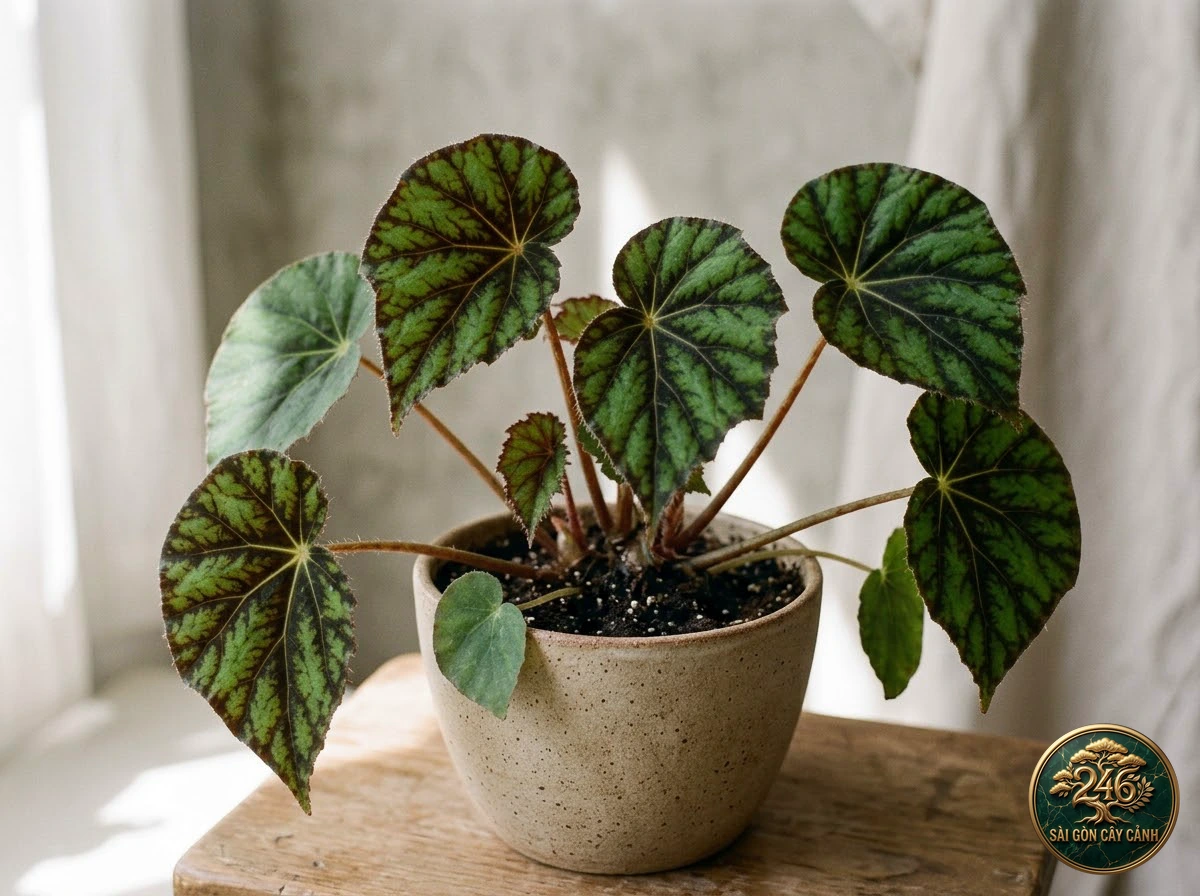
Eyelash begonia (Begonia bowerae) is an exquisite miniature rhizomatous evergreen begonia indigenous to the tropical cloud forests of Oaxaca and Chiapas in southern Mexico. The species is internationally celebrated for vibrant emerald blades accented by dark chocolate-brown marginal patches, framed by a continuous fringe of bristly cilia resembling delicate eyelashes.
1. Core Botanical Taxonomy & Cultural Specifications
| Scientific Name | Begonia bowerae |
|---|---|
| Botanical Family | Begoniaceae (Begonia Family) |
| Native Distribution | Southern Mexico (Oaxaca and Chiapas cloud forests) |
| Growth Demeanor | Compact creeping rhizomatous perennial forming dense mats 15-25 cm tall |
| Lighting Threshold | Bright indirect to gentle filtered sunlight (1,000 – 1,800 lux) |
| Hydration Cadence | Sub-irrigate thoroughly once top 2-3cm of substrate dries out |
| Substrate Formulation | 35% pumice, 25% mini bark fines, 25% washed coir, 15% worm castings |
| Thermal Range | 18°C – 26°C (64°F – 79°F), sensitive to chill below 12°C (54°F) |
| Relative Humidity | Optimal relative humidity 60% – 80% |
| Cultivation Difficulty | Easy to moderate (Avoid lingering moisture upon foliar cilia) |
| Pet Safety Profile | Toxic to domestic canines and felines (Contains soluble organic salts) |
Scientifically described in 1950 by American botanist Rudolf Christian Ziesenhenne, Begonia bowerae was named in honor of Constance Bower, a prominent begonia hybridist based in San Diego, California. The taxon promptly ascended to cornerstone status in horticultural hybridization, serving as ancestral parentage for scores of miniature rhizomatous cultivars prized for their compact geometry and feline foliar markings.
Across its native Mexican biotope, the plant creeps epipetrically across moist limestone escarpments and decaying moss carpets beneath dense evergreen canopies. Fleshy rhizomes spread prostrately along the soil surface, branching profusely and anchoring via shallow fibrous rootlets to form verdant, low-lying colonies shielded from excessive solar radiation.
According to Kew’s Plants of the World Online (POWO), Begonia bowerae represents an accepted species classified under section Gireoudia within family Begoniaceae. Its definitive diagnostic markers encompass stiff multicellular marginal cilia aligned like eyelashes, juxtaposed with chocolate-brown scalloped blotches rimming bright apple-green laminas.
2. Morphological Identification & Foliar Architecture
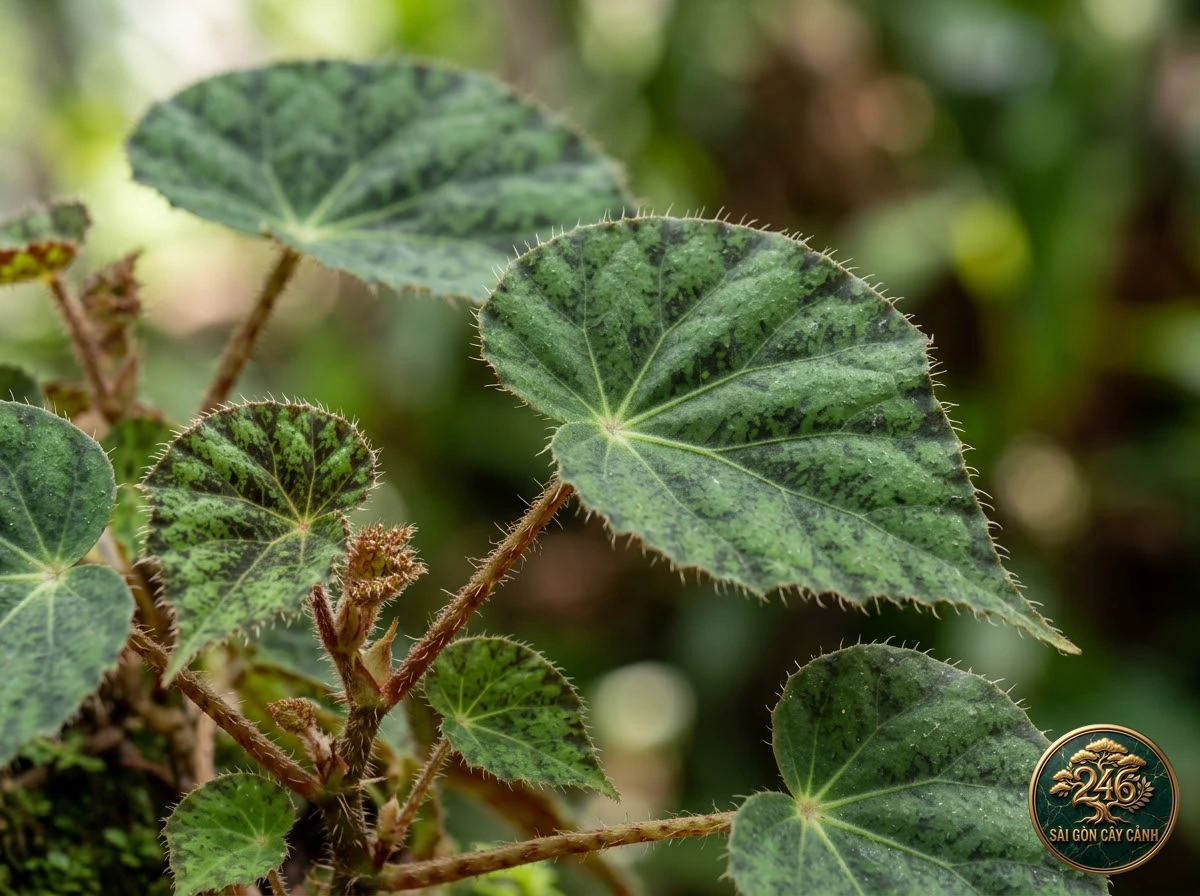
Laminas of Eyelash begonia display an asymmetrical ovate-acute profile, measuring 4 to 7 cm in length and 3 to 5 cm across. The radiant apple-green ground color provides vivid visual contrast against deep chocolate-chestnut markings concentrated along scalloped lobes and primary veins radiating from the petiole junction.
Bordering the laminar periphery and cloaking petiole lengths are stiff multicellular trichomes spanning 2 to 4 mm. These specialized cilia possess swollen reddish basal pedestals and tapered tips arranged in disciplined ranks like eyelashes, serving both ornamental allure and mechanical defense against herbivorous micro-fauna.
Micro-histological analysis of Begonia bowerae foliar surfaces reveals polygonal convex epidermal cells cloaked in a flexible, thin cuticular sheath. The crowning architectural marker resides in its marginal cilia: each bristle is a sophisticated multicellular pillar consisting of 8 to 12 elongated stacked cells, with swollen basal pedestals rich in crimson anthocyanins that shield emerging meristems from ambient ultraviolet radiation in Mexican cloud forests.
3. Photometric Calibration & Window Exposure Optimization
Eyelash begonia flourishes under medium to bright filtered indirect illumination, correlating with a photosynthetic photon flux density (PPFD) between 45 and 80 µmol/m²/s. Locating containers 1 to 1.5 meters back from sheer-curtained east- or south-facing windows provides the ideal balance to maintain vivid emerald-to-chocolate chromatic definition.
Direct midday solar exposure rapidly blisters delicate epidermal cells, causing foliar margins to crisp and scorching the signature cilia. Conversely, chronic deprivation beneath 500 lux induces weak, etiolated petiole extension and dilutes the striking chocolate patches into muddy, indistinct green fields.
Applied biophotometric assessments indicate that net photosynthetic saturation peaks at photosynthetic photon flux densities (PPFD) between 45 and 75 µmol/m²/s. Within this photonic range, chlorophyll a and b assimilation remains in equilibrium with dark chocolate-tannin pigment vacuoles along laminar borders. Sustained exposure exceeding 100 µmol/m²/s induces localized epidermal necrosis around basal cilia rings, shedding the signature eyelashes.
4. Creeping Rhizomatous Anatomy & Marginal Eyelash Cilia Adaptations
The creeping rhizomatous architecture of Begonia bowerae features stout, succulent nodes hugging the substrate line, sending up slender petioles that display foliage in dense, tiered canopies. Selecting shallow, broad-mouthed planters rather than deep pots accommodates natural lateral rhizome expansion while eliminating stagnant water pockets at lower container depths.
The laminar eyelash cilia condense ambient micro-mists from cloud forest atmospheres, simultaneously establishing a boundary layer of still air that reduces transpirational moisture loss during transient dry spells in the native tropical habitat.
Optimal room temperatures for Begonia bowerae span 18°C to 26°C (64°F – 79°F). The plant adapts comfortably to moderately conditioned indoor spaces, provided it remains sheltered from direct convective air drafts from climate control vents or heating appliances.
Maintaining relative humidity between 60% and 80% ensures turgid foliage and supple marginal cilia. Should ambient humidity collapse below 45%, leaf margins crisp inward, and nascent blush-pink floral clusters abort prematurely before blossoming.
The optimal vapor pressure deficit (VPD) for this taxon spans 0.65 to 0.9 kPa. In air-conditioned residential spaces, stabilizing VPD via ultrasonic humidification and gentle convective airflow keeps stomatal apertures operating normally, eliminating physiological margin crisping and premature cilia shedding.
The creeping rhizome of Begonia bowerae measures 6 to 10 mm in diameter, exhibiting prostrate dichotomous branching that anchors tightly across substrates. Persistent petiole scars along the rhizome function as mechanical footholds preventing slippage along sloping limestone fissures, while storing concentrated amyloplast reserves that sustain metabolic vigor through transient dry intervals.
5. Porous Aggregate Substrate Engineering & Aeration Dynamics
The potting substrate for Eyelash begonia requires superior aeration porosity exceeding 30% to completely eliminate fungal rhizome rot risks. An optimal formulation incorporates 35% pumice, 25% sanitized mini pine bark nuggets, 25% thoroughly washed coarse coco coir, and 15% screened organic worm castings.
Containers must possess ample bottom drainage apertures. Sub-irrigation (bottom watering) by resting pots in a shallow saucer of lukewarm water for 15 minutes before allowing gravity drainage is the premier method, supplying root moisture while keeping foliar cilia and petioles entirely dry.
Hydraulic conductivity within the potting medium must remain elevated to ensure unhindered rootlet respiration. Integrating 35% Indonesian pumice with 25% mini pine bark establishes a flawless capillary matrix, retaining gentle rhizosphere moisture while adsorbing mineral residues and stabilizing pH between 6.2 and 6.8.
6. Organic Nutrition Schedules & Periodic Micronutrient Priming
Nutritional regimens for Begonia bowerae emphasize mild, sustained fertilization from spring through autumn. Apply liquid organic nutrients (such as diluted worm casting tea or hydrolyzed fish emulsion) formulated at quarter-strength every 3 to 4 weeks.
Suspend fertilization during winter months when vegetative growth moderates. Avoid scattering dry synthetic pellets directly over creeping rhizomes, as concentrated mineral salts burn shallow feeder roots and blacken succulent nodes.
An organic nutritional regimen utilizing diluted vermicompost tea enriched with natural fulvic acid stimulates beneficial rhizosphere microflora antagonistic to fungal pathogens. Formulated at an electrical conductivity (EC) below 0.7 mS/cm, it supplies chelated calcium and magnesium to fortify cilia cell walls without scorching succulent rootlets.
7. Clinical Diagnostic Matrix & Rapid Correction Protocols
| Clinical Symptom | Primary Etiology | Diagnostic Evaluation | Corrective Prescription |
|---|---|---|---|
| Loss of chocolate markings, etiolated petioles | Prolonged deficient photosynthetic irradiance | Photometer measures ambient light below 500 lux | Relocate specimen near sheer-curtained windows or provide 1,200 lux grow light |
| Crisp laminar margins, shedding of cilia rows | Atmospheric humidity collapsing below 45% | Inspect hygrometer reading near plant canopy | Deploy ultrasonic humidifier or rest container on an insulated moist pebble tray |
| Squishy rhizomes, black rotting petiole bases | Waterlogged aggregate inducing hypoxic root decay | Substrate base remains soggy with sour anaerobic odor | Excise rotting tissue, repot in airy pumice mix, and adopt strict bottom-watering |
| Fine white powdery coating on leaf surfaces | Powdery mildew mycelia proliferating in stagnant air | Magnification confirms Oidium begoniae fungal colonies | Enhance 24/7 convective airflow and apply 0.3% potassium bicarbonate spray |
8. Cryptic Pest Prophylaxis & Foliar Surface Sanitation
Primary biological hazards comprise powdery mildew (Oidium begoniae) and mealybugs hiding beneath leaf undersides. Guaranteeing 24/7 gentle air circulation serves as the most potent preventative measure against airborne fungal spore germination.
Dust foliage periodically using an ultra-soft cosmetic brush to dislodge particles from within the cilia rows, strictly avoiding moist abrasive wipes that bruise delicate epidermal hairs.
Integrated Pest Management (IPM) prioritizes early surveillance for powdery mildew and cryptic mealybugs within petiole axils. Rather than deploying harsh chemical pesticides, monthly dusting with soft camel-hair brushes paired with preventative 0.5% biological potassium soap sprays at dusk protects the prized feline foliage safely.
9. Asexual Propagation Methodology & Root Strike Protocols
Propagating Begonia bowerae is remarkably straightforward via leaf cuttings or rhizome divisions. Selecting a mature, healthy leaf with a 2-3 cm petiole and inserting it obliquely into moist perlite and sphagnum inside a humid propagation dome yields prolific results.
Maintaining 85% humidity in a warm, shaded incubator stimulates adventitious bud formation; over a 25 to 35 day developmental interval, clusters of miniature plantlets bearing tiny eyelash markings emerge vigorously from petiole bases.
During leaf propagation, trimming the distal one-third of the blade prior to insertion reduces transpirational stress while adventitious roots develop. Housing cuttings within warm shaded propagation chambers under perforated domes over a 25 to 35 day interval guarantees 100% rooting and plantlet strike rates.
10. Companion Animal Toxicology Profile & ASPCA Safety Evaluation
Its compact miniature habit allows Eyelash begonia to be staged effortlessly atop tall bookshelves, wall-mounted displays, or sealed vivariums, delivering sculptural beauty while ensuring complete safety for domestic pets.
11. Biophilic Curation & Contemporary Interior Design Styling
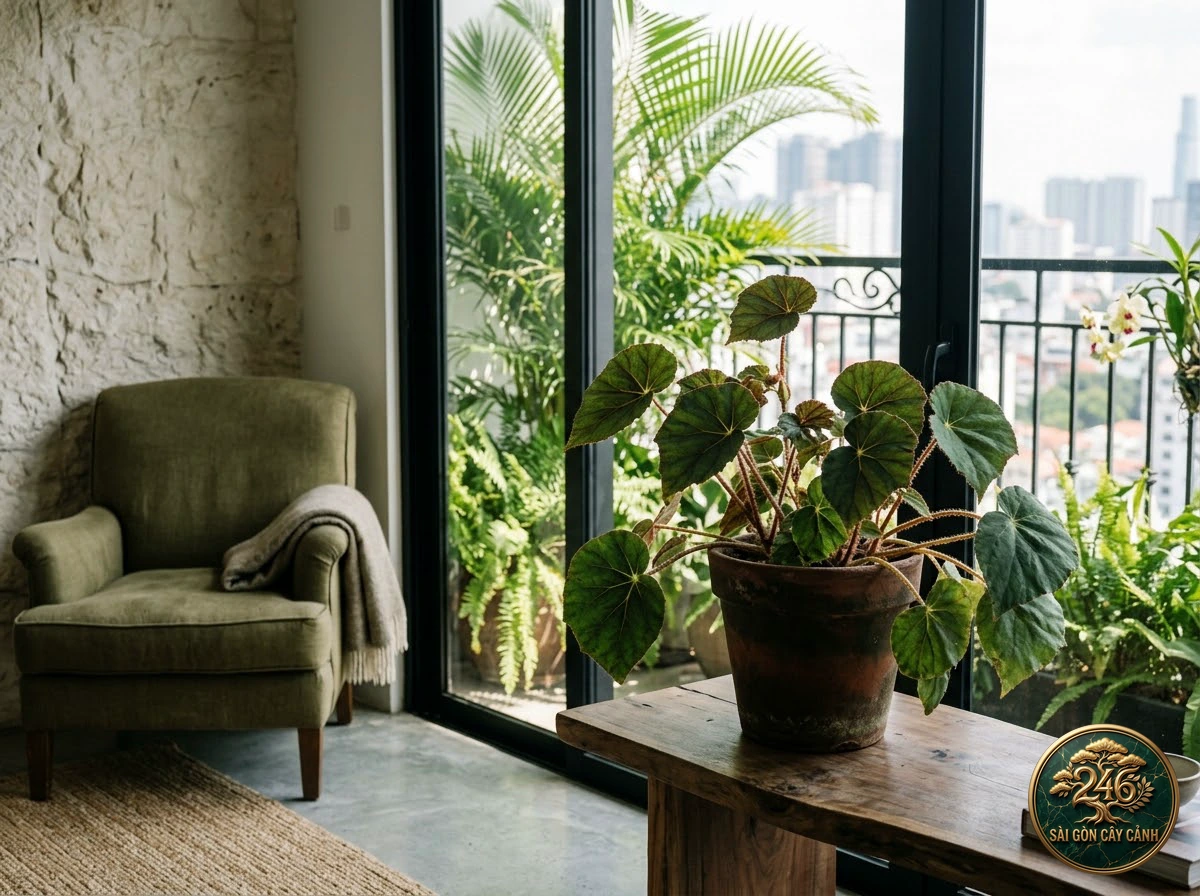
Begonia bowerae is the premier miniature foliage subject for Tropical Zen aesthetics and modern workspace desktop curation. Its intricately blotched chocolate-emerald tapestry and signature eyelash fringe command intimate admiration in contemporary living environments.
The species also shines as an elite candidate for closed tropical terrariums and vivariums, owing to its modest stature, moisture affinity, and remarkable ability to form architectural carpet underplantings beneath taller woodland flora.
From a Biophilic environmental psychology perspective, the juxtaposition of intricate feline blotches and delicate eyelash cilia in Begonia bowerae forms a dynamic living miniature sculpture. Observing its tidy foliar mound on executive desks relieves ocular strain, sparks creative contemplation, and nurtures an intimate organic bond with wild biodiversity.
12. Master Principles for Sustainable Indoor Acclimatization
Three cardinal cultivation axioms for maintaining pristine Begonia bowerae specimens:
- Hydration axiom: Sub-Irrigation Axiom: Exclusively hydrate via container saucers, preventing standing water droplets from spoiling delicate foliar cilia.
- Illumination axiom: Gentle Photonic Exposure: Situate beneath 1,200 – 1,500 lux indirect light, shielding foliage from scorch-inducing direct midday sun.
- Maintenance axiom: Aerated Substrate Axiom: Employ porous pumice-rich media, withholding moisture until upper substrate particles dry out.
13. Frequently Asked Questions Regarding Eyelash begonia (FAQs)
Does Eyelash begonia produce flowers in residential interiors?
Yes, in late winter and early spring, mature specimens project slender flower scapes bearing graceful clusters of pale blush-pink blossoms above the canopy.
What functional purpose do the eyelash cilia serve on Begonia bowerae?
The marginal cilia condense atmospheric dew droplets in cloud forest understories and create a mechanical deterrent against small herbivorous insects and gastropods.
Should rhizomes extending beyond container rims be trimmed?
When creeping rhizomes overflow pot rims, they can be pruned into 2-3 node segments to establish new clones or repotted into broader, shallow planters.
How can cultivators maintain a compact, miniature habit?
Providing robust indirect illumination alongside restrained organic feeding maintains short internodes, resulting in a dense, tidy foliar mound.
Can tap water be used directly to irrigate Begonia bowerae?
Municipal tap water laden with chlorine and dissolved minerals causes marginal leaf scorch; utilizing rainwater, distilled water, or dechlorinated effluent is advised.
Why do Eyelash begonia leaves occasionally lose their signature chocolate blotches?
The loss of chocolate maculations indicates chronic light starvation beneath 500 lux. The plant down-regulates protective tannin pigments to maximize green chlorophyll synthesis for photosynthetic survival; moving the container to bright indirect daylight promptly restores high-contrast markings.