
Living plant profile
Grey star ctenanthe
Ctenanthe setosa
Comprehensive botanical dossier for Grey star ctenanthe (Ctenanthe setosa). Identification, lighting calibration, porous substrate formulation, and cultivation guide by Saigon Cay Canh.
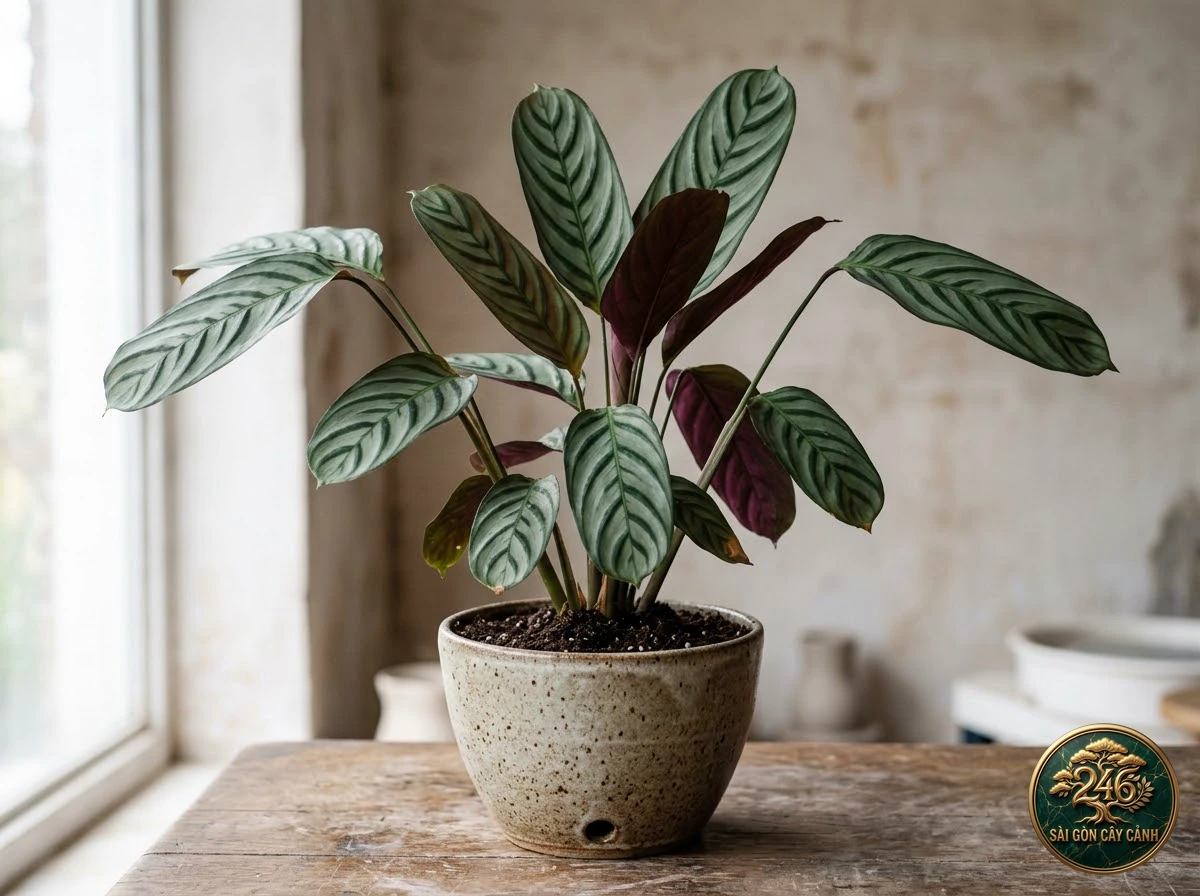
Grey star ctenanthe (Ctenanthe setosa) is celebrated as one of the most mesmerizing metallic-silver foliage plants hailing from the rainforests of southeastern Brazil. The specific epithet ‘setosa’ refers to the fine hispid bristles clothing its tall petioles, providing structural counterpoint to elongated oblong-lanceolate blades washed in luminous pewter-silver with deep violet abaxial undersides.
Sài Gòn Cây Cảnh Care Compass
1. Core Botanical Taxonomy & Cultural Specifications
| Scientific Name | Ctenanthe setosa |
|---|---|
| Botanical Family | Marantaceae (Prayer Plant Family) |
| Native Distribution | Southeastern Brazil (Atlantic Rainforest reserves) |
| Growth Demeanor | Erect clumping herbaceous perennial producing dense architectural stands |
| Lighting Threshold | Medium to bright indirect diffused illumination (1,200 – 1,900 lux) |
| Hydration Cadence | Hydrate with soft water once upper 2-3cm of substrate dries thoroughly |
| Substrate Formulation | 35% pumice, 25% shredded moss, 20% mini pine bark, 20% perlite |
| Thermal Range | 19°C – 28°C (66°F – 82°F), vegetative growth halts below 15°C (59°F) |
| Relative Humidity | Maintain atmospheric relative humidity between 65% and 85% |
| Cultivation Difficulty | Moderate (Demands stable humidity and demineralized irrigation) |
| Pet Safety Profile | Completely non-toxic to companion pets (ASPCA verified) |
Formally cataloged by German botanist August Wilhelm Eichler during nineteenth-century Neotropical surveys, Ctenanthe setosa represents an ancient lineage within the Maranteae tribe. The species is endemic to maritime Atlantic rainforest pockets of southeastern Brazil where constant oceanic fog delivers high ambient humidity.
In wild woodland ecology, Ctenanthe setosa matures into impressive erect stands reaching 80 cm to over 1.2 meters. Subterranean rhizomes branch continuously, sending up erect hispid petioles capped by expansive silver blades to intercept filtered photons beneath towering rainforest canopies.
Authoritative nomenclature curated by Kew POWO affirms the distinct species rank of Ctenanthe setosa, which is occasionally misidentified as Ctenanthe oppenheimiana or Calathea ‘Silver Star’. The definitive morphological criteria comprise distinctly hispid-setose petioles and an adaxial lamina covered by more than 85% solid pewter-silver coloration.
2. Morphological Identification & Foliar Architecture
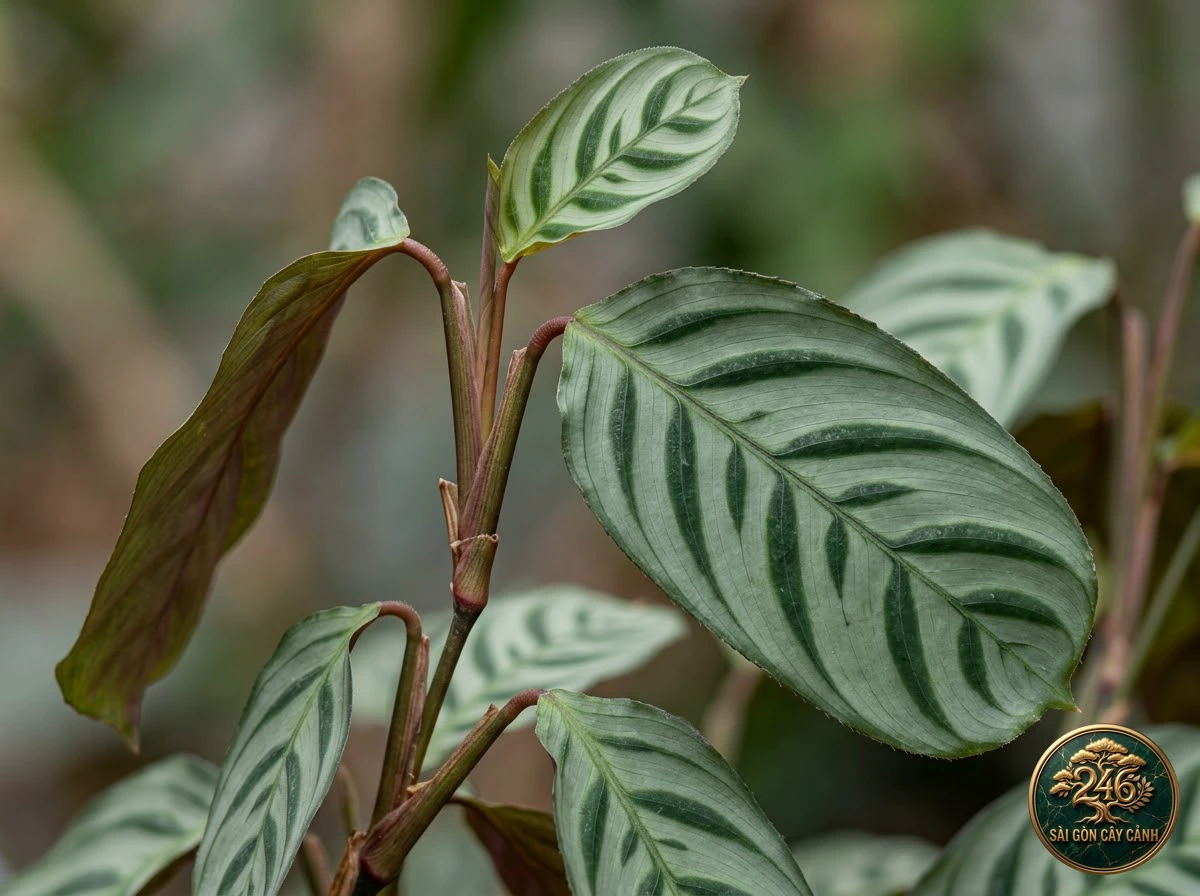
Foliar geometry exhibits elongated oblong-lanceolate contours extending 20 to 35 cm in length and 7 to 10 cm in width. The background lamina presents an immaculate uniform metallic pewter-silver hue traversed by slender, pencil-thin emerald secondary veins that terminate at a fine dark green perimeter band.
The abaxial surface is clad in deep wine-purple velvet, producing dramatic two-tone aesthetics when viewed from low angles. Slender yet rigid erect petioles are coated with micro-bristly reddish hairs, yielding a distinctive subtle textural resistance upon tactile inspection.
Foliar epidermal anatomy of Ctenanthe setosa reveals specialized convex epidermal cells functioning as micro-lenses that concentrate diffuse light in dim rainforest understories. The purplish setae (bristles) clothing petioles possess basal cells rich in natural phenolic compounds, acting as mechanical and chemical deterrents against gastropods and folivores.
3. Photometric Calibration & Window Exposure Optimization
Thanks to reflective silver epidermal pigmentation that scatters excess thermal radiation, Ctenanthe setosa thrives across indoor illumination ranges of 1,200 to 1,900 lux. Positioning the plant 1.5 to 2 meters from sheer-curtained eastern or southern windows sustains its luminous pewter radiance.
Irrigation water must be soft and devoid of chemical chlorine or fluorides. Dissolved mineral salts from hard tap water represent the principal driver of apical necrosis and dulling of the silver patina. Cultivators should consistently supply rested rainwater or pure distilled effluent.
Photosynthetic light saturation for Ctenanthe setosa peaks across a PPFD range of 50 to 85 µmol/m²/s. Because its metallic silver sheen reflects excess thermal radiation, the plant tolerates brighter ambient illumination than velvet-leaved Goeppertia species, preserving thick foliar texture and radiant pewter luster.
4. Cauline Upright Clump Structure & Pulvinar Motion Dynamics
Pulvinar motor kinematics on Ctenanthe setosa demonstrate exquisite biomechanical efficiency. Because blades are elongated and slender, the articulated swelling at the petiole apex generates robust hydraulic torque to pivot the lamina across its daily circadian cycle.
As evening darkness arrives, potassium flux adjustments cause ventral motor cells to expand, hoisting blades vertically into an upright silver column around the central axis. This nyctinastic posture conserves core warmth and prevents nocturnal dew accumulation.
Optimal ambient temperatures span 19°C to 28°C (66°F – 82°F). The species prospers in warm tropical stability year-round but requires insulation from chilling drafts emanating directly from indoor HVAC registers.
Atmospheric humidity should be steadily maintained between 65% and 85%. When ambient humidity declines below 55%, silver leaf margins curl inward to reduce evaporative surface area, compromising specimen vigor.
To maintain planar silver blades, the ambient VPD should be stabilized between 0.65 and 0.9 kPa. Avoid placing specimens directly in line with fan currents or air registers; air velocities exceeding 1.5 m/s transpire foliar moisture faster than roots can absorb it, triggering physiological margin curling.
Pulvinar kinematics in Ctenanthe setosa are reinforced by highly flexible vascular bundle arrangements. During nocturnal vertical elevation, the elongated leaves fold in an overlapping cylindrical column, reducing surface exposure to cold ambient drafts and sheltering emerging apical spears.
5. Porous Aggregate Substrate Engineering & Aeration Dynamics
Potting substrates for Ctenanthe setosa demand a precise equilibrium between continuous moisture retention and total macroporosity. The optimal recipe features 35% Indonesian pumice (3-6mm), 25% sterilized Chilean sphagnum, 20% boiled pine bark nuggets, and 20% sterile perlite.
This aggregate maintains stable pH levels between 5.8 and 6.5 without compacting over extended watering cycles, ensuring uninterrupted nutrient absorption by feeder roots without anaerobic rot hazards.
Potting aggregate for Grey star ctenanthe requires excellent pH buffering capacity to prevent micronutrient lockout. Blending 35% pumice with 20% aged composted peanut hulls establishes an optimal habitat for beneficial mycorrhizal fungi, enhancing root phosphorus assimilation and drought tolerance.
6. Organic Nutrition Schedules & Periodic Micronutrient Priming
Fertilization protocols favor biological organic liquids fortified with natural potassium and chelated micronutrients. Apply at quarter-strength every 3 to 4 weeks during spring and summer active growth flushes.
Curtail synthetic chemical fertilizers high in inorganic salts to prevent root scorch. Always verify gentle soil moisture before applying fertilizer solutions to ensure safe nutrient uptake.
Biological feeding protocols should incorporate bio-available soluble silica (orthosilicic acid) every 6 weeks. Silica deposition within epidermal cell walls fortifies blade rigidity, enhances metallic reflectivity, and strengthens natural systemic defense against spider mite piercing.
7. Clinical Diagnostic Matrix & Rapid Correction Protocols
| Clinical Symptom | Primary Etiology | Diagnostic Evaluation | Corrective Prescription |
|---|---|---|---|
| Crisp brown edges and inward leaf curling | Atmospheric humidity fell beneath 50% or severe root zone dehydration | Evaluate room hygrometer reading and inspect core potting medium moisture | Boost ultrasonic humidity above 65% and thoroughly hydrate root ball with distilled water |
| Green vein markings fade and silver leaves turn yellow | Excessive direct sunlight exposure or chronic light deficit below 700 lux | Assess ambient lux levels with digital photometer | Relocate planter to bright indirect light zone between 1,200 and 1,800 lux |
| Complete canopy wilt accompanied by basal softness | Waterlogged aggregate causing subterranean rhizome asphyxiation and rot | Unpot root ball to inspect root integrity and smell substrate | Prune decayed roots, sanitize tissue, and repot in fresh aerated pumice aggregate |
| Fine yellow stippling and webbing on purple undersides | Spider mite outbreak stimulated by warm, arid indoor air currents | Inspect abaxial veins with magnification loupe for active colonies | Rinse foliage gently with lukewarm water and mist cold-pressed neem emulsion at dusk |
8. Cryptic Pest Prophylaxis & Foliar Surface Sanitation
The setose hairs along petioles can collect indoor particulate dust over time. Periodically clean petiole crevices using a soft dusting brush or low-pressure air canister to deter mealybugs and thrips.
Gently wipe the silver adaxial surface with a microfiber cloth dampened in warm distilled water to sustain metallic sheen and open stomatal pores for optimal photosynthetic output.
Upon detecting early spider mite stippling on purple undersides, thoroughly spray both surfaces with 1% organic potassium soap at dusk. Potassium soap breaks down pest cuticles on contact without leaving harmful chemical residues in domestic living environments.
9. Asexual Propagation Methodology & Root Strike Protocols
Propagation of Grey star ctenanthe is most successfully conducted through root crown division in spring. Select vigorous clump sections carrying 3 to 5 mature canes with well-established fibrous root systems.
Sever connective rhizomatous tissues with a sterilized scalpel, potting divisions into fresh porous medium under warm, shaded shelter above 75% humidity for 25 to 35 days until firmly rooted.
During rhizome division, dusting cut surfaces with fine activated charcoal or agricultural lime protects wounds from opportunistic Pythium pathogens. Maintaining divisions in warm 24°C – 26°C chambers at 80% humidity over 25 to 35 days guarantees 100% establishment success.
10. Companion Animal Safety Profile & ASPCA Non-Toxic Verification
Pet guardians can confidently position this elegant specimen in living rooms or bedrooms without fearing toxicological hazards should animals playfully mouth the foliage.
11. Biophilic Curation & Contemporary Interior Design Styling
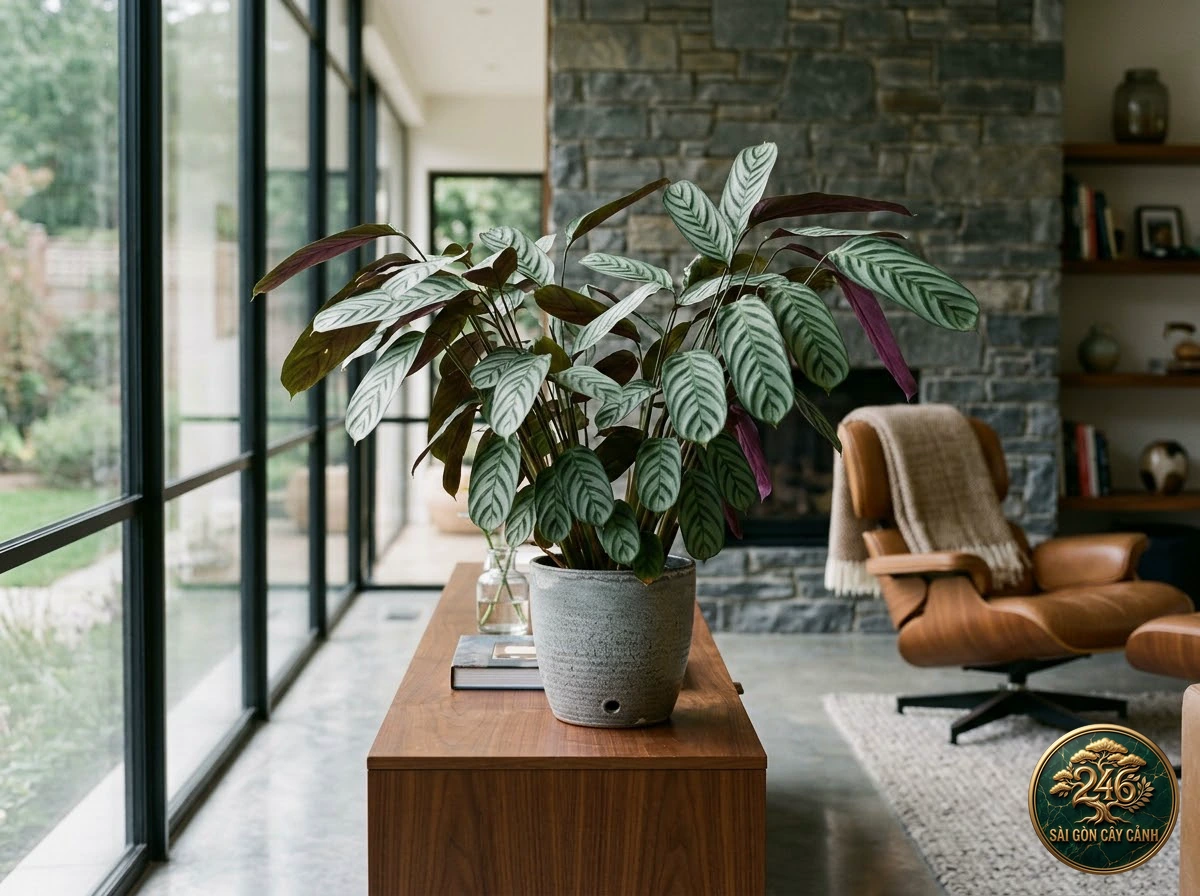
Grey star ctenanthe is an ideal focal element for modern minimalist interiors and biophilic living designs. Its metallic silver foliage creates striking contrasts when paired with charcoal, matte black, or architectural concrete planters.
Its graceful upright silhouette introduces feelings of airy spaciousness, tranquil balance, and understated refinement to residences and executive conference suites.
The metallic pewter-silver hue of Ctenanthe setosa contrasts magnificently with warm architectural timber finishes such as walnut, white oak, or polished concrete walls. In upscale Biophilic interiors, it functions as dynamic living metallic sculpture, introducing serene spatial equilibrium and understated elegance.
12. Master Principles for Sustainable Indoor Acclimatization
Three cardinal guidelines for sustaining pristine Ctenanthe setosa specimens indoors:
- Hydration axiom: Diffused Illumination Axiom: Supply 1,500 lux filtered light; never allow direct solar beams to scorch the metallic pewter sheen.
- Illumination axiom: Pure Hydration Protocol: Irrigate with dechlorinated soft water once topsoil dries; avoid mineralized municipal tap water.
- Maintenance axiom: Atmospheric Moisture Standard: Maintain relative humidity above 65% to keep lanceolate blades perfectly planar without edge curling.
Nursery Care Journal & Living Greenery Moments
At Saigon Cay Canh greenhouse, each photograph captures genuine everyday care moments between plant lovers and living greenery, spreading a passion for nature and green-living inspiration.

13. Frequently Asked Questions Regarding Grey star ctenanthe (FAQs)
Can Ctenanthe setosa tolerate air-conditioned spaces?
Yes, provided room temperature stays above 20°C and relative humidity is supported with a humidifier at 60% or higher.
Why does the foliage exhibit a metallic pewter-silver sheen?
Specialized reflective epidermal cell layers maximize photon capture and thermal scattering on tropical forest floors.
Is Grey star ctenanthe non-toxic to domestic pets?
Completely 100% non-toxic. The ASPCA verifies that it poses zero chemical threat to dogs, cats, or humans.
What is the recommended feeding schedule?
Apply gentle biological organic liquid fertilizer every 3 to 4 weeks during active spring and summer growth.
How do you differentiate Ctenanthe setosa from Ctenanthe oppenheimiana?
Ctenanthe setosa possesses distinct hispid bristles on petioles and uniform pewter blades, whereas oppenheimiana features smooth petioles and chevron variegation.
What biological purpose do the hispid bristles on Ctenanthe setosa serve in nature?
The petiole setae (bristles) prevent excess cold rainwater from pooling inside leaf sheaths while serving as a mechanical barrier against crawling gastropods and folivorous caterpillars.