
Living plant profile
Hay’s shingle vine
Rhaphidophora hayi
Comprehensive botanical dossier for Hay’s shingle vine (Rhaphidophora hayi). Identification, lighting calibration, porous substrate formulation, and cultivation guide by Saigon Cay Canh.
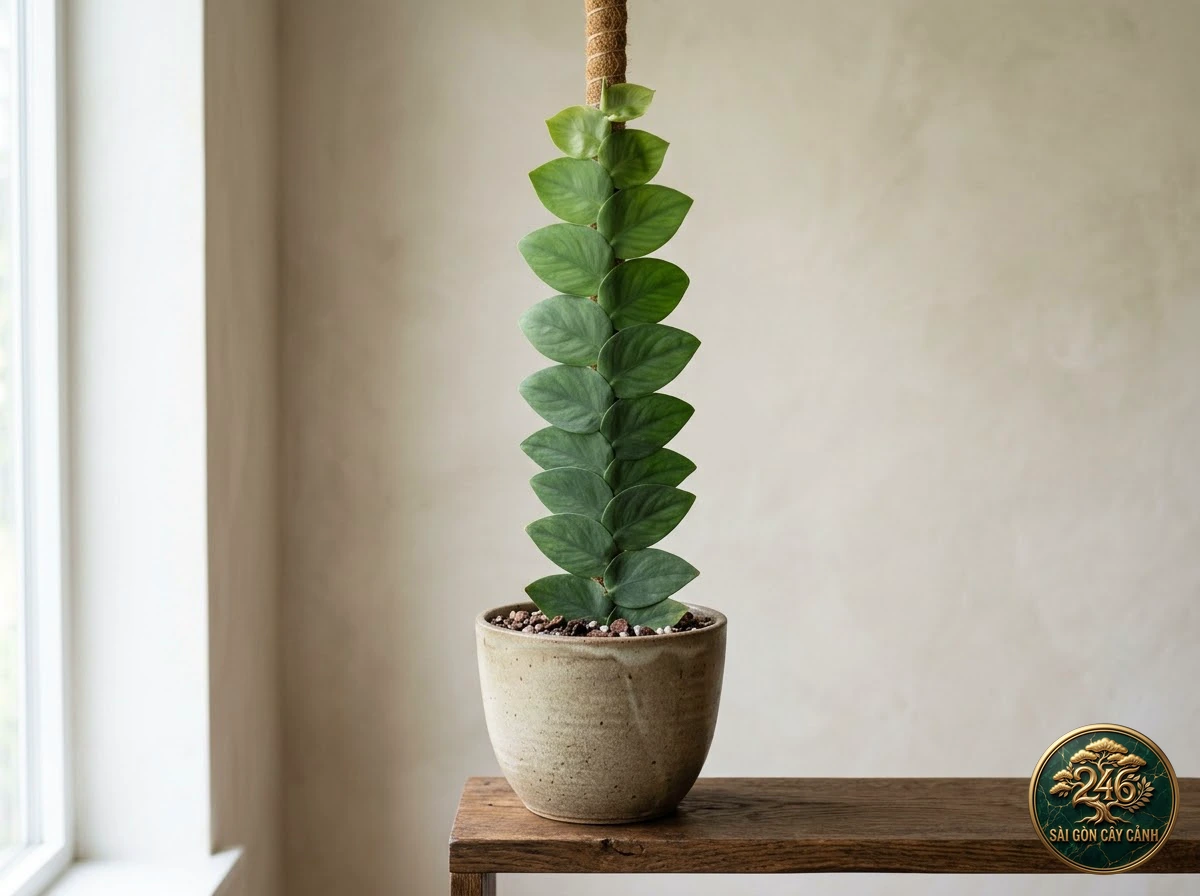
Hay’s shingle vine (Rhaphidophora hayi) is an extraordinary tropical climbing aroid native to the humid rainforests of Queensland and New Guinea, celebrated for its impeccable shingling habit where rounded, slate-green leaves overlap flush against tree bark like ancient dragon scales. It represents a refined botanical centerpiece for wall-mounted timber displays.
Sài Gòn Cây Cảnh Care Compass
1. Core Botanical Taxonomy & Cultural Specifications
| Scientific Name | Rhaphidophora hayi |
|---|---|
| Botanical Family | Araceae (Aroid Family) |
| Native Distribution | Lowland tropical rainforests of coastal Queensland (Australia) and New Guinea archipelagos |
| Growth Demeanor | Climbing shingling hemiepiphyte with overlapping flattened leaves ascending vertical surfaces |
| Lighting Threshold | Bright diffused daylight (1,200 – 2,800 lux); protects delicate appressed foliage from scorch |
| Hydration Cadence | Keep mounting moss moist; hydrate potting base when top 35% substrate has dried out |
| Substrate Formulation | 40% porous pumice, 25% fine bark chips, 20% shredded sphagnum, and 15% horticultural perlite |
| Thermal Range | 21°C – 31°C (70°F – 88°F; vegetative vigor ceases when temperatures drop below 16°C/60°F) |
| Relative Humidity | 70% – 90% (High ambient humidity enables anchor rootlets to secrete adhesive climbing mucilage) |
| Cultivation Difficulty | Moderate (Requires a flat timber mount lined with damp moss to maintain shingling habit) |
| Pet Safety Profile | Toxic (Contains insoluble calcium oxalate raphide crystals; mount securely beyond pets’ reach) |
Formally cataloged in the taxonomic archives of the Royal Botanic Gardens Kew (POWO), Rhaphidophora hayi illustrates the adaptive heteroblastic ontogeny characteristic of climbing Araceae. In its juvenile phase, vegetative shoots creep along forest floors, actively seeking vertical tree trunks or shaded rock faces upon which to anchor.
Unlike free-climbing aroids with extended petioles, juvenile leaves of Hay’s shingle vine are essentially sessile, clasping the timber substrate completely flush. This distichous arrangement forms an uninterrupted vegetative armor, shielding delicate adhesive rootlets beneath from wind-driven moisture desiccation.
Adventitious anchor roots exude a natural polysaccharide mucilage that polymerizes into a resilient biological adhesive, anchoring the vine firmly against rough bark crevices. Upon reaching upper forest canopies where photon influx surges, it transitions into mature foliage with distinct petioles.
2. Morphological Identification & Foliar Architecture
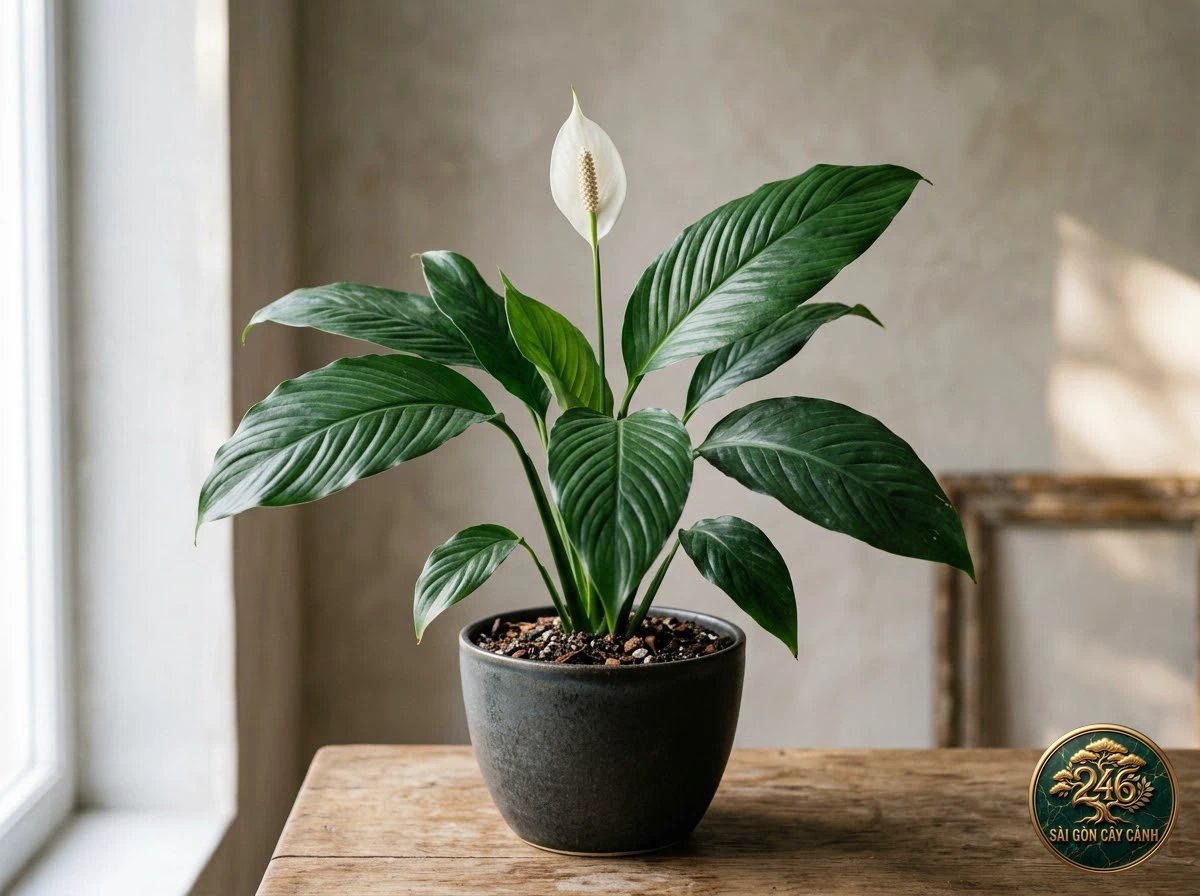
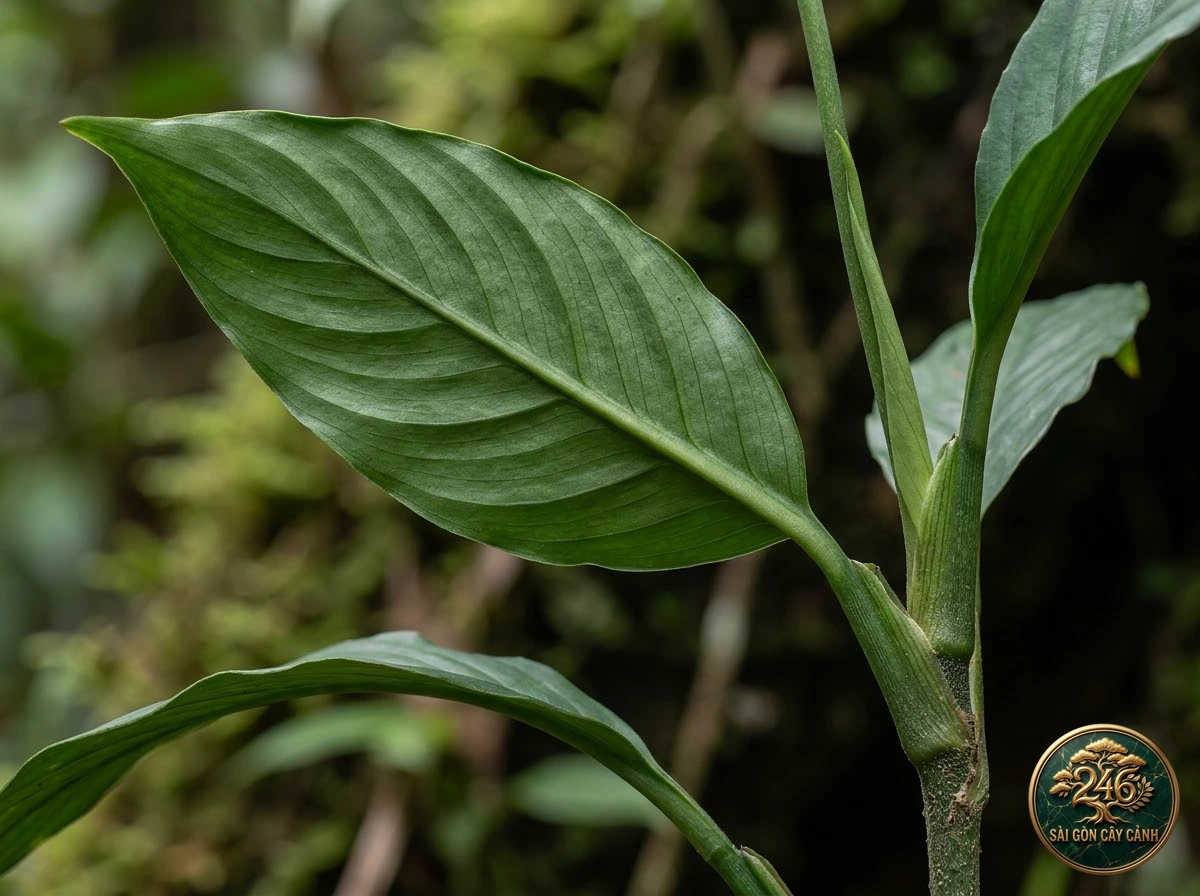
Juvenile foliar blades of Rhaphidophora hayi exhibit a broadly ovate to sub-orbicular contour measuring 4 to 8 cm across, featuring a mucronate tip and shallow cordate base. The laminar texture is distinctly sub-coriaceous with an understated matte sheen, displaying muted pewter-green hues contrasted by a dark emerald midrib.
The entire leaf margins curve slightly inward, clasping the timber mount to prevent dry ambient drafts from penetrating beneath. Extremely compressed juvenile internodes cause successive blades to overlap by 20% to 40%, generating a mesmerizing geometric pattern reminiscent of reptile armor.
Anatomical analysis of the abaxial surface of Rhaphidophora hayi foliage reveals specialized mechanical adaptations: ventral tissues exude polysaccharide mucilage that affixes the blade flush against timber or stone without damaging epidermal layers. An unusually thickened adaxial cuticular membrane significantly curtails transpirational water loss during intense insolation across exposed limestone escarpments.
3. Photometric Calibration & Window Exposure Optimization
Photosynthetic efficiency in Hay’s shingle vine peaks under diffused illumination ranging between 1,200 and 2,800 lux. Gentle morning daylight filtered through east-facing windows preserves the slate-green turgor without warping the tight shingle architecture.
Harsh unfiltered midday sunlight burns the flat laminar tissues, causing irreversible chlorotic scorch marks. Conversely, prolonged placement in dim corners below 800 lux prompts etiolated stretching where internodes elongate and leaves lose their signature shingling cohesion.
Photosynthetic photon flux density (PPFD) assays confirm that Hay’s shingle vine attains maximum carbon fixation between 70 and 130 umol/m2/s. Horticultural LED installations balancing 450nm blue and 660nm deep red spectra preserve its characteristic glaucous pewter sheen, encouraging tightly appressed internodal shingling rather than etiolated seeking behavior.
4. Structural Vining Architecture & Support Dynamics
Moisture management for Hay’s shingle vine requires dual attention to both subterranean roots and the vertical moss mount. Substrate roots require thorough irrigation whenever the top two centimeters dry out, ensuring excess water drains freely to preserve oxygenation.
The vertical wooden plank demands daily fine misting with purified water to nourish adventitious anchor rootlets. Moisture deficits along the mount desiccate delicate root tips, causing leaves to curl and detach from the timber surface.
The ideal thermal envelope for Rhaphidophora hayi spans 21°C to 31°C (70°F – 88°F), aligning seamlessly with warm tropical indoors. The specimen is sensitive to chilly air-conditioner drafts; ambient drops below 16°C (60°F) induce cellular dormancy.
Ambient relative humidity should remain between 70% and 90%. In air-conditioned domestic quarters where humidity dips below 55%, positioning an ultrasonic humidifier near the mounting board prevents foliar margin curling.
This species favors warm daytime ambient temperatures between 24°C and 28°C (75°F – 82°F) with a modest 3°C nighttime drop, emulating tropical Queensland forest patterns. Shield specimens from direct air-conditioning drafts, which rapidly dehydrate delicate young adhesive tissues.
When training stems onto flat cedar mounting boards or cork planks, secure mature internodes gently with soft horticultural ties, never clamping across newly flattened shingling blades. Daily micro-misting of the mount surface encourages short adventitious anchor roots to penetrate structural wood crevices securely.
5. Porous Aggregate Substrate Engineering & Aeration Dynamics
The potting mix at the plant base requires exceptional porosity and macro-pore aeration for healthy root respiration. An engineered recipe incorporates 40% fine pumice, 25% heat-treated fine bark chips, 20% shredded sphagnum moss, and 15% perlite, buffered to pH 5.8 to 6.5.
This aggregate blend completely eliminates compaction over prolonged cultivation cycles, while porous pumice stones act as mineral micro-reservoirs holding capillary moisture for developing root hairs.
Potting mix architecture requires superior macroscopic porosity through combining coarse pumice and chunky pine bark nuggets. Generous air pockets between mineral aggregates promote convective gas exchange, safeguarding foundational root crowns while upper aerial anchors absorb ambient atmospheric humidity.
6. Organic Nutrition Schedules & Periodic Micronutrient Priming
Nutrient delivery for Hay’s shingle vine favors ultra-diluted organic liquid formulations. Applying hydrolyzed fish emulsion or cold-water kelp extract at quarter-strength monthly across both container substrate and moss mount supplies balanced sustenance.
Avoid concentrated synthetic fertilizers; salt crystallization on mounting moss scorches tender aerial anchor hairs and leaves unsightly chalky residues upon the velvety foliage.
Nutritional management centers upon delivering dilute foliar mists directly across the vertical mount. Applying organic cold-water kelp extract enriched with humic substances every three weeks nourishes aerial anchoring rootlets without burning tender leaf margins.
7. Clinical Diagnostic Matrix & Rapid Correction Protocols
| Clinical Symptom | Primary Etiology | Diagnostic Evaluation | Corrective Prescription |
|---|---|---|---|
| Leaf margins curling and lifting from timber mount | Ambient humidity below 55% or desiccation of mounting moss | Check moisture of backing moss and inspect room hygrometer | Mist mounting moss daily and deploy humidifier to achieve >70% |
| Elongated internodes, widely spaced non-shingling leaves | Severe photon deficit below minimum photosynthetic threshold | Measure ambient illuminance at current mounting location | Relocate timber board to bright filtered daylight above 1,500 lux |
| Soft water-soaked brown lesions on foliar blades | Standing water droplets overnight in stagnant air circulation | Inspect adaxial leaf surfaces during late evening hours | Cease nocturnal misting, improve room airflow, excise necrotic leaf |
| Foliage chlorosis, yellowing across lower stem sections | Anaerobic root rot caused by waterlogged container substrate | Insert wooden dowel into pot core to evaluate moisture depth | Elevate drainage apertures and allow top 35% mix to dry out |
8. Cryptic Pest Prophylaxis & Foliar Surface Sanitation
In stagnant indoor environments lacking airflow, mealybugs and spider mites occasionally harbor along the secluded junction between leaf undersides and timber. Regular visual scouting and targeted spot-cleaning with alcohol-dipped swabs control early outbreaks.
Cleanse foliage by gently spraying fine morning mist across the velvety surface to rinse domestic dust, maintaining gentle air circulation to ensure blade dryness before nightfall.
Because imbricated foliage presses flush against mounts, dorsal leaf crevices can harbor concealed scale insects. Routinely inspect marginal interfaces with a hand lens; spot-treat cryptic pests using cotton swabs dipped in dilute horticultural neem soap solutions.
9. Asexual Propagation Methodology & Root Strike Protocols
Asexual propagation of Rhaphidophora hayi is most reliably executed via stem cuttings bearing 2 to 3 firmly rooted nodes. Excise the stem cleanly using a sterilized scalpel, fasten it onto a fresh moist moss board, and place inside a high-humidity propagation enclosure.
Within three to four weeks in warm ambient conditions between 24°C and 28°C (75°F – 82°F), dormant axillary buds awaken, pushing forth vigorous juvenile shoots that clasp the new timber support.
Successful clonal propagation involves taking tip cuttings bearing 3 to 5 neatly shingled leaves. Sever internodes cleanly beneath active nodes with a sterilized scalpel, fixing the stem onto damp sphagnum boards inside a propagation terrarium at 85% humidity to induce root strikes within 20 days.
10. Companion Animal Safety & Veterinary Toxicology Protocols
Pet owners must hang mounted specimens upon walls at least 1.5 meters above floor level, safely beyond the reach of playful cats and inquisitive dogs.
11. Biophilic Curation & Contemporary Interior Design Styling
Within contemporary Biophilic interiors, Hay’s shingle vine acts as a sophisticated living green sculpture. Mounted on natural cedar, driftwood planks, or slate tiles, its geometric planar habit introduces exquisite botanical refinement to minimalist work studios and luxury lounges.
The soothing slate-green hue combined with flawless rhythmic layering fosters visual serenity, mitigating digital eye strain across modern executive workstations.
In contemporary biophilic curation, a specimen of Hay’s shingle vine encasing dark drift timber reads like living architectural sculpture. The immaculate imbricated geometry provides striking organic texture against polished concrete walls or natural stone backgrounds.
12. Master Principles for Sustainable Indoor Acclimatization
To cultivate pristine shingling geometry and sustain vigorous growth of Rhaphidophora hayi indoors, growers must observe three core technical principles:
- Hydration axiom: Maintain consistent capillary contact moisture across mounting surfaces to stimulate persistent adventitious root attachment.
- Illumination axiom: Deliver filtered daylight between 1,500 and 3,000 lux, avoiding direct equatorial sunlight to preserve pewter pigmentation.
- Maintenance axiom: Water foundational potting root balls moderately on partial dry-down, preventing standing drainage saturation.
Nursery Care Journal & Living Greenery Moments
At Saigon Cay Canh greenhouse, each photograph captures genuine everyday care moments between plant lovers and living greenery, spreading a passion for nature and green-living inspiration.
13. Frequently Asked Questions Regarding Hay’s shingle vine (FAQs)
Can Rhaphidophora hayi adhere to masonry or ceramic tiles?
It may cling to textured porous bricks under saturated humidity, but cannot grip painted drywall or polished tile. Providing a moss-lined timber plank remains optimal.
How long does it take for Hay’s shingle vine to climb a 60 cm plank?
Under favorable indirect daylight and >75% humidity, growth progresses at 2 to 4 cm monthly, taking approximately 12 to 18 months to cover the plank.
Should one peel back the appressed leaves to inspect roots?
Never peel leaves away from the wood. Detaching foliage tears microscopic anchor rootlets, severing hydraulic connection and causing severe growth arrest.
How can one prevent white mold from developing on the timber mount?
Utilize decay-resistant hardwoods such as cedar or teak, hydrate strictly with purified water, and provide constant low-velocity air convection.
What should be done when the climbing shoot exceeds the plank summit?
Fasten a wooden extension plank directly above or excise the terminal apex using sterile shears to propagate a new vertical display.
How can one prevent Rhaphidophora hayi leaves from lifting away from the mount?
Leaf lifting primarily stems from desiccated mounting surfaces or off-axis lighting. Mist the timber surface daily and position diffuse light directly facing the plant to encourage snug phototropic adhesion.