Living plant profile
King anthurium
Anthurium veitchii
Master indoor care for King anthurium (Anthurium veitchii): maintaining leaf vitality, porous soil mixes for humid climates, and non-toxic pest defense protocols.
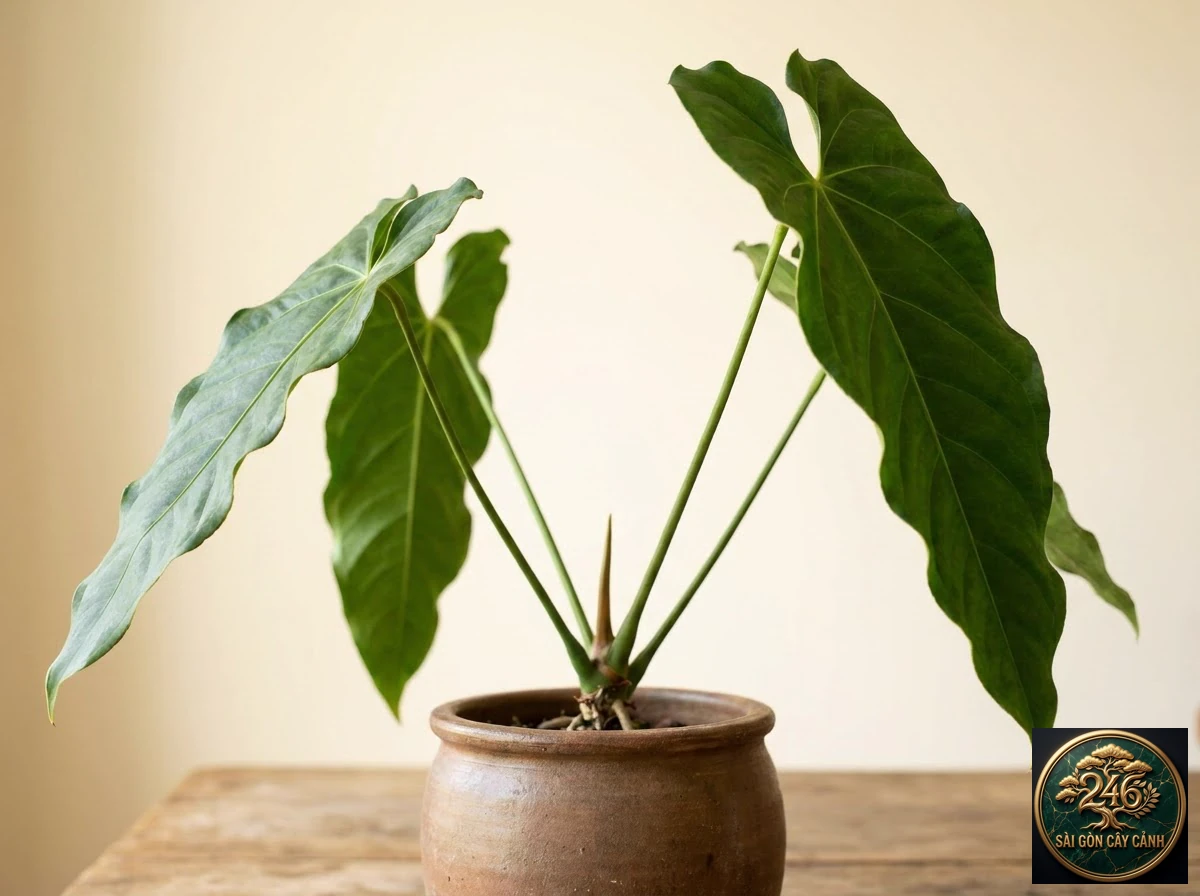
King anthurium (Anthurium veitchii) reigns supreme as the undisputed monarch of tropical foliage within the aroid kingdom. Renowned worldwide for its breathtaking pendulous leaves that cascade up to two meters in length, adorned with deeply sculpted horizontal corrugated ripples reminiscent of classical armor plating, this rare Colombian epiphyte represents the absolute pinnacle of contemporary biophilic botanical sophistication. Cultivating the King Anthurium indoors is a masterclass in horticultural precision, demanding an attuned understanding of root-zone aeration, relative humidity, and gentle indirect illumination.
1. Botanical Profile & Neotropical Rainforest Ecology
| Scientific Name | Anthurium veitchii Mast. |
|---|---|
| Plant Family | Araceae (Aroid family) |
| Growth Habit | Epiphytic herbaceous perennial; long pendulous corrugated foliage |
| Light Requirement | Bright indirect / filtered light (1,500 – 3,500 lux); shield from scorching midday solar radiation |
| Watering Protocol | Even moisture with supreme drainage; water when upper 40% dries; 3-second rapid runoff |
| Optimal Substrate | Chunky epiphytic mix: large aged pine bark, volcanic pumice, coarse perlite, sphagnum, worm castings |
| Ideal Temperature | 18°C – 28°C (64°F – 82°F; highly adapted to climate-controlled modern living spaces) |
| Ambient Humidity | 70% – 85% (Crucial factor preventing apical tip necrosis on long pendulous blades) |
| Cultivation Difficulty | Intermediate to Advanced (Requires disciplined environmental calibration) |
| Pet Safety | Toxic (Contains microscopic insoluble calcium oxalate raphides) |
Formally described in 1876 by the eminent British botanist Maxwell T. Masters, Anthurium veitchii honors John Veitch of the famous Victorian nursery dynasty. The species is strictly endemic to the pluvial neotropical rain forests of Colombia, thriving primarily across the wet montane foothills of the Chocó and Antioquia departments at elevations between 100 and 1,200 meters above sea level.
In its native habitat, the King Anthurium does not root in terrestrial forest soils. Instead, it lives entirely as an epiphyte, anchored securely within the mossy crotches and bark fissures of towering canopy trees. Its thick, fleshy aerial roots absorb ambient moisture from misty clouds and nutrient-laden rainwater running down tree trunks. This specialized ecological niche dictates that the root system requires uninhibited airflow and will rapidly asphyxiate if trapped in dense, waterlogged commercial potting compost.
2. Corrugated Foliar Architecture & Diagnostic Key
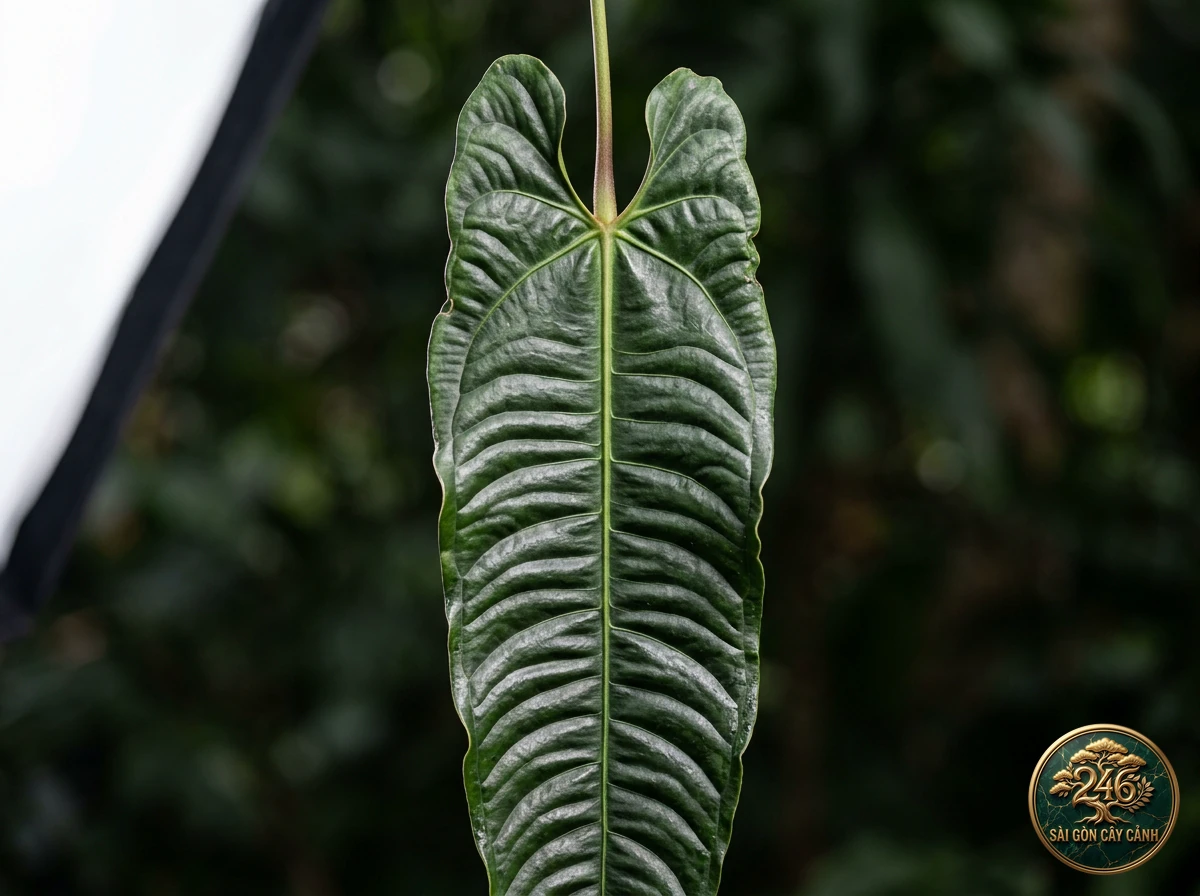
To definitively identify genuine Anthurium veitchii and distinguish it from long-leaf hybrids and allied species, botanists and collectors rely on distinct morphological characteristics:
Primary Diagnostic Markers:
- Horizontally Corrugated / Plicate Leaf Surface: The foliar lamina features dozens of symmetrical, deep wave-like ridges radiating laterally from the central midrib. This corrugated topography gives the blade an architectural, chiseled relief that captures light with metallic resonance.
- Pendant Lanceolate Silhouette: As specimens mature over 3 to 5 years, the blades adopt a dramatic downward-hanging posture, elongating to between 1.0 and 2.0 meters while maintaining a narrow width of only 20 to 35 cm.
- Lustrous Leathery Epidermis: The adaxial (upper) leaf surface exhibits a deep metallic emerald sheen, thick and leathery to the touch with an organic waxy cuticle. Juvenile emergent leaves unspurl with striking coppery bronze or caramel highlights before maturing into deep forest green.
- Smooth Flexible Petiole & Geniculum: The petioles are robust, cylindrical to faintly flattened adaxially, terminating in a prominent geniculum that permits dynamic phototropic orientation of the immense leaf blade.
3. Calibrating Indirect Daylight Apertures & Indoor Microclimates
In domestic apartment settings, positioning is the single most critical determinant of vegetative vigor and blade elongation. Anthurium veitchii flourishes under bright, diffused light calibrated between 1,500 and 3,500 lux (150 to 350 foot-candles).
The optimal domestic placement is 1.0 to 1.5 meters from an unobstructed East-facing or South-East window where gentle morning solar rays can be absorbed safely. Direct southern or western midday sunlight must be strictly intercepted by sheer drapery, as intense solar radiation will quickly scorch the raised corrugated ridges, causing permanent chlorotic bleaching and necrosis.
For executive office suites or residential interiors lacking natural daylight, install specialized full-spectrum LED horticultural grow lights (4000K – 5000K, CRI > 90) positioned 80 to 100 cm above the canopy, programmed for an automated 8- to 10-hour daily photoperiod.
4. Elevated Pedestal Staging Architecture for Pendant Growth
Unlike climbing aroids such as Monstera deliciosa that require vertical moss poles, Anthurium veitchii is an upright rosette epiphyte whose defining aesthetic is its cascading, downward-plummeting foliage. Placing containers on floor surfaces will inevitably cause fragile expanding leaf tips to drag, leading to mechanical tearing, creasing, and fungal colonization from floor dust.
Horticultural standard practice demands staging the plant atop an architectural pedestal or plant stand measuring 80 to 120 cm in height, or within heavy-duty suspended architectural planters. This elevation grants the specimen generous vertical clearance, allowing its massive foliage to cascade gracefully without physical restriction.
Surrounding the crown with a loose collar of sterile damp New Zealand sphagnum moss establishes a micro-climate buffer, shielding emerging aerial root tips from arid air conditioning drafts and promoting vigorous hydraulic uptake.
5. Engineered High-Porosity Substrate Mechanics for Epiphytic Roots
The number one killer of captive King Anthuriums is root asphyxiation resulting from dense, moisture-retentive potting soils. Because its epiphytic roots rely on uninterrupted oxygen exchange, potting mixes must duplicate the porous, freely draining ecology of canopy tree bark.
Saigon Cay Canh’s Professional Epiphytic Formula:
- 35% Medium-to-Large Aged Pine Bark (12-18mm): Steam-sterilized to prevent pathogens, providing structural macropores for root anchor and aeration.
- 30% Volcanic Pumice Nuggets (8-12mm): Porous mineral aggregate that stores moisture internally while maintaining macroscopic air pockets.
- 15% Coarse Horticultural Perlite (4-8mm): Ensures permanent substrate fluffiness and thermal root stability.
- 10% Rinsed Desalted Coconut Husk Chunks: Delivers fibrous, spongy organic moisture retention without decomposing rapidly.
- 10% Composted Worm Castings: Supplies gentle, sustained micronutrients and beneficial mycorrhizal flora.
This coarse, structured medium achieves an air-filled porosity exceeding 50%. When irrigated, surplus water cascades through bottom drainage holes in under 5 seconds, eliminating the risk of anaerobic stagnation around root tissues.
6. Balanced Nutrition & Essential Micronutrients for Foliar Rugosity
Fueling the development of two-meter corrugated leaves demands a consistent, balanced nutritional supply applied with disciplined moderation under the “weakly, weekly” principle.
During active monsoonal growth periods, administer a professional water-soluble NPK foliar fertilizer (such as 20-20-20 or 19-19-19 with chelated iron, zinc, and manganese) diluted to 25% of the manufacturer’s recommended strength every 10 to 14 days.
Crucially, Anthurium veitchii requires substantial amounts of soluble Calcium and Magnesium to construct robust cellular walls within its corrugated ridges. Monthly foliar applications of chelated Calcium-Boron and Magnesium sulfate prevent leaf-tip tearing during emergent unfurling. Supplementing with cold-pressed ascophyllum nodosum kelp meal stimulates natural systemic acquired resistance against environmental stresses.
7. Diagnostic Matrix for Foliar Necrosis & Corrective Protocols
| Visual Symptom | Underlying Root Cause | Physical Verification | Safe Corrective Protocol |
|---|---|---|---|
| Crispy brown tips and scorched margins on pendant blades | Ambient relative humidity below 60% or direct AC airflow | Measure humidity with hygrometer at the lowest tip level | Relocate away from AC vents, install ultrasonic humidifier to maintain 70-80% RH |
| Emerging leaf tearing or stuck inside petiole sheath | Arid air drying petiole lubricating sap; Calcium deficiency | Inspect the emerging cataphyll and petiole junction | Mist sheath with warm distilled water, feed dilute chelated Calcium-Boron fertilizer |
| Basal leaves yellowing, limp petioles, heavy pot weight | Prolonged saturation inducing hypoxic Phytophthora root rot | Insert bamboo probe to pot base; smell drainage holes | Withhold water 7 days, elevate planter; repot into fresh airy pine bark if rot persists |
| Circular yellow spots with brown halo on corrugated ridges | Anthracnose fungal infection from stagnant nocturnal water drops | Check underside of leaf for microscopic spore bodies | Blot foliage dry, enhance room ventilation, treat with organic bio-fungicide or neem oil |
8. Pest Mitigation & Safe Foliar Hygiene Protocols
Due to its deeply corrugated surface geometry, the lateral valleys of Anthurium veitchii offer ideal sheltered harborage for opportunistic greenhouse pests, including thrips (Thysanoptera), two-spotted spider mites (Tetranychidae), and armored scale insects (Diaspididae). Feeding damage manifests as unsightly silvery stippling across the emerald ridges.
Recommended Domestic Integrated Pest Management (IPM):
- Lukewarm Shower Rinsing: Bi-weekly, transfer the plant to a shower facility and thoroughly wash both leaf surfaces with gentle lukewarm water to physically dislodge dust, webbings, and immature nymph stages.
- Microfiber Wiping: Gently wipe down the corrugated valleys along their natural contours using a soft microfiber cloth dampened with reverse osmosis water. Avoid abrasive scrubbing.
- Organic Cold-Pressed Neem Treatment: Combine 5 ml pure cold-pressed neem oil + 3 ml organic castile soap + 1 liter warm water. Spray thoroughly during evening hours every 10 days to disrupt pest reproductive cycles safely.
9. Vegetative Offshoot Division & Sphagnum Rooting Protocols
As a slow-growing botanical treasure with high horticultural value, propagation of Anthurium veitchii should be executed with uncompromising surgical precision to protect the mother specimen.
The safest, most reliable method is basal offshoot division:
- Optimal Timing: Execute during early summer or the onset of the tropical monsoon season when mother plant vitality and environmental ambient humidity are at their annual peak.
- Offshoot Maturity Criteria: Separate offshoots only after they have produced at least two fully expanded adult leaves and possess 2 to 3 independent aerial roots measuring at least 4 to 6 cm in length.
- Aseptic Separation: Employ a surgical scalpel sterilized in 90% isopropyl alcohol. Make a decisive clean cut at the junction uniting the pup to the central caudex. Coat the exposed wound immediately with horticultural pruning paste or organic cinnamon powder to prevent fungal entry.
- Sphagnum Acclimation: Plant the division into a slotted transparent pot packed with moist, sterile New Zealand sphagnum moss. Maintain in high humidity (75%+) under gentle indirect light. In 4 to 6 weeks, vigorous secondary white root branching will signal readiness for standard bark potting.
10. Pet Toxicology & Insoluble Calcium Oxalate Mechanics
The chemical toxicity of the King Anthurium is an evolutionary defense mechanism characteristic of the Araceae family designed to deter herbivorous grazing in rainforest canopies. Specialized idioblast cells contain bundled raphide needles coupled with proteolytic enzymes that mechanically puncture oral tissues upon biting.
If pet ingestion is suspected, gently rinse the animal’s mouth with cool water or lactose-free milk to soothe mucosal tissues, monitor breathing patterns closely, and promptly contact your veterinary emergency provider.
11. Biophilic Interior Styling & Architectural Staging
Within contemporary biophilic architectural design, King Anthurium (Anthurium veitchii) functions as a monumental living sculpture. Its dramatic, muscular foliage cascades with solemn grandeur, creating an arresting botanical dialogue when juxtaposed against natural white oak cabinetry, minimalist concrete surfaces, or luxurious marble backdrops.
The specimen attains its highest aesthetic potential when paired with handcrafted matte charcoal ceramic vessels, understated raw terracotta urns, or lightweight fibrous composite planters displayed upon solid wood pedestals. Staged prominently within executive penthouse foyers, luxury master suites, or private reading sanctuaries, it elevates domestic tranquility, enriches indoor humidity levels, and delivers an enduring daily bond with the majestic natural world.
12. Common Domestic Cultivation Misconceptions
Cultivators frequently encounter three widespread pitfalls when caring for King Anthurium indoors:
- Misconception 1: Overpotting into Oversized Planters: Assuming massive foliage demands massive soil volume leads directly to disaster. Epiphytic aroids prefer a snug, compact root zone. Excessive soil volume remains saturated for weeks, suffocating delicate root hairs. Upgrade container diameter by no more than 3 to 5 cm when repotting.
- Misconception 2: Nocturnal Foliar Misting: Spraying water directly onto corrugated blades at dusk inside an air-conditioned room guarantees fungal anthracnose and leaf spot. Always irrigate and mist during morning hours so that water films evaporate before evening temperatures decline.
- Misconception 3: Forcing Leaves Upright on Trellises: Staking the pendant leaves of veitchii vertically violates the plant’s natural morphology, disrupts fluid translocation within petiole vascular bundles, and destroys the regal cascading form for which the species is celebrated.
13. Frequently Asked Questions About King Anthurium (FAQs)
How long does it take for a juvenile King Anthurium to produce one-meter leaves?
Under optimal tropical indoor cultivation with consistent indirect light, 75%+ relative humidity, and regular micronutrient feedings, a juvenile specimen typically requires 2.5 to 3.5 years to reach specimen maturity and produce cascading leaves exceeding one meter in length.
Can King Anthurium thrive in continuously air-conditioned interiors?
Yes, the plant adapts comfortably to typical air-conditioned temperatures (20°C – 26°C), but air conditioning severely depletes ambient humidity below 45%. To prevent leaf-tip crisping, you must install an ultrasonic room humidifier adjacent to the plant and ensure cold drafts do not blow directly against the foliage.
How often should I repot and replenish the potting substrate?
Repot every 18 to 24 months, or when aerial roots begin escaping drainage holes and the pine bark chunks begin breaking down into finer particles. Repot gently without disturbing the central root core, packing fresh coarse orchid bark and pumice around the perimeter.
Why are the horizontal corrugated waves on my plant’s leaves shallow and indistinct?
Wave depth depends primarily on two factors: specimen maturity and light quality. Juvenile foliage is naturally smoother; as the plant matures under strong diffused lighting (2,500 – 3,500 lux) combined with balanced Calcium and Magnesium nutrition, the corrugated ridges will become deeply pronounced and muscular.
Can I cultivate Anthurium veitchii permanently in semi-hydroponics (LECA)?
While possible in specialized setups with active aeration, standard bark/pumice epiphytic cultivation is far safer. Heavy, water-logged hydro reservoirs can drown the deep fleshy roots of mature specimens and fail to provide the mechanical ballast required to support massive two-meter cascading foliage.