Living plant profile
Many fingers sedum
Sedum pachyphyllum
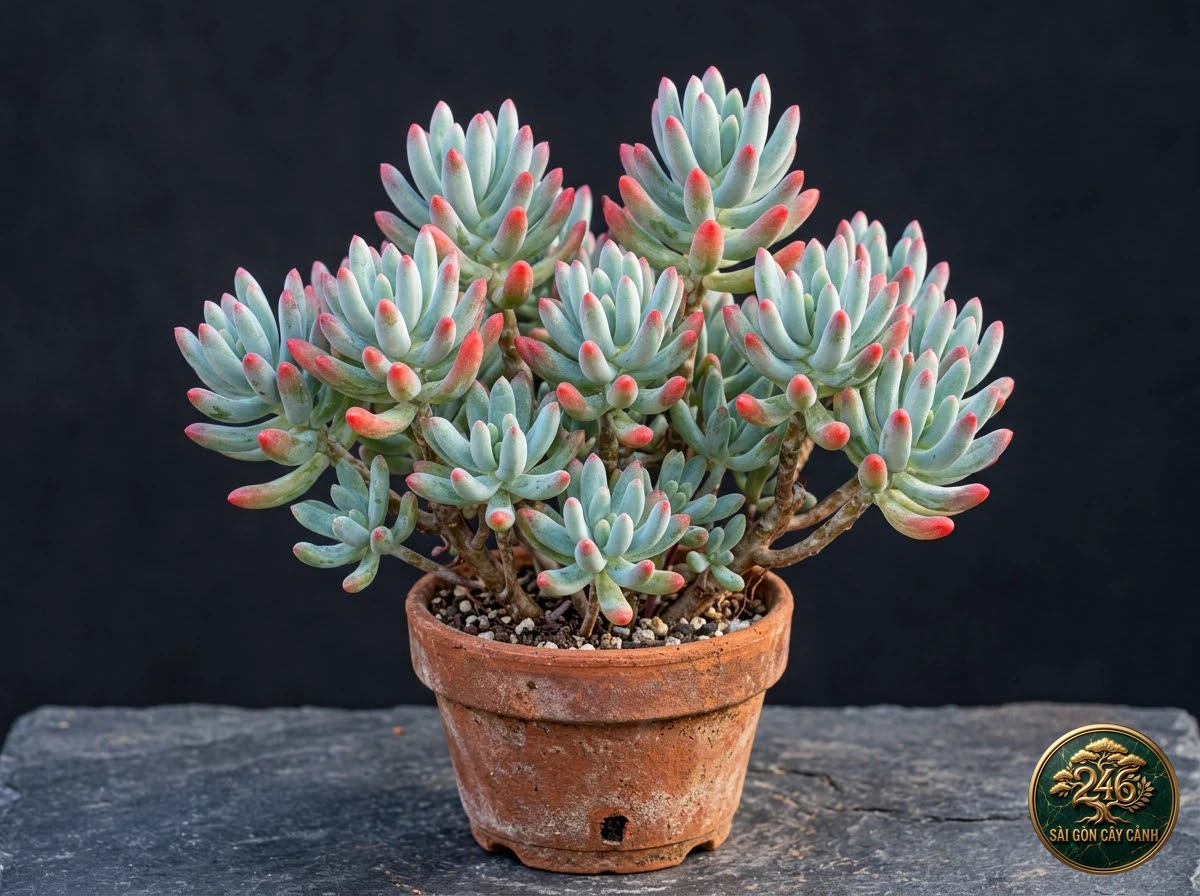
Many fingers sedum (Sedum pachyphyllum) Many fingers sedum (botanical binomial: Sedum pachyphyllum) is a celebrated succulent specimen revered in botanical aesthetics and modern biophilic design belonging to the Stonecrop family (Crassulaceae). Many fingers sedum Sedum pachyphyllum, celebrated for its curved, finger-like cylindrical blue-glaucous leaves tipped with intense ruby-red ‘jelly fingertips’. Saigon Cay Canh Botanical Care […]
Many fingers sedum (Sedum pachyphyllum)
Many fingers sedum (botanical binomial: Sedum pachyphyllum) is a celebrated succulent specimen revered in botanical aesthetics and modern biophilic design belonging to the Stonecrop family (Crassulaceae). Many fingers sedum Sedum pachyphyllum, celebrated for its curved, finger-like cylindrical blue-glaucous leaves tipped with intense ruby-red ‘jelly fingertips’.
Saigon Cay Canh Botanical Care Compass 360°
- Light Exposure
- Full direct sunlight (5,000 – 9.500 lux).
- Watering Cadence
- Water when dry; fleshy finger leaves sustain extended drought.
- Substrate Medium
- Sandy gravel, pumice, mineral scoria, and coco coir.
- Temperature Range
- 15°C – 35°C.
- Ambient Humidity
- 35% – 60%.
- Cultivation Level
- Very easy.
- Toxicity Rating
- Certified non-toxic by ASPCA.
1. Taxonomy & Botanical Classification
Sedum pachyphyllum is authoritatively indexed within the Royal Botanic Gardens, Kew (Plants of the World Online) under the Stonecrop family (Crassulaceae). It represents an evolutionary masterpiece of drought adaptation in succulent flora.
In native habitats across semiarid plateaus, it thrives on rocky bluffs with sparse moisture and abundant ambient illumination.
2. In-Depth Morphological Characteristics
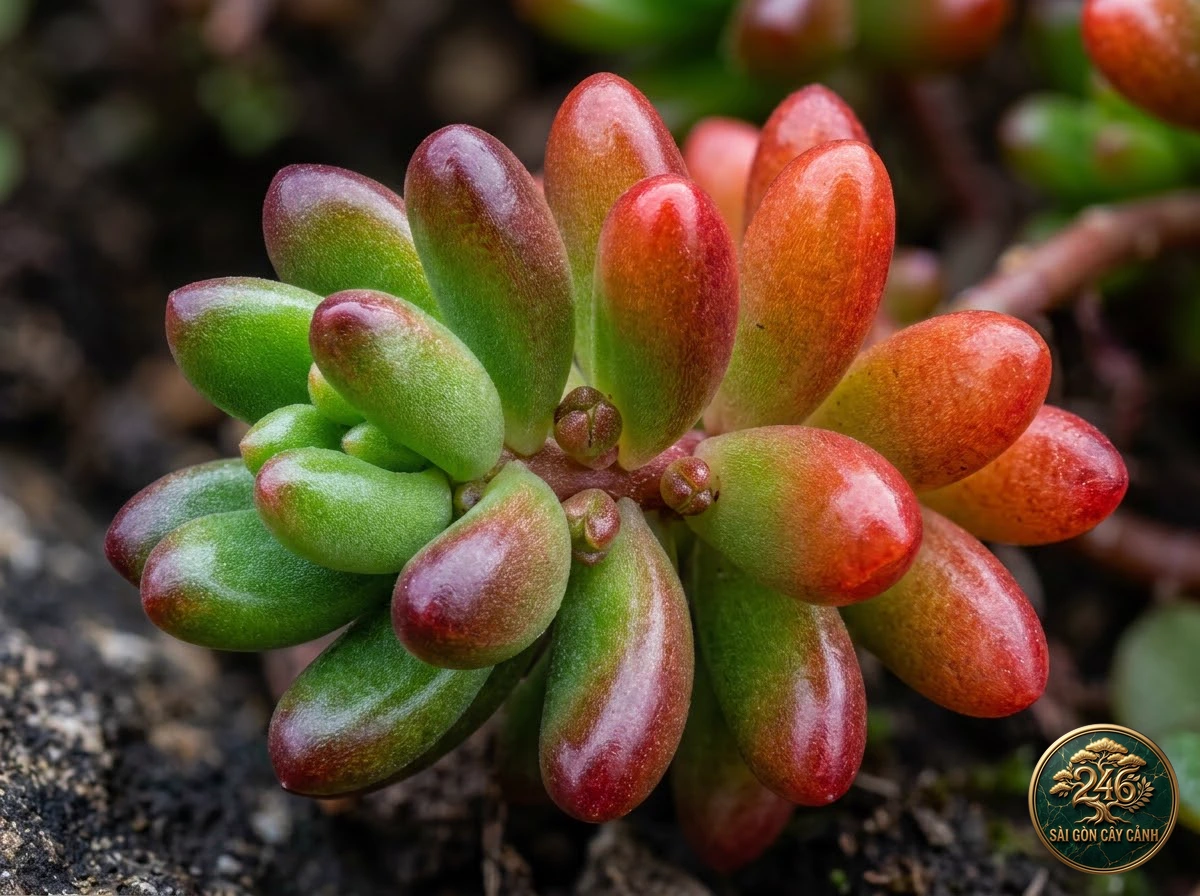
Many fingers sedum Sedum pachyphyllum, celebrated for its curved, finger-like cylindrical blue-glaucous leaves tipped with intense ruby-red ‘jelly fingertips’.
Morphologically, the distinct geometry of Sedum pachyphyllum optimizes exposure to sunlight while minimizing self-shading across leaf whorls.
Its epicuticular wax acts as a natural biological sunscreen, reflecting harsh UV radiation and reducing transpiration loss.
3. Photobiology & CAM Photosynthesis Dynamics
Full direct sunlight (5,000 – 9.500 lux).
Utilizing Crassulacean Acid Metabolism (CAM), stomata open exclusively at night to capture carbon dioxide. Adequate solar exposure ensures compact growth and rich pigment synthesis.
4. Irrigation Architecture & Moisture Dynamics
Water when dry; fleshy finger leaves sustain extended drought.
Adhere strictly to the ‘soak and dry’ philosophy: only water when the substrate is 100% bone-dry. Direct hydration to soil level, preventing standing water within leaf crevices.
5. Engineered Growing Media & Gritty Soil Mechanics
Sandy gravel, pumice, mineral scoria, and coco coir.
Root systems necessitate near-instantaneous water drainage and high pore volume to avert anaerobic bacterial and fungal root rot pathogens.
6. Microclimate Thermals & Humidity Dynamics
Optimal ambient temperature ranges between 15°C – 35°C., coupled with relative air humidity sustained at 35% – 60%..
Active ventilation is paramount: continuous gentle airflow prevents stagnant heat accumulation and microclimatic moisture pockets.
7. Nutrition Architecture & Fertilization
Feed using low-nitrogen succulent fertilizers diluted to 1/4 strength every 2 to 3 months during active growing flushes.
Refrain from high nitrogen formulas to avert etiolation and structural softness.
8. Maintenance Pruning & Propagation Protocols
Gently tweeze away desiccated basal leaves to sustain hygiene and discourage mealybug infestation around root flares.
Propagate via individual healthy leaf cuttings, stem beheading, or offsets separated during warm dry periods.
9. Integrated Pest Management & Diagnostics
Mealybugs harboring in leaf axes can be eliminated with 70% isopropyl alcohol on a cotton swab or preemptive organic cold-pressed neem treatments.
Immediately excise any softened stem portions to rescue specimens from systemic fungal rot.
10. Safety Profiles & ASPCA Pet Compatibility
Certified non-toxic by ASPCA.
Documented completely non-toxic and benign, making it a peaceful, worry-free addition to pet-loving households.
11. Biophilic Architectural & Interior Curation
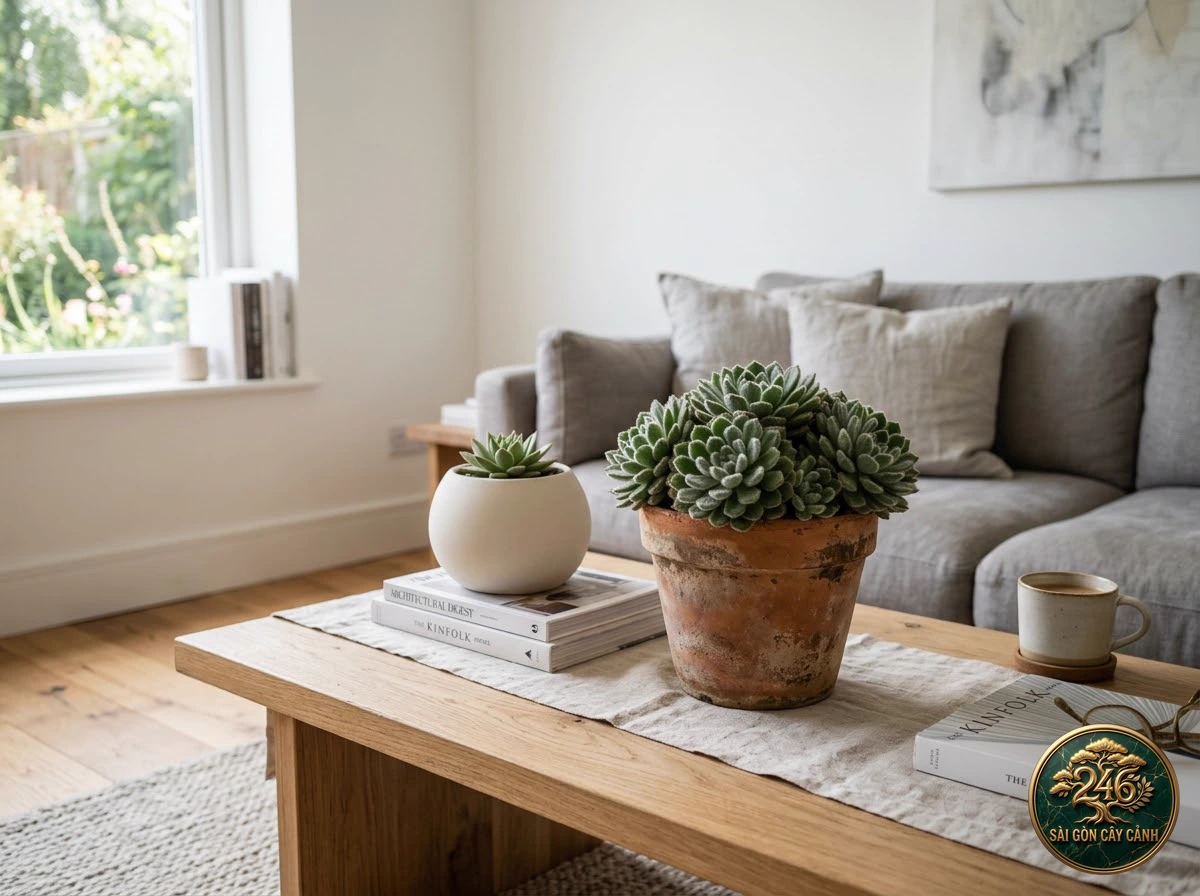
With sculptured living succulent geometry, Sedum pachyphyllum excels in bespoke ceramic planters, sunlit workspace desks, hanging baskets, and xeriscape rock arrangements.
It imparts tranquil minimalist presence, soothing visual fatigue with serene botanical balance.
12. Common Cultivation Pitfalls
- Frequent watering in moist soil: The primary catalyst for irreversible stem rot.
- Insufficient light: Triggers etiolated, stretched, pale growth.
- Water pooled in foliage crevices: Induces rapid fungal decay.
- Containers lacking drainage holes: Suffocates delicate succulent root filaments.
13. Curated Botanical Inquiries (FAQs)
How does one tell when the plant is thirsty?
Lower leaves soften slightly and show faint wrinkles; this tactile signal indicates the ideal moment for a thorough soak.
Should farina powder be wiped off dusty leaves?
Never wipe farina; use a soft makeup brush or gentle air bulb to clear dust without removing this irreplaceable protective wax.
How can vivid foliage colors be maximized?
Provide ample direct sun, cooler nighttime temperatures, and mild watering restraint to stimulate anthocyanin production.