
Living plant profile
Mountain peace lily
Spathiphyllum montanum
Comprehensive botanical dossier for Mountain peace lily (Spathiphyllum montanum). Identification, lighting calibration, porous substrate formulation, and cultivation guide by Saigon Cay Canh.
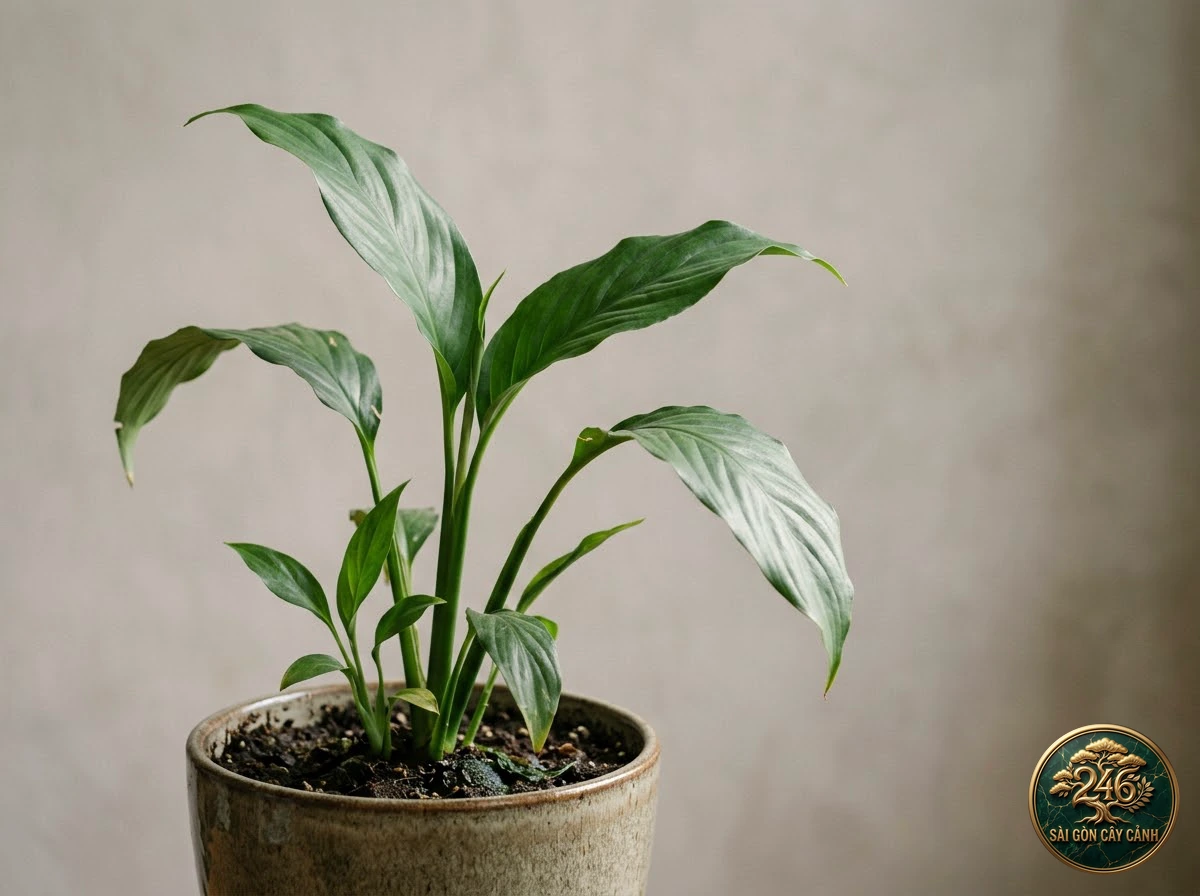
Mountain peace lily (Spathiphyllum montanum) is an exquisite montane botanical treasure originating from Central American cloud forests, distinguished by slender lanceolate foliage cloaked in a deep satin green and crowned by delicate crystalline-white spathes. It introduces the serene, pristine spirit of misty highlands into refined interior sanctuaries.
Sài Gòn Cây Cảnh Care Compass
1. Core Botanical Taxonomy & Cultural Specifications
| Scientific Name | Spathiphyllum montanum |
|---|---|
| Botanical Family | Araceae (Aroid Family) |
| Native Distribution | Montane cloud forests and submontane wet ravines of Costa Rica and Panama at elevations of 800 to 1,800 m |
| Growth Demeanor | Graceful erect terrestrial clumping herb with lanceolate foliage reaching 40 to 75 cm in height |
| Lighting Threshold | Soft diffused illumination (1,400 – 2,800 lux); adapted to mist-filtered understory lighting |
| Hydration Cadence | Irrigate when top 25-30% substrate dries; prefers continuous cool capillary dampness without stagnation |
| Substrate Formulation | 35% fine pumice, 30% fine pine bark and sphagnum fragments, 20% desalted coir, and 15% perlite |
| Thermal Range | 18°C – 28°C (64°F – 82°F; exhibits remarkable tolerance for cool montane ambient conditions) |
| Relative Humidity | 70% – 90% (High cloud-forest humidity preserves immaculate foliar turgor and flower freshness) |
| Cultivation Difficulty | Moderate (Demands consistent atmospheric moisture and cool aerated root environment) |
| Pet Safety Profile | Toxic (Contains insoluble calcium oxalate raphide crystals; position out of reach of domestic pets) |
Spathiphyllum montanum was circumscribed by Araceae specialists based on collections gathered along moss-laden ravines and misty slopes of Costa Rica. The specific epithet ‘montanum’ directly references its montane provenance, denoting an endemic ecological adaptation to cloud forest belts between 800 and 1,800 meters elevation.
The plant develops a compact upright to sub-creeping rhizome with closely spaced nodes forming refined, elegant clumps. Petioles are slender yet fibrous, measuring 25 to 45 cm with a narrow basal sheath and a responsive geniculum at the apex, orienting leaves to catch subtle light rays filtered through heavy mountain mist.
Adventitious feeder roots form dense superficial networks within cool, bryophyte-draped leaf humus along upland creeks. The root architecture demands high dissolved oxygen levels and is notably sensitive to thermal buildup in stagnant, waterlogged containers.
2. Morphological Identification & Foliar Architecture
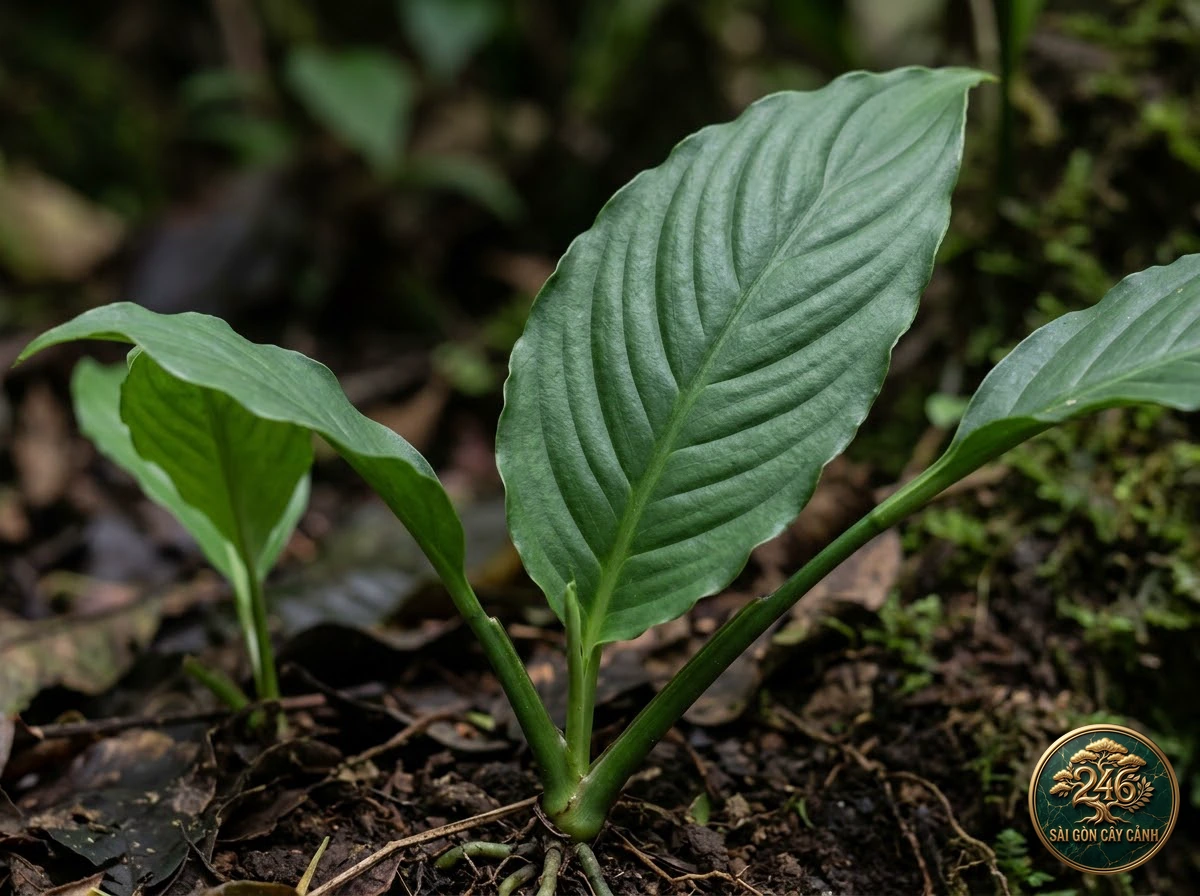
Foliar blades of the Mountain peace lily present an elongate-lanceolate to narrow-elliptic outline measuring 20 to 35 cm in length and 6 to 12 cm in width. The leaf apex tapers acuminately, framed by smooth or gently undulating margins. The satin-matte adaxial surface displays an understated deep green tone.
A slender midrib is etched beneath, complemented by delicate parallel lateral veins angling acutely toward margins. Slender flowering scapes rise 30 to 50 cm, carrying pristine white lance-ovate spathes 8 to 14 cm long that embrace a pale creamy-yellow spadix exuding a faint floral perfume at dawn.
Cytological foliar assays demonstrate that Spathiphyllum montanum possesses a 30% higher stomatal density than lowland peace lilies, an evolutionary adaptation optimizing gas exchange within the thin, moisture-saturated atmosphere of montane cloud forests. Slender lanceolate blades exhibit deep forest hues with a subtle satin luster, radiating understated organic tranquility.
3. Photometric Calibration & Window Exposure Optimization
Accustomed to shaded mountain mist understories, Spathiphyllum montanum thrives under soft, diffused lighting spanning 1,400 to 2,800 lux. Positions 1 to 1.5 meters away from east-facing windows or under full-spectrum botanical LEDs provide ideal photon quantities without thermal stress.
Direct equatorial sunlight will cause instant photochemical scorch on the delicate montane foliage. Conversely, gloomy recesses below 800 lux cause flowering abortion and gradual loss of rich foliar pigmentation.
Photometric studies establish an ideal PPFD range between 50 and 110 umol/m2/s for Mountain peace lily. Favoring gentle indirect daylight (1,400 – 2,800 lux) filtered through sheer curtains, it thrives gracefully in serene residential quarters sheltered from direct solar thermal radiation.
4. Rhizomatous Clump Architecture & Growth Management
Mountain peace lily demands steady substrate dampness while abhorring standing saturation. Irrigate when the surface dries down 25-30%, using a fine-rose watering wand to evenly percolate moisture through porous channels before draining completely.
Water purity is vital for this highland species. Montane roots react adversely to chlorine and heavy salts; always provide pure filtered or harvested rainwater at ambient room temperature, avoiding icy shocks to delicate root tips.
A unique trait of the Mountain peace lily is its affinity for cool ambient temperatures between 18°C and 28°C (64°F – 82°F). Possessing superior cool tolerance, it is exceptionally suited for air-conditioned spaces or highland climates.
Atmospheric humidity is crucial and must be maintained between 70% and 90%. Utilizing an ultrasonic cool-mist humidifier or generous pebble trays recreates the invigorating misty atmosphere of indigenous cloud forest canopies.
The most unique physiological trait of Mountain peace lily is its remarkable affinity for cool ambient temperatures between 18°C and 28°C (64°F – 82°F). Flourishing in cool air-conditioned interiors with high relative humidity (70% – 90%), it is ideal for highland regions or consistently climate-controlled executive offices.
The plant exhibits a refined architectural clump with slender 25-45 cm petioles ascending from compact rhizomes. To preserve tidy proportions, excise older senescent petioles flush to the base and rotate pots periodically to ensure balanced, upright shoot emergence.
5. Porous Aggregate Substrate Engineering & Aeration Dynamics
Potting substrates must prioritize maximum porosity and continuous gas diffusion: 35% fine pumice (3-6mm), 30% shredded sphagnum moss with aged mini bark chips, 20% rinsed coir pith, and 15% perlite, targeting pH 5.5 to 6.2.
This aggregate matrix simulates mossy highland humus, retaining refreshing moisture while preventing compaction and providing generous oxygen supplies to emerging root hairs.
Potting substrates for this montane aroid must prioritize fine porosity and refreshing moisture: 35% fine pumice (3-6mm), 30% shredded moss and fine aged bark, 20% rinsed coir pith, and 15% perlite. This replicates cool bryophyte humus along upland ravines without soil compaction.
6. Organic Nutrition Schedules & Periodic Micronutrient Priming
Fertilization should remain exceptionally gentle, diluted to one-third or half standard rates. Administer balanced organic micronutrient feeds monthly during spring and summer flushes to support steady foliage development and budding.
Strictly avoid high-salinity synthetic fertilizers that dehydrate root cell walls. Flush the substrate thoroughly with pure water every two months to leach out residual fertilizer salts.
Nutritional management requires extreme gentleness, formulated at one-third standard concentration. Applying soluble organic micronutrient foliar feeds monthly during spring and summer nourishes vegetative tissues without shocking sensitive montane root tips.
7. Clinical Diagnostic Matrix & Rapid Correction Protocols
| Clinical Symptom | Primary Etiology | Diagnostic Evaluation | Corrective Prescription |
|---|---|---|---|
| Leaf margins curling inwards with desiccated tips | Ambient relative humidity dropped below 60% or excessive room warmth | Inspect hygrometer and ensure distance from heat sources | Run ultrasonic mist humidifier and move specimen to cooler zone below 26°C |
| Foliage chlorosis and fading of deep forest hues | Excessive ambient light exposure or severe micronutrient depletion | Evaluate light levels and verify recent fertilization schedule | Shift container to softer indirect illumination and apply diluted chelated feed |
| Blackened softening at petiole bases near soil line | Anaerobic water stagnation triggering fungal rhizome decay | Examine drainage hole efficiency and sniff substrate for foul odor | Halt watering immediately, excise necrotic roots, and repot in fresh pumice mix |
| Fine webbing and dusty stippling across leaf blades | Tetranychid spider mites colonizing warm, arid environments | Check leaf undersides with loupe for active mite colonies | Rinse foliage under lukewarm shower and apply biological emulsified neem |
8. Cryptic Pest Prophylaxis & Foliar Surface Sanitation
Routinely inspect leaf undersides and petiole folds for spider mites and whiteflies during dry spells. Wipe foliage immediately with mild vegetable soap solutions upon spotting early signs of infestation.
Keep leaf surfaces clean by gently dusting with a damp microfiber cloth bi-weekly, simultaneously dislodging cryptic pests and enhancing photosynthetic activity on lush foliage.
Wipe slender lanceolate foliage with damp microfiber cloths bi-weekly to remove dust and monitor pest activity. Routinely inspect abaxial surfaces for spider mites during arid spells, rinsing with gentle water sprays and applying dilute botanical neem when necessary.
9. Asexual Propagation Methodology & Root Strike Protocols
Propagate by rhizomatous division during spring container upgrades. Gently tease away loose substrate from the root mass and sterilize cutting implements to separate divisions possessing vigorous root clusters.
Pot new divisions into fresh airy substrate, maintaining elevated humidity and shaded shelter for 3 weeks until adventitious roots establish and initiate new leaf growth.
Propagate by dividing rhizome offshoots during spring container refreshes. Gently tease away loose substrate, excise divisions retaining healthy roots with sterile shears, and pot into fresh airy mix under high humidity and shaded shelter for three weeks.
10. Companion Animal Safety & Veterinary Toxicology Protocols
As with all Spathiphyllum, vegetative tissues contain insoluble calcium oxalate raphides that irritate oral tissues if chewed. Display plants safely on raised desks or bookshelves out of pet reach.
11. Biophilic Curation & Contemporary Interior Design Styling
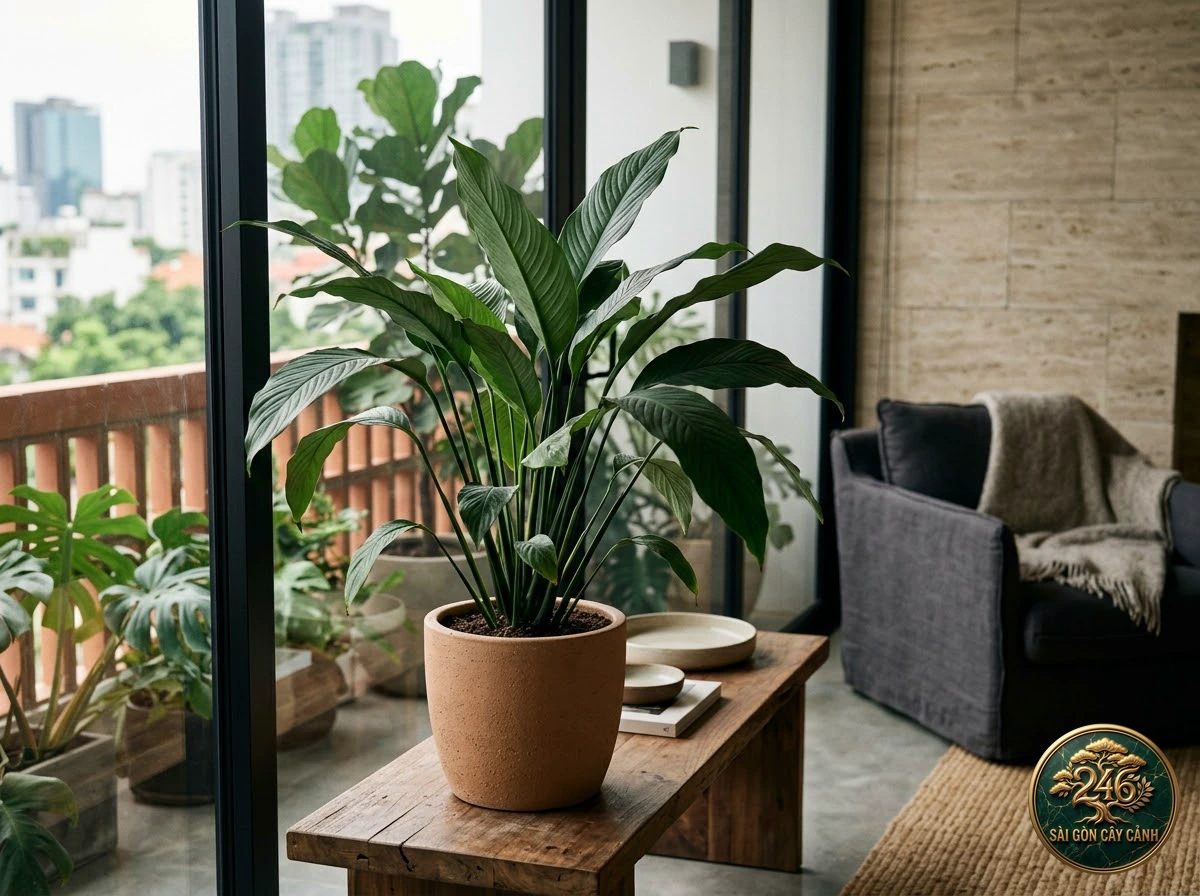
With its graceful proportions, refined lanceolate leaves, and pure white blossoms, the Mountain peace lily introduces subtle organic elegance into Japandi, Nordic minimalist, and modern tropical decor schemes.
The gentle highland presence of this plant radiates restorative coolness, promoting emotional balance and instilling quiet tranquility into personal living environments.
With graceful proportions, soft lanceolate foliage, and crystalline blooms, the Mountain peace lily introduces the pristine tranquility and crisp freshness of cloud forests into elegant Japandi, Wabi-Sabi, and Nordic Scandinavian living spaces.
12. Master Principles for Sustainable Indoor Acclimatization
To cultivate a thriving, long-lived specimen of Spathiphyllum montanum indoors, horticulturists must follow three foundational rules:
- Hydration axiom: Irrigate with pure dechlorinated water when top 25-30% substrate dries, keeping root zones cool and aerated.
- Illumination axiom: Deliver soft indirect light (1,400 – 2,800 lux) and maintain optimal cool temperatures between 18°C and 28°C (64°F – 82°F).
- Maintenance axiom: Sustain elevated ambient humidity above 70% via ultrasonic misting to preserve pristine foliar turgor and flower longevity.
Nursery Care Journal & Living Greenery Moments
At Saigon Cay Canh greenhouse, each photograph captures genuine everyday care moments between plant lovers and living greenery, spreading a passion for nature and green-living inspiration.

13. Frequently Asked Questions Regarding Mountain peace lily (FAQs)
Does Mountain peace lily adapt well to air-conditioned interiors?
It flourishes remarkably in air-conditioned environments between 20°C and 25°C, provided an ultrasonic humidifier compensates for dry air.
How frequently does this species produce blooms?
When supplied with gentle cool filtered daylight and humidity above 70%, it typically blooms 2 to 3 times annually in spring and autumn.
Can untreated municipal water be used for irrigation?
Not recommended. Originating from pristine upland streams, roots are sensitive to tap chemicals; use purified water or rainwater.
What are the symptoms of fertilizer salt burn?
Sudden brown necrosis at leaf tips and curled margins; immediately suspend feedings and thoroughly flush potting mix with pure water.
Should withered flower stems be excised?
Yes. Trimming spent scapes flush to the rhizome crown preserves metabolic reserves for new vegetative shoots and future blossoms.
Is Mountain peace lily suitable for cultivation in tropical lowlands like Ho Chi Minh City?
It performs exceptionally well indoors within air-conditioned spaces maintained at 20°C to 26°C with supplemental ultrasonic humidification. In unconditioned outdoor heat exceeding 34°C (93°F), growth stalls and leaf margins desiccate.