
Living plant profile
Pagoda flower (Clerodendrum paniculatum)
Clerodendrum paniculatum
📌 CLINICAL & BIOLOGICAL ABSTRACT — Pagoda flower (Clerodendrum paniculatum)Pagoda flower (Clerodendrum paniculatum) Clerodendrum paniculatum, globally revered as pagoda flower or temple flower, is a spectacular tropical semi-woody flowering shrub within the mint family (Lamiaceae). Renowned across botanical gardens, it produces monumental pyramid-shaped terminal panicles ascending 30 to 50 cm like multi-tiered Oriental pagodas, densely […]

Pagoda flower (Clerodendrum paniculatum)
Clerodendrum paniculatum, globally revered as pagoda flower or temple flower, is a spectacular tropical semi-woody flowering shrub within the mint family (Lamiaceae). Renowned across botanical gardens, it produces monumental pyramid-shaped terminal panicles ascending 30 to 50 cm like multi-tiered Oriental pagodas, densely packed with hundreds of brilliant scarlet-orange to vermilion florets. Slender, dramatically long-exserted curving stamens reach far beyond the tubular corollas, inviting fluttering butterflies and nectarivorous birds. Revered in traditional Vietnamese herbal medicine for systemic cooling and circulation balance, pagoda flower serves within Saigon Cay Canh landscape architecture as a regal architectural focal point radiating vibrant energy and prosperity.
Sài Gòn Cây Cảnh Care Compass
1. Botanical Identity & Taxonomic Nomenclature History
Clerodendrum paniculatum was officially established by Swedish botanist Carl Linnaeus in 1767 within his foundational addendum Mantissa Plantarum. The generic name Clerodendrum traces to Greek roots kleros (‘destiny’ or ‘fortune’) and dendron (‘tree’), acknowledging ancient botanical traditions attributing auspicious energy to the genus. The specific epithet paniculatum derives from Latin, signifying ‘panicle-bearing’ or ‘branched in loose clusters’, accurately characterizing the immense tiered pyramidal inflorescences.
Native to monsoon rainforest edges across Southeast Asia, pagoda flower has historically graced the sacred courtyards of ancient Buddhist temples in Thailand, Cambodia, and Vietnam, where its vermilion spires were dedicated in vernal rituals. Within traditional Vietnamese medicine, revered physicians including Tue Tinh documented its therapeutic synergy with Clerodendrum chinense (white glorybower) as a premier classical prescription to treat systemic heat, inflammatory skin lesions, and gynecological disorders.
2. Morphological Anatomy & Structural Architecture
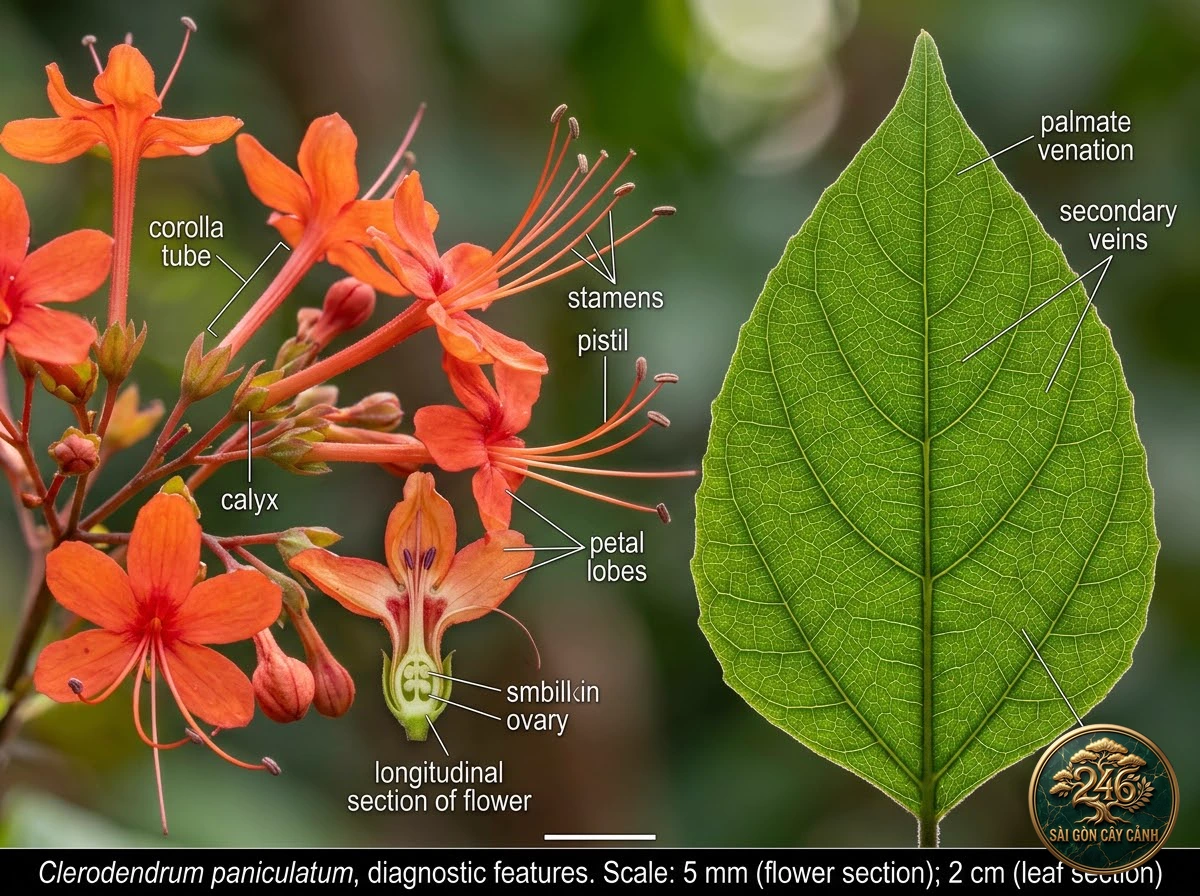
Morphologically, Clerodendrum paniculatum develops as an erect, substantial semi-woody shrub attaining heights of 1.5 to 2.5 meters with an umbrella-like canopy spreading 1.2 to 1.8 meters. Stems are stout and prominently 4-angled in youth, glabrous or puberulent, branching sparingly to support strong vertical terminal axes. Leaves are decussately opposite; blades are exceptionally large, broadly cordate to ovate-orbicular, spanning 15 to 35 cm long by 12 to 28 cm wide, palmately divided into 3 to 7 shallow triangular lobes resembling an ornate fan, with cordate bases and serrulate margins. The adaxial surface is deep lustrous emerald with distinct palmate venation, while the abaxial surface is paler and dotted with microscopic peltate glands, borne on stout petioles 10 to 25 cm long.
Inflorescences arise as monumental, erect, terminal pyramidal panicles measuring 30 to 50 cm in height and 20 to 30 cm across at the base, tapering upward into a majestic multi-tiered pagoda spire. The entire panicle axis, peduncles, pedicels, and calyces are saturated in brilliant coral-vermilion. Each zygomorphic floret possesses a small 5-toothed red calyx and an elongated, slender corolla tube 1.5 to 2.5 cm long expanding into five spreading lobes 1.2 to 1.5 cm across rendered in vibrant scarlet-orange. Four long-exserted crimson stamens curve upward extending 3 to 4 cm beyond the corolla. The floral spectacle persists for many weeks. The infructescence yields globose drupes 0.8 to 1.0 cm in diameter that ripen to glossy bluish-black, dividing into four pyrenes.
3. Solar Irradiance Thresholds & Photosynthetic Dynamics
Clerodendrum paniculatum is an adaptable tropical sciophyte-to-heliophyte performing best in bright partial shade to gentle full sun, with optimal luminous levels between 35,000 and 65,000 lux. A daily minimum of 4 to 6 hours of morning sunlight is vital to sustain its massive fan-like foliage and synthesize carbohydrate reserves for monumental terminal floral pagodas.
Under blistering unshaded midday tropical sun exceeding 38 degrees C, the large tender foliar margins may suffer minor transient wilting; conversely, under heavy shade below 20,000 lux, internodes stretch limply and floral spires become stunted and pale. An ideal setting provides generous morning insolation coupled with high canopy filtration during hot afternoons.
4. Mineral Substrate Mechanics & Root Aeration Porosity
The root architecture of pagoda flower incorporates deep-anchoring woody taproots with a vigorous lateral root system, demanding deep, organic-rich topsoil engineered for rapid gravity drainage without pooling. Stagnant anaerobic waterlogging lasting beyond 48 hours rapidly suffocates delicate feeder rootlets, triggering basal foliar chlorosis and severe defoliation.
The benchmark potting substrate crafted by Saigon Cay Canh contains 40% clean alluvial loam, 25% carbonized rice hulls for root zone aeration, 20% washed coco coir, 10% Trichoderma-fortified composted manure, and 5% horticultural perlite. Soil pH is maintained within 6.0 to 6.8. Planting pits and large decorative containers must feature unobstructed drainage apertures.
5. Hydraulic Equilibria & Irrigation Regimens
Possessing vast fan-like foliage and massive floral spires actively transpiring, Clerodendrum paniculatum demands generous, consistent moisture throughout active vegetative and blooming cycles. The baseline watering protocol mandates soaking the root zone thoroughly at dawn whenever the upper 2 to 3 cm of substrate feels dry. During arid tropical dry periods, irrigate once daily; during heavy rains, suspend watering until the surface dries.
Apply water directly to the soil surrounding the base; avoid forceful overhead irrigation directly into the blooming pagoda panicles, which shears fragile long-exserted stamens and damages delicate petals. Following monsoon downpours, verify that drainage channels remain completely free of obstruction.
6. Nutrient Biogeochemistry & Fertilization Protocols
To sustain expansive fan-like foliage and fuel monumental half-meter scarlet floral pagodas, pagoda flower requires generous and regular mineral nourishment. Top-dress with aged vermicompost or slow-release organic pellets (NPK 6-8-12) monthly at 1 to 2 kg worked into the perimeter drip line.
During floral bud formation and panicle expansion flushes, dissolve a water-soluble balanced formula (NPK 15-20-25 or NPK 16-16-16) at 1.5 grams per liter, drenching the root zone every 10 to 12 days. Complement with foliar micronutrient sprays rich in chelated calcium, boron, and organic potassium every 20 days to ensure panicle axis rigidity, keeping the heavy pagoda spires standing proudly against rain and wind.
7. Clonal Propagation & Germplasm Conservation
Clerodendrum paniculatum propagates reliably through semi-hardwood stem cuttings or root sucker separation, achieving rooting success above 90%. The optimal propagation window spans early monsoon or warm spring months. Select vigorous semi-ripe branchlets 15 to 20 cm long with 2 to 3 nodes. Using shears sanitized with 70% medical alcohol, make a 45-degree angle cut below a node, remove lower foliage, and cut the single remaining leaf in half to reduce transpirational stress.
Dip the basal cut into 1,000 ppm IBA rooting powder for several seconds and insert 5 to 6 cm deep into moist sharp sand and perlite. Maintain under 50% dappled shade with regular misting; robust adventitious root networks establish within 14 to 18 days, accompanied by rapid lateral shoot development.
8. Phytochemical Toxicity & Pet Safety Standards (ASPCA)
Botanical safety profile and ASPCA pet safety standards: Classified within the Lamiaceae family, Clerodendrum paniculatum is regarded as NON-TOXIC and non-hazardous to companion animals (dogs, cats) and humans under standard ASPCA toxicological criteria. The species does not synthesize toxic tropane alkaloids or dangerous phytochemical toxins.
Historically documented as a gentle medicinal herb, accidental nibbling of foliage or fallen blossoms by curious companion pets will not trigger systemic toxidrome. Horticulturists should collect spent panicles, sanitize cutting shears with 70% medical alcohol, and maintain routine biophilic hygiene to keep garden microclimates thriving safely.
9. Clinical Pathology Diagnostics & Treatment Strategies
Pathology inspection protocol for mealybug management and panicle nutrition regimes in Clerodendrum paniculatum:
| Clinical Manifestation | Etiological Cause | Standard Treatment Protocol |
|---|---|---|
| Floral pagodas remain stunted, florets are sparse and pale, and stems become weak and leggy | Severe solar deficiency caused by positioning in heavy shade below 20,000 lux for prolonged periods | Prune leggy stems with shears sanitized with 70% alcohol, move plant to receive 4 to 6 hours of direct morning sunlight daily |
| Young flushes and panicle branches develop white cottony wax deposits attended by foraging ants | Planococcus mealybugs tapping phloem sap from tender buds and secreting sticky honeydew | Wipe mealybug colonies with swabs dipped in 70% medical alcohol, spray cold-pressed neem oil twice 5 days apart |
| Lower massive leaves turn yellow and drop prematurely, substrate is soggy and smells moldy | Root asphyxiation and rot induced by poor drainage or clogged container drainage ports | Suspend watering immediately, clear container drainage holes, aerate topsoil, and drench with Trichoderma solution |
10. Comparative Morphology & Allied Taxa Diagnosis
Taxonomic comparative matrix isolating massive half-meter pyramidal scarlet panicles of Clerodendrum paniculatum:
| Diagnostic Parameter | Clerodendrum paniculatum (Pagoda flower) | Comparative Specimen A | Comparative Specimen B |
|---|---|---|---|
| Inflorescence Architecture and Color Scheme | Monumental pagoda panicle 30 to 50 cm high densely set with scarlet-orange florets and long red stamens | Massive terminal rounded umbels resembling bursting fireworks with hundreds of starry white-pink tubes | Dense terminal rounded corymbs of fragrant rose-pink florets packed tightly like floral hydrangeas |
| Foliar Dimensions and Morphology | Colossal cordate leaves 15 to 35 cm, palmately 3 to 7 lobed like an ornate fan in deep emerald | Large leaves 15 to 30 cm, striking bicolored contrast with deep emerald upper and royal purple underside | Broadly ovate-cordate leaves 10 to 20 cm, serrate margins, puberulent, lightly fetid when bruised |
| Companion Animal Safety and ASPCA Profile | NON-TOXIC (non-hazardous to companion animals under standard ASPCA guidelines) | NON-TOXIC (non-hazardous to companion animals under standard ASPCA guidelines) | NON-TOXIC (non-hazardous to companion animals under standard ASPCA guidelines) |
11. Biophilic Design Harmony & Contemporary Spatial Aesthetics
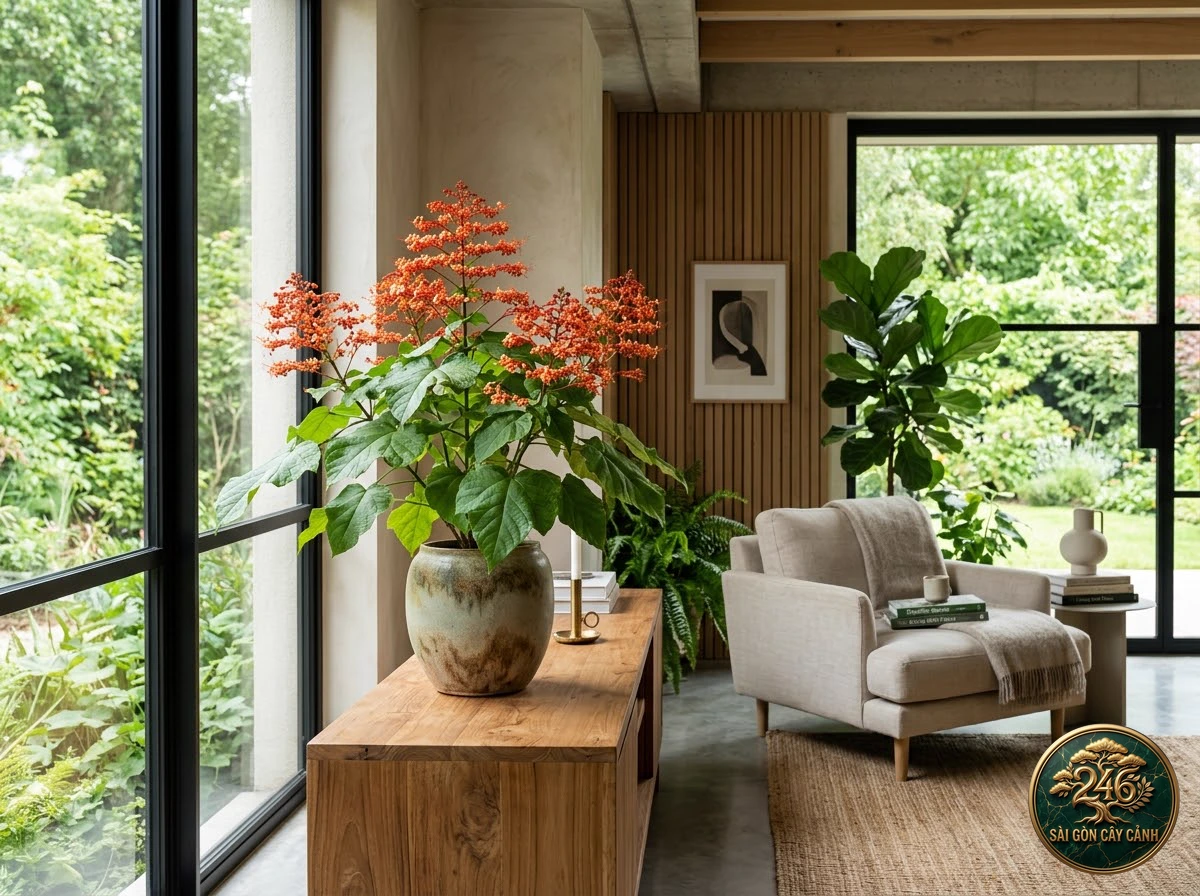
Within Asian architectural landscape philosophy and biophilic garden design, pagoda flower represents soaring prosperity, sovereign dignity, triumphant fortune, and exuberant celebratory energy. Its crimson pyramidal spires ascending like sacred pagodas infuse residential environments with auspicious warmth and protective vitality.
Owing to its striking architectural stature and brilliant vermilion palette, Clerodendrum paniculatum thrives in diverse garden compositions: featured as a solitary majestic accent in Zen-inspired courtyards, planted along spacious estate garden pathways, positioned flanking entrance terraces, or composed beside koi ponds to forge enchanting contemplative vistas.
12. Saigon Cay Canh Provenance & Cultivation Assurance

Saigon Cay Canh delivers magnificent, acclimated specimens of pure Clerodendrum paniculatum, featuring robust structural stems, expansive fan-shaped emerald foliage, and well-developed pagoda floral spires ready for vibrant display across premier landscaping projects.
We provide 100% botanical taxonomic verification, comprehensive plant health warranties, professional post-flowering pruning services, and dedicated landscape architecture advisory for private estate owners and luxury ecological resorts.
💬 Góc Tư Vấn & Hướng Dẫn Kỹ Thuật SGCC
Chuẩn E-E-A-T Kinfolk❓ Chăm sóc Pagoda flower (Clerodendrum cần lưu ý điều gì quan trọng nhất?
💡 Dạ điều quan trọng nhất là giữ môi trường sống ổn định, tránh sốc nhiệt hay dao động thông số đột ngột, đồng thời cung cấp khẩu phần ăn sạch và tươi mới ạ.
❓ Làm thế nào để phòng ngừa bệnh tật hiệu quả cho các bé?
💡 Dạ anh chị nên giữ vệ sinh chuồng/hồ nuôi sạch sẽ, thay nước hoặc dọn dẹp định kỳ và bổ sung vitamin, men tiêu hóa đều đặn để tăng sức đề kháng ạ.
🌿 Trang Thiết Bị, Đất Trồng & Dụng Cụ Bonsai Tuyển Chọn
Dụng cụ tỉa, giá thể hữu cơ & phân bón chuyên dụng cho cây cảnh.
Hạt Giống Hoa Cúc Họa Mi Trắng Daisy Flower Seeds-1500 …
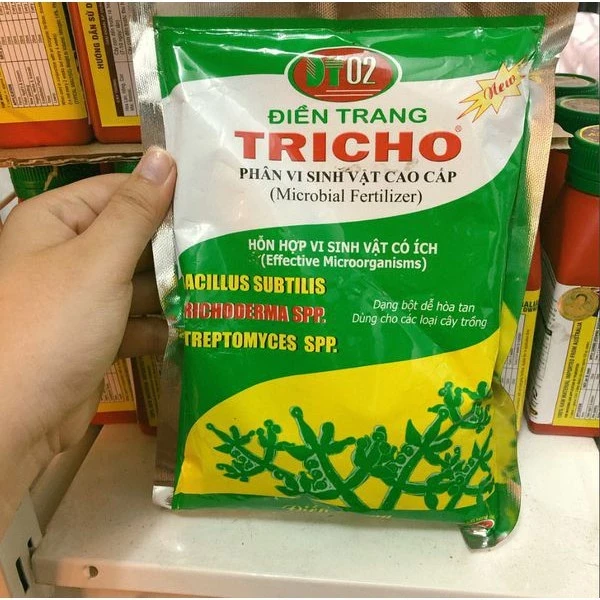
Nấm Trichoderma Chế phẩm vi sinh dùng Ủ Phân, Phòng Bện…
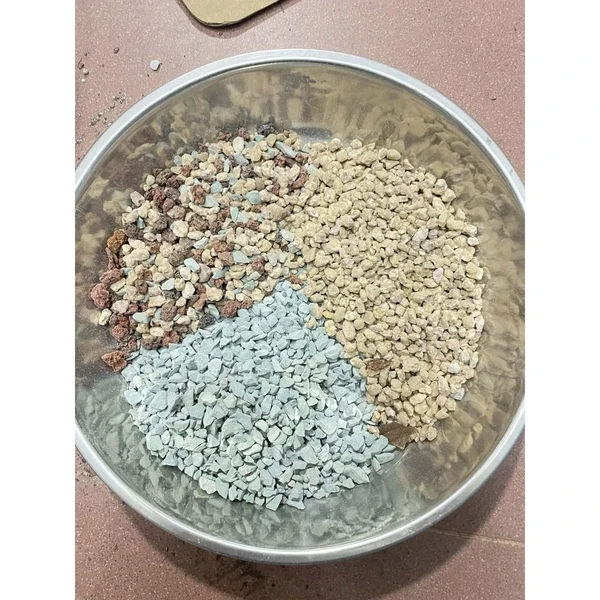
Các loại đá khoáng rải mặt sen đá, xương rồng: masato, …

Đá Perlite Trân Châu Trộn Giá Thể, Thoát Nước Tốt, Tăng…

Chậu vuông cao mini da báo, chậu bonsai, chậu cảnh gốm …

Khay ươm hạt giống/ Vỉ ươm hạt giống 128 lỗ – Có thể tá…
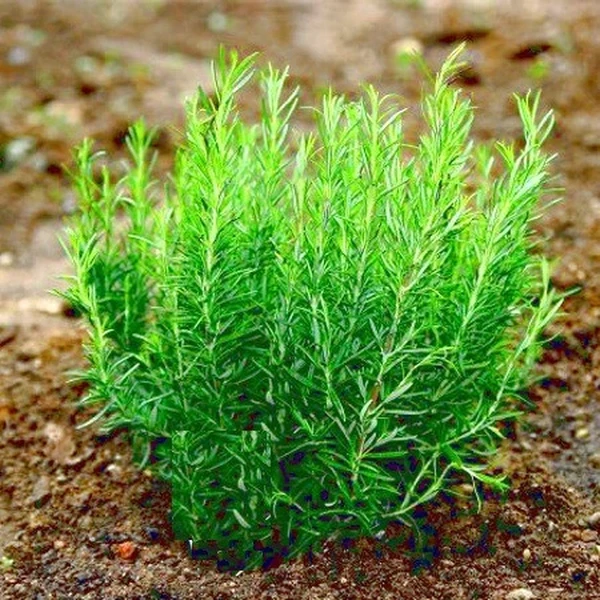
Hạt Giống Hương Thảo Rosemary (50 Hạt) – Dễ Trồng, Gia …
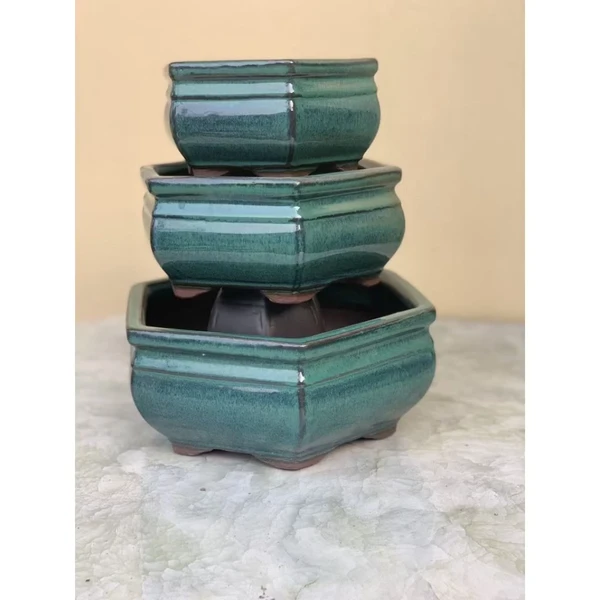
Chậu Lục Giác Mini bonsai tiểu cảnh – Chậu Trồng Cây se…
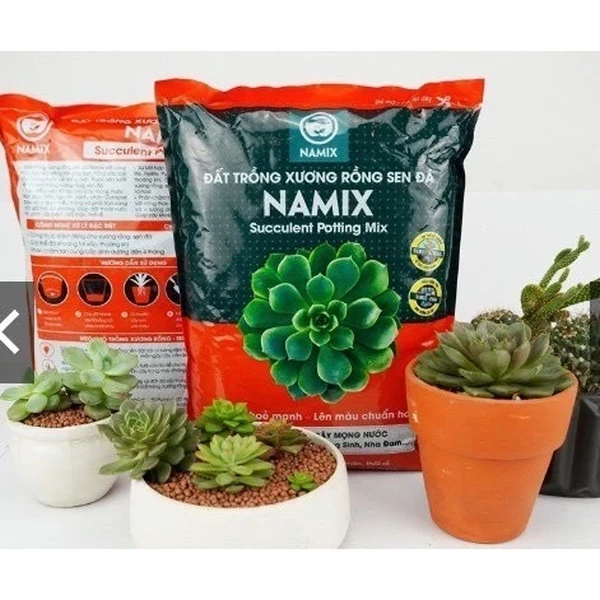
Đất trồng sen đá xương rồng trộn sẵn kèm phân bón cao c…

Lẻ 1kg Đất nung Akadama Nhật Bản (nền thủy sinh , bons…

Đá Perlite (đá trân châu) giá thể trồng cây giúp thoát …
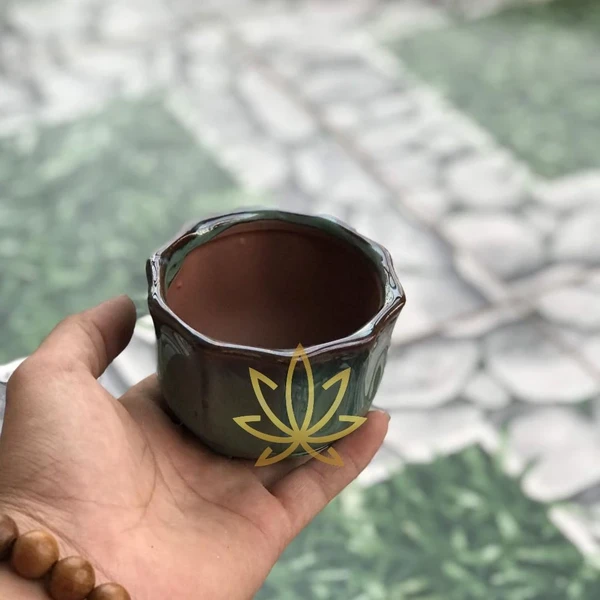
Chậu Mini Trồng Sen Đá Xương Rồng Cây Cảnh Bonsai Gốm S…

New Guinea impatiens (Impatiens hawkeri)
New Guinea impatiens (Impatiens hawkeri) Impatiens hawkeri, universally admired as New Guinea impatiens, is an aristocratic, dramatically oversized...
Read Monograph →
French hydrangea (Hydrangea macrophylla)
French hydrangea (Hydrangea macrophylla) Hydrangea macrophylla, internationally celebrated as French hydrangea, bigleaf hydrangea, or hortensia, is a magnificent...
Read Monograph →
Wingpod purslane (Portulaca umbraticola)
Wingpod purslane (Portulaca umbraticola) Portulaca umbraticola, widely known as wingpod purslane, ornamental purslane, or broadleaf moss rose, is...
Read Monograph →
Spiny spiderflower
Cleome spinosa, universally celebrated in ornamental horticulture as spiny spiderflower, spider plant, or pink queen, is an aristocratic,...
Read Monograph →Expert Q&A, Recommended Supplies & Article Feedback
Tap once to connect instantly via Google, Facebook or TikTok — no long forms required!
No questions yet for this article. Tap Google / Facebook / TikTok above to ask the first question!