
Living plant profile
Pillans Gasteria (Gasteria pillansii): Xerophytic Morphology, Distichous Form and Indoor Cultivation
Gasteria pillansii
Sai Gon Cay Canh • Living Herbarium V2 Pillans Gasteria (Gasteria pillansii): Xerophytic Morphology, Distichous Form and Indoor Cultivation Gasteria pillansii is a celebrated succulent native to arid Namaqualand, characterized by neat distichous strap-shaped leaves adorned with dense whitish speckling and remarkable drought resilience. Record ID: SGCC-PLANT-00532 Scientific Name: Gasteria pillansii Kensit Family: Asphodelaceae (Asphodelaceae) […]
Pillans Gasteria (Gasteria pillansii): Xerophytic Morphology, Distichous Form and Indoor Cultivation
1. Botanical Morphology & Ecological Adaptations
Gasteria pillansii, widely recognized under the vernacular name Pillans Gasteria / Namaqua Gasteria, is a highly distinguished succulent perennial belonging to the family Asphodelaceae. Native to the ecologically diverse landscapes of Namaqualand & Western Cape, South Africa, this species has evolved sophisticated anatomical adaptations to endure severe seasonal droughts, rocky scree terrain, and fluctuating thermal regimes.
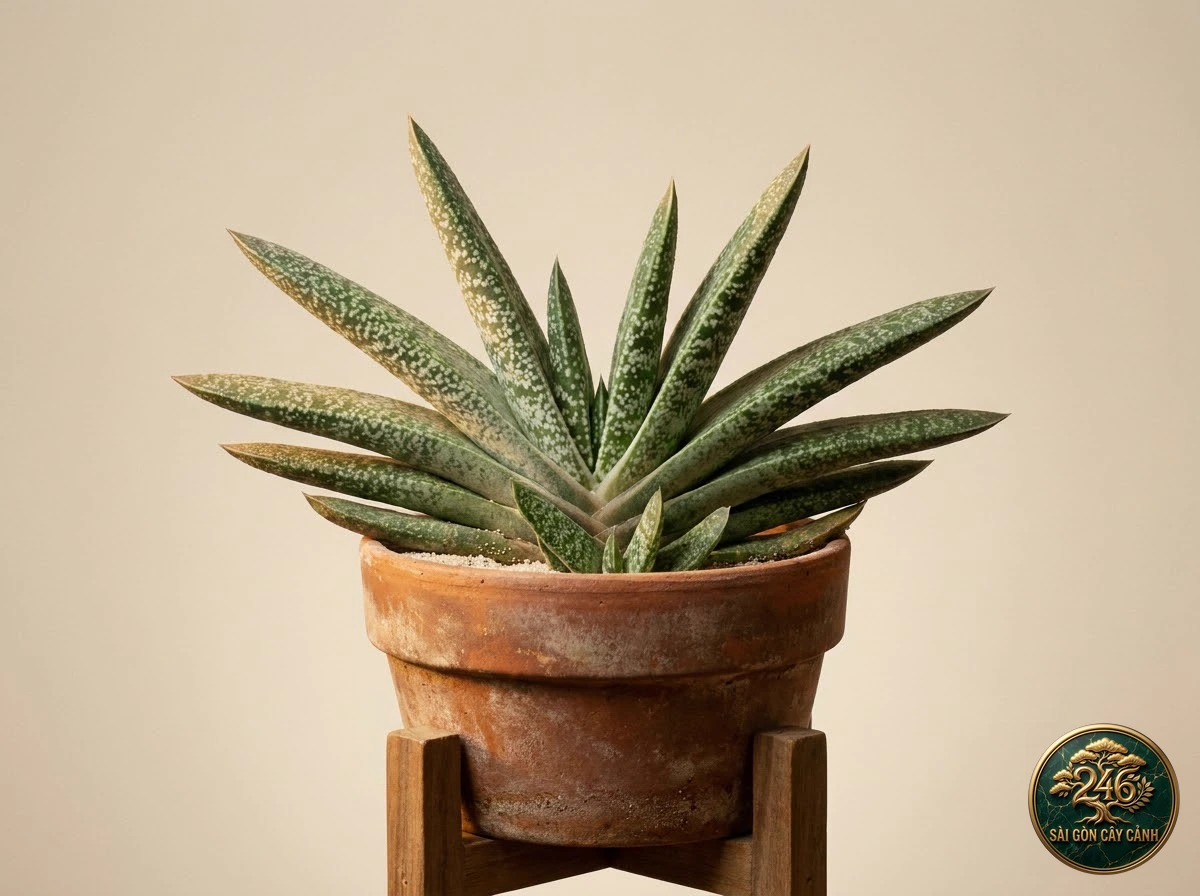
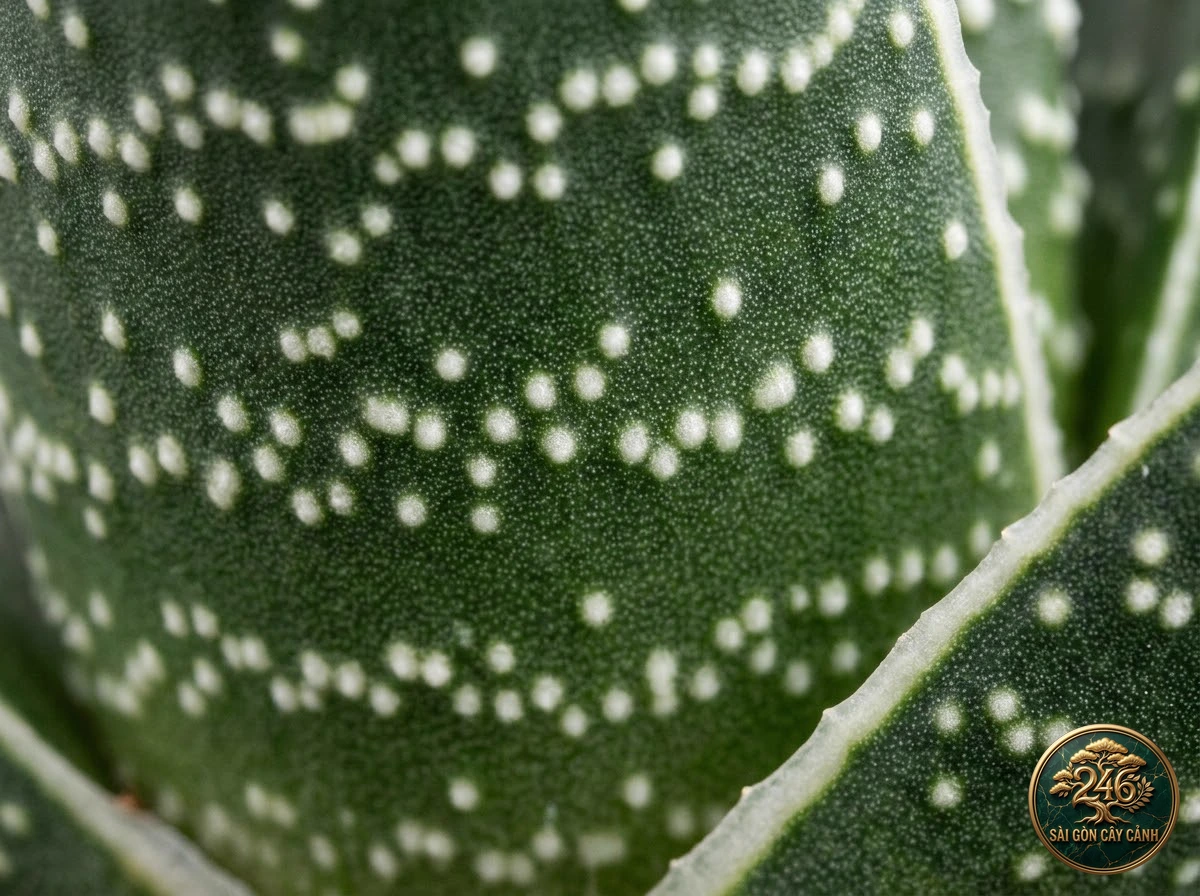
Gasteria pillansii is distinguished by tongue-shaped succulent blades adorned with countless minute white tuberculate speckles arranged in undulating transverse bands. Its distichous two-ranked fan habit persists indefinitely through maturity, complemented by sharp cartilaginous pale margins.
The subterranean root network of Gasteria pillansii navigates narrow clefts in Namaqualand granites, forming thick corky outer layers to buffer searing substrate temperatures. Graceful pink-peach bell-like blossoms dangle along sparsely branched floral axes.
2. Taxonomic Chronicle & Botanical History
Gasteria pillansii was scientifically described and published in 1910 by South African botanist Louisa Bolus (nee Kensit) in the Annals of the South African Museum, named in honor of avid botanical explorer Neville Stuart Pillans who collected the type specimen in arid Namaqualand. This species represents the most northwesterly distributed member of the genus, ranging across the hyper-arid winter-rainfall belt of Namaqualand into southern Namibia. For over a century, botanists have marveled at its capacity to endure blistering sun within granitic rock crevices.
3. Histological Specialization & CAM Photosynthetic Pathway
The anatomical organization of Gasteria pillansii reflects profound evolutionary adaptation to hyper-arid winter-rainfall desert scrub: its thick strap-like (lorate) leaves maintain an orderly two-ranked distichous fan arrangement throughout maturity. The epidermis is covered by a scabrid cuticular membrane patterned with dense white tuberculate spots arranged in transverse bands, serving dual roles of infrared reflectance and cryptic camouflage against granite gravel. Deep subterranean contractile storage roots hold substantial moisture, while suberized root collar tissues prevent reverse osmotic water loss into scorching dry sand.
4. Comprehensive Care Compass (Care Compass 360°)
La bàn chăm sóc Sài Gòn Cây Cảnh
5. Diagnostic Pathology & Clinical Horticultural Interventions
Monitoring foliar turgidity across the two-ranked leaves and verifying dermal texture in Gasteria pillansii enables early detection of root rot risks caused by excessive moisture.
| Observed Physical Symptom | Etiological Factor / Pathology | Horticultural Intervention Protocol |
|---|---|---|
| Distichous alignment twists and stretches toward light source | Unilateral insufficient illumination triggering phototropic deformation | Rotate container 180 degrees weekly or supply overhead full-spectrum LED |
| Foliar tips desiccate into ash-grey brittle margins | Extreme dry air draft coupled with excessive ambient heat | Elevate surrounding ambient humidity without misting directly into crown |
| Roots detach completely leaving hollow lignified base upon unpotting | Cold prolonged wetness rotting fine absorbent root hairs | Debride corky tissue, treat with rooting hormone, set upon dry pumice to regenerate |
| Longitudinal necrotic streaks with tacky residue along adaxial keel | Opportunistic fungal infection via insect puncture wounds | Excise affected section, disinfect with povidone-iodine, isolate in dry airy spot |
6. Infrageneric Taxonomic Differentiation Matrix
The taxonomic comparison table below delineates key diagnostic traits separating Gasteria pillansii from fan-forming relatives such as Gasteria disticha and Gasteria brachyphylla:
| Taxonomic Characteristic | Gasteria pillansii (Pillans Gasteria / Namaqua Gasteria) | Comparative Counterpart A | Comparative Counterpart B |
|---|---|---|---|
| Growth Habit | Retains strict two-ranked fan (distichous) architecture | Transitions into spiral rosette upon reaching maturity | Forms tight clustering clumps of multi-tiered rosettes |
| Foliar Epidermis | Finely scabrid with transverse bands of white tubercles | Completely glossy, smooth vitreous surface | Marginal sharp teeth traversing blade perimeter |
| Leaf Length | Flattened strap-like leaves reaching 10 – 20 cm | Thicker, stouter leaves with blunt obtuse apex | Tapering lanceolate leaves ending in mucronate point |
| Ecological Habitat | Arid winter-rainfall Namaqualand desert scrub | Eastern Cape transitional thicket with summer moisture | High altitude rocky outcrops and grassland habitats |
7. Vegetative Propagation & Offsetting Protocols
Propagating Pillans Gasteria is highly successful using rooted basal pups produced along the subterranean crown. During autumn repotting, gently detach offsets bearing at least three developed leaves and independent root fibrils, treat excision surfaces with powdered sulfur, and dry in shade for 3 to 5 days. Install offsets into porous terracotta pots filled with eighty percent pumice and twenty percent coarse sand, maintaining light bottom moisture for two weeks to stimulate active root anchoring. Vegetative propagation from leaf segments also yields multiple adventitious plantlets within six to eight weeks.
8. Phytopathology & Integrated Pest Management
The most frequent pathological concern with Gasteria pillansii is anthracnose leaf spot caused by Colletotrichum fungi under stagnant, overly humid conditions. Symptoms present as circular sunken black lesions with chlorotic yellow halos spreading across the blade. Treatment mandates immediate specimen isolation, cleansing affected surfaces with medicinal alcohol, spraying with systemic copper fungicide, and relocating to an airy, well-ventilated spot. Never permit irrigation water to lodge within basal leaf axils overnight, particularly during rainy spells.
9. Companion Planting & Xerophytic Groupings
Gasteria pillansii integrates seamlessly with native succulent treasures of Namaqualand such as dwarf Conophytum buttons, Lithops living stones, and columnar Haworthia reinwardtii. Combining the speckled distichous fan of pillansii with compact spherical mimicry succulents produces an authentic, museum-grade miniature desert terrascape. Planting within sand-colored unglazed ceramic bowls dressed with weathered grey granite grit magnifies its rugged wild presence.
10. Spatial Placement & Interior Architectural Styling
The classical distichous fan symmetry of Gasteria pillansii captivates enthusiasts of modern architectural interior design. Its compact, orderly habit never becomes unkempt, making it a premier selection for executive bookcases, bespoke coffee tables, and quiet study alcoves. Paired with minimalist crackle-glaze stoneware or raw industrial concrete cylinders, it exudes quiet dignity, patience, and grounded architectural poise.
11. Urban Apartment Microclimates & Architectural Cultivation
For Gasteria pillansii, the primary cultural imperative within urban apartments is strict moisture regulation during protracted monsoon humidity. Evolving in hyper-arid Namaqualand, its container substrate demands eighty-five percent coarse mineral grit such as volcanic pumice and boiled scoria. Elevating the planter upon ventilated timber plinths on breezy balconies allows circulating ambient air to dissipate dampness around the sensitive crown.
When stationing Gasteria pillansii within urban residences, an east-facing balcony or a window draped with sheer filtering fabric offers the finest microclimate. Because the plant naturally angles its distichous leaf ranks toward unilateral light, turn the container 180 degrees fortnightly to preserve geometric symmetry. During protracted humid tropical squalls exceeding eighty-five percent humidity, never mist water into basal leaf axils; operate a gentle convective circulation fan to keep air moving steadily across the foliage.
Within contemporary interior design narratives, the two-ranked distichous fan of Gasteria pillansii conveys quiet dignity, serene balance, and contemplative poise. Positioning this specimen on natural oak shelving or beside handcrafted teaware elevates organic antiquity, offering a tranquil visual sanctuary amidst bustling urban commitments.
12. Domestic Pet Safety & Household Placement Guidelines
NON-TOXIC TO PETS (ASPCA Safe) – Harmless to companion dogs and felines with zero toxic secondary metabolites.
Ranking as a benign non-toxic succulent, Gasteria pillansii poses zero toxicity hazards to household pets, requiring only gentle physical handling to preserve its textured coat.
13. In-Depth Botanical Q&A with Sai Gon Cay Canh
Frequently Asked Question: Will my Pillans Gasteria lose its fan shape and form a radiating spiral as it matures?
Expert Diagnosis from Saigon Cay Canh: No, that persistent architecture is precisely the botanical hallmark of Gasteria pillansii! Unlike many congeners that transition into spiral rosettes with age, Gasteria pillansii steadfastly retains its two-ranked distichous fan formation throughout its multi-decade lifespan. To ensure the paired ranks remain perfectly straight and balanced, rotate the container 180 degrees bi-weekly so both foliar planes receive balanced ambient illumination.
14. Nursery Botanical Journal & Green Sanctuary Notes
Cultivation logs at Sai Gon Cay Canh demonstrate that Gasteria pillansii sustains pristine two-ranked fan alignment after two years in sheltered urban settings. Its charming pendant pink-peach stomach blossoms provide delightful testament to the resilience of this desert succulent.
Monitoring Gasteria pillansii at our experimental research station reveals an exceptionally deliberate growth pace, producing merely two to three leaf pairs per annum. This dignified cadence inspires contemplative patience in horticultural caretakers, fostering serene inner balance amidst demanding urban routines.
15. Seasonal Mineral Nutrition & Micro-Nutrient Management
Nutrient requirements for Pillans Gasteria are exceptionally sparse: scatter a minimal pinch of balanced slow-release organic granules along the pot rim at the onset of active growth. Avoid high-nitrogen foliar sprays entirely, which prompt unnatural rapid expansion that ruptures the textured tuberculate foliar skin.
During late autumn and winter (its native austral active period), administer diluted worm casting tea or cold-pressed seaweed extract at one-sixth label concentration via sub-irrigation once per month. Never apply synthetic fertilizers rich in nitrogen, which rupture delicate tuberculate pustules and soften structural leaf parenchyma.
16. In-Situ Conservation Status & Ethical Botanical Stewardship
Although Gasteria pillansii ranges across broader Namaqualand tracts, localized populations near settlements encounter pressures from illicit field harvesting. We adhere rigorously to ex-situ nursery propagation, safeguarding authentic distichous genetics without disturbing fragile wild desert populations.
At the Sai Gon Cay Canh botanical sanctuary, we strictly condemn wild-harvested succulent trade. Every Gasteria pillansii specimen delivered to enthusiasts features traceable F2 and F3 nursery lineage records, actively protecting fragile wild Namaqualand colonies for global ecological balance.
17. Native Habitat Ecology & Environmental Stress Physiology
Gasteria pillansii is endemic to the arid interior of Namaqualand and the Olifants River valley in the Northern Cape of South Africa. This harsh ecosystem is characterized by mild winter rainfalls and scorching arid summers where ambient temperatures frequently surpass 40 degrees Celsius. To endure these extremes, Gasteria pillansii confines itself to steep south- and southeast-facing granite clefts where rocky escarpments block fierce afternoon rays.
The most extraordinary morphological adaptation of Gasteria pillansii is its dense coat of raised white tuberculate pustules. These micro-tubercles scatter solar radiation to protect deep chloroplasts while acting as efficient condensation traps: when cold Atlantic fog rolls inland from the Benguela current, moisture coalesces along the tubercles and trickles down foliar furrows toward the root crown. The permanent two-ranked distichous leaf arrangement minimizes foliar surface exposure during vertical solar noon. Urban horticulturists must respect its natural dormancy, strictly avoiding irrigation when tropical night temperatures exceed 30 degrees Celsius.
Nursery Care Journal & Living Greenery Moments
At Saigon Cay Canh greenhouse, each photograph captures genuine everyday care moments between plant lovers and living greenery, spreading a passion for nature and green-living inspiration.

18. Concluding Horticultural Appraisal
Gasteria pillansii stands as an extraordinary ambassador of desert geometry, curated and documented by Sai Gon Cay Canh to celebrate enduring botanical wonders within modern architectural living spaces.
Embodying the tranquil dignity of a living desert rock sculpture, Gasteria pillansii stands not merely as evidence of evolutionary endurance under extreme environmental pressures, but as a philosophical living masterpiece. Its presence within contemporary workspaces or living quarters clarifies visual perspectives, cultivating calm resilience and providing a restorative biophilic anchor amidst fast-paced urban lifestyles.