Living plant profile
Ponytail palm
Beaucarnea recurvata
Ponytail palm (Beaucarnea recurvata) is a celebrated pachycaul succulent with a massive swollen caudex and cascading linear strap leaves, celebrated for its striking desert silhouette and extraordinary drought endurance. Despite its deceptive common name, it is not a true palm but rather an evolutionary member of the asparagus family. The definitive factor for success in […]
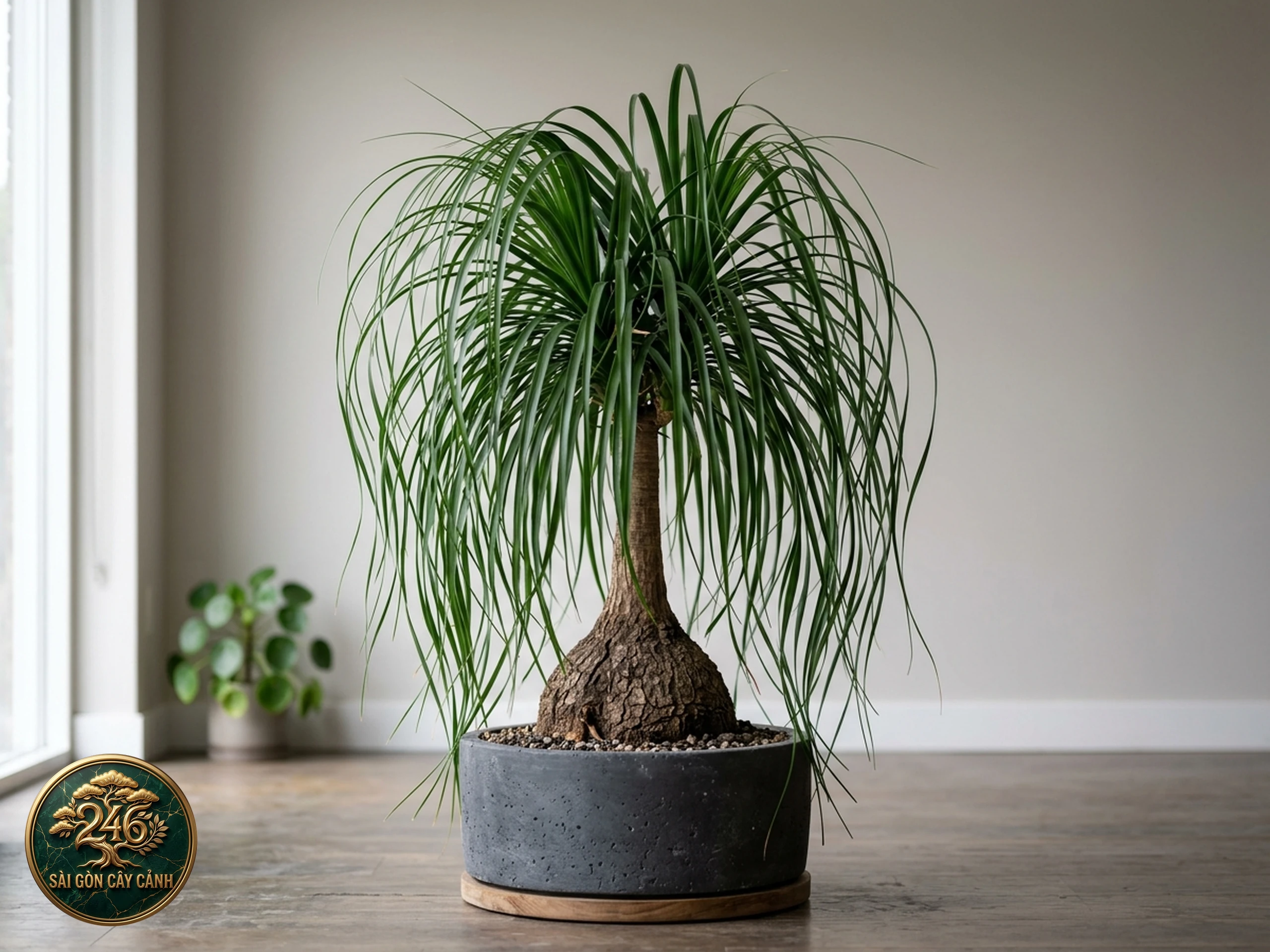
Ponytail palm (Beaucarnea recurvata) is a celebrated pachycaul succulent with a massive swollen caudex and cascading linear strap leaves, celebrated for its striking desert silhouette and extraordinary drought endurance. Despite its deceptive common name, it is not a true palm but rather an evolutionary member of the asparagus family. The definitive factor for success in apartment cultivation lies in establishing a responsive watering routine guided by direct substrate assessment rather than a rigid calendar schedule.
1. Desert Adaptation & Evolutionary Morphology of Beaucarnea Recurvata
| Scientific Name | Beaucarnea recurvata |
|---|---|
| Botanical Family | Asparagaceae (Asparagus family) |
| Growth Habit | Pachycaul succulent with swollen basal caudex and cascading linear foliage |
| Light Exposure | Direct gentle sun to bright indirect light (2,000 – 5,000 lux); thrives in luminous spaces |
| Watering Requirement | Infrequent deep watering; caudex stores months of moisture reserves; allow soil to dry completely |
| Recommended Substrate | Gritty desert blend: 50% pumice and coarse river sand, 30% decomposed granite, 20% screened potting soil |
| Optimal Temperature | 15°C – 32°C (59°F – 90°F); tolerant of seasonal temperature swings |
| Relative Humidity | 30% – 55% RH; ideally suited to dry indoor environments |
| Care Difficulty | Very easy / Highly drought-resistant |
| Pet Safety Status | Non-toxic to pets: Certified harmless to cats, dogs, and horses by ASPCA |
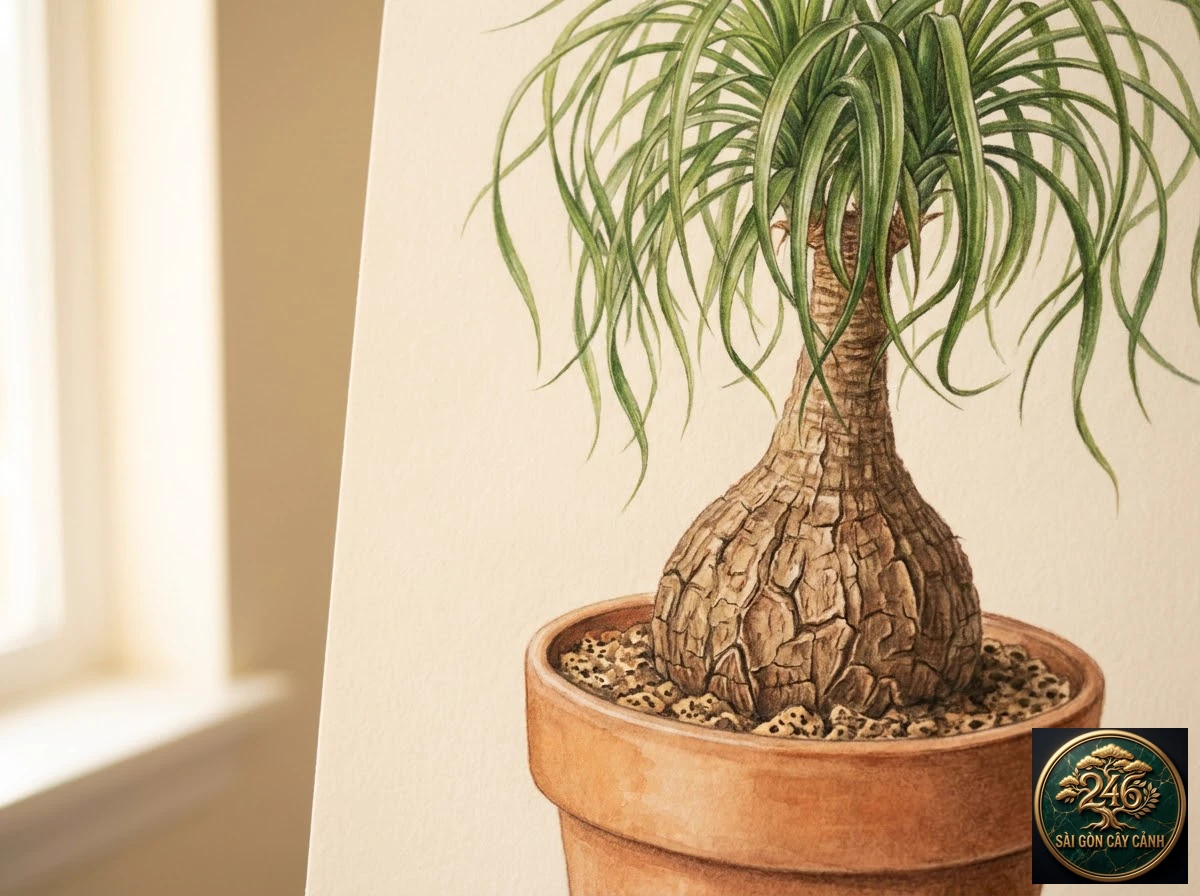
Native to the semi-desert dry deciduous forests and rocky canyon slopes of eastern Mexico, Beaucarnea recurvata is marvelously adapted to survive months of severe arid heat. In its wild habitat, specimens can slowly develop into sculptural trees reaching up to 15 meters in height, with massive bulbous bases over 3 meters wide. This enlarged caudex functions as a biological water reservoir, accumulating moisture during rare tropical storms to sustain the crown throughout long dry periods.
2. Bulbous Caudex Water Storage Anatomy & Cascading Blade Aesthetics
Accurate identification of Beaucarnea recurvata requires close inspection of foliar structure, petiole anatomy, and developmental habit. In commercial horticulture, ambiguous common names frequently cause misidentification, leading to improper care regimens.
The foliage consists of hundreds of narrow, leathery, recurved strap leaves that emerge in a fountain-like cascade from the apex of the stem. The leaf margins are finely serrulate with microscopic silica teeth, providing structural rigidity and discouraging herbivore consumption in the wild. The thick epidermis features stomata deeply recessed in sunken crypts that significantly reduce transpiration losses under bright, desiccating sunlight.
Key Diagnostics: Not a true palm despite its popular trade moniker; distinguished from Nolina longifolia (which produces a taller, less bulbous trunk with stiffer, non-pendulous leaves) and cycads like Cycas revoluta (which bear rigid, spiny pinnae along woody trunks). The distinctive swollen bulbous woody base confirms species identity.
3. Positioning for Maximum Sunlight on West-Facing Terraces
Within urban residences, position the plant in accordance with natural lighting dynamics: Excellent for sunny balconies, south-facing window embrasures, and bright living rooms receiving ample natural illumination. Avoid placing foliage directly in cold convective drafts from air conditioning units, as rapid evaporative loss compromises leaf margins while soil remains wet.
4. Soak-and-Dry Hydration Protocol Designed for Succulent Stems
Do not adhere to a predetermined watering schedule. Transpiration rates fluctuate with seasonal warmth, airflow, and pot volume.
Three-Step Moisture Check:
- Insert a wooden dowel or finger 3-5 cm into the potting medium.
- If damp substrate particles adhere to the probe: Delay watering for 48-72 hours.
- When the probe emerges clean and dry: Saturate the root zone thoroughly until water flows freely from drainage holes, then discard standing saucer water after 15 minutes.
5. Pumice and Volcanic Mineral Substrate for Caudex Protection
The root system of Beaucarnea recurvata demands substantial gas exchange. Dense potting soils compact over repeated waterings, generating hypoxic conditions that foster anaerobic root pathogens.
The root system extends outward from the base of the caudex in a network of fleshy, branching feeder roots. These roots require an exceptionally free-draining mineral potting matrix. If potted in heavy organic soils that remain soggy, the porous tissues of the caudex base absorb excess water uncontrollably, leading to fatal internal rot. Incorporating volcanic pumice, coarse perlite, and crushed granite ensures immediate gravitational drainage while anchoring the heavy caudex securely.
Recommended Soil Mix: Mineral-heavy gritty blend preventing water retention around the sensitive basal caudex, formulated with pumice, coarse perlite, and coarse sand. Unglazed terracotta or specialized aerated nursery pots provide superior root zone oxygenation compared to non-porous containers.
6. Controlled Feeding Regiment to Promote Steady Trunk Girth Growth
Modest, consistent fertilization sustains healthy foliage without mineral burn. During active vegetative flush (spring and summer), supply balanced liquid organic fertilizer diluted to half strength monthly. Discontinue feeding during dormant or low-light winter intervals.
Due to its specialized succulent caudex, Beaucarnea recurvata requires only minimal nutritional intervention. During the active growing period from late spring through late summer, an application of low-nitrogen, high-potassium liquid succulent fertilizer diluted to one-quarter strength every two months encourages healthy cambial expansion in the swollen base. Avoid high-nitrogen agricultural fertilizers, which induce unnaturally rapid, weak strap leaf growth that collapses under its own weight. Cease all fertilization throughout autumn and winter.
7. Troubleshooting Shriveling Bulbs, Brown Foliar Ends, and Soft Bases
| Observed Symptom | Primary Root Cause | Verification Method | Corrective Action |
|---|---|---|---|
| Lower leaf chlorosis (yellowing) | Overwatering / hypoxic root environment | Inspect lower substrate moisture | Extend dry intervals, verify drainage holes |
| Crispy brown margins | Sub-optimal ambient humidity / AC airflow | Measure room humidity, check draft paths | Relocate away from vents, elevate humidity |
| Etiolation (pale, stretched stems) | Insufficient photosynthetic photon flux | Assess light intensity at foliage level | Shift closer to bright indirect source |
| Soft basal stem / wilting | Fungal root compromise (pythium/phytophthora) | Unpot root ball and inspect root firmness | Excise decayed roots, treat with fungicide, repot |
8. Managing Scale Insects Hiding Within Tight Leaf Bases
Mealybugs and two-spotted spider mites present the most frequent pest challenges. Regular foliar cleansing with a damp microfiber cloth serves as primary defense. For localized infestations, isolate the specimen and treat with 70% isopropyl alcohol via cotton swab or apply cold-pressed horticultural neem oil during evening hours.
Because of its tough, fibrous leaf structure and thick waxy cuticle, the ponytail palm is remarkably resistant to insect damage. Occasionally, spider mites or scale insects may lodge deep within the dense central rosette if ambient humidity drops exceptionally low in winter. Inspecting the crown periodically and wiping foliage with a damp cloth or spraying with mild insecticidal soap effectively manages potential pest issues.
9. Propagation Realities: Offshoot Harvesting vs Seedling Growth
Propagate during the active growth season via vegetative stem cuttings or division. Select vigorous nodes possessing aerial root initials. Sever cleanly with sanitized shears, allow callous formation for two hours, then root in clean aerated water or damp sphagnum moss under warm, diffused light.
10. Non-Toxic ASPCA Classification: Peace of Mind for Pet Owners
11. Heavy Monsoonal Protection Protocols for Outdoor Pots
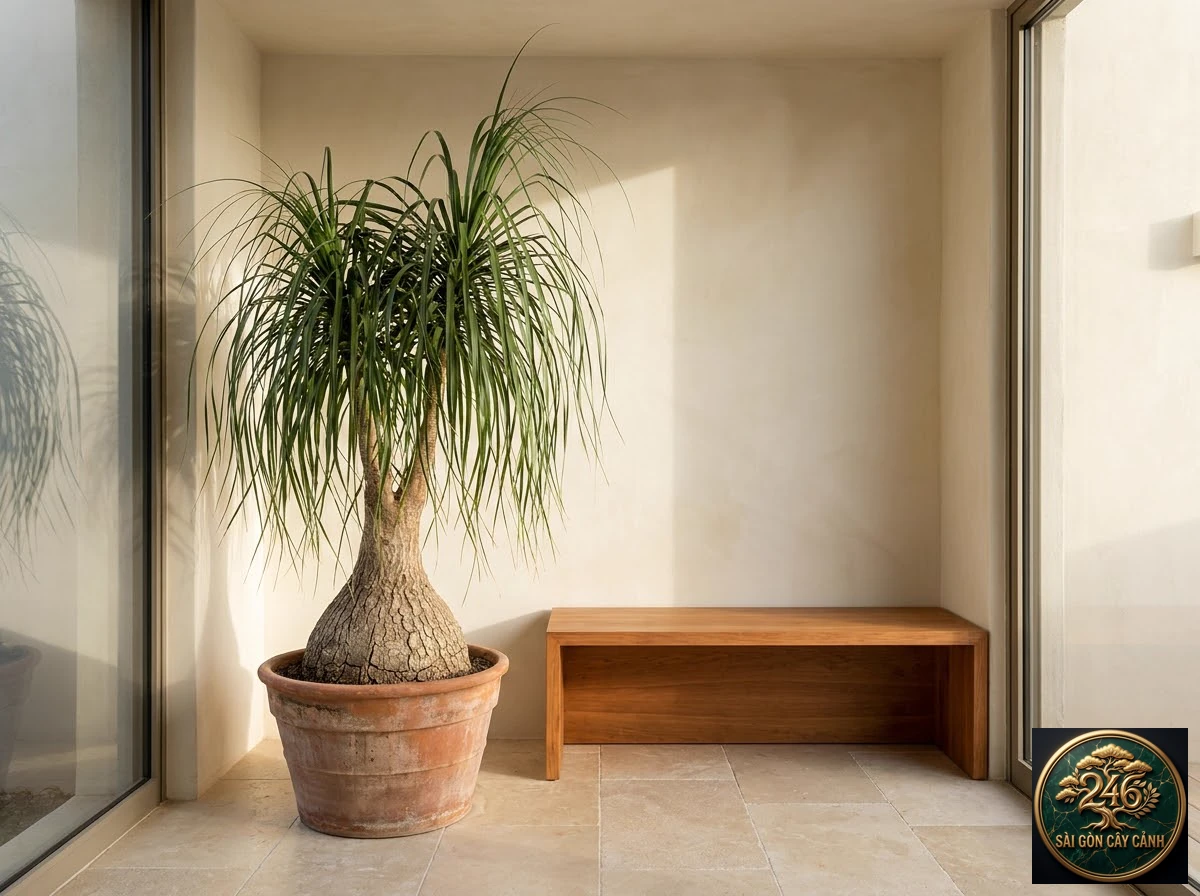
The sculptural foliage of Beaucarnea recurvata harmonizes gracefully with biophilic, Scandinavian, and contemporary architectural settings. Pair alongside trailing pothos or structural snake plants to create dynamic multi-tiered botanical arrangements.
With its dynamic fountain-like crown and sculptural woody base, Beaucarnea recurvata serves as an eye-catching focal specimen in minimalist, modern, and desert-inspired interior decor. It pairs beautifully with architectural terracotta pots, rough stone surfaces, and low-water succulent groupings on bright terraces and airy apartment living rooms.
12. Curated Q&A on Cultivating Statement Elephant-Foot Trees
“Plants can thrive indefinitely in windowless interior spaces” — All vegetative growth requires photosynthetic photons. In rooms devoid of natural light, full-spectrum horticultural LED fixtures must be provided for 8-10 hours daily to maintain metabolic equilibrium.
“Because its common name is ‘palm’, the ponytail palm requires dense tropical humidity” — Despite its common trade designation, Beaucarnea recurvata is a member of the asparagus family (Asparagaceae) native to arid Mexican scrublands, not tropical rainforests. It is exquisitely adapted to dry indoor air and suffers no ill effects from standard domestic heating or air conditioning. Attempting to provide artificial high humidity through enclosed terrariums or perpetual misting will only encourage fungal mold and crown rot around the woody caudex.
13. Frequently Asked Questions (FAQ)
When should this plant be repotted?
Repot every 18-24 months or when roots spiral densely and emerge through bottom drainage ports. Select a replacement container 3-5 cm wider in diameter.
Should foliar shine products or oils be applied?
Never apply culinary oils or commercial leaf gloss. They occlude stomata, hindering gas exchange and attracting particulate debris. Clean foliage solely with pure water.
Is daily misting beneficial in air-conditioned apartments?
Misting provides only transient humidity spikes and may cause fungal leaf spot if foliage remains wet without air movement. Use a pebble tray or ultrasonic humidifier for sustained ambient moisture.
How can I distinguish underwatering from overwatering?
Underwatered foliage exhibits uniform dry limpness in a desiccated root ball. Overwatered plants display yellowing lower leaves accompanied by mushy, dark petioles and sodden soil.
Can tap water be used directly?
Municipal water often contains dissolved chlorine and fluorides that cause tip burn in sensitive foliage. Allow water to sit uncovered for 24 hours prior to irrigation.