Living plant profile
Short-Leaved Aloe (Aloe brevifolia): Glaucous Cuticle, Abaxial Teeth and Clump-Forming Rockery Cultivation
Aloe brevifolia
Sai Gon Cay Canh • Living Herbarium V2 Short-Leaved Aloe (Aloe brevifolia): Glaucous Cuticle, Abaxial Teeth and Clump-Forming Rockery Cultivation Aloe brevifolia is a delightful dwarf succulent endemic to Western Cape limestone hills, renowned for short fleshy glaucous-blue leaves, prominent cartilaginous white teeth on dorsal keels, and attractive dense clumping habits. Record ID: SGCC-PLANT-00537 Scientific […]
Short-Leaved Aloe (Aloe brevifolia): Glaucous Cuticle, Abaxial Teeth and Clump-Forming Rockery Cultivation
1. Botanical Morphology & Ecological Adaptations
Aloe brevifolia, widely recognized under the vernacular name Short-Leaved Aloe / Kleinaalwyn, is a highly distinguished succulent perennial belonging to the family Asphodelaceae. Native to the ecologically diverse landscapes of Western Cape, South Africa, this species has evolved sophisticated anatomical adaptations to endure severe seasonal droughts, rocky scree terrain, and fluctuating thermal regimes.
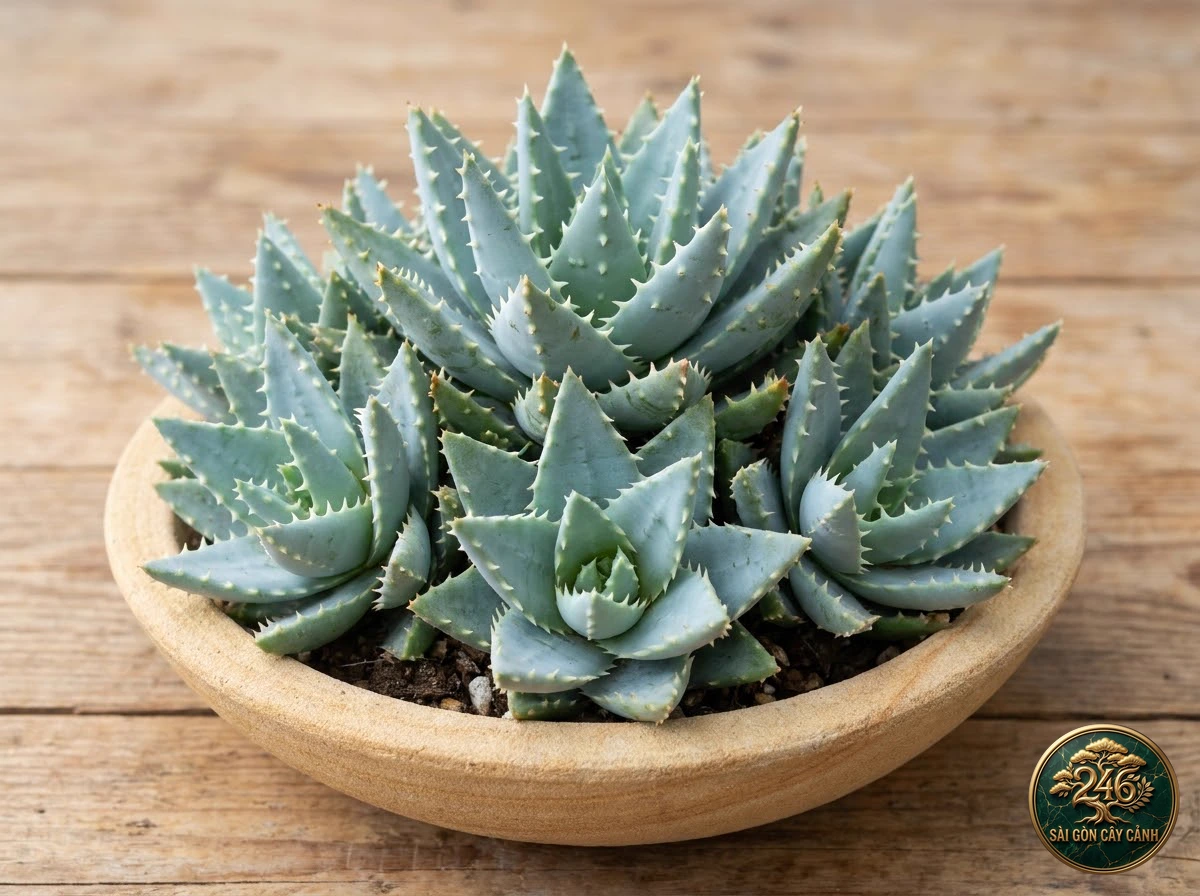
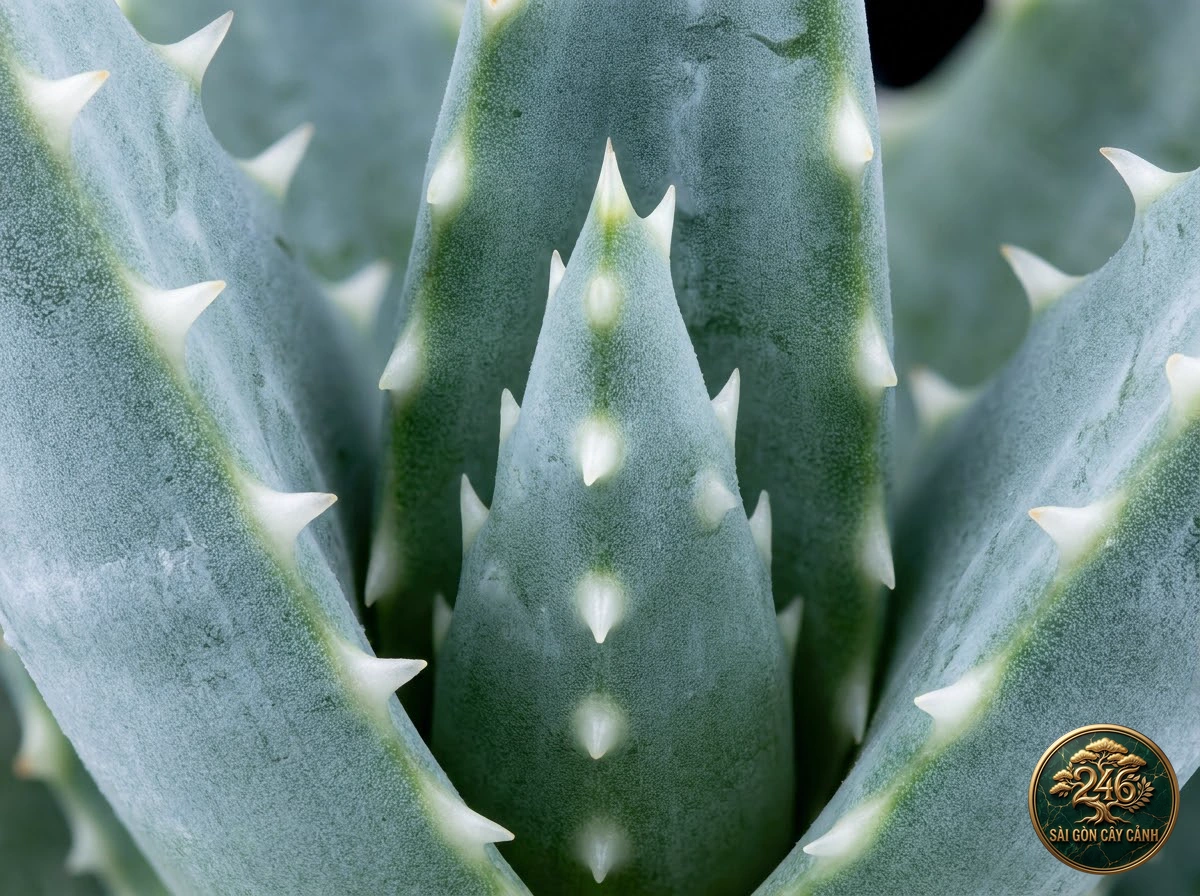
Aloe brevifolia grows into dense dwarf cushions composed of tightly packed rosettes with short triangular succulent leaves of powdery glaucous blue. Foliar margins and keels are armed with stout cartilaginous ivory teeth reminiscent of miniature shark teeth.
The stout root system of Aloe brevifolia accommodates coastal limestone clays of South Africa, generating subterranean rhizomatous offsets that carpet exposed soils. Stout cylindrical racemes present vivid scarlet tubular flowers.
2. Taxonomic Chronicle & Botanical History
Aloe brevifolia (Short-Leaved Aloe) was classified in 1768 by Philip Miller in The Gardeners Dictionary. The specific epithet brevifolia combines Latin brevis (short) and folium (leaf), accurately describing the stout, triangular, fleshy leaves characteristic of the species. Endemic to coastal limestone hills of the Western Cape (from Caledon to Bredasdorp), it forms dense mounding cushions on exposed calcareous outcrops battered by maritime Atlantic breezes.
3. Histological Specialization & CAM Photosynthetic Pathway
Anatomical examination of Aloe brevifolia reveals specialized adaptation to sun-drenched calcareous outcrops: short deltoid leaves measure only 6 to 9 cm long yet up to 2 cm thick, packed with succulent parenchyma. The epidermis is coated with a dense chalky glaucous wax layer that scatters harsh ultraviolet radiation and curbs cuticular transpiration. Most uniquely, the abaxial foliar keel is armed with a longitudinal row of stout conical white cartilaginous prickles, mirrored by sharp marginal teeth, creating formidable physical protection against browsing wildlife.
4. Comprehensive Care Compass (Care Compass 360°)
La bàn chăm sóc Sài Gòn Cây Cảnh
5. Diagnostic Pathology & Clinical Horticultural Interventions
The powdery glaucous epicuticular wax on Aloe brevifolia shields cellular chloroplasts; loss of waxy coating or dull greening flags insufficient direct solar exposure.
| Observed Physical Symptom | Etiological Factor / Pathology | Horticultural Intervention Protocol |
|---|---|---|
| Foliage loses powdery glaucous blue hue, turning dull deep green | Insufficient direct solar radiation halting natural epicuticular wax production | Incrementally introduce plant to 3-4 hours of direct morning sunshine |
| Cartilaginous dorsal spines turn dark brown, soggy and necrotic | Substrate humidity remains excessively elevated, encouraging root pathogen ingress | Extend dry intervals, top-dress container with coarse volcanic pumice to lift leaves |
| Prolific offset colony cracks ceramic planter from internal pressure | Vigorous stoloniferous clustering exceeding container structural capacity | Repot into wider shallow terracotta dish or divide offsets into standalone pots |
| Circular reddish-orange raised pustules erupting across lamina | Aloe rust infection caused by pathogenic fungus Uromyces aloes | Excise severely infected leaves cleanly, spray with copper fungicide, maximize ventilation |
6. Infrageneric Taxonomic Differentiation Matrix
The morphological analysis below clarifies distinctive characteristics separating dwarf Aloe brevifolia from comparable species such as Aloe humilis:
| Taxonomic Characteristic | Aloe brevifolia (Short-Leaved Aloe / Kleinaalwyn) | Comparative Counterpart A | Comparative Counterpart B |
|---|---|---|---|
| Foliar Coloration | Striking glaucous blue-grey masked by epicuticular wax | Glossy deep green devoid of waxy bloom | Jade green adorned with irregular white mottling |
| Abaxial Spines | Distinctive line of white conical teeth along dorsal keel | Completely smooth abaxial surface with zero spines | Scattered hard tuberculate white bumps on both faces |
| Growth Silhouette | Compact low-mounding cushion producing dense basal offsets | Solitary upright columnar pachycaul trunk | Prostrate crawling or climbing scrambling vine |
| Foliar Dimensions | Short stout triangular leaves measuring only 6 – 9 cm | Elongated tapering swords measuring 30 – 60 cm | Flattened strap-shaped flexible blades |
7. Vegetative Propagation & Offsetting Protocols
Propagating Aloe brevifolia is exceptionally brisk through division of dense clustering offsets. Due to vigorous caespitose habits, a single crown develops into an intricate cushion of 10 to 15 interconnected rosettes within two years. During spring or autumn, divide offset clumps carrying independent root fibrils with a clean knife, dust incisions with sulfur, and dry for 3 to 4 days. Plant into porous terracotta containing coarse gravel, volcanic pumice, and crushed limestone chips; rooted cushions establish rapidly and resume branching within a single season.
8. Phytopathology & Integrated Pest Management
Disease resistance in Aloe brevifolia is formidable due to its heavy waxy cuticle, yet it remains susceptible to subterranean fungal root rot if grown in compact, poorly draining soil during wet seasons. Symptoms involve basal leaf liquefaction into black mush and softening of white spines. Remediation requires unpotting, washing roots clean, amputating all darkened roots, immersing in systemic fungicide for 10 minutes, drying bare-root for a week, and replanting into pure mineral grit. Top-dress with volcanic gravel to keep lower foliage elevated above damp soil.
9. Companion Planting & Xerophytic Groupings
In Mediterranean rockeries and outdoor succulent borders, Aloe brevifolia partners impeccably with glaucous beauties including Dudleya brittonii, powdery Echeveria laui, and juvenile Cape Aloe specimens. Interweaving blue-grey foliage tones with crisp white spines generates an enchanting arid tapestry that remains resilient, architectural, and effortlessly sustainable.
10. Spatial Placement & Interior Architectural Styling
Featuring dense mounding cushion geometry and distinctive glaucous blue coloration, Aloe brevifolia is an ideal living accent for Coastal, Mediterranean, and Rustic Minimalist decor. It achieves sublime expression when housed in wide shallow terracotta pans, raw sandstone troughs, or coarse sandy-textured ceramics. Positioned on sun-drenched windowsills, outdoor patio dining tables, or modern apartment verandas, it introduces refreshing coastal spirit and wild architectural charm.
11. Urban Apartment Microclimates & Architectural Cultivation
Aloe brevifolia introduces stout architectural presence to sunny south-facing windowsills or open apartment verandas. Its chalky blue-grey wax protects against blistering urban heat without foliar wilting. Wide shallow terracotta pans allow offset clusters to spread outward as naturally as on native coastal limestone cliffs.
Aloe brevifolia serves as a stellar selection for compact dish gardens on dining consoles or reception desks, celebrated for maintaining a dwarf architectural footprint that never grows leggy. Cultivated in shallow terracotta bowls, its rhizomatous offsets form a captivating powder-blue succulent carpet. Provide at least four hours of direct morning sun daily to keep ivory marginal prickles sharply defined.
The distinctive powdery blue hue of Aloe brevifolia pairs impeccably with modern architectural materials including board-formed concrete, dark walnut, and matte black steel. Showcased within Minimalist, Bauhaus, or Japandi interior settings, this compact succulent injects dynamic textural depth and sophisticated biophilic discernment.
12. Domestic Pet Safety & Household Placement Guidelines
TOXIC TO COMPANION PETS (ASPCA Warning) – Contains aloin latex capable of triggering mild to moderate gastric distress in companion animals.
Despite its petite stature, the rigid marginal teeth of Aloe brevifolia require careful handling; position vessels upon floating shelving away from playful infant hands.
13. In-Depth Botanical Q&A with Sai Gon Cay Canh
Frequently Asked Question: Why has my Short-Leaved Aloe lost its chalky blue-grey powder, turning ordinary glossy green?
Expert Diagnosis from Saigon Cay Canh: The glaucous blue-grey bloom coating Aloe brevifolia foliage consists of microscopic epicuticular wax crystals synthesized to shield tissues from intense solar radiation. Deprived of direct sunlight in sheltered indoor positions, the plant curtails wax synthesis, reverting to a smooth deep green cuticle. To revive its iconic powdered blue hue, transition the specimen to an outdoor location receiving at least 4 to 5 hours of unfiltered direct sunshine daily; within several weeks, the protective glaucous mantle will restore its thick chalky luminescence.
14. Nursery Botanical Journal & Green Sanctuary Notes
Nursery journals at Sai Gon Cay Canh capture striking color dynamics in Aloe brevifolia: under sunny dry conditions, chalky blue leaves and white dorsal teeth form dramatic textural contrast, evoking coastal tranquility.
Nursery cultivation logs confirm astonishing drought tolerance in Aloe brevifolia: even when left unirrigated for four weeks under scorching heat, its rosettes merely contract slightly, regaining full plump turgidity within hours following deep rehydration.
15. Seasonal Mineral Nutrition & Micro-Nutrient Management
Fertility regimens for Short-Leaved Aloe benefit from alkaline minerals including calcium and magnesium to fortify dorsal prickles. Blending crushed calcified grit or dolomite into potting soil during repotting hardens foliar tissue and enriches the glaucous mantle.
Evolving naturally upon alkaline calcareous limestone soils, Aloe brevifolia relishes potting mixes amended with crushed oyster shell or horticultural dolomite limestone. Scatter a pinch of organic slow-release granules around the vessel rim before seasonal rains to deliver sustained trace minerals.
16. In-Situ Conservation Status & Ethical Botanical Stewardship
Aloe brevifolia is a narrow-range endemic restricted to coastal Overberg limestone ridges threatened by agricultural clearing. Sai Gon Cay Canh is committed to preserving this lineage through dedicated nursery offset propagation.
In the Overberg lowlands, natural colonies of Aloe brevifolia endure severe habitat loss driven by agricultural pastures. Sai Gon Cay Canh champions this threatened germplasm through controlled vegetative propagation, sharing conservation awareness across the horticultural community.
17. Native Habitat Ecology & Environmental Stress Physiology
Aloe brevifolia is a localized dwarf succulent restricted to coastal limestone outcrops and calcareous clay slopes within the Overberg region of South Africa’s Western Cape. Experiencing a Mediterranean climate marked by wet winters and arid summers, the species forms dense, low-growing colonies. Individual rosettes measure merely 8 to 10 cm in diameter but proliferate via subterranean rhizomes to form extensive succulent mats that anchor vulnerable limestone screes.
Environmentally, the short, thick triangular blades of Aloe brevifolia are blanketed in a powdery glaucous epicuticular wax (pruinose layer) that reflects intense ultraviolet radiation on exposed coastal headlands. Robust ivory cartilaginous teeth lining foliar margins and dorsal keels defend stored water reserves against grazing desert rodents. The shallow, densely branched root network rapidly absorbs transient winter rains across alkaline limestone soils. For urban container culture, it offers an exceptionally durable dwarf architectural profile, demanding minimal space while maintaining rugged geometric compactness when provided full sun.
Nursery Care Journal & Living Greenery Moments
At Saigon Cay Canh greenhouse, each photograph captures genuine everyday care moments between plant lovers and living greenery, spreading a passion for nature and green-living inspiration.

18. Concluding Horticultural Appraisal
Aloe brevifolia stands as a testament to the rugged endurance of succulent flora. Sai Gon Cay Canh is honored to curate and share authoritative botanical guidelines on this exceptional species.
Despite its compact dwarf footprint, Aloe brevifolia embodies extraordinary stamina and supreme drought resistance forged upon harsh coastal limestone outcrops. The interplay between powdery glaucous blue coloration and sharp ivory teeth transforms every pot into a singular living sculpture, elevating any sophisticated domestic succulent collection.