
Living plant profile
Snowflower peace lily
Spathiphyllum floribundum
Comprehensive botanical dossier for Snowflower peace lily (Spathiphyllum floribundum). Identification, lighting calibration, porous substrate formulation, and cultivation guide by Saigon Cay Canh.
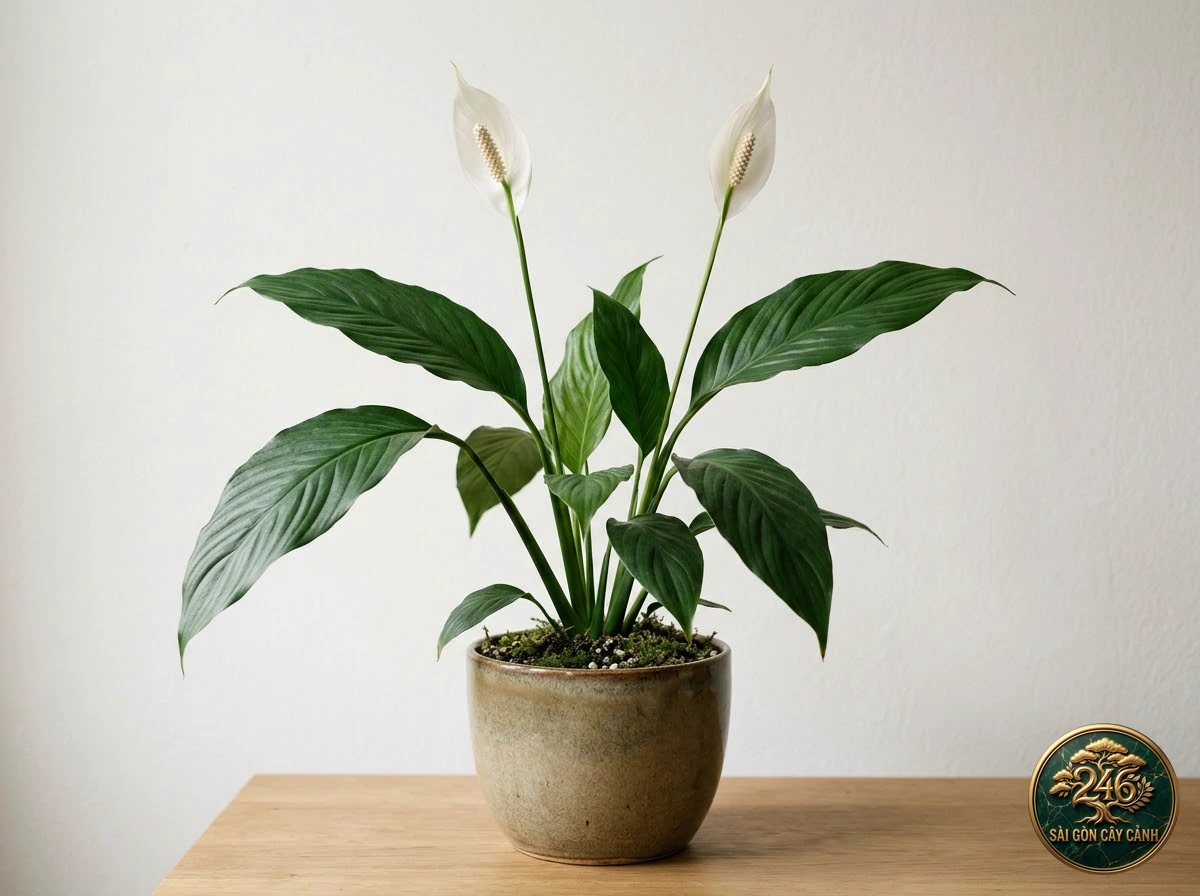
Snowflower peace lily (Spathiphyllum floribundum) is the most enchanting miniature jewel of the peace lily genus, native to northwestern South American rainforests. Celebrated as the ‘Snowflower peace lily’ for its dwarf compact habit, velvety matte-green foliage, and prolific year-round production of petite white spathes, it is a beloved desktop companion.
Sài Gòn Cây Cảnh Care Compass
1. Core Botanical Taxonomy & Cultural Specifications
| Scientific Name | Spathiphyllum floribundum |
|---|---|
| Botanical Family | Araceae (Aroid Family) |
| Native Distribution | Lowland rainforest understories of northwestern South America across Colombia, Ecuador, and Panama |
| Growth Demeanor | Compact dwarf terrestrial aroid forming dense miniature clumps reaching 25 to 40 cm height |
| Lighting Threshold | Gentle diffused daylight (1,200 – 2,500 lux); delicate foliage thrives in sheltered shade |
| Hydration Cadence | Hydrate when top 30% dries; maintains cool capillary moisture with free drainage |
| Substrate Formulation | 40% fine pumice, 25% fine bark chips, 20% shredded sphagnum moss, and 15% horticultural perlite |
| Thermal Range | 20°C – 30°C (68°F – 86°F; thrives in warm tropical interiors, halts development below 15°C/59°F) |
| Relative Humidity | 70% – 90% (High humidity sustains velvety matte turgor and fuels continuous blooming) |
| Cultivation Difficulty | Easy (Exceptionally floriferous dwarf habit, perfectly scaled for desktop and bookshelf display) |
| Pet Safety Profile | Toxic (Contains insoluble calcium oxalate raphides; display securely beyond domestic pets) |
Cataloged in the Royal Botanic Gardens Kew (POWO) database, Spathiphyllum floribundum is recognized as a miniature terrestrial aroid indigenous to the wet humic floors of northwestern South American rainforests. The specific epithet ‘floribundum’ denotes ‘profuse flowering’, capturing its remarkable floriferous nature.
The plant forms a compact rhizome that branches close to the substrate surface, producing dense mounds with a maximum height of 25 to 40 cm. Slender petioles measure 12 to 20 cm, flanked by basal sheaths that cradle miniature blades into a neat hemispherical dome.
Delicate fibrous roots spread shallowly through the aerated substrate, favoring steady capillary moisture. Given its compact footprint and prolific blooming capacity, this species represents the primary ancestral parent of modern dwarf indoor peace lily hybrids.
2. Morphological Identification & Foliar Architecture
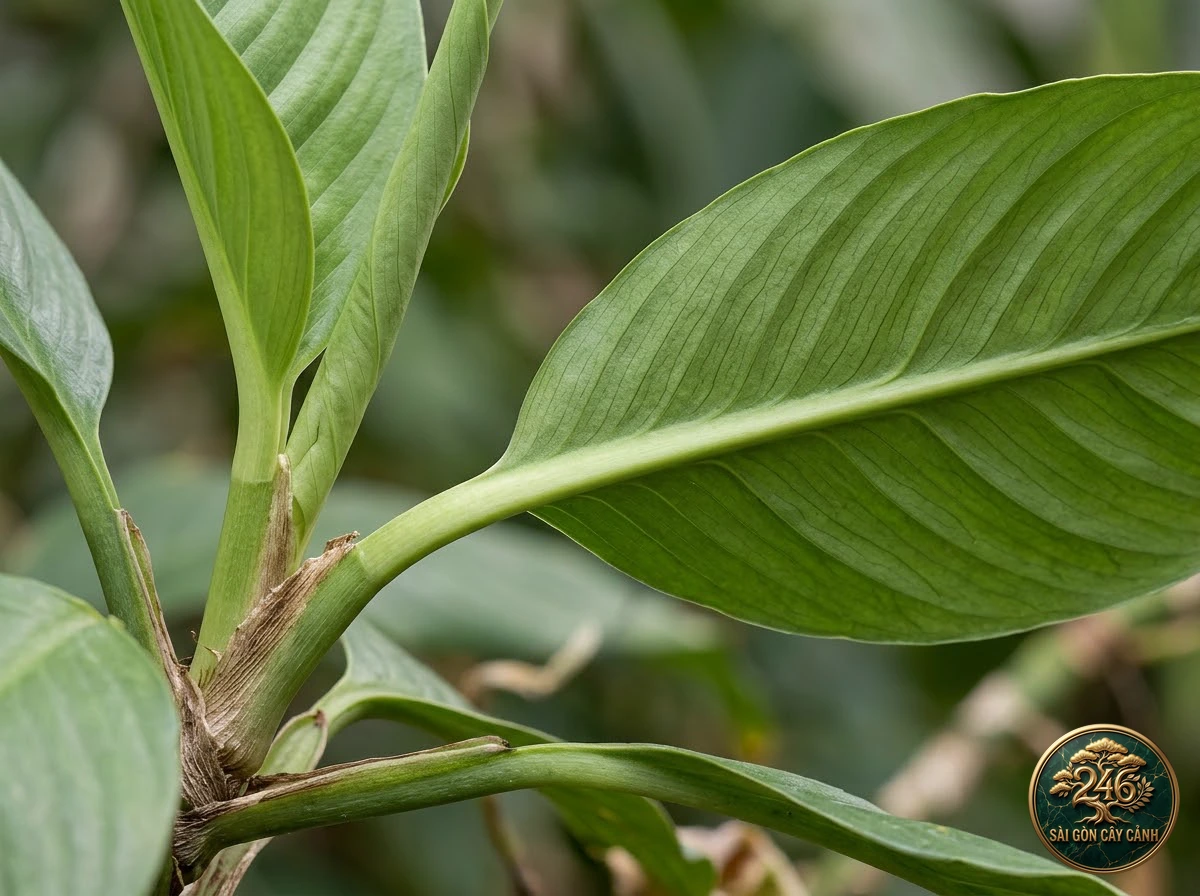
Foliar blades of Snowflower peace lily exhibit an elliptic to oblong-lanceolate shape measuring 12 to 20 cm in length and 5 to 8 cm in width. Its most striking diagnostic feature is a velvety matte adaxial texture in rich forest green, accentuated by a pale green to silvery white central costa.
The petite inflorescence is exquisitely proportioned: an ovate porcelain-white spathe measuring 5 to 8 cm long and 3 to 4 cm wide cups a short cylindrical yellowish-cream spadix (3 to 5 cm). Mature clumps can produce 4 to 8 concurrent white spathes, creating a snowflower spectacle over green velvet.
Under stereomicroscopic magnification, the adaxial leaf surface of Spathiphyllum floribundum reveals a micro-papillate velvety epidermis of conical cells that scatter incident light, yielding a luxurious matte velvet finish. A delicate pale silver-green feathering runs along the central midrib, creating a refined aesthetic contrast against dark green margins.
3. Photometric Calibration & Window Exposure Optimization
Adapted to deep rainforest shade, Spathiphyllum floribundum requires gentle filtered daylight between 1,200 and 2,500 lux. Displayed upon office desks with ambient window illumination or bookshelves 1.5 meters from windows, it blooms steadily without stress.
Its delicate velvety foliage is vulnerable to direct solar radiation; unfiltered midday rays bleach chlorophyll and scorch leaf margins. Conversely, prolonged placement in deep shade below 700 lux decreases inflorescence frequency.
Adapted to the deepest floor of Colombian rainforests, the Snowflower peace lily requires a modest PPFD of only 40 to 90 umol/m2/s to sustain continuous floral initiation. It is exceptionally well suited for desktop workspaces enjoying soft indirect light (1,200 – 2,400 lux) or standard office LED illumination for 8 to 10 hours daily.
4. Rhizomatous Clump Architecture & Growth Management
Irrigation for Snowflower peace lily requires attentive discipline: hydrate thoroughly when the top 30% substrate feels dry. Because dwarf cultivars occupy smaller containers (12 to 18 cm), media dries faster than deep planters, necessitating checks every 3 to 4 days.
Strictly utilize purified water or clean rainwater for irrigation, avoiding chlorinated municipal tap water to preserve delicate velvety leaf tips.
The optimal thermal envelope spans 20°C to 30°C (68°F – 86°F). The specimen adapts seamlessly to climate-controlled office interiors around 22°C to 26°C, halting growth when temperatures drop below 15°C (59°F).
Ambient humidity should hover between 70% and 90%. Placing the small planter upon a desktop pebble humidity tray maintains a localized microclimate, prolonging spathe longevity.
Optimal cultivation temperatures range from 20°C to 30°C (68°F – 86°F). In air-conditioned environments, sustain relative humidity between 65% and 85% using gravel moisture trays to prevent spathe tips from desiccating prematurely and maintain year-round blooming.
The plant maintains a naturally dwarf, compact clumping habit reaching only 30 to 45 cm in height without pruning. Slender yet resilient petioles emerge densely from subterranean rhizomes, forming a tidy hemispherical mound ideally proportioned for desktop ceramics.
5. Porous Aggregate Substrate Engineering & Aeration Dynamics
Growing media for this miniature aroid requires fine-grained porous aggregates: 40% fine pumice (3-5mm), 25% finely shredded pine bark, 20% chopped sphagnum moss, and 15% perlite, buffered to pH 5.5 to 6.2.
This aggregate formula preserves cool capillary moisture around fragile feeder rootlets while ensuring instantaneous drainage to protect small rhizomes from decay.
Because fibrous roots of this dwarf peace lily are delicate and shallow, substrate formulations require fine mineral aggregates: 35% fine pumice (2-5mm), 30% shredded bark and moss, 20% desalted coir pith, and 15% perlite. This mixture maintains cool micro-moisture without compacting.
6. Organic Nutrition Schedules & Periodic Micronutrient Priming
Nutritional supplementation requires ultra-diluted concentrations due to diminutive biomass. Apply liquid organic bio-fertilizer at quarter-strength every three weeks during active blooming phases.
Avoid concentrated synthetic fertilizers that scorch tender root hairs, flushing substrates thoroughly with purified water bi-monthly to eliminate salt accumulation.
True to its specific epithet ‘floribundum’ (profuse bloomer), this plant initiates continuous blossoms when supplied with regular nutrients. Diluted organic liquid feeds rich in potassium and trace boron administered monthly preserve pristine white spathes and vibrant golden-yellow spadices.
7. Clinical Diagnostic Matrix & Rapid Correction Protocols
| Clinical Symptom | Primary Etiology | Diagnostic Evaluation | Corrective Prescription |
|---|---|---|---|
| Velvety leaf tips blackened and curled crisp | Chlorine/fluoride tap water toxicity or ambient humidity <55% | Check desktop hygrometer and evaluate irrigation water purity | Switch to purified water and place planter atop pebble humidity tray |
| Prolonged cessation of white spathe emergence | Insufficient desktop illumination below 700 lux threshold | Measure ambient illuminance with photometric sensor | Relocate planter closer to window or supplement with LED desk lamp |
| Complete wilt and drooping of all miniature petioles | Severe desiccation of root ball in small desktop container | Inspect container weight and probe substrate moisture | Bottom-soak planter in shallow cool water for 15 minutes to rehydrate |
| Lower leaves yellowing with soft foul-smelling roots | Excessive irrigation causing root rot in poorly draining pot | Examine root ball through bottom drainage apertures | Trim decayed rootlets, repot in fresh porous mix, reduce watering |
8. Cryptic Pest Prophylaxis & Foliar Surface Sanitation
Mealybugs may shelter inside compact petiole sheaths in stagnant air. Spot-clean infestations promptly using cotton swabs dipped in 70% rubbing alcohol.
Gently dust the velvety foliar surface with a soft cosmetic brush weekly to maintain clean stomatal apertures and pristine aesthetic appeal.
Velvety foliage collects fine domestic dust. Clean blades weekly using a soft camel-hair brush or gentle micro-misting; avoid aggressive wiping with coarse cloths that could abrade the delicate micro-papillate epidermal finish.
9. Asexual Propagation Methodology & Root Strike Protocols
Propagation is readily accomplished via clump division during annual spring repotting. Gently separate small offsets bearing 2 to 3 healthy leaves and established roots, cutting cleanly with a sterile blade.
Pot offsets into miniature containers with fresh porous mix, sustaining steady moisture in humid shade. Offsets establish new roots and flower within 6 to 8 weeks.
Propagate easily by separating daughter offshoots during spring potting maintenance. Excise crowns retaining at least 3 leaves and healthy rootlets with sharp shears, potting into 12-15 cm containers and keeping in shaded warmth for two weeks to establish.
10. Companion Animal Safety & Veterinary Toxicology Protocols
The plant stores insoluble calcium oxalate raphides causing oral burning if chewed; display planters upon desks or high bookshelves away from companion pets.
11. Biophilic Curation & Contemporary Interior Design Styling
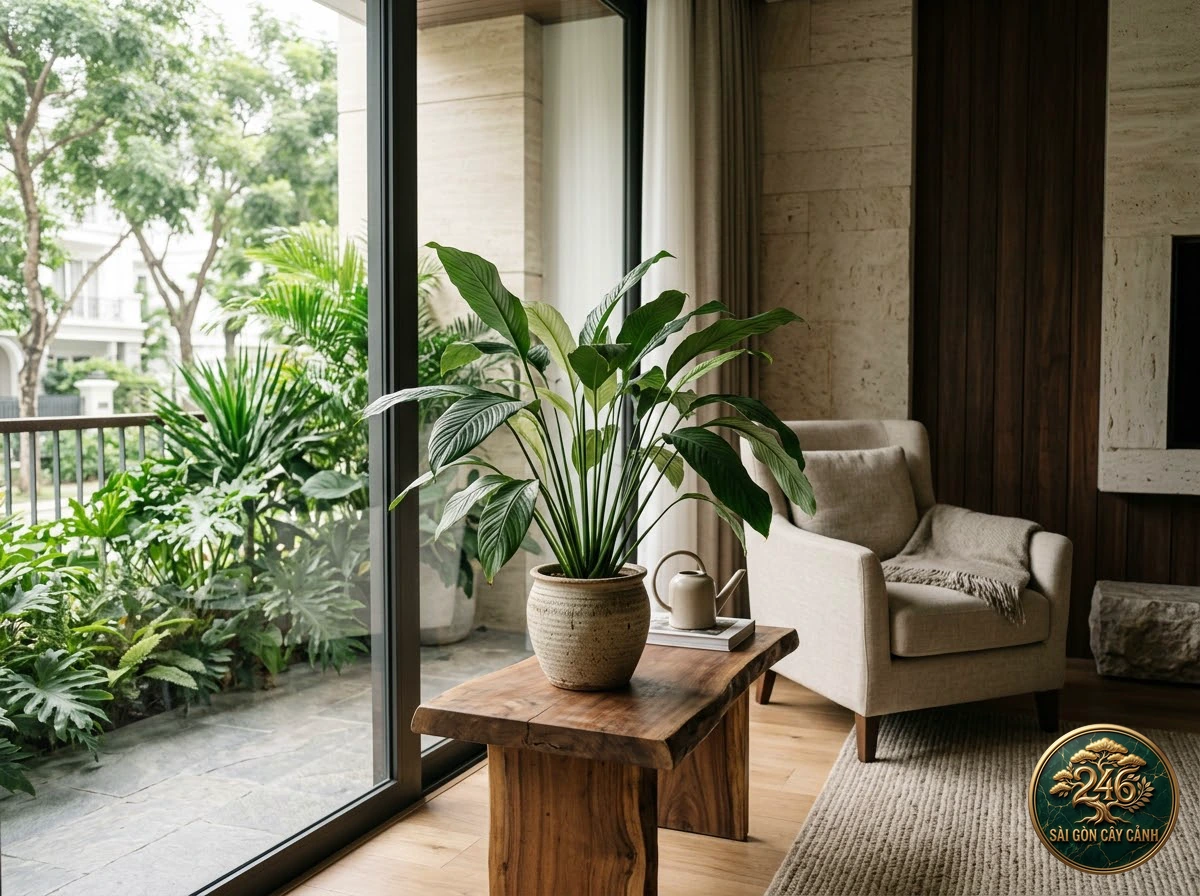
Within desktop Biophilic interior styling, Snowflower peace lily serves as an exquisite living centerpiece. Its compact stature, velvety deep-green canopy, and pristine white blossoms enliven executive desks, bookshelves, and intimate lounge tables.
The graceful presence of snow-white spathes fosters deep tranquility, relieving workday stress and inspiring fresh creative energy throughout daily routines.
With its diminutive stature, soft velvety canopy, and prolific display of delicate white flowers, the Snowflower peace lily is the ultimate choice for executive desks, coffee tables, reception counters, and minimalist bookshelves.
12. Master Principles for Sustainable Indoor Acclimatization
To maintain continuous prolific flowering and luxurious velvety foliage on Spathiphyllum floribundum indoors, growers should master three core rules:
- Hydration axiom: Irrigate gently when top 25-30% substrate dries, utilizing pure dechlorinated water to protect fine feeder roots.
- Illumination axiom: Deliver gentle indirect light (1,200 – 2,400 lux), strictly shielding soft velvety foliage from harsh direct rays.
- Maintenance axiom: Provide dilute organic nutrients monthly and excise spent flower stalks flush to base to prompt fresh blooms.
Nursery Care Journal & Living Greenery Moments
At Saigon Cay Canh greenhouse, each photograph captures genuine everyday care moments between plant lovers and living greenery, spreading a passion for nature and green-living inspiration.

13. Frequently Asked Questions Regarding Snowflower peace lily (FAQs)
Does Snowflower peace lily truly bloom year-round?
Yes. Provided with bright diffused daylight (>1,500 lux) and diluted organic nutrition, it flowers continuously across all four seasons.
Is it suitable for compact corporate office desks?
Extremely well-suited due to its petite height under 35 cm, notable air-purifying qualities, and elegant velvet texture requiring minimal space.
How long does each individual spathe persist?
Each white spathe remains pristine and showy for 3 to 5 weeks before transitioning to pale green as the flower ages.
How can one maintain the velvety matte foliar sheen?
Avoid commercial leaf-shine sprays entirely; gently dust with soft cosmetic brushes and maintain ambient humidity above 70%.
Can it be cultivated in self-watering sub-irrigation pots?
Yes, provided the mix is predominantly volcanic pumice to prevent saturation, though traditional terracotta pots with drainage remain safest.
Why is the Snowflower peace lily exceptionally popular for office desktop displays?
Because of its compact 30-45 cm height, space-saving demeanor, eye-soothing velvety foliage, and remarkable ability to bloom profusely even under artificial indoor office fluorescent and LED lighting.