
Living plant profile
Triostar stromanthe
Stromanthe sanguinea
Comprehensive botanical dossier for Triostar stromanthe (Stromanthe sanguinea). Identification, lighting calibration, porous substrate formulation, and cultivation guide by Saigon Cay Canh.
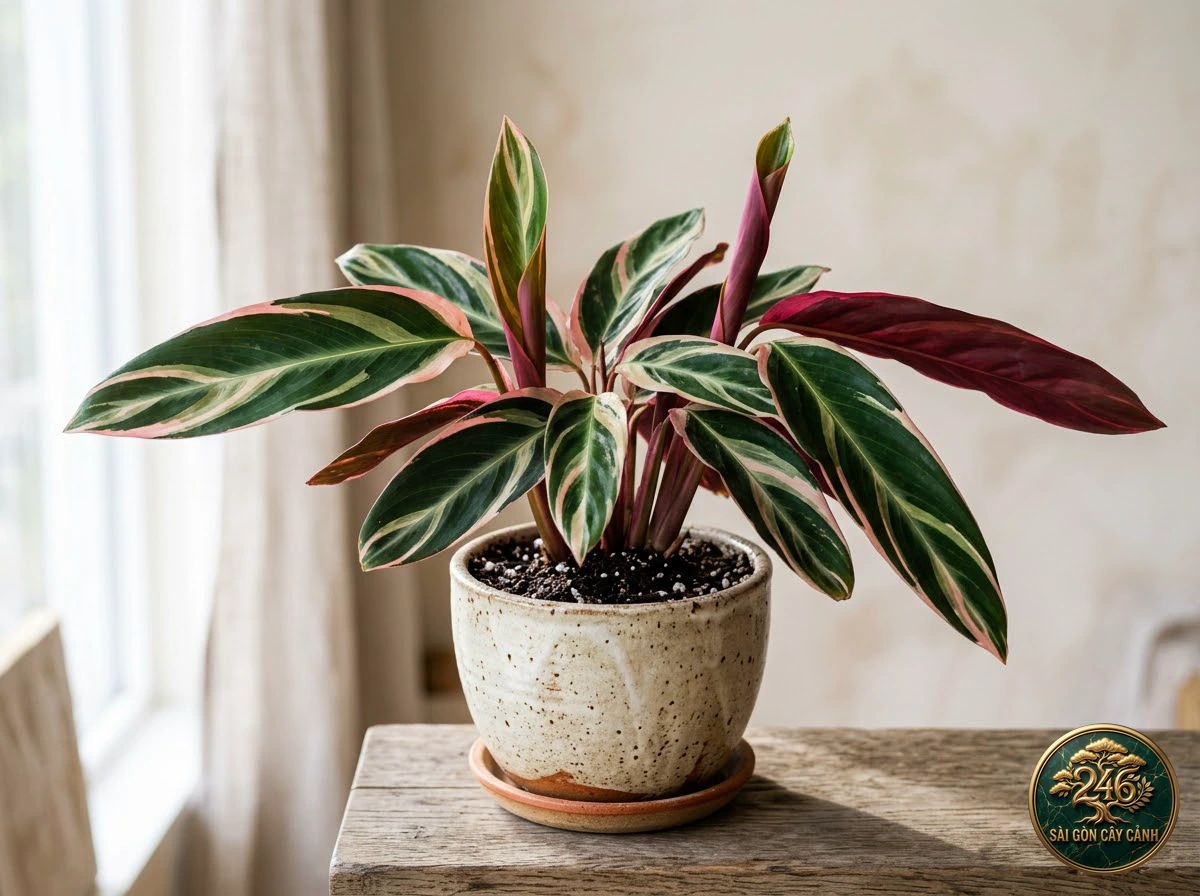
Triostar stromanthe (Stromanthe sanguinea) is universally celebrated as one of the most stunning tricolor tropical foliage masterpieces indigenous to the Atlantic rainforests of southeastern Brazil. The plant captivates botanical collectors through dynamic multi-hued brushstrokes blending creamy-ivory, pastel pink, and forest green on top, dramatically underpinned by luminescent ruby-magenta abaxial surfaces.
Sài Gòn Cây Cảnh Care Compass
1. Core Botanical Taxonomy & Cultural Specifications
| Scientific Name | Stromanthe sanguinea |
|---|---|
| Botanical Family | Marantaceae (Prayer Plant Family) |
| Native Distribution | Southeastern Brazil (Atlantic Coastal Rainforests) |
| Growth Demeanor | Erect bushy herbaceous perennial branching into dense colorful stands |
| Lighting Threshold | Generous bright diffused indirect light (1,400 – 2,200 lux) |
| Hydration Cadence | Irrigate with demineralized water once upper 2-3cm of substrate dries |
| Substrate Formulation | 35% pumice, 25% shredded moss, 20% mini pine bark, 20% perlite |
| Thermal Range | 19°C – 28°C (66°F – 82°F), vegetative arrest below 15°C (59°F) |
| Relative Humidity | Optimal ambient relative humidity 65% – 85% |
| Cultivation Difficulty | Moderate (Demands pure demineralized water and elevated humidity) |
| Pet Safety Profile | Completely non-toxic to companion animals (ASPCA verified) |
Stromanthe sanguinea (scientifically allied with *Stromanthe thalia* by Kew POWO authorities) was cataloged during nineteenth-century Neotropical expeditions. The generic name derives from Greek ‘stroma’ (bed/couch) and ‘anthos’ (flower), referring to the flattened inflorescence bracts, while the epithet ‘sanguinea’ celebrates the saturated blood-red coloration of its abaxial surfaces.
Within primary Atlantic coastal rainforest floors of Brazil, the species matures into luxuriant clumps standing 60 to 90 cm tall. The acclaimed cultivar ‘Triostar’ represents an exceptional stable chimera where carotenoids, anthocyanins, and chlorophyll pigments synthesize to produce its iconic tricolor chromatic signature.
Botanical verification from Kew and the Royal Horticultural Society (RHS) highlights Stromanthe sanguinea ‘Triostar’ as a recipient of the prestigious Award of Garden Merit (AGM), honoring its peerless foliar beauty and exemplary performance in indoor biophilic landscapes.
2. Morphological Identification & Foliar Architecture
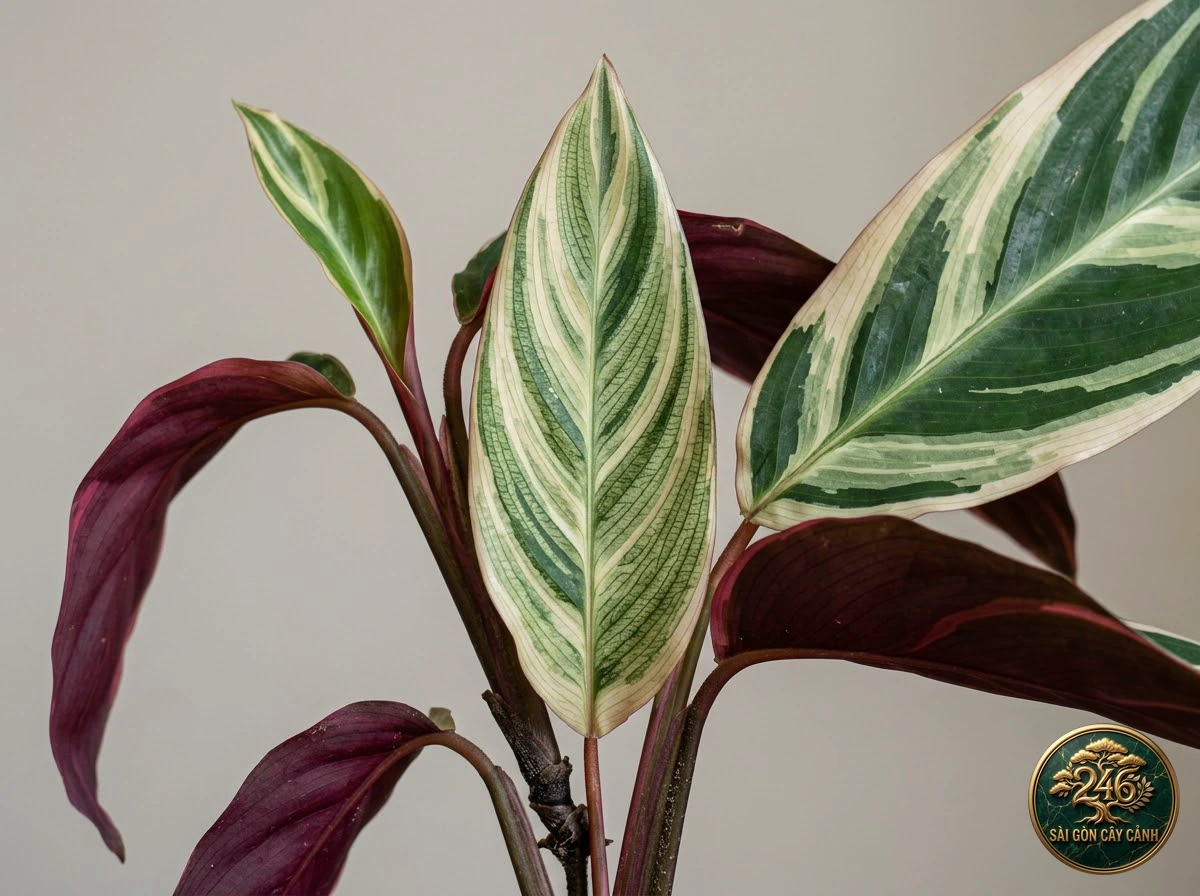
Foliar morphology presents broad lanceolate blades measuring 20 to 35 cm in length and 7 to 12 cm across, characterized by leathery sub-coriaceous substance. The adaxial surface displays an artistic masterwork: dynamic brushstrokes of creamy-ivory and pastel pink stream outward from midribs across deep olive green foundations.
The abaxial surface is saturated in vivid ruby-red or brilliant claret, casting an ambient rosy glow through translucent ivory adaxial variegation zones. Pink-tinted petioles extend 15 to 25 cm, articulating at blade bases with a highly photoreceptive pulvinus joint.
The peerless tricolor chromatic mechanism of Stromanthe sanguinea ‘Triostar’ represents an intricate optical interplay among three plant pigments. The adaxial surface exhibits creamy-ivory sectors devoid of chlorophyll, deep green sectors dense with chlorophyll a and b, and delicate pastel-pink zones produced when saturated anthocyanin reds from the abaxial surface shine through translucent white adaxial cell layers.
3. Photometric Calibration & Window Exposure Optimization
Because substantial foliar sectors lack chlorophyll, Triostar demands abundant diffused lighting spanning 1,400 to 2,200 lux to prevent chromatic fading. Locating specimens within 1 to 2 meters of sheer-veiled eastern or northern windows delivers optimum photonic energy without thermal stress.
Water purity represents a non-negotiable cultural baseline for Triostar. Translucent creamy variegated sectors react sensitively to chlorine, fluoride, and dissolved tap water mineral salts. Untreated municipal water triggers severe edge necrosis. Cultivators must consistently provide harvested rainwater, distilled water, or reverse-osmosis filtration.
The cultivar demands relatively elevated irradiance within Marantaceae, reaching peak photosynthetic efficiency at PPFD levels between 65 and 115 µmol/m²/s. Deficient lighting suppresses abaxial anthocyanin synthesis, causing pastel pink zones to fade into dull off-white or washed-out green.
4. Anthocyanin Chromatic Effects & Pulvinus Motor Dynamics
Nyctinastic circadian movement in Stromanthe sanguinea produces one of the most mesmerizing botanical displays among prayer plants. By day, blades recline horizontally to intercept diffused light, exhibiting their tricolor pastel variegation across the room.
At dusk, potassium-driven turgor shifts within the pulvinus elevate blades vertically in unison. The entire specimen transforms into a radiant ruby-red sculptural column, unveiling glowing abaxial claret surfaces beneath evening interior illumination.
The ideal thermal envelope for Stromanthe sanguinea spans 19°C to 28°C (66°F – 82°F). Specimens thrive in warm tropical stability but promptly curl foliage and cease growth if temperatures drop beneath 15°C (59°F).
Ambient atmospheric humidity must be sustained between 65% and 85%. Triostar is exceptionally sensitive to dry air; relative humidity dropping below 55% rapidly provokes crisp marginal desiccation and inward blade curling.
The ideal vapor pressure deficit (VPD) for Triostar is tightly constrained between 0.6 and 0.85 kPa. The cultivar is acutely vulnerable to arid air-conditioned environments; if relative humidity dips below 55%, delicate unpigmented margin cells lose turgor rapidly, curling into crisp brown margins within 48 hours.
The pulvinus motor swelling of Triostar exhibits exquisite photoperiodic sensitivity. By day, blades rest horizontally at 10-20 degrees for photon capture. At dusk, surging ventral motor turgor drives blades into an upright 90-degree stance, transforming the clump into a glowing ruby-claret architectural bouquet beneath interior lamps.
5. Porous Aggregate Substrate Engineering & Aeration Dynamics
The root system of Triostar develops dense fibrous clusters from underground rhizomes, requiring porous, aerated, and evenly moist media. The standard recipe blends 35% Indonesian pumice, 25% sterilized Chilean sphagnum, 20% boiled mini pine bark, and 20% horticultural perlite.
This granular aggregate ensures surplus water evacuates freely through container drain holes without stagnation, supplying rich pore oxygen to feeder roots and protecting rhizomes against fungal pathogens.
Substrate architecture for Triostar must achieve a granular air-filled porosity exceeding 45% for unhindered rhizome respiration. Combining Indonesian pumice with boiled pine bark fines and Chilean sphagnum creates an optimal moisture buffer, preventing abrupt dehydration that crisps delicate pink margins.
6. Organic Nutrition Schedules & Periodic Micronutrient Priming
Fertilization protocols prioritize gentle organic biological liquids rich in natural potassium and micronutrients (such as hydrolyzed fish protein and cold-water kelp). Administer at quarter-strength every 3 to 4 weeks during active growth seasons.
Avoid synthetic chemical fertilizers high in mineral salts, which accumulate and burn tender variegated tissues. Flush the container thoroughly with pure distilled water quarterly to wash away residual salts.
Periodic organic nutritional supplementation must balance bio-available potassium and chelated magnesium to fortify cellular membrane integrity. Applying diluted worm casting tea at an electrical conductivity (EC) below 0.7 mS/cm monthly fosters thick, lustrous blades while eliminating mineral salt toxicity.
7. Clinical Diagnostic Matrix & Rapid Correction Protocols
| Clinical Symptom | Primary Etiology | Diagnostic Evaluation | Corrective Prescription |
|---|---|---|---|
| Crisp brown margins on white and pink foliar sectors | Municipal tap water chlorine/fluoride or room humidity falling below 50% | Evaluate room hygrometer reading and test irrigation water electrical conductivity | Switch exclusively to pure distilled or rainwater and elevate humidity above 65% with misting |
| Pink and white variegation fades toward dull green | Chronic light deficit beneath 900 lux threshold suppressing pigment expression | Assess ambient lux levels at canopy height with digital photometer | Relocate planter to bright indirect daylight (1,500 – 2,000 lux) near sheer-curtained windows |
| Total canopy collapse accompanied by rhizome softness | Compacted potting medium causing anaerobic root rot and rhizome hypoxia | Unpot root ball to inspect feeder roots and evaluate substrate odor | Prune decayed roots, sanitize tissue, and repot in fresh aerated pumice aggregate |
| Fine webbing and yellow punctate stippling on ruby undersides | Two-spotted spider mite infestation stimulated by warm, dry indoor air | Inspect abaxial midrib surfaces with magnification loupe for active colonies | Wipe leaves with lukewarm cloth and mist biological cold-pressed neem emulsion at dusk |
8. Cryptic Pest Prophylaxis & Foliar Surface Sanitation
Because variegated tissues are soft and delicate, routinely inspect ruby undersides for two-spotted spider mites. Upon detecting fine webbing or stippling, rinse foliage with fine water mist and apply diluted biological neem oil at dusk.
Regularly wipe leaves with a soft microfiber cloth dampened in warm distilled water to remove dust, restore tricolor brilliance, and optimize photosynthetic efficiency.
Because its variegated foliage features soft, thin cellular walls, Triostar is highly attractive to two-spotted spider mites in dry seasons. Monthly preventative misting with cold-pressed neem oil emulsion at 0.25% concentration at dusk shields both surfaces without compromising foliar aesthetics.
9. Asexual Propagation Methodology & Root Strike Protocols
The most reliable propagation method for Stromanthe sanguinea is rhizome clump division during spring container repotting. Each division must retain 2 to 3 healthy stems alongside a vigorous fibrous root mass.
Carefully separate connective rhizomes with a sterilized blade, potting divisions into fresh airy medium under warm, shaded shelter above 75% humidity for 25 to 35 days until established.
During rhizome clump division, each excised unit must retain at least 2 vigorous stems with fully unfurled foliage and healthy roots exceeding 5 cm. Housing divisions within warm shaded shelters maintaining 80% – 85% humidity over a 25 to 35 day interval ensures rapid feeder root anchorage into fresh aggregate.
10. Companion Animal Safety Profile & ASPCA Non-Toxic Verification
Pet guardians can confidently display Triostar specimens on credenzas or plant stands without fearing toxicological hazards if pets playfully brush against or nibble leaves.
11. Biophilic Curation & Contemporary Interior Design Styling
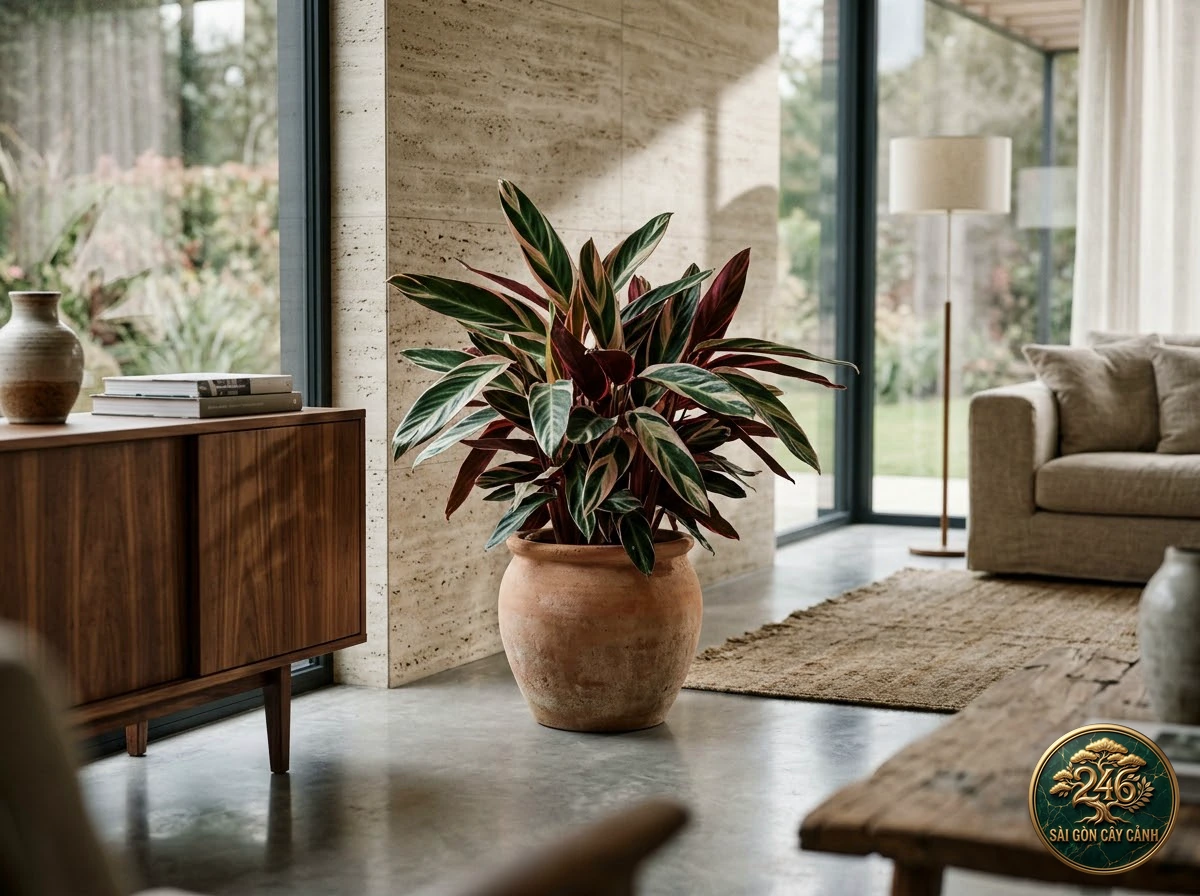
Showcasing a harmonious blend of pastel pink, creamy-ivory, and forest green, Triostar serves as an opulent living focal point for modern Biophilic, Scandinavian, and Japandi interior aesthetics.
Its dramatic nyctinastic transformation between daytime horizontal displays and vibrant nocturnal ruby columns provides endless inspiration, infusing living spaces with vitality and dynamic elegance.
In luxury tropical architectural interiors, Stromanthe sanguinea ‘Triostar’ embodies refined living elegance. The harmonious juxtaposition of pastel pink, creamy-ivory, and emerald against radiant ruby undersides elevates the specimen into a living masterpiece that enlivens modern living spaces.
12. Master Principles for Sustainable Indoor Acclimatization
Three cardinal rules for maintaining vibrant tricolor coloration on Stromanthe sanguinea:
- Hydration axiom: Diffused Photonic Axiom: Position in strong 1,800 lux indirect light; shield strictly from direct solar rays that scorch pastel pink tissues.
- Illumination axiom: Pure Hydration Protocol: Exclusively deploy RO, rainwater, or distilled water; eliminate chlorinated and fluoridated tap water.
- Maintenance axiom: Microclimatic Humidity Mandate: Guarantee relative humidity above 65% to keep variegated margins supple and prevent inward curling.
Nursery Care Journal & Living Greenery Moments
At Saigon Cay Canh greenhouse, each photograph captures genuine everyday care moments between plant lovers and living greenery, spreading a passion for nature and green-living inspiration.

13. Frequently Asked Questions Regarding Triostar stromanthe (FAQs)
How can you maximize the vibrant pastel pink foliar coloration?
The secret is delivering generous filtered daylight (1,500 – 2,000 lux) coupled with humidity above 65%. Inadequate light causes reversion to green.
Why do Triostar leaves fold vertically into prayer position at night?
This nyctinastic movement is orchestrated by the pulvinus motor joint, displaying radiant ruby undersides while conserving nocturnal moisture.
Is Stromanthe Triostar safe around cats and dogs?
Completely safe. The ASPCA verifies that Stromanthe sanguinea is 100% non-toxic to companion animals.
Should foliage be misted directly with water?
Mist the surrounding ambient air rather than leaving heavy water droplets sitting on delicate white leaf sectors overnight, which invites fungal leaf spot.
What is the recommended repotting frequency?
Repot every 12 to 18 months in early spring when expanding rhizomes fill the container volume.
How can you prevent the pastel pink variegation on Triostar from fading into plain white or dull green?
Delivering generous diffused daylight (1,500 – 2,000 lux) and maintaining humidity above 65% is paramount. Strong filtered light stimulates abaxial anthocyanin synthesis, which projects radiant pink luminescence through the translucent white upper sectors.