Living plant profile
Dagua dumb cane
Dieffenbachia daguensis
Comprehensive botanical dossier for Dagua dumb cane (Dieffenbachia daguensis). Identification, lighting calibration, porous substrate formulation, and cultivation guide by Saigon Cay Canh.
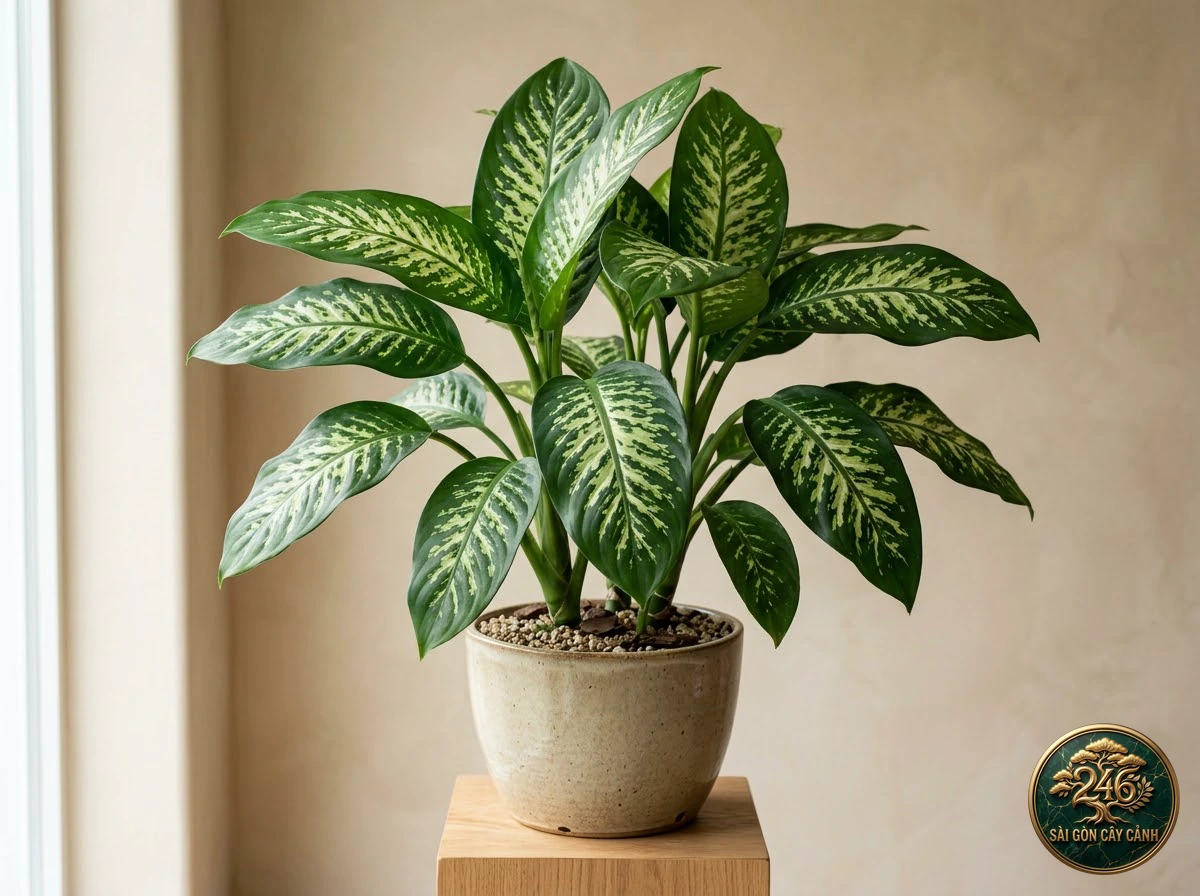
Dagua dumb cane (Dieffenbachia daguensis) is a rare collector aroid hailing from the Dagua River valley of Colombia, prized for silk-thin papery foliage intricately etched with ivory veining. It embodies delicate refinement and quiet botanical luxury, rewarding attentive cultivation with ethereal beauty.
Sài Gòn Cây Cảnh Care Compass
1. Core Botanical Taxonomy & Cultural Specifications
| Scientific Name | Dieffenbachia daguensis |
|---|---|
| Botanical Family | Araceae (Aroid Family) |
| Native Distribution | Dagua River valley within the hyper-humid Choco rainforest biome of Western Colombia |
| Growth Demeanor | Graceful erect herbaceous perennial with delicate papery lamina atop slender, pliable canes |
| Lighting Threshold | Deep shade to low diffused daylight (800 – 1,800 lux); papery foliage is exceptionally sun-sensitive |
| Hydration Cadence | Preserve consistent aerated moisture; irrigate when top 2 cm soil dries, avoiding prolonged drought |
| Substrate Formulation | 35% volcanic pumice, 25% chopped sphagnum moss, 25% perlite, and 15% fine pine bark |
| Thermal Range | 21°C – 30°C (70°F – 86°F; flourishes within stable warm equatorial environments) |
| Relative Humidity | 75% – 90% (Demands elevated atmospheric humidity to shield thin delicate lamina) |
| Cultivation Difficulty | Demanding (Requires vigilant humidity buffering and good air movement) |
| Pet Safety Profile | Toxic (Insoluble calcium oxalate crystals irritate animal oral tissues) |
Cataloged in Kew taxonomic registries (POWO), Dieffenbachia daguensis is indigenous to the Dagua River valley within Colombia’s legendary Choco biogeographic hotspot, renowned globally for exceptional precipitation and near-saturated ambient humidity. Under permanent understory gloom, it developed specialized foliar adaptations for low-irradiance survival.
Sheltered along misty river valley slopes, its canes remain slender and pliable. The root architecture draws steady nourishment from humid alluvial leaf mold, sustaining delicate foliar hydration amidst dense understory competitors.
The Dagua river basin maintains an average ambient relative humidity above 85% year-round, allowing palisade mesophyll cells to maximize surface area for low-irradiance photon capture. Prolific fine feeder root hairs spread across humid surface humus, absorbing dissolved organic nutrients continuously without requiring deep taproot structures.
2. Morphological Identification & Foliar Architecture
Leaves represent an artistic triumph of nature. Oblong-lanceolate blades measuring 20 to 35 cm feature a remarkably thin, translucent papery texture that allows soft ambient light to pass through. Upper surfaces display luminous sea-green tones overlaid with subtle ivory and mint veins along the midrib.
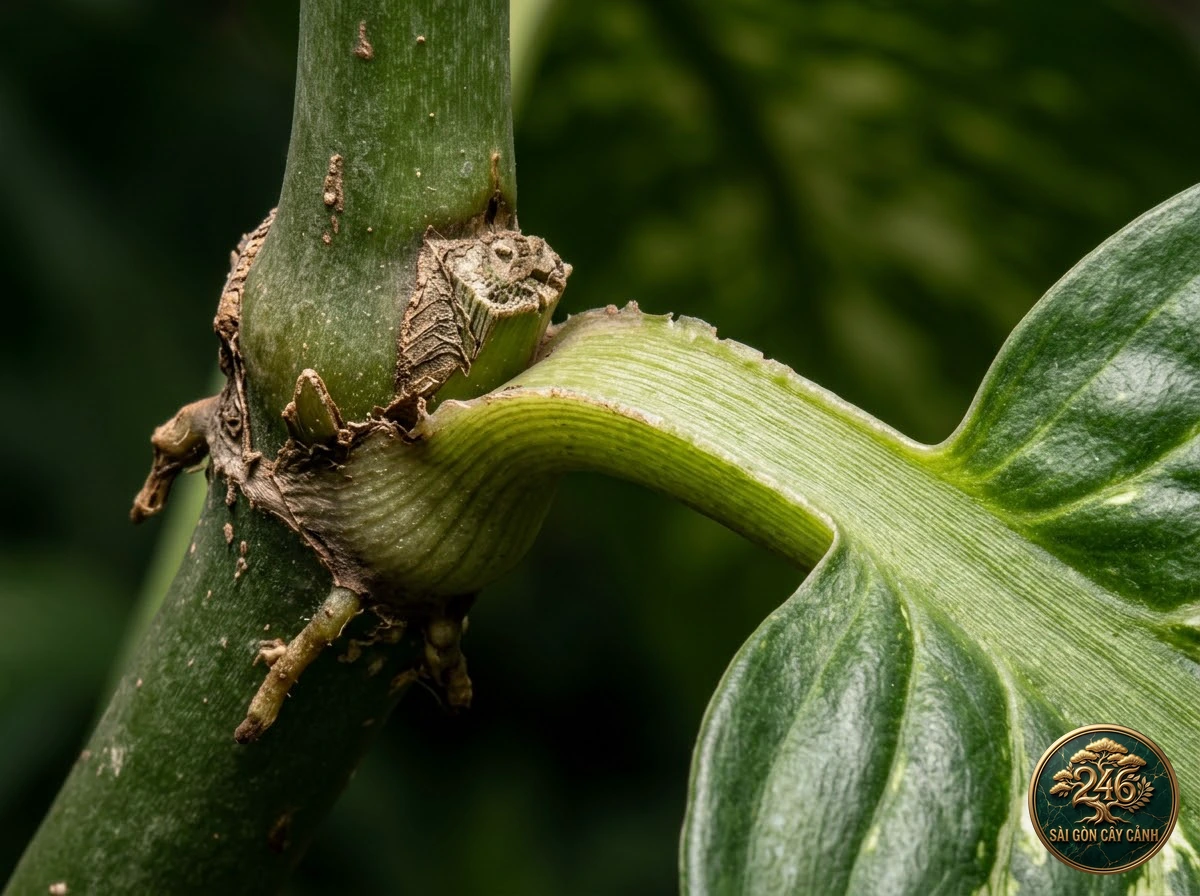
Slender yet resilient petioles clasp the cane securely through basal sheaths. Leaf margins display gentle wave-like undulations that flutter in gentle breezes, imparting a poetic, weightless visual elegance to the plant.
Epidermal cells of Dagua dumb cane contain high free water content, imparting orchid-like textural softness to the leaves. High stomatal density distributed across both lamina surfaces optimizes carbon dioxide assimilation under the extreme low-irradiance conditions of the ancient Choco forest canopy. This semi-translucent tissue structure delivers distinctive refractive visual aesthetics under ambient interior illumination.
3. Photometric Calibration & Window Exposure Optimization
Reflecting its dim Choco understory heritage, the plant prospers under soft filtered daylight between 800 and 1,800 lux. Positioning 2 meters back from window panes or within rooms illuminated by gentle indirect domestic LEDs provides ideal conditions.
Its thin papery foliage cannot tolerate direct solar irradiance. Even brief exposure to harsh midday sun fatally collapses fragile epidermal cells into crisp brown tissue. Maintain continuous diffused protection at all times.
4. Structural Cane Dynamics & Form Optimization
Dagua dumb cane establishes a neat upright clumping demeanor with slender canes naturally balancing foliar mass without external trellising. Basal tillering progressively forms a graceful, compact domestic thicket.
Opt for proportionate ceramic vessels with generous drainage ports to complement the plant’s delicate lines. Turning the planter a quarter turn weekly prevents asymmetrical foliar reach toward light sources.
5. Engineered High-Porosity Substrate Formulation
Delicate rootlets demand a porous, moisture-retentive yet highly aerated substrate. Heavy clay or compacted loams suffocate tender feeder roots, quickly inducing root rot after watering.
A recommended bespoke mixture combines 35% volcanic pumice, 25% chopped long-fiber sphagnum moss, 25% coarse perlite, and 15% fine aged pine bark. This blend sustains cool internal moisture around root tips while excess irrigation drains freely.
The 25% chopped sphagnum component forms a micro-hydration sponge mimicking natural moss carpets of the Dagua valley, bathing root hairs in cool aerated moisture without compaction. Perlite and pumice maintain open aeration voids, allowing roots to breathe freely around the clock.
6. Organic Bio-Fertilization & Mineral Management
Fertilization requires extreme conservatism. Apply cold-pressed marine kelp drench or diluted organic humic compounds at one-quarter standard strength once every four weeks during active vegetative flushes, strictly avoiding heavy mineral fertilizer salts.
Every three months, thoroughly leach the container by pouring generous rested water through the potting media to rinse out residual mineral salts, maintaining pristine root-zone chemistry.
7. Clinical Diagnostic Matrix & Horticultural Resolutions
| Clinical Symptom | Root Pathology | Diagnostic Method | Targeted Resolution |
|---|---|---|---|
| Delicate foliar margins curl inward and turn crispy | Ambient atmospheric humidity below 65% | Verify local hygrometer reading at canopy | Operate cool mist humidifier nearby, add pebble tray |
| Lower cane softens, leaves collapse in yellow mush | Substrate compaction trapping stagnant water | Probe bottom drainage moisture depth | Halt irrigation, elevate pot base, renew with airy pumice mix |
| Emerging leaves pale and lack translucent gloss | Deficit of photosynthetic daylight | Evaluate light levels with a lux meter | Move closer to soft diffused daylight or add horticultural lamp |
| Minute stippled yellow dots beneath foliage | Spider mite activity encouraged by arid air | Inspect abaxial leaf surfaces with magnifier | Wipe clean with moist microfiber cloth, elevate ambient moisture |
| Translucent water-soaked spots appear on thin lamina | Bacterial leaf spot triggered by stagnant nocturnal dampness | Inspect lesions against backlighting | Blot foliage dry, improve room circulation, isolate specimen |
8. Pest Mitigation Protocols & Foliar Sanitation
Owing to thin foliar lamina, spider mites and thrips represent the primary insect threats in warm dry air. Maintaining relative humidity above 75% and routine leaf cleaning serve as the most dependable non-chemical defenses.
Monthly foliar dusting using a warm damp microfiber cloth clears atmospheric particulate deposits. Exercise gentle handling to avoid tearing the delicate lamina while unblocking stomatal pores.
For this delicate thin-leaved specimen, never apply petroleum-based chemical pesticide emulsions, as volatile solvents rapidly dissolve fragile epidermal cuticles, causing widespread leaf scorch within hours. Instead, utilize bio-rational botanical extracts or beneficial Bacillus subtilis microbial sprays to safeguard foliar health gently and safely.
9. Asexual Propagation Methodology
Propagation proves most successful via basal offshoot division during seasonal potting upgrades. Sever connecting rhizomes cleanly with a sterilized razor treated with 70% alcohol, seal cut margins, and air-dry 12 hours.
Terminal cuttings can likewise be rooted in damp sphagnum moss inside an enclosed propagation cloche for 4 to 6 weeks. Maintain shaded warmth between 22°C and 26°C for root formation.
10. Veterinary Toxicology & Domestic Safety Safeguards
Position containers on high furniture away from household pets. If accidental mastication occurs, rinse the oral cavity with cool water or offer small amounts of lactose-free milk to soothe physical irritation, consulting a veterinarian if symptoms persist.
11. Biophilic Interior Design & Architectural Styling
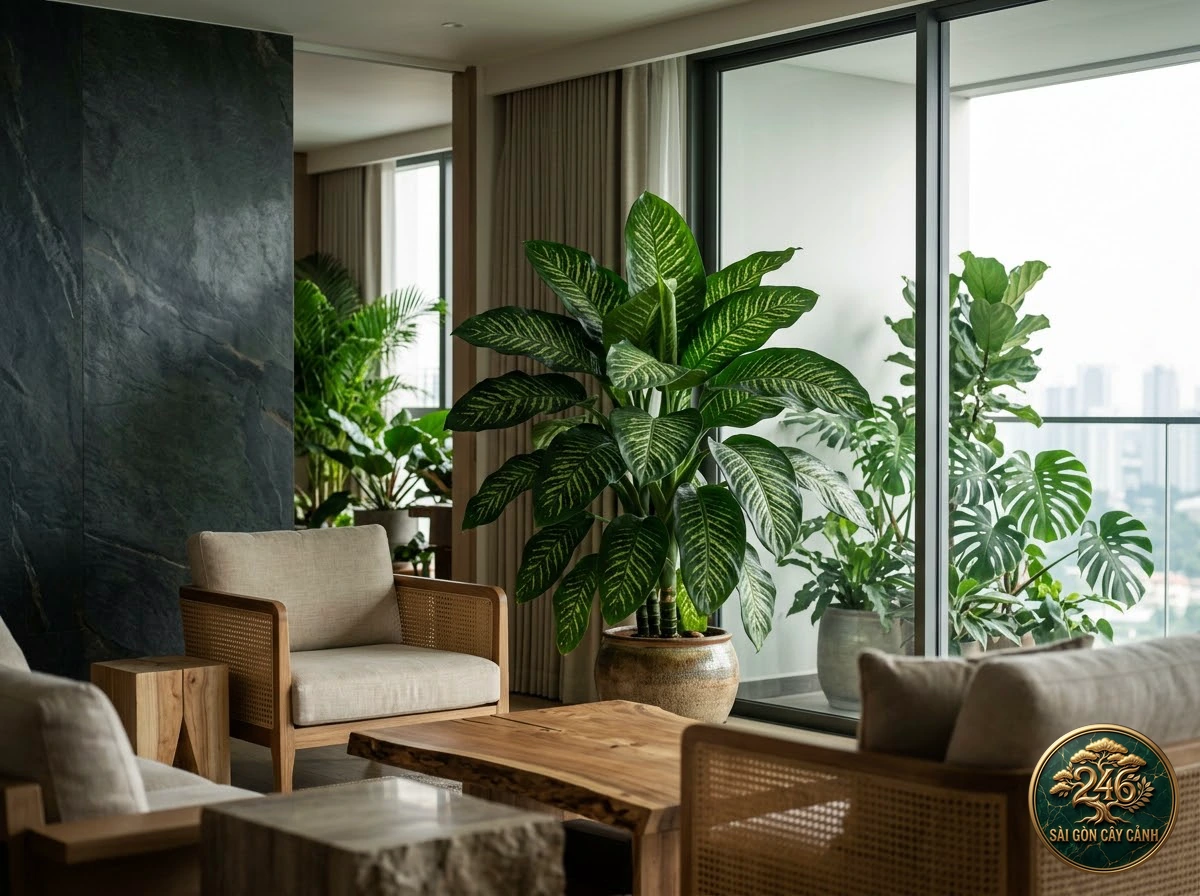
Showcasing delicate translucent foliage and graceful lines, Dagua dumb cane introduces serene refinement to residential desks, quiet study bookshelves, and contemplative tea spaces.
It harmonizes exquisitely with smoky grey stoneware, natural unglazed terracotta, or minimalist white porcelain planters, cultivating quiet organic tranquility and restorative calm within indoor environments.
The translucent foliage creates mesmerizing ethereal backlighting under warm evening lamps. Each leaf blade glows softly like green silk ribbons, providing an elevated aesthetic experience for devotees of mindful, contemplative living.
12. Master Cultivation Axioms
Drawn from specialized nursery experience at Saigon Cay Canh, observe these three essential practices for cultivating this delicate species:
- Hydration Precision: Water only after the upper 2 cm of potting mix dries; confirm moisture depth with a probe before irrigating.
- Solar Management: Provide steady diffused illumination between 800 and 1,800 lux; shield delicate foliage from direct midday solar rays at all times.
- Foliar Care: Gently cleanse foliar blades monthly with a damp microfiber cloth to preserve stomatal respiration without tearing thin tissues.
13. Frequently Asked Botanical Questions (FAQs)
Why are the leaves of this species notably thinner than standard dumb canes?
This represents evolutionary adaptation to hyper-humid Choco rainforest understories. In saturated air and deep gloom, heavy waxy cuticles are unnecessary, allowing thin laminae to maximize low-light photon capture.
Can this delicate species survive in air-conditioned interiors?
It tolerates climate-controlled temperatures between 22°C and 26°C but suffers in dry air. Operating a cool mist humidifier or pebble tray is mandatory.
What is the ideal water source for irrigation?
Rested ambient rainwater or reverse-osmosis filtered water is strongly recommended to prevent dissolved mineral crusts along fragile leaf margins.
What early indicator reveals low ambient humidity?
The earliest symptom is inward curling of delicate leaf margins accompanied by crisp dry foliar tips.
When is repotting recommended?
Every 14 to 18 months during early spring warmth, once roots gently colonize the bottom container volume.
How does one prevent tearing delicate foliage during dusting?
Support the underside of the leaf blade with one palm while gently gliding a damp microfiber cloth with the other from petiole to apex without applying pressure.
Nursery Care Journal & Living Greenery Moments
At Saigon Cay Canh greenhouse, each photograph captures genuine everyday care moments between plant lovers and living greenery, spreading a passion for nature and green-living inspiration.