
Living plant profile
Penwiper plant (Kalanchoe marmorata)
Kalanchoe marmorata
Comprehensive botanical monograph on Penwiper plant (Kalanchoe marmorata): structural morphology, physiological adaptations, porous mineral substrate, and specialized cultivation guidelines.
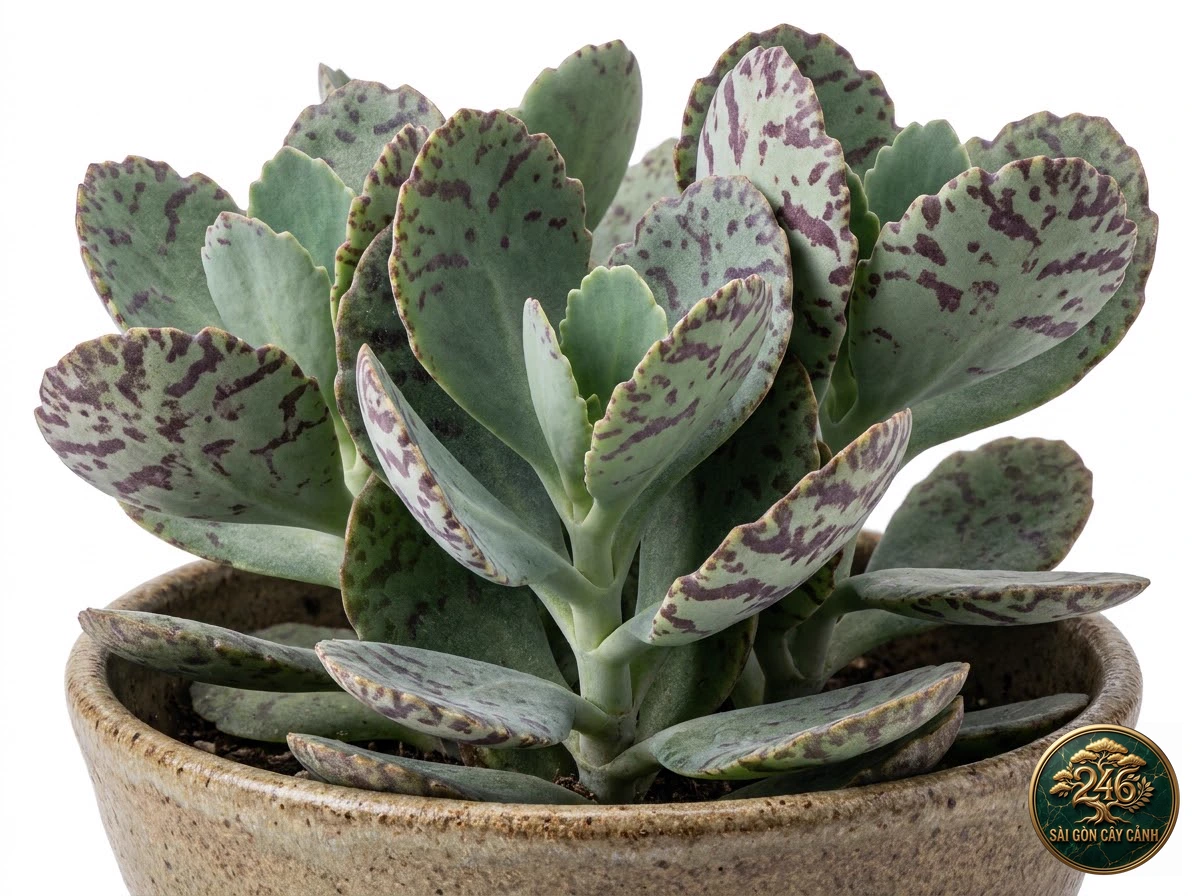
Penwiper plant (Kalanchoe marmorata)
Sài Gòn Cây Cảnh Care Compass
1. Botanical Introduction & Taxonomic Identity
Kalanchoe marmorata, known in international horticultural literature as the penwiper plant or marbled kalanchoe, is one of the most aesthetically refined and aristocratic succulents native to the Horn of Africa. The botanical species epithet marmorata derives from Latin, meaning marbled, reflecting the painterly patterns gracing each foliar blade: atop a velvety, powder-dusted glaucous gray-green epidermis, dramatic zigzag splotches of plum-purple, chocolate, and deep maroon wander across the surface like veins in polished marble. This chromatic combination gives the plant an antique, stately elegance that commands high admiration among discerning succulent collectors worldwide.
Kalanchoe marmorata was scientifically described in 1883 by British botanist John Gilbert Baker in The Gardeners’ Chronicle, drawing from holotypes collected across the arid highland escarpments of Eritrea and Ethiopia. The specific epithet marmorata derives from Latin, meaning marbled, paying tribute to the intricate plum-purple zigzag markings that wander across its glaucous foliar canvas. The species received distinguished recognition from the Royal Horticultural Society (RHS) for its extraordinarily large, sweet-scented starry white blooms, cementing its reputation as one of the most celebrated East African succulents in horticultural history.
2. Native Habitat & Geographical Distribution
Native ecosystems of Kalanchoe marmorata span rocky alpine ridges and dry highland slopes at impressive altitudes between 1,200 and 2,400 meters across Ethiopia, Eritrea, Sudan, and northern Somalia. In these East African highlands, plants grow nestled among weathered basalt outcrops and granite crevices subjected to high ultraviolet radiation by day yet bathed in cool mountain breezes by night. The parched alpine atmosphere and sporadic seasonal rainfall encouraged this taxon to form a sturdy semi-woody caudex alongside heavy foliar wax layers that shield vital inner parenchyma cells from solar irradiation.
3. Detailed Morphological Characteristics
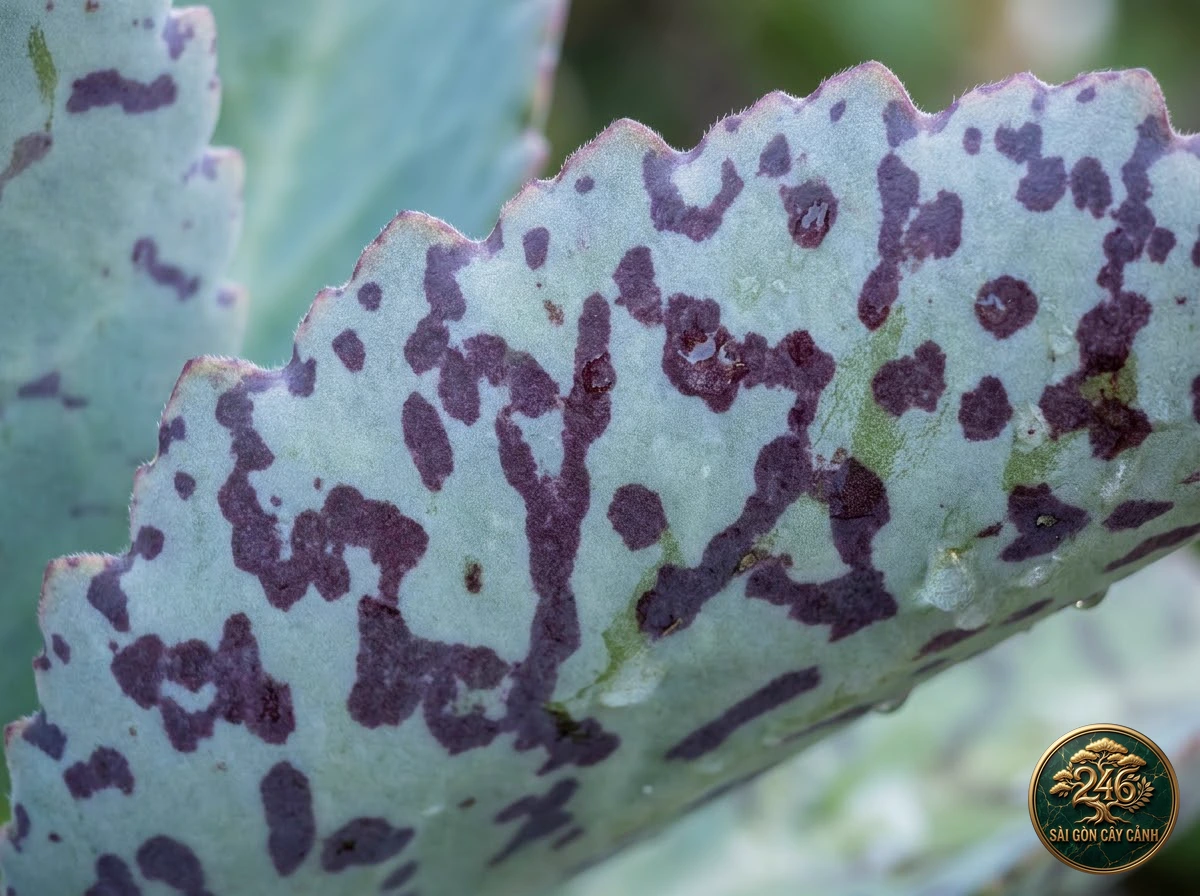
Morphologically, Kalanchoe marmorata develops into a stout, low subshrub reaching 30 to 50 cm in height, with thick fleshy stems that become suberized and woody with age. The opposite decussate leaves are broadly obovate with coarsely crenate, scalloped margins, measuring 10 to 20 cm in length and 6 to 13 cm in width. The powdery bloom imparts a soft silky tactile finish to the foliage. The most spectacular biological feature of Kalanchoe marmorata lies in its inflorescence: unlike most congeners which bear tiny florets, this species yields extraordinarily large, pure white, four-petaled starry blossoms up to 8 cm across with elongated floral tubes that exhale a rich, sweet perfume at dusk to attract nocturnal hawkmoth pollinators.
Microscopic analysis of the foliar epidermis in Kalanchoe marmorata illuminates the physiological mechanism governing its marbled patterns: epidermal cells within the blotches contain vacuoles packed with fivefold higher concentrations of anthocyanins and protective polyphenols compared to the surrounding glaucous tissue. These natural antioxidants function as selective optical filters, absorbing excess ultraviolet energy on high alpine plateaus and dissipating it safely as thermal energy, thereby shielding underlying chloroplasts from photoinhibition during intense sunny days.
4. Core Botanical Matrix
Core taxonomic and cultivation parameters:
| Botanical Parameter | Observed Trait | Saigon Cay Canh Horticultural Recommendation |
|---|---|---|
| Scientific Name | Kalanchoe marmorata Baker | Maintain certified taxonomic labeling across nursery stock |
| Plant Family | Stonecrop family (Crassulaceae) | Observe specialized succulent physiological requirements |
| Native Distribution | Rocky montane slopes and arid plateaus spanning Ethiopia, Eritrea, Sudan, and northern Somalia | Replicate native climatic parameters in indoor cultivation |
| Illumination Intensity | 25,000 – 50,000 lux | Direct sunlight for 4 to 6 hours daily deepens purple-plum zigzag marbling against glaucous foliage |
| Thermal Window | 15°C – 30°C | Protect against frost below 8°C and provide ventilation during heat |
| Relative Humidity | 35% – 55% | Sustain gentle atmospheric air movement to disperse stagnant moisture |
| Substrate pH | 6.0 – 6.8 | Utilize porous neutral mineral components for rapid drainage |
| Substrate Formulation | 40% Indonesian pumice, 20% mineral zeolite grit, 15% expanded perlite, 15% neutralized coco peat, 10% humic worm castings | Maintain coarse granular structure; avoid dense suffocating soils |
| Irrigation Strategy | Enforce complete root-medium drying between drenchings; never permit drainage saucers to retain water overnight | Enforce thorough substrate dry-down between watering sessions |
| Propagation Pathways | Rooting nodal shoot cuttings bearing two or three leaf tiers, or whole mature leaf bedding in moist mineral grit | Perform during warm spring or early wet season for peak vigor |
| Veterinary Toxicology | TOXIC TO COMPANION ANIMALS (ASPCA Toxic) | Synthesizes cardiac bufadienolide glycosides that pose severe toxicological hazards to household animals upon ingestion. |
5. Toxicity Profile & Domestic Safety
Botanical toxicology analyses identify high concentrations of bufadienolide cardiac glycosides throughout the biological tissues of Kalanchoe marmorata, with elevated toxicant levels inside its floral corollas. These steroidal compounds interfere with calcium and potassium regulation across myocardial cell membranes. If pets ingest foliar fragments, acute poisoning symptoms manifest within hours: severe oral irritation, persistent vomiting, mucosal diarrhea, acute lethargy, labored respiration, and marked ventricular dysrhythmias. Saigon Cay Canh advises custodians to position containers upon elevated display consoles or dedicated desks inaccessible to domestic pets.
6. Lighting Dynamics & Photosynthetic Adaptations
Kalanchoe marmorata requires generous solar radiation to maintain deep contrast within its purple marble marbling. In tropical cultivation, it thrives best with 4 to 6 hours of direct solar exposure daily, particularly cool unshaded morning sunlight ranging between 25,000 and 50,000 lux. Strong light triggers rich anthocyanin accumulation across the epidermal blotches. When cultivated in dim indoor areas, the foliage reverts to a uniform pale green, the distinctive markings fade away, and internodes stretch weakly. Nevertheless, intense scorching midday heat without adequate airflow should be moderated to preserve the delicate farina blanket.
7. Moisture Equilibrium & Irrigation Regimes
Hydration for Kalanchoe marmorata must strictly adhere to the principle of thorough substrate dry-down between watering sessions. The root system of this montane lithophyte is exceptionally sensitive to overwatering. During dry tropical spells, provide thorough irrigation around the pot perimeter once every 8 to 12 days after confirming the root ball has dried out completely. During monsoon seasons or when ambient humidity rises above 75%, widen intervals to 14 to 20 days. Never allow drainage saucers beneath the container to retain standing runoff, as capillary back-absorption suffocates delicate root hairs and sparks fatal root decay.
8. Substrate Architecture & Nutrition Strategy
The specialized substrate engineered for Kalanchoe marmorata by Saigon Cay Canh combines 75% porous coarse minerals with 25% stabilized organic humus: 40% Indonesian pumice (3-6mm), 20% natural mineral zeolite grit for cation buffering, 15% expanded perlite, 15% neutralized coco coir peat, and 10% aged earthworm castings. This formulation guarantees rapid gravitational percolation within moments, surrounding root surfaces with fresh oxygen. Substrate pH should remain between 6.0 and 6.8. An annual conservative application of micronutrient-enriched slow-release fertilizer pellets at the start of the active vegetative cycle supports plump, healthy foliar marbling.
Mineralization protocols for Kalanchoe marmorata must prioritize balanced natural volcanic trace minerals. The plant is adapted to soils rich in iron, silica, and calcium but scarce in unstable organic matter. Excessive organic nitrogen dilutes the intense marbled patterns and turns foliar tissues watery and fragile. Cultivators should top-dress containers with natural mineral zeolite grit or iron-rich volcanic scoria gravel, supplemented by a modest application of high-potassium slow-release pellets in early spring, maintaining muscular leaf turgidity and vivid marbling throughout the year.
9. Temperature Dynamics & Aeration Strategy
The optimal thermal comfort range for Kalanchoe marmorata is 15°C to 30°C. Hailing from cool East African highlands, the species benefits from marked diurnal temperature swings, which deepen the intensity of its purple foliar marbling. It comfortably tolerates summer highs of 36°C when shaded from harsh noon sun and supported by continuous natural breezes. A relative humidity of 35% to 55% is ideal. Cultivators should avoid humid, stagnant indoor environments where unmoving air fosters sooty mold spores and invites mealybugs to colonize the foliage.
10. Specialized Propagation Protocols
Propagating Kalanchoe marmorata is most efficiently accomplished via stem shoot cuttings or whole mature leaf bedding. For stem cuttings, select semi-hardwood shoot tips 8 to 12 cm long bearing two or three leaf tiers, sever cleanly with a sterilized razor, let the cut surface suberize in dry shade for 4 to 5 days, and insert into lightly moistened pumice grit to stimulate rooting. For leaf propagation, gently detach an undamaged mature leaf from the stem base and lay it flat atop mineral pumice; within three to four weeks, adventitious bud tissue and tender rootlets will emerge from the basal scar.
11. Diagnostic Matrix & Preventative Health
Scale insects and fungal collar rot represent the most hazardous afflictions for Kalanchoe marmorata. Upon spotting white woolly mealybug deposits within leaf junctures, gently apply a cotton bud dipped in 70% medicinal alcohol to dissolve the pest cuticle. Avoid abrasive wiping across the leaf lamina to safeguard the ornamental farina and marbling. If the basal stem softens into a watery brown lesion, immediately unpot the plant, surgically excise all diseased tissue until sound green pulp remains, dust with sulfur powder, and repot into bone-dry fresh substrate.
Clinical diagnostics and remedial actions:
| Observed Symptom | Primary Root Cause | Saigon Cay Canh Remedial Action |
|---|---|---|
| Lower leaves turn soft, thin, and wrinkled | Prolonged moisture deficit in the root medium | Provide a deep perimeter soak for Kalanchoe marmorata; tissues recover within 48 hours |
| Black soft decay at the stem base with leaf drop | Anaerobic fungal root rot due to waterlogged substrate | Unpot immediately, excise necrotic pulp, treat with sulfur powder, and repot into bone-dry pumice |
| Elongated, weak internodes with pale drooping foliage | Chronic insufficiency of direct solar radiation | Relocate Kalanchoe marmorata to receive unshaded morning sunlight for 4 to 6 hours daily |
| White cottony clusters nested in foliar axils | Foliar mealybug infestation (Pseudococcidae) | Apply 70% medicinal alcohol directly with a cotton bud to dissolve waxy insect cuticles without foliar damage |
12. Living Architecture & Interior Styling
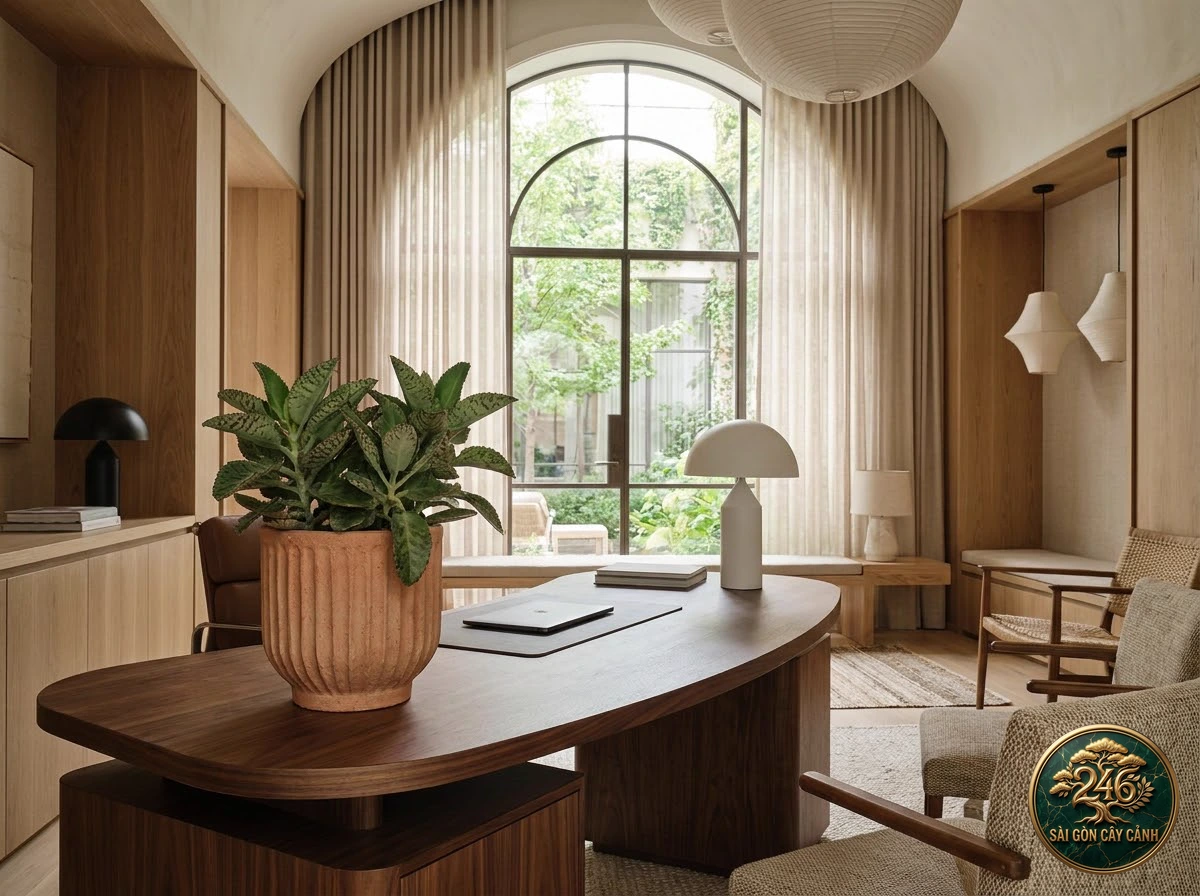
Boasting unique marble marbling and fragrant starry white blooms, Kalanchoe marmorata commands pride of place in prestigious succulent collections and Japandi or Nordic interior designs. It radiates poise and sculptural dignity when housed in muted slate-gray ceramic pottery, minimalist cement vessels, or carved stone urns. Displayed upon a living room coffee table, boutique hotel reception counter, or sun-drenched windowsill, it introduces exquisite botanical sophistication and tranquil natural balance into refined architectural settings.
Boasting unique plum-purple marbling atop a regal glaucous canvas and fragrant starry white blooms, Kalanchoe marmorata commands pride of place in elite succulent collections and Japandi or Nordic architectural designs. It radiates sculptural dignity when showcased in muted slate-gray ceramic pottery, minimalist cement vessels, or monolithic carved stone urns. Placed upon a living room coffee table, boutique hotel reception counter, or sun-drenched windowsill, it introduces exquisite botanical sophistication and serene natural balance into refined spaces.
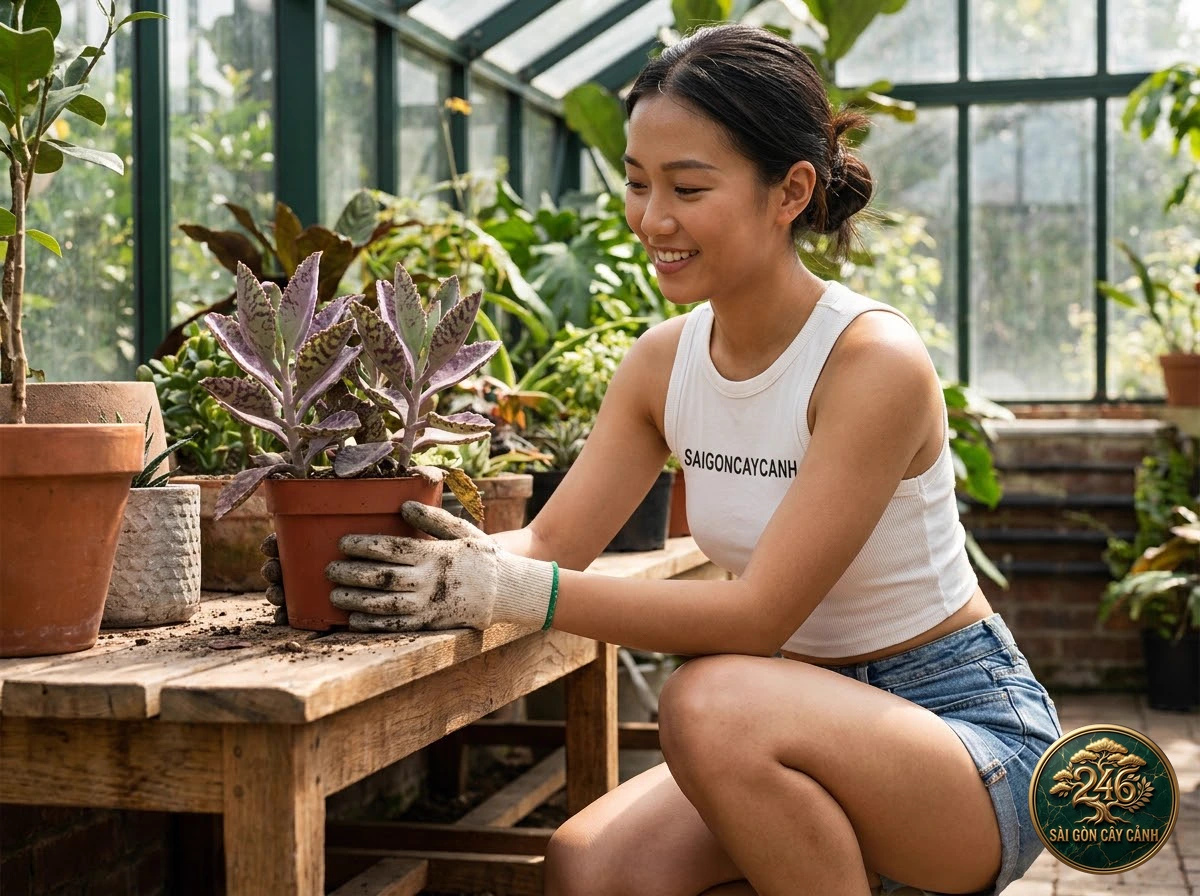
Brand Ambassador & Living Herbarium Botanical Philosophy
At Saigon Cay Canh botanical nursery, each specimen is curated and tended under the guidance of our brand ambassador, ensuring vibrant vitality and true-to-type morphology.
13. Horticultural Excellence & Living Heritage
Saigon Cay Canh takes profound pride in delivering masterfully cultivated specimens of Kalanchoe marmorata, preserving every sharp marbled contour and healthy root structure. Grounded in rigorous botanical knowledge and genuine horticultural passion, we remain dedicated to guiding your growing journey, sharing authentic living treasures that bring lasting natural beauty and quiet distinction into your cherished home.