
Living plant profile
Bates’s gasteria (Gasteria batesiana)
Gasteria batesiana
Comprehensive botanical monograph on Bates’s gasteria (Gasteria batesiana): structural morphology, physiological adaptations, porous mineral substrate, and specialized cultivation guidelines.
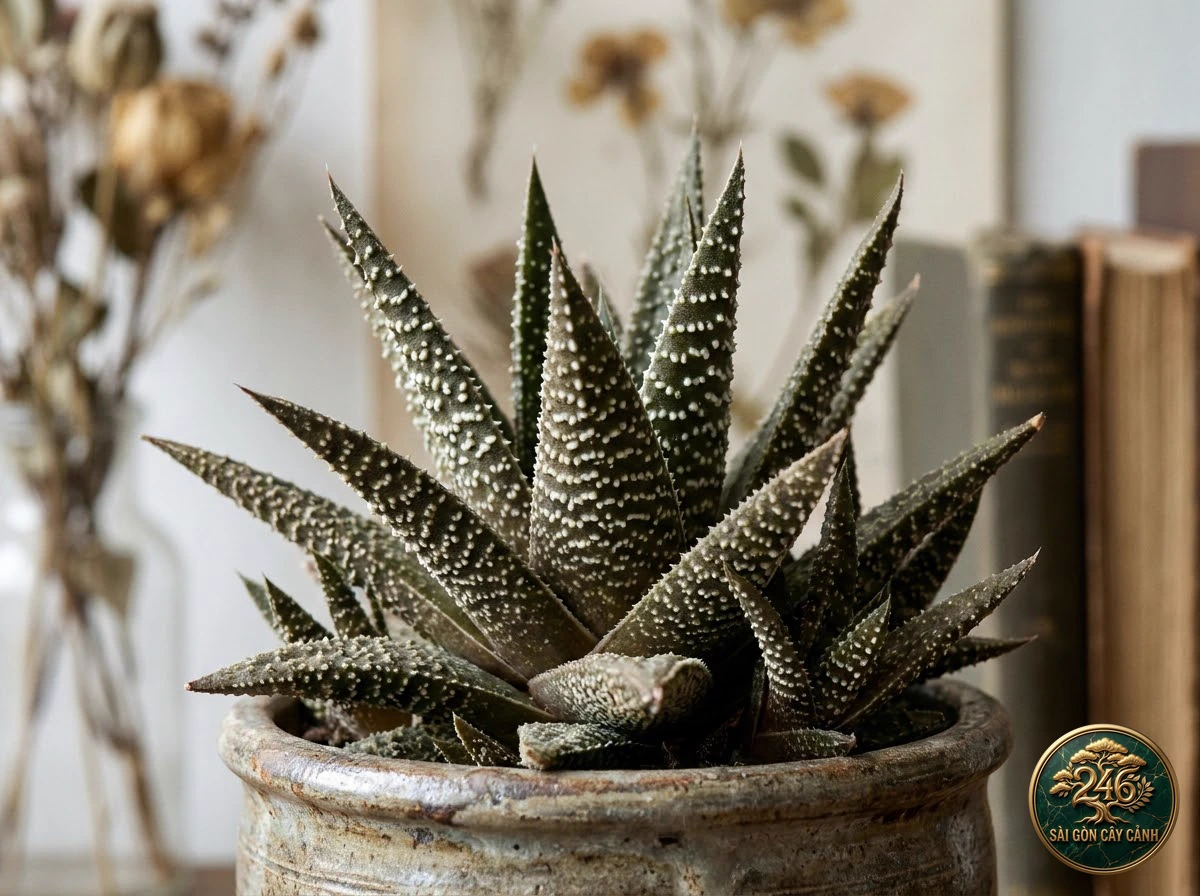
Bates’s gasteria (Gasteria batesiana)
Sài Gòn Cây Cảnh Care Compass
1. Botanical Introduction & Taxonomic Identity
Within the genus Gasteria of the family Asphodelaceae, Gasteria batesiana stands as an archetype of primitive botanical sculpture and rugged desert resilience. The generic designation Gasteria derives from the Greek term gaster, denoting belly or stomach, referencing the distinctive pendulous tubular blossoms characterized by a swollen, ampulliform basal pouch. The specific epithet batesiana honors George Latimer Bates, a distinguished naturalist and botanical explorer. The species’ most arresting aesthetic attribute is its extraordinarily rough, heavily rugose foliar texture: each thick strap-like leaf of dark forest-green or charcoal is densely encrusted with thousands of stark, raised white tubercles, imparting a prehistoric reptilian tactile sensation reminiscent of weathered crocodile hide.
Gasteria batesiana was formally published in 1955 by the English botanist and succulent authority Gordon Douglas Rowley in The National Cactus and Succulent Journal. The species commemorates George Latimer Bates, a dedicated naturalist explorer who devoted decades to African ecology. Prior to its discovery, botanists were accustomed to smooth or flat-spotted Gasteria taxa; the emergence of batesiana with heavily tuberculate, sandpaper-like leaves resembling reptilian hide revolutionized the morphological scope of the genus, demonstrating the rugged adaptations of cliff-dwelling chasmophytes in northeastern South African canyons.
2. Native Habitat & Geographical Distribution
The indigenous habitat of Gasteria batesiana is situated in northeastern South Africa, tucked into deep rocky canyons, sheer sandstone cliffs, and steep riverine gorges flanking the Olifants and Blyde river systems across Mpumalanga and Limpopo provinces. This montane habitat experiences a subtropical summer-rainfall regime with dry, mild winters. Far from being an exposed plains xerophyte, batesiana is a specialized chasmophyte: thriving within narrow, vertical fissures of south- and southeast-facing cliffs that receive perpetual shade from direct solar glare. Its roots navigate deep into cool subterranean rock clefts, absorbing atmospheric condensation and riverine humidity, allowing individual colonies to persist for decades.
3. Detailed Morphological Characteristics
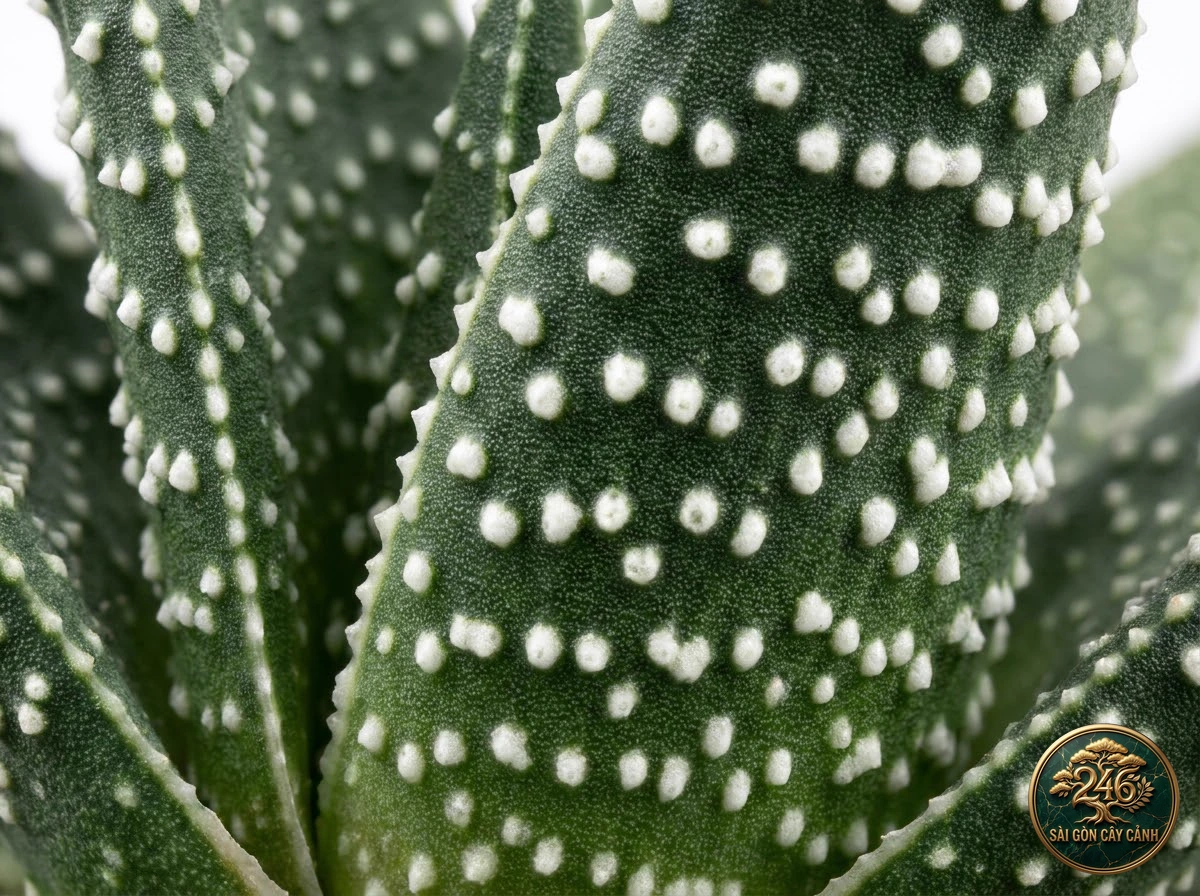
In architectural morphology, Gasteria batesiana presents an initially distichous foliar arrangement that gradually transitions into a spiraled, stemless rosette spanning 12 to 25 cm across. The strap-shaped to triangular leaves are exceptionally rigid and thick, measuring 10 to 18 cm in length and 2 to 4 cm in basal width, terminating in an acute mucro. Both leaf surfaces are densely crowded with elevated, coarse white verrucose tubercles that coalesce into irregular transverse bands. Leaf parenchyma is reinforced with dense lignified sclerenchyma fibers, conferring structural stiffness and preventing desiccating water loss. Arching floral racemes 30 to 45 cm long emerge in spring, displaying pendulous, stomach-shaped blossoms of brilliant coral-pink tipped with pale lime-green, co-evolved for pollination by sunbirds.
Micro-anatomical examination of Gasteria batesiana foliage reveals a veritable biological fortress against desiccation and mechanical abrasion: the elevated verrucose tubercles encrusting the epidermis are fortified mounds of heavily cutinized, silica-enriched cells acting as microscopic shields against solar glare and abrasive canyon winds. Between these tubercles, stomata are deeply sunken within protected furrows, operating on CAM physiology to virtually eliminate transpiration. The internal mesophyll contains dense, mucilaginous pectin-rich water-storage vacuoles, allowing the plant to remain turgid while rooted in dry cliff fissures across rainless months.
4. Core Botanical Matrix
Core taxonomic and cultivation parameters:
| Botanical Parameter | Observed Trait | Saigon Cay Canh Horticultural Recommendation |
|---|---|---|
| Scientific Name | Gasteria batesiana G.D.Rowley | Maintain certified taxonomic labeling across nursery stock |
| Plant Family | Asphodel family (Asphodelaceae) | Observe specialized succulent physiology within Asphodelaceae |
| Native Distribution | Sheer sandstone cliffs and riverine gorges flanking the Olifants River drainage basin, Mpumalanga and Limpopo, South Africa | Replicate native climatic parameters in indoor cultivation |
| Illumination Intensity | 12,000 – 25,000 lux | Cool diffused illumination or bright shade; demonstrates superior shade tolerance compared to desert succulents |
| Thermal Window | 12°C – 30°C | Protect against cold below 8°C and provide active ventilation during heat |
| Relative Humidity | 40% – 65% | Sustain gentle atmospheric air movement to disperse stagnant moisture |
| Substrate pH | 6.2 – 7.0 | Utilize porous neutral mineral components for rapid drainage |
| Substrate Formulation | 50% fine pumice (2-4mm), 20% hard akadama clay, 15% zeolite grit, 10% perlite, 5% clean worm castings | Maintain coarse granular structure; avoid dense suffocating soils |
| Irrigation Strategy | Soak deeply when substrate is eighty-five percent dry; possesses formidable drought tolerance with rapid tissue rehydration | Enforce thorough substrate dry-down between watering sessions |
| Propagation Pathways | Separation of mature basal offsets or rooting sectioned cross-cut leaf segments in sterile mineral pumice | Perform during warm spring or early wet season for peak vigor |
| Veterinary Toxicology | NON-TOXIC TO COMPANION ANIMALS (ASPCA Non-Toxic) | COMPLETELY PET-SAFE (ASPCA Non-Toxic); non-toxic to domestic felines and canines. |
5. Toxicity Profile & Domestic Safety
From the perspective of domestic biosafety, Gasteria batesiana ranks among the safest possible choices for companion animal households. Rigorous toxicological classification by the ASPCA certifies the genus Gasteria as strictly NON-TOXIC to cats and dogs. Although its foliage exhibits a rugged, sandpaper-like texture, it lacks penetrating spines and is completely devoid of cardiac bufadienolides or toxic alkaloids. Inquisitive household pets that might playfully chew on a leaf encounter no health hazards, granting guardians uncompromised peace of mind.
6. Lighting Dynamics & Photosynthetic Adaptations
Light requirements for Gasteria batesiana mirror its shady cliffside ancestry: flourishing within a gentle photometric envelope between 12,000 and 25,000 lux. It excels in cool diffused brightness or bright shade, demonstrating much greater shade resilience than related Aloe and Haworthia taxa. Intense unshaded midday sun should be avoided, as excessive irradiance turns the rich foliage a dull stressed bronze and stalls vegetative growth. An east-facing windowsill with soft morning sun or an interior living room with good indirect light provides idyllic cultural parameters.
7. Moisture Equilibrium & Irrigation Regimes
Irrigation protocols for Bates’s gasteria rely upon deliberate drying intervals: saturate the root ball thoroughly only after eighty-five percent of the container substrate has dried. Thanks to thick coriaceous foliage and robust roots, batesiana exhibits exceptional drought endurance, effortlessly enduring 3 to 4 weeks without water. In tropical conditions, this translates to watering roughly every 6 to 8 days during breezy weather and extending to 10 to 14 days during humid monsoon periods, watering the perimeter at twilight.
8. Substrate Architecture & Nutrition Strategy
The specialized potting matrix for Gasteria batesiana emphasizes open mineral architecture with gentle nutrient buffering: 50% fine pumice (2-4mm), 20% hard Japanese akadama, 15% zeolite grit, 10% perlite, and 5% clean worm castings. This formula ensures constant oxygenation across the rhizosphere, rapid gravitational water exit, and a stable pH between 6.2 and 7.0.
9. Temperature Dynamics & Aeration Strategy
Optimal temperatures for Gasteria batesiana range between 12°C and 30°C. Highly tolerant of warm tropical conditions, it easily withstands temperatures up to 35°C provided it remains in well-ventilated shade. Ambient relative humidity between 40% and 65% is ideal. Sustained air circulation remains the paramount cultural practice, keeping the rough verrucose foliar surfaces clean and repelling opportunistic fungal blights.
10. Specialized Propagation Protocols
Propagating Gasteria batesiana is remarkably straightforward through two methods: basal pup division or cross-sectional leaf cuttings. When mature clumps produce lateral shoots, sever rooted offsets cleanly with a sterilized scalpel, treat with sulfur, and air-cure for 4 days before potting into mineral grit. Furthermore, Gasteria demonstrates exceptional regenerative totipotency from leaf segments: a mature leaf can be sliced horizontally into 3 to 5 cm sections, dried for a week, and inserted vertically into moist fine pumice; within 4 to 6 weeks, multiple adventitious plantlets bud profusely along the severed margin.
11. Diagnostic Matrix & Preventative Health
Gasteria batesiana possesses formidable resilience due to its tough leathery foliage; nevertheless, it can fall prey to Phyllosticta black spot fungus if maintained in stagnant, dim, excessively humid enclosures. This fungal pathogen creates circular sunken black lesions across the textured leaves, compromising aesthetic appeal. Prevention requires continuous air movement, morning watering, and keeping leaf axils free from standing water. If fungal spots appear, isolate the specimen and treat with diluted copper fungicide or biological silver spray.
Clinical diagnostics and remedial actions:
| Observed Symptom | Primary Root Cause | Saigon Cay Canh Remedial Action |
|---|---|---|
| Rugged reptilian leaf surfaces soften, lose firmness, and turn dark brownish-black | Overly frequent watering during humid weather causing vascular rot in succulent tissues | Cease irrigation immediately, relocate to a breezy spot, and allow the potting medium to dry out thoroughly |
| Sunken circular black spots appearing scattered across the white foliar tubercles | Phyllosticta fungal spores taking hold under persistent moisture, poor light, and stagnant air | Wipe leaf surfaces dry with paper towels and spray biological colloidal silver solution every ten days |
| Leaves stretch unusually long, thin out, and display loose spacing between tiers | Specimen placed in deep shade for extended periods triggering phototropic elongation | Increase ambient diffused light to 15,000-25,000 lux to encourage compact, rigid foliar development |
| Root mealybugs establishing white cottony colonies around subterranean fleshy roots | Aged, compacted potting medium creating stagnant conditions favoring subterranean pests | Discard old soil entirely, cleanse roots with mild soapy water, and replant into fresh sterile pumice mix |
12. Living Architecture & Interior Styling
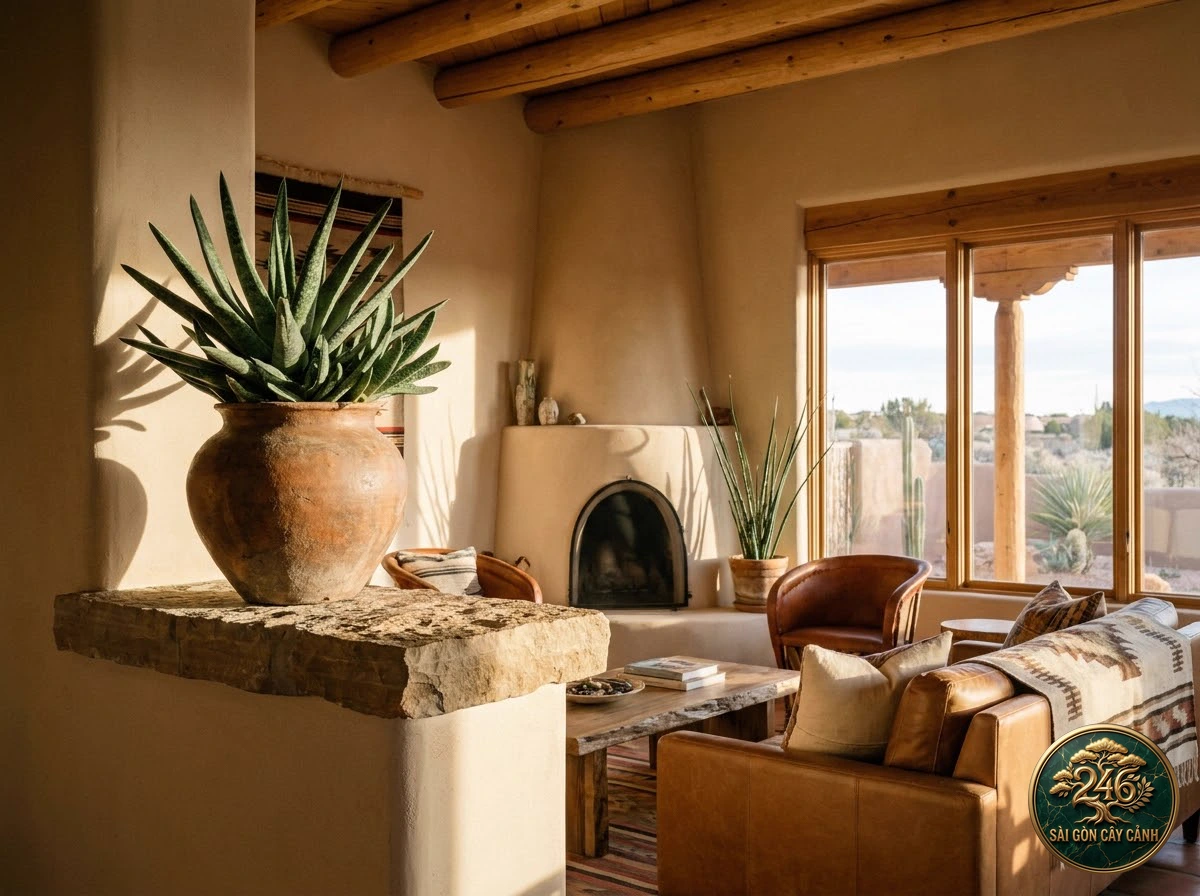
In xerophytic arrangements, Gasteria batesiana pairs magnificently with cliff-dwelling Mammillaria cacti, rugged Haworthia limifolia, and smooth glaucous Gasteria glomerata. The coarse, sandpaper-like texture of batesiana creates dramatic textural depth against smooth or powder-dusted companion foliage, invoking a rugged, authentic cliffside desert aesthetic.
Gasteria batesiana serves as an ideal living sculpture for Brutalist architecture and bold contemporary interior styling. Its dark, moss-green reptilian texture harmonizes flawlessly with raw cast-concrete vessels, rustic unglazed stoneware, or carved river-stone planters. Stationed upon industrial metal desks, reclaimed timber credenzas, or living room console tables, it emanates grounded permanence, ancient strength, and serene protective energy.
Nursery Care Journal & Living Greenery Moments
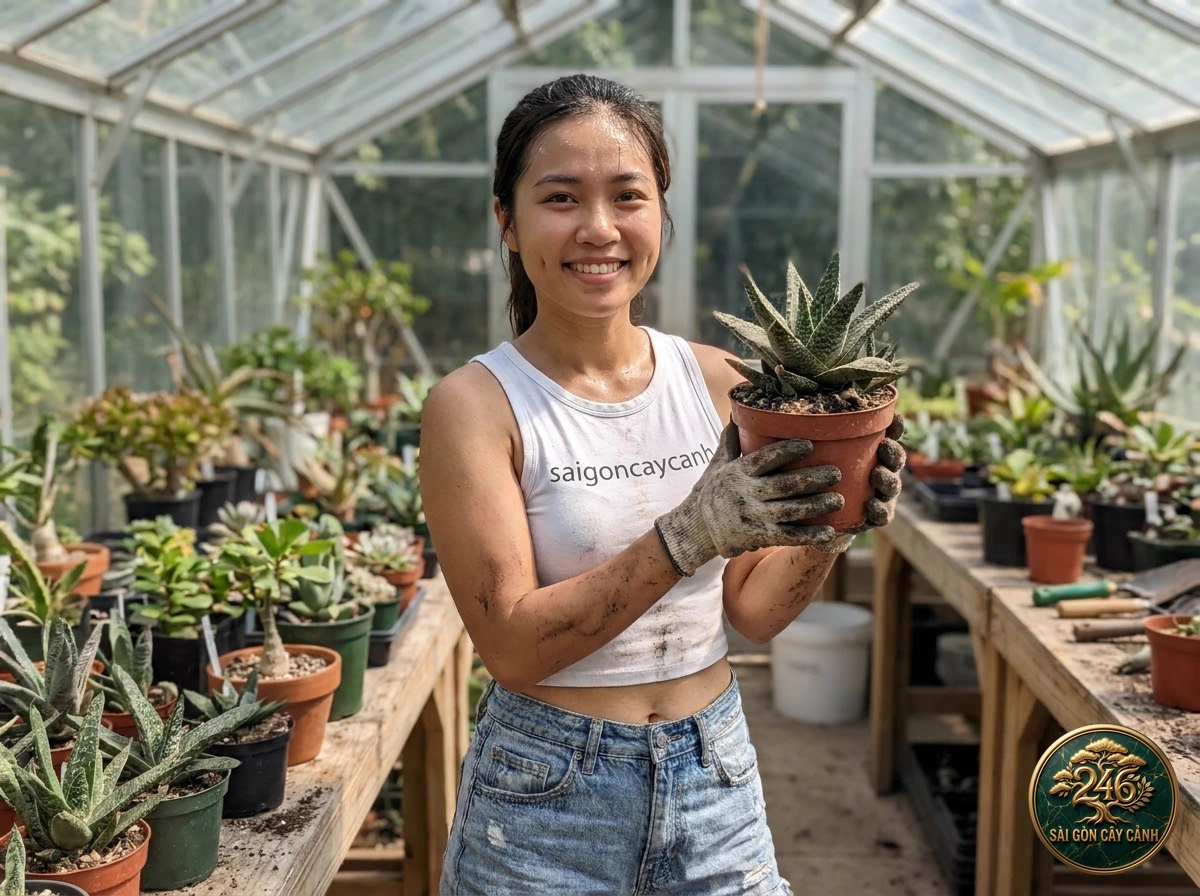
At Saigon Cay Canh greenhouse, each photograph captures genuine everyday care moments between plant lovers and living greenery, spreading a passion for nature and green-living inspiration.
13. Frequently Asked Questions & Botanical Summary
Frequently Asked Question: Why is my Bates’s gasteria turning a dull reddish-brown and losing the crisp relief of its white tubercles?
Expert Diagnosis from Saigon Cay Canh: Foliar browning and apparent flattening of tubercles indicates that the specimen is enduring excessive direct solar irradiance exceeding the threshold of a cliff-dwelling chasmophyte. In habitat, batesiana thrives within shaded south-facing rock fissures; intense sun forces the plant to accumulate protective brown pigments while cellular contraction flattens surface relief. Relocate the plant to bright indirect shade with good ventilation; within 1 to 2 weeks, the rich dark moss-green color returns and the stark white verrucose tubercles regain their raised tactile sharpness.
Bates’s gasteria Gasteria batesiana channels the raw primeval beauty of the Olifants River gorges, standing as an enduring living sculpture perfected through the horticultural archives of Saigon Cay Canh.