Living plant profile
Linden’s angel-wing
Caladium lindenii
Comprehensive botanical dossier for Linden’s angel-wing (Caladium lindenii). Identification, lighting calibration, porous substrate formulation, and cultivation guide by Saigon Cay Canh.
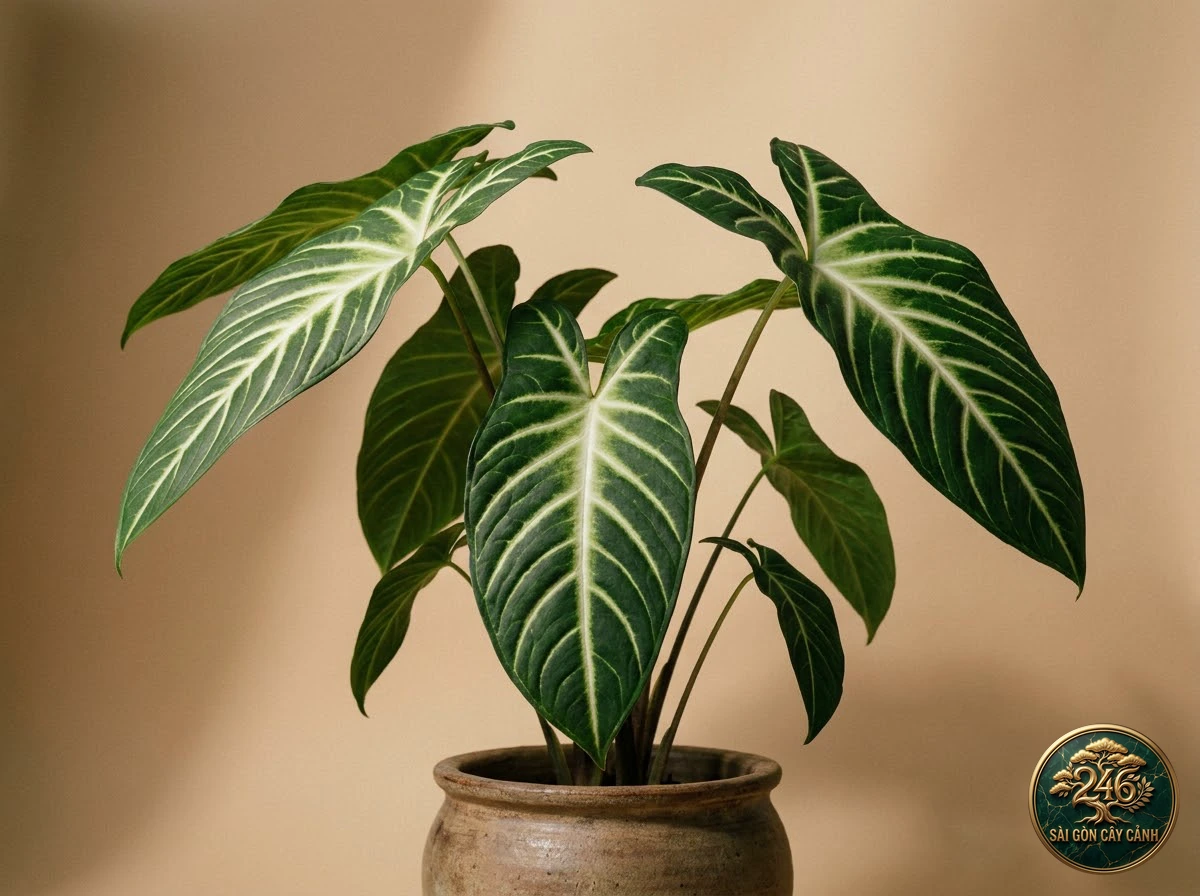
Linden’s angel-wing (Caladium lindenii) is a legendary tropical foliage classic native to Colombian rainforests, historically cataloged as Xanthosoma lindenii. Renowned for its majestic sagittate-hastate leaf blades adorned with striking creamy-white primary and secondary veins etched against deep emerald velvet, this botanical masterpiece provides aristocratic architectural drama.
1. Core Botanical Taxonomy & Cultural Specifications
| Scientific Name | Caladium lindenii |
|---|---|
| Botanical Family | Araceae (Aroid Family) |
| Native Distribution | Tropical montane rainforest understories of Colombia and Panama |
| Growth Demeanor | Rhizomatous clumping terrestrial herb reaching 40 – 70 cm, largely evergreen habit |
| Lighting Threshold | Medium to bright filtered daylight (1,500 – 3,000 lux); avoid direct solar scorch |
| Hydration Cadence | Consistently moist root environment; intolerant of severe drought or waterlogging |
| Substrate Formulation | 35% horticultural pumice, 25% aged pine bark chips, 25% sphagnum coir blend, 15% perlite |
| Thermal Range | 20°C – 30°C (68°F – 86°F; avoid prolonged exposure below 16°C/60°F) |
| Relative Humidity | 70% – 85% (Elevated relative humidity maintains foliar turgor and creamy venation clarity) |
| Cultivation Difficulty | Moderate (Requires stable ambient humidity and calibrated moisture management) |
| Pet Safety Profile | Toxic (Contains insoluble calcium oxalate crystals; keep out of reach of domestic pets) |
The taxonomic history of this specimen engaged botanical scholars for decades before being formally transferred from Xanthosoma into Caladium by taxonomists at Kew Gardens (POWO). A pivotal morphological divergence from standard caladiums lies in its subterranean architecture: developing stout creeping rhizomes rather than solitary rounded tubers, allowing the plant to remain largely evergreen under warm, humid domestic conditions.
In its native Colombian montane habitats, it inhabits sheltered river valleys and forest understories, anchoring into deep organic humus continuously enriched by leaf fall. Its spreading rhizomatous network empowers the plant to form broad, stately clumps reaching forty to seventy centimeters in stature.
Elongated, erect petioles emerge directly from subterranean nodes, reinforced by robust fibrous sheaths. The starch-rich rhizome provides reliable physiological buffering, allowing rapid foliage recovery following temporary environmental stress.
2. Morphological Identification & Foliar Architecture
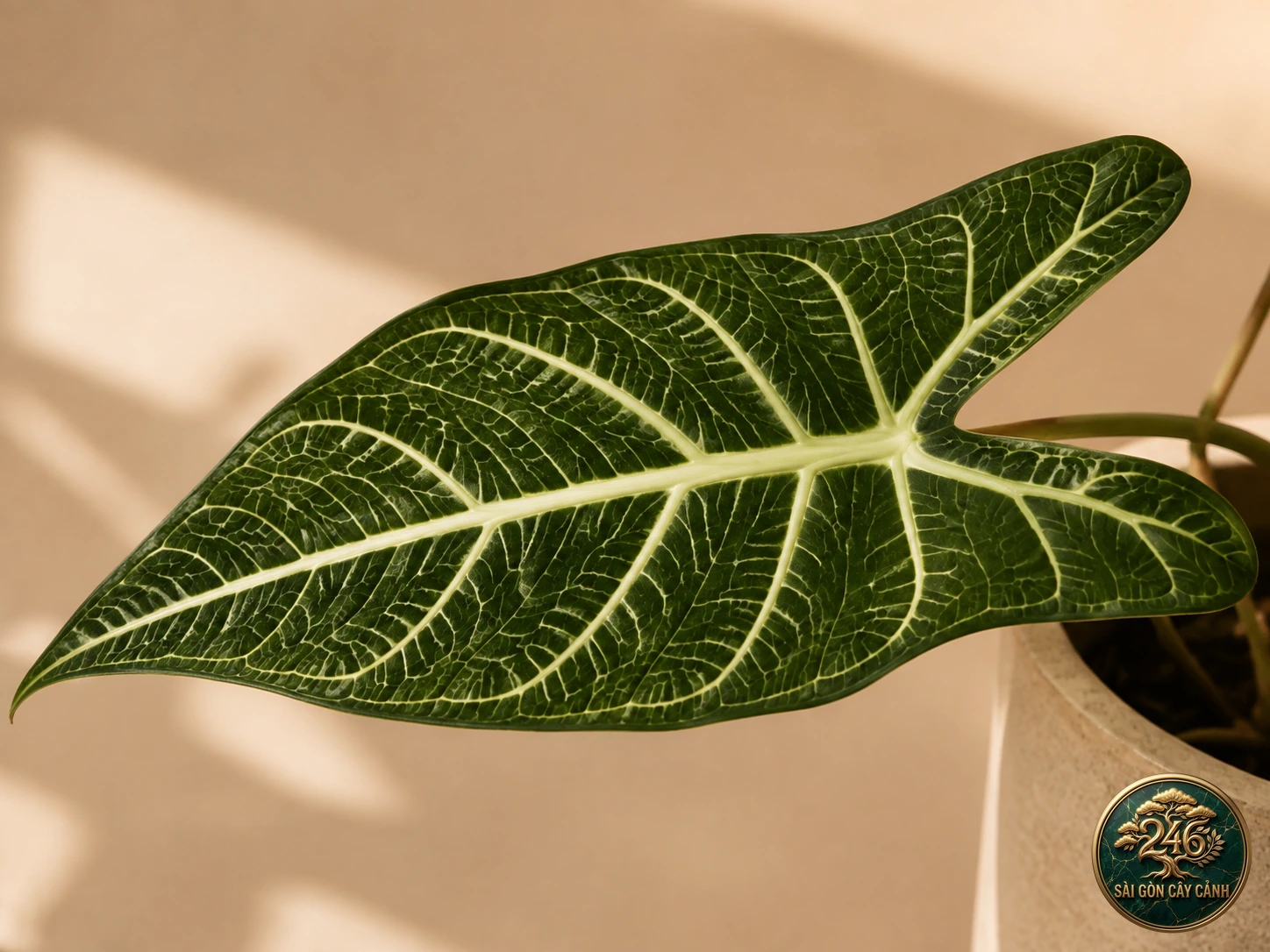
The definitive botanical hallmark of Linden’s angel-wing is its elongated sagittate-hastate blade spanning 25 to 40 cm, flanked by prominent basal lobes. The adaxial surface displays a velvety deep emerald sheen, accentuated by an ivory-white central midrib and radiating lateral primary veins resembling an exquisite symmetrical fishbone pattern.
The abaxial surface is pale matte green, revealing the prominent vascular architecture beneath. Petioles are pale green, structurally channeled along their upper surfaces and rounded below, presenting an elegant architectural splay.
The creamy-white venation network of Caladium lindenii is constructed from reinforced collenchyma strands rich in structural pectin and cellulose yet devoid of green chlorophyll, providing an architectural scaffold for the elongated sagittate lamina. The exquisite bilateral symmetry of lateral veins generates an iconic fishbone pattern of unmatched botanical sophistication.
3. Photometric Calibration & Window Exposure Optimization
Caladium lindenii thrives under bright diffused daylight calibrated between 1,500 and 3,000 lux. Filtered illumination ensures the creamy venation retains crisp contrast against velvety emerald surfaces. Direct unfiltered afternoon sunlight burns the delicate vein margins, resulting in persistent brown scars.
Inadequate light below 1,000 lux causes the white venation to fade toward dull green, accompanied by floppy, elongated petioles unable to maintain vertical poise. Placing containers near east or southeast windows filtered by sheer blinds yields optimal results.
Optimal illumination measured via calibrated photometers spans 150 to 250 foot-candles (1,600 to 2,700 lux). Indirect morning sunlight delivers adequate photon density to preserve creamy collenchyma venation without degrading chlorophyll pigments within adjacent laminar tissue.
4. Geophytic Tuber Dynamics & Dormancy Phenology
Unlike deciduous tuberous caladiums that lose foliage in winter, Linden’s angel-wing requires steady root moisture year-round. Thoroughly saturate the root ball when the top two centimeters feel dry, ensuring rapid drainage through bottom holes without leaving standing water in collection saucers.
During humid rainy periods, space irrigations farther apart and verify subterranean moisture levels with a wooden probe, guarding against moisture-induced root asphyxiation.
The physiological thermal range spans 20°C to 30°C. Thriving within warm tropical ambient ranges, it suffers under chilling air conditioning drafts; prolonged exposure below 16°C induces marginal chlorosis.
Ambient relative humidity should remain steady between 70% and 85%. When humidity drops below 60%, the sagittate leaf tips brown and curl, while the creamy venation loses its pristine crispness.
A modest diurnal thermal shift from 26°C daytime to 20°C night stimulates steady phloem transport into expanding rhizomes. Position containers away from direct air conditioning vents to avert sudden turgor pressure loss within elongated petioles.
5. Engineered High-Porosity Substrate Formulation
An optimal substrate recipe comprises 35% medium pumice, 25% aged composted pine bark, 25% washed coconut coir fibers, and 15% horticultural perlite. This mixture maintains high porosity and resistant structure that resists compaction over prolonged cultivation.
A buffered pH between 5.8 and 6.5 optimizes micro-nutrient availability, particularly iron and magnesium crucial for foliar pigmentation.
The creeping rhizomatous habit of Caladium lindenii favors wide, shallow containers filled with high-porosity media. Volcanic pumice and pine bark nuggets vent subterranean carbon dioxide accumulations, allowing underground rhizomes to branch freely without physical constriction from heavy clay soils.
6. Organic Bio-Fertilization & Mineral Management
Supply balanced organic liquid fertilizer monthly through spring and summer to nourish expanding rhizomes and sustain active foliar production. Supplement with calcium and magnesium to reinforce cell wall strength within erect petioles.
Halve fertilizer concentrations during cooler, darker winter months when metabolic activity slows, avoiding salt build-up that damages fragile root tips.
As an evergreen aroid devoid of complete deciduous dormancy, Linden’s angel-wing absorbs continuous nutrition year-round. Monthly waterings with liquid worm casting extract and bio-available calcium reinforce robust, thick petioles capable of supporting expansive arrowhead blades.
7. Clinical Diagnostic Matrix & Horticultural Resolutions
| Clinical Symptom | Root Pathology | Diagnostic Method | Targeted Resolution |
|---|---|---|---|
| Creamy veins yellowing, leaf blades drooping | Overwatering causing root oxygen starvation | Inspect pot drainage, extend dry intervals, incorporate coarser pumice | Risk of rhizome decay |
| Crisp curling margins on sagittate blades | Ambient relative humidity below 60% | Deploy ultrasonic humidifier to maintain >75%, avoid air conditioner drafts | Epidermal desiccation |
| Elongated leggy petioles, fading white venation | Insufficient diffused daylight below 1,000 lux | Move closer to east-facing window receiving 2,000 lux diffused light | Etiolation distortion |
| Fine microscopic webbing beneath leaves | Two-spotted spider mites in dry atmosphere | Wipe foliage with mild soap solution and apply organic neem oil spray | Pest infestation damage |
8. Pest Mitigation Protocols & Foliar Sanitation
Typical pests include thrips and two-spotted spider mites feeding on the abaxial leaf surfaces. Wipe foliage regularly with soft damp cloths and apply preventive biological neem oil sprays monthly.
Rhizome rot occurs exclusively in waterlogged, anaerobic media; excise decayed portions cleanly and dust cuts with activated charcoal before repotting into fresh porous mix.
The V-shaped petiole sheaths of Linden’s angel-wing frequently harbor domestic dust and concealed mealybugs. Systematically flushing petiole crevices with gentle pressurized water during early morning maintains basal sanitation and discourages pest colonization.
9. Asexual Propagation Methodology
Propagation of Caladium lindenii is accomplished most effectively by dividing clustered rhizomes during early spring repotting. Remove the plant from its container, gently wash away media to inspect the rhizome structure, and identify sections with healthy roots and active eyes.
Use a sterile razor to divide rhizome segments possessing at least two to three leaves, potting divisions into fresh airy substrate in a warm, humid propagation space.
Routinely inspect the deep petiole sheaths for hidden mealybugs or thrips. Dab emerging colonies with cotton swabs moistened in mild botanical alcohol, followed by monthly preventive neem emulsion mists to keep the velvety matte foliage pristine.
10. Veterinary Toxicology & Domestic Safety Safeguards
Position planters upon sturdy elevated pedestals or inaccessible plant shelves to eliminate accidental pet browsing.
11. Biophilic Interior Design & Architectural Styling
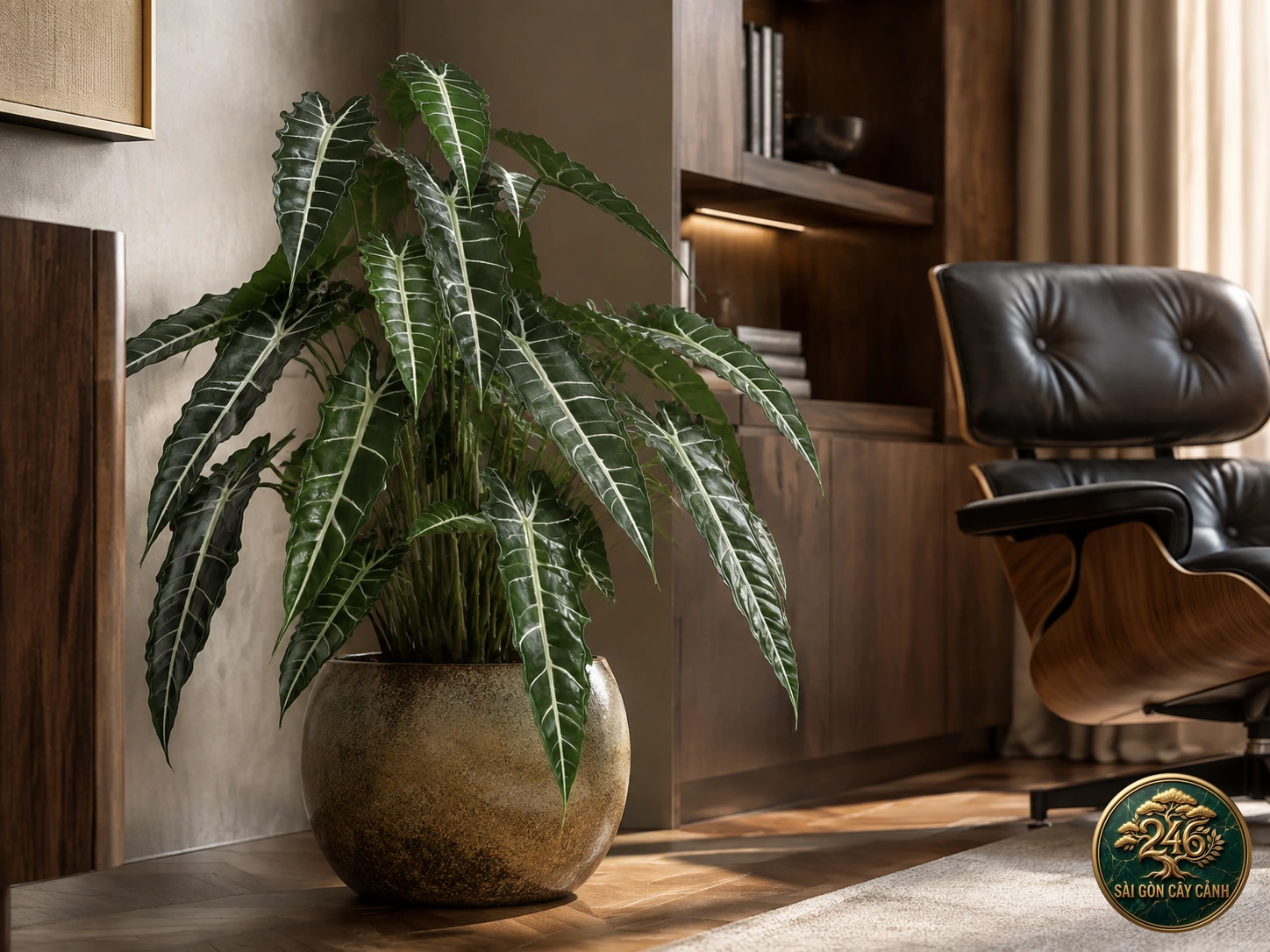
With its proud sagittate architecture and high-contrast white venation, Linden’s angel-wing serves as a sculptural statement piece in upscale interior landscapes. It excels in minimalist white porcelain or charcoal stoneware planters, enlivening executive suites, living rooms, and gallery corridors.
Grouping Caladium lindenii with solid green foliage specimens such as Philodendrons or Monsteras creates an architecturally layered, sophisticated indoor tropical vignette.
With its aristocratic presence and soaring sagittate blades, Linden’s angel-wing serves as a dramatic architectural accent within executive boardrooms, boutique hotel lobbies, and private libraries. Positioned against charcoal or navy walls, its creamy venation seems to glow with natural luminescence.
12. Master Cultivation Axioms
Three master horticultural rules for maintaining lush, evergreen foliage on Caladium lindenii:
- Hydration axiom: Maintain consistent capillary moisture year-round, never allowing rootballs to desiccate while ensuring rapid bottom drainage.
- Illumination axiom: Deliver abundant filtered daylight between 1,500 and 3,000 lux, shielding foliage from direct midday sun to preserve contrast.
- Sanitation axiom: Keep ambient warmth steadily above 20°C (68°F) and relative humidity over 70% to prevent crisping along slender sagittate tips.
13. Frequently Asked Botanical Questions (FAQs)
Does Caladium lindenii completely die back in winter like other caladiums?
No. Possessing a creeping rhizomatous root system rather than a deciduous tuber, it remains largely evergreen when kept above 20°C (68°F) with adequate moisture.
Why are the petioles collapsing and bending over?
This occurs due to etiolation in low light or severe dehydration resulting in loss of cellular turgor pressure within petiole vascular tissues.
Can I apply commercial leaf shine products or coconut oil to the foliage?
Never apply leaf shine or oils. The velvety matte lamina contains delicate stomata that become suffocated by oils, causing rapid foliar chlorosis and tissue necrosis.
What type of planter suits Caladium lindenii best?
Porous unglazed terracotta or ceramic planters equipped with generous bottom drainage holes provide optimal breathability, preventing moisture stagnation around rhizomes.
Does this plant bloom, and what do the flowers look like?
It produces typical aroid inflorescences consisting of a creamy greenish spathe enclosing a spadix, though the bloom lacks the dramatic visual appeal of its magnificent foliage.
Why do the milky white veins of Caladium lindenii gradually fade?
Vein blurring typically stems from insufficient illumination or excessive nitrate fertilization. Relocate the specimen to bright indirect light (2,000 to 3,200 lux) and apply potassium-dominant micronutrients to restore striking silvery contrast.