Living plant profile
Acorn peperomia
Peperomia tetraphylla
Comprehensive botanical dossier for Acorn peperomia (Peperomia tetraphylla). Identification, lighting calibration, porous substrate formulation, and cultivation guide by Saigon Cay Canh.
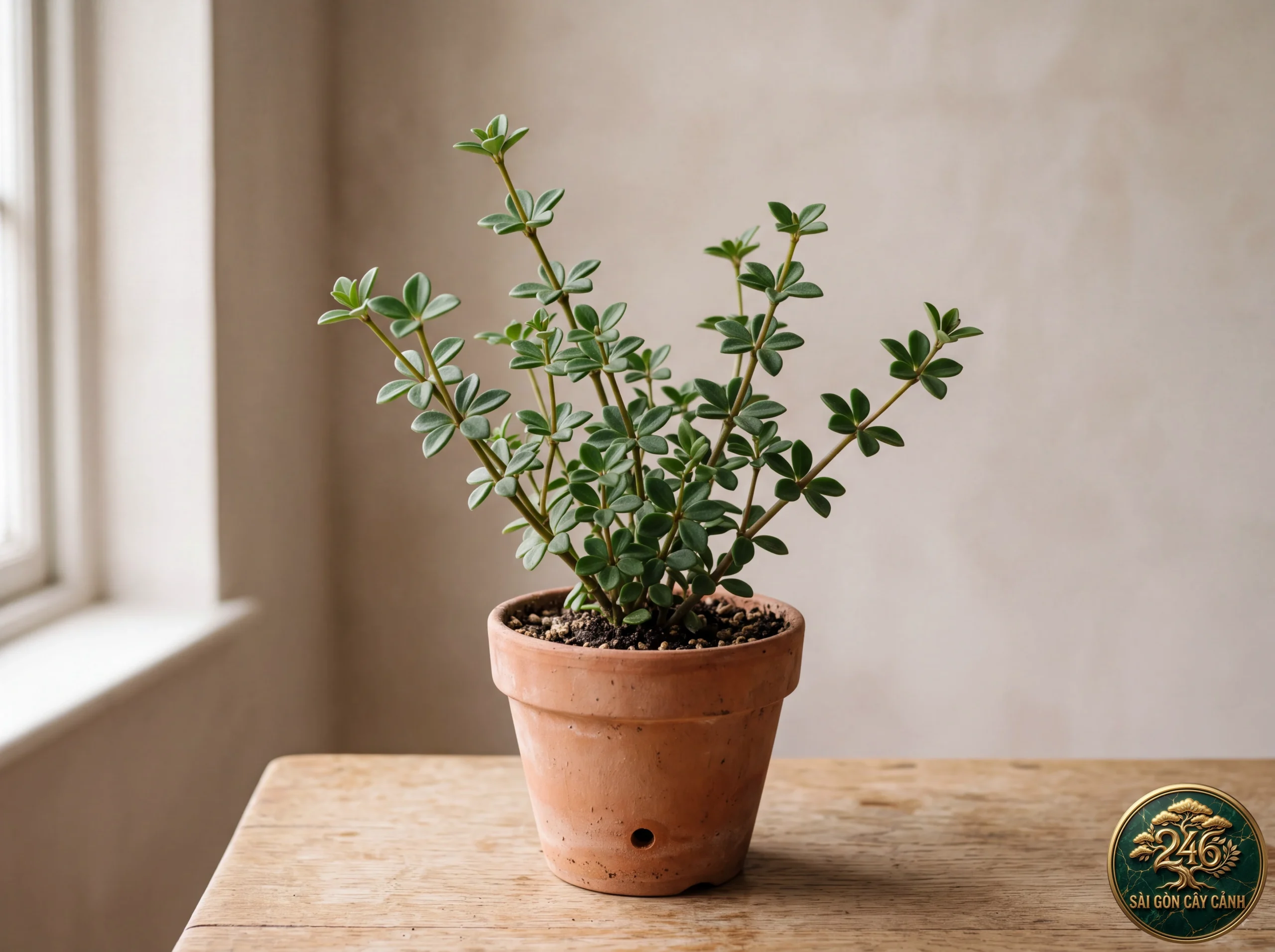
Acorn peperomia (Peperomia tetraphylla) is an exquisite miniature succulent foliage species in the pepper family (Piperaceae), distinguished by symmetrical four-leaved foliar whorls of glossy jade-green blades clustered at each cauline node, offering refined compact charm for desktops.
1. Core Botanical Taxonomy & Cultural Specifications
| Scientific Name | Peperomia tetraphylla |
|---|---|
| Botanical Family | Piperaceae (Pepper Family) |
| Native Distribution | Pantropical and subtropical regions of the Americas, Africa, Asia, Oceania |
| Growth Demeanor | Succulent epiphytic herb with creeping or gently decumbent habit |
| Lighting Threshold | Moderate to bright indirect diffuse illumination (1,200 – 2,800 lux) |
| Hydration Cadence | Allow upper 50% substrate to dry between waterings; avoid soggy media |
| Substrate Formulation | Pumice aggregate, mini pine bark, washed coconut coir, perlite |
| Thermal Range | 18°C – 30°C (comfortable ambient thermal range; protect below 10°C) |
| Relative Humidity | 55% – 75% (readily acclimates to residential humidity) |
| Cultivation Difficulty | Easy (resilient, pest-resistant, drought-tolerant succulent foliage) |
| Pet Safety Profile | 100% Non-Toxic (ASPCA certified safe for companion cats and dogs) |
Taxonomically, Peperomia tetraphylla exhibits one of the broadest pantropical native distributions across the genus Peperomia. It thrives as an epiphyte or lithophyte rooted into mossy bark fissures and humid rock crevices across tropical rainforests from the Americas to Asia, superbly adapted to capturing aerial moisture and intermittent rain cascades.
The diagnostic morphological marker of this taxon is its distinct foliar phyllotaxy: at each cauline node, leaves emerge in symmetrical whorls of four (occasionally three or five), inspiring the specific epithet ‘tetraphylla’ from Greek meaning ‘four-leaved’. Cauline stems are semi-succulent, tinted pale green to faint russet, branching densely into tidy mounds 10 to 20 cm tall.
Leaf blades are obovate to broadly elliptic, measuring 1 to 2 cm long, remarkably thick and fleshy with a lustrous jade sheen. Inflorescences are erect terminal spikes of pale green 2 to 4 cm long; post-anthesis fruits develop into diminutive sticky berries bearing a conical apical beak resembling miniature acorns, giving rise to its colloquial trade name ‘Acorn peperomia’.
2. Morphological Identification & Foliar Architecture
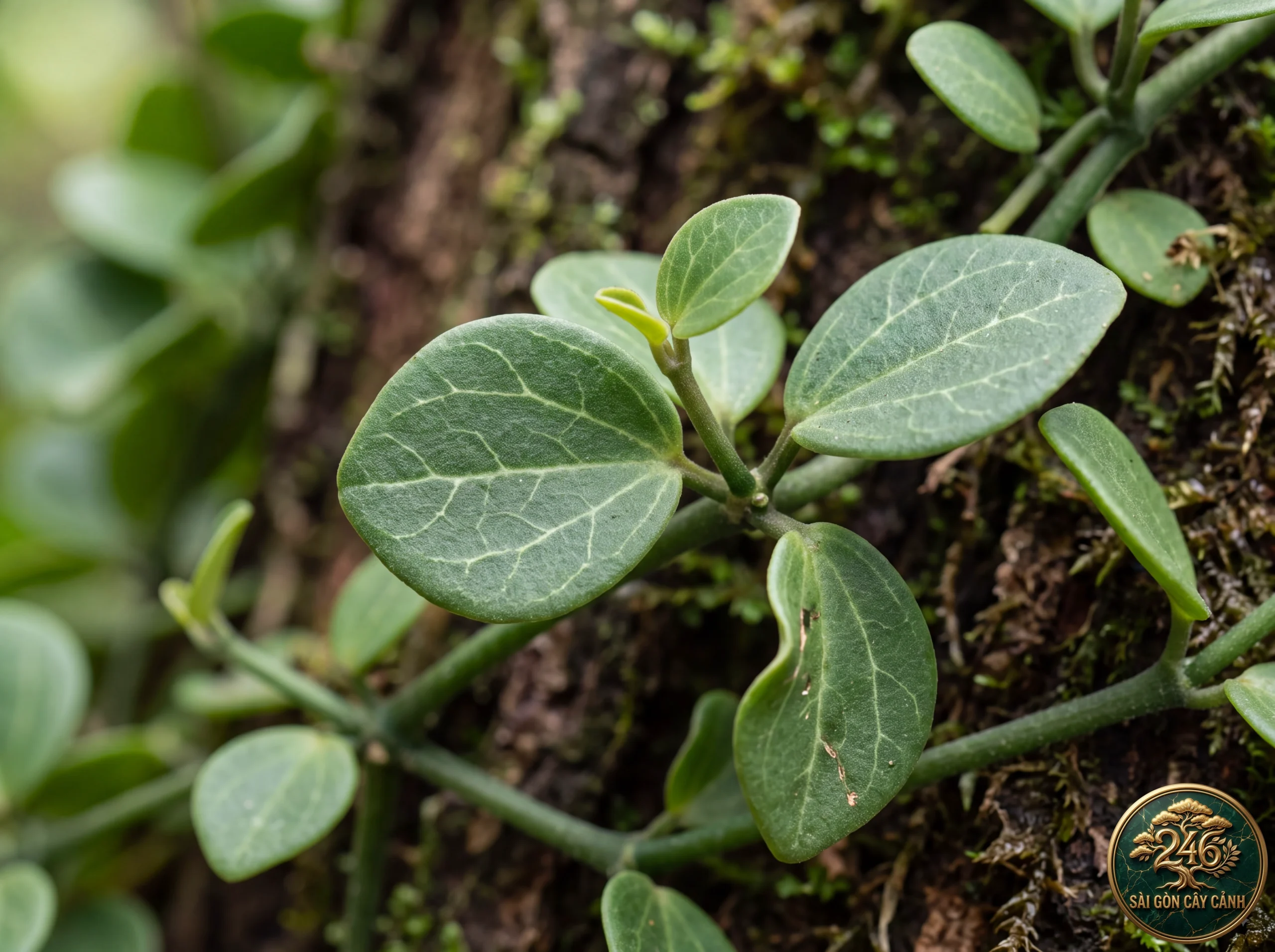
Diagnostic keys for Acorn peperomia center on its stiff, semi-succulent foliar texture armored by a substantial cuticular envelope that minimizes desiccation. Palpating the blade reveals rigid turgidity, with the adaxial surface displaying deep emerald gloss etched with three faint impressed veins, while the abaxial epidermis is paler and completely glabrous.
Under residential cultivation, Peperomia tetraphylla maintains a dense, compact architecture with compressed internodes when provided with bright indirect daylight. In contrast, prolonged placement in dim light induces cauline etiolation, elongating internodal spacing between four-leaf whorls and diluting the sculptural compactness of the specimen.
Micro-histological analysis of Peperomia tetraphylla demonstrates an exceptionally thick adaxial cuticular sheath that minimizes transpirational moisture loss during canopy drought intervals. A specialized multiple-layered foliar hypodermis occupies approximately 40% of total laminar thickness, composed of clear water-storing parenchymal cells situated above densely packed photosynthetic palisade mesophyll adapted to intercept diffuse understory photons.
3. Photometric Calibration & Window Exposure Optimization
Photometric calibration for Peperomia tetraphylla targets diffuse daylight levels between 1,200 and 2,800 lux, corresponding to a PPFD flux of 25 to 55 µmol/m²/s. The ideal indoor placement is an executive desk or shelf situated 1 to 2 meters back from east- or south-facing windows, enjoying copious gentle daylight shielded from scorching midday sunbeams.
Should foliar surfaces develop crispy tan sunburn lesions or curled margins, the plant is experiencing acute solar irradiance; immediately relocate it into softer filtered light. Conversely, if leaves fade to dull yellowish-green while stems stretch thinly toward windows, supplement with full-spectrum LED fixtures for 10-12 hours daily.
Biophotometric assessments indicate that Acorn peperomia reaches net photosynthetic saturation across a modest PPFD flux of 25 to 55 µmol/m²/s. Within this photonic range, chlorophyll a and b synthesis remains in equilibrium, preserving the rich turgid jade luster of foliar whorls; sustained exposure exceeding 90 µmol/m²/s precipitates chlorophyll photodegradation, bleaching the foliage into pale yellowish-green.
4. Quadrifoliate Whorled Foliar Anatomy & Diminutive Acorn-Like Spikes
The architectural habit of Peperomia tetraphylla faithfully mirrors its epiphytic origins clambering across tropical mossy tree bark. Cauline stems branch from the base and spread prostrately; wherever nodes touch moist substrate, adventitious rootlets emerge promptly to anchor the clump and absorb localized moisture.
Owing to succulent, brittle cauline tissues, mechanical wiring or forced bending must be avoided. The plant naturally crafts a symmetrical, cushion-like spreading mound that softly cascades over shallow ceramic rims, creating an organic miniature bonsai effect without intrusive training wires.
The comfortable thermal envelope for Peperomia tetraphylla spans 18°C to 30°C, seamlessly integrating into air-conditioned residential and commercial spaces. It tolerates warm spikes up to 34°C provided potting media remains airy and ambient humidity exceeds 60%; however, cold drafts below 12°C must be strictly avoided.
Ambient relative humidity is ideally calibrated between 55% and 75%. Inside air-conditioned rooms where humidity dips below 50%, the succulent leaves may lose some turgid luster; placing the pot atop a pebble-water tray or grouping it among companion foliage creates a restorative localized microclimate.
The target vapor pressure deficit (VPD) spans 0.7 to 1.1 kPa with an ambient relative humidity of 55% to 75%. Endowed with internal water-storing hypodermal buffers, the plant operates facultative Crassulacean Acid Metabolism (CAM) under air-conditioned moisture stress, closing daytime stomata to conserve cellular hydration impeccably.
The quadrifoliate whorled architecture at each node establishes an optimal spatial radial array that minimizes self-shading among adjacent leaves. Cauline cross-sections reveal scattered vascular bundles surrounded by flexible collenchyma sheaths, endowing prostrate stoloniferous branches with tensile resilience to support heavy succulent foliage without mechanical collapse.
5. Porous Aggregate Substrate Engineering & Aeration Dynamics
Substrate engineering for Acorn peperomia requires exceptional porosity and instantaneous gravity drainage. An optimal formulation incorporates 40% mini pumice (3-5 mm), 30% sterilized fine pine bark, 20% desalted coarse coconut coir chunks, and 10% horticultural perlite, establishing an airy matrix protecting fibrous roots from suffocation.
Regarding irrigation cadence, apply water only when the substrate volume has dried out approximately 50% to 60%. Employ sub-irrigation via bottom soaking or gentle perimeter watering in the morning, avoiding overhead drenching over compact leaf whorls at dusk to thwart opportunistic fungal germination.
Hydraulic conductivity within the potting medium requires instantaneous gravitational percolation to prevent anaerobic rootlet asphyxiation. Integrating 40% pumice aggregate with 30% fine pine bark establishes a stable porous matrix that retains gentle capillary moisture while providing air-filled porosity exceeding 35%, buffering pH between 6.0 and 6.8.
6. Organic Nutrition Schedules & Periodic Micronutrient Priming
Nutritional replenishment for Peperomia tetraphylla is conservative owing to the measured metabolic turnover of succulent epiphytes. Monthly throughout the active growing season, administer gentle organic liquid feeds such as vermicompost extract or seaweed tea diluted to one-quarter strength with an EC below 0.5 mS/cm.
Never apply concentrated synthetic chemical fertilizers or deposit quick-release granular pellets against succulent stem collars, as free mineral salts readily burn fragile root hairs and blacken fleshy nodes. Cease nutritional feeding altogether during cool winter dormancy periods.
Biological nutritional management involves applying dilute vermicompost extract paired with organic cold-water kelp essence at an electrical conductivity (EC) strictly below 0.5 mS/cm monthly during spring and summer. Soluble bio-chelated potassium and calcium reinforce succulent cell wall rigidity, fortifying fungal resistance without chemical root scorch.
7. Clinical Diagnostic Matrix & Rapid Correction Protocols
| Clinical Symptom | Primary Etiology | Diagnostic Evaluation | Corrective Prescription |
|---|---|---|---|
| Leaves turning yellow, flaccid, and stems detaching at soil line | Root and crown rot caused by chronic over-irrigation and soggy media | Inspect root ball moisture and detect sour anaerobic odor in substrate | Cease watering immediately, excise rotten tissues, repot in porous pumice, ventilate |
| Cauline internodes stretching thinly with widely spaced leaf whorls | Chronic light starvation in deeply shaded indoor locations | Measure ambient light levels beneath 800 lux at the container site | Relocate specimen closer to bright filtered windows or supplement with LED grow lights |
| Crisp tan or brown necrotic scorch patches on adaxial leaf blades | Direct intense solar radiation causing foliar photochemical burn | Correlate scorch marks with unshielded direct sunbeam exposure paths | Move container deeper into room away from direct unshaded glass panes |
| Flocculent white cottony deposits nestled within nodal leaf axils | Mealybug infestation feeding upon succulent phloem sap | Examine with hand lens to identify oval white scale insects | Clean affected axils with cotton swab dipped in organic soap and apply botanical spray |
8. Cryptic Pest Prophylaxis & Foliar Surface Sanitation
Plant health surveillance prioritizes deterrence against cottony mealybugs (Pseudococcidae) that shelter inside dense nodal axils or around basal root collars. Upon early detection of white flocculent wax, carefully swab affected leaf junctions using cotton buds dipped in dilute potassium insecticidal soap.
Root and basal stem rot instigated by opportunistic Pythium and Phytophthora fungi constitutes the primary threat under waterlogged media. The most effective preventative defense is guaranteeing high substrate porosity, utilizing generously perforated containers, and watering only when media has dried sufficiently.
Integrated Pest Management (IPM) prioritizes early surveillance for cryptic mealybugs sheltering in nodal foliar axils. Rather than applying harsh agrochemicals, routine magnification scouting paired with localized dusting using soft camel-hair brushes dipped in 0.5% biological potassium soap eradicates scale colonies safely.
9. Asexual Propagation Methodology & Root Strike Protocols
Multiplying Peperomia tetraphylla is remarkably straightforward via shoot tip cuttings or single nodal whorl segments. Using sterile shears, sever 5 to 8 cm stem pieces bearing at least two foliar whorls, allowing cut ends to air-callus in warm shade for 2-3 hours prior to substrate insertion.
Insert callused cuttings into moist perlite blended with fine sphagnum, sheltered under warm indirect illumination. Maintaining gentle moisture over a 25 to 35 day developmental interval stimulates dense fibrous white root flushes and active apical buds, exceeding a 95% strike success rate.
During nodal whorl stem cutting propagation, treating severed wounds with sterile activated charcoal powder and air-callusing in shade prevents opportunistic Erwinia bacterial rot. Maintained under a ventilated humidity dome in warm 22°C – 26°C conditions over a 25 to 35 day interval, 100% root strike and shoot initiation are achieved.
10. Companion Animal Safety Profile & ASPCA Non-Toxic Verification
According to the Animal Poison Control Center of the ASPCA, foliage plants within the genus Peperomia are verified non-toxic to domestic felines and canines. Peperomia tetraphylla contains zero hazardous chemical irritants or noxious alkaloids, serving as a thoroughly safe indoor foliage choice for pet-loving households.
11. Biophilic Curation & Contemporary Interior Design Styling
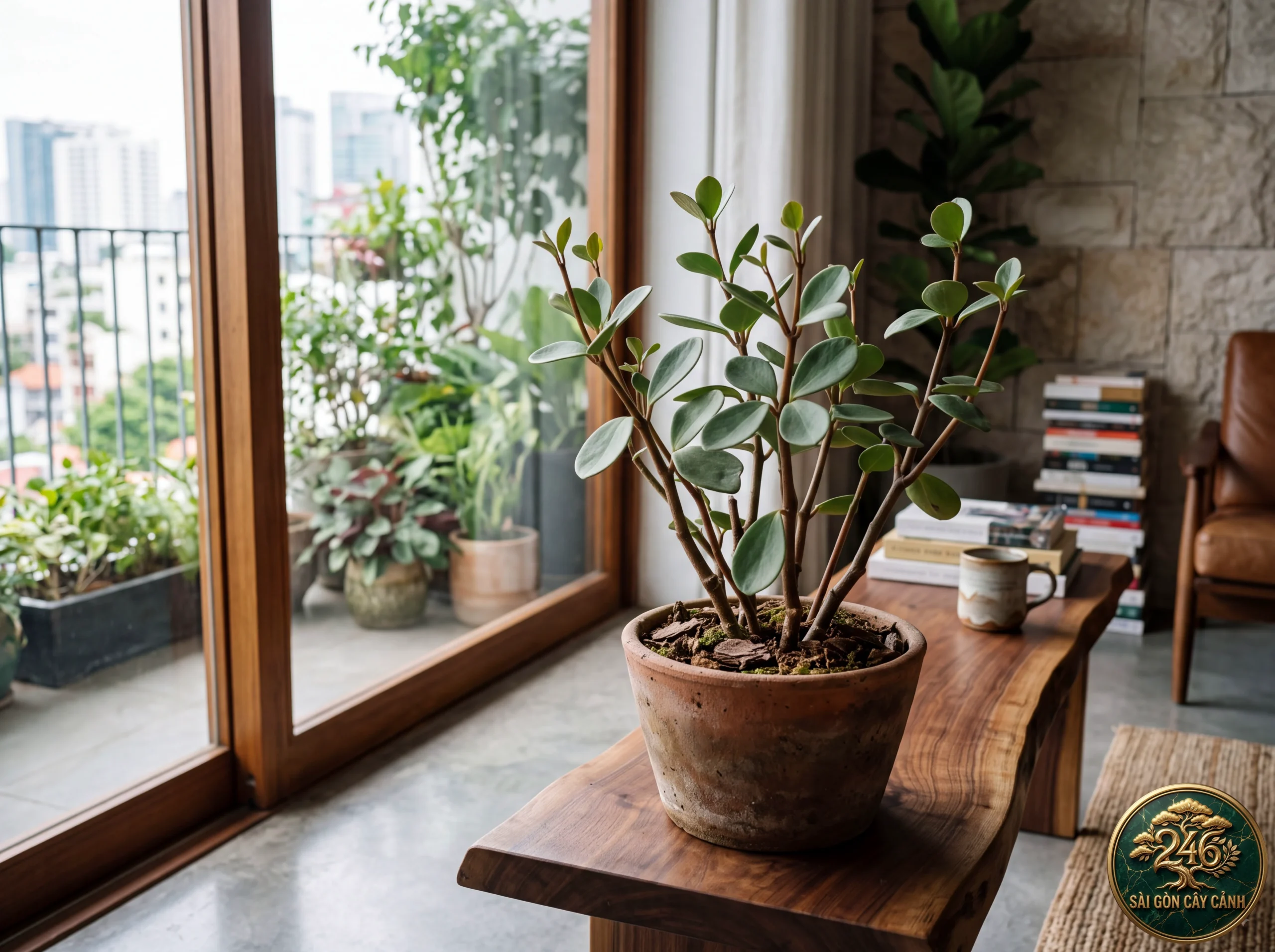
In modern Biophilic interior styling, Peperomia tetraphylla introduces a diminutive sculptural green accent brimming with organic vitality. Its symmetrical four-leaf clusters look stunning in artisanal ceramic pots on executive desks, bookshelves, window sills, or incorporated into open arid-terrarium compositions.
The soothing emerald coloration and balanced geometric harmony relieve ocular fatigue for individuals working prolonged hours before digital screens. Contemplating the miniature perfection of its succulent foliage fosters restorative mindfulness and peaceful focus throughout busy workdays.
From a Biophilic environmental psychology perspective, the cross-symmetrical four-leaf geometry of Peperomia tetraphylla introduces calming fractal order to high-stress executive workspaces. Observing its miniature turgid jade clusters relieves ocular accommodation strain, fostering contemplative restoration and tranquil mental focus.
12. Master Principles for Sustainable Indoor Acclimatization
To cultivate thriving Peperomia tetraphylla with compact turgid jade whorls indoors, adhere strictly to these three foundational principles:
- Hydration axiom: Hydration axiom: Irrigate only when substrate dries 50-60%, allowing rapid drainage without nocturnal water pooling.
- Illumination axiom: Illumination axiom: Supply bright filtered daylight of 1,200-2,800 lux while sheltering foliage from scorching direct rays.
- Maintenance axiom: Aeration axiom: Utilize high-porosity mineral substrates and place containers where gentle ambient convective airflow circulates.
13. Frequently Asked Questions Regarding Acorn peperomia (FAQs)
Does Acorn peperomia require routine overhead foliar misting?
No; its succulent tissues conserve internal moisture efficiently, and standing water lingering inside compact axils overnight can foster bacterial rot.
How often should Peperomia tetraphylla be repotted into larger containers?
Due to its compact root system and modest growth rate, repotting is needed only every 2 to 3 years when roots gently fill the pot.
Why do some stem nodes feature only three leaves instead of four?
This represents normal physiological foliar variation along immature shoots; vigorous shoots under bright light will reliably produce complete four-leaf whorls.
Can this species be cultivated in purely aquatic hydroculture?
Long-term hydroculture is unadvisable because its succulent stems easily succumb to tissue maceration in standing stagnant water.
Does pinching terminal shoot tips promote bushier branching?
Yes; gently pinching apical tips awakens dormant axillary buds along lower nodes, prompting dense lateral branching and a fuller cushion habit.
Why do intact leaves of Acorn peperomia occasionally drop off upon gentle touch?
Spontaneous leaf shedding typically indicates localized rhizosphere hypoxia caused by chronic bottom over-saturation, triggering premature petiole abscission layer formation; immediately withhold irrigation, inspect drainage, and repot in airy pumice.