
Living plant profile
White Rain Lily (Zephyranthes candida)
Zephyranthes candida
📌 CLINICAL & BIOLOGICAL ABSTRACT — White Rain Lily (Zephyranthes candida)White Rain Lily (Zephyranthes candida) Zephyranthes candida, widely admired as white rain lily, autumn zephyrlily, or fairy lily, is an enchanting perennial bulbous herb belonging to the amaryllis family (Amaryllidaceae). Native to the sun-drenched pampas and river basins of South America, this species enchants garden […]
White Rain Lily (Zephyranthes candida)
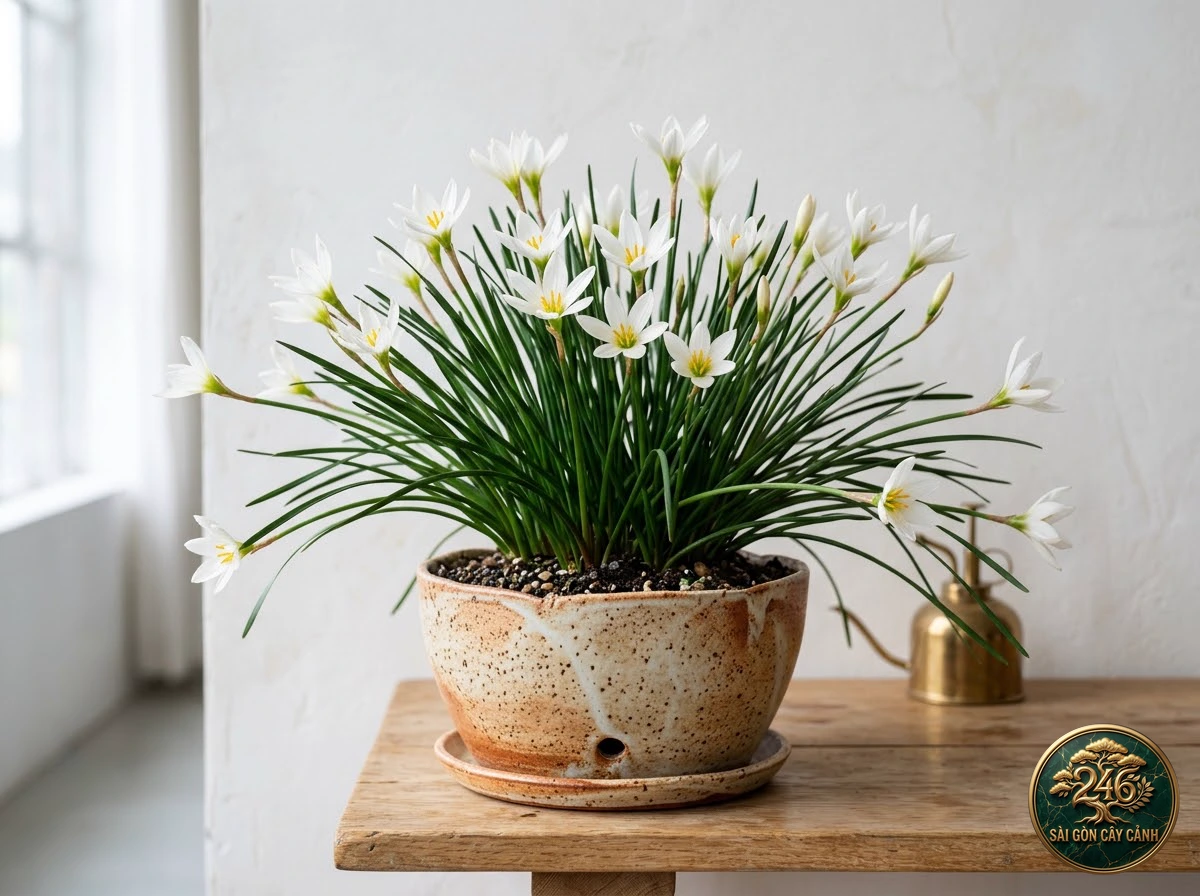
Zephyranthes candida, widely admired as white rain lily, autumn zephyrlily, or fairy lily, is an enchanting perennial bulbous herb belonging to the amaryllis family (Amaryllidaceae). Native to the sun-drenched pampas and river basins of South America, this species enchants garden admirers with pristine, crystalline elegance: dense tufts of deep green, rush-like cylindrical foliage resembling chives serve as a vibrant emerald backdrop for solitary six-parted star-shaped flowers of glistening snow-white hue, accentuated by brilliant yellow anthers. Blooming with astonishing vigor after seasonal showers, the plant forms continuous luminous floral blankets. Within Saigon Cay Canh landscaping repertoire, white rain lily symbolizes untainted purity and quiet resilience, functioning as a premier edging selection for modern tropical gardens.
Sài Gòn Cây Cảnh Care Compass
1. Botanical Identity & Taxonomic Nomenclature History
Zephyranthes candida was originally described by British botanist John Lindley as Amaryllis candida in 1823, before being systematically reassigned to Zephyranthes by William Herbert in 1826. The generic epithet Zephyranthes honors the Greek deity of the west wind, Zephyros. The specific epithet candida originates from classical Latin candidus (‘dazzling white’ or ‘pure snow-like’), perfectly capturing the crystalline luminescence of its pristine petals.
Native to the marshes and riparian floodplains of the Rio de la Plata (‘River of Silver’) across Argentina and Uruguay, the immense drifts of gleaming white blossoms along the riverbanks reportedly inspired the naming of the river by early Spanish navigators. Naturalized broadly across warm temperate and tropical continents, it remains one of the most widely cultivated botanical groundcovers throughout Vietnamese residential gardens.
2. Morphological Architecture & Anatomical Characteristics

Morphologically, Zephyranthes candida develops from a compact, subglobose tunicate bulb 1.5 to 2.5 cm in diameter with dark brown membranous scales and vigorous white adventitious roots. Its premier vegetative distinction lies in its specialized foliar architecture: leaves are not flattened straps, but rather erect, cylindrical, rush-like (terete) blades measuring 20 to 35 cm in length and 2 to 4 mm in diameter, exhibiting a glossy dark green epidermal layer and fleshy interior, closely mimicking chive foliage.
Flowering scapes are slender, erect, and hollow, reaching 15 to 20 cm in height, bearing a solitary terminal erect blossom. The blossom measures 3 to 5 cm in diameter, opening into a regular, starry cup composed of 6 ovate-lanceolate tepals of immaculate snow-white coloration, occasionally tinged pale green at the exterior base. Six stamens display vivid saffron-yellow anthers encircling a slender style topped with a short trifid stigma. The fruit is a subglobose 3-valved capsule bearing lustrous flattened black seeds.
3. Photobiology & Photosynthetic Energy Thresholds
Zephyranthes candida is a versatile heliophyte that tolerates partial shade conditions better than its pink-flowered relatives. To maintain lush foliar density and stimulate continuous mass flowering flushes, the plant requires 4 to 6 hours of direct solar exposure daily, under light levels ranging between 30,000 and 60,000 lux. Under full sun, foliar turgor peaks and petals expand with dazzling luster.
While accommodating bright dappled shade around 20,000 lux, overall floral flush density moderates slightly compared to full open exposures. The environmental resilience of white rain lily is remarkable, enduring extreme tropical temperatures above 39 degrees C as well as highland cool dips down to 8 degrees C without foliar dieback.
4. Mineral Substrate Mechanics & Root Aeration Dynamics
The vigorous root system of Zephyranthes candida penetrates deeply, thriving in sandy loam, alluvial silt, or light humus-rich soil engineered for open porosity and brisk drainage. While exhibiting slightly superior tolerance to temporary surface saturation compared to pink rain lilies, prolonged stagnant anaerobic conditions will inevitably provoke soft bulb decay.
The potting and bedding formulation prescribed by Saigon Cay Canh comprises 45% nematode-free alluvial loam, 20% carbonized rice husks, 15% rinsed coco coir chips, 15% aged vermicompost, and 5% coarse river sand or perlite. Soil pH is stabilized within 6.0 to 7.5. Garden beds should be elevated 10 to 15 cm above grade to avert localized pooling during heavy monsoon spells.
5. Irrigation Dynamics & Soil Hydraulic Equilibrium
Water requirements for white rain lily are moderate and forgiving. Under regular maintenance, apply deep irrigation every 1 to 2 days during early morning hours, saturating the soil surface uniformly. Established clumps demonstrate exceptional drought hardiness, surviving weeks without supplementary watering by conserving moisture within subterranean bulbs.
Natural precipitation delivers atmospheric nitrogen and drops barometric pressure, synchronously awakening latent floral buds. For controlled holiday or event blooming, withholding water for 7 consecutive days followed by 2 days of thorough rehydration with phosphorus-potassium-rich fertilizer unfailingly unleashes a synchronized sea of gleaming white stars within 4 to 5 days.
6. Mineral Nutrition Protocols & Periodic Fertilization Schedules
To preserve an evergreen foliage carpet and provide sustained energy for bulb division, consistent organic feeding is essential. Top-dress with aged vermicompost or composted bio-cattle manure at 0.5 kg per square meter every 2 months, gently scratching it into the surface soil along the perimeter of the clumps.
Supplement with mineral fertigation: dissolve NPK 15-15-15 or NPK 12-12-17 at 1.5 g per liter, drenching the root zone every 20 days. During peak flowering flushes in the monsoon season, foliar applications of chelated calcium, boron, and potassium humate fortify scape rigidity and maintain pristine snow-white petal margins free of blemishes.
7. Acclimatized Propagation & Germplasm Preservation
Propagating Zephyranthes candida by clump division is the standard, highly efficient horticultural approach. This species multiplies with astonishing rapidity; an initial cluster of 5 bulbs can expand into 30 to 50 densely packed bulbs within a single year. Clump splitting can be performed year-round across southern tropical zones.
Use a garden trowel to lift the dense bulb cluster, gently separating individual bulblets or small clusters of 2 to 3 offsets. Trim the tubular leaves back to approximately 10 cm to limit water stress, and plant immediately into prepared beds or containers spaced 5 to 8 cm apart. Water thoroughly; root establishment occurs within 5 to 7 days, with rapid vegetative resumption.
8. Biosafety Assessment & Companion Animal Toxicological Profiles (ASPCA)
Botanical safety profile and ASPCA pet safety standards: Consistent with other Amaryllidaceae geophytes, the subterranean bulbs of Zephyranthes candida contain mild to moderate concentrations of phenanthridine alkaloids, notably lycorine. Under ASPCA veterinary criteria, the plant is classified as TOXIC TO DOGS AND CATS if storage bulbs are ingested in quantity.
The erect rush-like foliage poses minimal hazard upon accidental nibbling, though ingesting large amounts may cause transient stomach upset. Clinical manifestations of bulb ingestion in domestic pets include hypersalivation, vomiting, mild diarrhea, and lethargy. Saigon Cay Canh recommends that pet owners cultivate white rain lilies in elevated planters, masonry-walled beds, or perimeter borders out of habitual pet excavation zones.
9. Clinical Pathology Diagnostic Matrix & Therapeutic Interventions
Clinical pathology screening for red blotch suppression and nocturnal slug deterrence in Zephyranthes candida:
| Clinical Symptomology | Etiological Factor | Prescribed Therapeutic Protocol |
|---|---|---|
| Bulbs become soft and mushy with blackened scales; entire foliar tufts yellow, loosen, and pull away easily | Prolonged waterlogging following continuous rainfall or obstructed pot drainage, inviting Phytophthora root rot pathogens | Cease watering immediately, rogue and discard diseased bulbs, dress soil with agricultural lime, and drench healthy clumps with Ridomil Gold |
| Tubular leaves develop reddish-orange or rust-like necrotic streaks, desiccating progressively from tips downward | Red blotch disease caused by fungal pathogen Stagonospora curtisii, triggered by high ambient humidity and inadequate air circulation | Prune away infected foliage with sterilized shears, apply copper-based fungicides (Copper Oxychloride) or Daconil twice 7 days apart |
| Foliar tips are raggedly chewed overnight, accompanied by silvery slime trails across the soil surface | Snails and terrestrial slugs emerging at dusk to voraciously browse on succulent tubular leaves and emerging buds | Hand-pick snails after sunset or scatter biological metaldehyde or iron phosphate bait pellets around bed perimeters |
10. Comparative Morphology & Sympatric Differentiation
Morphological comparative matrix isolating cylindrical rush-like blades and pristine snow-white stars of Zephyranthes candida:
| Diagnostic Trait | Zephyranthes candida (White Rain Lily) | Comparative Taxon A | Comparative Taxon B |
|---|---|---|---|
| Foliar morphology and cross-section | Cylindrical rush-like leaves 20 to 35 cm long, solid succulent interior mimicking chives | Flat strap-shaped leaves 6 to 10 mm wide with a prominent dorsal structural keel | Miniature flattened linear leaves 10 to 15 cm long, 3 to 5 mm wide forming compact rosettes |
| Blossom coloration and dimensions | Pristine crystalline white petals 3 to 5 cm across with contrasting bright saffron anthers | Incandescent rose-pink to magenta petals 6 to 9 cm across with pale greenish throat | Delicate rosy-pink petals 2.5 to 4 cm across, blooming intermittently year-round |
| Flood tolerance and landscape resilience | Superior tolerance to short-term surface water; forms dense weed-suppressing evergreen carpets | More sensitive to saturated soils; demands brisk drainage to prevent rot while yielding large flowers | Petite compact stature ideal for small tabletop containers and miniature rockery borders |
11. Symbolic Heritage, Biophilic Design & Architectural Placement
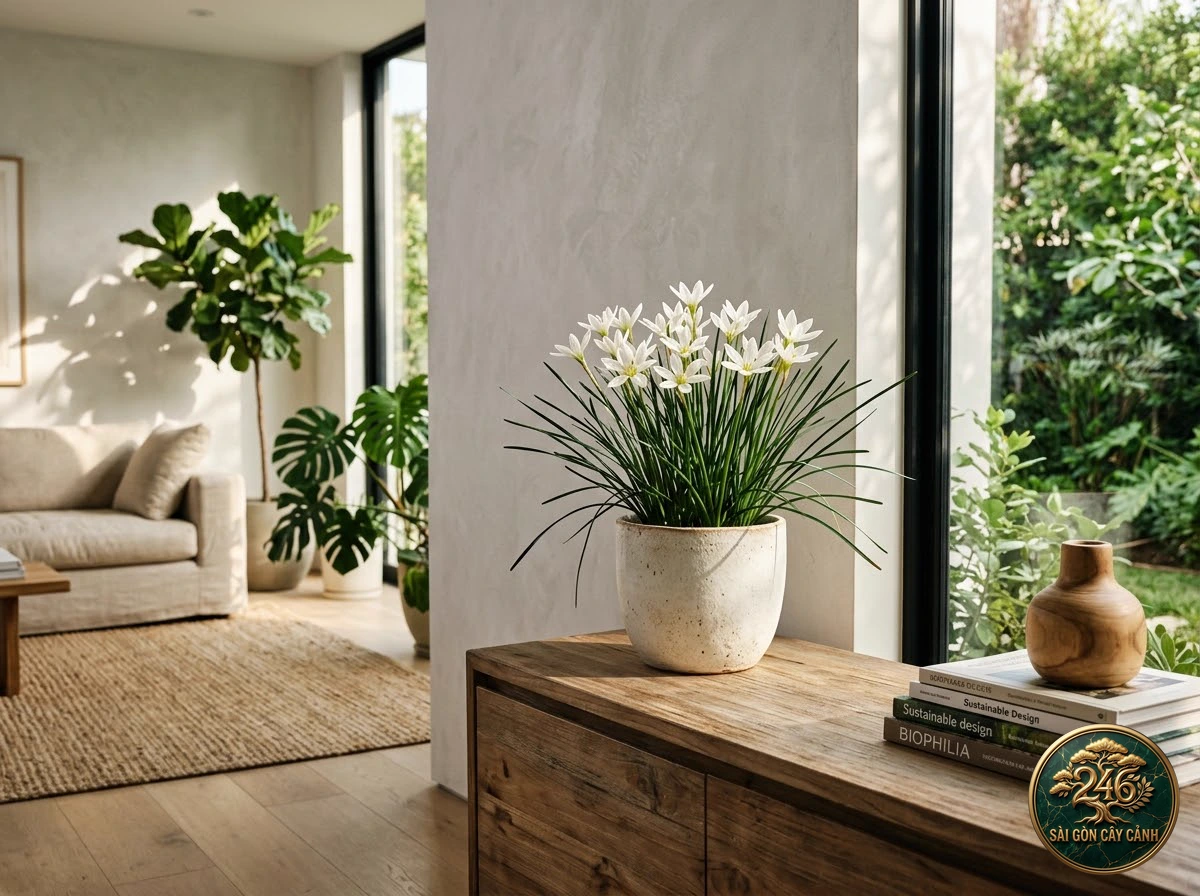
In floricultural symbolism and Feng Shui design, white rain lily embodies pure metal energy, signifying untainted sincerity, clarity of mind, and radiant rebirth following storm-tossed adversity. The pristine white petals illuminate garden spaces, evoking tranquil peace, emotional rejuvenation, and serene spatial harmony.
Due to its compact caespitose habit and capacity to form dense, floriferous emerald carpets dotted with starry white blossoms, Zephyranthes candida serves as a premier groundcover choice for luxury resorts, villa perimeter borders, beneath high-canopy specimen trees, or woven into garden stepping-stone pathways to produce poetic, fairytale landscapes.
12. SGCC Acclimatization Benchmarks & Quality Guarantee

Saigon Cay Canh is an established premier supplier of wholesale and retail Zephyranthes candida stock, delivering high-vigor bare-root bulbs and pre-rooted nursery containers with dense root masses, catering to municipal landscaping projects, luxury resorts, and high-end residential gardens.
We guarantee 100% botanical genetic authenticity, firm disease-free bulbs, an insured field survival rate exceeding 98%, and professional turn-key landscape border design and installation services across southern provinces.
💬 Góc Tư Vấn & Hướng Dẫn Kỹ Thuật SGCC
Chuẩn E-E-A-T Kinfolk❓ Chăm sóc White Rain Lily (Zephyranthe cần lưu ý điều gì quan trọng nhất?
💡 Dạ điều quan trọng nhất là giữ môi trường sống ổn định, tránh sốc nhiệt hay dao động thông số đột ngột, đồng thời cung cấp khẩu phần ăn sạch và tươi mới ạ.
❓ Làm thế nào để phòng ngừa bệnh tật hiệu quả cho các bé?
💡 Dạ anh chị nên giữ vệ sinh chuồng/hồ nuôi sạch sẽ, thay nước hoặc dọn dẹp định kỳ và bổ sung vitamin, men tiêu hóa đều đặn để tăng sức đề kháng ạ.
🌿 Trang Thiết Bị, Đất Trồng & Dụng Cụ Bonsai Tuyển Chọn
Dụng cụ tỉa, giá thể hữu cơ & phân bón chuyên dụng cho cây cảnh.
1 Ký Cành Giống Hoa Mười Giờ SAM ĐƠN Chuẩn SAM THÁI Nhậ…

Kéo cắt tỉa, kéo cắt cành, dao cắt tỉa cây ăn quả, kéo …

combo 10 chậu(32x22cm) Chậu nhựa lục giác LG19 vân giả …

Bay tay lớn Inox mũi nhọn làm vườn LV212
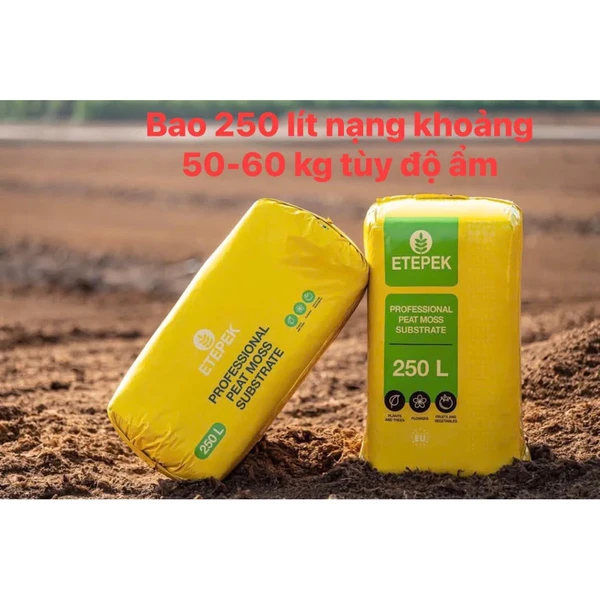
Giá thể peatmoss rêu than bùn giá thể trồng cây ươm hạt…
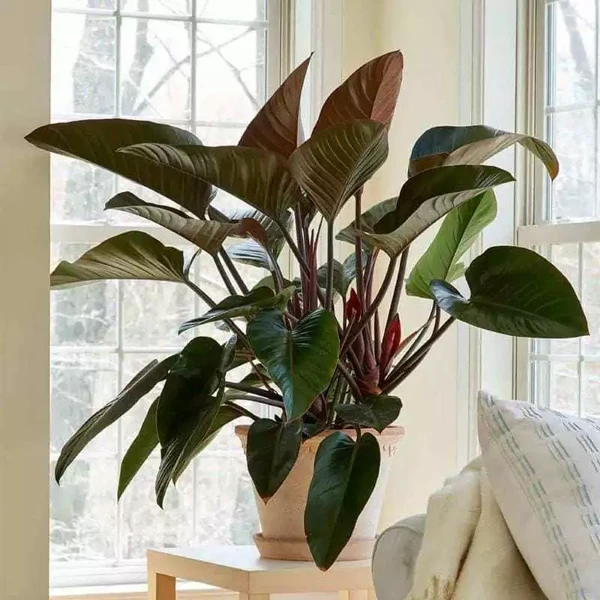
Cây Trầu Bà Đế Vương Đỏ Cỡ Đại phong thuỷ trồng nội thấ…

Giá thể trộn sẵn dành cho kiểng lá, monstera, kiểng var…

Kéo cắt cành Kéo cắt cành cộng lực Kéo cắt cây cảnh bon…

5kg Phân Trùn Quế 100% nguyên chất SFARM PB01 dạng bột_…

Nguyên bao 20kg (45 lít) Pumice Stone – Đá Anh Vũ nhập …

sen đá phật bà trong chậu nhựa cứng 7cm ko cần thay đất…

Cây kim tiền vàng mô hinh cây vàng may mắn cây tài lộc …
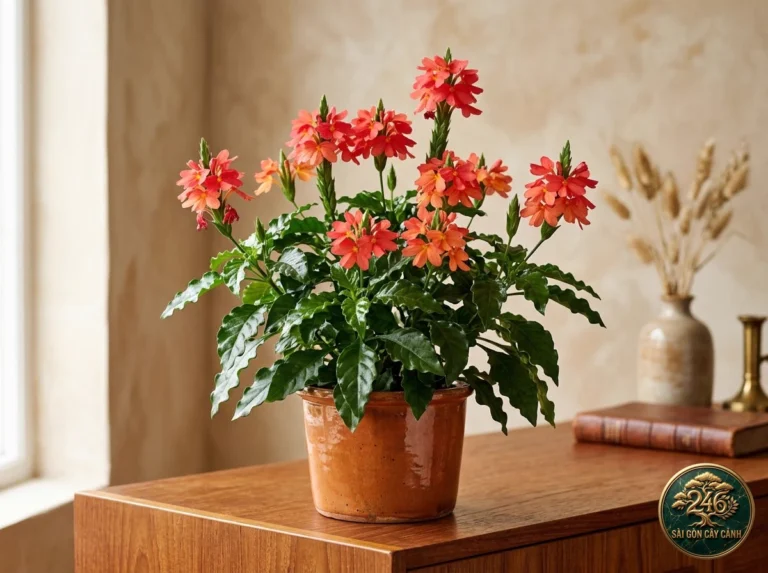
Nile crossandra
Crossandra nilotica, celebrated internationally as the Nile crossandra or East African firecracker flower, is an aristocratic, evergreen tropical...
Read Monograph →
Carnation (Dianthus caryophyllus)
Carnation (Dianthus caryophyllus) Dianthus caryophyllus, universally revered as carnation, clove pink, or the divine flower, is an aristocratic,...
Read Monograph →
New Guinea impatiens (Impatiens hawkeri)
New Guinea impatiens (Impatiens hawkeri) Impatiens hawkeri, universally admired as New Guinea impatiens, is an aristocratic, dramatically oversized...
Read Monograph →
Firecracker plant
Russelia equisetiformis, celebrated universally across tropical horticulture as the firecracker plant, coral plant, or fountain plant, is an...
Read Monograph →Expert Q&A, Recommended Supplies & Article Feedback
Tap once to connect instantly via Google, Facebook or TikTok — no long forms required!
No questions yet for this article. Tap Google / Facebook / TikTok above to ask the first question!