
Living plant profile
Bayer’s haworthia (Haworthia bayeri)
Haworthia bayeri
Comprehensive botanical monograph on Bayer’s haworthia (Haworthia bayeri): structural morphology, physiological adaptations, porous mineral substrate, and specialized cultivation guidelines.
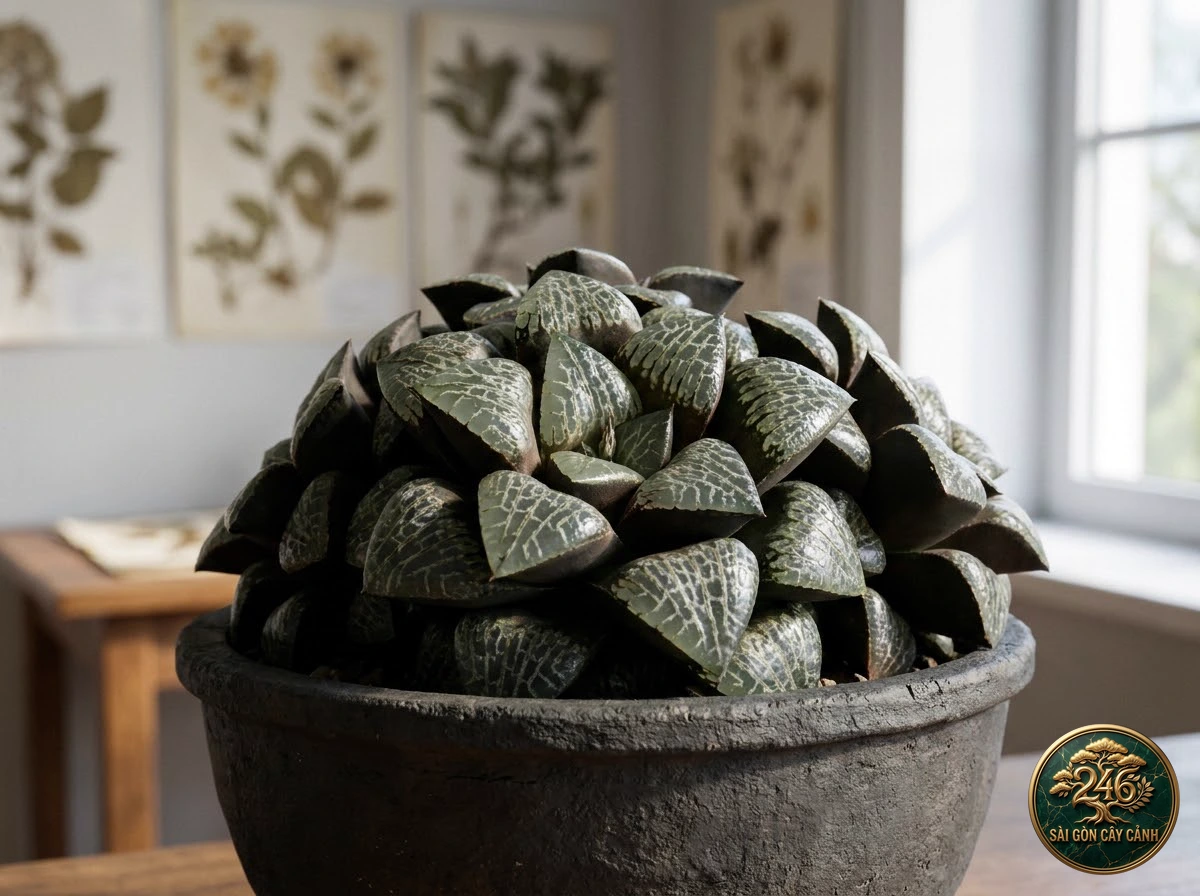
Bayer’s haworthia (Haworthia bayeri)
Sài Gòn Cây Cảnh Care Compass
1. Botanical Introduction & Taxonomic Identity
Among the elite ranks of retuse haworthias, Haworthia bayeri is revered worldwide as the black jewel of succulent connoisseurship. Officially described in 1997 by botanists J.D. Venter and Steven Hammer, the specific epithet honors Martin Bruce Bayer, former curator of the Karoo Desert National Botanical Garden and the world’s preeminent taxonomic authority on the genus Haworthia. What captivates collectors is its inky obsidian to deep amethyst foliar coloration paired with an extraordinarily intricate reticulate network of translucent lines etched across its flattened triangular facets. Each leaf window resembles a polished piece of dark smoked glass illuminated from within by subterranean green veins, projecting an aura of enigmatic majesty.
Haworthia bayeri was formally published in 1997 by J.D. Venter and Steven A. Hammer in the prestigious botanical journal Haseltonia, honoring Martin Bruce Bayer, universally recognized as the preeminent taxonomic authority on Haworthia. Prior to its establishment as an autonomous species, isolated populations around Uniondale were often relegated as Haworthia emelyae var. bayeri or confused with Haworthia tricolor. Its recognition as a distinct species validated its unique evolutionary position: an isolated eastern Little Karoo endemic distinguished by an unmistakable obsidian reticulate lattice found nowhere else in the plant kingdom. Wild populations of Haworthia bayeri are extraordinarily rare and strictly protected under South African botanical conservation frameworks. Certified clone lines safeguarded within national botanical gardens such as Kirstenbosch and Karoo Desert Garden represent invaluable genetic repositories for international succulent research and biodiversity preservation.
2. Native Habitat & Geographical Distribution
The wild habitat of Haworthia bayeri is secluded within the eastern Little Karoo basin, traversing arid hillslopes and valleys between Uniondale and Oudtshoorn in the Western Cape of South Africa. Perched at elevations between 600 and 1,100 meters, this plateau endures a continental climate marked by cold, frosty winter nights and blisteringly dry summers. The terrain consists of weathered shale scree and dark quartz gravel. In habitat, bayeri exists almost completely subterranean, aligning its dark triangular facets flush with the surrounding scree. Its inky coloration is a masterful dual adaptation: providing camouflage against foraging desert herbivores while maximizing thermal absorption during bitter high-altitude winter months.
3. Detailed Morphological Characteristics
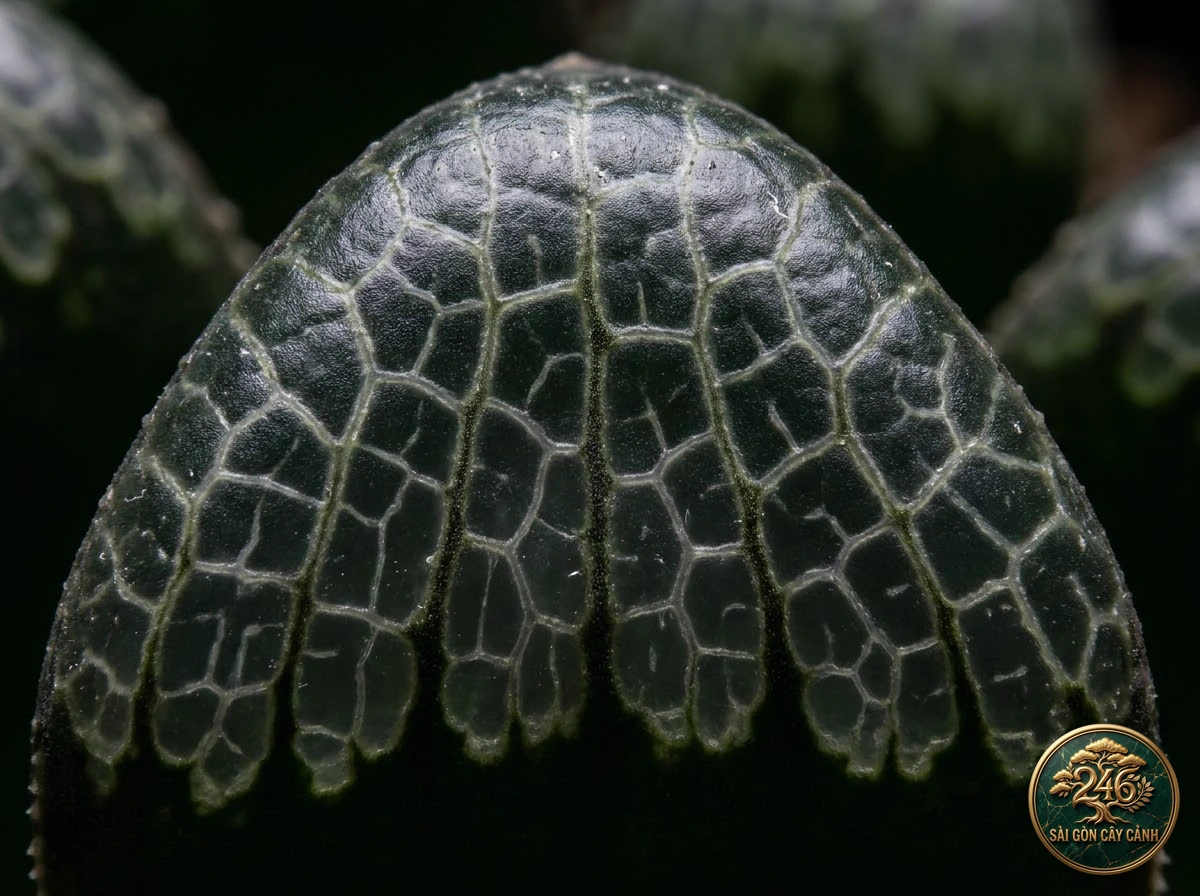
In architectural detail, Haworthia bayeri forms a ground-level, stemless rosette spanning 6 to 10 cm across, remaining stubbornly solitary throughout its lifespan. A mature crown consists of 10 to 20 succulent leaves 4 to 7 cm long, terminating in broadly deltoid, slightly rounded facets 2 to 3.5 cm in width. The windowed plane exhibits a lustrous obsidian to dark purplish-charcoal base, either glassy-smooth or adorned with micro-papillae. Its definitive hallmark is an intricate reticulate lattice of bright emerald lines crisscrossing beneath the dark window, resembling an illuminated spiderweb. The root system features massive, fleshy contractile taproots extending deep into the rocky clay. Slender scapes 25 to 35 cm tall display refined white florets with subtle greyish-brown veins.
Functional anatomy of Haworthia bayeri showcases extraordinary bio-optical specialization: its flattened terminal facets possess an inky obsidian hue caused by dense protective concentrations of tannins and dark anthocyanins in the outer epidermal cells. Interspersed throughout these dark matrices is an intricate subterranean network of clear emerald reticulate light conduits. Viewed under magnification, this lattice functions as microscopic biological fiber-optic cables: ambient daylight striking the dark facet is captured by the luminous green veins and conducted deep into subterranean chlorenchyma, shielding tissues from heat while capturing photosynthetic energy. The mystical obsidian coloration of Haworthia bayeri results from concentrated accumulations of dark phenolic compounds and dense anthocyanins within outermost epidermal cells. The subterranean reticulate lattice coursing beneath the dark window serves as a multidirectional bio-optical vascular system, distributing ambient light evenly to subterranean chlorenchyma columns. Its massive contractile roots generate substantial mechanical tension, effectively anchoring and pulling the crown deeper into rocky scree during prolonged arid droughts.
4. Core Botanical Matrix
Core taxonomic and cultivation parameters:
| Botanical Parameter | Observed Trait | Saigon Cay Canh Horticultural Recommendation |
|---|---|---|
| Scientific Name | Haworthia bayeri J.D.Venter & S.A.Hammer | Maintain certified taxonomic labeling across nursery stock |
| Plant Family | Asphodel family (Asphodelaceae) | Observe specialized succulent physiology within Asphodelaceae |
| Native Distribution | Quartz and shale scree plains around Uniondale and eastern Oudtshoorn in the Little Karoo, Western Cape, South Africa | Replicate native climatic parameters in indoor cultivation |
| Illumination Intensity | 15,000 – 28,000 lux | Cool diffused illumination or gentle morning sun; balanced light deepens the rich obsidian black luster |
| Thermal Window | 10°C – 26°C | Protect against cold below 8°C and provide active ventilation during heat |
| Relative Humidity | 35% – 55% | Sustain gentle atmospheric air movement to disperse stagnant moisture |
| Substrate pH | 6.2 – 6.8 | Utilize porous neutral mineral components for rapid drainage |
| Substrate Formulation | 55% fine pumice (2-4mm), 20% hard akadama, 15% zeolite grit, 5% perlite, 5% clean organic matter | Maintain coarse granular structure; avoid dense suffocating soils |
| Irrigation Strategy | Highly cautious watering; irrigate only when medium is ninety percent dry; ensure perfect root aeration | Enforce thorough substrate dry-down between watering sessions |
| Propagation Pathways | Rare offset separation or patient propagation from selective hand-pollinated certified seed strains | Perform during warm spring or early wet season for peak vigor |
| Veterinary Toxicology | NON-TOXIC TO COMPANION ANIMALS (ASPCA Non-Toxic) | PET-SAFE CERTIFIED BY ASPCA (Non-Toxic); entirely harmless around domestic felines and canines. |
5. Toxicity Profile & Domestic Safety
Regarding companion animal safety, Haworthia bayeri is verified as 100% NON-TOXIC to cats and dogs by the ASPCA. The specimen is completely free from hazardous secondary metabolites and physical prickles. This absolute safety profile paired with its majestic beauty renders it a premier living sculpture for refined home offices and display vitrines.
6. Lighting Dynamics & Photosynthetic Adaptations
Illumination for Haworthia bayeri necessitates subtle modulation: a range of 15,000 to 28,000 lux proves optimal. Specimens thrive in cool diffused brightness or gentle morning sun lasting 3 to 4 hours. Adequate light deepens the obsidian foliar sheen and illuminates the subcutaneous emerald lattice. Unfiltered tropical noon sun must be avoided, as intense solar heat can dull the lustrous clarity of its prized windowed facets.
7. Moisture Equilibrium & Irrigation Regimes
Watering strategy for Bayer’s haworthia requires deliberate patience: irrigate only when ninety percent substrate desiccation is achieved. During active spring and autumn growth, soak thoroughly every 6 to 8 days. In sweltering summer periods when growth pauses, administer modest hydration around the pot rim every 12 to 15 days at dusk to keep deep root hairs viable without rotting its fleshy taproots.
8. Substrate Architecture & Nutrition Strategy
The specialized substrate for Haworthia bayeri demands premier mineral aeration: 55% fine pumice (2-4mm), 20% hard akadama clay pellets, 15% natural zeolite grit, 5% perlite, and 5% sterile worm humus. This formula guarantees exceptional rhizosphere oxygenation, maintains stable pH between 6.2 and 6.8, and eliminates any risk of taproot rot.
9. Temperature Dynamics & Aeration Strategy
Optimal temperatures for Haworthia bayeri span 10°C to 26°C. Specimens flourish in crisp, temperate surroundings with ambient relative humidity between 35% and 55%. Continuous gentle air circulation is essential, ensuring the dark glassy facets remain dry and impervious to opportunistic fungal pathogens.
10. Specialized Propagation Protocols
Propagating Haworthia bayeri represents a masterclass in horticultural patience, as specimens remain fiercely solitary and almost never produce natural offsets. Selective hand-pollination between exceptional clone lines to produce authenticated seed strains constitutes the premier propagation method; seeds are sown in sterile mineral flats under stable temperatures of 18°C to 22°C. Seedlings develop deliberately, taking 4 to 5 years of attentive cultivation to display their iconic reticulated obsidian facets. Single leaf propagation can occasionally succeed if mature leaves are cleanly excised with their complete basal collar intact.
11. Diagnostic Matrix & Preventative Health
With tough, compact foliage and rugged resilience, Haworthia bayeri exhibits superior disease resistance; however, it remains vulnerable to taproot rot if waterlogged during sultry summer peaks. Fleshy storage roots rot rapidly under Fusarium attack if soil remains saturated for more than three consecutive days. Safeguard specimens by employing hyper-porous substrates with over ninety percent pumice and akadama, ensuring active air circulation, and avoiding heavy irrigation when temperatures exceed 32°C. Foliar mealybugs should be swiftly eradicated using soft swabs dipped in mild biological alcohol.
Clinical diagnostics and remedial actions:
| Observed Symptom | Primary Root Cause | Saigon Cay Canh Remedial Action |
|---|---|---|
| Mysterious obsidian coloration dulls and reticulate net venation loses luminous clarity | Severe deprivation of ambient photosynthetic irradiance or excessive chemical fertilizer inputs | Halt feeding, reposition specimen into bright diffused illumination measuring 20,000 to 28,000 lux |
| Subterranean taproot turns blackened with the rosette completely losing its grip in soil | Soil fungi invading succulent taproots following heavy irrigation during high-temperature summer rest | Unpot, excise blackened roots cleanly, sanitize with mild alcohol, and cure unpotted for two weeks |
| Triangular leaves flatten out excessively and lose their symmetrical cupped profile | Growing medium retaining water excessively coupled with stuffy, poorly ventilated placement | Repot into high-porosity matrix containing sixty percent pumice and position in brisk fresh airflow |
| Mealybugs penetrating deep into the narrow crevices between tightly packed dark leaves | Humid, shaded microclimates enabling crawler nymphs to colonize dense foliar folds | Use a fine-tipped artist brush dipped in biological alcohol to swab crevices, rinsing with water after fifteen minutes |
12. Living Architecture & Interior Styling
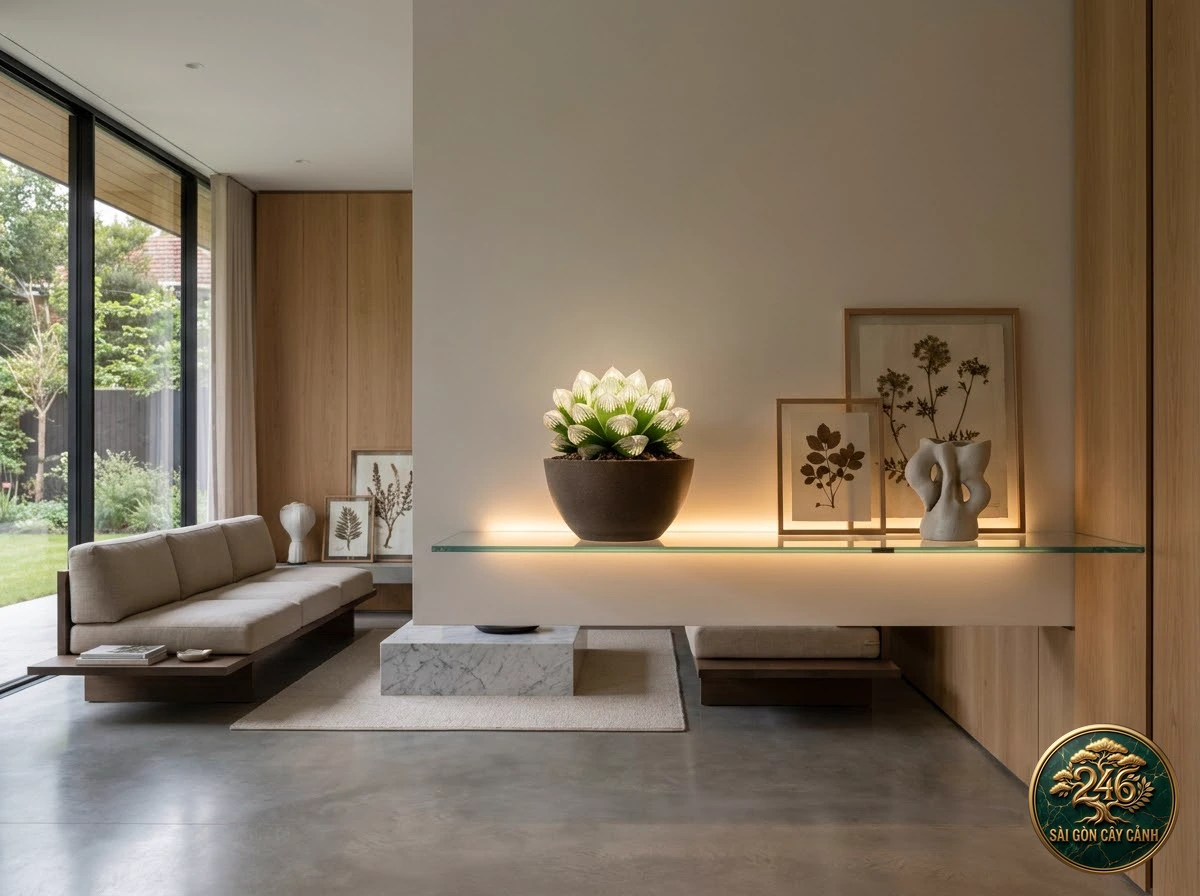
Haworthia bayeri serves as the crowning jewel in elite succulent showcases, offering dramatic visual contrast when displayed alongside pale emerald Haworthia cooperi or marbled pink Haworthia emelyae. Surrounding bayeri with pure white quartz gravel or lustrous black lava stones within an artisan ceramic dish accentuates the mysterious, regal charisma of this South African black jewel.
Haworthia bayeri embodies the ultimate standard of dark minimalist luxury and contemplative elegance. Its regal obsidian complexion paired with luminous reticulate veining transforms it into a living sculpture for prestigious interior spaces. It achieves supreme aesthetic harmony in matte black artisan ceramics, hand-carved sandstone pots, or patinated dark bronze planters. Positioned upon executive boardroom desks, private library tables, or art gallery vitrines, it radiates deep stillness, intellectual poise, and commanding presence. The enigmatic stillness of Bayer’s haworthia anchors contemplative calm into interior spaces, offering a tranquil sanctuary of quiet mindfulness amidst hectic modern urban lifestyles.
Nursery Care Journal & Living Greenery Moments
At Saigon Cay Canh greenhouse, each photograph captures genuine everyday care moments between plant lovers and living greenery, spreading a passion for nature and green-living inspiration.

13. Frequently Asked Questions & Botanical Summary
Frequently Asked Question: Why is the reticulate net pattern on my Haworthia bayeri fading and the leaf color shifting to dull greenish-brown?
Expert Diagnosis from Saigon Cay Canh: When Haworthia bayeri loses its prized obsidian sheen and its reticulate lattice blurs, the root cause is almost invariably insufficient light or excessive nitrogen fertilization. In low-light environments, the plant overproduces green chlorophyll to compensate, overwhelming dark protective pigments. Move the container into brighter diffused light (22,000 to 28,000 lux) with 2 to 3 hours of gentle morning sun while halting synthetic feeding; within 15 to 25 days, its deep obsidian luster and glowing emerald veins will fully return.
Bayer’s haworthia Haworthia bayeri represents the crowning jewel of dark minimalist luxury and botanical authority, meticulously documented by the editorial team at Saigon Cay Canh.