
Living plant profile
Bengal clockvine (Thunbergia grandiflora)
Thunbergia grandiflora
📌 CLINICAL & BIOLOGICAL ABSTRACT — Bengal clockvine (Thunbergia grandiflora)Bengal clockvine (Thunbergia grandiflora) Thunbergia grandiflora, universally celebrated as Bengal clockvine, blue trumpet vine, or skyflower, is a monumental tropical woody climbing vine positioned within the acanthus family Acanthaceae. Renowned for its vigorous growth and breathtaking weeping racemes of colossal campanulate blossoms in ethereal sky-blue to […]

Bengal clockvine (Thunbergia grandiflora)
Thunbergia grandiflora, universally celebrated as Bengal clockvine, blue trumpet vine, or skyflower, is a monumental tropical woody climbing vine positioned within the acanthus family Acanthaceae. Renowned for its vigorous growth and breathtaking weeping racemes of colossal campanulate blossoms in ethereal sky-blue to soft lavender-blue centered with a creamy-yellow throat, it envelops vertical structures in luxuriant shade. Accompanied by broad heart-shaped foliage, it stands as the ultimate choice for romantic pergolas, estate gate arbors, and sweeping landscape facades.
Sài Gòn Cây Cảnh Care Compass
1. Botanical Identity & Taxonomic Nomenclature History
Thunbergia grandiflora was formally cataloged by Scottish botanist William Roxburgh, the illustrious ‘Father of Indian Botany’, in 1820 within Hortus Bengalensis and subsequently described in detail within Flora Indica. The generic name Thunbergia honors Swedish naturalist Carl Peter Thunberg. The specific epithet grandiflora derives from Latin compounding grandis (‘magnificent’ or ‘colossal’) and flora (‘flower’), accurately emphasizing the remarkable floral dimensions of this species compared to its congeners.
Classified in the acanthus family Acanthaceae, Bengal clockvine is indigenous to the wet tropical foothill forests of the sub-Himalayas, northeastern India, Bangladesh, Myanmar, Thailand, and the Indochinese peninsula including Vietnam. Possessing an ethereal sky-blue floral coloration extraordinarily rare among vigorous tropical climbers, it captured international horticultural prestige. In Vietnam, it remains a classic arbor vine traditional to historic garden estates, offering cooling atmospheric shade, poetic tranquility, and nostalgic grace.
2. Morphological Anatomy & Structural Architecture

Morphologically, Thunbergia grandiflora develops as a colossal, vigorous evergreen woody liana capable of climbing 10 to 20 meters or more, twining tenaciously over structural trellises and host trees to construct an impenetrable curtain of shade. Stems become stout woody boles with corky greyish-brown bark, with young branchlets quadrangular and rough-pubescent; beneath the soil, roots swell into massive tuberous storage organs. Leaves are opposite; blades are broadly ovate to cordate measuring 8 to 20 cm long by 6 to 15 cm wide, coarsely 3-to-5 angularly lobed or coarsely toothed, palmately veined, scabrous and rough to the touch on both surfaces, supported by sturdy petioles 4 to 10 cm long.
Blossoms are borne in elongated pendulous racemes hanging from leaf axils and stem tips 30 to 100 cm in length, displaying 10 to 30 flowers opening sequentially. Each flower is embraced by two large green bracteoles 2.5 to 3.5 cm long marked with subtle purplish striations enclosing a reduced ring-like calyx. The campanulate corolla extends 6 to 8 cm in length, expanding at the rim into five broad, wavy-margined spreading lobes spanning 7 to 10 cm across. Petals display an ethereal sky-blue to soft lavender-blue hue, transitioning into a pale creamy-yellow throat streaked with subtle violet nectar guides. Four stamens are sheltered inside the tube. The fruit is a woody beaked globose capsule 3 to 4 cm long enclosing four rough, flattened seeds.
3. Solar Irradiance Thresholds & Photosynthetic Dynamics
Thunbergia grandiflora is an obligate full-sun tropical heliophyte demanding intensive solar radiation to sustain the substantial biomass of its vigorous climbing canopy and stimulate continuous pendulous floral racemes. It requires at least 6 to 8 hours of direct solar exposure daily, thriving within light thresholds between 45,000 and 85,000 lux. Intense solar saturation triggers elongated inflorescence development, enriches sky-blue petal luminosity, and promotes synchronous flower opening.
When positioned in structural shade or beneath dense tree canopies, the vine produces lush foliar growth but flowering becomes severely suppressed, yielding only sparse, truncated racemes. The species exhibits astonishing heat tolerance, flourishing effortlessly amidst tropical Vietnamese summer heat and withstanding stormy winds through its deep anchoring tuberous root system.
4. Mineral Substrate Mechanics & Root Aeration Porosity
The root architecture of Bengal clockvine features massive subterranean tuberous storage roots accompanied by extensive lateral feeder roots that spread meters into the surrounding earth. The vine accommodates a broad range of soil textures from sandy loams to alluvial clays, but achieves peak vigor in deep, porous alluvial soils rich in organic matter that allow unobstructed drainage.
The standardized planting substrate formulated by Saigon Cay Canh for planting pits and large planters incorporates 45% fertile alluvial loam, 25% carbonized rice husks, 15% thoroughly washed coco coir, and 15% aged manure or vermicompost inoculated with Trichoderma. Substrate pH is maintained ideally between 6.0 and 7.0. Planting pits must measure at least 60x60x60 cm with gravel bottom drainage to accommodate expanding tuberous roots.
5. Hydraulic Equilibria & Irrigation Regimens
Irrigation protocols for Thunbergia grandiflora follow the principle of deep periodic soaking combined with free drainage. Owing to its massive subterranean water-storing tubers, established vines exhibit formidable drought resistance, effortlessly enduring dry spells without mortality. However, producing lush evergreen canopies and continuous weeping floral cascades requires generous hydration throughout active growing cycles.
Standard irrigation for established pergola vines involves deep morning soaking daily or every other day whenever surface soil dries. Apply water directly around the root zone. During extended monsoon deluges, verify that drainage channels discharge excess rainwater promptly to protect tuberous root reserves from prolonged inundation.
6. Nutrient Biogeochemistry & Fertilization Protocols
With its rapid growth rate and colossal foliar biomass, Bengal clockvine demands generous nutrition to sustain vigorous vegetative extensions and stimulate perpetual weeping floral racemes from spring through autumn. Broadcast slow-release organic bio-fertilizer pellets (NPK 6-12-12) or aged bovine compost around the root zone every 40 to 45 days to replenish edaphic nutrients.
During floral evocation cycles, apply a water-soluble high-phosphate and high-potassium formula (NPK 15-30-15) at 1 gram per liter every 10 to 12 days to elongate inflorescences and synchronize bud flushes. Complement with monthly foliar applications of chelated trace elements including magnesium, zinc, and boron to preserve glossy foliar vigor and disease resistance.
7. Clonal Propagation & Germplasm Conservation
Thunbergia grandiflora propagates effortlessly through semi-hardwood stem cuttings, air-layering, or tuber division during warm, humid spring and early rainy seasons. Stem cuttings represent the most efficient commercial technique: collect robust semi-mature shoots 20 to 30 cm long with 2 to 3 nodes, cut at a 45-degree angle below a node using shears sterilized with 70% medical alcohol, and reduce foliar surface area by two-thirds.
Dip the basal cut into 1,000 ppm IBA rooting solution, then insert 8 to 10 cm deep into moist potting media composed of sharp sand and coco coir under 50% shade. Maintain consistent moisture; within 20 to 25 days, prolific adventitious roots develop, followed by energetic twining vegetative growth.
8. Phytochemical Toxicity & Pet Safety Standards (ASPCA)
Botanical safety evaluation and ASPCA pet safety standards: Classified within the acanthus family Acanthaceae, Thunbergia grandiflora is officially registered as non-toxic and pet-safe under standard ASPCA companion animal guidelines. The species poses zero toxicological hazards to domestic dogs, cats, or horses, synthesizing no hazardous cardiac glycosides or toxic alkaloids.
The vine is exceptionally safe for shading pergolas in luxury family gardens and eco-resorts where pets and children gather beneath. However, owing to its rapid vegetative growth and heavy canopy weight, sturdy wrought-iron or reinforced concrete trellises are essential for structural integrity. Pruning implements should be sanitized regularly with 70% medical alcohol to ensure sanitary landscape upkeep.
9. Clinical Pathology Diagnostics & Treatment Strategies
Clinical pathology protocol for nocturnal insect management and pendulous sky-blue raceme nutrition in Thunbergia grandiflora:
| Clinical Manifestation | Etiological Cause | Standard Treatment Protocol |
|---|---|---|
| Foliage displays yellow speckling, accompanied by fine silky webbing and tiny spider mites on undersides | Spider mite proliferation favored by dry weather or overcrowded foliar canopies lacking air circulation | Syringe leaf undersides with water in early morning, followed by organic foliar sprays of neem oil and potassium insecticidal soap |
| Tender shoots twist, floral buds blacken and drop prematurely from weeping racemes | Thrips or mealybugs extracting vital juices from young vegetative and floral primordia | Swab pest clusters with 70% medical alcohol, prune affected tips, and apply dilute organic horticultural mineral oil spray |
| Leaf lamina riddled with holes and chewed margins occurring during nocturnal hours | Caterpillars or nocturnal beetles feeding on tender foliar tissue after dusk | Inspect and manually remove pests at night, or apply bio-insecticide containing Bacillus thuringiensis (Bt) |
10. Comparative Morphology & Allied Taxa Diagnosis
Morphological comparative matrix isolating massive weeping sky-blue racemes and subterranean storage tubers of Thunbergia grandiflora:
| Diagnostic Parameter | Thunbergia grandiflora (Bengal clockvine) | Comparative Specimen A | Comparative Specimen B |
|---|---|---|---|
| Growth Habit and Vigor | Colossal woody liana extending 10 to 20 m, developing massive subterranean storage tubers | Self-supporting erect woody shrub 1.5 to 2.5 m tall with arching branchlets | Herbaceous twining climber 2 to 4 m tall with distinct winged petioles |
| Floral Architecture and Coloration | Colossal campanulate sky-blue blooms 6-8 cm long in long weeping racemes 30 to 100 cm | Tubular-funnelform blooms in velvety royal purple with radiant golden-orange throat | Salverform amber-orange blooms centered by a velvety midnight-purple eye |
| Foliar Morphology | Large broadly cordate blade 8 to 20 cm long with coarse angular lobes and scabrous texture | Small obovate blade 3 to 7 cm long with smooth glossy texture and short petiole | Triangular-cordate blade 4 to 9 cm long supported by conspicuously winged petioles |
11. Biophilic Design Harmony & Contemporary Spatial Aesthetics

In tropical landscape architecture and Eastern biophilic philosophy, Bengal clockvine symbolizes soaring prosperity, protective benevolence, cohesive familial unity, and restorative serenity. Its weeping sky-blue blossoms create an oasis of contemplative peace, dispelling stress and cooling the intense heat of tropical summers.
The vine performs impeccably when adorning grand shade pergolas, residential entrance gate archways, green facades of modern buildings, or sweeping flowering arbor walks within upscale eco-resorts.
12. Saigon Cay Canh Provenance & Cultivation Assurance

Saigon Cay Canh specializes in cultivating and installing verified acclimated Thunbergia grandiflora climbing vines, featuring robust vigorous stems 2 to 3 meters tall in oversized nursery containers, dense root balls, and rapid climbing vigor ready to cover structural arbors.
We provide 100% certified botanical authenticity, professional consultation on structural pergola engineering, and comprehensive living establishment guarantees across distinguished residential and luxury hospitality developments nationwide.
💬 Góc Tư Vấn & Hướng Dẫn Kỹ Thuật SGCC
Chuẩn E-E-A-T Kinfolk❓ Chăm sóc Bengal clockvine (Thunbergia cần lưu ý điều gì quan trọng nhất?
💡 Dạ điều quan trọng nhất là giữ môi trường sống ổn định, tránh sốc nhiệt hay dao động thông số đột ngột, đồng thời cung cấp khẩu phần ăn sạch và tươi mới ạ.
❓ Làm thế nào để phòng ngừa bệnh tật hiệu quả cho các bé?
💡 Dạ anh chị nên giữ vệ sinh chuồng/hồ nuôi sạch sẽ, thay nước hoặc dọn dẹp định kỳ và bổ sung vitamin, men tiêu hóa đều đặn để tăng sức đề kháng ạ.
🌿 Trang Thiết Bị, Đất Trồng & Dụng Cụ Bonsai Tuyển Chọn
Dụng cụ tỉa, giá thể hữu cơ & phân bón chuyên dụng cho cây cảnh.

Combo 1-5 Cây lá dổi, cây dổi đất – Gia vị Tây Bắc – Là…

Giá thể trồng cây kiểng lá SFARM túi 20dm3 ( khoảng 8kg…
Cây Cẩm Nhung Lá May Mắn Mix Màu Đỏ Xanh, Fittonia Chậu…

Combo Kéo Cắt Cành + Kéo Tỉa lá, Tỉa Dăm Thép Đúc Nguyê…

dây nhôm chỉ uốn cây đủ size 2/3/4/5/6(1kg)

Phân Bón Lá NPK 20-20-20 + TE Của Growmore Loại 100g 3 …

Đôn mặt tròn gỗ hương mặt 30cm cao 30cm kê chậu hoa cây…

Bình Xịt Phun Sương Dudaco 2L – Bình Tưới Cây Mini Cầm …
Chậu Trầu Bà Đế Vương Đỏ Size To bán kính 50cm, cây …

Đĩa nhựa vuông lót chậu, khay lót chậu vuông hoa cây cả…

Máy bơm phun sương mini Sinleader 12v dùng làm phun sươ…

Bộ Dụng Cụ Làm Vườn Mini 3 Món,Dụng Cụ Trồng Hoa Nhỏ Gọ…
Wingpod purslane (Portulaca umbraticola)
Wingpod purslane (Portulaca umbraticola) Portulaca umbraticola, widely known as wingpod purslane, ornamental purslane, or broadleaf moss rose, is...
Read Monograph →
Panicle hydrangea (Hydrangea paniculata)
Panicle hydrangea (Hydrangea paniculata) Hydrangea paniculata, universally known as panicle hydrangea or peegee hydrangea, is a majestic, cold-hardy,...
Read Monograph →
Wishbone flower (Torenia fournieri)
Wishbone flower (Torenia fournieri) Torenia fournieri, internationally celebrated as wishbone flower or bluewings, is a charismatic, profusely flowering...
Read Monograph →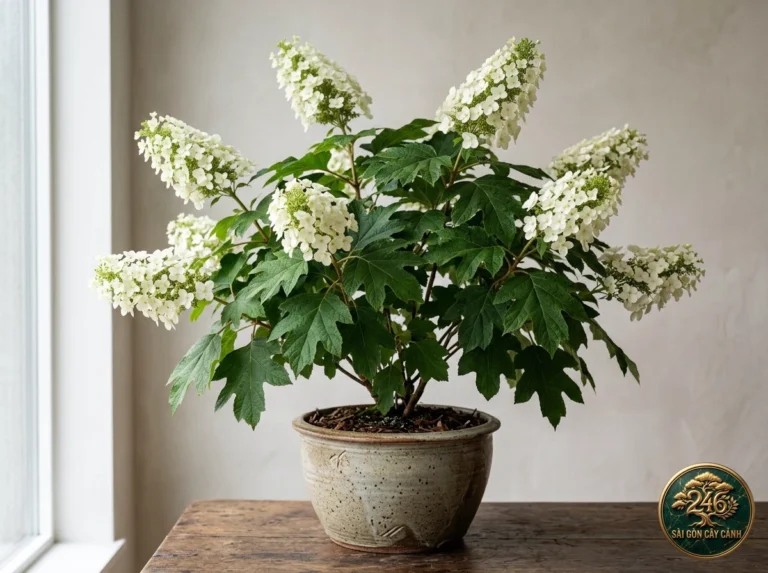
Oakleaf hydrangea (Hydrangea quercifolia)
Oakleaf hydrangea (Hydrangea quercifolia) Hydrangea quercifolia, internationally celebrated as oakleaf hydrangea, is an awe-inspiring, structurally dramatic deciduous flowering...
Read Monograph →Expert Q&A, Recommended Supplies & Article Feedback
Tap once to connect instantly via Google, Facebook or TikTok — no long forms required!
No questions yet for this article. Tap Google / Facebook / TikTok above to ask the first question!