
Living plant profile
Cooper’s translucent haworthia (Haworthia cooperi)
Haworthia cooperi
Comprehensive botanical monograph on Cooper’s translucent haworthia (Haworthia cooperi): structural morphology, physiological adaptations, porous mineral substrate, and specialized cultivation guidelines.
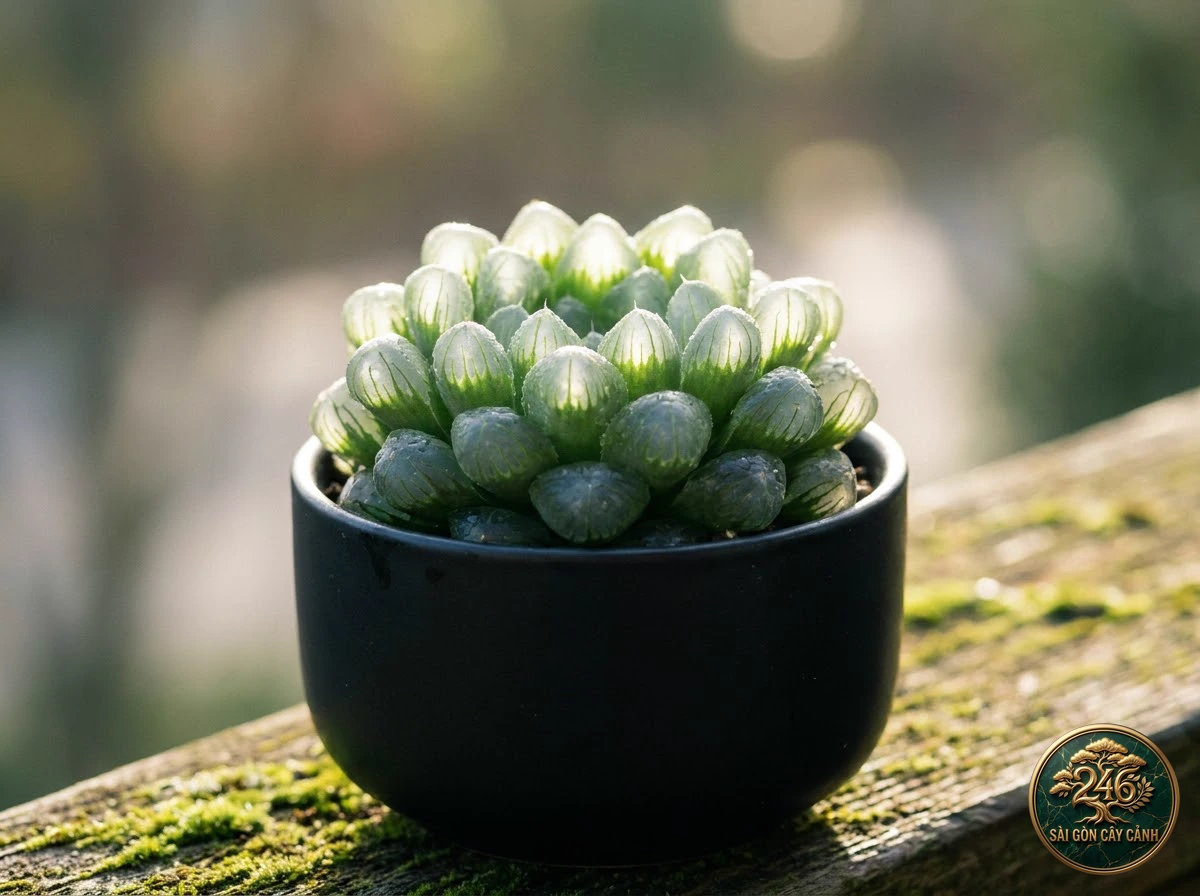
Cooper’s translucent haworthia (Haworthia cooperi)
Sài Gòn Cây Cảnh Care Compass
1. Botanical Introduction & Taxonomic Identity
Within the succulent plant kingdom, Haworthia cooperi is celebrated as a living optical masterpiece, affectionately known among botanical enthusiasts as Cooper’s translucent haworthia or the windowed jewel plant. Classified within the family Asphodelaceae, this species evolved an extraordinary anatomical specialization to flourish across the sun-baked plains of South Africa’s Eastern Cape. The upper apex of every swollen, globose leaf blade is completely translucent, resembling meticulously polished crystal droplets. Termed epidermal window cells or foliar fenestrations in botanical literature, these specialized translucent cells act as natural optical conduits, funneling ambient sunlight deep into subterranean chloroplast-rich parenchyma while shielding chlorophyll from extreme desert solar irradiation.
Haworthia cooperi was officially described by British botanist John Gilbert Baker in 1870 within Refugium Botanicum, based on botanical holotypes gathered from the Eastern Cape of South Africa. The specific epithet cooperi honors Thomas Cooper (1815-1913), a distinguished English plant collector who spent years exploring southern Africa to secure rare succulent specimens for the Royal Botanic Gardens Kew. Over the past century, Haworthia cooperi has maintained an iconic status among international succulent connoisseurs, revered for its mesmerizing crystalline leaf windows that embody the ethereal beauty of polished natural gemstones.
2. Native Habitat & Geographical Distribution
The natural distribution of Haworthia cooperi centers upon quartz gravel flats, sandstone ledges, and grassy hillsides surrounding the Makhanda (formerly Grahamstown) district in South Africa’s Eastern Cape Province. In this habitat, the plant exhibits a specialized subterranean lifestyle: the bulk of its fleshy rosette remains nestled below the cool surface gravel, exposing only its glassy, translucent leaf windows to the sun. This region experiences mild winter rainfall and warm, dry summers, frequently tempered by coastal morning mists sweeping inland from the Indian Ocean. This cryptic subterranean habit shelters the succulent tissues from foraging herbivores and minimizes moisture evaporation under the harsh African sun.
3. Detailed Morphological Characteristics
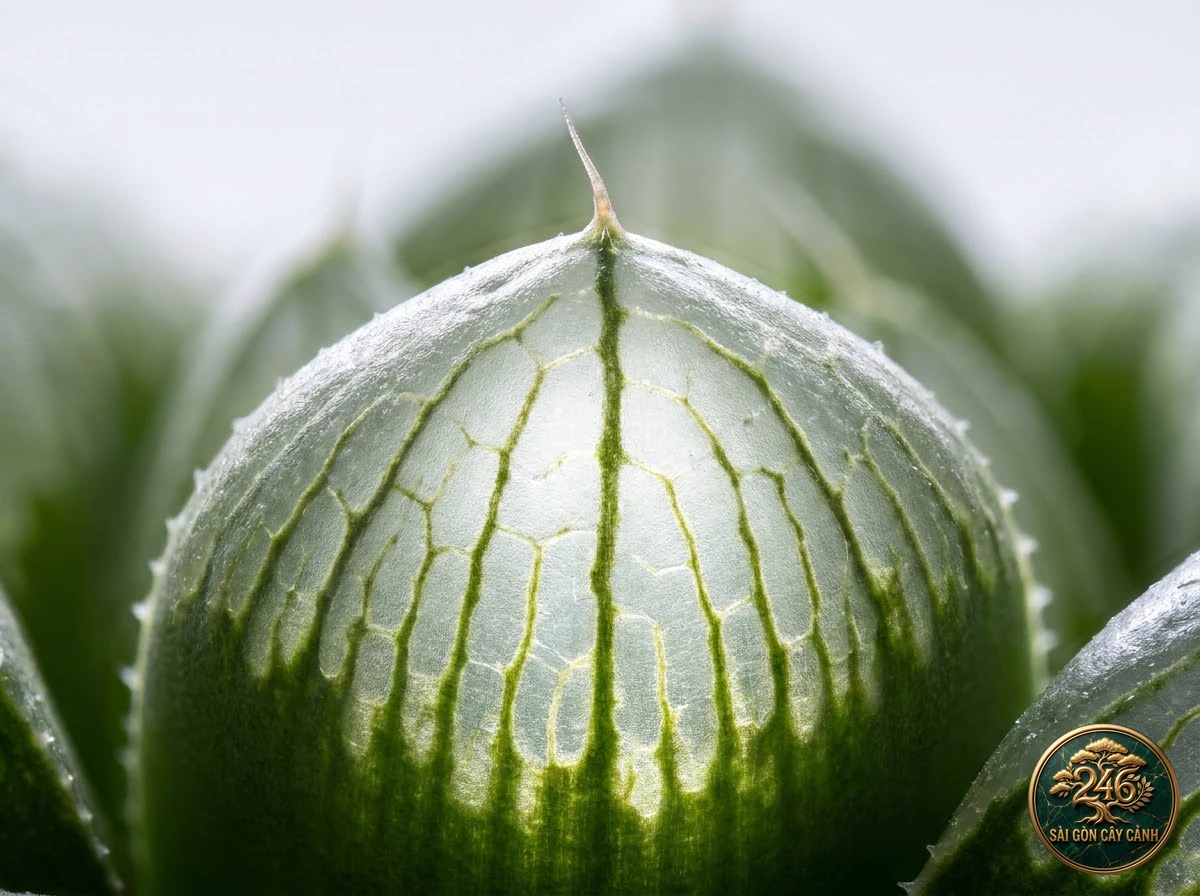
Morphologically, Haworthia cooperi forms compact, acaulescent globose rosettes spanning 5 to 10 cm in diameter that proliferate into multi-headed cushions over time. The foliage consists of densely packed, swollen, turgid leaves 2 to 4 cm long and 1 to 1.5 cm broad. Each leaf apex terminates in a delicate, translucent awn or bristly mucro. The foliar window reveals transparent jelly-like parenchyma traversed by fine, longitudinal green veins running beneath the glassy surface, producing a mesmerizing three-dimensional optical effect. The root system features fleshy, thick contractile roots capable of contracting during severe droughts to pull the rosette deeper into the protective gravel layer. Slender floral scapes rise 20 to 35 cm above the crown, bearing small, two-lipped white florets etched with subtle green mid-stripes.
Cross-sectional microscopic inspection of Haworthia cooperi foliage reveals the extraordinary optical architecture of foliar fenestrations: the translucent apical dome is completely devoid of chloroplasts, composed instead of enlarged water-storage parenchyma functioning as biological optical lenses. Incoming ambient sunlight is gently refracted and channeled down into the basal mesophyll where chlorophyll-packed cells are safely anchored beneath the gravel line. This ingenious light-guiding anatomy enables high-efficiency photosynthesis while shielding delicate pigments from scorching ultraviolet radiation in the African wild.
4. Core Botanical Matrix
Core taxonomic and cultivation parameters:
| Botanical Parameter | Observed Trait | Saigon Cay Canh Horticultural Recommendation |
|---|---|---|
| Scientific Name | Haworthia cooperi Baker | Maintain certified taxonomic labeling across nursery stock |
| Plant Family | Asphodel family (Asphodelaceae) | Observe specialized succulent physiological requirements |
| Native Distribution | Quartz gravel plains and sedimentary rock fissures across Eastern Cape Province, South Africa (near Makhanda / Grahamstown) | Replicate native climatic parameters in indoor cultivation |
| Illumination Intensity | 15,000 – 30,000 lux | Bright filtered light or gentle morning sun; avoid harsh direct midday sun which induces foliar bronzing and stress |
| Thermal Window | 15°C – 28°C | Protect against frost below 8°C and provide ventilation during heat |
| Relative Humidity | 45% – 65% | Sustain gentle atmospheric air movement to disperse stagnant moisture |
| Substrate pH | 6.2 – 6.8 | Utilize porous neutral mineral components for rapid drainage |
| Substrate Formulation | 45% fine pumice (2-4mm), 20% hard akadama clay, 15% perlite, 10% zeolite grit, 10% desalinated coco coir with worm humus | Maintain coarse granular structure; avoid dense suffocating soils |
| Irrigation Strategy | Irrigate thoroughly once ninety percent of the medium is dry; appreciates balanced root micro-moisture during spring and autumn | Enforce thorough substrate dry-down between watering sessions |
| Propagation Pathways | Separation of lateral basal suckers, or rooting undamaged whole succulent leaf cuttings in moist mineral substrate | Perform during warm spring or early wet season for peak vigor |
| Veterinary Toxicology | NON-TOXIC TO PETS (ASPCA Non-Toxic) | NON-TOXIC TO COMPANION ANIMALS (ASPCA Non-Toxic); completely safe for households with cats and dogs. |
5. Toxicity Profile & Domestic Safety
Regarding domestic pet safety, Haworthia cooperi represents an exceptionally safe choice for households with companion animals. According to authoritative databases compiled by the ASPCA Animal Poison Control Center, all members of the genus Haworthia are verified as completely NON-TOXIC to dogs, cats, and horses. The species contains zero hazardous bufadienolide cardiac glycosides and is devoid of harsh chemical irritants. Should a curious cat or dog playfully nibble on its succulent, translucent leaves, no toxic physiological consequences will occur, offering complete peace of mind to animal-loving plant collectors.
6. Lighting Dynamics & Photosynthetic Adaptations
Illumination requirements for Haworthia cooperi are refined and markedly distinct from full-sun desert succulents. The species thrives under bright filtered light or gentle morning sun, requiring luminous levels between 15,000 and 30,000 lux. Filtered illumination preserves the pristine transparency of its apical windows and maintains a vibrant emerald-jade hue. If subjected to harsh, unshielded afternoon sun, the succulent tissues undergo thermal stress, turning a dull reddish-brown or bronze while shriveling. Conversely, profound darkness induces etiolation, stretching the compact rosette out of its jewel-like form. A spot adjacent to an east-facing window diffused by a sheer curtain offers perfection.
7. Moisture Equilibrium & Irrigation Regimes
Irrigation for Haworthia cooperi requires balanced moisture management: the growing medium should dry out substantially before replenishing water, but prolonged bone-dry desiccation should be avoided. During active spring and autumn cycles, provide a thorough soak when approximately 85% to 90% of the potting medium feels dry, averaging once every 5 to 7 days in tropical lowlands. During sweltering summer peaks above 32°C, specimens enter semi-dormancy; cultivators should extend watering intervals to 10 to 14 days, applying modest amounts around the pot rim during cool twilight hours to preserve root hair viability without inciting fungal rot in succulent taproots.
8. Substrate Architecture & Nutrition Strategy
The specialized substrate for Haworthia cooperi demands exceptional porosity paired with clean mineral buffering: combining 45% fine-grade horticultural pumice (2-4mm), 20% hard Japanese akadama clay pellets for moisture buffering and root stimulation, 15% expanded perlite, 10% mineral zeolite grit for cation management, and 10% thoroughly washed coco coir amended with worm humus. Heavy, compact garden soils must be avoided as they suffocate the fleshy contractile roots. An ideal substrate pH rests between 6.2 and 6.8. A minimal application of slow-release succulent fertilizer or diluted organic liquid feed during early autumn encourages wonderfully plump, translucent foliar windows.
Mineralization strategies for Haworthia cooperi demand extreme refinement to sustain the crystal-clear translucency and turgor of its foliar windows. The species thrives in clean mineral substrate enriched with bio-available calcium, silica, and potassium derived from hard akadama clay and natural zeolite grit. High-nitrogen chemical fertilizers and unfermented organic matter must be avoided as they cloud window transparency and induce rot in subterranean taproots. Cultivators should apply heavily diluted organic liquid seaweed feed or balanced micro-nutrients in early autumn to stimulate fibrous root hairs and sustain magnificent foliar turgidity.
9. Temperature Dynamics & Aeration Strategy
The optimal thermal comfort range for Haworthia cooperi is 15°C to 28°C, when ambient weather remains pleasantly mild. When tropical summer temperatures rise above 33°C, the plant slows down metabolic activity, requiring placement in a shaded, well-ventilated alcove to reduce thermal load on the root zone. Relative humidity between 45% and 65% is ideal, sustaining foliar turgidity without desiccating the delicate awn tips. Sustained gentle air movement serves as the definitive cultural safeguard, effectively warding off root-invading fungal spores.
10. Specialized Propagation Protocols
Propagation of Haworthia cooperi is rewarding and dependable due to its natural clumping habit. The primary method is division of lateral offshoots: when pups attain 3 to 4 cm in diameter with self-sufficient roots, unpot the clump, cleanly excise the offset using a sterilized blade, allow the wound to dry in shaded air for 2 to 3 days, and pot into moist pumice-akadama grit. Single leaf propagation is also viable provided the entire basal leaf collar is detached intact; after 4 to 6 weeks on moist mineral substrate, new adventitious rootlets and miniature translucent rosettes sprout reliably from the petiole base.
11. Diagnostic Matrix & Preventative Health
Subterranean root mealybugs and summer crown rot caused by unseasonal watering during hot afternoons represent the primary concerns for Haworthia cooperi. If foliage shrivels despite moist potting mix, unpot and inspect the root system; upon detecting white chalky deposits from root mealybugs, wash all old soil off under running water, dip roots in a mild alcohol solution, let dry, and repot into sterilized substrate. If roots soften with decay, excise rotten sections with a sterilized blade, coat with sulfur powder, and keep in dry shade until new root emergence occurs.
Clinical diagnostics and remedial actions:
| Observed Symptom | Primary Root Cause | Saigon Cay Canh Remedial Action |
|---|---|---|
| Lower leaves turn soft, thin, and wrinkled | Prolonged moisture deficit in the root medium | Provide a deep perimeter soak for Haworthia cooperi; tissues recover within 48 hours |
| Black soft decay at the stem base with leaf drop | Anaerobic fungal root rot due to waterlogged substrate | Unpot immediately, excise necrotic pulp, treat with sulfur powder, and repot into bone-dry pumice |
| Elongated, weak internodes with pale drooping foliage | Chronic insufficiency of direct solar radiation | Relocate Haworthia cooperi to receive unshaded morning sunlight for 4 to 6 hours daily |
| White cottony clusters nested in foliar axils | Foliar mealybug infestation (Pseudococcidae) | Apply 70% medicinal alcohol directly with a cotton bud to dissolve waxy insect cuticles without foliar damage |
12. Living Architecture & Interior Styling
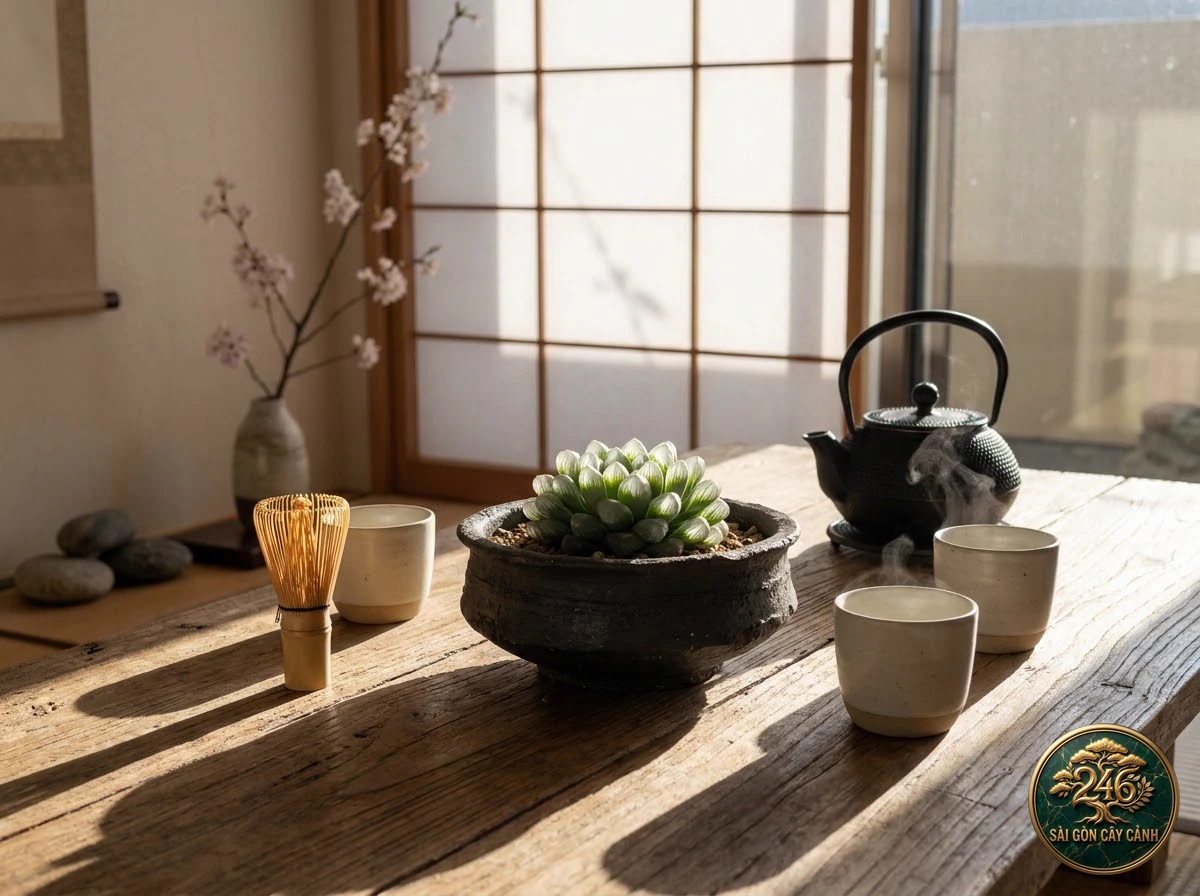
Possessing an ethereal, jewel-like transparency that glimmers under ambient light, Haworthia cooperi serves as a refined artistic adornment for writing desks, minimalist bookshelves, tea ceremony counters, or sunlit window sills. It achieves aesthetic perfection when paired with handcrafted ceramic vessels, hollowed river pebbles, or classic unglazed stoneware dishes. Observing these crystalline, translucent foliage windows catching the morning light inspires a profound sense of serenity, clarity, and positive organic energy throughout the living environment.
Possessing an ethereal, jewel-like translucency that sparkles under morning light, Haworthia cooperi serves as a refined living adornment for executive writing desks, minimalist bookshelves, tea ceremony counters, or sunlit window sills. It achieves aesthetic perfection when housed in handcrafted ceramic vessels, hollowed river pebbles, or classic unglazed stoneware dishes dressed with fine white quartz gravel. Observing these crystalline, translucent foliage windows catching ambient daylight inspires a profound sense of serenity, clarity, and positive living energy throughout modern architectural interiors.
Brand Ambassador & Living Herbarium Botanical Philosophy
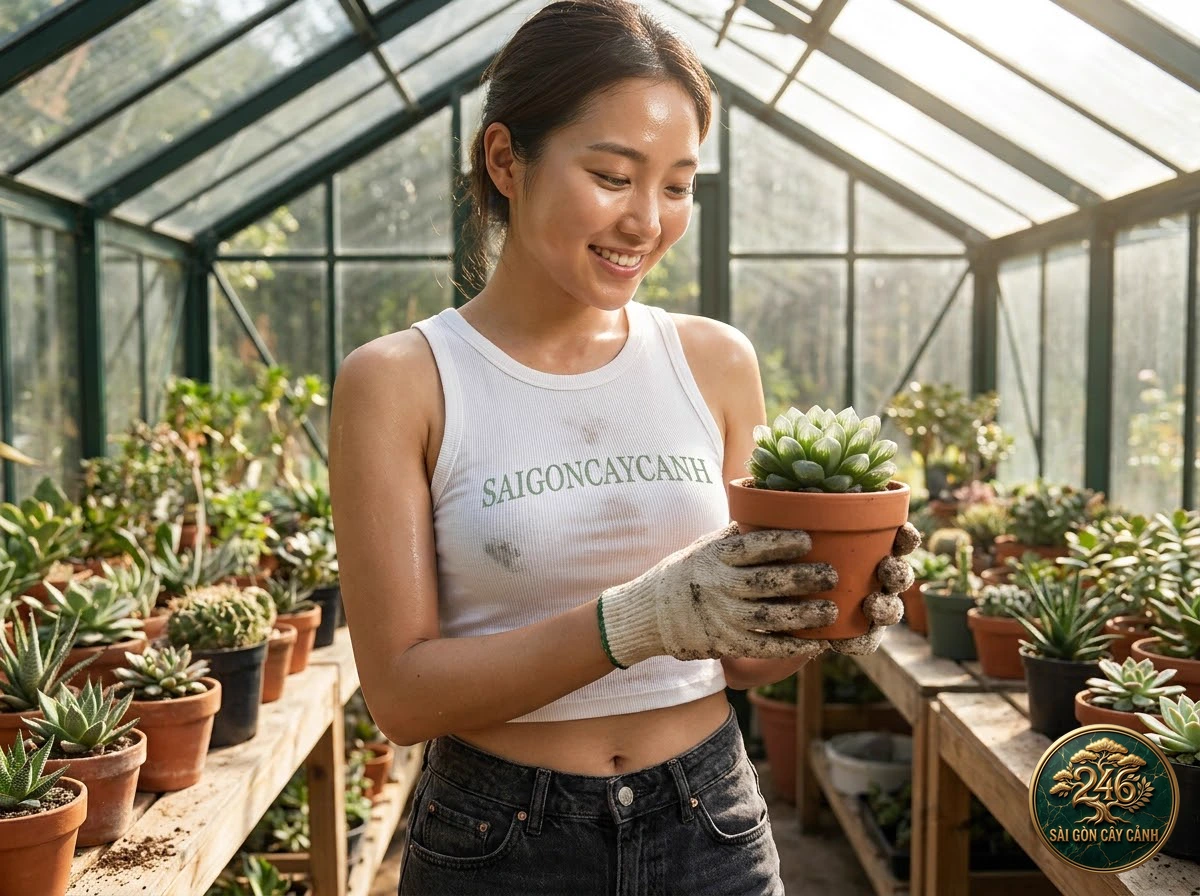
At Saigon Cay Canh botanical nursery, each specimen is curated and tended under the guidance of our brand ambassador, ensuring vibrant vitality and true-to-type morphology.
13. Horticultural Excellence & Living Heritage
At Saigon Cay Canh, we cultivate Haworthia cooperi with the meticulous care worthy of precious living gemstones, hardening each plant under optimized light filtration and clean mineral substrates to achieve maximum natural window clarity and turgidity. We take great pride in delivering robust, pet-safe botanical treasures of pristine genetic authenticity. Saigon Cay Canh remains devoted to sharing specialized horticultural knowledge, accompanying you on an inspiring journey of natural appreciation and refined botanical living.