
Living plant profile
Jungle velvet calathea
Goeppertia warszewiczii
Comprehensive botanical dossier for Jungle velvet calathea (Goeppertia warszewiczii). Identification, lighting calibration, porous substrate formulation, and cultivation guide by Saigon Cay Canh.
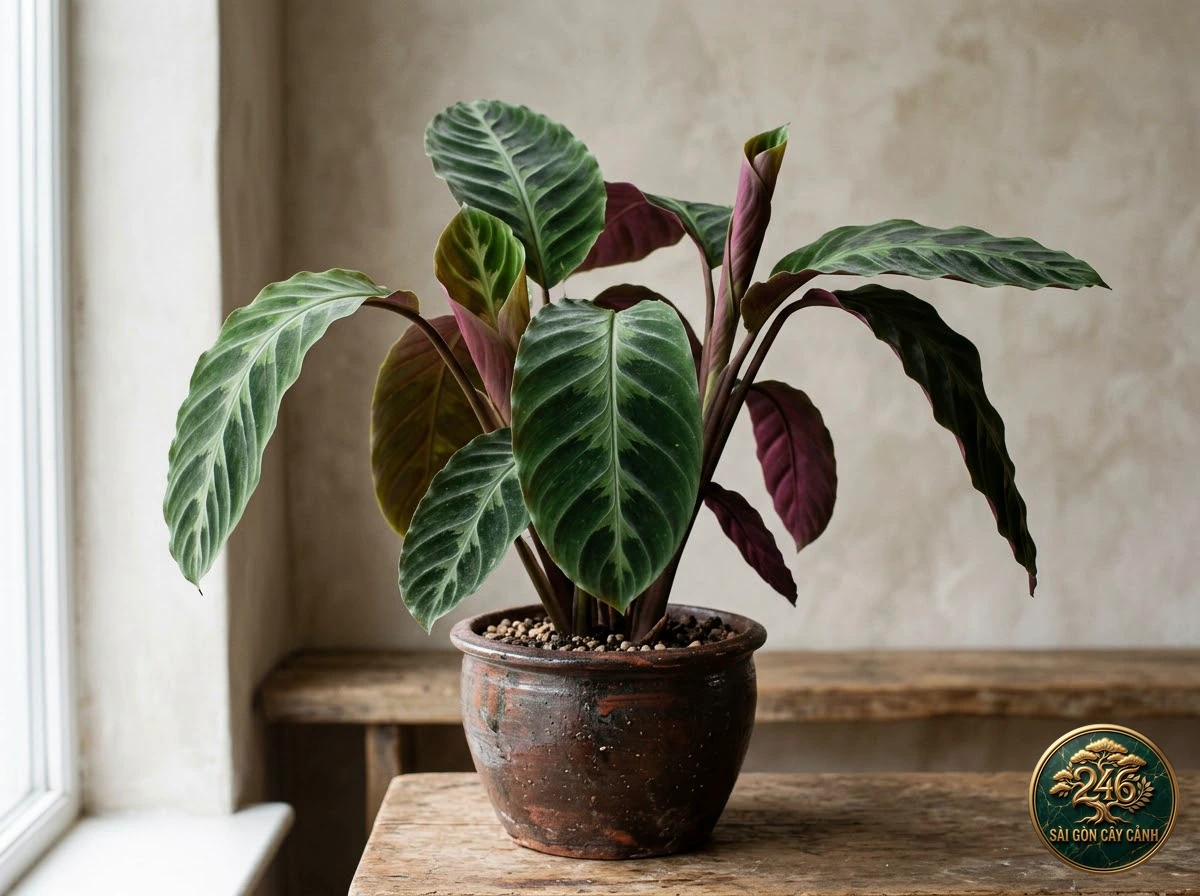
Jungle velvet calathea (Goeppertia warszewiczii) is an extraordinary botanical marvel native to Central American rainforests, celebrated for plush midnight-green velvet foliage illuminated by an intricate feathered fishtail pattern of electric lime-green radiating along the midrib. Undersides glow in rich beetroot-purple velvet, complemented by cone-like ivory floral bracts in a display of regal majesty.
1. Core Botanical Taxonomy & Cultural Specifications
| Scientific Name | Goeppertia warszewiczii |
|---|---|
| Botanical Family | Marantaceae (Prayer Plant Family) |
| Native Distribution | Pristine lowland and premontane rainforest floors of Costa Rica and Nicaragua in Central America |
| Growth Demeanor | Stately clump-forming perennial 80 to 120 cm tall with luxurious velvet foliage and wine-red reverses |
| Lighting Threshold | Gentle diffused daylight (1,600 – 3,200 lux); thrives in luminous canopy shade without direct rays |
| Hydration Cadence | Hydrate when top 25-30% substrate dries; prefers continuous capillary coolness without saturation extremes |
| Substrate Formulation | 35% pumice, 30% shredded sphagnum and fine aged bark, 20% rinsed coco coir pith, and 15% perlite |
| Thermal Range | 21°C – 30°C (70°F – 86°F; flourishes in warm domestic rooms, vegetative arrest below 16°C/60°F) |
| Relative Humidity | 70% – 90% (Elevated relative humidity preserves plush foliar velvet and immaculate margins) |
| Cultivation Difficulty | Moderate (Demands consistent atmospheric humidity and pure water devoid of fluoride or chlorine) |
| Pet Safety Profile | Non-toxic (Completely safe for companion animals; certified non-toxic to dogs and cats by the ASPCA) |
Goeppertia warszewiczii commemorates the famed nineteenth-century Polish botanical explorer Jozef Warszewicz, who discovered it within pristine Costa Rican cloud forest fringes. Fully cataloged in Kew’s Plants of the World Online (POWO), it stands out as one of the few species combining plush velvet foliage with tiered cone-like ivory blooms.
The plant forms imposing clumps ascending up to 1.2 meters, anchored by vigorous subterranean rhizomes. Thick petioles cloaked in fine reddish-purple pubescence measure 40 to 70 cm, capped by a sensitive pulvinus that orchestrates magnificent nocturnal prayer ascents.
A shallow fibrous root network ramifies through nutrient-rich forest litter. Root hairs excel at capillary moisture intake but are intensely vulnerable to waterlogged, oxygen-deprived conditions that foster root rot.
2. Morphological Identification & Foliar Architecture
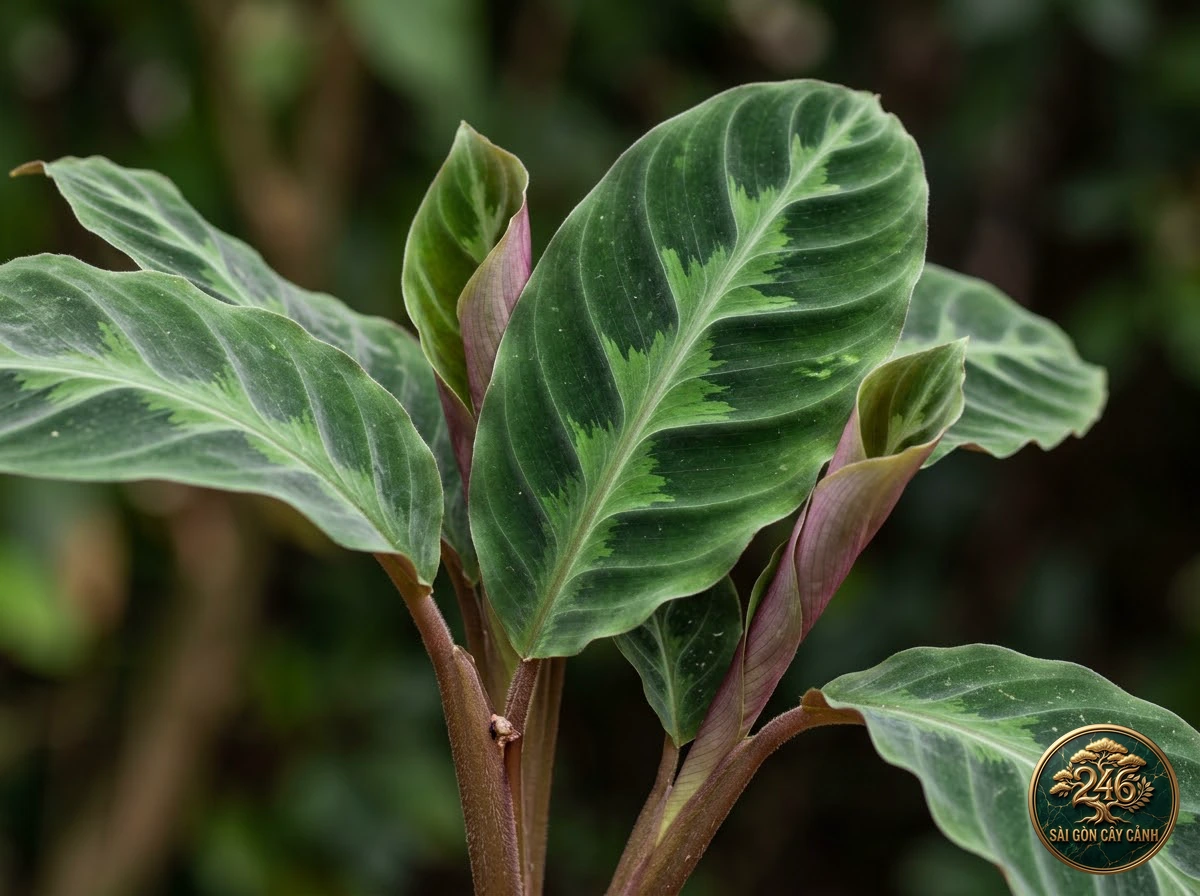
Foliar blades of Jungle velvet calathea present an expansive ovate-lanceolate silhouette measuring 30 to 50 cm in length and 15 to 25 cm in width. The upper surface is a carpet of deep midnight-green velvet, centered by an electric chartreuse fishtail band radiating along the midrib.
The abaxial surface is lined with a dense plush pile of rich beetroot-purple velvet. Dense cone-like inflorescences feature spirally arranged waxy ivory-white bracts flushed with pale rose that persist for 4 to 6 weeks.
Micro-anatomical examination of Goeppertia warszewiczii leaves reveals a breathtaking dual-pigment architecture: adaxial conical cells form a plush midnight-green velvet pile illuminated by a chartreuse fishtail band rich in chlorophyll-b for low-light harvesting, while the abaxial surface is packed with radiant beetroot-purple anthocyanin vacuoles.
3. Photometric Calibration & Window Exposure Optimization
The plant thrives under bright indirect illumination between 1,600 and 3,200 lux. Positioning containers 1 to 2 meters away from filtered sunlit windows maintains razor-sharp fishtail patterning and rich abaxial purple saturation.
Strictly shield from direct midday sun to prevent photothermal scorching of velvety tissues. Conversely, deep shade below 800 lux blurs the central fishtail contrast and halts inflorescence initiation.
Spectrometric assays identify an optimal PPFD between 80 and 150 umol/m2/s for Jungle velvet calathea. Exploiting blue and red wavelengths efficiently in diffused light, it thrives in gentle indirect corners (1,600 – 3,200 lux) without risking foliar tissue burn.
4. Pulvinus Kinematics & Nyctinastic Diurnal Dynamics
The nyctinastic prayer dance of Goeppertia warszewiczii is a botanical spectacle: at twilight, the apical pulvinus elevates massive velvet blades into vertical unison, unveiling the stunning beetroot-purple reverse.
At dawn, pulvinar cells reverse hydraulic turgor, lowering blades horizontally to intercept daylight, connecting indoor environments with nature’s diurnal pulse.
Ideal temperatures span 21°C to 30°C (70°F – 86°F). The specimen flourishes in warm domestic warmth, ceasing growth below 16°C (60°F) and requiring protection from AC drafts.
Relative humidity must remain elevated between 70% and 90%. An ultrasonic mist humidifier or pebble moisture tray keeps velvety canopies turgid and margins pristine.
Optimal cultivation temperatures range from 21°C to 30°C (70°F – 86°F) paired with 70% to 90% relative humidity. Operating an ultrasonic cool-mist humidifier in air-conditioned interiors preserves foliar velvet and extends cone-like ivory bloom longevity.
The pulvinus of Goeppertia warszewiczii is lined with soft reddish-purple fuzz, articulating smoothly with pliable primary veins. At dusk, half-meter-long velvet blades elevate vertically like an enormous lotus bud, unveiling dramatic beetroot-purple reverses in ambient evening light.
5. Porous Aggregate Substrate Engineering & Aeration Dynamics
Potting substrate demands 35% pumice, 30% shredded sphagnum moss with mini composted pine bark, 20% desalted coco coir, and 15% coarse perlite, balanced to pH 5.8 to 6.5.
This mix simulates moist Central American rainforest floors, preserving refreshing capillary dampness without anaerobic soil compaction.
An aerated aggregate blending 35% pumice, 30% shredded sphagnum moss, and mini aged bark creates an environment emulating Costa Rican riparian forest humus, sustaining capillary moisture without anaerobic root compaction.
6. Organic Nutrition Schedules & Periodic Micronutrient Priming
Apply diluted liquid organic fertilizer monthly during spring and summer. Balanced nutrition stimulates vigorous new velvet shoots and supports cone-like ivory blossoms.
Avoid concentrated chemical fertilizers that scorch delicate velvet foliage. Flush containers thoroughly with pure water bi-monthly to eliminate residual mineral salts.
Apply liquid organic bio-fertilizer enriched with natural potassium and phosphorus every three weeks during active spring and summer flushes to support robust velvet foliage and promote tiered cone-like floral bracts.
7. Clinical Diagnostic Matrix & Rapid Correction Protocols
| Clinical Symptom | Primary Etiology | Diagnostic Evaluation | Corrective Prescription |
|---|---|---|---|
| Crisp brown margins and curled velvet edges | Ambient relative humidity dropped below 60% or chlorine toxicity | Monitor room hygrometer and inspect water purity | Run ultrasonic humidifier above 70% and switch to pure dechlorinated water |
| Fading of central lime-green fishtail contrast | Photon deficit below 900 lux threshold | Measure ambient lux at foliage level with light meter | Relocate to bright filtered daylight (1,800+ lux) and apply chelated feed |
| Sudden drooping and structural collapse of velvet petioles | Severe root zone dehydration or anaerobic root rot decay | Probe substrate core moisture and evaluate root health | Bottom-water if desiccated; excise rotted roots and repot if soggy |
| Fine webbing and minute yellow stippling on purple reverses | Tetranychid spider mites colonizing warm, arid environments | Inspect abaxial velvet under magnification loupe | Shower foliage gently with lukewarm water and treat with neem spray |
8. Cryptic Pest Prophylaxis & Foliar Surface Sanitation
Given the thick velutinous lamina, monitor for thrips and whiteflies along underside purple midribs during warm months. Employ beneficial predatory mites alongside delicate dusting with ultra-soft camel-hair brushes to safeguard velvet pile.
Dust foliage using a soft camel-hair brush or gentle mist; never scrub with coarse towels that could damage the plush velvet pile.
Inspect petiole folds and abaxial surfaces for spider mites during arid periods. Clean dust using a soft camel-hair brush or gentle morning misting; never rub with coarse towels that could abrade the velvet pile.
9. Asexual Propagation Methodology & Root Strike Protocols
Propagate via rhizome clump division during spring repotting. Separate crowns retaining at least 3 to 4 mature leaves and independent roots with a sterile blade.
Divide rhizomatous clumps carefully during early spring growth flushes when the specimen possesses multiple mature shoots. Sever connecting subterranean crowns with a sterilized scalpel, preserving at least three fleshy primary roots per division before potting in shaded nursery warmth.
Propagate by rhizome clump division during seasonal spring repotting. Separate crowns retaining at least 3 sturdy velvet leaves and independent roots with a sterile blade, dusting cuts before potting under shaded humidity for three weeks.
10. Companion Animal Safety Profile & ASPCA Non-Toxic Verification
Goeppertia warszewiczii is certified completely non-toxic to dogs and cats by the ASPCA. Plant lovers can display this majestic specimen with total peace of mind.
11. Biophilic Curation & Contemporary Interior Design Styling
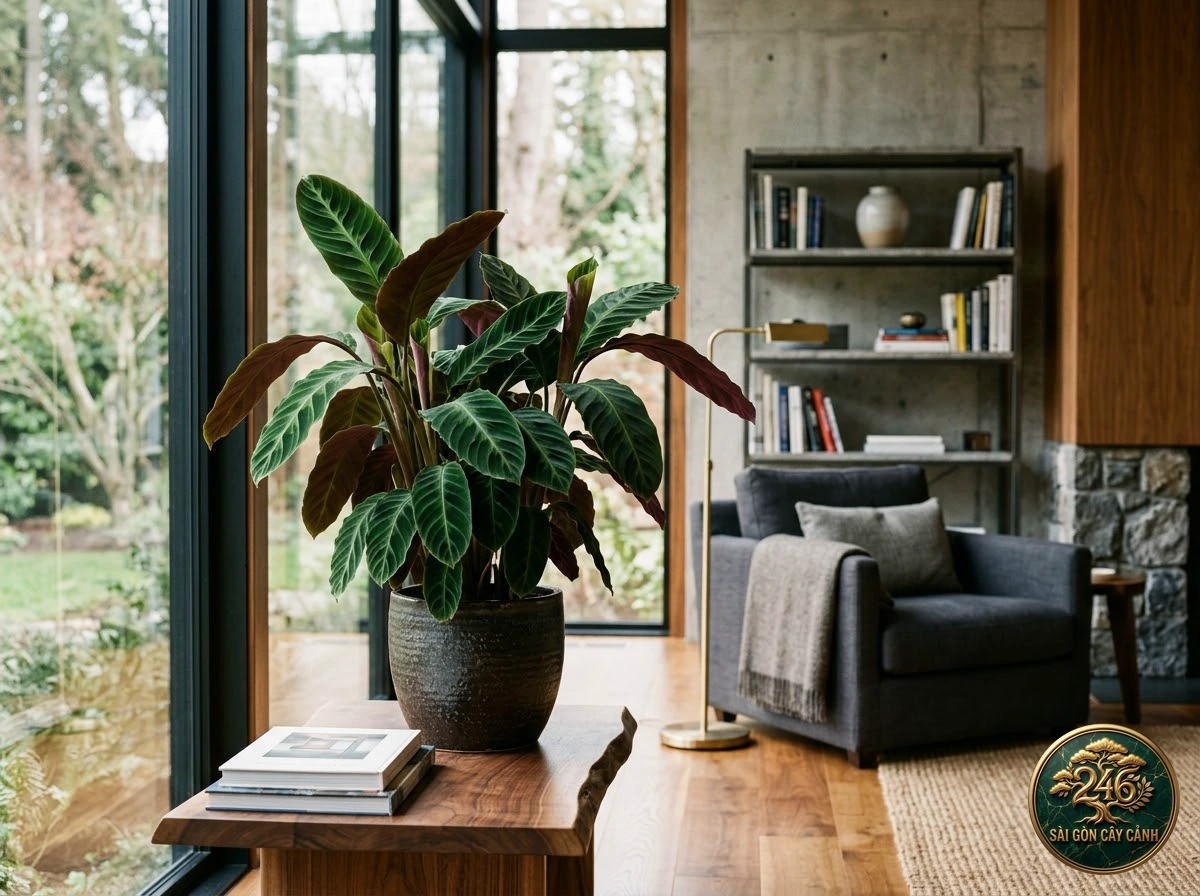
Featuring regal stature, midnight-green velvet blades with luminous chartreuse venation, and wine-red reverses, Jungle velvet calathea is a showstopper for luxury salons, executive suites, and creative ateliers.
Its enigmatic beauty paired with kinetic prayer choreography brings deep tranquility, biological connection, and unmatched sophistication to modern interiors.
Featuring regal stature, midnight-green velvet blades with luminous chartreuse venation, and wine-red reverses, Jungle velvet calathea is a showstopper for luxury salons, executive suites, and creative ateliers.
12. Master Principles for Sustainable Indoor Acclimatization
To cultivate a thriving specimen of Goeppertia warszewiczii and stimulate recurring tiered ivory blooms indoors, horticulturists should follow three essential rules:
- Hydration axiom: Apply purified RO water when the top 3 cm of medium desiccates; strictly avoid lingering water droplets on velvety adaxial surfaces overnight.
- Illumination axiom: Provide gentle filtered lighting near 1,200 lux; isolate completely from radiant heat sources like cooking appliances or space heaters.
- Maintenance axiom: Guarantee ambient humidity above 75% to preserve rich violet plush abaxial textures and ensure uniform unfurling of emerging leaves.
13. Frequently Asked Questions Regarding Jungle velvet calathea (FAQs)
Does Jungle velvet calathea produce flowers, and are they attractive?
Yes, remarkably so. It yields tiered cone-like inflorescences of waxy ivory-white to pale rose bracts resembling sculpted roses that persist for 4 to 6 weeks.
Why is this species commonly known as Jungle Velvet?
Because both blades and petioles are cloaked in a dense, plush velvety pile that feels luxuriously soft to the touch, like authentic wild rainforest velour.
What water specifications should be maintained?
Always provide harvested rainwater, distilled water, or reverse-osmosis water. Municipal tap water containing chlorine or fluoride burns velvet leaf margins.
Is the plant toxic to companion dogs or cats?
Completely non-toxic. Belonging to the Marantaceae family, it is certified 100% pet-safe by the ASPCA.
How frequently should repotting and clump division take place?
Repot every 1.5 to 2 years when emerging offshoots crowd the container rim or when roots coil tightly at the drainage holes.
Does Jungle velvet calathea produce flowers, and are they attractive?
Yes, remarkably so. It yields tiered cone-like inflorescences of waxy ivory-white to pale rose bracts resembling sculpted roses that persist for 4 to 6 weeks.