
Living plant profile
Monk’s hood cactus
Astrophytum ornatum
📌 CLINICAL & BIOLOGICAL ABSTRACT — Monk’s hood cactusAstrophytum Cactaceae Standard Botanical Monograph V2 Monk’s Hood Cactus (Astrophytum ornatum): Columnar Stature, Golden Spines and Pot Culture Scientific Binomial: Astrophytum ornatum (DC.) F.A.C.Weber English Vernacular: Monk’s hood cactus Plant Family: Cactaceae Native Distribution: Hidalgo & Queretaro, Mexico Astrophytum ornatum is the tallest and most majestic columnar […]
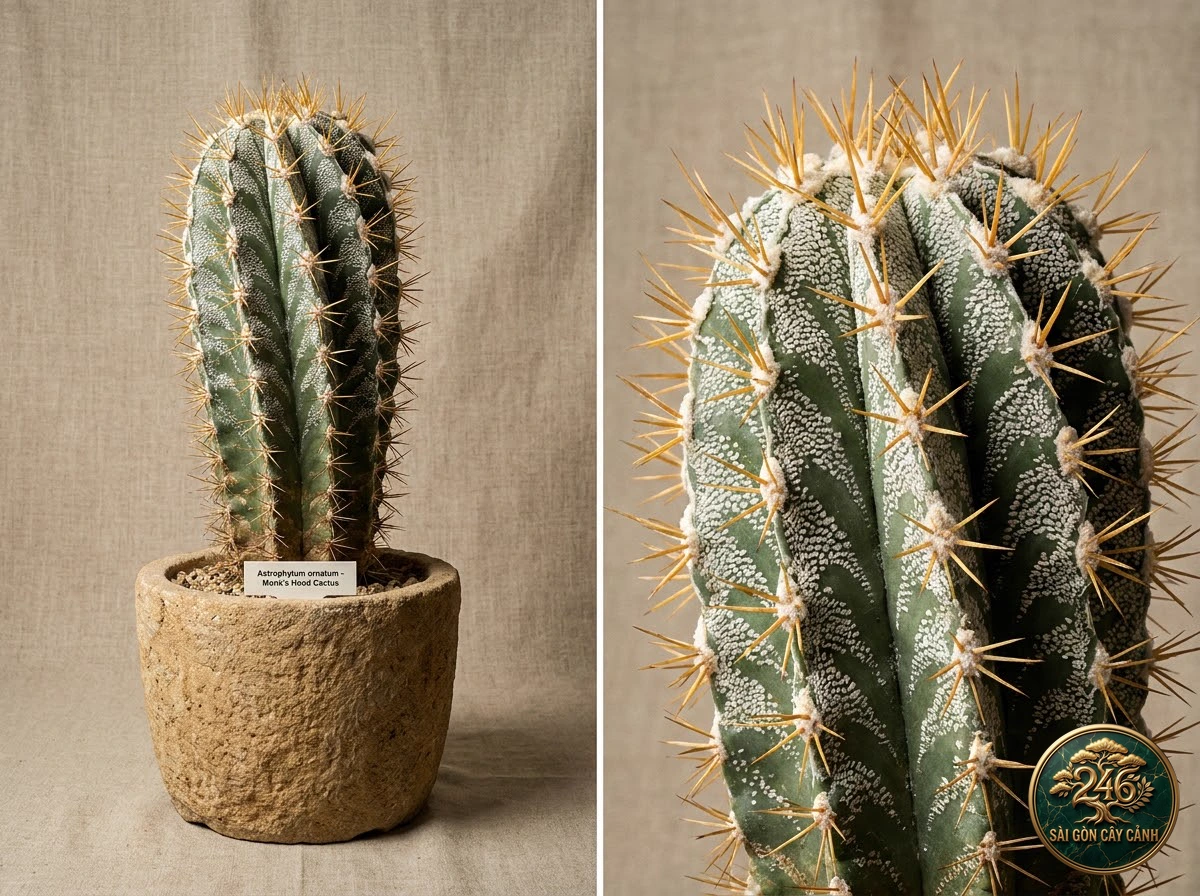
Monk’s Hood Cactus (Astrophytum ornatum): Columnar Stature, Golden Spines and Pot Culture
English Vernacular: Monk’s hood cactus
Plant Family: Cactaceae
Native Distribution: Hidalgo & Queretaro, Mexico
Astrophytum ornatum is the tallest and most majestic columnar species in Astrophytum, distinguished by white chevron flocking bands resembling imperial robes and formidable gleaming golden spines.
Sài Gòn Cây Cảnh Care Compass
1. Botanical Provenance & Nomenclature History
Astrophytum ornatum was described by Augustin Pyramus de Candolle in 1828 and transferred to Astrophytum by Frederic Albert Constantin Weber in 1896. It inhabits sheer limestone canyon walls across Hidalgo and Queretaro in central Mexico.
Perched upon rugged limestone cliffs at elevations between 800 and 2,000 meters, it evolved an upright columnar stature armed with stout golden thorns to endure harsh mountain winds and intense solar irradiance.
2. Morphological Characteristics & Diagnostic Keys

The stem begins globose before elongating into an impressive columnar trunk reaching one meter in height and fifteen to twenty centimeters wide, marked by eight slightly spiraling ribs. Rib faces display white flocking in symmetrical chevron bands, contrasted by five to ten stout amber-gold spines three to four centimeters long.
During warm summers, apical areoles produce elegant canary-yellow blossoms seven to nine centimeters wide, followed by scaly dark green capsules that burst at the apex when seeds mature.
3. Photosynthetic Irradiance & Microclimate Engineering
Solar irradiance needs range from 6,000 to 12,000 lux, thriving under generous direct sunlight for five to seven hours daily; intense photons fortify needle-sharp golden spines and sustain crisp chevron banding.
Situate pots on open sunny terraces or breezy balconies with strong air currents that cool the expansive columnar mass during hot tropical afternoons.
4. High-Percolation Mineral Substrate Engineering
The potting mix blends 50% coarse volcanic pumice, 25% lava scoria grit, 15% perlite, and 10% rich mineral sandy loam.
Coarse mineral porosity allows irrigation water to flush freely past root surfaces and evacuate base drain holes quickly, providing vital aeration for deep anchoring roots.
5. Biological Irrigation Protocols & Seasonal Rhythms
Watering follows strict soak-and-dry principles: soak thoroughly every seven to ten days in dry seasons once the entire substrate is completely dry.
During cool humid rainy intervals, widen watering cycles to sixteen or twenty days to preserve firm columnar turgor and protect roots from hypoxic damage.
6. Trace Mineral Nutrition & Balanced Bio-Fertilization
Apply diluted potassium-rich organic liquid fertilizer at light dosage once monthly in late afternoon through sunny spring and summer cycles.
Avoid high-nitrogen fertilizers that induce soft, rapid growth, which dilutes the golden spine color and compromises structural stability.
7. Clonal & Sexual Propagation Protocols
Propagate by seed; dark amber seeds germinate vigorously within five to seven days over warm, moist mineral substrate.
Seedlings display exceptional vigor and fast developmental growth, revealing characteristic chevron flocking and golden spines within their first year.
8. Biochemical Toxicity & Companion Animal Safety (ASPCA)
Astrophytum ornatum possesses zero internal toxicity under ASPCA standards, posing no biochemical danger to household pets.
Because its golden spines are remarkably stout and needle-sharp, wear protective leather gloves when repotting and position containers safely away from high-traffic zones.
9. Clinical Pathology Diagnostics & Pest Management
Detection of epidermal lesions and restorative techniques for columnar Astrophytum ornatum:
| Observed Symptom | Biological Root Cause | Standard Remedial Action |
|---|---|---|
| Columnar stem bends and stretches out thin | Chronic shortage of direct solar photons in dim interiors | Relocate pot to receive 4-5 hours of direct morning sun daily to restore firmness |
| Rib margins turn dark with weeping fluid | Bacterial infection entering through physical wounds | Excise decayed flesh with sterile blade, dust sulfur, dry 7 days |
| Base turns brown-soft with loose rootstock | Irrigating too frequently while potting mix remains damp | Unpot, trim decayed roots, dry 10 days in shade, repot into pure pumice |
| White mealybug cotton in furrows and areoles | Sap-sucking pseudococcid pests infesting plant tissue | Dab spots with 70% alcohol cotton swab, apply organic neem spray at dusk |
10. Taxonomic Comparative Matrix Across Allied Taxa
Field diagnostic matrix differentiating Astrophytum ornatum from allied columnar cactaceae:
| Diagnostic Metric | Astrophytum ornatum | Allied Species A | Allied Species B |
|---|---|---|---|
| Stem height | Erect columnar trunk reaching up to 1 meter | Low flattened-globose cushion 4 to 7 cm | Ultra-flattened ground-level disc 2 to 5 cm |
| Spine color | Formidable needle-sharp gleaming amber-gold | Soft feathery white interwoven lace | Entirely spineless smooth surface |
| Epidermal pattern | White chevron bands like imperial robes | Dense veil of snow-white plumose spination | Prominent pearl-like circular areoles |
| Growth vigor | Fastest growing and most vigorous in genus | Slow growing, clustering into cushions | Very slow growing solitary disc |
11. Biophilic Interior Design & Architectural Application

The commanding columnar stature and gleaming golden spination of Astrophytum ornatum deliver high architectural drama when potted in rough-hewn stone planters within Mediterranean courtyards.
Its resolute vertical poise symbolizes enduring fortitude and quiet self-mastery against nature’s harshest trials.
🌿 Trang Thiết Bị, Đất Trồng & Dụng Cụ Bonsai Tuyển Chọn
Dụng cụ tỉa, giá thể hữu cơ & phân bón chuyên dụng cho cây cảnh.

Dây Nhôm Uốn Cây Cảnh Bonsai, Dây 5MM, Cuộn 100Gr, Mềm …

Kéo Cắt Cành Siêu Sắc Kéo Tỉa Cành Dụng cụ Làm Vườn Đa …

Bình xịt nước Gose, phun sương mini dùng tưới cây, xịt …

Bộ vòi xịt tưới cây đa năng 8 chế độ phun cao cấp
Hạt Giống Hoa Mười GIờ Thái Bông Kép Nở To Đẹp 4 Mùa Qu…

Kéo cắt tỉa cây ăn quả, kéo cắt cành, kéo làm vườn, dụn…

Đôn nhựa giả gỗ kê tráp ăn hỏi , decor trang trí chậu h…
Kesoto Sắt Treo Tường Treo Cây Móc Nặng Chậu Trồng Giỏ …

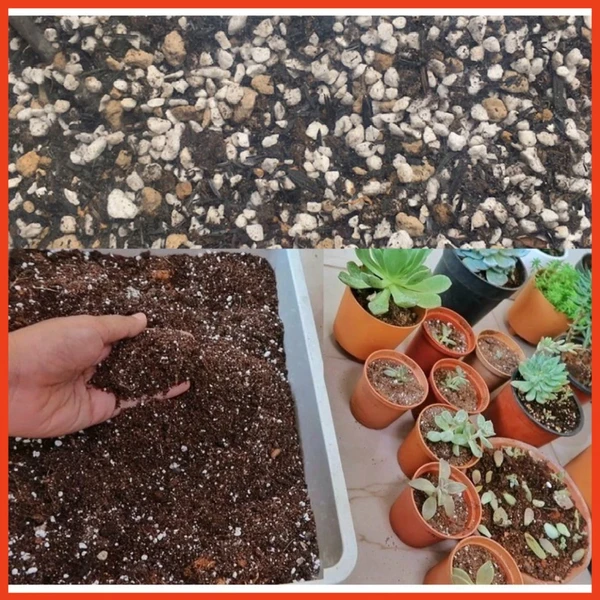
Đất trồng sen đá, xương rồng trộn sẵn 1 Kg 🔥Coco Forest…
Chậu nhựa trồng cây, Chậu tròn giả sứ in hình em bé trồ…

🚿 LINH,VÒI XỊT NƯỚC ĐA NĂNG 8 CHẾ ĐỘ – ĐẦU VÒI RỬA XE, …

Chậu nhựa trồng cây Lục Giác Mai giả đá TRẮNG, nhiều kí…
Nursery Care Journal & Living Greenery Moments
At Saigon Cay Canh greenhouse, each photograph captures genuine everyday care moments between plant lovers and living greenery, spreading a passion for nature and green-living inspiration.

💬 Góc Tư Vấn & Hướng Dẫn Kỹ Thuật SGCC
Chuẩn E-E-A-T Kinfolk❓ Chăm sóc Monk’s hood cactus cần lưu ý điều gì quan trọng nhất?
💡 Dạ điều quan trọng nhất là giữ môi trường sống ổn định, tránh sốc nhiệt hay dao động thông số đột ngột, đồng thời cung cấp khẩu phần ăn sạch và tươi mới ạ.
❓ Làm thế nào để phòng ngừa bệnh tật hiệu quả cho các bé?
💡 Dạ anh chị nên giữ vệ sinh chuồng/hồ nuôi sạch sẽ, thay nước hoặc dọn dẹp định kỳ và bổ sung vitamin, men tiêu hóa đều đặn để tăng sức đề kháng ạ.

Cylindrical Snake Plant (Sansevieria cylindrica)
Sansevieria cylindrica, the Cylindrical Snake Plant or African Spear, is a celebrated architectural succulent featuring stiff upright round spearlike leave
Read Monograph →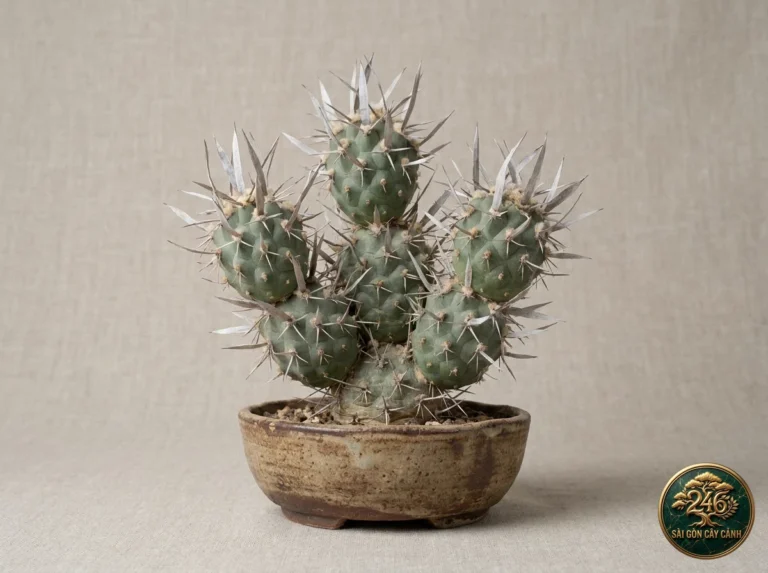
Paper Spine Cactus (Tephrocactus articulatus)
Tephrocactus articulatus is an extraordinary South American cactus celebrated for fragile pinecone-like stacked joints and wide, papery, flexible ribbon-li
Read Monograph →
Saguaro Cactus (Carnegiea gigantea)
Carnegiea gigantea is the iconic monumental saguaro cactus of the Sonoran Desert, renowned for massive fluted columnar trunks, formidable spine clusters, a
Read Monograph →
Living Pebbles (Conophytum bilobum)
Conophytum bilobum is an enchanting miniature succulent pebble within the Aizoaceae family, celebrated for heart-shaped chalky-blue bilobed succulent bodie
Read Monograph →Expert Q&A, Recommended Supplies & Article Feedback
Tap once to connect instantly via Google, Facebook or TikTok — no long forms required!
No questions yet for this article. Tap Google / Facebook / TikTok above to ask the first question!