Living plant profile
Raindrop peperomia
Peperomia polybotrya
Comprehensive botanical dossier for Raindrop peperomia (Peperomia polybotrya). Identification, lighting calibration, porous substrate formulation, and cultivation guide by Saigon Cay Canh.
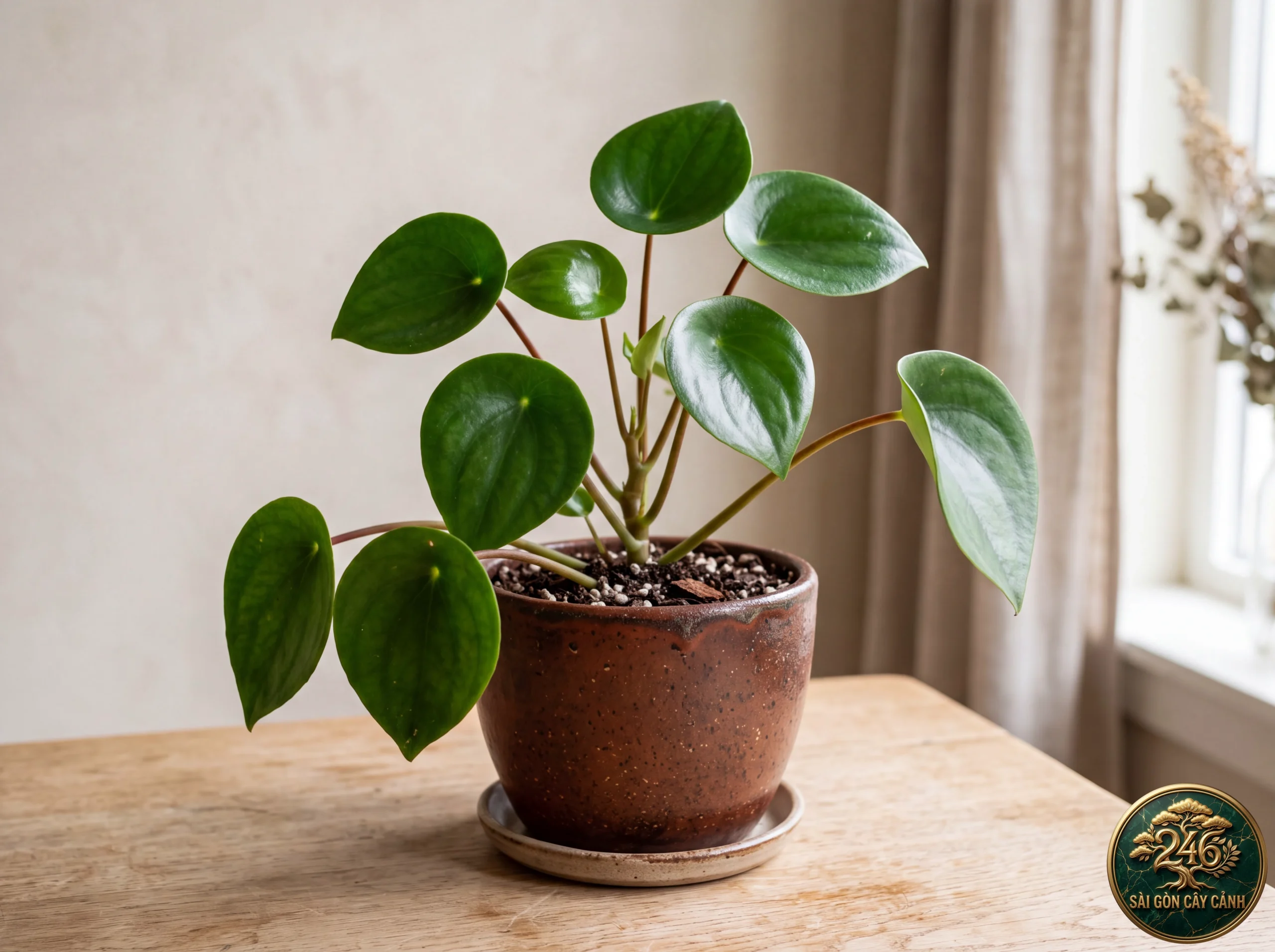
Raindrop peperomia (Peperomia polybotrya) is an enchanting tropical foliage plant distinguished by succulent raindrop- or heart-shaped blades with a polished mirror sheen and delicate pointed tips, symbolizing prosperity and refreshing vitality indoors.
Sài Gòn Cây Cảnh Care Compass
1. Core Botanical Taxonomy & Cultural Specifications
| Scientific Name | Peperomia polybotrya |
|---|---|
| Botanical Family | Piperaceae (Pepper Family) |
| Native Distribution | Tropical rainforests of Colombia and Ecuador (Andean foothills) |
| Growth Demeanor | Compact upright semi-succulent herb with neat basal clustering |
| Lighting Threshold | Moderate to bright indirect filtered illumination (1,200 – 3,000 lux) |
| Hydration Cadence | Irrigate when upper 50% media dries; highly intolerant of soggy soil |
| Substrate Formulation | Pumice aggregate, coarse coconut coir, fine pine bark, perlite |
| Thermal Range | 18°C – 28°C (prefers mild tropical warmth; vulnerable below 12°C) |
| Relative Humidity | 60% – 80% (tropical montane forest humidity levels) |
| Cultivation Difficulty | Easy (durable succulent foliage, water-wise, minimal maintenance) |
| Pet Safety Profile | 100% Non-Toxic (ASPCA certified completely safe for dogs and cats) |
In terms of provenance and phytogeography, Peperomia polybotrya is endemic to Andean montane rainforests across Colombia and Ecuador. It thrives as an epiphyte rooted in moss-padded tree forks or on shaded riparian boulders, enjoying perpetually high atmospheric humidity and moderated tropical temperatures.
The defining morphological hallmark of Peperomia polybotrya is its distinctive foliar geometry: each thick, succulent blade is shaped like a raindrop (deltoid-ovate) or rounded heart with a tapered, gently downcurved apex, evoking a suspended drop of rain. The petiole attaches in a sub-peltate orientation near the base, flaring outward gracefully.
Blades measure 6 to 10 cm long and 5 to 8 cm broad, with a flawless, mirror-like gloss reminiscent of polished jade. The deep emerald foliage contrasts elegantly against pale green or purplish stems; inflorescences emerge as slender cream-colored spikes 8 to 12 cm long that emit a delicate sweet herbal fragrance.
2. Morphological Identification & Foliar Architecture
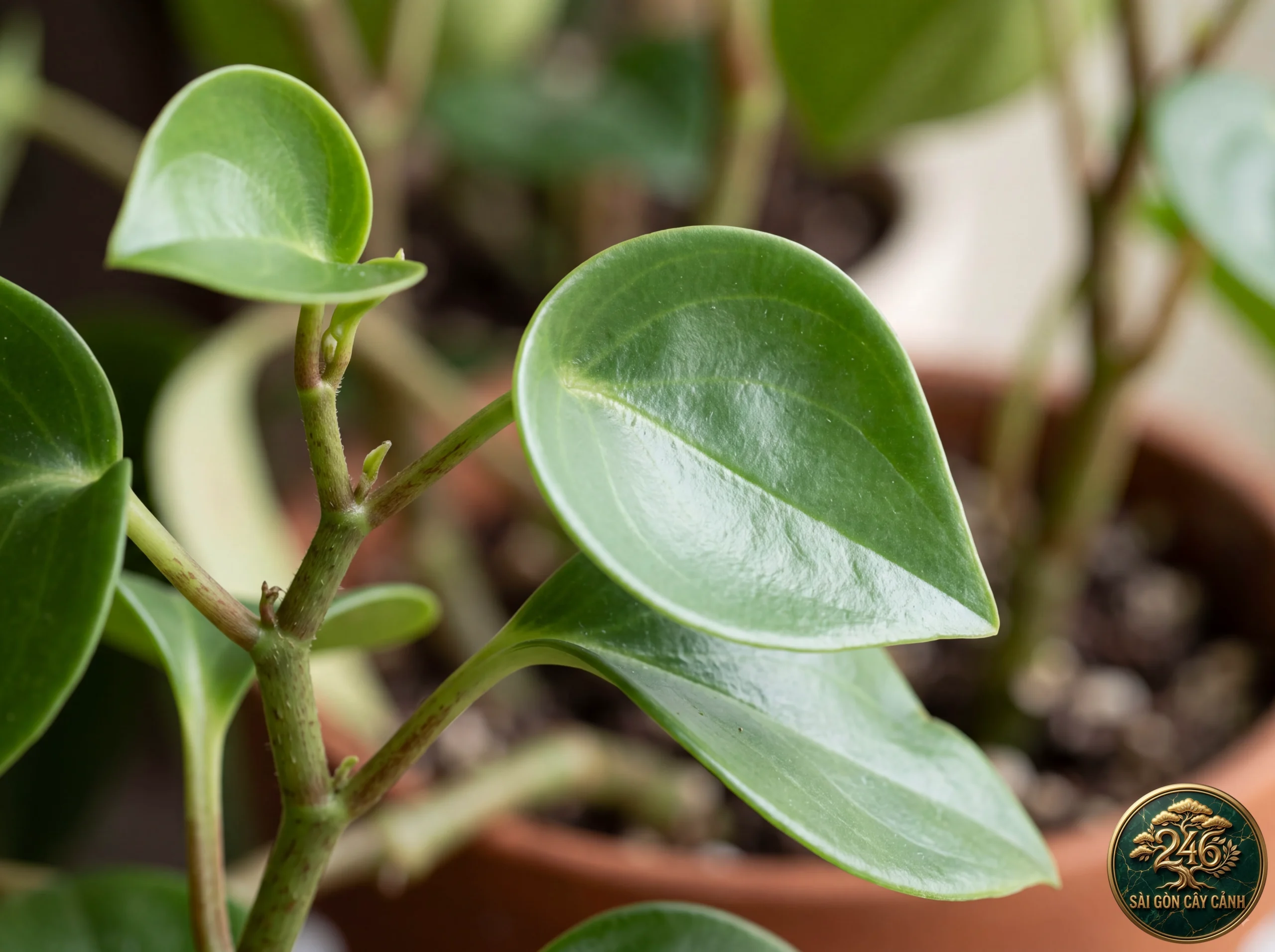
Diagnostic distinctions separating Raindrop peperomia from Pilea peperomioides include: Peperomia polybotrya possesses distinctly thicker, more succulent foliage with a distinct tapered raindrop apex (unlike the perfectly orbicular peltate blades of Pilea), sub-peltate eccentric petiole attachment, and characteristic Piperaceae rat-tail spikes.
The plant displays a compact, caespitose upright growth habit, attaining mature heights of 20 to 35 cm. Tightly packed alternating leaves carpet the container crown, forming an opulent, sculptural dome highly celebrated among urban interior foliage collectors.
Foliar histology of Peperomia polybotrya reveals specialized convex dome-shaped epidermal cells coated in a smooth, thick cuticular varnish functioning as micro-lenses to focus incoming photons. Beneath the epidermis lie 3 to 4 stratified layers of large polygonal water-storing hypodermal cells, establishing the resilient succulent thickness and iconic deltoid raindrop curvature.
3. Photometric Calibration & Window Exposure Optimization
Photometrically, Peperomia polybotrya flourishes under diffuse daylight between 1,200 and 3,000 lux (25 to 60 µmol/m²/s PPFD). Its polished foliar cuticle scatters incoming photons, enabling efficient photosynthetic utilization of gentle indoor light without chlorophyll breakdown.
Exposing foliage to unshielded direct sunlight precipitates thermal epidermal burns, scarring succulent tissues with unsightly tan scorch spots. Conversely, protracted deep shade beneath 800 lux causes petioles to stretch thinly and diminishes blade dimensions, reducing foliar luster.
Photobiological evaluation confirms that Raindrop peperomia achieves peak net photosynthetic assimilation under a PPFD flux between 25 and 60 µmol/m²/s. Its mirror-like cuticle scatters diffuse indoor rays efficiently; however, unshielded exposure exceeding 100 µmol/m²/s at midday precipitates thermal necrosis, blistering the delicate acute apex into crispy brown patches.
4. Raindrop Deltoid Foliar Architecture & Sub-Peltate Petiolar Mechanics
The succulent cauline axis of Peperomia polybotrya measures 8 to 15 mm in diameter, exhibiting vigorous basal branching and harboring copious cellular water reserves. This robust cauline anatomy supports its upright posture and enables rapid recovery from transient underwatering.
Petiolar bases clasp the stem firmly, providing resilient yet brittle structural articulations. Careful handling is recommended when relocating or cleaning containers to avoid inadvertently snapping the succulent raindrop blades.
The optimal room temperature for vigorous growth spans 18°C to 28°C, mirroring its cool montane Andean heritage. The species is acutely sensitive to cold drops below 12°C and direct chilling drafts from air conditioners; maintain a minimum clearance of 1.5 meters from cooling vents.
Target ambient humidity is comfortably maintained between 60% and 80%. During dry seasons or in sealed air-conditioned offices, placing the container on a pebble-water tray or employing an ultrasonic humidifier preserves the mirror-like succulent sheen of its raindrop blades.
The optimal vapor pressure deficit (VPD) spans 0.65 to 0.95 kPa with relative humidity between 60% and 80%. In air-conditioned residential spaces, stabilizing VPD via a pebble-water humidity tray keeps stomatal apertures functioning normally, eliminating physiological desiccation of acute raindrop tips.
The sub-peltate petiolar biomechanics of Peperomia polybotrya represent a fascinating botanical engineering marvel. The petiole attaches eccentrically beneath the lamina 5 to 8 mm inward from the basal margin, establishing an optimal 45-degree angle that permits the raindrop blades to track ambient daylight smoothly without twisting primary cauline vascular bundles.
5. Porous Aggregate Substrate Engineering & Aeration Dynamics
Substrate formulation for Raindrop peperomia demands outstanding porosity to shield delicate rootlets from fungal pathogens. A proven recipe consists of 40% horticultural pumice (3-6 mm), 30% washed coconut coir chunks, 20% fine pine bark, and 10% perlite, stabilizing a rhizosphere pH of 6.0 to 6.8.
Regarding irrigation technique, hydrate only when the top 50% substrate volume has dried out. Water gently around the root crown in early morning with soft water, ensuring swift gravitational percolation through base holes without permitting the pot to sit in stagnant saucer pools.
Hydraulic conductivity within the potting medium must remain elevated to ensure unhindered rootlet respiration. Integrating 40% pumice aggregate with 30% desalted coconut coir chunks establishes a flawless capillary matrix, retaining gentle moisture while adsorbing mineral residues and stabilizing pH between 6.0 and 6.8.
6. Organic Nutrition Schedules & Periodic Micronutrient Priming
Nutritional management relies on ultra-dilute organic feedings administered once monthly during active warm months. Utilize diluted vermicompost tea or cold-water seaweed extract mixed at an electrical conductivity (EC) strictly beneath 0.5 mS/cm to nourish succulent stems and glossy leaves safely.
Avoid excessive synthetic nitrogenous fertilizers which cause cellular bloating, flattening the distinct raindrop contour and increasing susceptibility to bacterial rot. Cease all fertilization during cool winter slowdowns while widening the watering interval.
Organic nutritional regimens deploy diluted vermicompost extract paired with cold-water kelp essence at an EC strictly below 0.5 mS/cm monthly during active flushes. Chelate-rich microelements including iron and magnesium fortify the photosynthetic apparatus within thick succulent blades without burning delicate root hairs.
7. Clinical Diagnostic Matrix & Rapid Correction Protocols
| Clinical Symptom | Primary Etiology | Diagnostic Evaluation | Corrective Prescription |
|---|---|---|---|
| Petioles turning black, mushy, and blades dropping cleanly from stem | Bacterial crown rot from chronic over-irrigation and stagnant soil | Inspect bottom soil to find wet, compacted, sour-smelling media | Halt irrigation immediately, excise rot, repot in airy pumice substrate |
| Foliage losing its mirror luster, turning dull, and flagging downward | Root ball dehydration or severely deficient ambient humidity | Probe potting mix to find bone-dry, powdery substrate | Give thorough soaking to restore turgor and set pot on pebble-water tray |
| Circular tan-brown necrotic scorch patches on adaxial leaf surface | Direct solar radiation causing localized photochemical leaf burn | Correlate burn lesions with direct midday sunbeam exposure angles | Relocate specimen deeper into the room away from unshaded window glass |
| Petioles stretching excessively with leaves shrinking in size | Light starvation from prolonged placement in deeply shaded room corners | Measure ambient light levels beneath 800 lux at the container site | Move plant to a brighter position receiving luminous diffuse daylight |
8. Cryptic Pest Prophylaxis & Foliar Surface Sanitation
Biological pest management emphasizes preventative surveillance against mealybugs and spider mites through bi-weekly foliar wiping using soft damp microfiber cloths. Maintaining pristine foliar surfaces eliminates cryptic pest hiding spots while maximizing light absorption.
Crown rot and black petiole rot triggered by Erwinia bacteria or Pythium fungi invariably stem from saturated substrate conditions. Upon detecting blackened petiole bases, immediately excise affected foliage flush with the stem, dust incisions with sterile charcoal, and maximize airflow.
Integrated Pest Management (IPM) prioritizes early surveillance for Erwinia soft rot and cryptic mealybugs within petiole axils. Monthly foliar wiping with soft damp microfiber cloths paired with preventative 0.5% biological potassium soap sprays at dusk protects the prized glossy raindrop foliage safely.
9. Asexual Propagation Methodology & Root Strike Protocols
Propagating Peperomia polybotrya is highly successful via terminal stem cuttings or single leaf cuttings with intact petioles. Using a sterile scalpel, sever a healthy mature leaf retaining 2-3 cm of petiole, allowing it to air-callus in shade for 2 hours.
Insert the petiole at a 45-degree angle into moist sand-perlite medium under a perforated transparent humidity cover. Maintained in warm ambient temperatures of 22°C – 26°C over a 25 to 35 day interval, adventitious roots strike vigorously, followed by 2 to 4 miniature clonal plantlets.
During succulent leaf-petiole cutting propagation, housing cuttings beneath a ventilated humidity dome in warm 22°C – 26°C ambient conditions over a 25 to 35 day developmental interval stimulates basal callus cells to strike dense fibrous roots and generate miniature plantlets with 100% success.
10. Companion Animal Safety Profile & ASPCA Non-Toxic Verification
Peperomia polybotrya is certified by the ASPCA as completely non-toxic to domestic canines and felines. Void of toxic phytotoxins or caustic sap, it poses zero chemical hazard if nibbled by playful pets, serving as an ideal green companion in animal-loving homes.
11. Biophilic Curation & Contemporary Interior Design Styling
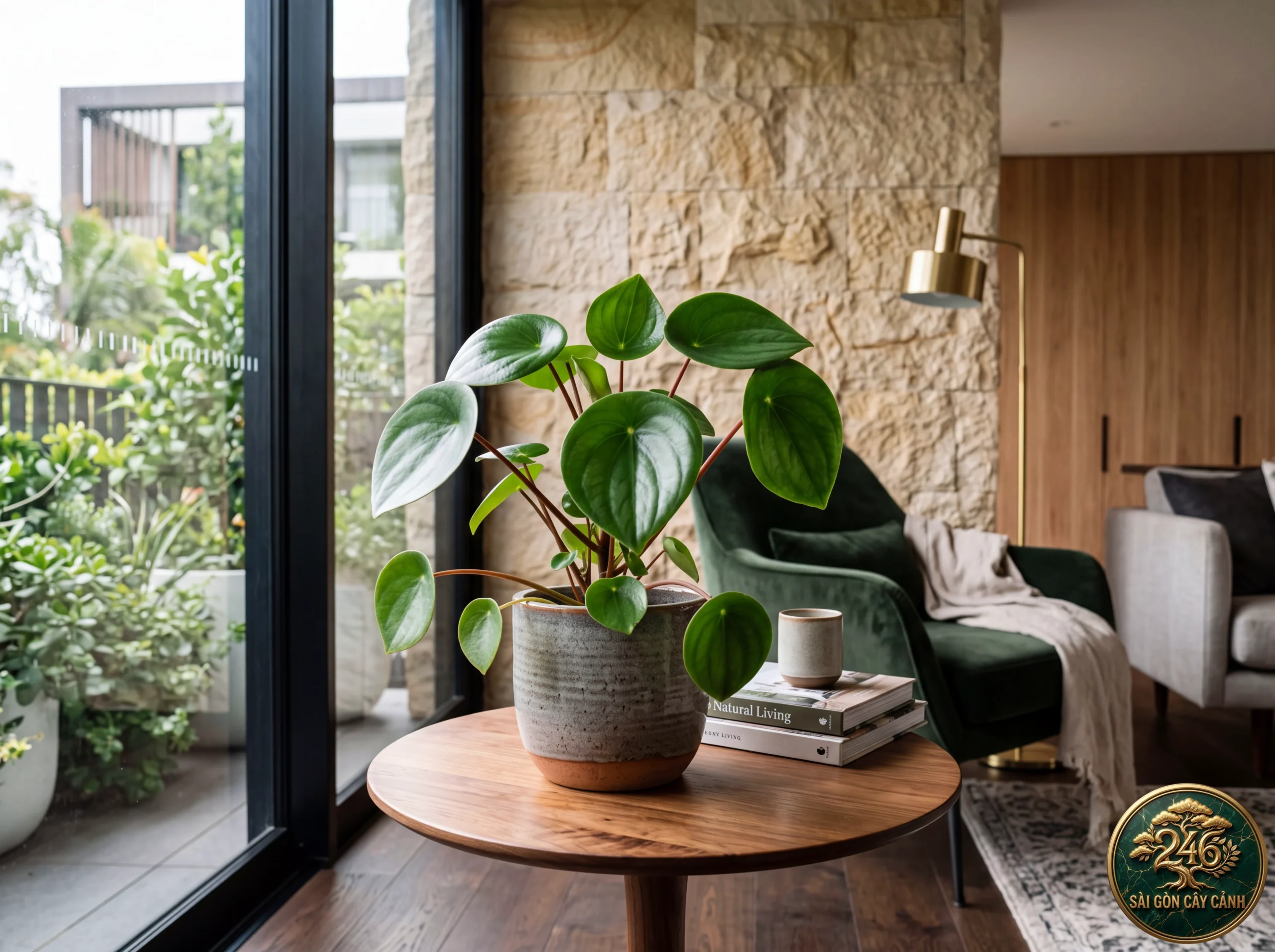
In modern Biophilic interior architecture, Peperomia polybotrya stands as a living sculptural jewel with its mirror-gloss raindrop leaves. Its neat silhouette makes it a favorite accent on office desks, minimalist bedside credenzas, coffee tables, or Scandinavian timber plant stands.
The plump raindrop contour symbolizes abundant good fortune, continuous renewal, and natural prosperity. Contemplating the vibrant vitality of its glossy foliage calms mental stress, refreshing executive focus and instilling enduring inner tranquility.
From a Biophilic environmental psychology perspective, the mirror-gloss raindrop geometry of Peperomia polybotrya forms a dynamic living miniature sculpture. Observing its plump, turgid foliage on executive desks relieves ocular strain, sparks creative contemplation, and nurtures an intimate organic bond with tropical nature.
12. Master Principles for Sustainable Indoor Acclimatization
To maintain thriving Raindrop peperomia with lustrous foliage and compact habit indoors, adhere faithfully to these three foundational rules:
- Hydration axiom: Hydration axiom: Water only when substrate dries 50%, ensuring rapid gravity percolation without bottom waterlogging.
- Illumination axiom: Illumination axiom: Provide gentle indirect daylight of 1,200-3,000 lux, completely shielding foliage from harsh direct sun.
- Maintenance axiom: Maintenance axiom: Clean foliar blades regularly with damp cloths and position containers in naturally ventilated rooms.
Nursery Care Journal & Living Greenery Moments
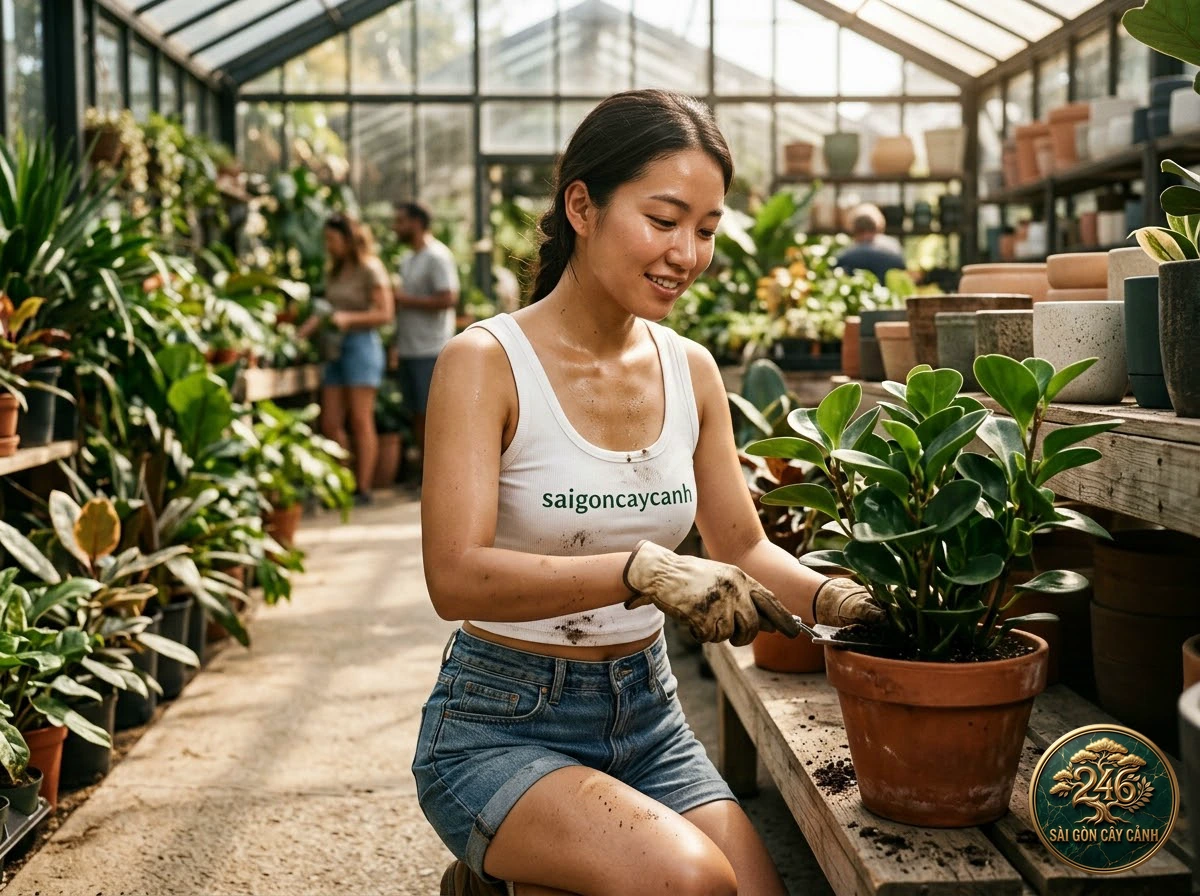
At Saigon Cay Canh greenhouse, each photograph captures genuine everyday care moments between plant lovers and living greenery, spreading a passion for nature and green-living inspiration.
13. Frequently Asked Questions Regarding Raindrop peperomia (FAQs)
How does Peperomia polybotrya differ from Pilea peperomioides?
Peperomia polybotrya has thicker succulent leaves with a distinct pointed raindrop tip and sub-peltate attachment; Pilea has flat orbicular leaves with central peltate attachment.
Is it normal for the plant to shed a few leaves after arrival?
Shedding 1-2 basal leaves during acclimatization to a new indoor environment is normal; it stabilizes within 1-2 weeks under proper light and care.
Should chemical leaf shine sprays be used on Raindrop peperomia?
Never apply commercial leaf shine chemicals which clog stomata; its leaves possess innate glossy shine that only requires wiping with damp water.
How often does Raindrop peperomia bloom indoors?
It produces slender cream rat-tail flower spikes primarily in spring and summer when provided with adequate warm diffuse daylight.
Can plantlets be propagated from detached leaves?
Yes; if a freshly detached leaf retains its petiole base, inserting it into moist perlite produces adventitious roots and plantlets in 25-35 days.
Why do Raindrop peperomia leaves lose their glossy sheen and curl slightly?
Loss of foliar luster typically stems from dry ambient atmospheres (below 45%) or transient root ball dehydration; misting the surrounding air and restoring balanced soil moisture promptly revitalizes the glossy finish.